Weebou Editorial Team
 8 min read
 In this article
A little preparation
Put out four to six items that are safe to wear and easy to put on alone: a few hats, scarves, an old shirt, a bag, a pair of oven gloves that fit loosely, and a scrap of fabric to use as a cloak. Avoid cords, long trailing cloth, masks that block vision and anything that could pull around a neck. A mirror at child height helps a lot, and a cushion or rug can serve as a stage.
It helps to choose open-ended props rather than a full costume with a fixed story. A hat can belong to a gardener, a pilot or a queen who loves cooking, and the child decides which. Offer items to every child equally, whatever the character is traditionally linked to, and ask about the job or plan instead of assigning roles. Give yourself a small part and follow your child’s lead. A session of fifteen to thirty minutes is typical, and dressing up can happen again tomorrow with a different mix.

Ideas to try together
The everyday helper station
A helper station gives dressing up a clear purpose: someone in the story needs help, and the child decides how. Children try out real-life jobs such as growing food, sorting books or repairing a bicycle, and use the vocabulary and sequences they have seen. It is a gentle way to make sense of the adult world.
You’ll need
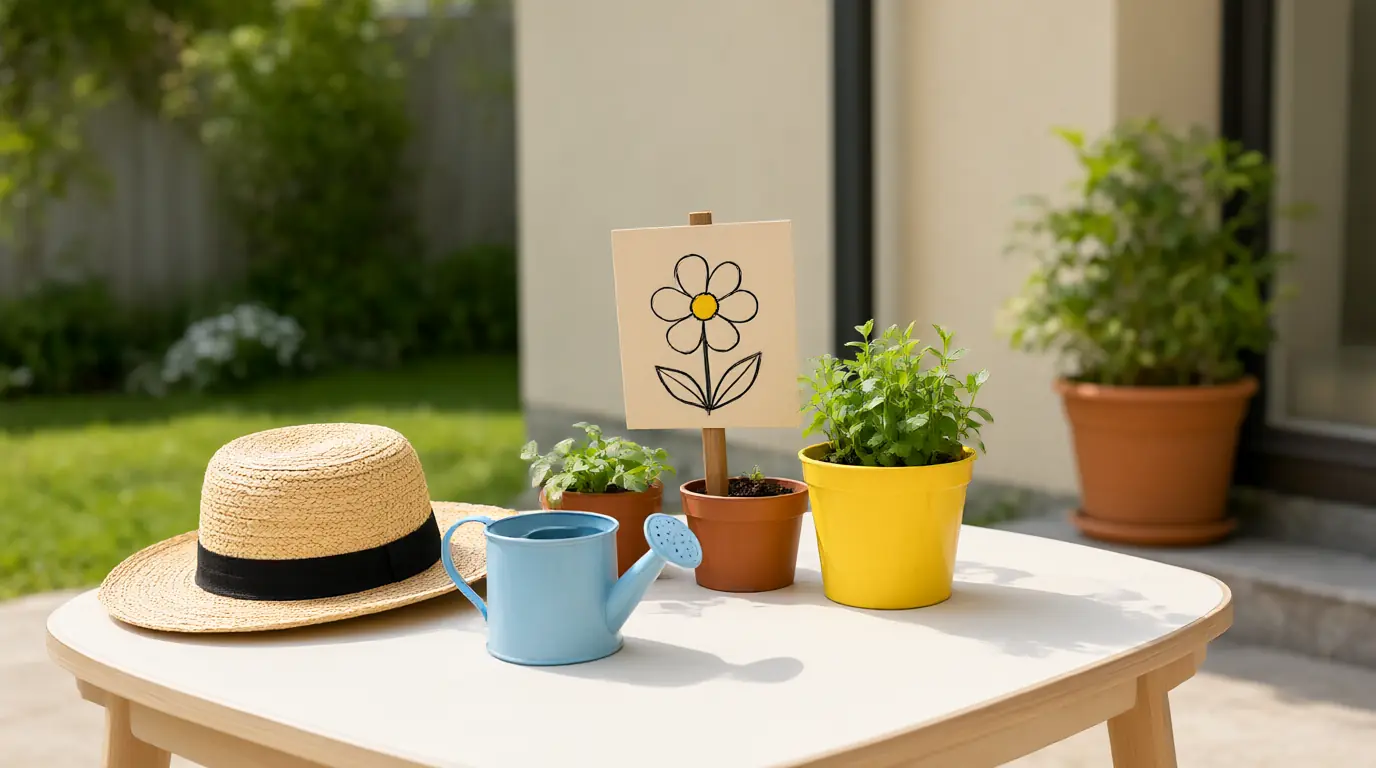
- A hat, apron or bag to suggest a job
- 3 or 4 props such as a watering can, a pile of books or a toy tool
- A cushion or box for a counter
- A paper sign drawn by your child
How to do it
- Lay out a hat and one or two props on a table and let your child choose.
- Ask what job the clothes suggest and who needs help today.
- Set up a small station, such as a counter or a garden bed, and let your child draw a sign for it.
- Play a customer or a neighbour who arrives with a small problem, such as a plant that looks sad.
- Let your child decide what to do and ask what the helper needs next.
- Swap roles so your child becomes the visitor and you play the helper.
Make it your own: Younger children may only want to wear the hat and carry the bag, which is fine. Older children can add a short sequence of jobs, such as plant, water, wait and pick, and explain the order to you.
One prop, many roles
A single ordinary prop, passed around, encourages flexible thinking. A scarf can be a cape, a river, a baby blanket or a bandage, and children begin to see that objects can stand for other things. The game takes almost no preparation and works with any item in the room.
You’ll need
- 1 large silky scarf or a tea towel
- A clear floor space
- A chair or cushion to sit on
- A mirror, if you like
How to do it
- Hold up the scarf and say ‘what could this be?’
- Let your child try one idea, such as a cape, and show you how it is used.
- Pass the scarf to the next player, who must find a different use.
- Keep passing it around, noticing each new idea and avoiding repeats.
- Pick a favourite, and act out a short scene where the scarf plays that role.
- End by naming how many different things it was.

Make it your own: Younger children can use the prop as a hiding game, peek-a-boo or a blanket for a toy. Older children can play without speaking, using only actions, and let others guess what the scarf has become.
The costume interview
An interview invites a child to say who the character is, which builds spoken language and storytelling. The interviewer asks open questions, and the child answers in role. Some children are shy about speaking as themselves but happily answer when wearing a hat and speaking as someone else.
You’ll need
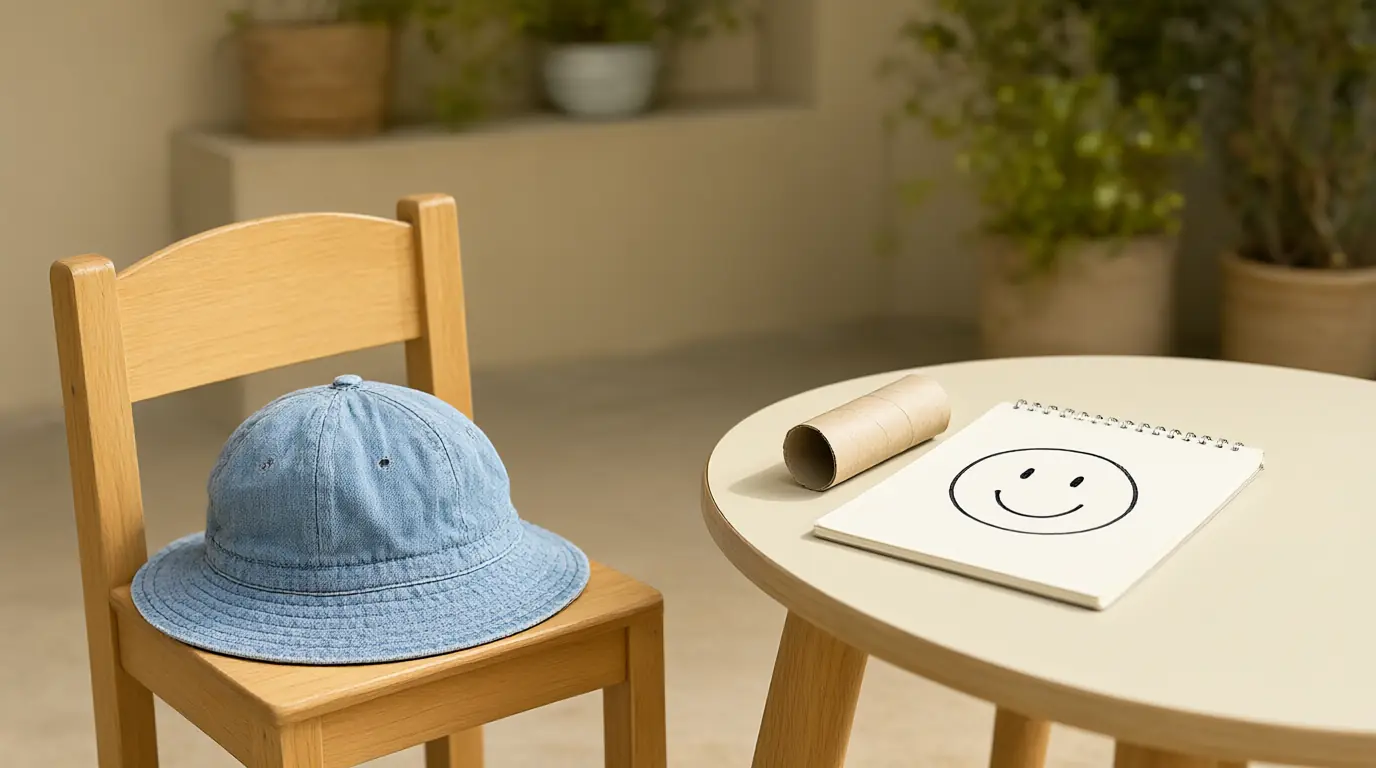
- A hat or scarf for the character
- A pretend microphone, such as a rolled card tube
- A chair for the guest
- A notepad and pencil
How to do it
- Let your child choose a hat or scarf and put it on, looking in the mirror if they like.
- Sit them in the guest chair and say ‘welcome, I am so pleased to meet you. What is your name?’
- Ask a few open questions: where do you live, what do you do all day, what is your favourite food?
- Write down a few of the answers, or draw them, to show you are listening.
- Ask one question about a problem: what is the hardest part of your job?
- Swap roles so that your child interviews you, or another toy.
Make it your own: For children who say little, offer two choices in each question, such as ‘do you live in a forest or a castle?’ Older children can interview two characters, one after another, and compare their answers.
A change of plan
A gentle twist in the story invites a child to solve a problem in character. The shop is closed, the rain has started or the bridge is missing, and the character must react. Children get to practise flexible thinking and are reassured that things can change and the story can still go on.
You’ll need
- A dress-up hat or cloak
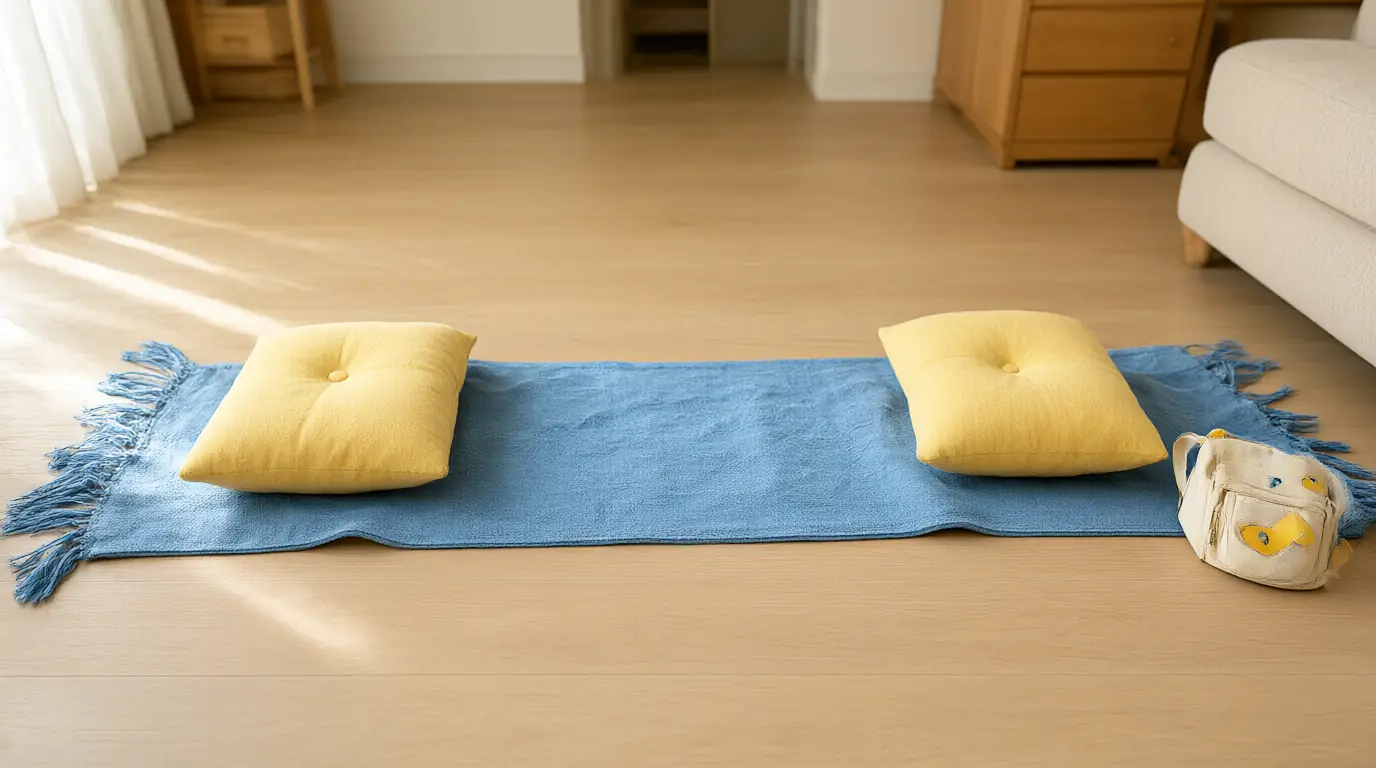
- A few blocks or cushions for obstacles
- A blue scarf for a river
- A bag for treasure
How to do it
- Start a simple story together: ‘The traveller is going to the market to buy apples.’
- Let your child act out getting ready, putting on a hat and picking up a bag.
- Introduce a small problem, for example ‘Oh no, the road is closed. What will you do?’
- Wait and see what your child decides, and avoid giving an answer too soon.
- Add a second change if the first goes smoothly, such as a sudden rain shower or a friendly stranger.
- Finish with the character arriving, or deciding on a new plan, and say what was the most clever choice.
Make it your own: Younger children may need a clue, such as a blue scarf for a river to cross. Older children can invent the twist themselves and then challenge you to solve it in role.
Build a prop box from the recycling bin
Making a prop box turns dressing up into a project. Children choose items from the recycling pile, decide what they will be and then use them in play. The box gives the game a home and a reason to keep returning to it, and it shows how ordinary things can become part of a story.
You’ll need
- A large cardboard box
- Clean cardboard tubes, boxes and lids
- Scraps of fabric and ribbon (no long cords)
- Child-safe glue, tape and markers
How to do it
- Lay out the clean recycling materials on a table.
- Ask your child to choose three things and say what they could become, such as a telescope, a crown or a shield.
- Help them tape or glue the pieces together, with an adult cutting where needed.
- Decorate each prop with markers and fabric scraps.
- Put all the props in the box and test one in a short scene.
- Decorate the outside of the box with a drawing and keep it somewhere easy to reach.
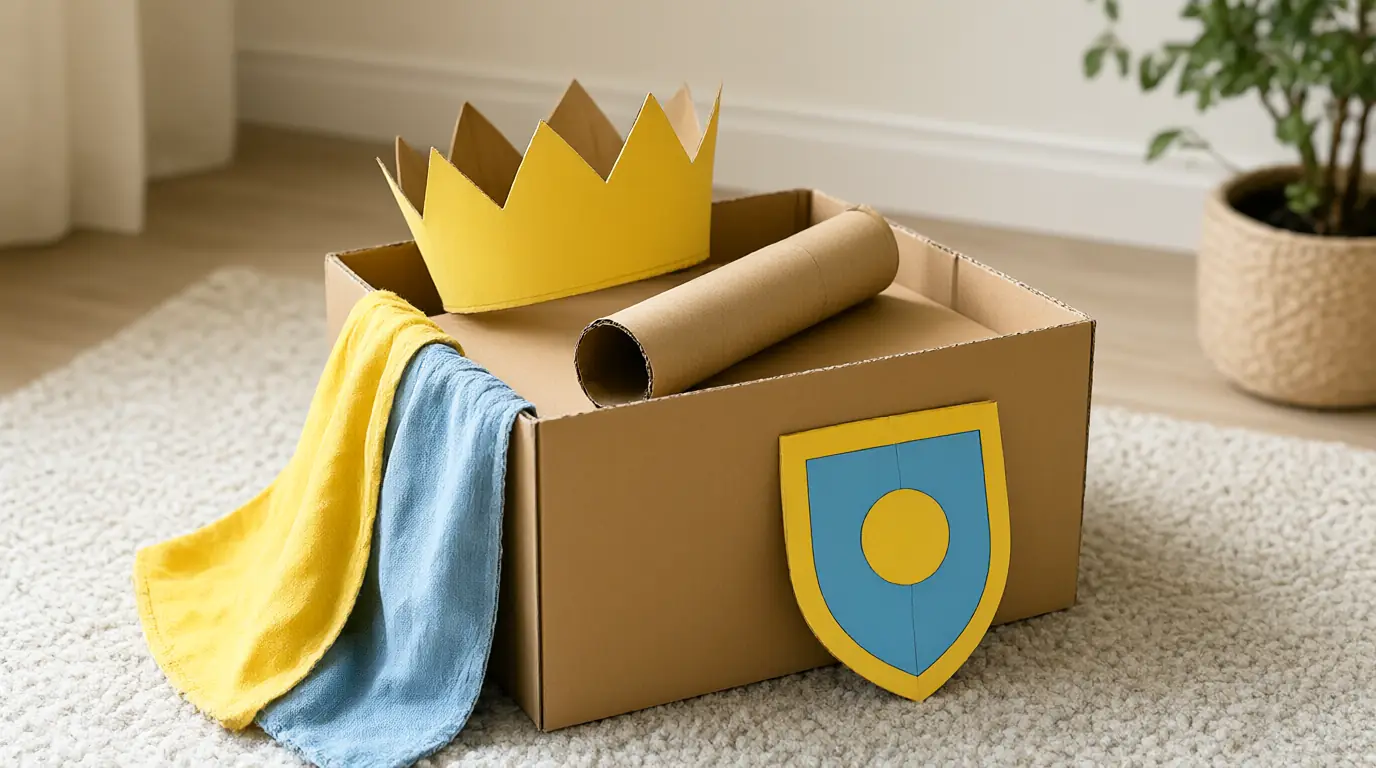
Make it your own: Younger children can decorate a ready-made tube with stickers. Older children can plan a set of props for a particular story, such as a ship’s captain, and sort them into a pile before making them.

Make it work for your family
If a child wants to wear the same costume every day, let them. Repeating a favourite character is a way of getting to know it, and the story often develops over time. If sharing is hard, set out two similar hats so nobody has to wait, or let the child who is waiting take the role of director or photographer.
Try to ask about the character rather than the child: ‘what does the pilot do next?’ gives more freedom than ‘what are you doing?’ and draws out answers that are not about being right. For more pretend play ideas, take a look at acting games for kids or improv games for kids. Keep a small basket of favourites in sight and rotate a few items each week.

Parents also ask
Should boys and girls have different dress-up items?
No. Offer the same mix of hats, scarves, bags and tools to every child and let them choose. Children try on many roles to understand the world, and any role, from a firefighter to a queen, can be explored by any child.
What can I use if I do not have a dress-up box?
Everyday items are fine: scarves, tea towels, an old shirt, oven gloves, a bag, a hat, a tablecloth for a cape. Choose items with no cords, long ties or anything that blocks vision, and your child will supply the imagination.
My child only copies characters from screens. Is that a problem?
Not at all. Copying is how children start, and it often leads to new ideas. You can gently invite changes by asking ‘what if the character got lost?’ or ‘what would they do if it rained?’ so the story becomes your child’s own.
Choose materials and activities that suit your child, supervise as needed and adapt the ideas to their interests and abilities. About our editorial approach