Weebou Editorial Team
 7 min read
 In this article
A little preparation
Clear a space on a flat, non-slip floor or short dry grass, and place hoops at least two big steps apart. Take away anything a child could trip over, and keep hoops out of reach of babies. Plastic hoops can tangle around feet, so let children walk or hop into them rather than run, and keep the hoops on the ground at all times unless an adult is holding one.
Explain where the game starts and where children wait, and use a strip of tape or a rug as the 'home' spot. Show each move slowly once before anyone starts, and agree that a child may step beside a hoop or point to it instead of entering. Sessions of ten to fifteen minutes with a rest in between suit this age. If you want more floor-based movement, see jumping games with easy stepping options and balance games with feet close to the ground.

Ideas to try together
Island hopping across the living room
Flat hoops turn into islands in a pretend sea, giving children a reason to step, hop and balance in a controlled way. The game builds leg strength and planning, since a child has to look at where the next island is before moving. It also lets children choose a movement style.
 You’ll need
- Three or four hoops
- A blue sheet or towel as 'water' (optional)
- A soft toy to rescue
- Floor tape for the start
How to do it
- Lay the hoops in a loose trail, with each one a comfortable step apart, and tape a starting line.
- Say that the floor is the sea and the hoops are islands, and tell your child they are going to rescue a toy.
- Let them choose how to travel between islands: step, hop or tiptoe.
- Ask them to say the name of each island as they land, for example 'Banana Island'.
- At the last hoop, pick up the toy and carry it back by a different route.
- Move one hoop closer or further away and see whether the route changes.
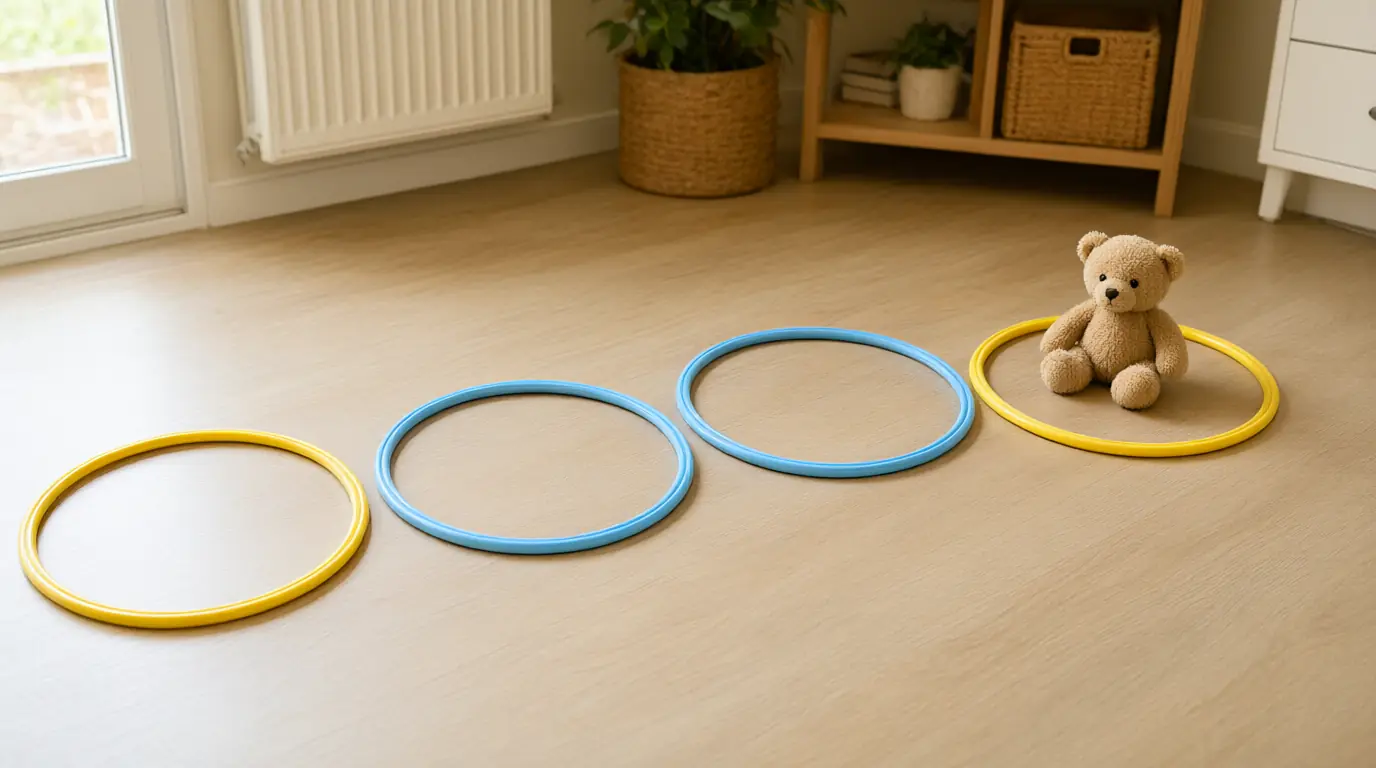
Make it your own: Younger children can walk beside the hoops and drop a pebble-sized beanbag into each one. Older children can hop on one foot or move one hoop themselves to make a new puzzle.
Sort the deliveries into two hoops
A sorting game uses hoops as clear boundaries so that children can see which group each card belongs to. Choosing where to put each picture builds early classification skills and vocabulary. There is no race, so children can think about the rule before they move.
You’ll need
- Two hoops in different colours
- Six to ten picture cards, such as animals, fruit and vehicles
- A basket for the cards
- A seat or cushion for the 'caller'
How to do it
- Place a hoop at each end of the space and put the basket of cards in the middle.
- Choose a rule together, for example 'animals go in the red hoop and food goes in the blue hoop'.
- Let your child pick a card and say its name before carrying it to the correct hoop.
- Ask one child to be the caller who checks each card by saying 'Yes, it belongs' or 'Let's look again'.
- When all cards are placed, count the cards in each hoop and compare.
- Change the rule, such as things that fly and things that do not, and sort the cards again.
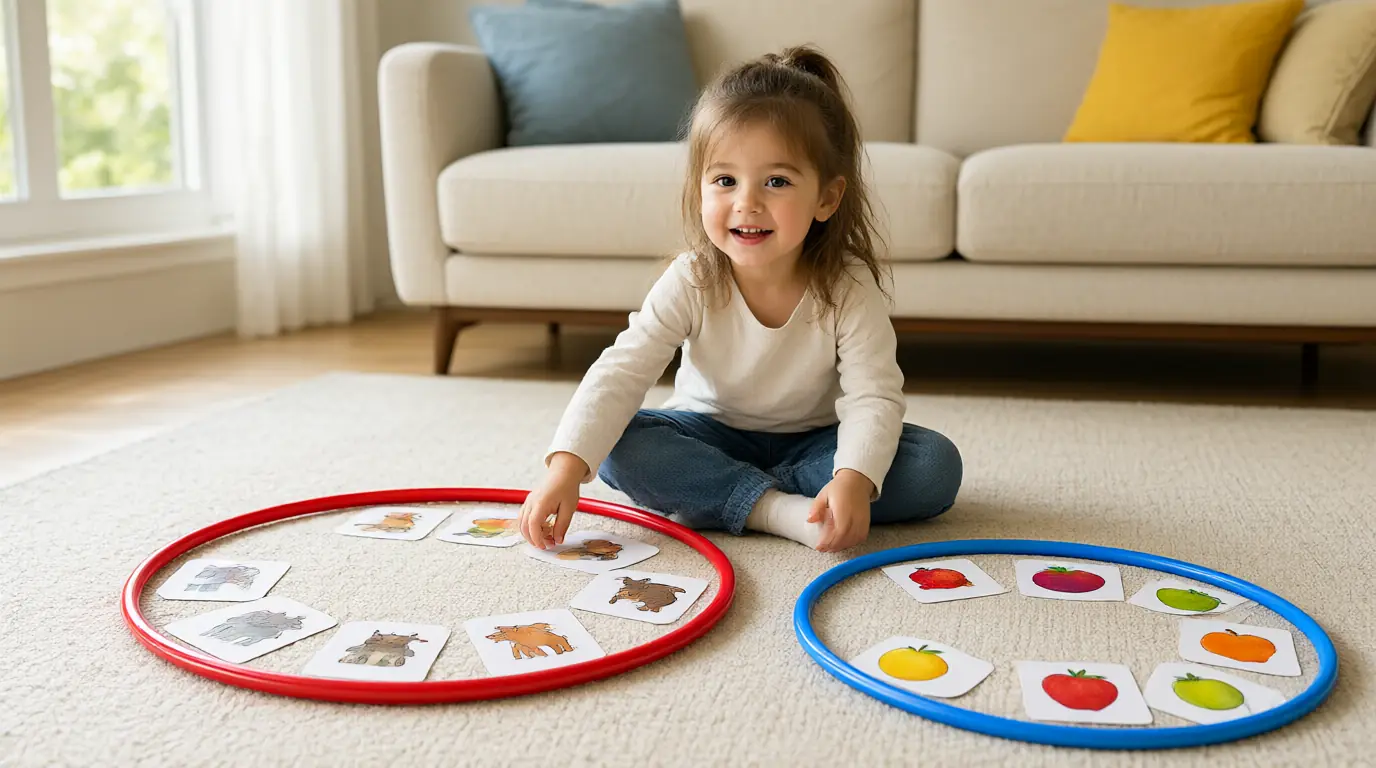
Make it your own: For younger children, use just two categories and three cards. Older children can use a third hoop or make up a rule for the others to guess.
Soft ball landing inside the circle
Rolling a soft ball into a hoop builds hand-eye coordination without the pressure of throwing hard. The hoop gives a clear target, and moving it closer or further away changes the challenge. Children learn to adjust the strength of a push after seeing where the ball goes.
You’ll need
- One hoop
- A soft foam ball or a pair of rolled socks
- A tape line to stand behind
- A small basket to collect the ball
How to do it
- Lay the hoop flat on the floor about two steps from the tape line.
- Show your child how to roll the ball along the floor with both hands, aiming at the middle of the hoop.
- Let the ball stop completely before anyone goes to fetch it.
- Ask what they might change if the ball stopped short: a bigger push, a different angle.
- After three goes each, move the hoop a bit further and try again.
- Finish by rolling the ball in together, one child at each side of the hoop.
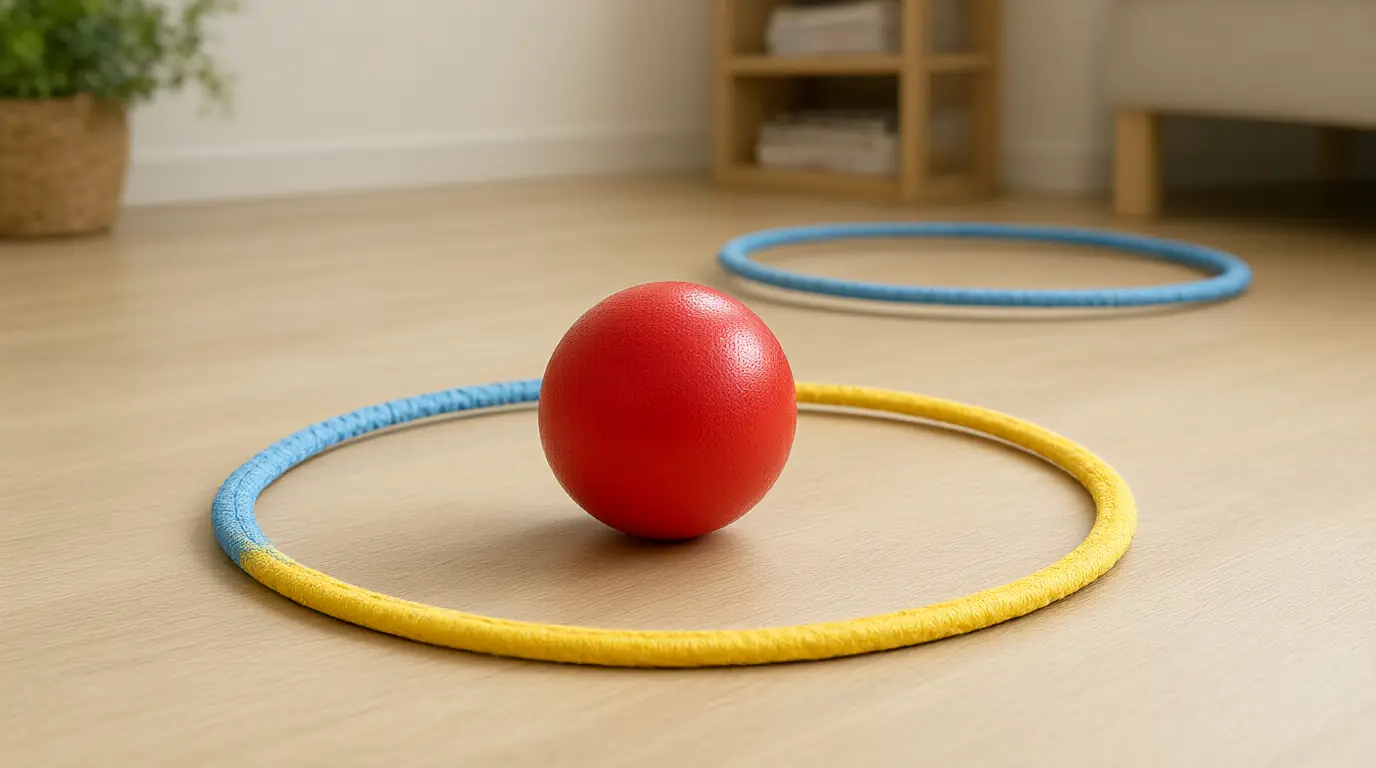
Make it your own: Younger children can start one step away and sit down to roll. Older children can try to make the ball stop in a particular spot, or use a second hoop as a second target.
Story circles: home, library and park
Hoops become pretend places that give a story somewhere to happen. Moving a toy or your own body between them lets children link places in a sequence, which helps with early storytelling. A child who prefers to talk can tell the story while another child moves the toy.
You’ll need
- Three hoops
- A toy figure, a teddy or a small doll
- Three picture cards: house, book and tree
- A cushion for the storyteller
How to do it
- Lay three hoops in a triangle and put a picture card in each one.
- Introduce the character and say where the story begins, in the home hoop.
- Ask your child where the character goes next, and move the toy to that hoop.
- Add a small event in each place, such as finding a book or meeting a duck.
- Take turns: one person tells what happens, the other moves the toy or walks the route.
- Finish by telling the whole story again in order, pointing to each hoop.
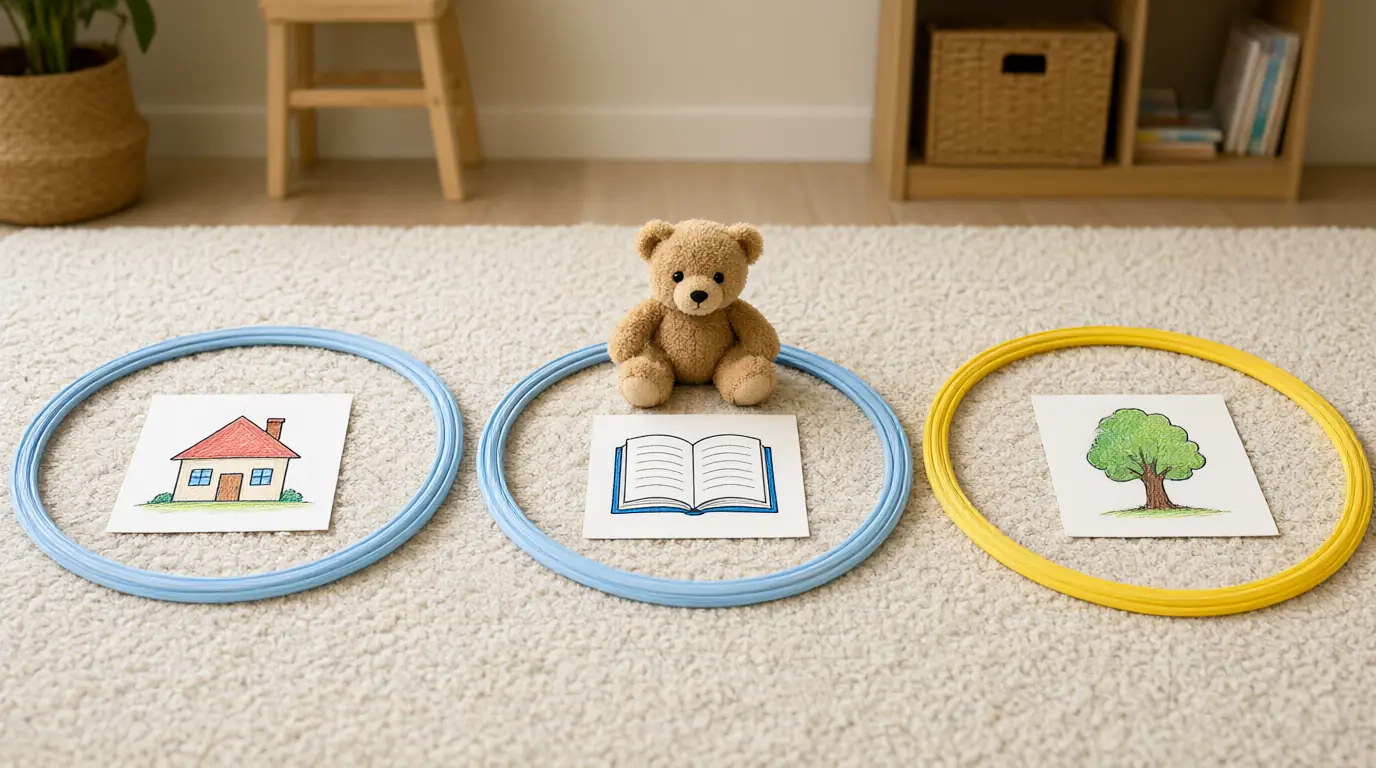
Make it your own: Younger children can simply carry the toy from hoop to hoop while you tell the story. Older children can add a fourth place and invent a problem to solve.

Make it work for your family
Start with one hoop and one child, then add more only when the first version runs smoothly. If children argue over who goes into a hoop, give each child a hoop of their own or use floor tape to make more circles. A drawn chalk circle or a looped rope works well wherever a hoop would be a trip risk, such as a crowded room.
Change the way children move rather than the pace: tiptoe, bunny hop, crab walk or slow-motion giant steps all suit the same hoops. Praise what you see, such as 'You waited for your turn', rather than who finished first. For a hoop-free way of sorting and delivering, try group games with different ways to join in, or use circle games with clear turns if the group is large.

Parents also ask
At what age can kids use a hula hoop?
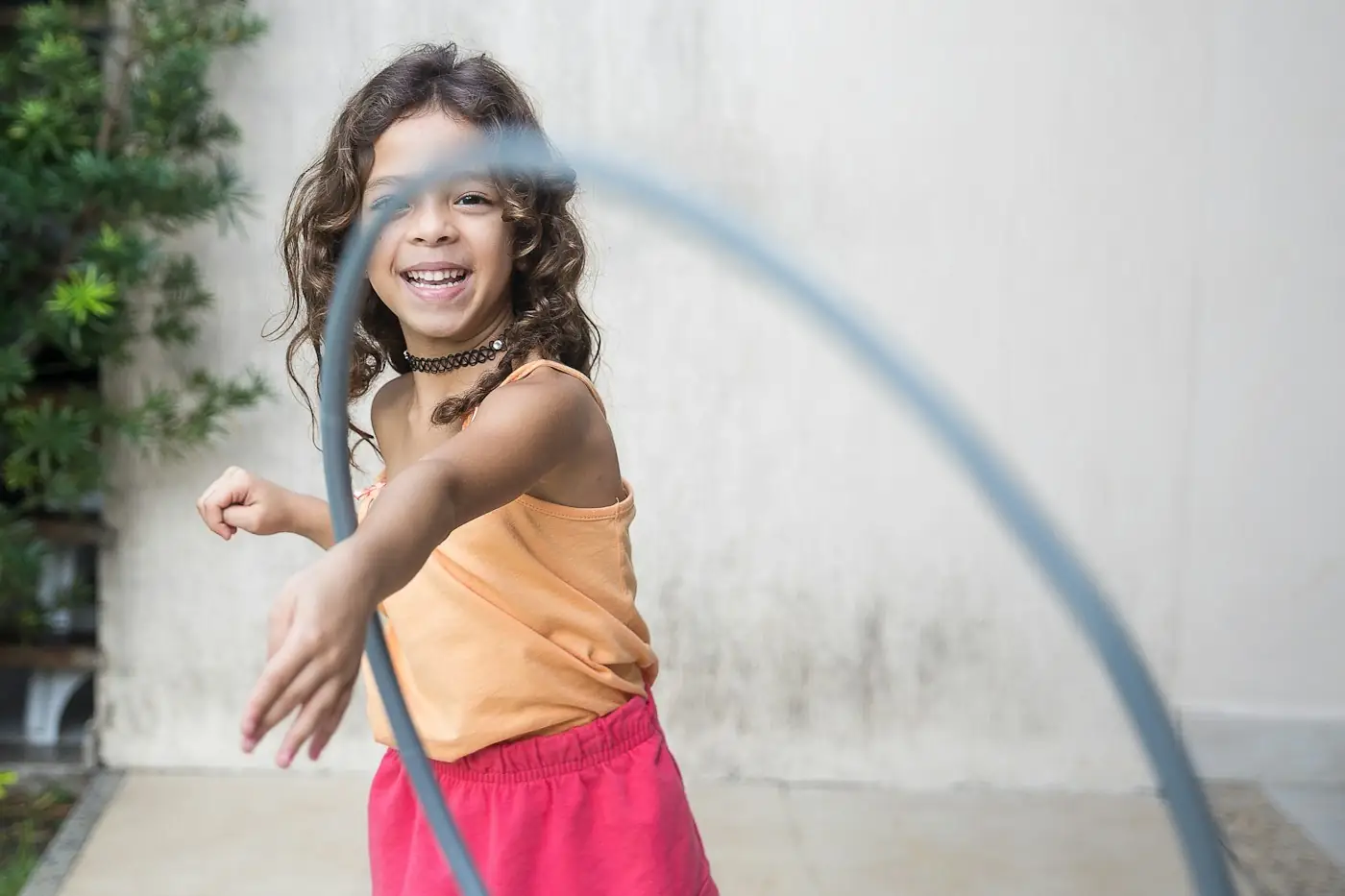
Many children enjoy hoops on the floor from around three, using them as targets or islands. Spinning a hoop around the waist is hard and often comes later, so there is no need to teach it. Choose a lightweight hoop sized for a child.
What size hoop is best for young children?
A child-sized hoop that comes up to about the child's chest when stood on the floor is easiest to handle, and it is lighter than an adult hoop. For floor games, any size works as long as it lies flat and does not bend or crack.
How can I play hoop games in a small space?
Use one or two hoops, or draw circles with chalk or tape. Play standing still: drop beanbags in, sort pictures or step in and out. Move furniture aside and keep sessions short. A hoop can also be a pretend boat on a rug.
Choose materials and activities that suit your child, supervise as needed and adapt the ideas to their interests and abilities. About our editorial approach