Weebou Editorial Team
 7 min read
 In this article
A little preparation
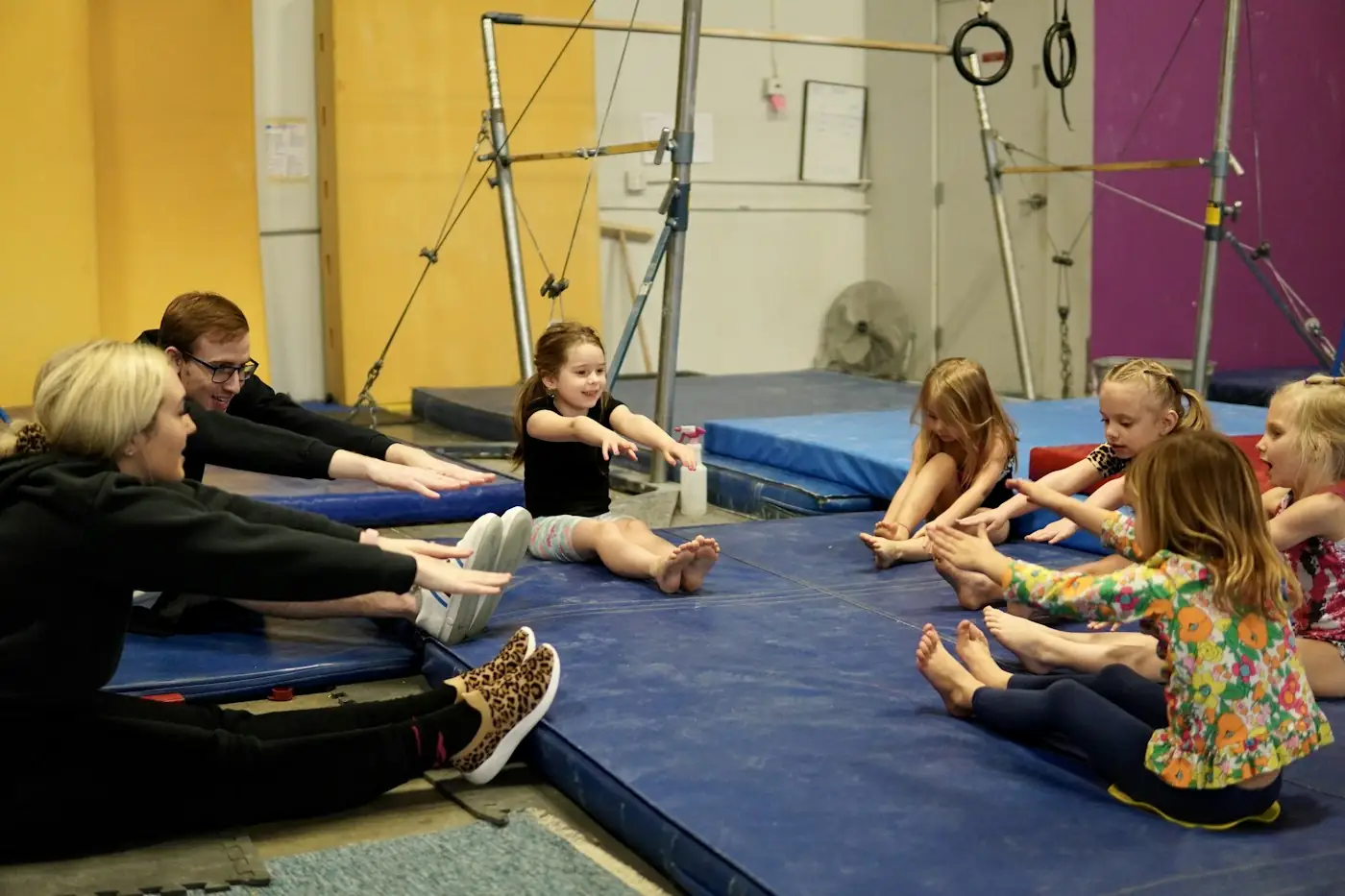
Walk the hall before the children arrive. Look for slippery patches, damp spots, loose mats, sharp corners and any equipment that is not part of the game, and move it out of reach. Mark the playing area with tape or cones, and show children where the edge is by walking along it together. Teach one stop signal, such as a bell or a hand raised high, and practise it before the first game: move, ring, freeze, repeat.
Choose a quiet corner with a cushion where a child can rest and watch. Keep the group to a size you can see at a glance, with an adult near the boundary at all times. Explain one rule at a time, demonstrate it and allow a short practice before adding objects. Plan for about fifteen minutes of active play with a calm closer. If your hall sessions include ball skills, you may also like these basketball beginnings with soft balls and low targets.

Ideas to try together
Island journeys
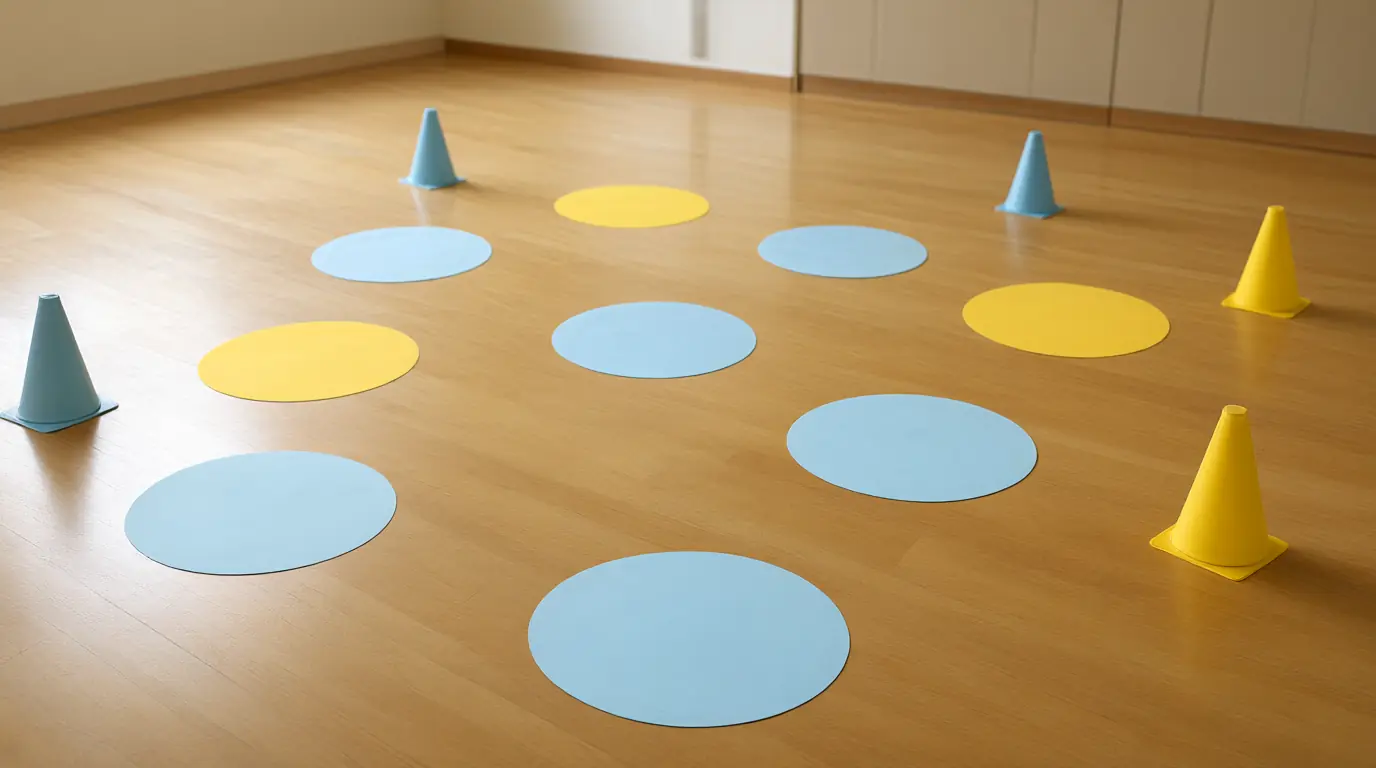
Floor spots become islands, and children choose how to travel between them. The spacing teaches children to look around before moving, and the choice of movement lets each child pick what feels right. Stepping, side-stepping and seated arm reaches all count, so the game stays inclusive and calm.
 You’ll need
- 8 to 12 large floor spots or paper circles
- A bell or a small drum
- Picture cards of movements
- A soft music track (optional)
How to do it
- Spread the spots around the hall with wide gaps between them.
- Invite each child to stand on an island of their choice.
- Show a movement card and ask the group to travel to a new island that way.
- Ring the bell so everyone freezes on an island.
- Change the movement and repeat.
- Finish by gathering on one big island for a stretch.
Make it your own: Younger children can use fewer, closer spots and walk. Older children can plan a route through three islands or invent a new movement card.
Delivery routes
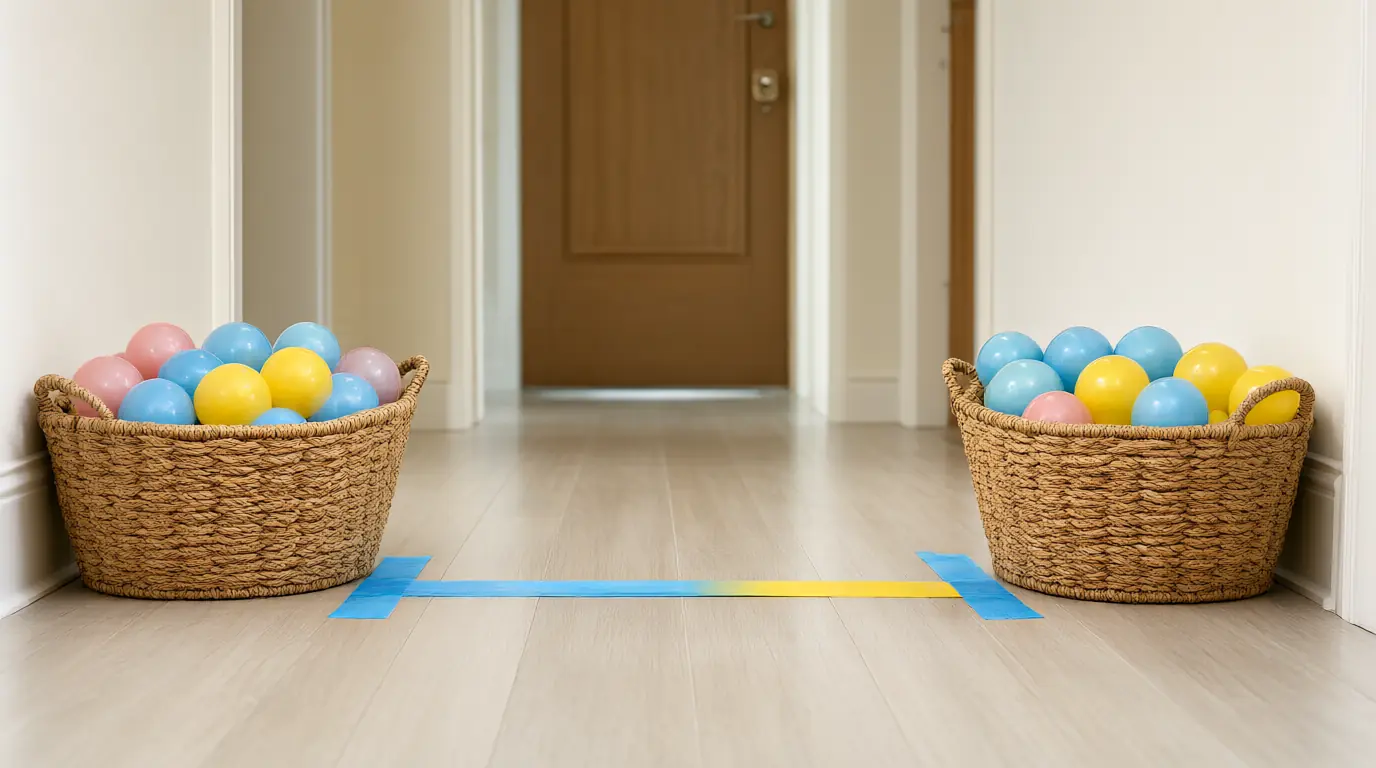
Delivering soft balls from one basket to another gives children a purpose for moving and a reason to watch where they are going. Carrying one item at a time keeps hands busy and avoids pushing. Changing the route between rounds encourages the group to talk and decide on clear paths together.
You’ll need
- Two large baskets or boxes
- 10 soft balls or rolled socks
- Floor tape to mark a route
- A small bell
How to do it
- Put the balls in the first basket and place the empty basket across the room.
- Mark a clear route with tape and show where to walk.
- Each child carries one ball and drops it in the second basket.
- Ring the bell and swap the positions of the baskets.
- Ask the group whether the route could be clearer or shorter.
- Count the balls together when the round is finished.
Make it your own: Younger children can carry a ball in two hands and walk a short route. Older children can carry a ball while stepping in a pattern or on a path of spots.
Shape orchestra
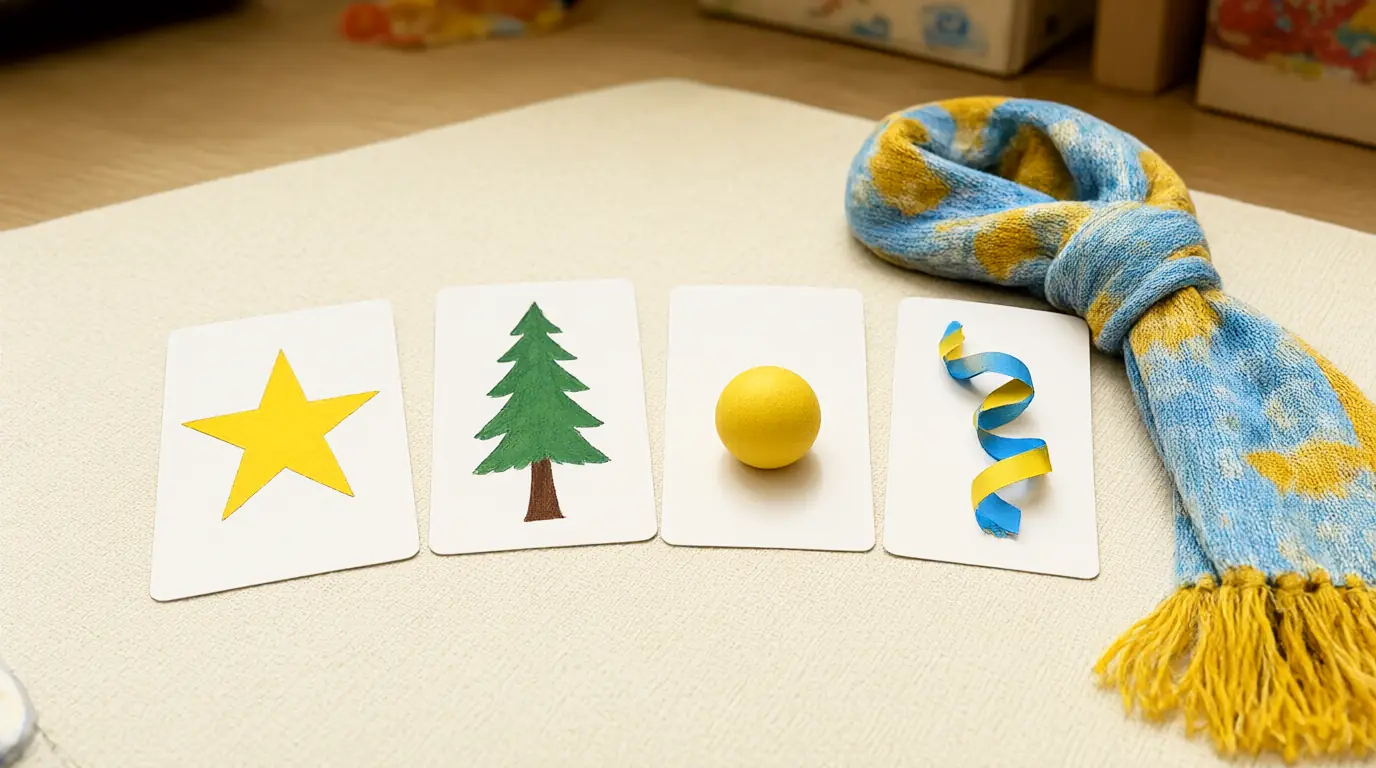
Making shapes with the body gives children a full-body game with no running at all. The leader calls a shape, and everyone interprets it in their own way, so there is no right answer. Taking the conductor role gives confident children a chance to lead while quieter ones can follow comfortably.
You’ll need
- A clear floor space
- A conductor's scarf or ribbon
- Four picture cards showing wide, tall, small and twisty shapes
- A small bell
How to do it
- Show each shape card and try the shape together.
- The conductor holds up a card and the group makes that shape.
- Ring the bell so everyone holds still like a statue.
- Look around and notice how different the shapes are.
- Pass the scarf to a new conductor.
- Finish by making the biggest shape you can, then the smallest.
Make it your own: Younger children can use just two cards and make shapes with their arms. Older children can combine two shapes or make a shape with a partner.
Follow the fabric
A bright piece of fabric moving slowly gives children something to watch and follow, which helps them match their pace to a leader. The group copies with empty hands from their own spaces, so there is no pushing or crowding. Giving each volunteer a short turn leading builds confidence.
You’ll need
- A bright fabric square about the size of a tea towel
- A clear space for each child
- A bell
- A cushion for resting
How to do it
- Hold the fabric where everyone can see it.
- Move it slowly up, down and from side to side.
- Invite children to move their hands the same way.
- Add a slow step with each movement of the fabric.
- Ring the bell and freeze.
- Hand the fabric to a volunteer for their turn leading.
Make it your own: Younger children can sit and follow with one hand. Older children can lead a sequence of three movements and teach it to the group.
Quiet cool-down trail
Finishing with a slow, gentle game helps children settle after energetic play. A trail of floor pictures gives them something to look at while they move slowly. It also teaches that a body can speed up and slow down, which is useful when it is time to go home or sit for a story.
You’ll need
- Six picture cards showing calm animals or objects
- Tape for the floor
- A soft cushion at the end
- Quiet music (optional)
How to do it
- Tape the cards in a line across the floor.
- Walk to the first card as slowly as a snail.
- At the next card, move like a sleepy cat.
- Continue with a calm movement at each picture.
- Reach the cushion and lie or sit down.
- Take three slow breaths together.
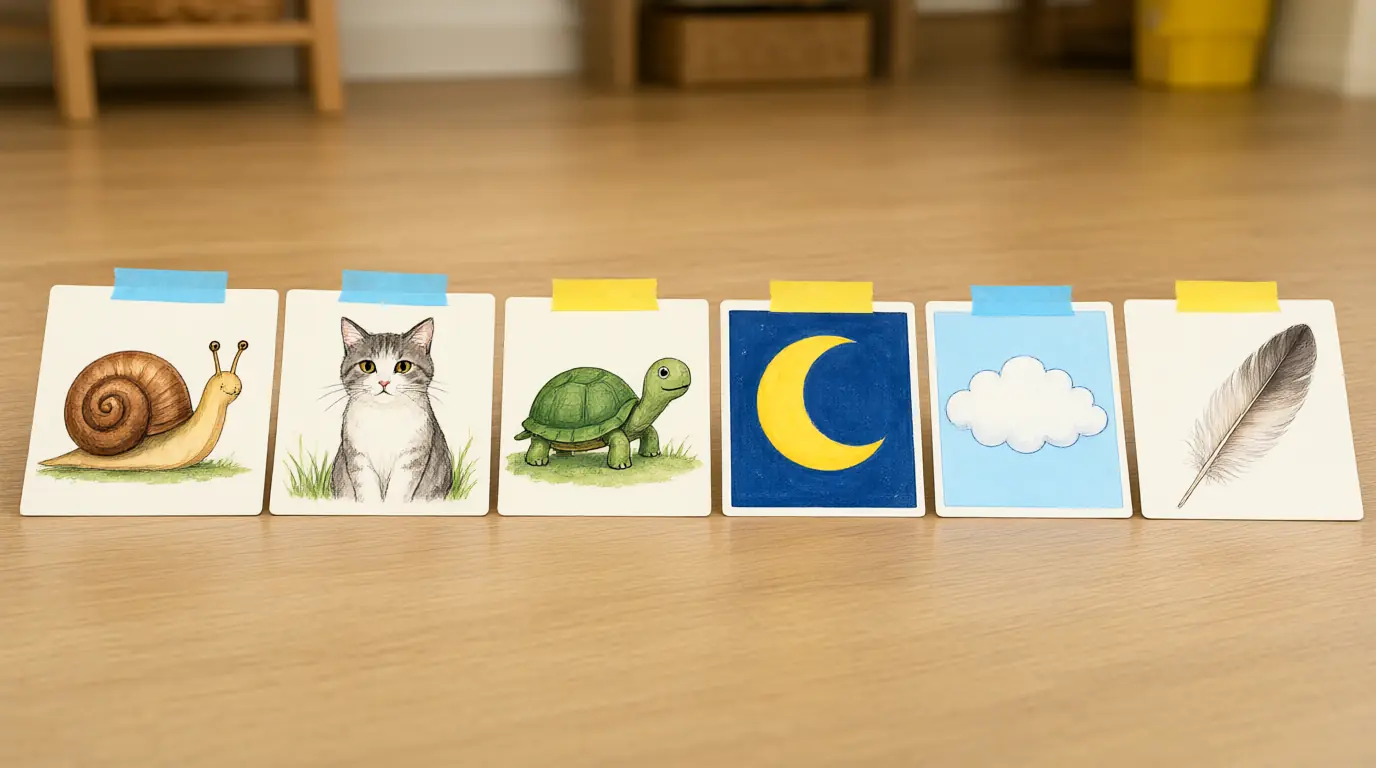
Make it your own: Younger children can use just three pictures. Older children can pick the movement for each card or make a trail for a friend.

Make it work for your family
Offer walking, rolling and seated arm movements next to running, so that every child can take part in their own way. If a game gets loud or crowded, ring the bell, stop and reset; a calm restart usually works better than a reminder. Keep an eye on children who go quiet or wander off, as they may need a rest or a different job.
Resist ranking children or counting who finishes first. Praise noticing, helping and good use of space instead. If a child is nervous about large halls, let them hold a cone or a scarf and start near the wall. For more movement ideas that use music, look at dance games where children choose how to move, or for a sit-down option between active games, try a gentle brain break.

Parents also ask
How long should a gym session be for preschoolers?
Around fifteen to twenty minutes is usually enough for children aged 3 to 6, with a short rest between games. Watch for tired legs or silliness and finish with a calm activity. It is better to stop while children are still enjoying themselves.
What equipment do I need for gym games?
Very little. Floor spots or paper circles, soft balls, a few baskets, fabric squares and a bell are enough for most games. Check the floor for slippery or damp patches and remove anything that is not part of the game before you start.
How do I include a child who does not want to run?
Offer other ways to move, such as walking, stepping or seated arm movements, and give them a job like ringing the bell or holding the fabric. Let them watch first if they wish. Many children join in once they feel comfortable and see others enjoying the game.
Choose materials and activities that suit your child, supervise as needed and adapt the ideas to their interests and abilities. About our editorial approach