Weebou Editorial Team
 8 min read
 In this article
A little preparation
Clear the floor of toys, rugs with curled edges and anything slippery, and check that there is room for each child to stretch both arms without touching someone. Bare feet or non-slip socks are usually safest. Decide on a volume that is comfortable for the quietest child in the room, and choose music with a steady beat and no sudden loud sections.
Agree on a stopping cue before you start, such as a raised hand or a wave of a scarf, and practise it once so that children know what it looks like. Keep sessions to five to ten minutes at first, and plan a calmer moment at the end, such as slow breathing with arms floating down. Choose a quiet edge of the space where a child can sit and watch, or move from a chair, and make clear that this is a way to join in, not a place for children who are doing it wrong. Avoid lifts, spins and any movement that feels uncomfortable.

Ideas to try together
Shape freeze
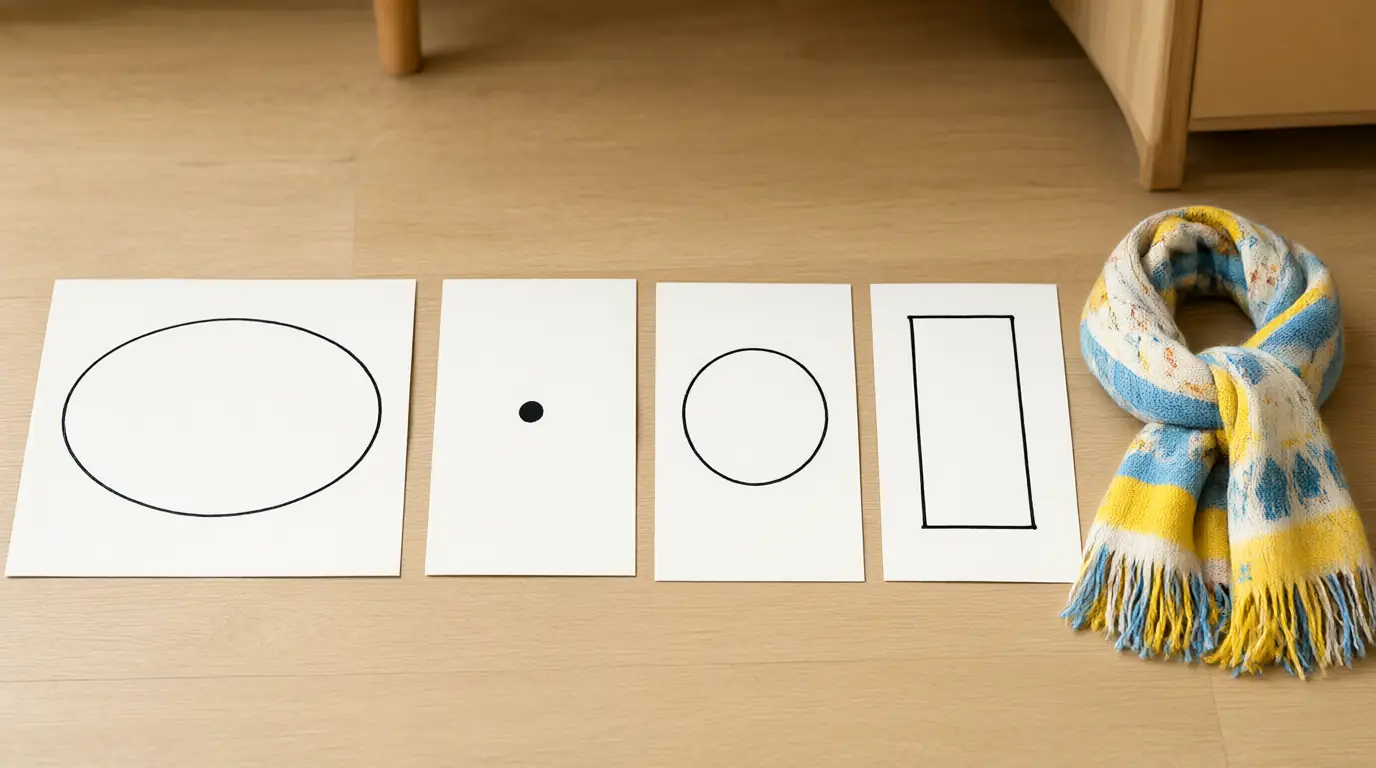
A short burst of music followed by a pause gives children plenty of room to dance freely and then show a shape. Naming a simple word such as wide, small, round or twisty sets the challenge, and each child makes their own version. It builds body awareness and listening, and the pause gives a natural rest.
 You’ll need
- A music player
- 4 picture cards showing wide, small, round and tall shapes
- A clear floor space
How to do it
- Show the picture cards and let children try each shape with their bodies.
- Play 15 seconds of music and invite everyone to dance in their own space.
- Stop the music and hold up one card.
- Everyone makes their own version of that shape and holds it for a slow count of three.
- Relax shoulders and shake out arms before the music starts again.
- Let a child choose the next card.
Make it your own: Younger children can freeze without a shape, simply stopping when the music stops. Older children can make shapes with a partner, such as a wide shape made by two people, if both are comfortable.
Animal soundtrack
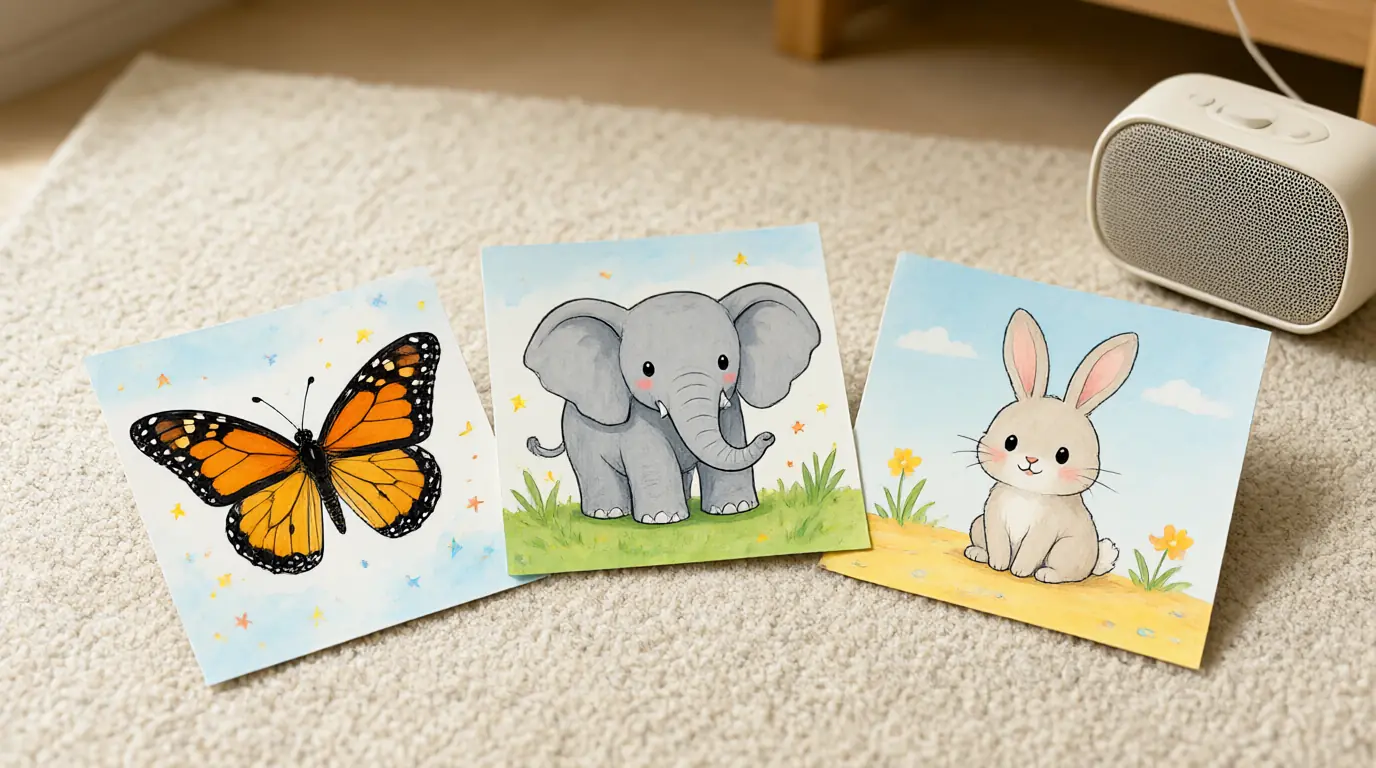
Pairing an animal with a piece of music invites children to think about how movement matches sound. A butterfly could become small seated hand flutters while an elephant inspires slow, heavy steps. Because each child explains their own choice, the game values different interpretations over resemblance to the real animal.
You’ll need
- 5 to 6 animal picture cards
- A music player with a slow and a fast piece of music
- A basket for the cards
How to do it
- Pick one animal card from the basket and show it to the group.
- Talk about how the animal moves: fast, slow, jumpy or smooth.
- Play a piece of music and invite everyone to move like that animal in their own way.
- Stop the music and ask a child to show their favourite movement.
- Try the same animal with a different piece of music and notice what changes.
- Choose a new card and repeat.
Make it your own: Younger children can use only two animals, such as a bird and a bear. Older children can invent a new animal, say what its music sounds like and teach the group how it moves.
Leader of one move
Taking a turn as the leader gives children a chance to be creative and visible without having to perform a routine. The leader invents just one gentle movement, the group copies it briefly, then another person takes over. Passing is welcome, which makes the game safe for children who do not want to be in front.
You’ll need
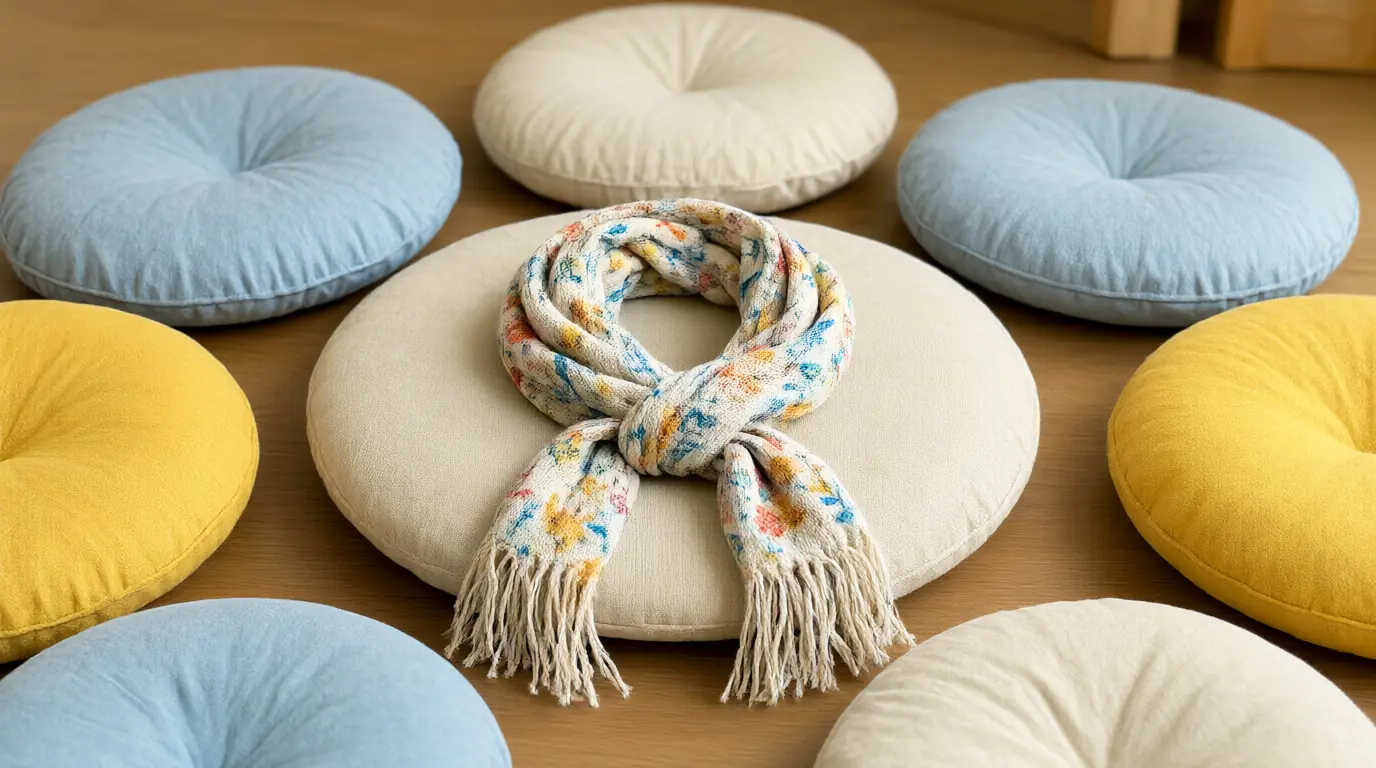
- A scarf to pass to the leader
- A music player
- Cushions to mark each child's space
How to do it
- Stand or sit in a circle with a cushion each, leaving room between children.
- Hand the scarf to a volunteer and play a little music.
- The leader makes one movement, such as swaying arms or tapping knees, and holds the scarf up.
- Everyone copies the movement for eight counts.
- The leader passes the scarf to someone else, or to the adult if they want to pass.
- Keep going until the music ends.
Make it your own: Younger children can choose from two movements shown on cards. Older children can add a second movement, so the group copies a pair of steps, and then pass to the next leader.
Fast hands, slow feet
Doing two different things at the same time shows children that body parts can follow different ideas. Quick hand taps with slow steps, then still feet with slowly floating arms, feels a bit like patting your head while rubbing your stomach, in a friendly way. It develops coordination and the ability to switch.
You’ll need
- A music player with a steady beat
- A clear floor space
- Two picture cards: a rabbit for fast and a tortoise for slow
How to do it
- Show the rabbit and tortoise cards and ask which is fast and which is slow.
- Do slow steps with fast hand taps on your knees.
- Invite children to try it with the music playing.
- Switch to still feet and slow floating arms.
- Let a child choose the next combination.
- Finish with both feet and hands slow, then a deep breath.
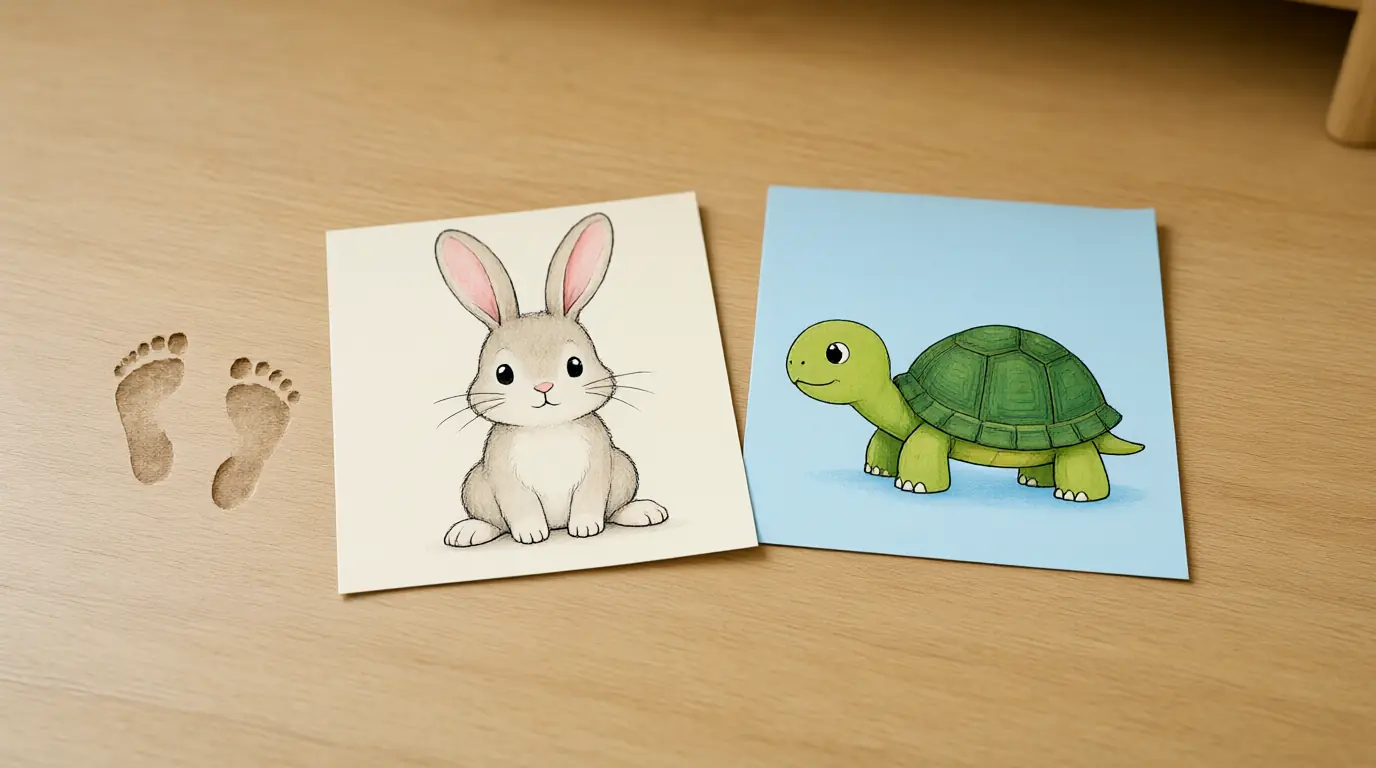
Make it your own: Younger children can do just one speed at a time, and sit while they tap. Older children can add a third part, such as nodding their head at a different speed, if they enjoy the challenge.
Scarf dance for slow music
A light scarf makes slow movement easy to see and satisfying to do. It floats, swirls and drifts, and children can follow it with their hands or eyes. It is a good way to end a dance session, because the pace naturally calms and children get a moment of gentle focus.
You’ll need
- One light scarf per child
- A slow piece of music
- A clear space with room for arms
- A basket for collecting scarves
How to do it
- Give each child a scarf and let them hold it in both hands.
- Play the music quietly and show how to let the scarf float up and down.
- Invite children to try making circles, waves or a figure of eight in the air.
- Toss the scarf gently and watch it fall.
- Move the scarf slowly to the floor as the music ends.
- Fold it and put it in the basket together.
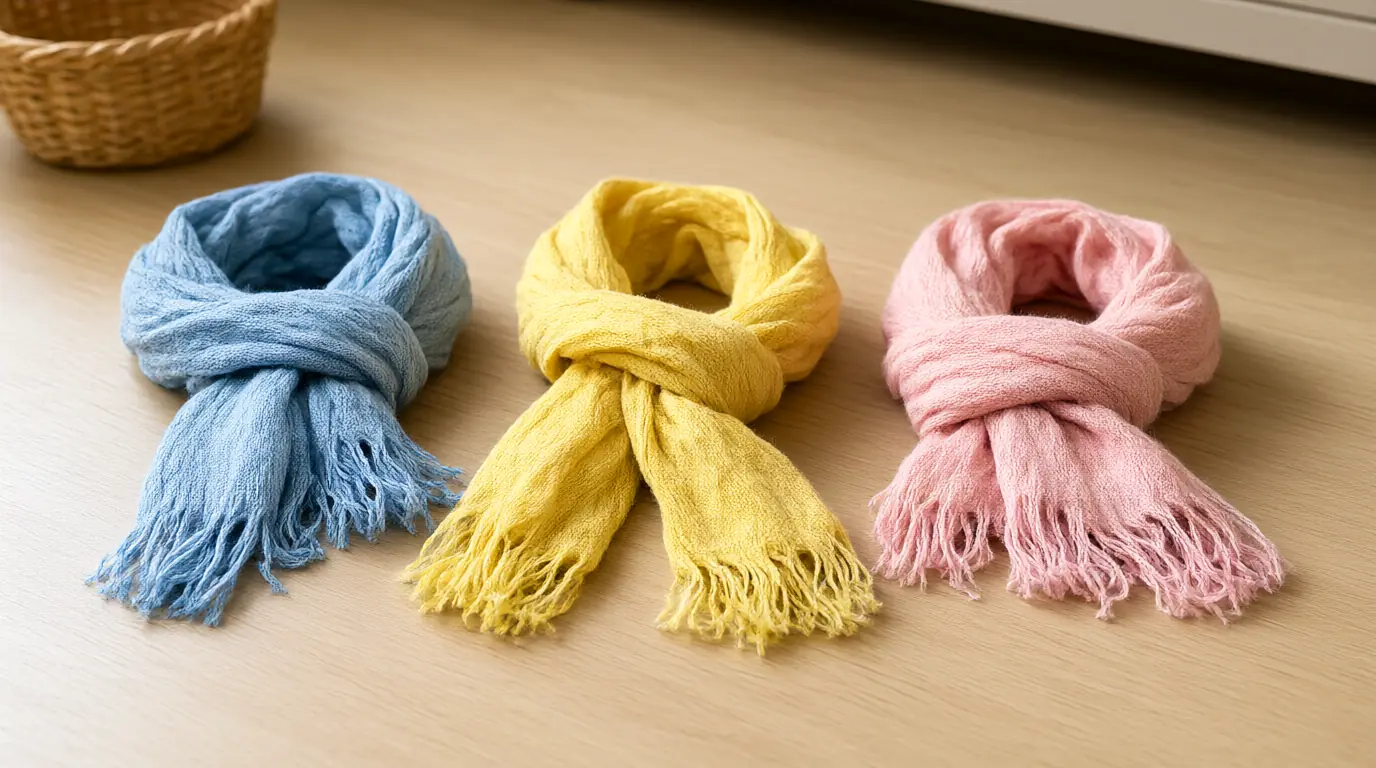
Make it your own: Younger children can wave the scarf while sitting. Older children can match the scarf's path to a feeling such as sleepy or happy and show the group.

Make it work for your family
Offer a quiet edge for children who prefer to watch, and invite them to choose a movement when they feel ready. When you suggest a new idea, change only one element at a time, such as speed, size or the part of the body that moves, so children can follow. Describe what you notice instead of correcting: I see big arms and tiny feet.
If the group becomes too excited, bring the music down, slow the pace and move to a gentler game such as floating scarves. For children who find music overwhelming, try dancing to a drum or to silence. Seated dancing is not a lesser version, because arms, hands, faces and shoulders can all move. For more movement play, see these gross motor activities, the music games and some balance games.

Parents also ask
How do I get a shy child to join in dancing?
Offer a seat at the edge and let them watch for as long as they like. Invite them to hold a scarf or choose the next song, and dance beside them without asking them to copy you. Many children join in once they have seen the game a few times.
What kind of music is best for children's dance games?
Music with a steady beat and a clear change in speed works well, such as a slow piece and a fast piece. Choose volume carefully, keep songs short and include some silence. Let children suggest music they enjoy.
How long should a dance game last for preschoolers?
Five to ten minutes is plenty for most young children, with a calm moment at the end. Stop while they are still enjoying it. Short bursts of dancing with pauses and quiet movement are easier to manage than one long session.
Choose materials and activities that suit your child, supervise as needed and adapt the ideas to their interests and abilities. About our editorial approach