Weebou Editorial Team
 7 min read


 In this article
A little preparation
Clear one comfortable spot, perhaps a rug or the space beside a window, and offer two choices before you start: a movement break or a quiet look. Show the cards or objects you will use, and say how long the break will last. Keep the break separate from any reward or punishment, so it is a kind pause rather than something earned or taken away.
Agree on a simple way to return, such as a chime, a picture card or the words 'Ready when you are'. Some children want a lot of movement and others prefer quiet and little conversation, so ask what feels helpful today. Offer seated versions of every game and do not insist on closing eyes, touching another person or copying a pose. If a child seems unable to settle despite breaks, or you have concerns about attention or movement, talk to your doctor or a qualified professional.

Ideas to try together
Window detective
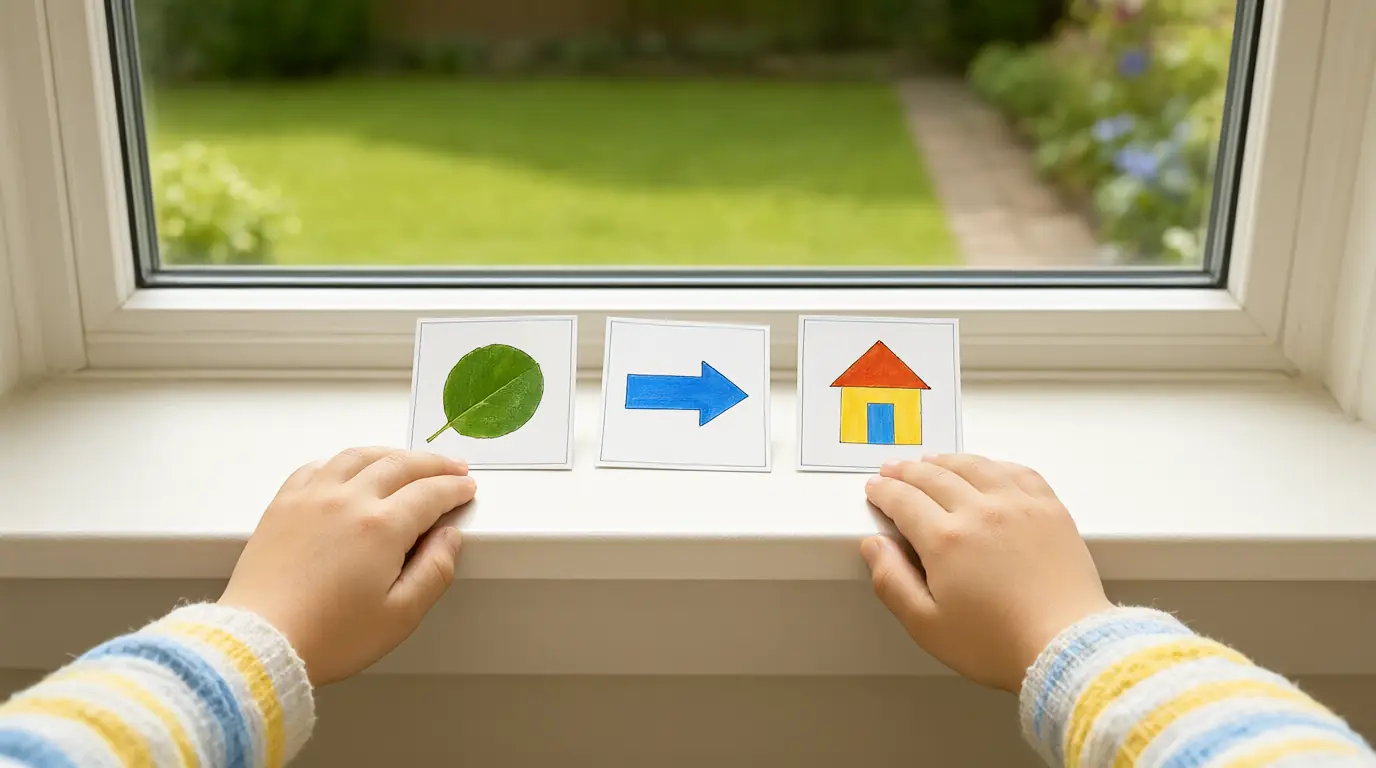
A look out of a safe window gives the eyes somewhere new to rest and gives your child a small, achievable search. Finding something round, something moving and something still asks for noticing, not for correct answers.
 You’ll need
- A safe window with a view
- Three picture cards or fingers: round, moving, still
- A stool or chair if needed
How to do it
- Stand or sit by the window and show the three cards.
- Each find something round and say or point to it.
- Look for something moving, such as a leaf, a car or a bird.
- Look for something still, such as a house or a fence.
- Describe one discovery in a sentence without worrying about the name.
- Decide whether to return to the activity or take a longer pause.
Make it your own: Younger children can find one thing and point. Older children can find something for each colour or a thing that starts with their first letter.
Weather arms
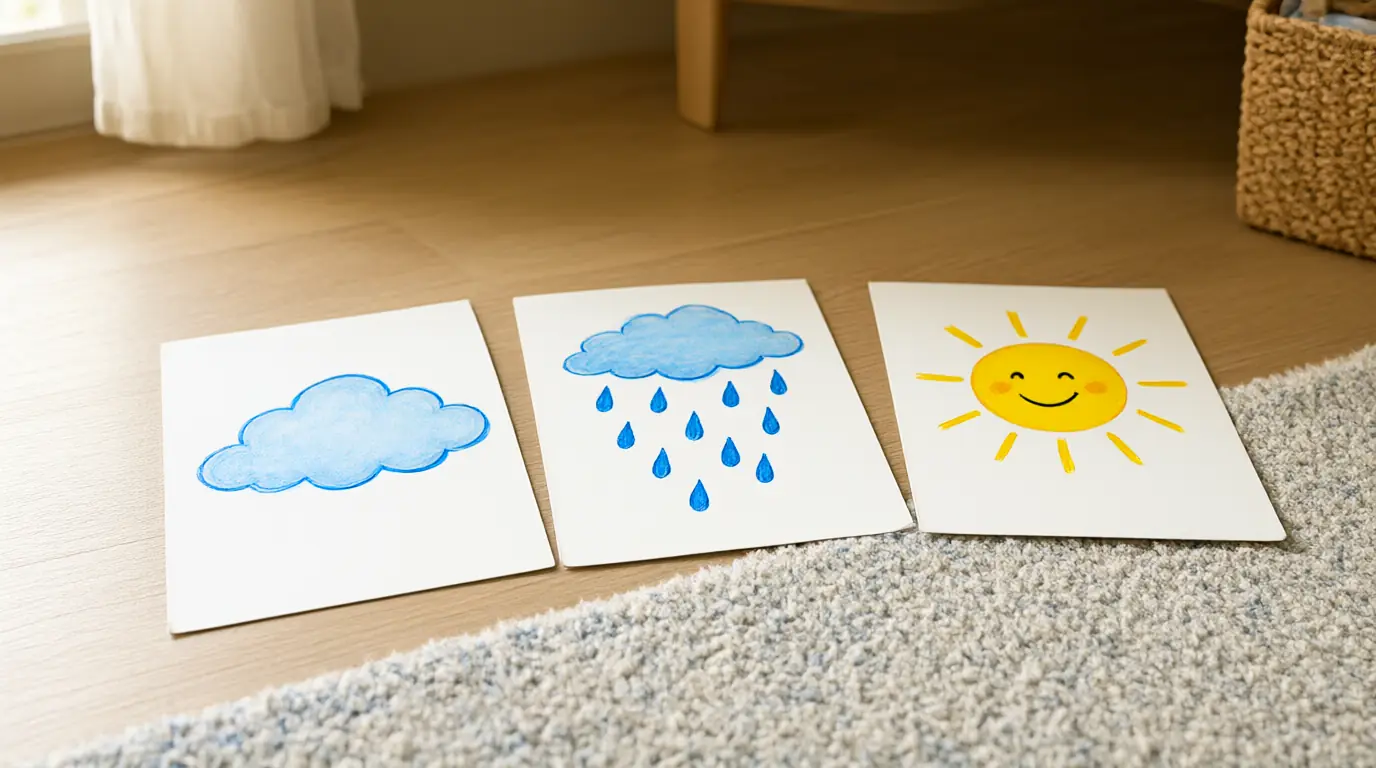
Moving arms to match a weather picture gives the body a break without much space or noise. Children can choose slow clouds, falling rain or a rising sun, so the movement is theirs and can be adjusted to any energy level.
You’ll need
- Three weather picture cards: cloud, rain and sun
- A clear space where you can stretch your arms
- A chair for seated play
How to do it
- Choose a weather card and show it.
- Drift your arms like slow clouds and invite your child to join.
- Flutter fingers downward like gentle rain.
- Rise slowly with arms overhead for a sun.
- Swap leaders after a few movements.
- Finish with arms by your sides and one slow breath.
Make it your own: Younger children can copy one movement. Older children can invent a new weather, such as wind or snow, and teach it to you.
Tiny room journey
A short trip to a nearby spot, such as the bookshelf, gives your child a small goal and a change of position. Returning by a different route adds a little thinking without extra effort. Because the distance is short and the path is clear, the break stays a break: your child moves, notices something new and is ready to come back to the earlier activity or choose another.
You’ll need
- A clear path across a room
- A picture card of the destination
- A soft toy to carry
How to do it
- Choose a destination, such as the bookshelf, and show the card.
- Travel there at a comfortable pace, such as slow walking or tiptoeing.
- Notice one object on the way and say what it is.
- Pause at the destination for one breath.
- Return by a different clear route.
- Hand the toy over and say, 'We have arrived.'
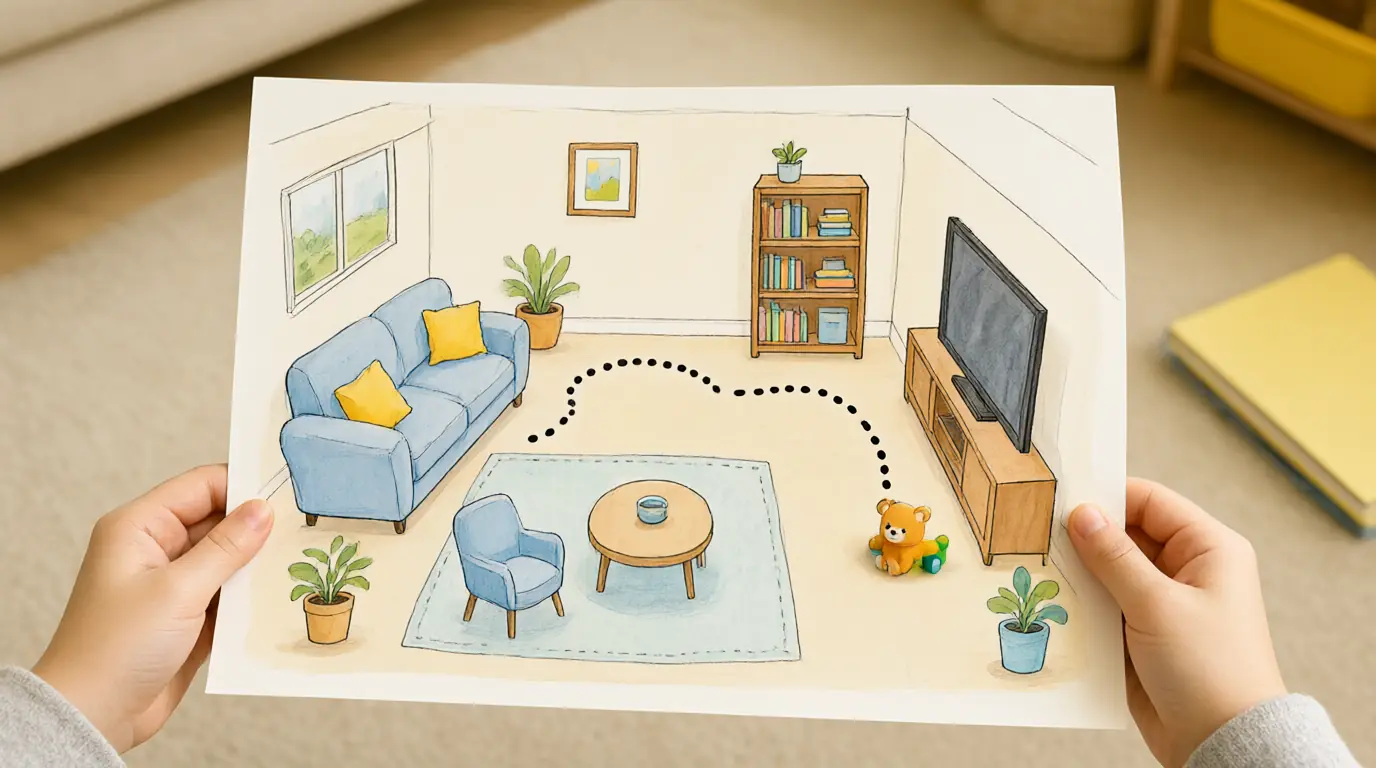
Make it your own: For seated children, point to the destination and describe the route. Older children can choose how to travel, such as hopping on one foot if that is safe.
A listening postcard
Listening to the room for a short time and describing one sound, as if writing a postcard, gives children a quiet job. They can notice a fan, a clock or a bird without anyone talking over it.
You’ll need
- A blank card as a pretend postcard
- A crayon
- A quiet corner
How to do it
- Sit comfortably and say, 'Let us listen for ten seconds.'
- Stay quiet and notice sounds in the room and outside.
- Choose one sound and describe it: 'I heard the fan humming.'
- Let the other person add a sound.
- Draw a tiny picture of the sound on the postcard.
- Pass the card to a toy to 'deliver'.
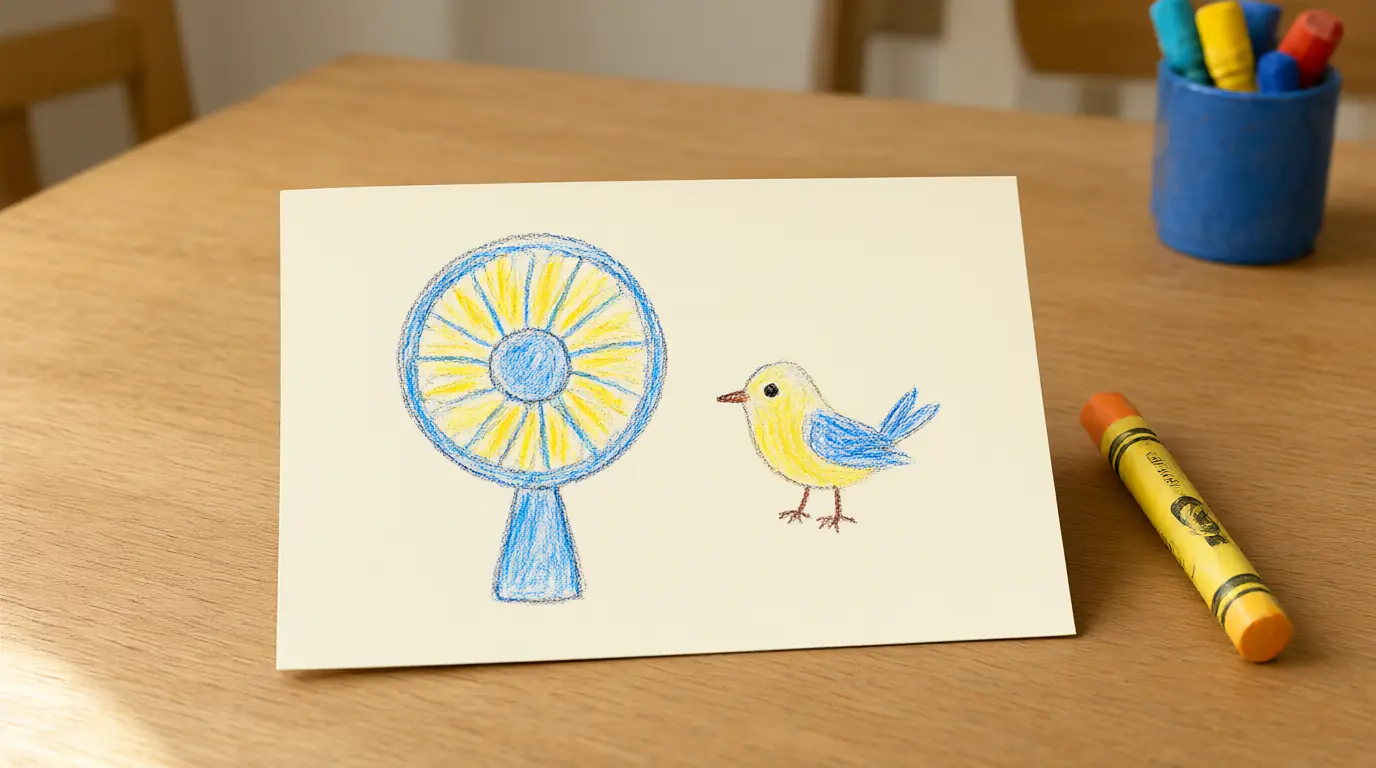
Make it your own: Younger children can point to the direction of a sound. Older children can listen for three sounds and put them in order.
A slow pinwheel breath
Blowing gently on a paper pinwheel makes slow breathing visible. Children can see how a soft breath spins it and a hard one stops it, and the game gives them something to do with a long out-breath.
You’ll need
- A paper pinwheel on a stick
- A chair
- A picture card of a soft breeze
How to do it
- Hold the pinwheel at arm's length and show the card.
- Take a small breath in through the nose.
- Blow out softly so the pinwheel turns slowly.
- Try a second, even slower breath.
- Let your child hold it and try on their own.
- Place it down and ask how their body feels.
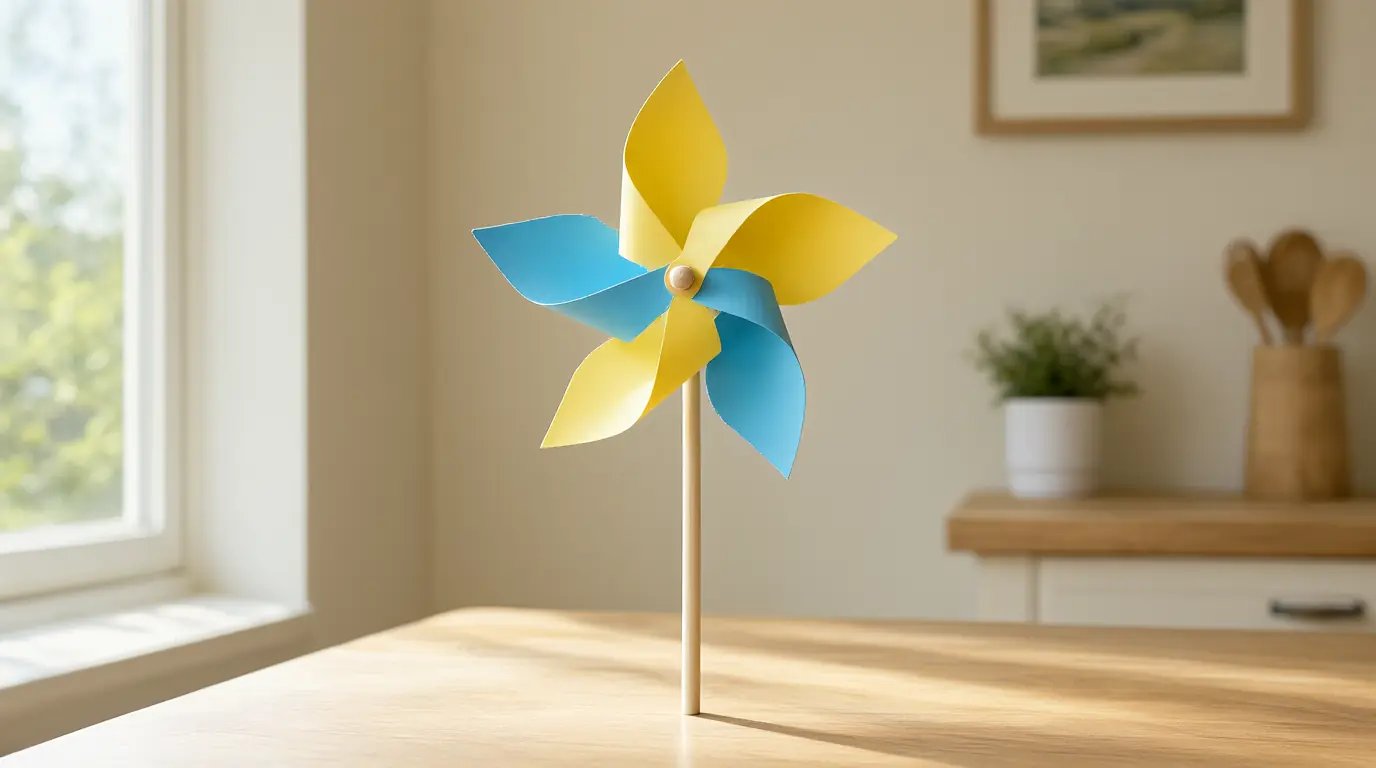
Make it your own: Younger children can blow a feather or a tissue. Older children can count how long the pinwheel spins and aim to make it last longer.

Make it work for your family
Some children want movement, while others prefer quiet and less conversation. Ask what feels helpful, offer usual mobility supports and do not insist on closing eyes or copying a pose. A break is for the child, not for the adult's schedule, so end it when the child is ready rather than when the clock says so.
If a break leads to a long delay, shorten it next time and keep the return simple. Do not use breaks as rewards or take them away as a consequence. For a longer calm routine, try gentle noticing activities or some stop-and-go games for practising a pause.

Parents also ask
How long should a brain break last?
One to three minutes is usually enough for young children. A short break with a clear start and end is easier to return from than a long one. Adjust to your child's mood and let them choose when they are ready.
What are brain breaks that do not need movement?
Looking out of a window, listening for sounds, breathing on a pinwheel or looking at a picture book all work while seated. Offer both active and quiet options so your child can pick what suits them.
Will a brain break help my child focus?
It may help some children feel ready to carry on, but no break is guaranteed. Watch how your child responds and adjust. If you have concerns about attention, speak to your doctor or a qualified professional.
Choose materials and activities that suit your child, supervise as needed and adapt the ideas to their interests and abilities. About our editorial approach