Weebou Editorial Team
 7 min read

 In this article
A little preparation
Clear a smooth, level stretch of floor about three or four steps long, with no stairs, rugs that slide or doorways in the route. Use empty boxes and soft things only. A good test is that your child can see over whatever they carry and lift it with one hand if they need to. Wear socks with grips or bare feet, and keep any sharp-edged cardboard taped over.
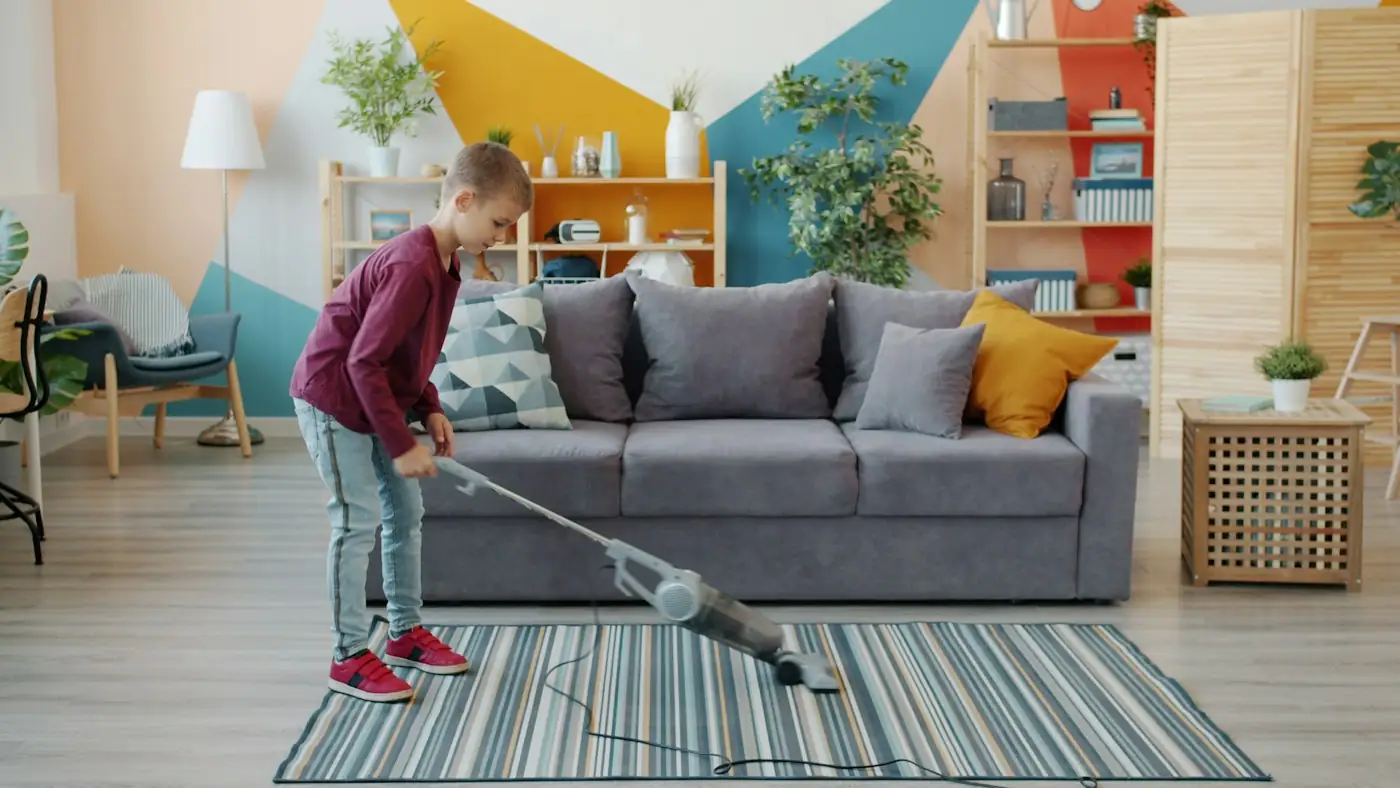
Plan for ten to fifteen minutes and let your child decide when the delivery is finished. Decide on the roles before you start: mover, checker, sorter. Everyone can swap, and a watching or seated job is part of the game. Avoid weights, sandbags, pressing on a child's body or asking them to push through tiredness. If a movement looks effortful or your child says it feels odd or sore, change the job to something lighter. Ordinary helping around the home, such as cleaning games, gives plenty more chances for this kind of purposeful movement.

Ideas to try together
Empty box movers
An empty cardboard box is large enough to feel like a real job and light enough to move without strain. Sliding it between two signs gives children a clear start and finish, and they can work out how to turn corners and where to stand without being told.
 You’ll need
- 1 or 2 empty boxes, tape-sealed and about the size of a shoebox
- 2 sheets of paper as start and finish signs
- A smooth floor or low-pile rug
- A soft cushion to stop the box
How to do it
- Lay the two paper signs on the floor three or four steps apart and decide which is the depot and which is the shop.
- Show how to slide the box with both hands on the side, keeping knees soft and the box low.
- Invite your child to deliver the box to the shop and tell you where it should be placed.
- Swap roles: you move the box, your child checks it is in the right place.
- Add a second box and ask which one to take first.
- When both have arrived, stack them gently and ask how many deliveries you made.
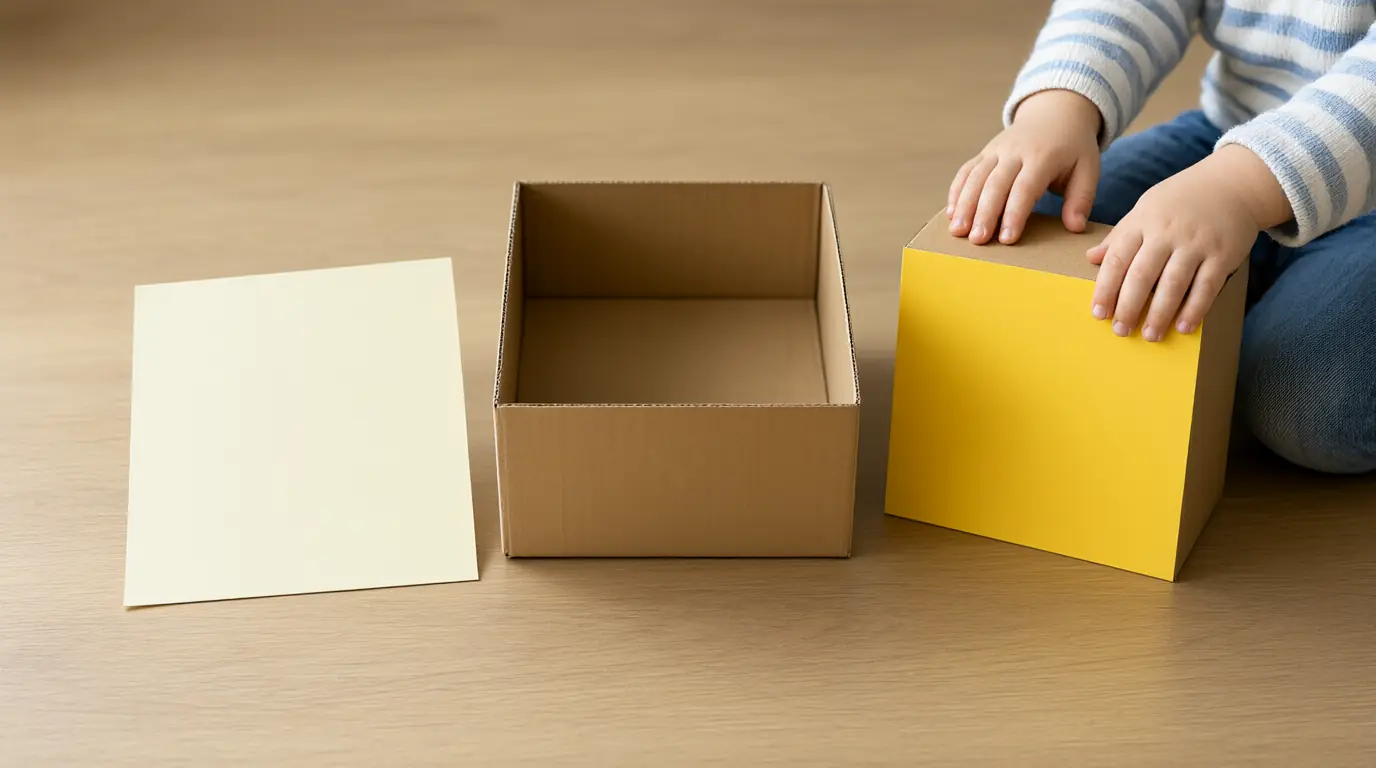
Make it your own: For younger children, shorten the route to two steps and use a very light box. For older children, add a corner to the route or ask them to plan the order of three boxes.
Soft toy delivery service
Carrying a basket of soft toys combines balance, grip and planning, and the story provides the reason. Delivering one toy at a time keeps the load safe, and the pretend customer gives children something to listen for and respond to.
You’ll need
- A low, light basket with handles
- 4 to 6 soft toys
- A few picture cards or paper signs for different rooms
- A small chair as the delivery desk
How to do it
- Place the soft toys in the basket and put one paper sign at each end of the route.
- Choose a customer, for example the teddy by the window who needs a friend.
- Carry the basket with two hands to the first stop, keeping it where your child can see over it.
- Take out one toy, say its name and place it on the sign.
- Check with the customer whether the delivery is right and fetch another toy if not.
- Finish by tucking everyone in and counting what you delivered.
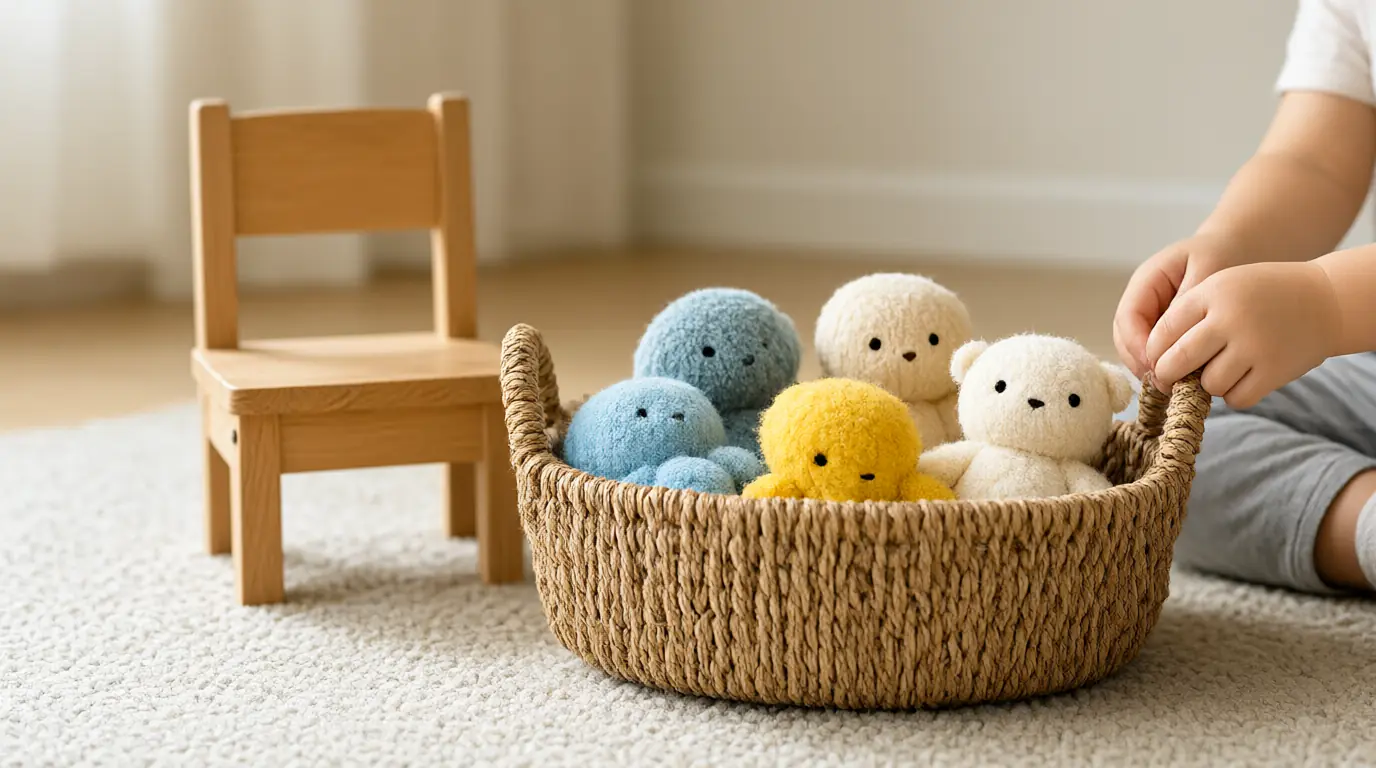
Make it your own: If carrying feels tiring, put the basket on a low trolley such as a stroller or box with a handle, or deliver one toy at a time. Older children can take orders and plan the shortest route.
Paper wall press
Smoothing a big sheet of paper on the wall gives children a light, controlled push at a comfortable height. The aim is a flat poster, not effort: you are looking for open hands, a steady wall and an easy rhythm, and the game stops as soon as it stops being fun.
You’ll need
- A large sheet of paper (flip-chart or lining paper)
- Low-tack painter's tape
- Crayons or washable markers
- A step-free wall space
How to do it
- Tape the paper to the wall at your child's shoulder height, with the top edge secure and the bottom curling slightly.
- Explain that the paper is full of pretend bubbles and wrinkles that need smoothing out.
- Show how to smooth from the middle outwards with open palms and a light, slow push.
- Count each sweep together and notice how the paper changes under your hands.
- Offer a crayon so your child can draw the bubbles they flattened.
- Peel the tape slowly and decide where to display or recycle the poster.
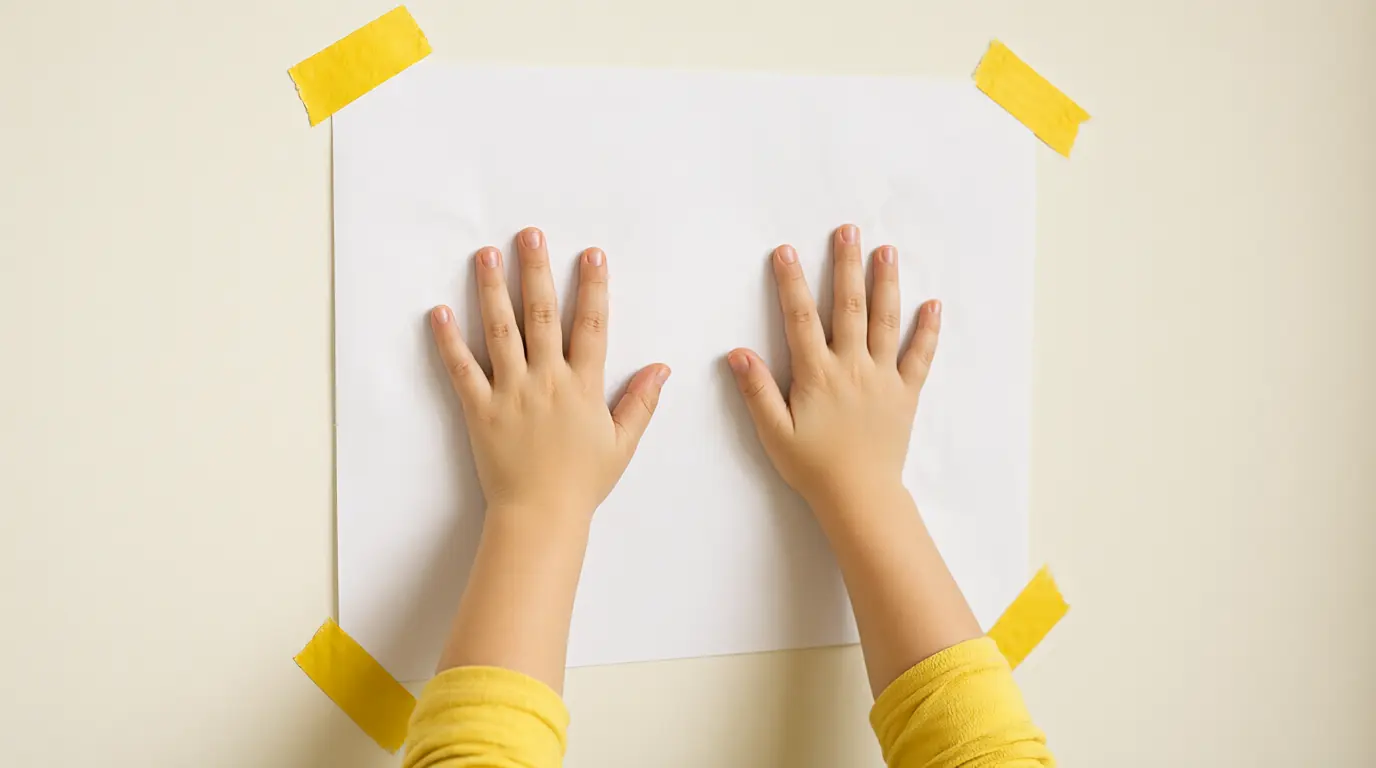
Make it your own: Younger children can work on a lower sheet on a table instead of the wall. For older children, draw a path across the paper to follow with a flat hand and a steady pace.
Pretend laundry helper
A pretend laundry service turns light everyday carrying into a role with several small decisions: whose cloth is this, where does it go and is it folded neatly? The pace is entirely child-led and the real baskets stay in the adult's hands.
You’ll need
- 4 to 6 small clean cloths or dish towels
- A low basket or box
- A table or low shelf for folded items
- Soft toys or picture cards as the owners
How to do it
- Pile the clean cloths in a heap and set the basket on the floor next to the table.
- Pick up one cloth, hold it with both hands and decide which toy it belongs to.
- Fold it loosely in half, then half again, pressing the edges flat.
- Carry the folded cloth to the table or basket and place it down gently.
- Repeat until all the owners have their cloths and the pile is gone.
- Ask the owners, who you can voice, to say thank you.
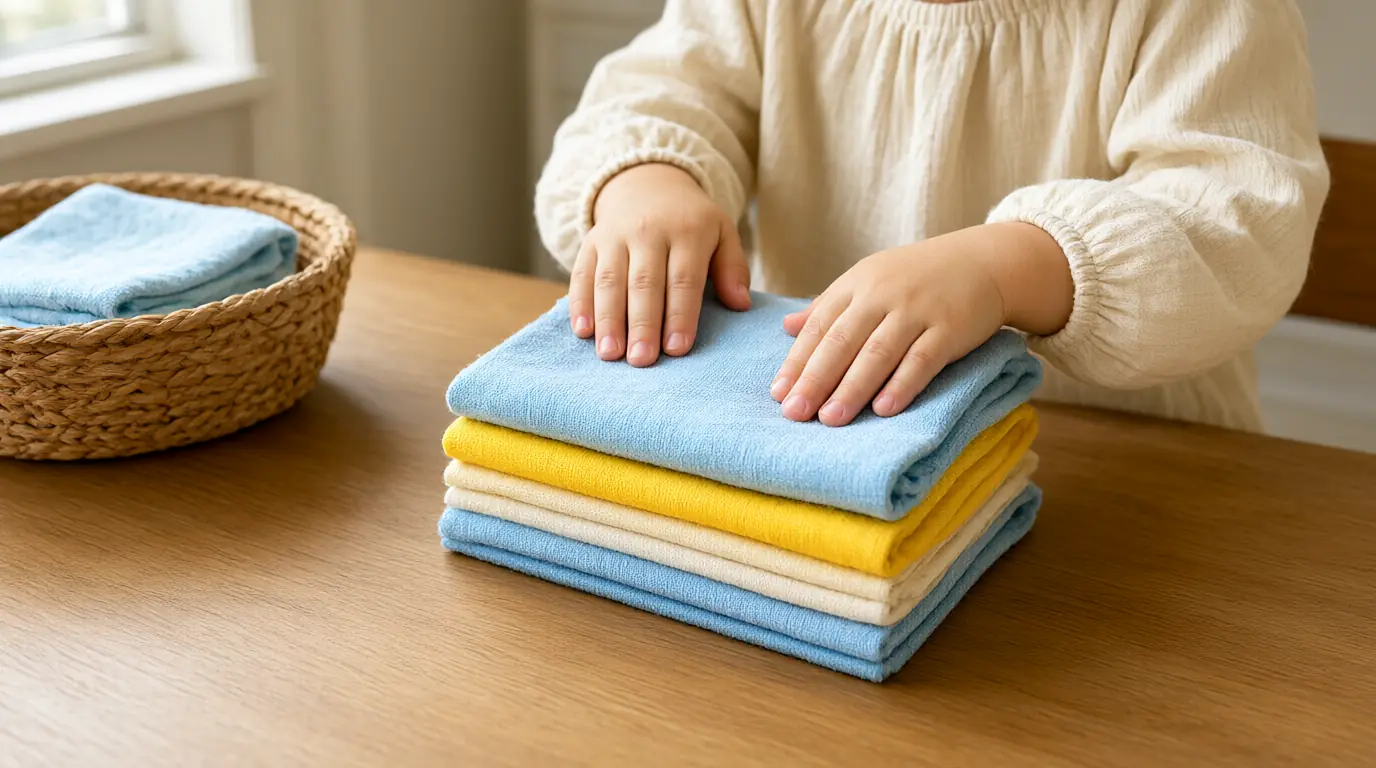
Make it your own: Younger children can skip the folding and just carry or drop each cloth in the basket. Older children can sort by colour or size before folding and make labels with pictures.

Make it work for your family
Keep the load small and the goal clear. A child who knows where the box is going and why will usually move more carefully than one who is simply told to push. If a box catches on the floor, make it lighter, shorten the route or use a smoother surface instead of asking for more effort. If a child loses interest after one trip, that is a complete game.
Tiredness is not proof that an activity is working, and nobody has to finish a round. Offer a rest job such as stacking the delivered boxes or sorting toys by colour. Heavy work is only one part of a varied day; mix it with other whole-body play for preschoolers and quiet times, and pay attention to what your child chooses and enjoys.

Parents also ask
What are heavy work activities for kids?
The term usually describes pushing, pulling and carrying movements that give the body firm feedback, such as moving an empty box or helping carry light shopping. At home they are best treated as ordinary active play with light loads, not as therapy.
Is it safe to give a child something heavy to carry?
Keep loads light enough that your child can see over them, carry them comfortably and put them down without dropping them. Empty boxes, soft toys and cloths are good choices. Avoid weights, weighted backpacks and pressing on your child's body unless a qualified professional has advised it.
Should I ask a professional about my child's movement?
Yes, if you have concerns about how your child moves, tires, or responds to touch and movement. A paediatrician, physiotherapist or occupational therapist can look at your child's individual needs. Playful carrying games at home can sit alongside that advice but should not replace it.
Choose materials and activities that suit your child, supervise as needed and adapt the ideas to their interests and abilities. About our editorial approach