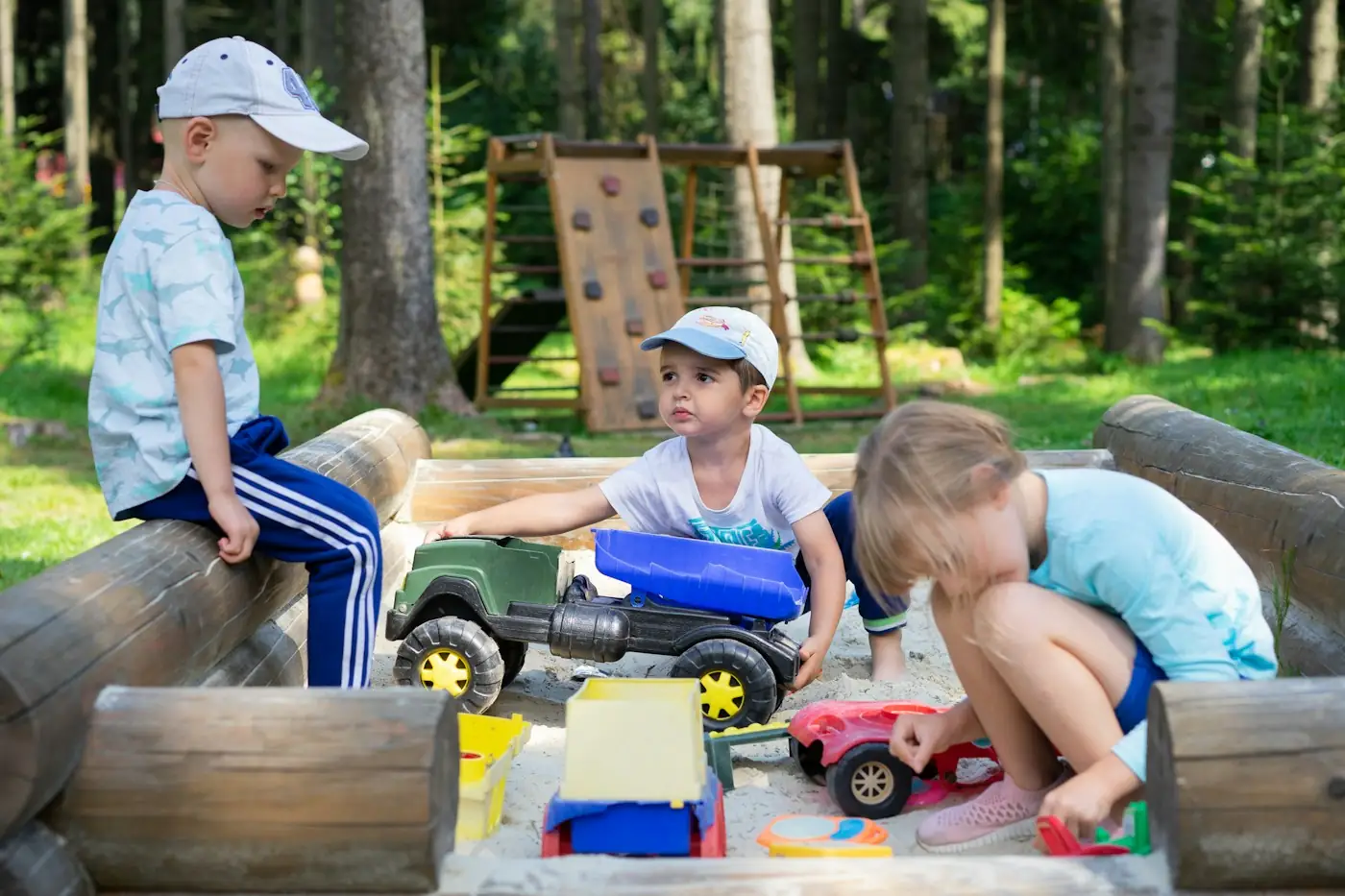
7 min read

 In this article
A little preparation
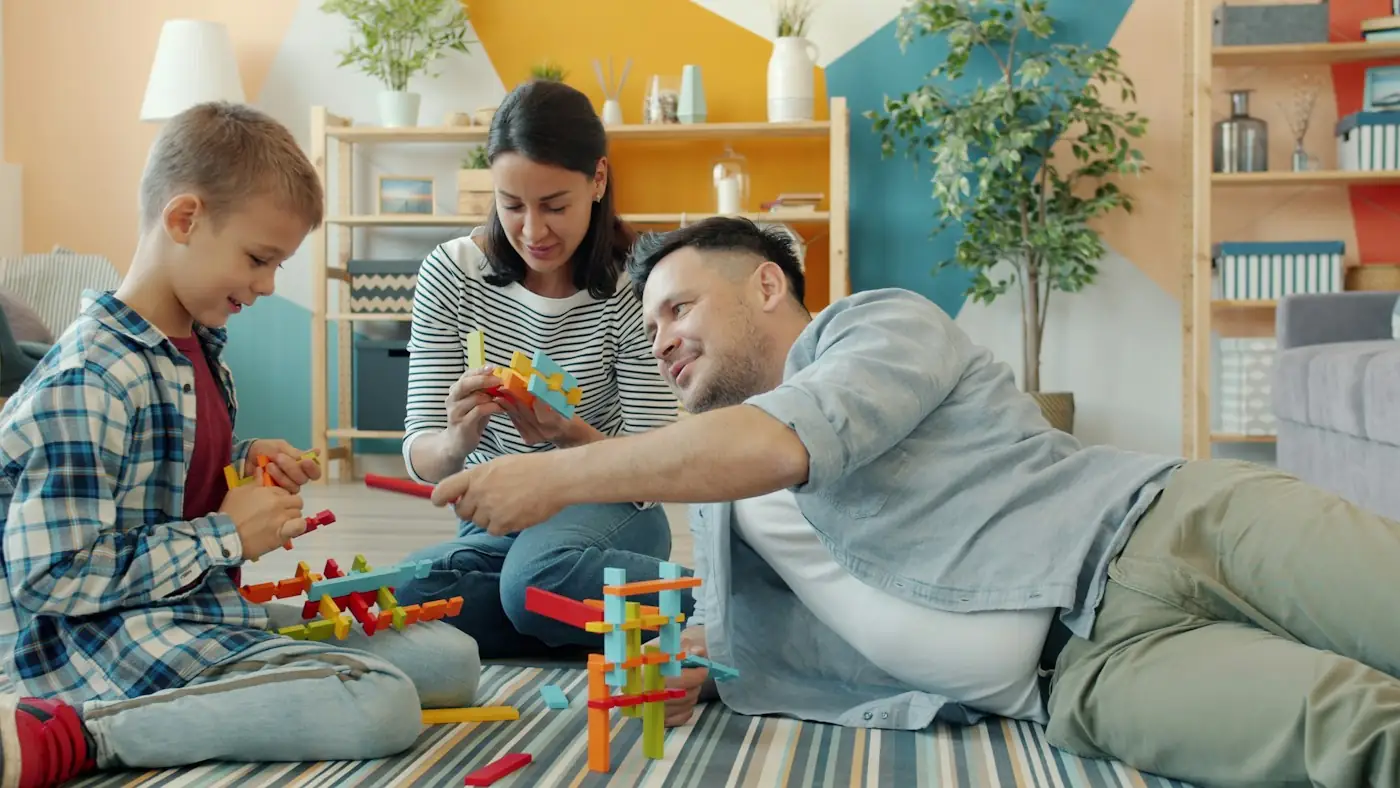
Pick one idea and decide where it will happen. A corner of the living room, the kitchen table or a spare bedroom is plenty, and it helps to agree beforehand which area is ‘in’ the game and which is not. Gather the materials in a single basket before you call everyone together, so you are not hunting for scissors while enthusiasm fades. Ask each person how they would like to join in: some will make, some will talk and some will watch for a while first.
Think about the youngest child. Anything small enough to swallow should be out of reach, and any task with scissors, hot drinks or glass needs an adult. Let children pick their own jobs, and give the older ones a leadership role, such as ‘museum director’ or ‘cafe manager’, so they are not just helping the little ones. Set a rough time limit of thirty to forty minutes and finish with a short, clear ending, such as taking a bow or tidying up together, so the activity has a shape.

Ideas to try together
Open a household museum
Choosing which objects deserve a place in a museum makes children look at ordinary things as if for the first time. Each person picks something that matters to them, and then explains why. It suits mixed ages, because younger children can point and older ones can write or speak.
 You’ll need
- 5 to 8 safe household objects, such as a favourite mug, an old key or a shell
- Small cards and a pen for labels
- A table or a shelf to display on
- A sheet to cover the table
How to do it
- Each person chooses one or two objects they would like to show.
- Arrange the objects on the table in a way that looks good to the group.
- Make a label for each one: a drawing or a sentence about why it matters.
- Choose a director to guide visitors around, taking turns.
- Walk through the museum together and ask each owner to tell the story of their object.
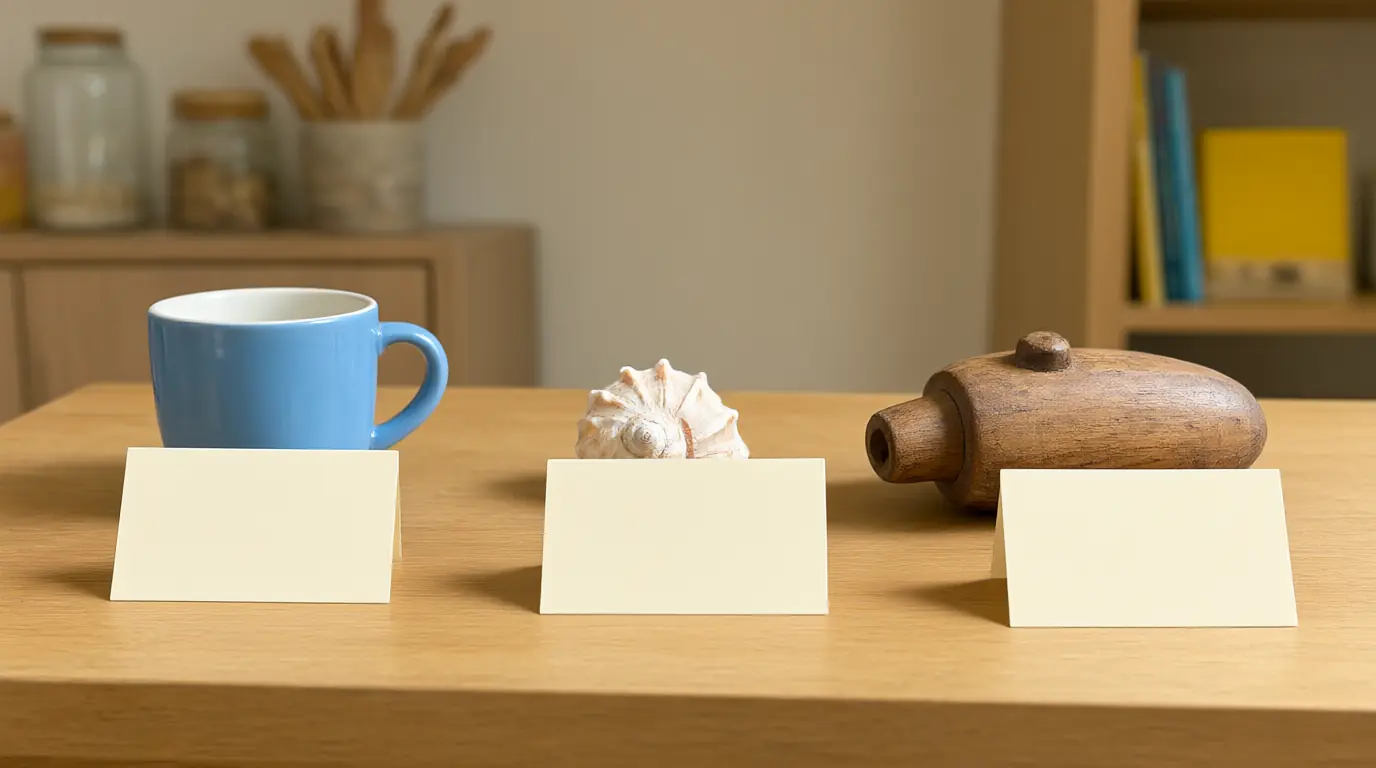
Make it your own: Younger children can place a toy on a cloth and tell you its name. Older children might write a museum guide with three facts for each object.
Run a pretend café
A café is a role-play game in which everyone has a clear job: waiter, cook, customer or manager. Children practise listening, taking orders and counting out items, and the story flexes to fit any age. The menu can be anything, including pretend soup made from paper.
You’ll need
- Paper and crayons for the menu
- Cups, plates and toy food
- A tray or a book to carry orders
- A tablecloth or a sheet
How to do it
- Decide the café’s name and what it serves, and draw a menu with pictures.
- Set up a table with a cloth, plates and cups for the customers.
- Choose roles: waiter, cook and customer, and swap after a few rounds.
- The waiter takes the order with a pad and the cook makes it from toy food.
- At the end, the customers give a pretend tip and say what they liked best.
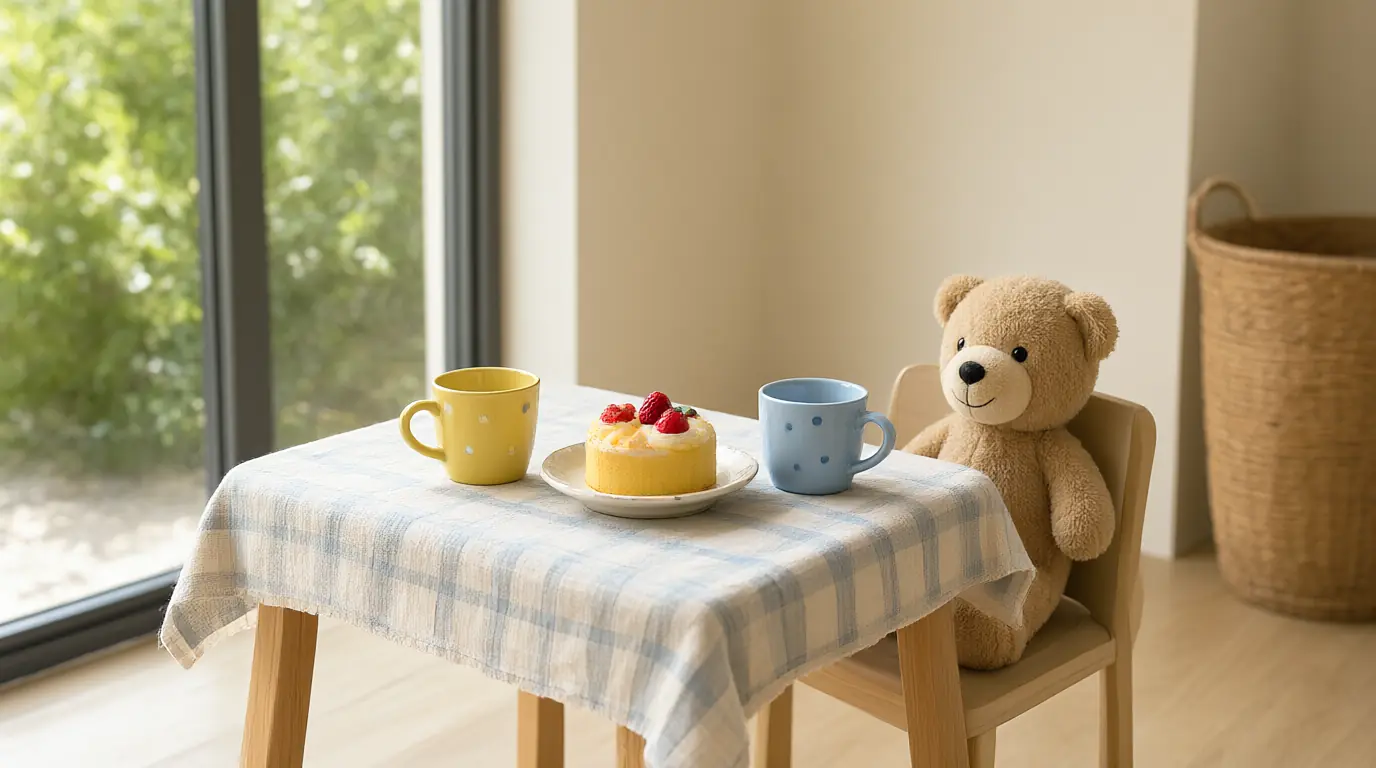
Make it your own: For younger children, offer just two items on the menu and use a single plate. Older children can write a price list or work out how many cups are needed.
Tell a sound story
A story told aloud, with voices and made-up sound effects, needs no equipment at all. Each person adds a sentence or a sound, so the story belongs to everyone. This activity builds listening and imagination, and it is easy to continue in the car or at bedtime.
You’ll need
- A few household objects that make gentle sounds, such as a wooden spoon, a cup and a paper bag
- A comfortable place to sit together
- A cushion for the person who is telling
How to do it
- Choose the setting for your story, such as a rainy forest or a busy kitchen.
- The first person says one sentence to begin.
- The next person adds a sound or a sentence, using an object if they like.
- Keep passing the story round until it reaches a natural end.
- Choose a sound to finish it, such as a gentle knock on the table.
Make it your own: Younger children can add only a sound, such as a splash. Older children can plan a beginning, a problem and an ending before starting.
Draw a neighbourhood map
Drawing the places you know and connecting them with paths helps children think about space and routes. Everyone adds something they love, so the map becomes a portrait of how your family sees the area. It is also a good conversation starter about where people go and why.
You’ll need
- A large sheet of paper or a roll of lining paper
- Crayons or felt-tip pens
- A few toy cars or figures to move around the map
How to do it
- Draw your home in the middle of the paper and say its name aloud.
- Ask each person to add a place they visit often, such as the park or the shop.
- Connect the places with roads or paths.
- Add something imaginary the neighbourhood needs, such as a slide or a pond.
- Use the toy cars to take a trip from one place to another.
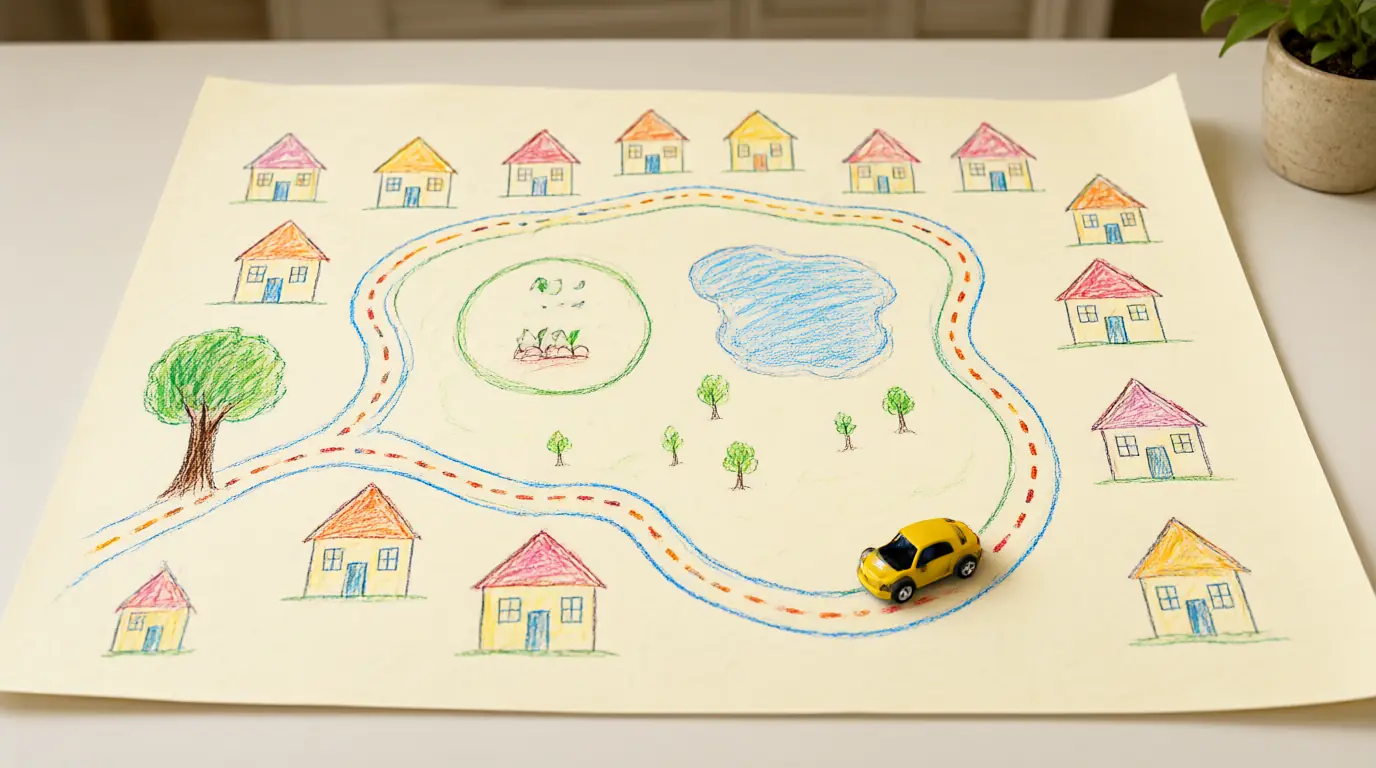
Make it your own: Younger children can scribble a path between two places. Older children can add street names and plan the quickest route.
Build a blanket-fort cinema
A fort makes an ordinary room feel special, and the planning matters as much as the building. Children think about structure, size and comfort, then invite family members in as audience. Instead of a film, you can run a shadow show or story hour, which keeps the screens off.
You’ll need
- 2 chairs and a large blanket or sheet
- Cushions and pillows
- A flashlight with a child-safe cover
- Paper cut-out shapes on sticks
How to do it
- Place two chairs a short distance apart and drape the blanket over them.
- Weigh down the corners with books and add cushions inside.
- Check that the fort is stable and that there are no cords nearby.
- Make a simple puppet show with paper cut-outs held in front of the flashlight.
- Invite the family inside to watch, and take turns being the performer.
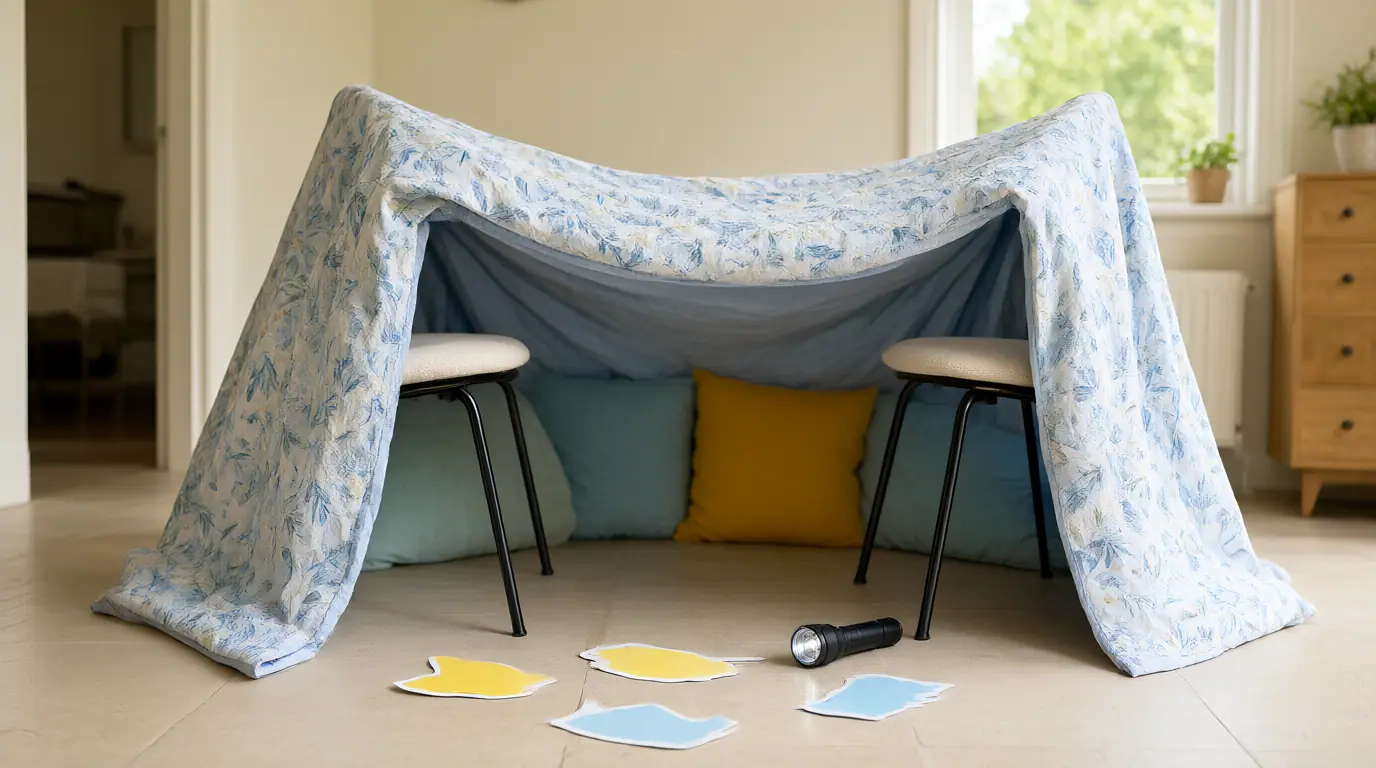
Make it your own: Younger children can crawl in and out of a small fort while you hold the blanket up. Older children can design the entrance, sort the seating and write a poster.

Make it work for your family
Keep the plan loose. A younger child may spend the whole time on one small part, such as arranging cups, while an older sibling adds more and more detail; both are taking part. If someone loses interest, let them drift away and rejoin later without comment.
Tidying can be part of the game: the museum closes, the cafe washes up, the fort is taken down at the end of the film. Taking a photo of what you made gives it an ending without needing to keep it forever. For more ideas that need very little, try these rainy-day games and these cooperative play ideas, or open a Weebou creativity game when you want something digital and calm.

Parents also ask
What can we do as a family at home with no money?
Use what you already have: build a museum from household objects, run a pretend café, draw a map or tell a story. Paper, cups, blankets and cardboard are enough. Shared planning and a useful role for each person matter more than materials.
How do I keep children of different ages involved?
Give each child a role that fits them, such as director for the oldest and carrier for the youngest. Let the younger ones repeat a simple task while older siblings add detail. A shared goal, such as finishing the museum, holds everyone together.
How long should a family activity last?
Thirty to forty minutes is usually enough, but follow your children’s energy. Finish with a clear ending, such as a bow, a photo or tidying up together, so that the activity feels complete even if you stop early.
Choose materials and activities that suit your child, supervise as needed and adapt the ideas to their interests and abilities. About our editorial approach