Weebou Editorial Team

 In this article
A little preparation
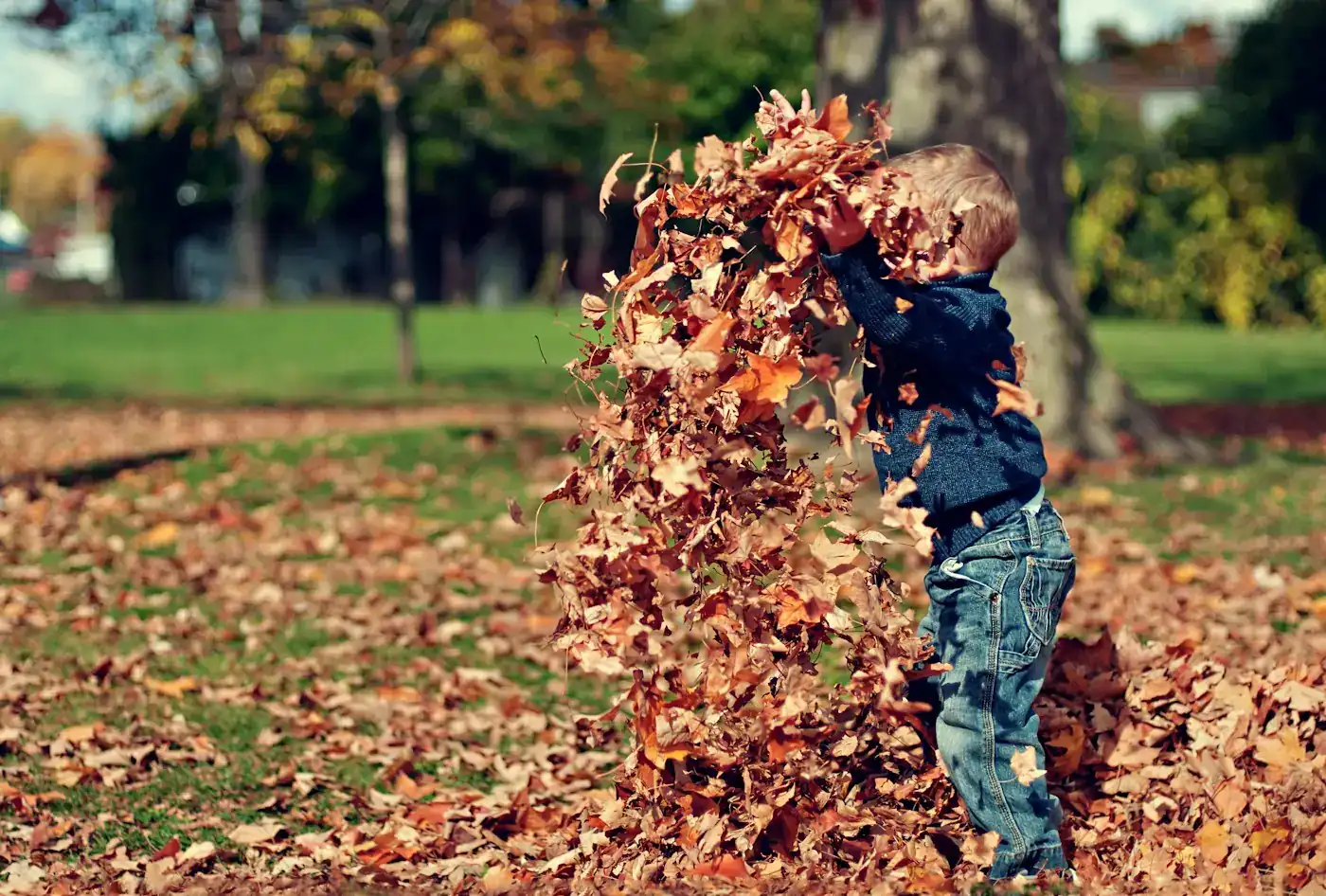
Choose one activity and set it up before your toddler arrives, so nothing has to be explained while they are already exploring. Clear a path wide enough for a small child to walk without obstacles, and put away anything that could be knocked or chewed. Autumn offers real leaves, conkers and acorns, but these are choking hazards for children who still mouth objects, so keep natural finds at a distance and use the large paper versions described here instead. Ten to fifteen minutes is usually plenty at this age; stop while your child is still interested and leave the materials out for later.
Work at floor level or on a low table where your toddler can stand or kneel safely. Sit close enough to hold a hand on stairs and steps. At this age children learn through their whole body, so expect carrying, dropping, tipping and repeating rather than a finished product. If you have more than one toddler, lay out two identical sets so sharing is not the first lesson. A parent-and-child toddler play routine works well when the weather keeps you inside.

Ideas to try together
Carry-and-deliver paper leaves
A simple delivery loop uses the toddler's favourite action—carrying something and putting it down—and adds a little autumn colour. Large paper leaves are easy for small hands to grip and impossible to swallow. Naming a colour as you go builds words without any test.
 You’ll need
- 8–10 large paper leaves in two or three autumn colours
- Two low baskets or tubs
- A short clear stretch of floor
How to do it
- Cut or tear leaf shapes about the size of your hand, big enough that they cannot be swallowed.
- Put both baskets on the floor a few steps apart and place all the leaves in one.
- Pick up a leaf, hand it to your toddler and let them carry it to the other basket.
- Say one word as they drop it: 'In.' or the leaf's colour, if you like.
- Let them empty the basket back the other way when it is full—that is often the best part.
- Stop when they wander off; the leaves stay out for later.
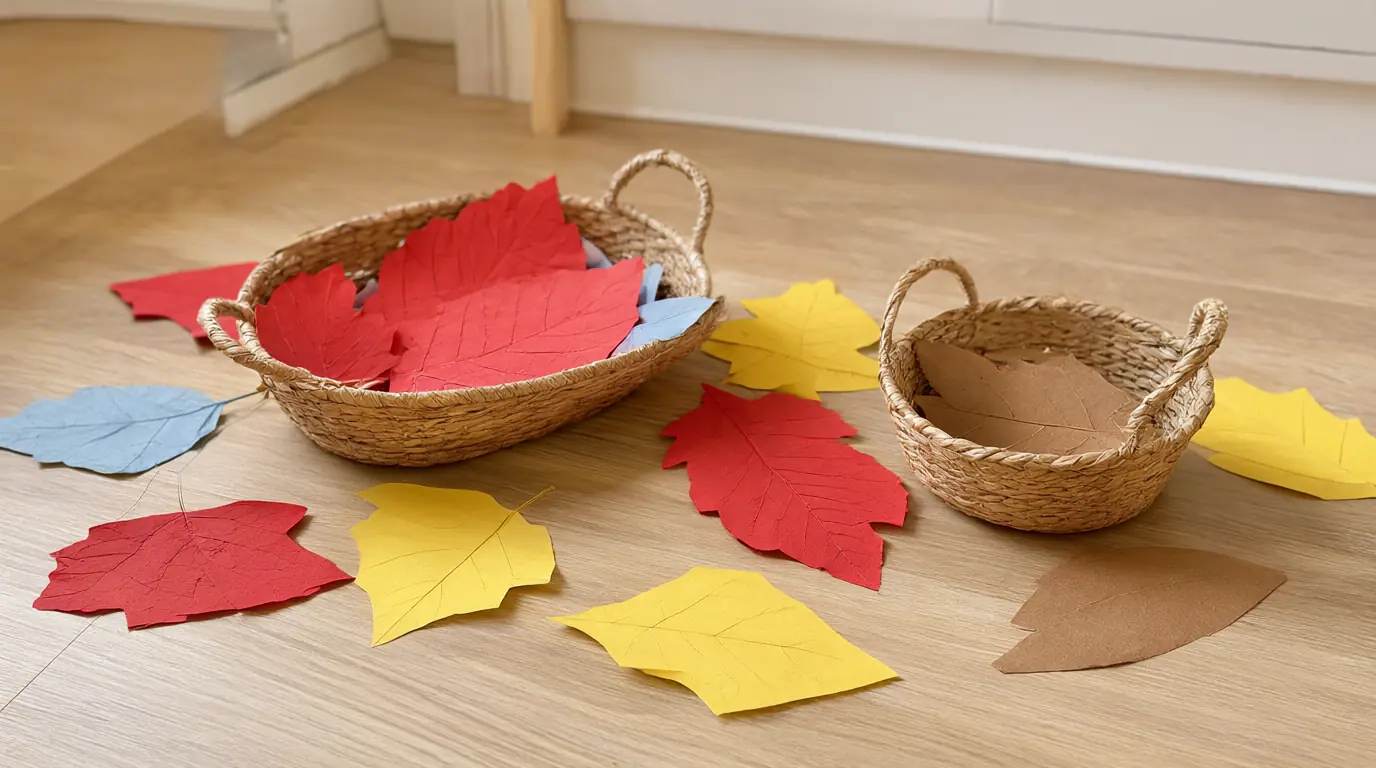
Make it your own: For a younger toddler, use just two or three leaves and keep the baskets close. Older children can sort by colour into three baskets, or carry one leaf on a small tray to steady their steps.
A weather window to watch together
You do not need to go outside to notice the season. Standing at a window, you and your toddler can watch branches move, rain run down the glass or leaves drift past. Describing one thing slowly gives their attention somewhere to rest and adds weather words to their understanding long before they can say them.
You’ll need
- A window with something to watch
- A low stool or safe seat
- A cloth to wipe the glass
How to do it
- Choose a window with something to see—a tree, a street or a patch of sky.
- Lift your toddler so they can see comfortably, or use a stool they hold onto.
- Point at one thing and name it simply: 'Wind.' 'Rain.' 'A red leaf.'
- Add a matching action, such as waving your hand for wind or patting the glass for rain.
- Wait in silence for a moment and see what they notice next.
- Go back on a different day and look for the same tree; ask where the leaves have gone.
Make it your own: A child who is not yet walking can do this from your arms or a high chair by the window. Older children can draw what they see afterwards, or watch for a week and tell you how the same tree keeps changing.
Pumpkin outlines and washable crayons
A large pumpkin shape gives a toddler a big, friendly target for early marks. They are not trying to colour it in—at this age the point is the movement of the crayon and the surprise of a line appearing. A sturdy outline on the floor or a low table also makes it easy to come back to over several days.
You’ll need
- A large pumpkin outline drawn on sturdy paper or card
- Two or three chunky washable crayons
- Tape to hold the paper down
- An apron or old shirt (optional)
How to do it
- Draw a big pumpkin shape, or print one, on paper at least as wide as your toddler's arms.
- Tape it flat to the floor or a low table so it does not slide.
- Offer one crayon at a time, without a model to copy.
- Make a few big marks yourself and say what they are: 'A line.' 'Round and round.'
- Let them scribble, dot and press as they like, inside or over the edge.
- Praise the doing, not the outcome: 'You made a long one.'
- Display it at their height when they have had enough.
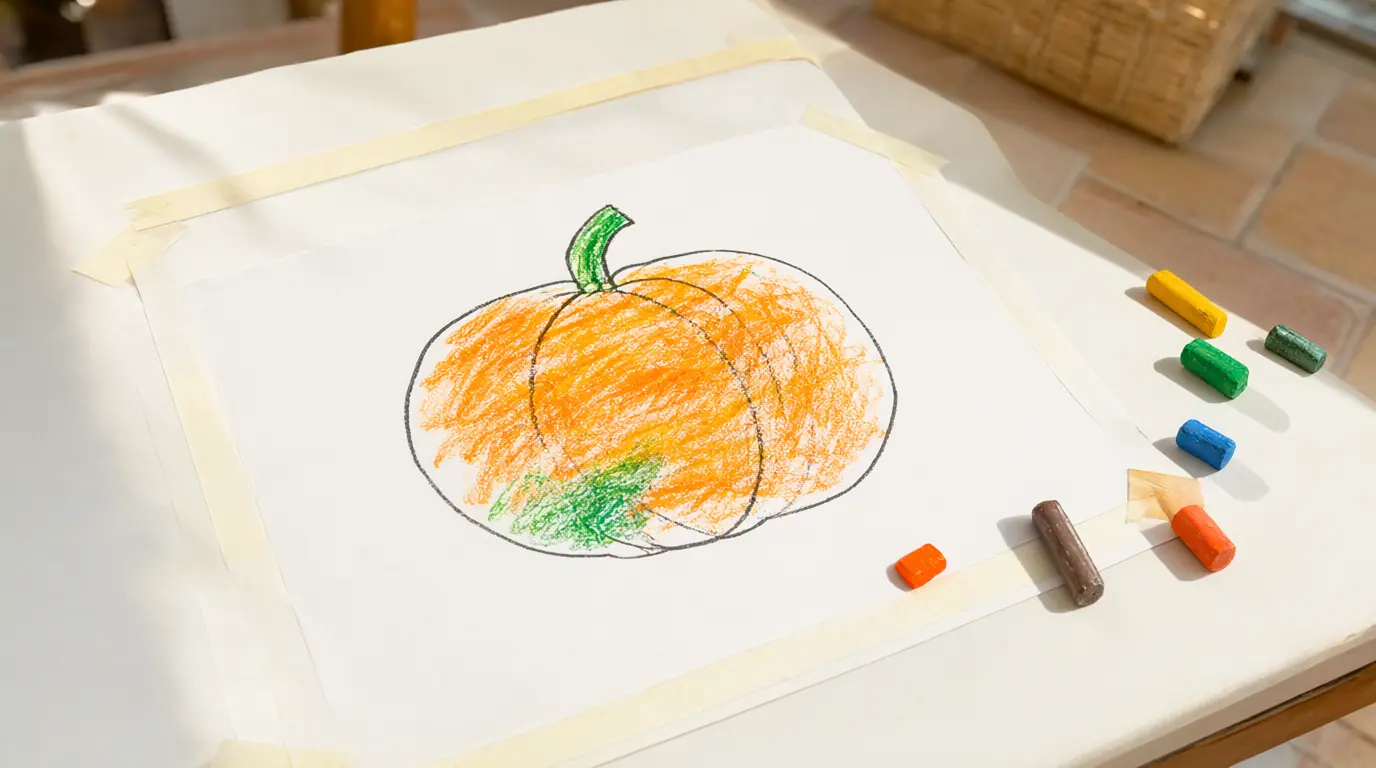
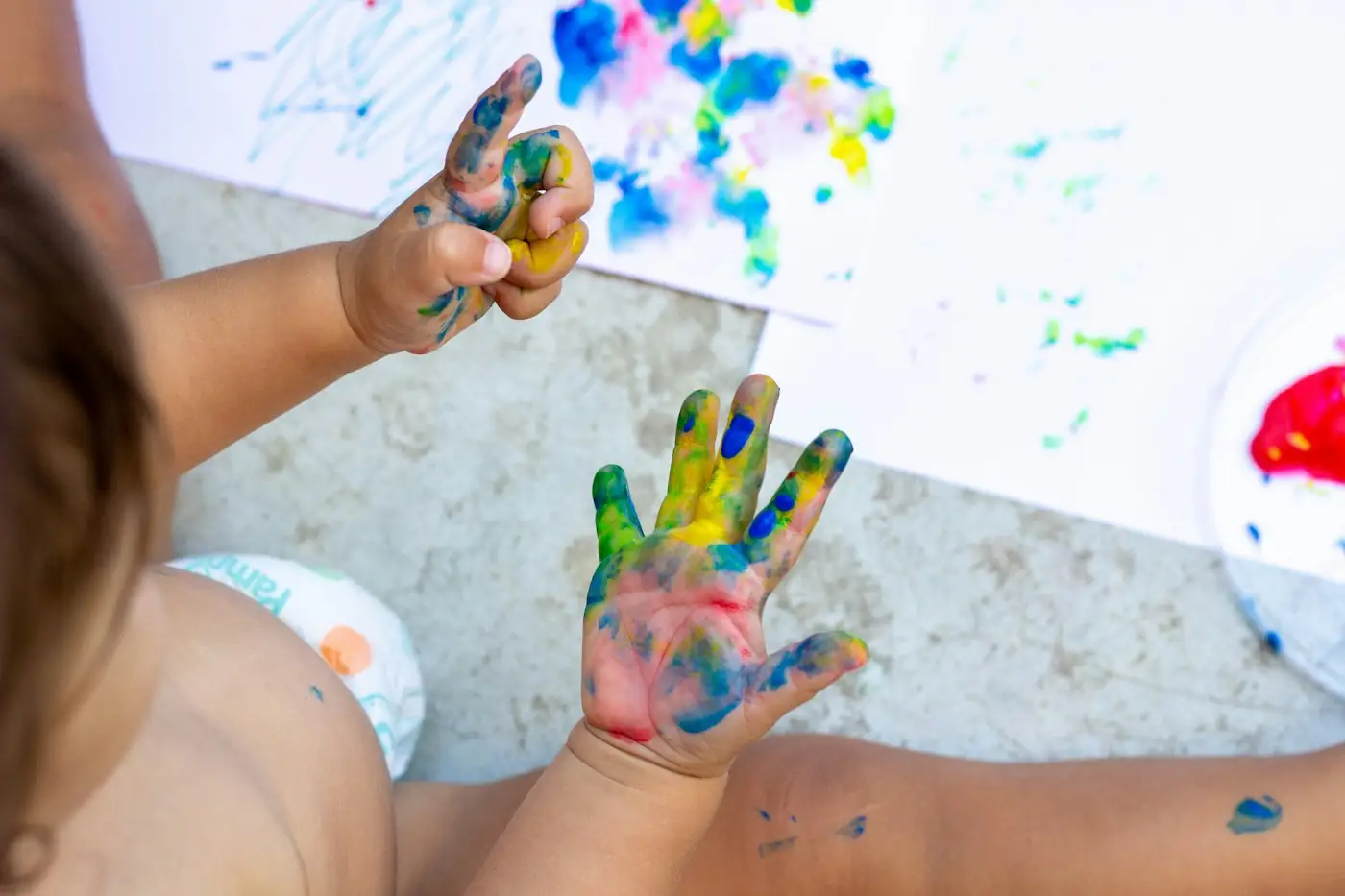
Make it your own: Younger toddlers may only pat the crayon; that counts. Older ones can add a green stem or draw two pumpkins and compare their sizes. If they eat crayons, use a washable finger paint instead and clean hands straight away.
A stepping path of soft markers
By around two, toddlers love stepping up, over and along. A short path of soft markers gives that urge a safe route and works the whole body. Because the markers are flat, there is nothing to trip over, and you can hold a hand the whole way. Following the same path again and again builds confidence.
You’ll need
- 5–6 flat, non-slip floor markers (paper circles, foam mats or cushions)
- A clear stretch of floor
- A basket at the end
How to do it
- Lay the markers in a short line or gentle curve, no more than a step apart.
- Test each one by pressing it down, so nothing slides.
- Walk the path first yourself, holding your toddler's hand.
- Let them step on, over or beside each marker—all are correct.
- Put the basket at the end and drop a leaf in when they arrive.
- Re-arrange the markers into a curve or a zigzag when they are ready for a change.
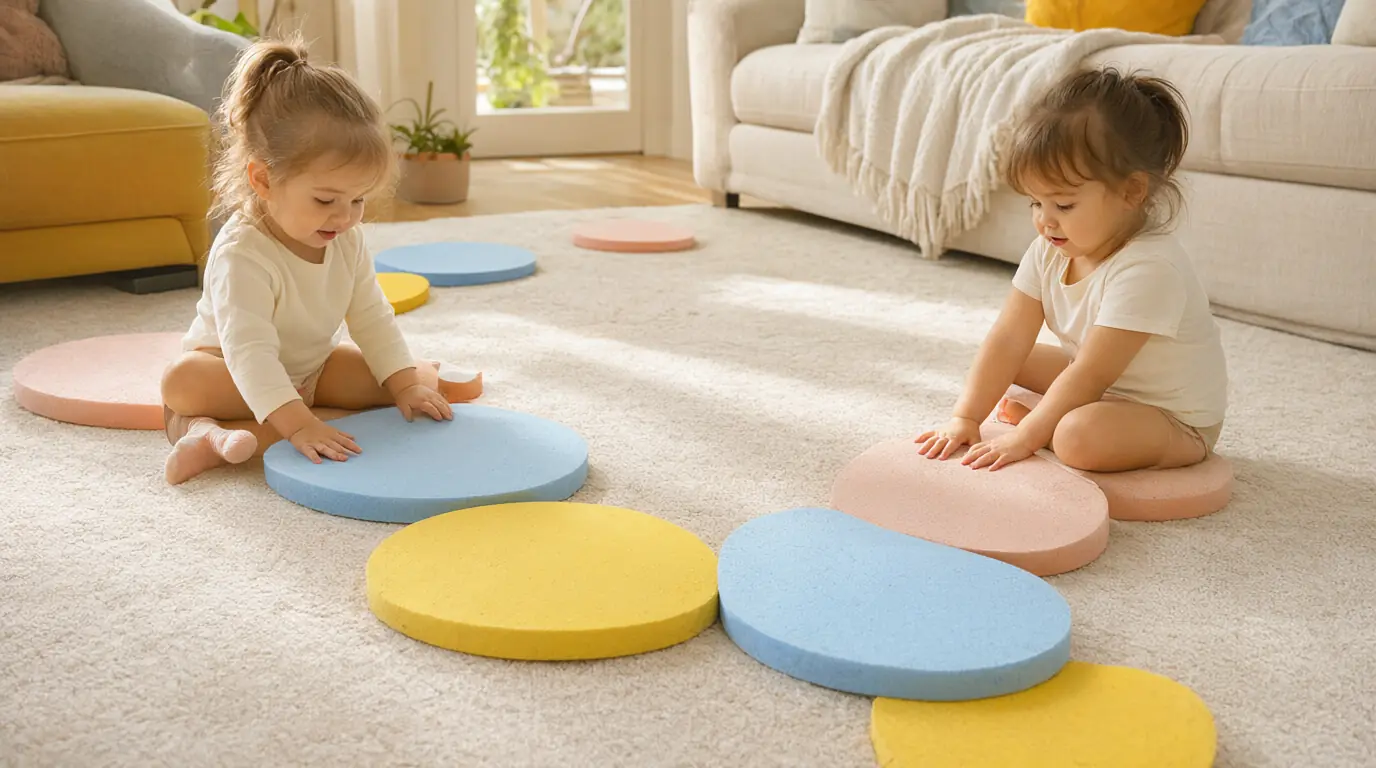
Make it your own: A child not yet steady on their feet can pat the markers from a seated position while you name them. Older toddlers can hop, jump or carry a leaf along the path, or help you lay it out in a new pattern before walking it.
Sorting leaves into two big bowls
Sorting is one of the first things toddlers do with real understanding, and autumn colours make the categories obvious. With just two bowls and a handful of big paper leaves, your child practises matching, moving and choosing. There is no score and no wrong answer—if a yellow leaf lands in the red bowl, it can simply travel back.
You’ll need
- 8–12 large paper leaves in two clearly different colours
- Two wide bowls or shallow boxes
- One leaf of each colour as a model in each bowl
How to do it
- Cut leaves large and simple, with no sharp points.
- Put one yellow leaf in one bowl and one red leaf in the other as a guide.
- Hand your toddler a leaf and ask, 'Is this like this one?' while pointing.
- Let them drop it in whichever bowl they choose.
- Say the colour as it lands, and let them move it again if they want.
- Change the rule later: sort big and small, or make a pile of every leaf with a stalk.
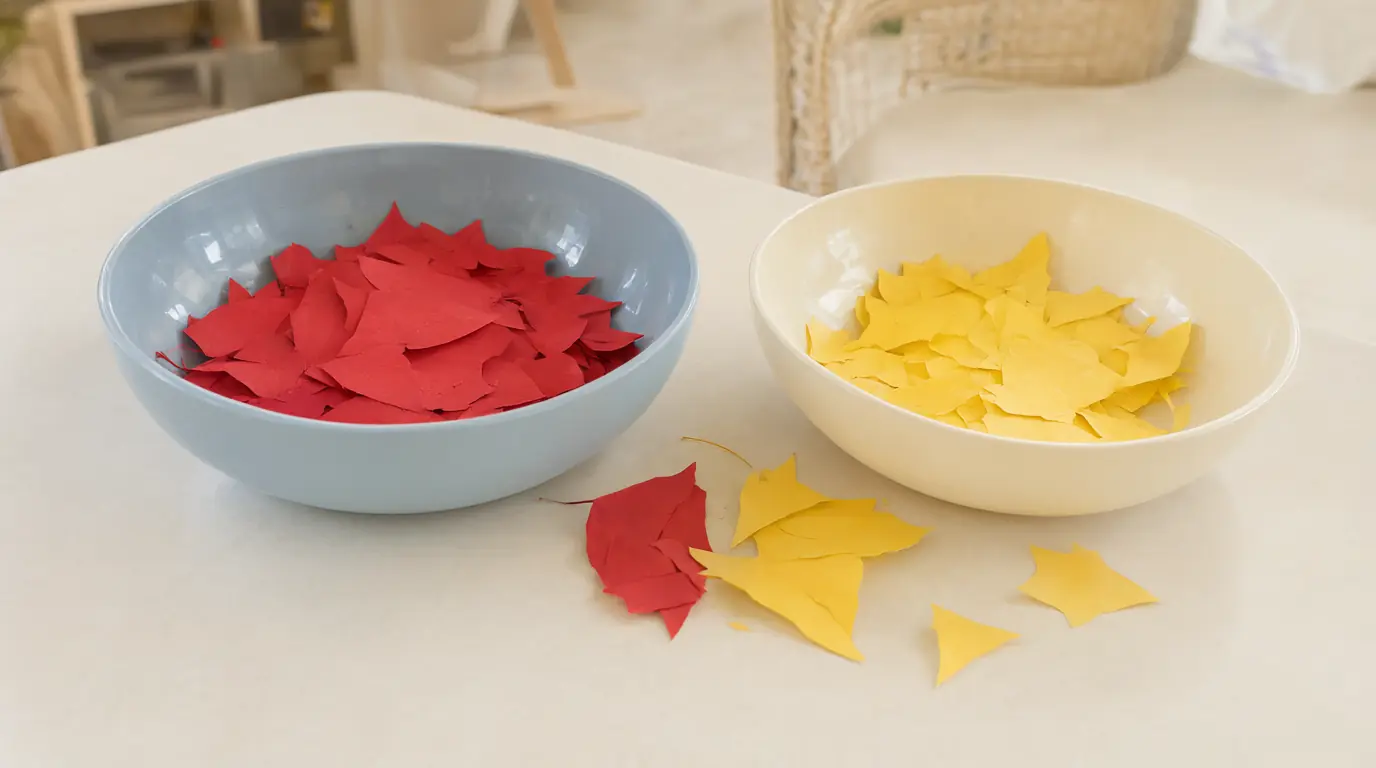
Make it your own: Start with two very different colours and only a few leaves. Older toddlers can sort into three bowls by colour, or by size. If they prefer to carry rather than sort, let them move a whole pile from one bowl to the other.

Make it work for your family
If your toddler loses interest after a minute, that is normal and not a sign the activity failed. Leave the materials within reach and try again another time—familiar things often get a longer look on the second day. Keep sessions short, one idea at a time, and resist adding a step just because it seems easy for you.
Some toddlers dislike the feel of certain materials, such as dry paper or paint on their hands. Offer an alternative way in: let them carry the bowl instead of the leaf, or watch while you make marks and then take over. Never leave a toddler alone with paper that could be torn and eaten, and keep real nuts, berries and small decorations out of reach. When you want more variety, try these fall activities for kids or some big-material crafts for toddlers.

Parents also ask
What fall activities can I do with a 2-year-old?
Carrying large paper leaves between two baskets, sorting them into two bowls by colour and making crayon marks on a big pumpkin outline all suit a 2-year-old. They need big materials, a clear space and no small parts, plus you nearby the whole time.
Are conkers and acorns safe for toddlers?
No—conkers, acorns and small berries are choking hazards for children who still put things in their mouths, and some are also mildly toxic. Enjoy them by looking from a distance, or use large paper and fabric versions instead.
How long should a toddler activity last?
Often only five to fifteen minutes, and that is plenty. Stop while your child is still interested rather than waiting for a meltdown, and leave the materials out so the same activity can be picked up again later that day or the next.
Choose materials and activities that suit your child, supervise as needed and adapt the ideas to their interests and abilities. About our editorial approach