Weebou Editorial Team

 In this article
A little preparation
Pick one short outing you can repeat, roughly ten to twenty minutes, along a familiar street, a park edge, a balcony or even a view from a window. Take a cloth bag or shallow tray, and check the ground before small hands reach down. Warm layers and waterproof shoes matter more than a special kit. Say clearly what may be collected: dry fallen leaves from the ground, and nothing from bushes, berries, mushrooms or seed pods. If collecting is not allowed where you live, take photographs instead.
At home, cover a table with newspaper and set out paper, peeled crayons and tape in shallow dishes so nothing rolls away. Do the indoor making in the morning if you can, because the light fades early and tired children work better in daylight. Plan for about fifteen minutes of making and leave anything unfinished on the table to return to. For a child who wants to keep searching outside, this outdoor scavenger hunt makes noticing the goal rather than collecting.

Ideas to try together
A noticing walk on a route you know
Returning to the same street or park edge is what makes this work: your child compares today with last week instead of looking at everything for the first time. Three changes is plenty, such as a colder wind, a puddle where there was none or a hedge cut back. Photograph the same spot each visit so the changes become visible later.
 You’ll need
- A warm layer and waterproof shoes
- A cloth bag or shallow tray
- A phone or camera for the same photo spot
- A stick or a piece of chalk to mark the route
How to do it
- Choose a route you can walk in ten to fifteen minutes, with one fixed point such as a gate or a bench.
- Before you set off, ask your child to guess one thing that might have changed.
- Walk slowly and say what you notice out loud without asking your child to find anything yet.
- At the fixed point, take the same photograph you took on the last visit.
- Collect two or three dry fallen leaves from the ground and put them in the bag.
- On the way back, ask which change was the biggest surprise.
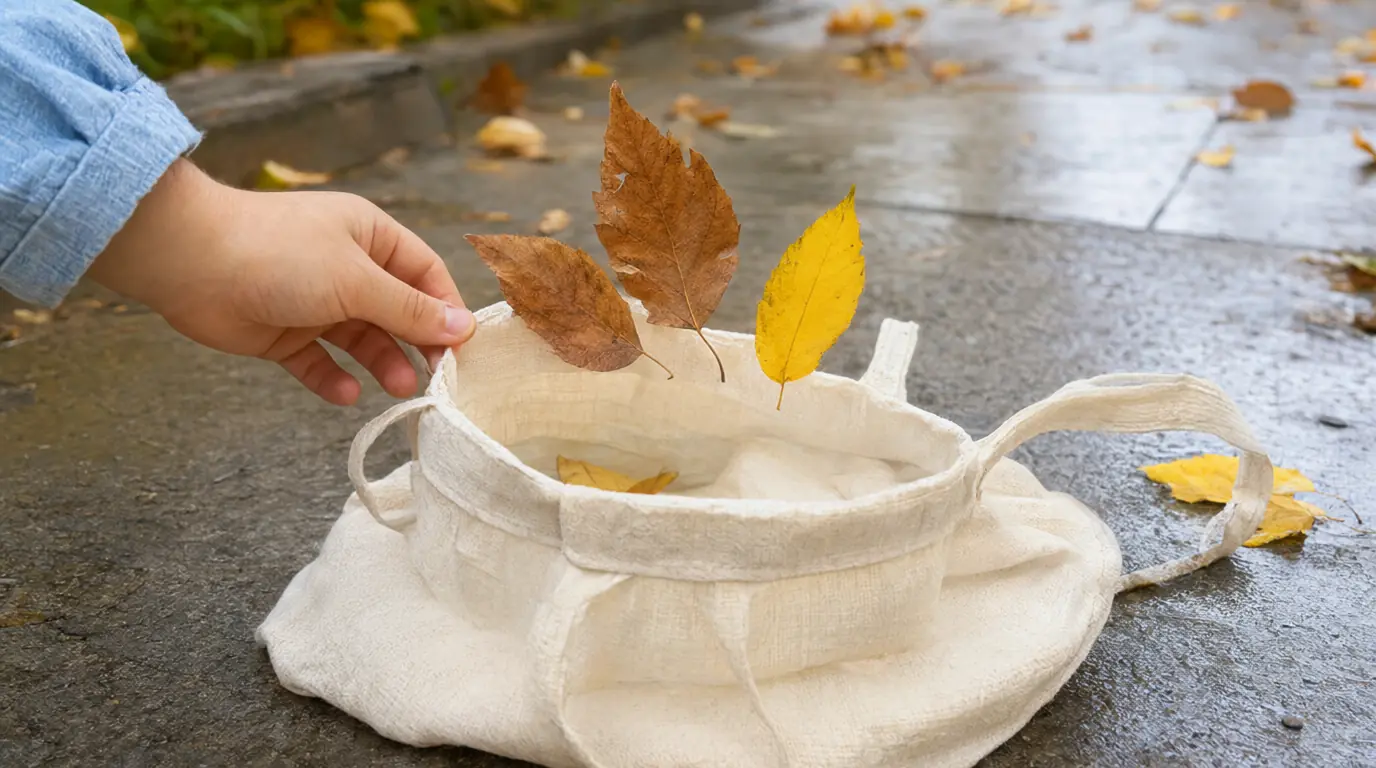
Make it your own: A two-year-old can carry the bag and point; a five-year-old can draw the route from memory afterwards. In a city, use a balcony or the walk to the shop. If your child uses a buggy or wheelchair, pick a smooth loop and let them hold the camera.
Leaf pattern gallery on a tray
Sorting leaves by shape, edge and colour is a maths and language task hiding inside a nature table. Your child decides the rule and you describe it back: all the pointy ones, all the round ones, all the ones that crackle. Nothing needs a name, and the one like a hand is a better description than a plant label.
You’ll need
- Eight to twelve dry fallen leaves
- A shallow tray or a sheet of card
- A soft brush
- A magnifying glass if you have one
How to do it
- Lay the leaves flat on the tray and let your child handle them first.
- Ask your child to choose one leaf and find every leaf that is similar in some way.
- Line them up and ask what the line is sorted by.
- Make a second line using a different rule, such as biggest to smallest.
- Brush off the dust and look at the veins with a magnifying glass.
- Take a photo before the leaves curl, then tip them back into the garden.
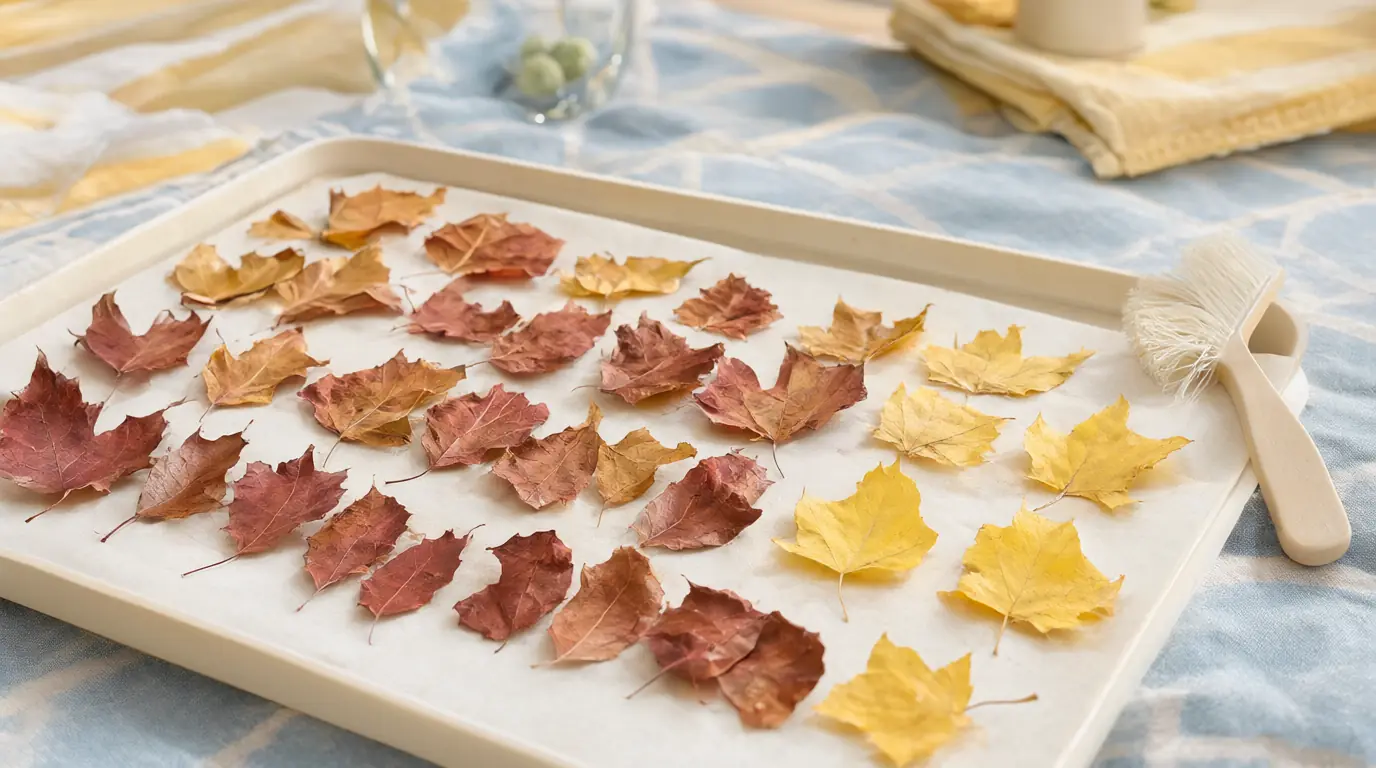
Make it your own: Younger children can make one pile of crunchy leaves and one of soft ones. Older ones can build a repeating pattern and predict the next leaf. A light mist of water keeps brittle leaves from shattering while they are handled.
Crayon leaf rubbings on a paper banner
Rubbings turn a leaf's hidden structure into something a child can see immediately, which makes this the most satisfying indoor job of the season. The paper stays still, the crayon does the work, and even a child who finds drawing hard gets a detailed result on the very first try.
You’ll need
- Several flat dry leaves
- Thin paper, such as printer paper
- Peeled crayons in autumn colours
- Tape
- A long strip of paper for the banner
How to do it
- Lay a leaf with its veins facing up on the table.
- Cover it with paper and tape the corners down so the paper cannot slide.
- Turn a peeled crayon on its side and rub firmly across the leaf in one direction.
- Lift the paper to show the pattern, then swap the leaf for a different shape.
- Repeat three or four times along one long strip so the rubbings become a banner.
- Hang the banner where the light reaches it and ask your child where it should go.
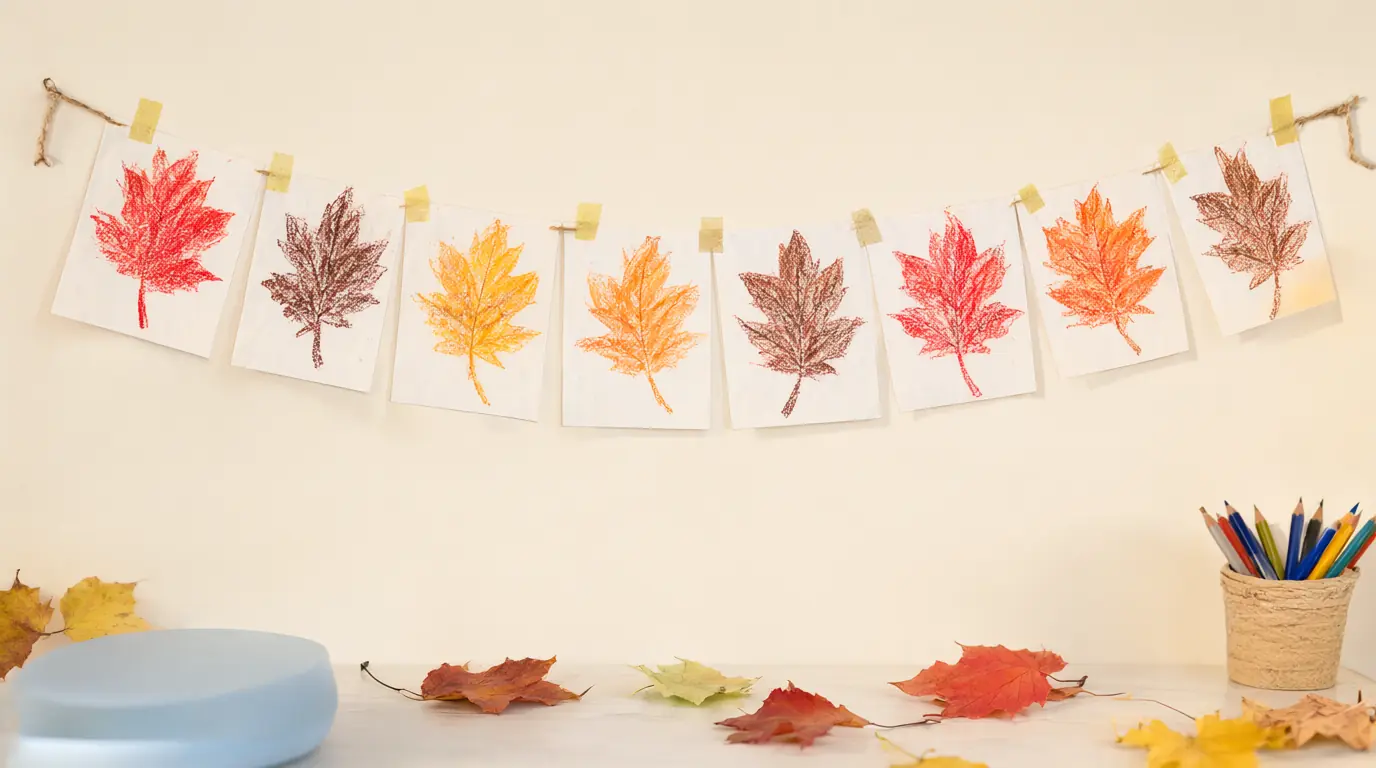
Make it your own: For a two-year-old, tape one leaf under the paper and let them scribble over it with a fat crayon. Older children can add the place each leaf came from, or overlap two colours to see the same veins twice.
A market basket drawing
Autumn food is often easier to spot than autumn weather: squashes, apples, pears, chestnuts and dark grapes arrive in the shops. Looking closely at shape, skin and colour before drawing gives your child real detail to work with, and the finished picture becomes a record of what your family actually eats.
You’ll need
- Two or three seasonal fruits or vegetables
- Thick paper
- Crayons or chalk pastels
- A real basket or bowl
- A damp cloth for sticky hands
How to do it
- Put the food in the basket and let your child take each piece out and hold it.
- Ask what the skin feels like and where the stalk or leaf sits.
- Draw the basket first, then add the food in any order your child likes.
- Offer a second colour so your child can show a shadow or a bruise.
- Write your child's own words about each food at the bottom of the page.
- Wash and cut a piece to share at snack time if your family eats it.
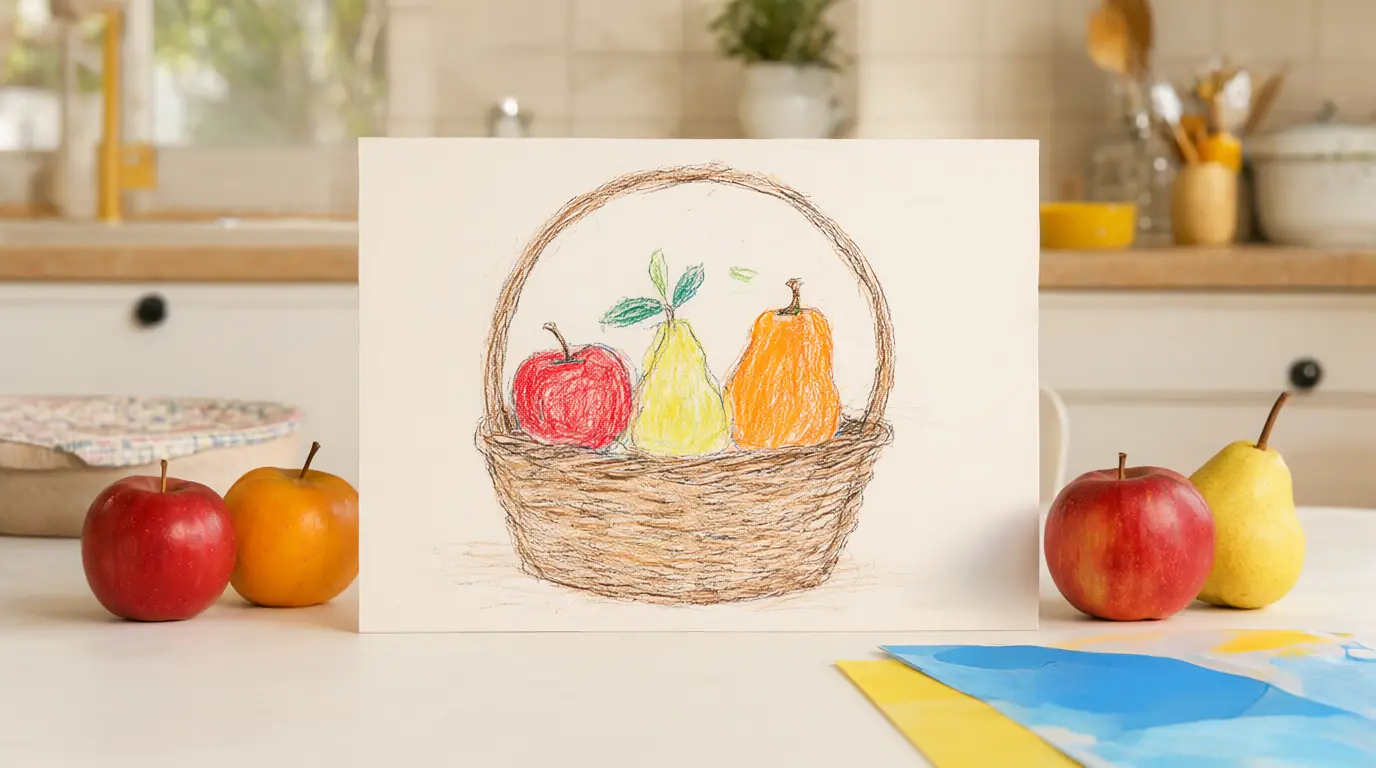
Make it your own: Younger children can print with a halved apple or pear instead of drawing. Older ones can count the pieces, sort them by size or plan a soup. If a shop trip is difficult, use a photo of a market stall beside the real fruit.
A cosy story corner for darker evenings
When the light goes earlier, an indoor corner with a blanket, a cushion and one chosen book gives the evening a shape. Asking your child what makes a place feel comfortable turns a small arrangement into a design decision, and the same corner can be rebuilt in under a minute on any afternoon.
You’ll need
- One blanket
- Two cushions
- Two or three picture books
- A small lamp or a window with evening light
How to do it
- Choose a corner away from the door and the walkway.
- Let your child decide where the blanket goes and whether it hangs or lies flat.
- Add one cushion to sit on and one to lean against.
- Pick two books and put the rest away so the choice stays small.
- Sit together and read the first page in the corner before you begin.
- Ask what would make it cosier tomorrow, then change one thing.
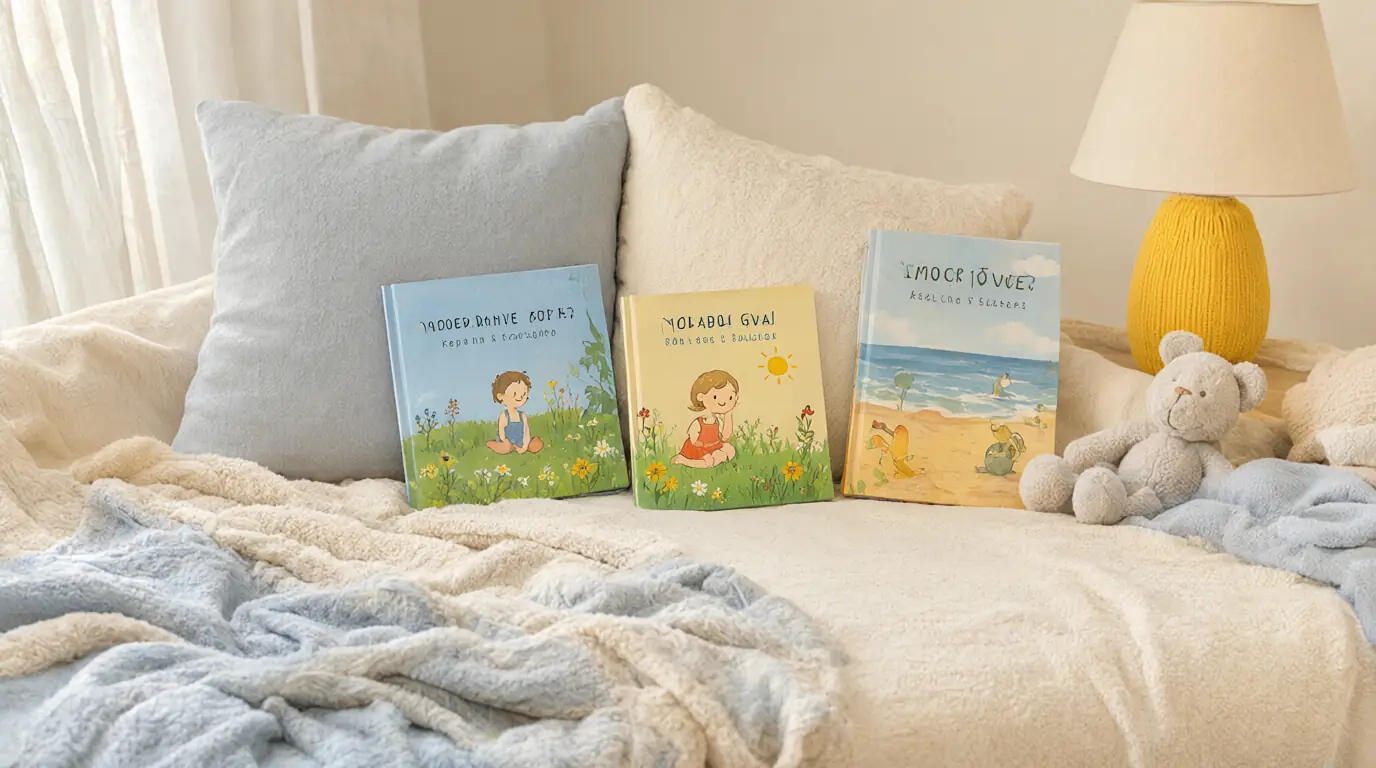
Make it your own: A two-year-old may only want to wrap up and roll about, and that counts. Older children can add a drawn sign or a pretend window. In a shared room, a blanket over two chair backs makes a corner that packs away.

Make it work for your family
Fall weather rarely cooperates with a plan. If it rains, move the walk indoors: look from a window, draw what you see and compare it with a photo from a brighter day. If your area stays green, follow light, wind, temperature and food instead of leaf colour, because the season is still happening. A child who loses interest after five minutes is usually finished rather than bored, so stop there and keep the leaves for tomorrow. Store collected leaves between sheets of newspaper under a heavy book for a few days if you want them flat, and wipe trays rather than washing them so damp leaves do not stick.
Keep the making short and put the results where they can be seen: a banner on the wall, a drawing on the fridge, a tray of sorted leaves on a shelf. For more ideas using the same leaves, try these fall crafts for kids, or a set of toddler fall activities if a younger sibling wants to join in with bigger materials.

Parents also ask
What fall activities can we do if there are no leaves where we live?
Quite a few. Notice the light fading earlier, chart the temperature on a paper strip, draw seasonal food from the market, collect dry seed heads and sticks, or build a cosy reading corner for darker evenings. Leaf colour is only one sign of the season, and many places never get it.
What age are these fall activities suitable for?
Most suit children from about two to six, with small changes. Two-year-olds carry the bag and make big marks; five- and six-year-olds sort leaves by their own rule, draw a route from memory and add words to their rubbings. An adult stays close during outdoor collecting.
How do we collect leaves safely with young children?
Take only leaves that have already fallen and are dry, from ground you can see clearly. Avoid berries, mushrooms, seed pods and anything growing on a bush you cannot identify, and keep it all away from mouths. Wash hands afterwards and check the pavement for glass or animal mess before children reach down.
Choose materials and activities that suit your child, supervise as needed and adapt the ideas to their interests and abilities. About our editorial approach