Weebou Editorial Team
 7 min read
 In this article
A little preparation
Use paper larger than you think you need: A3 sheets or the back of a roll of wrapping paper give room for big arm movements and mistakes. Offer a choice of two or three tools, such as chunky crayons, washable felt tips and a soft pencil, and keep everything on a tray so the table stays tidy. Sit beside your child rather than opposite, so you both look at the same sheet.
Agree one rule before you start: a drawing can be a picture, a pattern or a few lines that stand for something, and a child may talk instead of drawing whenever they like. Sessions of 10 to 20 minutes suit most children in this age range. Stop while your child still wants more. Ask permission before writing on their picture, and keep any caption on a separate note. If your child enjoys paper play more generally, these paper games for kids make a good follow-up.

Ideas to try together
Finish the doorway
Start with a plain door shape drawn in the middle of the page. Your child decides what lies on the other side: a familiar kitchen, a jungle, an invented planet or just a swirl of colour. The game gives a clear starting point, which helps children who freeze in front of a blank sheet, while leaving the actual content completely open.
You’ll need
- 1 large sheet of paper
- A pencil to draw the door outline
- Crayons or felt tips in 4 to 6 colours
- A small sticky note for a dictated title (optional)
How to do it
- Draw a tall rectangle with a small round handle, leaving plenty of paper around it.
- Say, 'Someone has just opened this door. What can they see?'
- Let your child fill the doorway and the space around it however they like, including with patterns only.
- Ask what sounds or smells belong in that place and add a mark for each one if they want to.
- Turn the page and draw a second door together, then compare the two places.
- Write down any title they dictate on a sticky note beside the drawing.
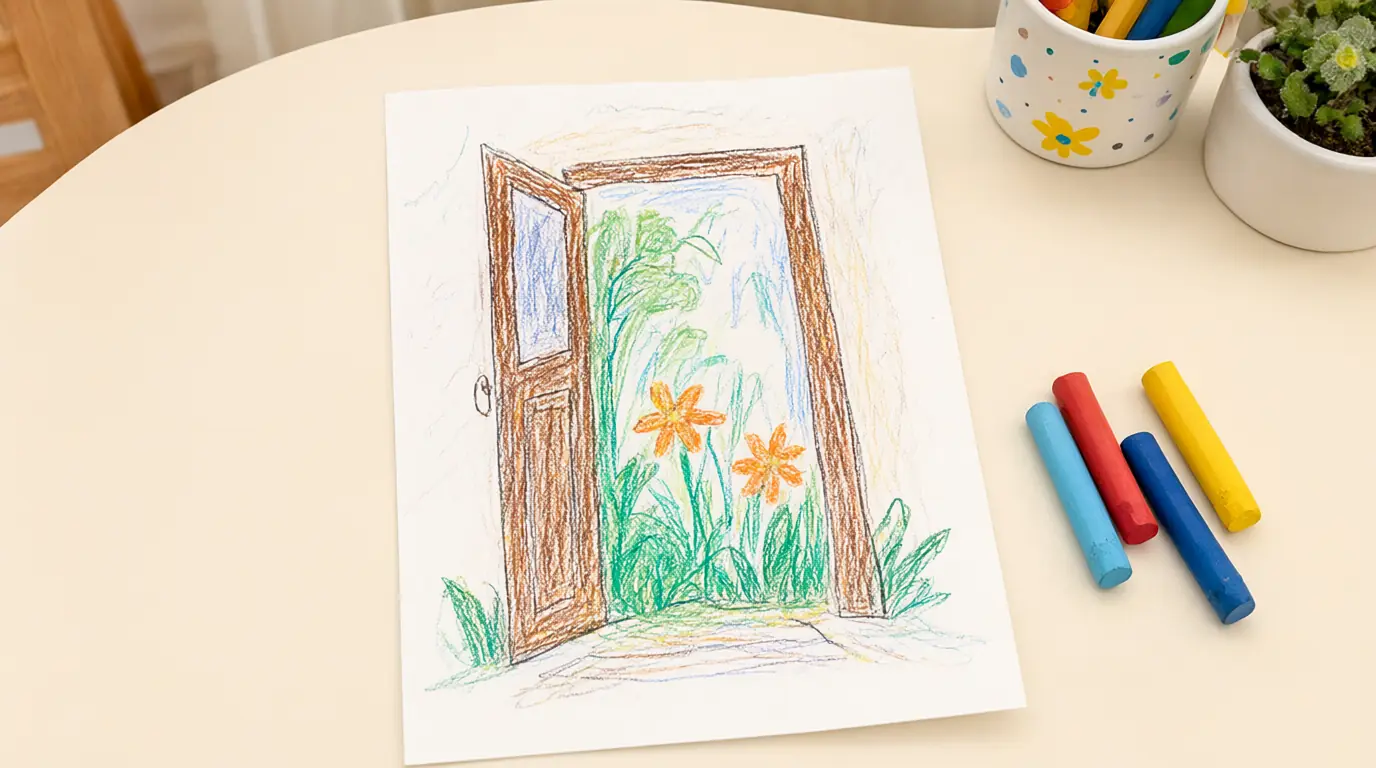
Make it your own: For younger children, cut out the door from coloured paper so they only need to decorate what is behind it. Older children can draw three doors in a row and invent a story that leads through all of them.
Map an imaginary walk
A map turns drawing into planning. Your child chooses three stops on an invented walk, draws a path between them and adds clues about what happens at each place. The finished sheet becomes a prop for storytelling, and children practise sequence words such as first, next and finally without anyone calling it a lesson.
You’ll need
- 1 large sheet of paper
- A thick marker for the path
- Crayons for the stops
- A small toy or button to travel along the route
How to do it
- Draw a small house in one corner and say that is where the walk starts.
- Ask your child to pick three places to visit, such as a pond, a hill or a bakery.
- Draw a wiggly path from the house to each place in turn, letting your child hold the marker if they prefer.
- At each stop add one picture clue, such as a duck, a flag or a loaf of bread.
- Move the toy along the path and tell the journey aloud, taking turns to add one sentence at each stop.
- Finish by drawing the route home, then ask which stop they would most like to visit again.
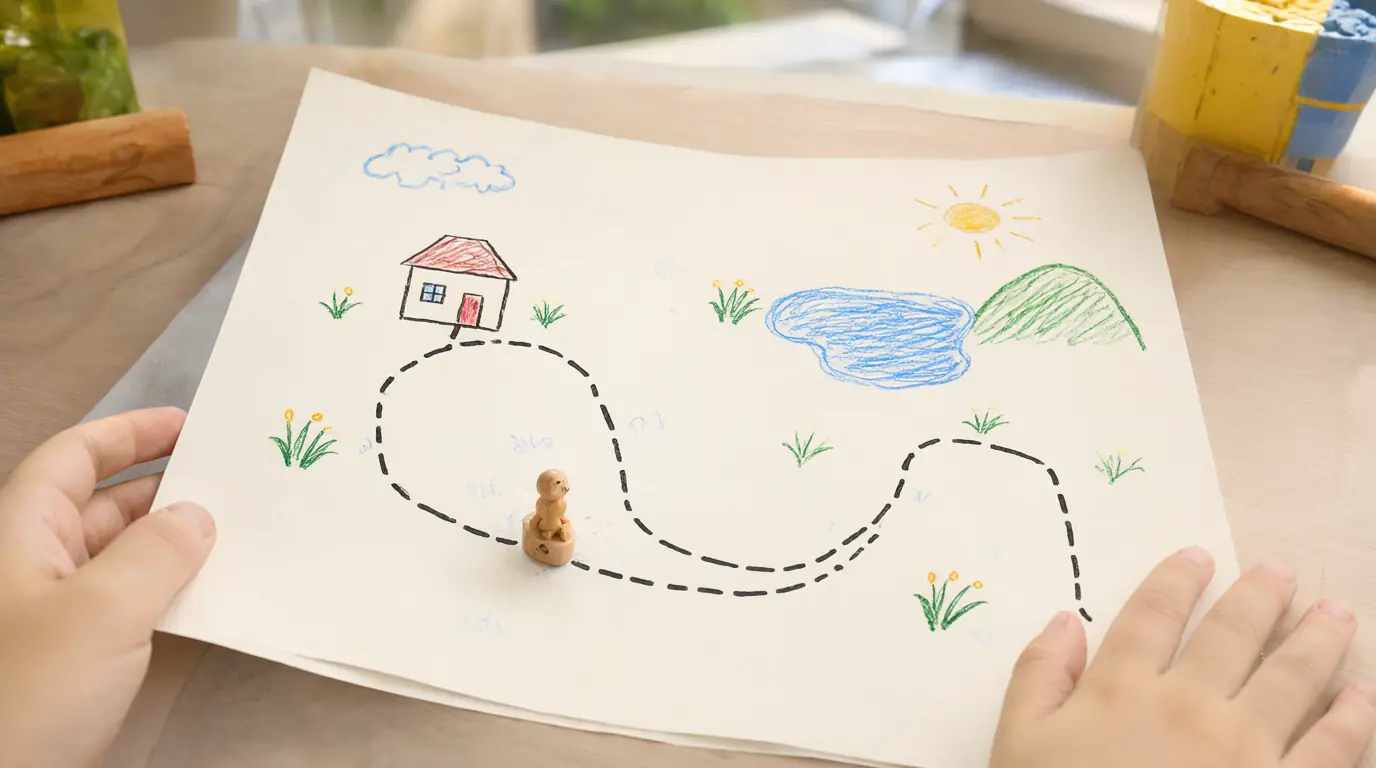
Make it your own: Younger children can follow a path you have already drawn and simply add one picture at the end. Older children can add a key with symbols, or draw a second route that avoids the pond.
One feature changes
Draw an invented creature, then draw a second version in which exactly one feature is different. The constraint is what makes the game interesting: your child compares two drawings, notices the difference and imagines what the change could be for. It is a gentle introduction to cause and effect, reached through pictures rather than worksheets.
You’ll need
- 2 sheets of paper or 1 sheet folded in half
- Crayons or felt tips
- A pencil
- Small stickers for the changed feature (optional)
How to do it
- Fold the paper in half and invite your child to draw an invented creature on the left side, with a body, a face and any other parts they like.
- Together, name one thing about the creature, such as its legs, ears or tail.
- On the right side, redraw the creature with that one feature changed: longer, curlier, wider or missing.
- Ask, 'What could this creature do now that the first one could not?'
- Swap roles: your child chooses a feature for you to change in a drawing of yours.
- Hold both folded halves side by side and take turns spotting the single difference.
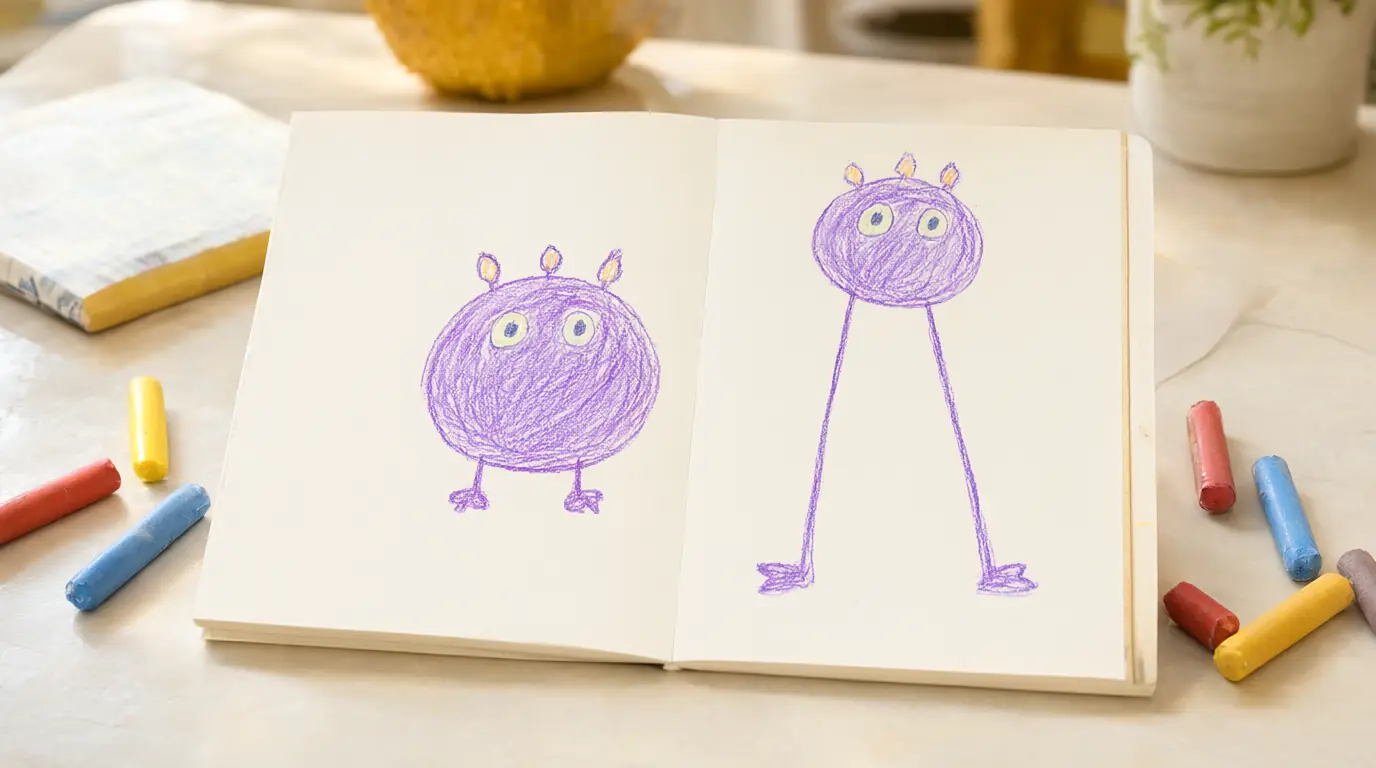
Make it your own: Younger children can make the second creature by adding a sticker or a single extra mark. Older children can draw three versions and arrange them from slowest to fastest, or any order they can explain.
Describe it, then draw it
One player describes an imaginary object in a few short sentences while the other draws. The point is the conversation afterwards, not a score. Both players discover how much a description leaves out, and children practise choosing words that carry meaning: shape, size, colour and position all become useful.
You’ll need
- 2 sheets of paper
- 2 sets of crayons or felt tips
- A book or tray to use as a screen between the players
How to do it
- Sit side by side with the tray standing between your two sheets of paper.
- Decide on a simple imaginary object, such as a hat for a dragon or a house for a snail.
- The describer gives three clues, for example: 'It is round. It has a big door. It is bright yellow.'
- The drawer draws what they heard and asks one question if they want to know more.
- Remove the tray and compare the two pictures, looking at what matches and what each drawer added.
- Swap roles and describe something different.
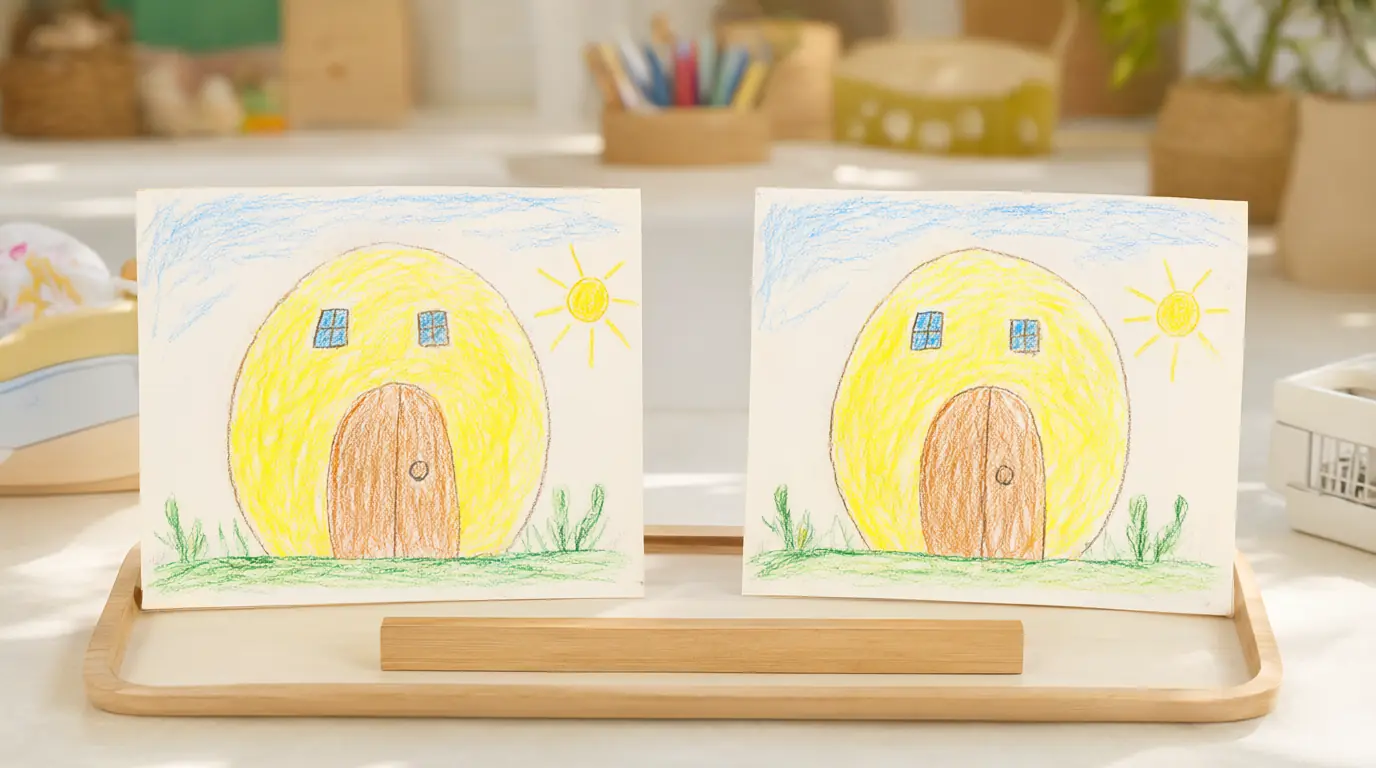
Make it your own: For younger children, the adult describes and the child draws, using only one clue at a time. Older children can add position words such as above, beside and behind, or keep the screen up for the whole game.

Make it work for your family
If your child says 'I can't draw it', shrink the job rather than offering a model. Ask for just the first line, a single shape or a pattern for the border, and let them decide what comes next. Resist guessing what a picture is. A neutral comment such as 'tell me about the bit at the top' lets them explain without feeling tested, and it often produces more vocabulary than a quiz would.
Keep a folder of dated pictures so your child can see how their drawings change over the months. For more on what different kinds of marks can tell you, see understanding children's drawings, and for a step-by-step approach to seeing details, try helping kids draw.

Parents also ask
What drawing games can a 3-year-old play?
Three-year-olds usually enjoy big, open marks: scribbling to music, filling a doorway you have outlined, or adding one picture to a shared sheet. Use chunky crayons and large paper, keep the session short and accept any mark as a drawing.
How do you encourage a child who says they cannot draw?
Make the task smaller and give a purpose: draw only the door, the path or one changed feature. Avoid drawing a model for them to copy, and ask them to tell you about their marks. Confidence tends to grow when a drawing has a story attached.
Should I correct a child's drawing?
Generally not. Young children draw what they know and feel, not what they see, so proportions and colours will not match real life. Ask what they would like you to notice and talk about the choices they made instead of fixing them.
Choose materials and activities that suit your child, supervise as needed and adapt the ideas to their interests and abilities. About our editorial approach