Weebou Editorial Team
 7 min read
 In this article
A little preparation
Use a flat, uncluttered surface such as a table, a wooden floor or a low tray on a rug. Carpets can make towers wobble, so a hard tray or a piece of cardboard under the blocks helps. Choose large, age-rated blocks that are easy to hold and keep small pieces out of reach of younger children who still mouth objects. If you cut any cardboard, do it yourself beforehand and smooth any rough edges.
Keep building low so that falling pieces do not land near a face, and agree that a collapse is simply part of the game. Decide in advance where finished builds will stay, so nobody has to dismantle something they are proud of. Play for as long as your child is interested, usually ten to twenty minutes, and offer materials rather than solving the problem. A question such as what could we try next works better than showing the answer.

Ideas to try together
Bridge for a visitor
A bridge challenge gives building a clear purpose: a toy needs to cross a gap. Children learn that a bridge has to reach both sides, hold the load and be wide enough to be useful. They can test it one crossing at a time and change it when it fails.
 You’ll need
- 2 stacks of 4 blocks
- A strip of cardboard about 20 cm long
- A small toy figure
- Extra blocks for supports
How to do it
- Place two stacks of blocks about a hand-width apart on the table.
- Introduce a toy visitor who needs to reach the other side.
- Let your child choose what to lay across the gap: a block, a cardboard strip or both.
- Walk the visitor across the bridge one step at a time and watch what happens.
- If it bends or falls, ask what to change: a shorter gap, a thicker material or a support underneath.
- Test again, then try a heavier toy if your child wants a new challenge.
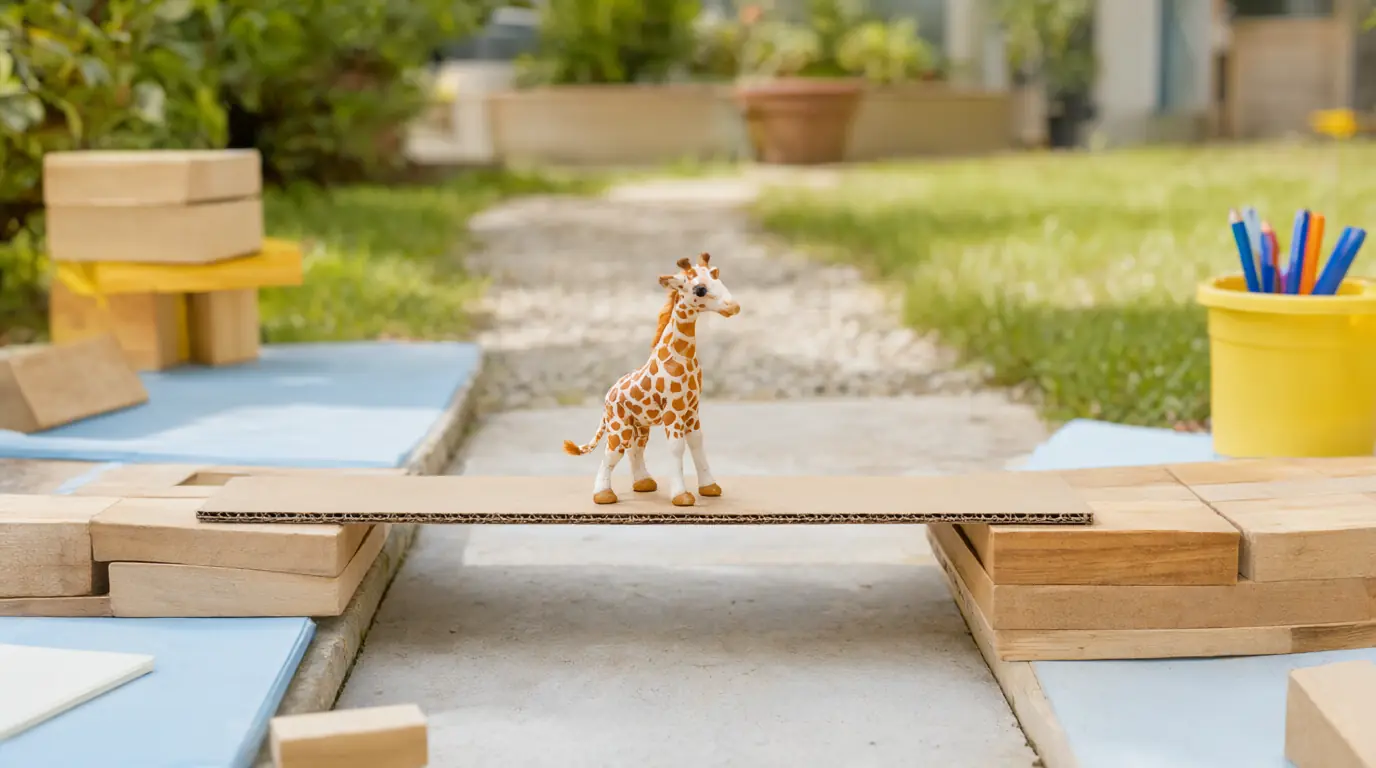
Make it your own: Younger children can use a gap of only one block-width. Older children can try a longer gap and compare which materials span it best.
Roof rescue
A shelter with a roof introduces the idea of walls that carry weight. Children discover that a roof needs enough support and that the shape of a paper roof affects whether it stays up. Each small change gives them something to talk about.
You’ll need
- 6 to 8 large blocks
- 1 sheet of stiff paper
- A small toy to shelter
- Masking tape (optional)
How to do it
- Build two walls from blocks, a hand-width apart, as a small shelter.
- Place a sheet of paper across the top as a roof.
- Move the toy inside and see whether the roof stays up.
- If it sags, fold the paper into a tent shape or add a third wall.
- Test again by placing a very light block on top of the roof.
- Talk about which version felt strongest and why.
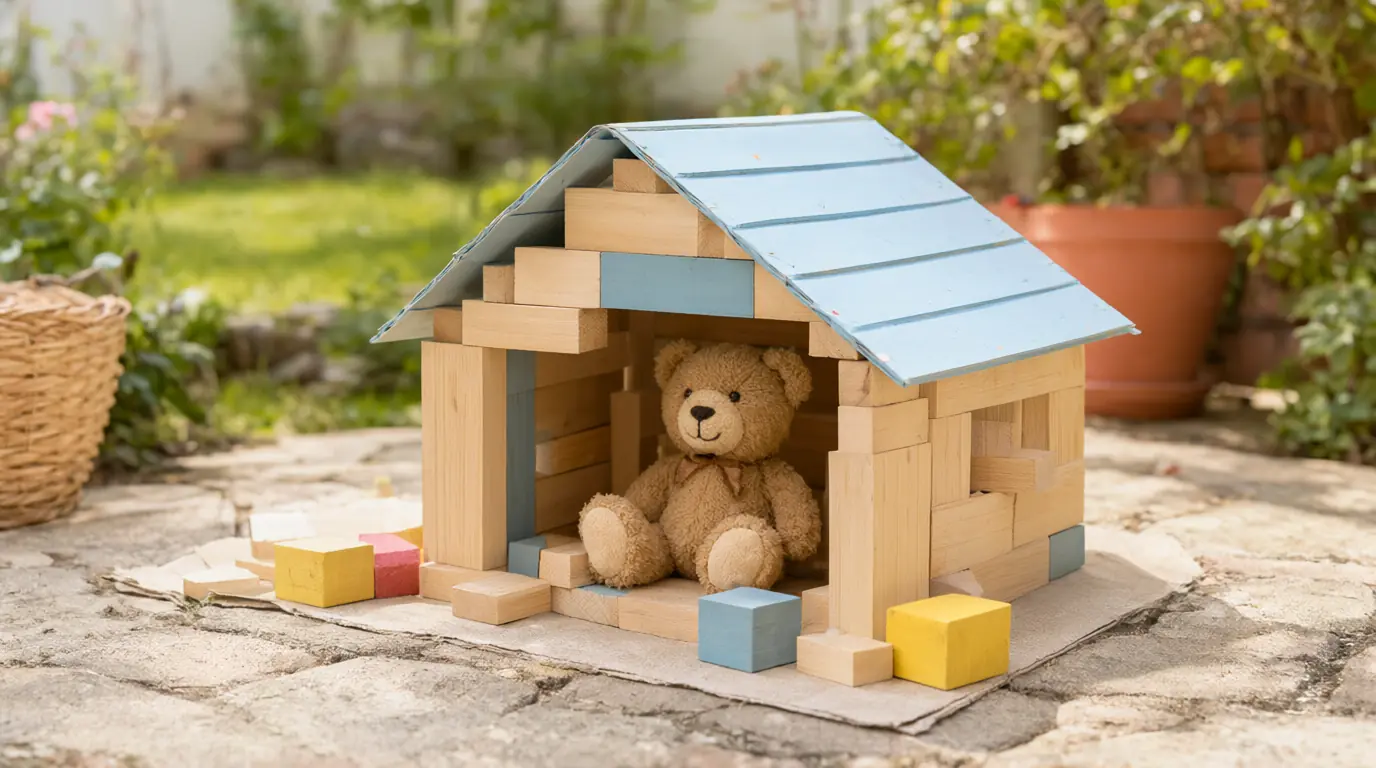
Make it your own: Younger children can use a single flat block as a roof. Older children can try making the roof from two sheets leaning against each other, or compare paper with cardboard.
Describe and build
In this partner game one person builds and the other recreates it from a spoken description. It develops position words like beside, behind and on top, and teaches children that clear words help others understand. Swapping roles makes both listening and describing matter.
You’ll need
- 6 blocks in 3 colours (two sets)
- A cardboard screen or a book to stand between the partners
- A tray
How to do it
- Give each player the same three or four blocks and put a screen between them.
- The first player builds a small arrangement, such as red beside blue with yellow on top.
- They describe it aloud, one block at a time, without pointing.
- The second player builds what they hear.
- Remove the screen and compare the two builds together.
- Swap roles and try a new arrangement.
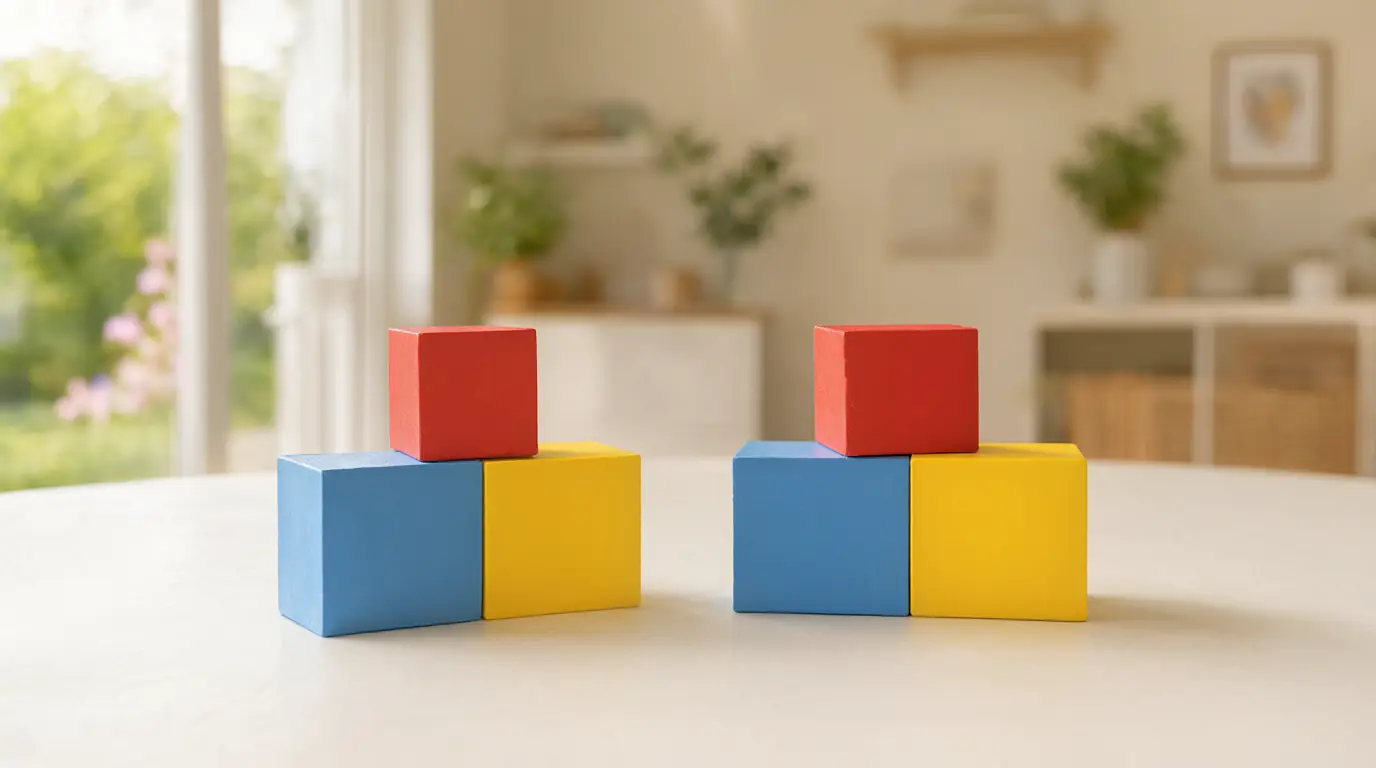
Make it your own: Younger children can use just two blocks and gesture. Older children can add more blocks, or use position words such as left and right.
Road with a turn
A road lined with blocks is a first exercise in planning a route. Adding a bend makes children think about width, turning space and what happens at a corner. They can test with a toy vehicle and redesign the corner until it fits.
You’ll need
- 10 to 12 blocks
- A toy car or truck
- A large sheet of paper as a road surface
- Masking tape
How to do it
- Lay the paper on the floor and line one side with blocks.
- Place blocks along the other side to create a road a little wider than the toy.
- Drive the toy along the road to test the width.
- Add a bend and see whether the toy still fits.
- Widen the corner or move a block if the toy gets stuck.
- Add a small house at the end of the road and drive the toy to it.
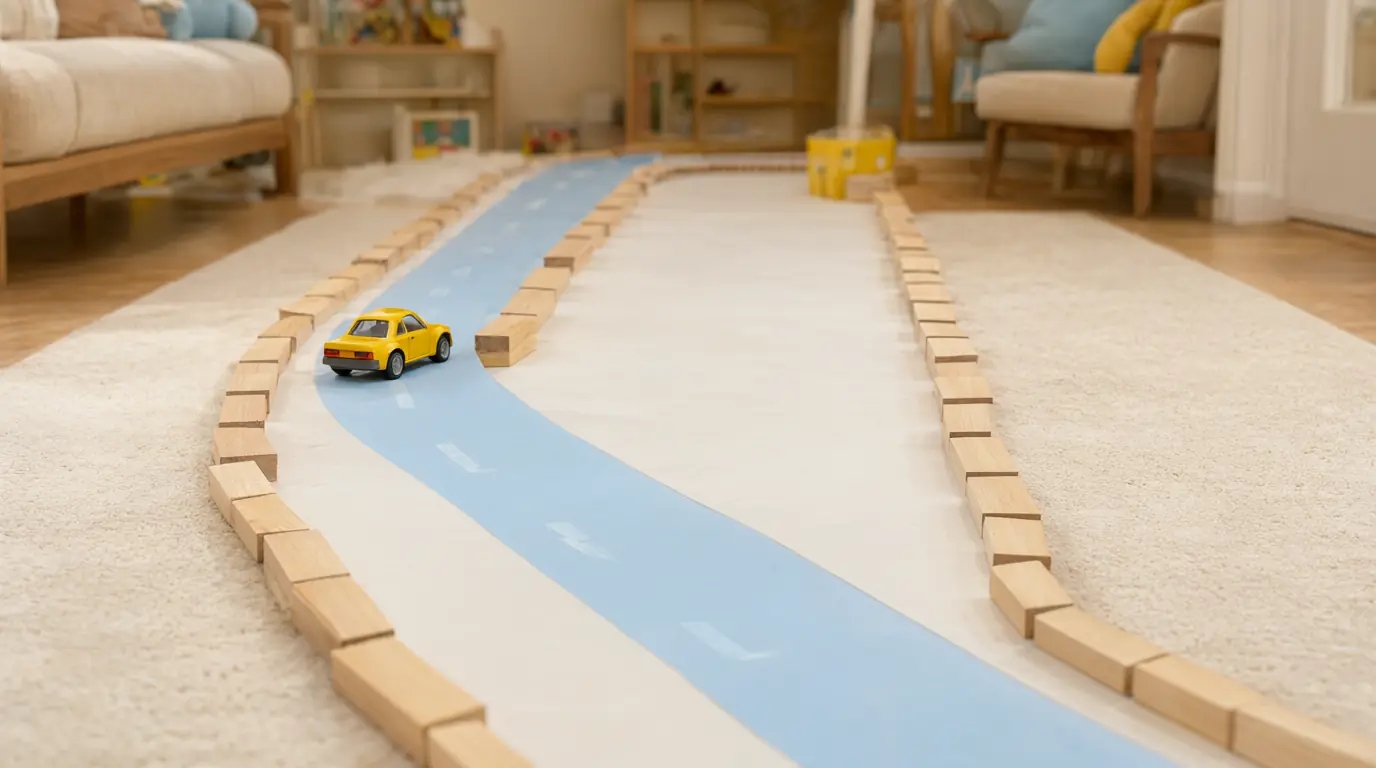
Make it your own: Younger children can build a straight road only. Older children can add a second road that crosses the first, or build a bridge over it.
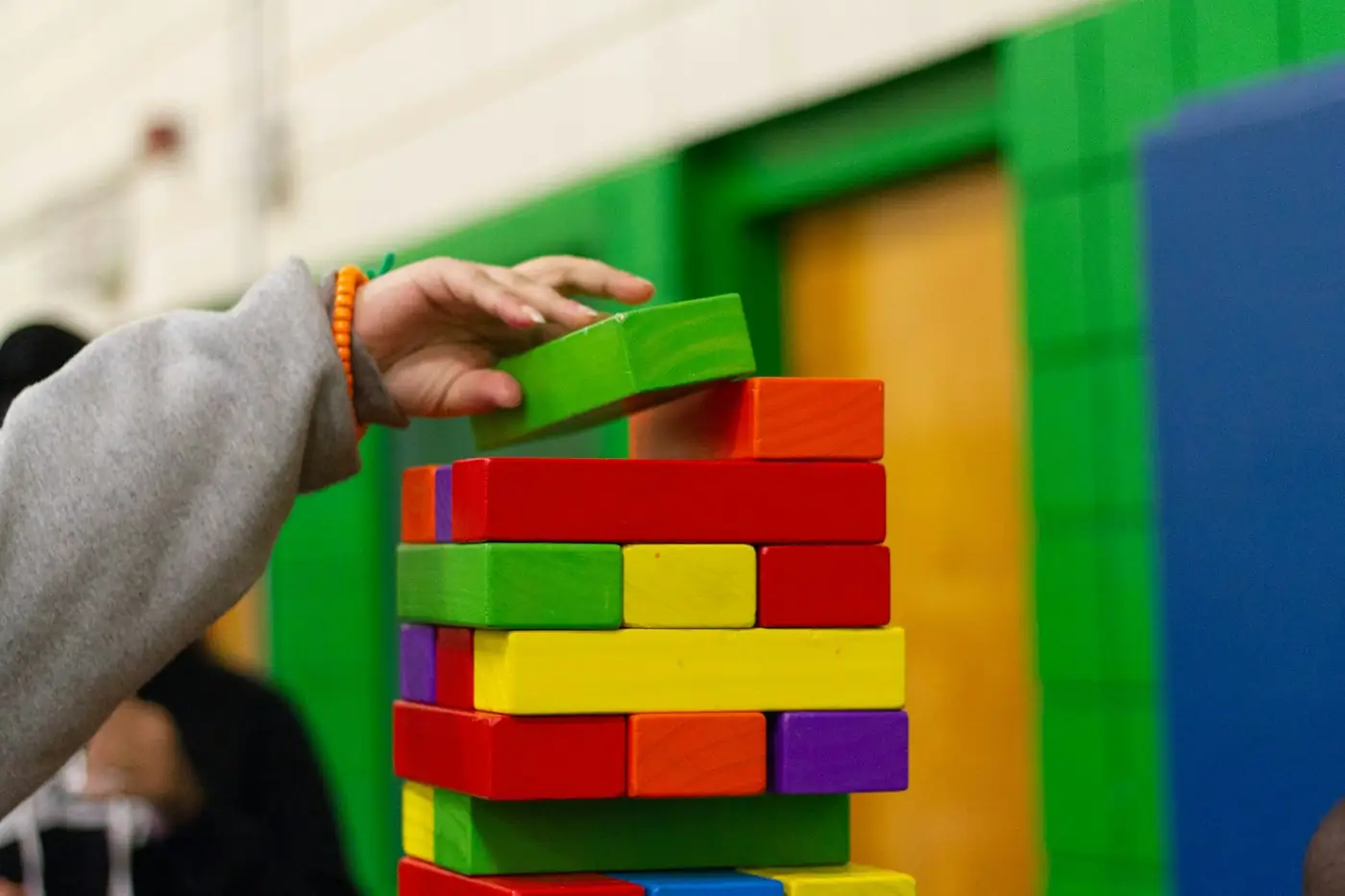
Tallest tower test
A tallest-tower game is a classic for a reason: it shows that a wide base helps a tower stay up. Children try different strategies and see directly which one works, which makes it a gentle first science experiment.
You’ll need
- 10 to 12 blocks of the same size
- A flat tray
- A paper strip to mark the height
How to do it
- Give your child about ten blocks and a tray.
- Ask them to build the tallest tower they can without it falling.
- When it falls, ask what they think happened and try again.
- Talk about changes such as a wider base or placing blocks in the middle.
- Mark the height of the best tower with a paper strip.
- Try a second time and compare the strips.
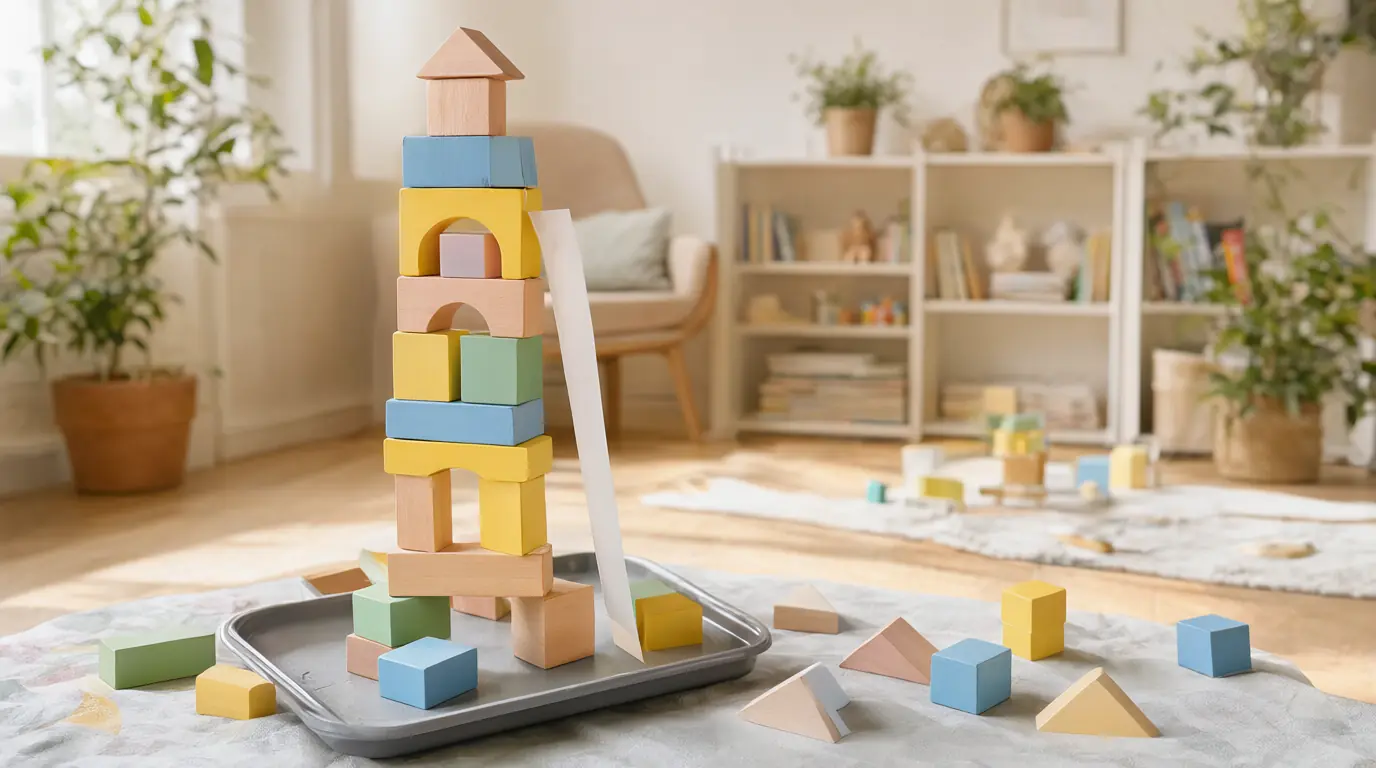
Make it your own: Younger children can build for fun without measuring. Older children can predict how many blocks will stand before the tower falls, and then count.

Make it work for your family
When a structure falls, resist the urge to rebuild it yourself. A toppled tower is a free experiment, and asking what do you think happened gives your child a chance to explain. If frustration rises, offer a smaller goal, such as a wall of three blocks, then build up again. Photograph a favourite structure before taking it apart, since some children find it easier to move on when the picture is saved.
Children often copy a build they have seen elsewhere, which is fine; they will change it in their own way. If you want to connect building to maths, count the blocks together or compare two towers using words such as taller and shorter, as in these early engineering activities. For a gentler follow-up when blocks are put away, try some drawing games where your child sketches what they built.

Parents also ask
What are good building games for toddlers?
Toddlers enjoy stacking a few large blocks, knocking them down and filling a box. Keep builds low and the blocks large, and stay close so nothing small goes into mouths. A single bridge across a short gap is a good first challenge.
What can children build besides block towers?
Roads, bridges, shelters, boats and simple mazes all work well. Cardboard strips, paper tubes and masking tape widen what is possible, and a toy figure gives the build a purpose. Children often prefer building something for a character.
How can I help if my child gets frustrated when a build falls?
Treat the fall as an experiment and ask what they noticed. Offer a smaller goal or a different material rather than rebuilding it yourself. Taking a photo of the best attempt can help them feel that the effort counted.
Choose materials and activities that suit your child, supervise as needed and adapt the ideas to their interests and abilities. About our editorial approach