Weebou Editorial Team

 In this article
A little preparation
Before you begin, decide which story you are telling and keep it to a few sentences. Ask a family member or a church leader if you are unsure which account suits young children, and choose the version you are comfortable answering questions about. Set out paper, card and crayons on a clear table, and keep the materials for one idea only so the choice stays easy. Sharp scissors and any cutting stay with an adult.
Allow around 20 to 30 minutes, with no expectation of finishing everything. If the conversation turns to someone who has died, use plain, gentle words and follow your child's questions rather than filling silence. Never ask a group of children to talk about a bereavement in front of others, and let a child stop drawing whenever they want. A battery tea light replaces any open flame. If your family also marks Halloween, these friendly Halloween activities can sit alongside the day rather than compete with it.

Ideas to try together
A paper story portrait
Start with one short account from your own tradition, chosen in advance and told in a few sentences. Then invite your child to draw a single detail that caught their attention — a bowl, a boat, a lantern, a hand — rather than the whole scene. Drawing one object helps a young child hold on to the story and gives you a natural way to ask what that detail was for. Glue the drawing onto a card frame so it can stand on a shelf.
 You’ll need
- One short story, told aloud
- A5 sheet of thick paper
- Crayons or felt tips
- A card frame cut by an adult (two rectangles)
- Glue stick
How to do it
- Tell the story in three or four sentences and stop there.
- Ask which detail your child noticed most and let them name it in their own words.
- Invite them to draw just that detail, large, in the middle of the paper.
- Let them add one colour around it if they want a background.
- Glue the drawing onto the card frame and fold the frame's tab so it stands.
- Write the detail's name on the back in your child's words, not yours.
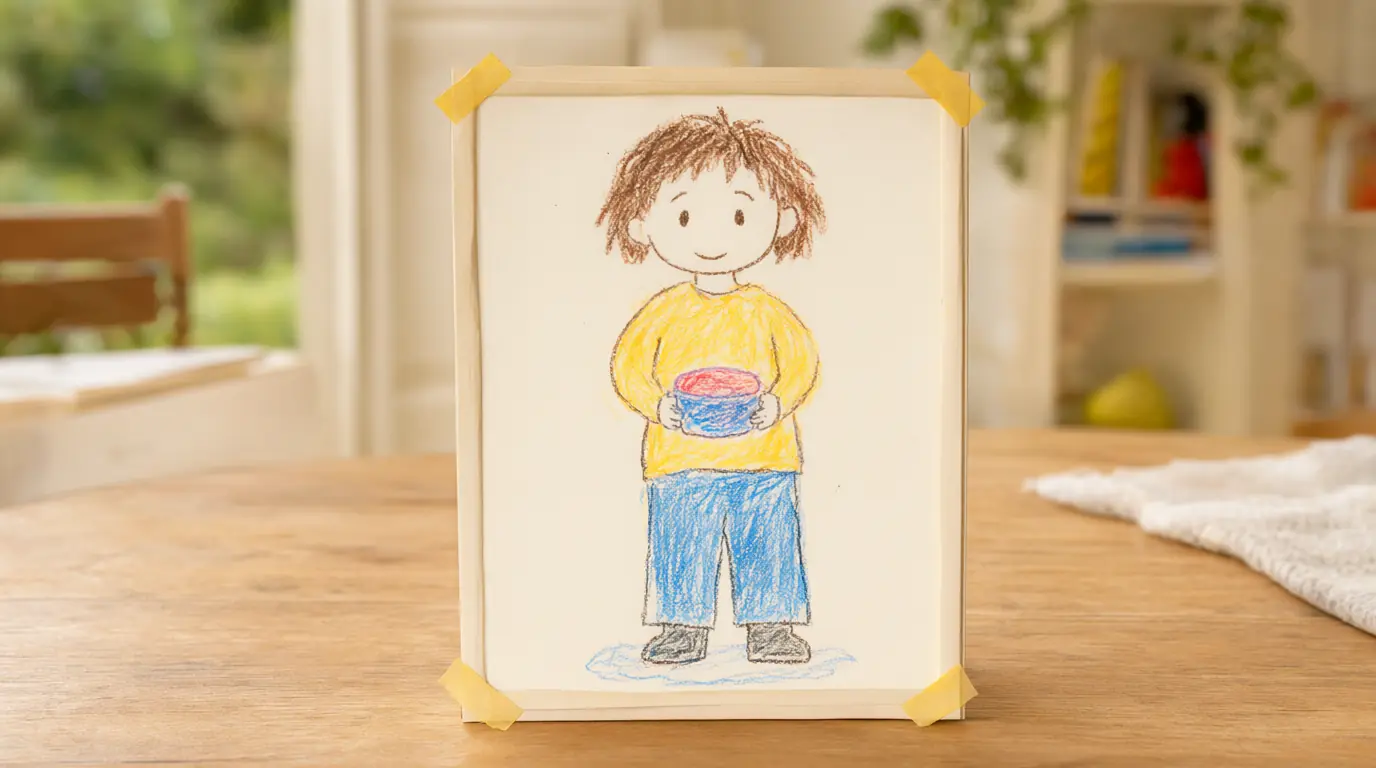
Make it your own: Younger children can draw a single shape and tell you about it while you write. Older children can add a second detail and explain how the two connect. A child who dislikes drawing could choose a sticker or cut a shape instead.
A kind-action card
Saints' stories usually turn on one ordinary action: sharing bread, visiting someone who was ill, speaking up for a person nobody listened to. Ask your child to think of a small action they could do this week and draw it, then write their sentence underneath if they want. Keeping the focus on the action rather than on being good avoids turning the day into a test of behaviour.
You’ll need
- One piece of A5 card
- Crayons
- A pencil for you to write with
How to do it
- Recall the action from the story in one sentence: who did what, and for whom.
- Ask your child what small action they could do this week, and accept their first answer.
- Let them draw that action as a simple scene with two figures or one hand and one object.
- Write their exact words at the bottom of the card.
- Stand the card where they will see it during the week.
- At the end of the week, ask whether the action happened and what it was like.
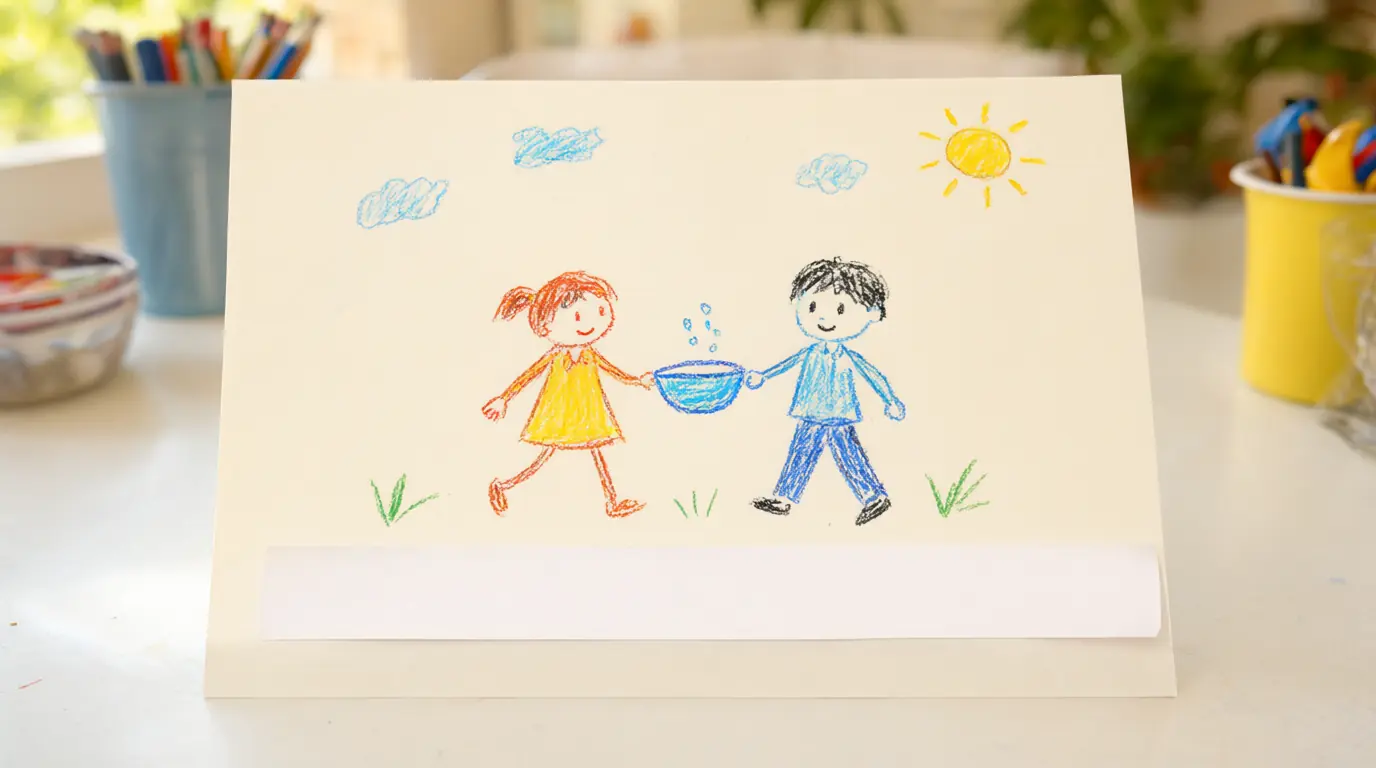
Make it your own: For a three-year-old, keep it to one drawing and no writing. Older children can plan two actions or choose one that involves someone outside the family. If a child cannot think of an action, offer two concrete choices rather than an open question.
Our family tradition page
Every household keeps the day differently: a church service, a special meal, a paper lantern, a visit to a grave or nothing at all. A single page with three drawings — what we do, who we remember, what we eat — makes your family's version visible and easy to talk about. It is also a good place to say plainly that other families do something different, and that this is fine.
You’ll need
- One sheet of A4 paper
- Crayons
- Optional: a photo or a small printed picture to glue on
How to do it
- Fold the page into three columns with a light pencil line.
- Label the columns together: we do, we remember, we eat.
- Let your child draw one thing in each column, or leave a column empty if it does not apply.
- Talk about one family you know who marks the day differently.
- Add the date at the top and keep the page with your seasonal things.
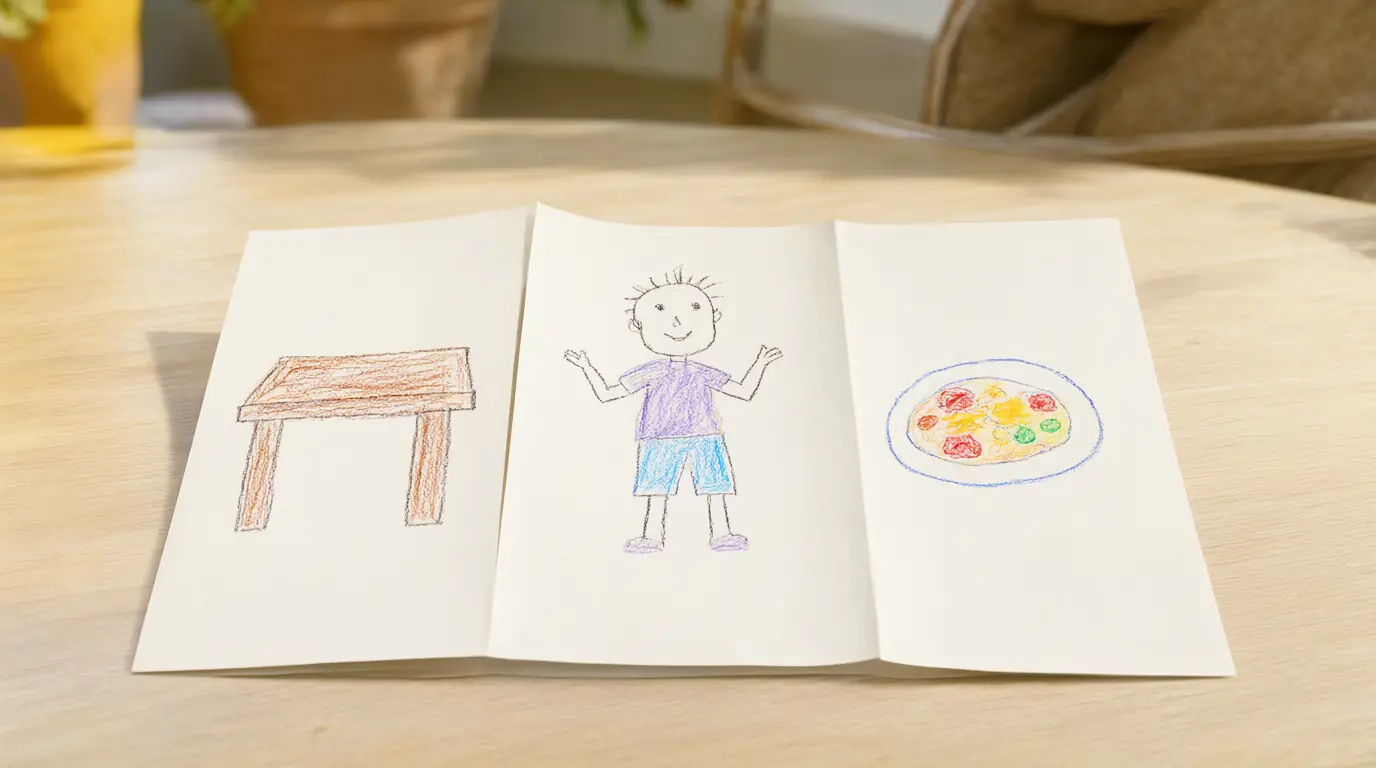
Make it your own: Younger children can fill a single column with one drawing and dictate the rest. Older children can add a fourth column for a question they still have. Families who do not observe the day can make a page about a person they like to remember instead.
A paper lantern with a battery light
A paper lantern gives children the idea of light without a flame, which suits the way many families mark the day. Folded card holds its shape better than thin paper, and a battery tea light sits safely inside. Children can decorate the panels with symbols from a story you have told, then carry the lantern to the table at teatime.
You’ll need
- A4 card in a light colour
- Crayons
- A battery tea light
- Tape
- A ruler and a pencil
How to do it
- Fold the card in half lengthwise, then open it out.
- Let your child decorate both halves with symbols or patterns, keeping the edges clear.
- An adult cuts a row of short slits along the fold, or scores it so the card bends.
- Bring the two short ends together into a cylinder and tape them.
- Place the battery tea light inside on a flat surface and switch it on.
- Carry it carefully to the table and talk about which symbol your child chose.
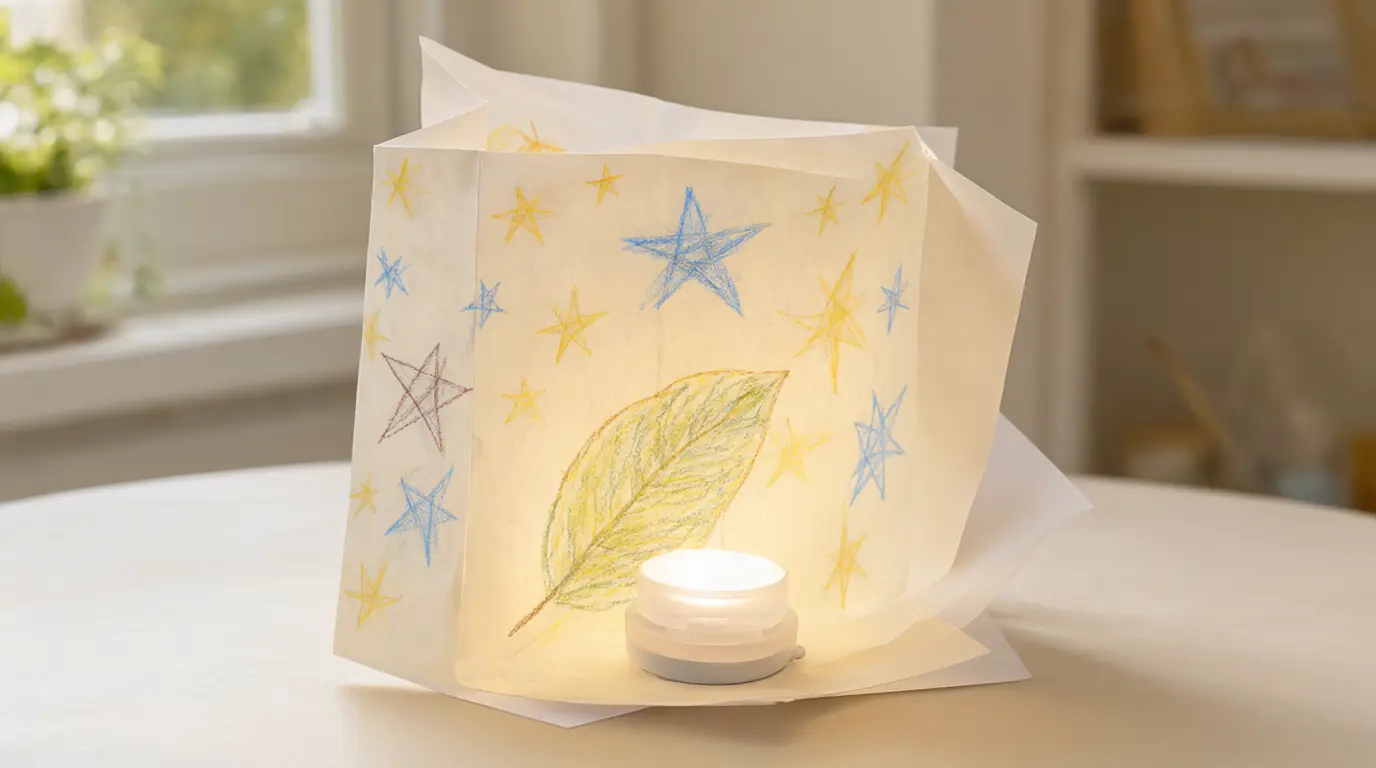
Make it your own: Younger children can decorate a ready-made card tube. Older children can make two lanterns and compare the patterns. If the light is distracting, switch it on only once the lantern is finished.
A symbol pairs game
Turn the day's stories into a small matching game. Make four or six pairs of cards, each pair showing one simple symbol: a lantern, a heart, a boat, a bowl, a key, a hand. Two cards are turned at a time and named aloud before they are put back. Naming the symbol links the game to the story, and the repetition makes the details stick without any quizzing.
You’ll need
- 8 to 12 small cards, all the same size
- A pencil
- Crayons
- Optional: two copies of a printed symbol sheet
How to do it
- Draw one symbol on each of two cards, making four to six pairs.
- Name each symbol together and remind each other which story it came from.
- Shuffle the cards and lay them face down in a grid.
- Take turns turning two cards and naming what you see.
- Keep a pair when the two match, and put unmatched cards back in the same place.
- At the end, lay all the pairs out and retell one story using its symbol.
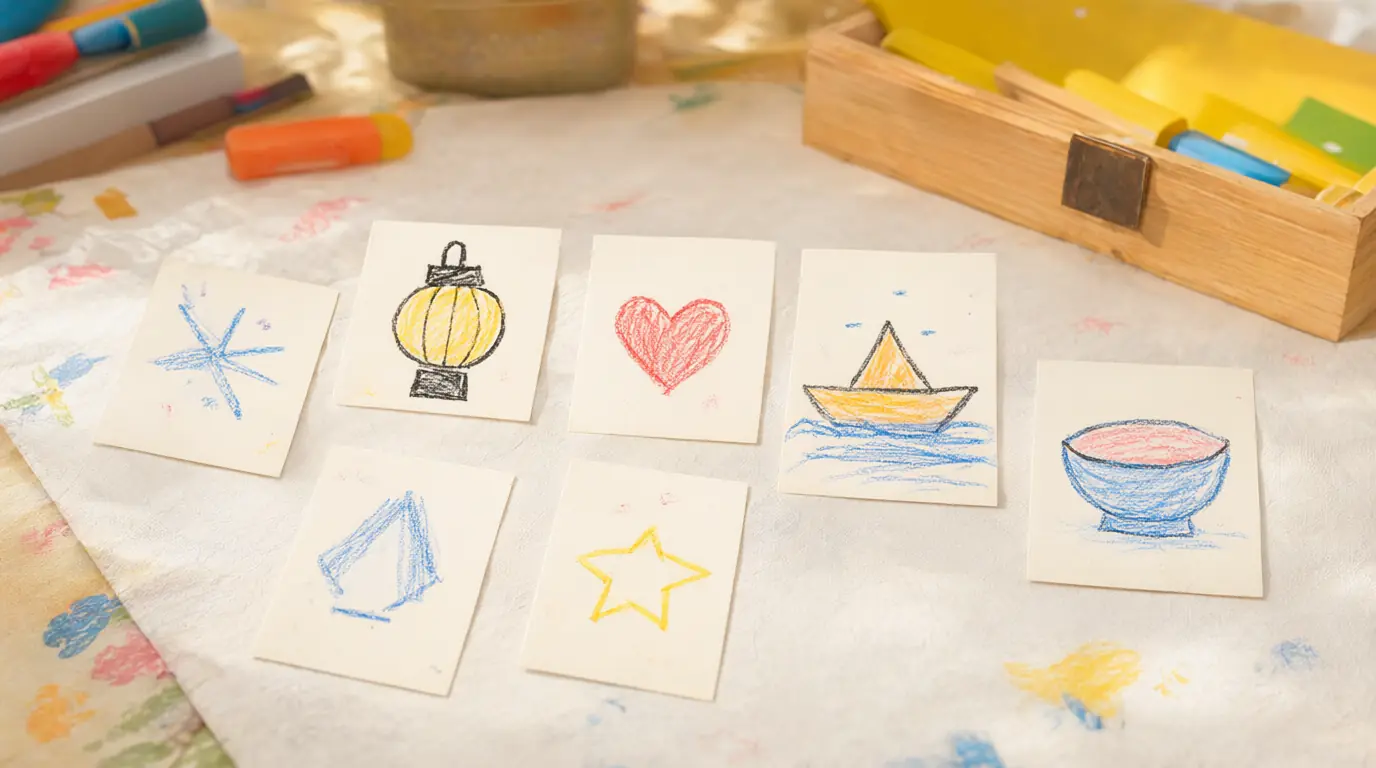
Make it your own: For younger children, start with three pairs and leave them face up. Older children can add a rule that they must say one sentence about the symbol before keeping the pair. A child who finds losing hard can play alone against you with a shared pile.

Make it work for your family
If your child loses interest after one drawing, that is a complete activity. Children often return to a story days later with a question, so leave the picture where they can see it. When a child asks something you cannot answer, say so and offer to find out together — a short answer you actually know is worth more than a long one you are improvising. In a group, keep the making part separate from any sharing circle so nobody has to speak.
Some children will want to know why a friend does not mark the day at all. A simple answer works: families remember different things in different ways. If the questions keep coming, follow them another day with these gratitude rituals or a few everyday kindness ideas that turn the story into something a child can do.

Parents also ask
What is All Saints' Day for children?
It is a Christian day for remembering people whose lives are held up as examples of faith, courage or care. For young children, the simplest version is one story about one person and one small thing to make, with no expectation that they understand the whole tradition.
How is All Saints' Day different from Halloween?
Halloween on 31 October is a popular celebration with costumes and sweets, while All Saints' Day on 1 November is a church observance. Some families mark both, some mark only one, and the two do not need to be explained as opposites to a young child.
Do all Christians celebrate All Saints' Day on 1 November?
No. Many Western churches keep it on 1 November, while Orthodox churches usually celebrate All Saints on the first Sunday after Pentecost. Some families also remember particular people on other dates through the year, so customs vary widely.
Sources & further reading
Explore these primary sources for further context on this topic.
Choose materials and activities that suit your child, supervise as needed and adapt the ideas to their interests and abilities. About our editorial approach