Weebou Editorial Team
 In this article
A little preparation
Start by choosing one idea and gathering everything before you invite your child. A clear table, a tidy floor and ordinary room lighting are enough; a dark room, a sudden noise or an unexpected mask can turn a friendly game into a frightening one. Twenty to thirty minutes suits most children, and stopping while everyone is still enjoying themselves makes it easier to come back to the activity another day.
Tell your child what will happen before each step, and offer a way out: they can watch, sit next to you or choose a different character at any point. Keep costumes short enough to walk in and free of anything that covers the eyes. An adult handles sharp scissors, staples and any small parts, and children who still mouth objects need large pieces only. If your child enjoys games with a pause built in, these stop-and-go games suit Halloween well, and you can find more seasonal making in these Halloween crafts for kids.

Ideas to try together
Friendly creature parade
Designing the character first gives a child control over how spooky the day becomes: a bat with a bow, a cat that says hello or a pumpkin with a smile are all valid answers. Walking in a short parade adds movement and rhythm, and the roles of leading, following or simply watching are genuinely part of the game rather than a consolation prize.
 You’ll need
- Thick paper and crayons
- Child-safe scissors for an adult to use
- Tape or a hole punch and wool
- A short walking space indoors
How to do it
- Ask what creature your child would like to become: friendly, silly or something completely invented.
- Draw the creature together on thick paper, adding eyes, wings, ears or a hat.
- Cut out the shape with adult scissors, or let your child cut if they are ready and supervised.
- Tape the drawing to a stick or thread wool through a punched hole so it can be carried or worn.
- Practise how the creature moves: flapping, creeping, hopping or floating.
- Parade around the room with music, taking turns to lead while everyone else copies the movement.
- Finish by sitting down and asking the creature where it lives and who its friends are.
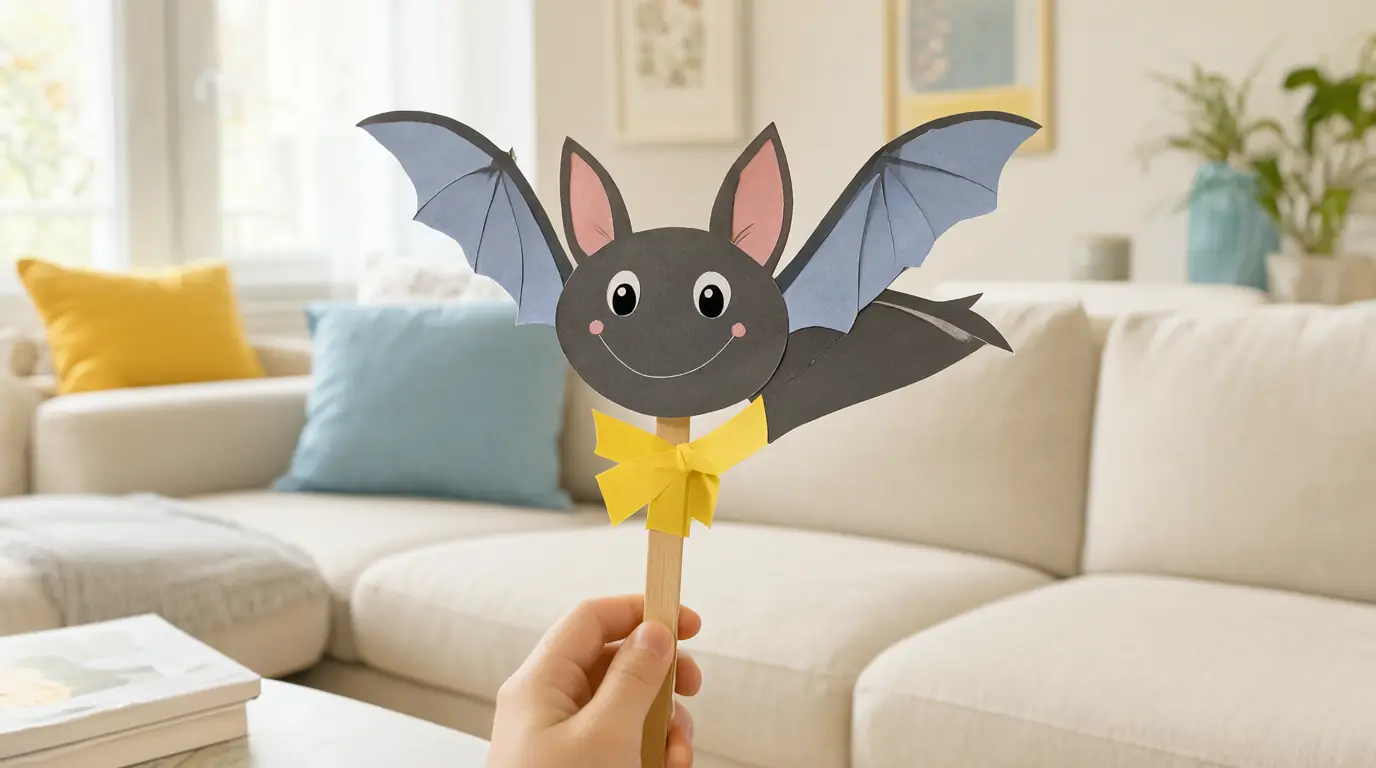
Make it your own: Toddlers can carry the paper creature while you make the movement; older children can invent two creatures and a short story for each. A child who prefers not to move can be the leader who calls out the movements from a chair.
Pumpkin pattern hunt
A hunt turns an ordinary room into a game without anything dark or unexpected. Matching patterns rather than racing keeps the focus on looking closely, and placing the pumpkins in visible spots means no one has to crawl into corners or open cupboards to join in.
You’ll need
- 6–10 paper pumpkins in two or three colours
- A thick marker for drawing patterns
- Tape or sticky putty
- A basket or bag to collect them
How to do it
- Draw simple patterns on pairs of pumpkins: stripes, dots, zigzags, curls or a single star.
- Show your child each pattern before hiding it so nothing is a surprise.
- Hide the pumpkins in visible places: on chairs, beside books, along a low shelf.
- Give one pumpkin as a model and ask your child to find the pumpkin that matches it.
- Collect the pair together and put it in the basket before moving to the next pattern.
- For a second round, let your child hide the pumpkins and give you the clues.
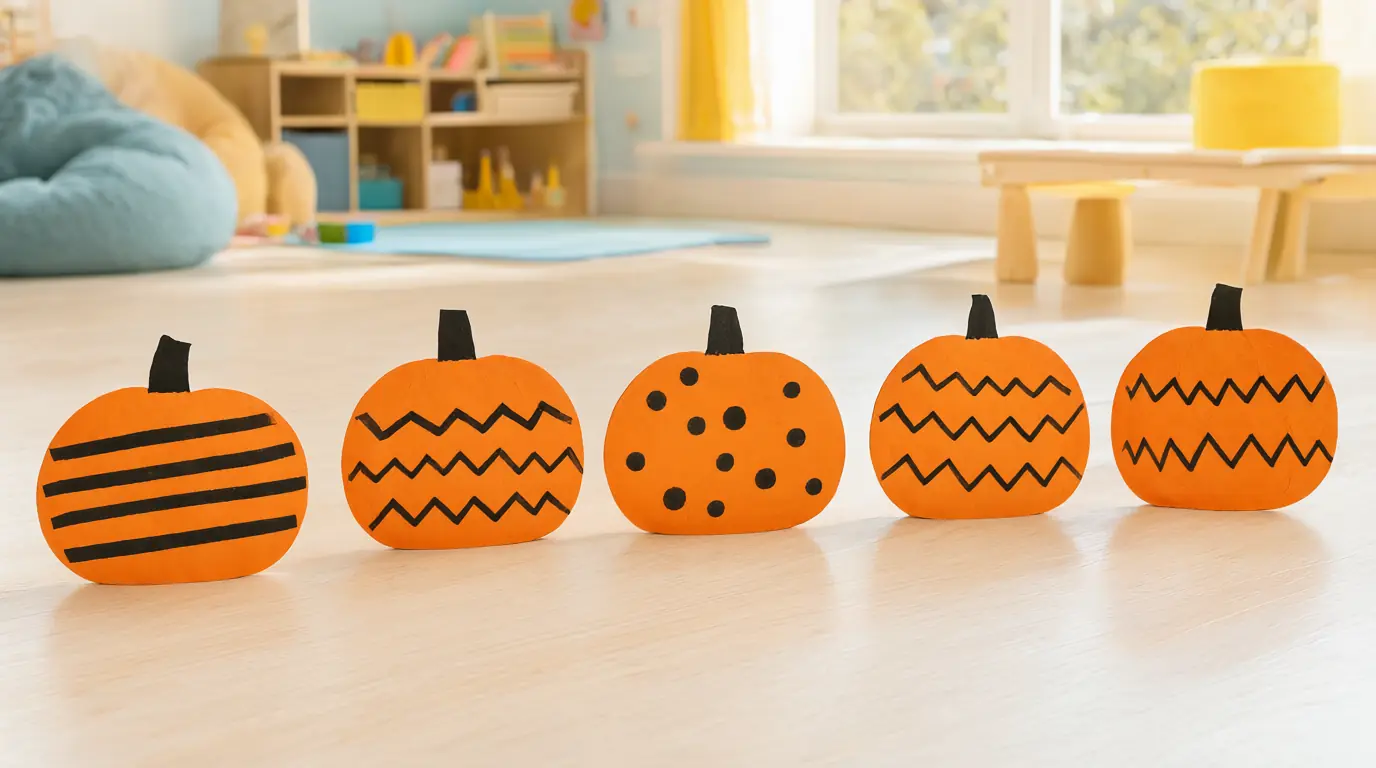
Make it your own: Two-year-olds can hunt just three pumpkins with clearly different patterns. Older children can hunt for two patterns at once, or match a pumpkin to a pattern card rather than to another pumpkin.
Pretend potion picture
Drawing a potion keeps the magic on paper, where nothing can spill or be swallowed. Inventing the ingredients is a quiet language game, and deciding what the potion is for — helping someone sleep, making flowers grow — gives the drawing a purpose and a story to tell afterwards.
You’ll need
- A large sheet of paper
- Crayons, pencils or washable paint
- A few coloured pencils for extra detail
How to do it
- Ask what the potion does and who will use it.
- Draw the bottle or jar large, filling most of the page.
- Add ingredients one at a time: three leaves, a drop of moonlight, a pinch of laughter.
- Draw a label with a picture rather than words if your child prefers.
- Give the potion a name and say it out loud together.
- Tell the story of the day someone needed the potion and what happened next.
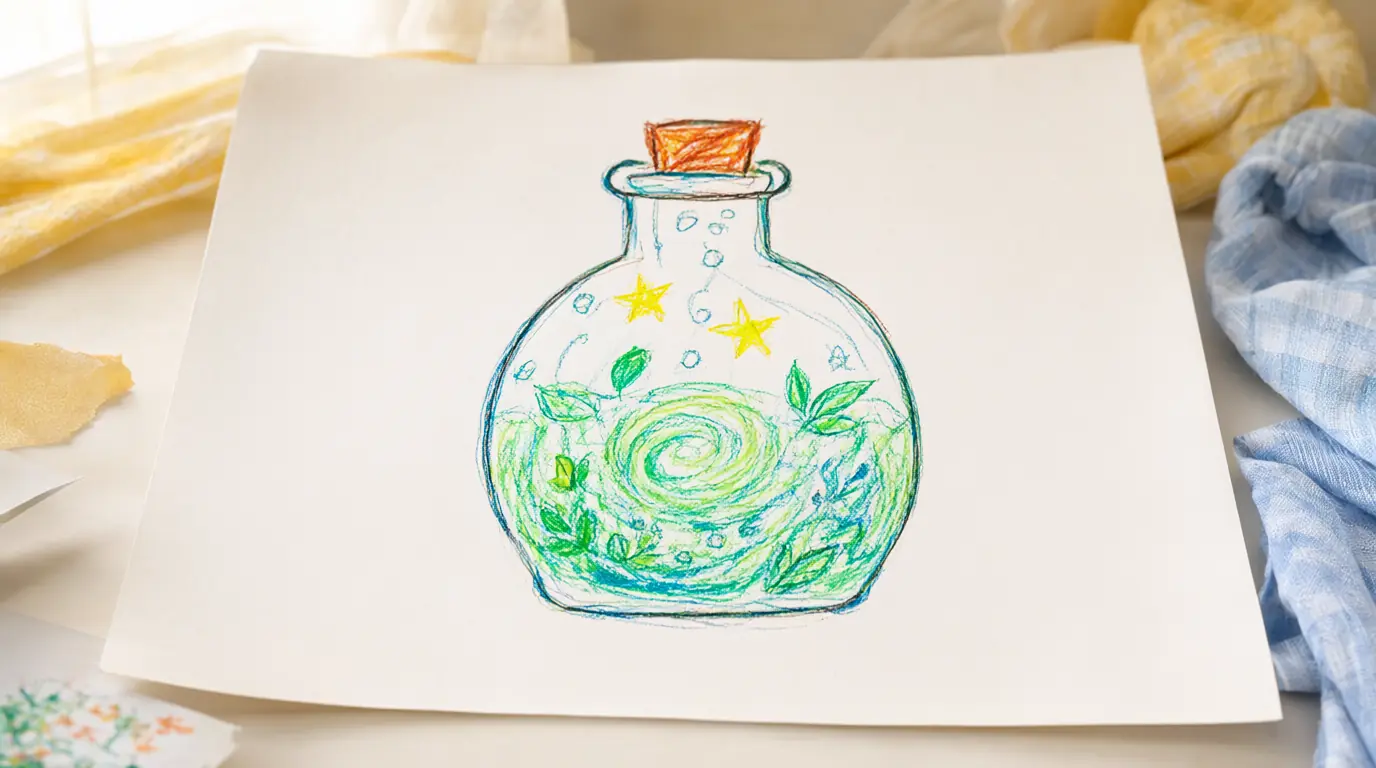
Make it your own: Younger children can decorate a potion bottle outline while you write their ingredients for them. Older children can draw a small instruction leaflet with a warning symbol and a careful dose.
Toy costume studio
Making something for a toy is often easier than making something for yourself, and it lets a child direct the whole design. A paper cape, a crown or a collar can transform a teddy into a character in minutes, and the toy becomes a story prop for the rest of the afternoon.
You’ll need
- A large soft toy
- Thick paper, felt scraps or fabric offcuts
- Wool, tape or sticky putty
- Crayons and stickers
How to do it
- Choose the toy that will be dressed; a large teddy or a cushion creature works well.
- Ask what the character is: a friendly wizard, a sleepy dragon, a baker.
- Cut a simple cape, crown or collar shape with adult scissors.
- Let your child decorate the shape before anything is attached.
- Fasten it with tape, sticky putty or a loose loop of wool that comes off easily.
- Give the toy a voice and act out one short scene together.
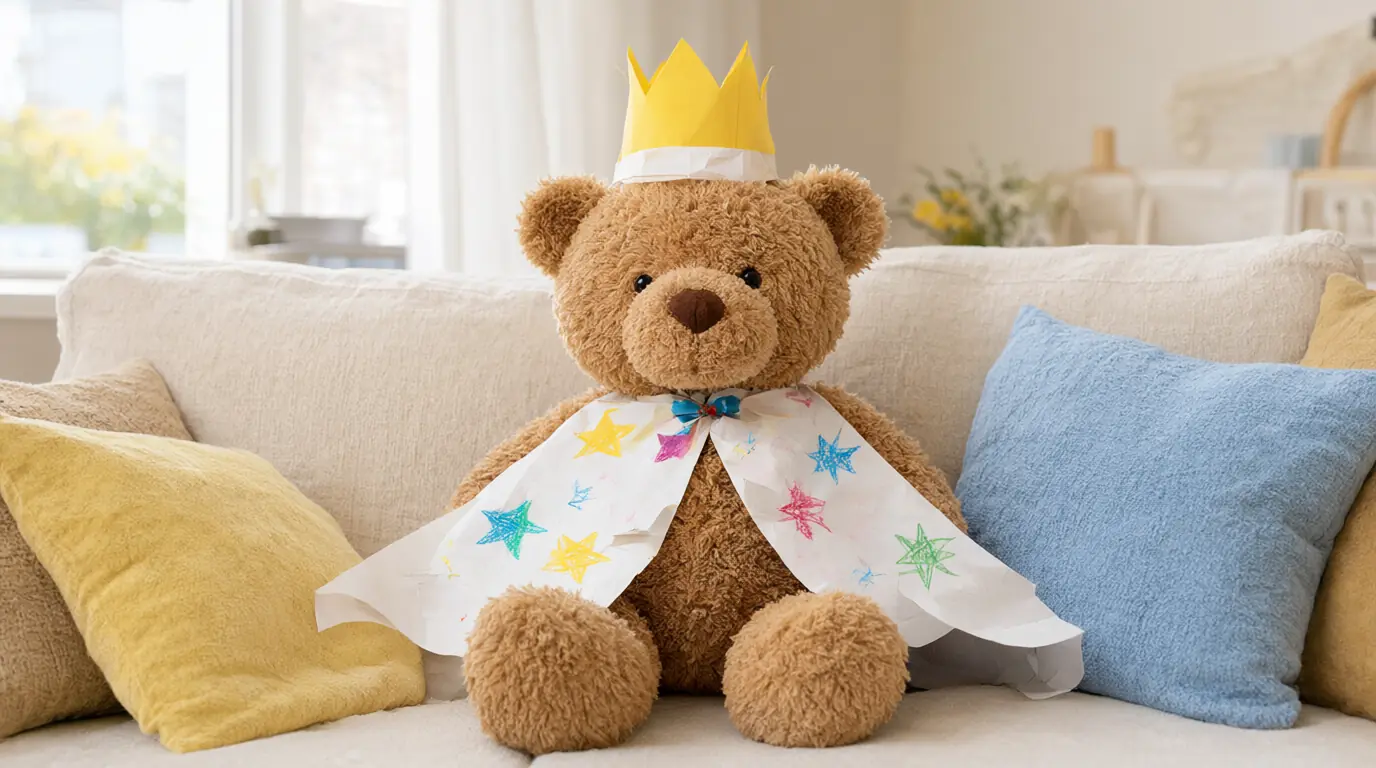
Make it your own: Toddlers can decorate the shape and watch you attach it. Older children can make two outfits and swap them, or write a tiny label for the character on the back of the paper.
Friendly riddles for the table
Riddles are the easiest Halloween activity to carry anywhere, and the friendly ones practise listening and reasoning without any hint of threat. Read each clue slowly, pause and let your child guess before you give the answer; wrong guesses are part of the fun and often more interesting than the right one.
How to do it
- Q: I am round and orange and I sit on a porch in October. I wear a smile, not a frown. A: A pumpkin.
- Q: I am made from an old white sheet with two holes for eyes. I float past the window and say hello. A: A friendly ghost.
- Q: I have eight legs and I spin a web in a corner. I am small and not at all scary. A: A spider.
- Q: I am black with wide wings and I fly at night. I am not a bird. A: A bat.
- Q: I stand in a field wearing a hat, and birds like to land on my arms. A: A scarecrow.
- Q: You carry me from door to door, and I am full of treats by bedtime. A: A trick-or-treat bag.
Make it your own: For younger children, add a picture of the answer face down. Older children can invent their own riddle and give you three clues, starting with the hardest one.

Make it work for your family
If your child loses interest halfway through, stop and leave the materials out for later rather than pushing on. Children who go quiet may simply be concentrating, so wait a few seconds before offering help. When something feels like too much, change one detail instead of ending the game: turn the ghost into a cloud, swap the mask for a hat, or bring a favourite soft toy into the story. A child who watches from the sofa is still taking part.
Keep the session short and finish before tiredness sets in; a game that stops while it is still fun is the one children ask for again. If your child loves words and guesses, friendly Halloween riddles and Halloween would you rather questions make a calm table activity for a wet afternoon. Photograph the finished creatures and costumes so they can be revisited later, and let your child decide where to display them.

Parents also ask
Which Halloween activities suit a child who finds spooky things frightening?
Friendly ones with a visible set-up: a paper creature parade, a pattern hunt using pumpkins on shelves, a drawn potion or dressing a soft toy. Explain each step before it happens, keep the room lit and let your child watch or opt out without missing anything. Choosing a funny character is often enough to make the day feel safe.
At what age do children understand Halloween?
Many children grasp the dressing-up and treat-sharing parts by around three, while the line between pretend and real keeps forming for several more years. Costumes, decorations and jokes land very differently at four and at seven, so follow your child's reactions rather than their age and keep the scarier details for later.
How do I plan a small Halloween party at home for young children?
Pick two or three short activities that need little space, such as a pattern hunt, a craft table and a riddle sheet, and set them up in separate corners. Keep the lights on, the music gentle and the whole thing under an hour. Invite parents to stay and offer a quiet spot for anyone who needs a break.
Choose materials and activities that suit your child, supervise as needed and adapt the ideas to their interests and abilities. About our editorial approach