Weebou Editorial Team
 In this article
A little preparation
Set aside about twenty minutes at a table where you can leave a pumpkin and a few paper cards out. You will need a calendar for the current month, a small pumpkin, a tray, a spoon, and paper and pencils for the sorting game. Nothing here has to be bought specially, and the six ideas can be done in one afternoon or spread across the week before the thirty-first.
Decide in advance how you will talk about the difference between a fact, a tradition and a story. A tradition is something people choose to do, a fact is something we can check, and a story is something we enjoy pretending. Keep that language light, because children move between the three constantly and that is part of the pleasure. Skip gory decorations and jump-scare videos, and if your child prefers a gentler version of the celebration, these friendly Halloween activities cover the same topics without the frights.

Questions to explore together
Why the date is always 31 October
One fixed date is easy to remember and gives children a way to place the celebration on a calendar. The name is a shortened form of All Hallows' Eve, the evening before All Saints' Day on 1 November, which is why the date never moves. Counting down also builds a real sense of how long a week is, which is much harder to explain in the abstract.
How to do it
- Open a calendar to October and find the thirty-first together.
- Count how many days are left, crossing one off each morning.
- Say the old name out loud: All Hallows' Eve, the evening before All Saints' Day.
- Find 1 November on the same calendar and notice that the two days sit side by side.
- Point out that south of the equator October is spring, so the same date looks completely different there.
- Ask which day of the week it falls on this year and mark the square with a small drawing.
Make it your own: Younger children can simply cross off days and count to three. Older ones can work out how many weekends are left, or find another country on a globe and guess whether it will be warm or cold there in October.
Open a pumpkin and find the seeds
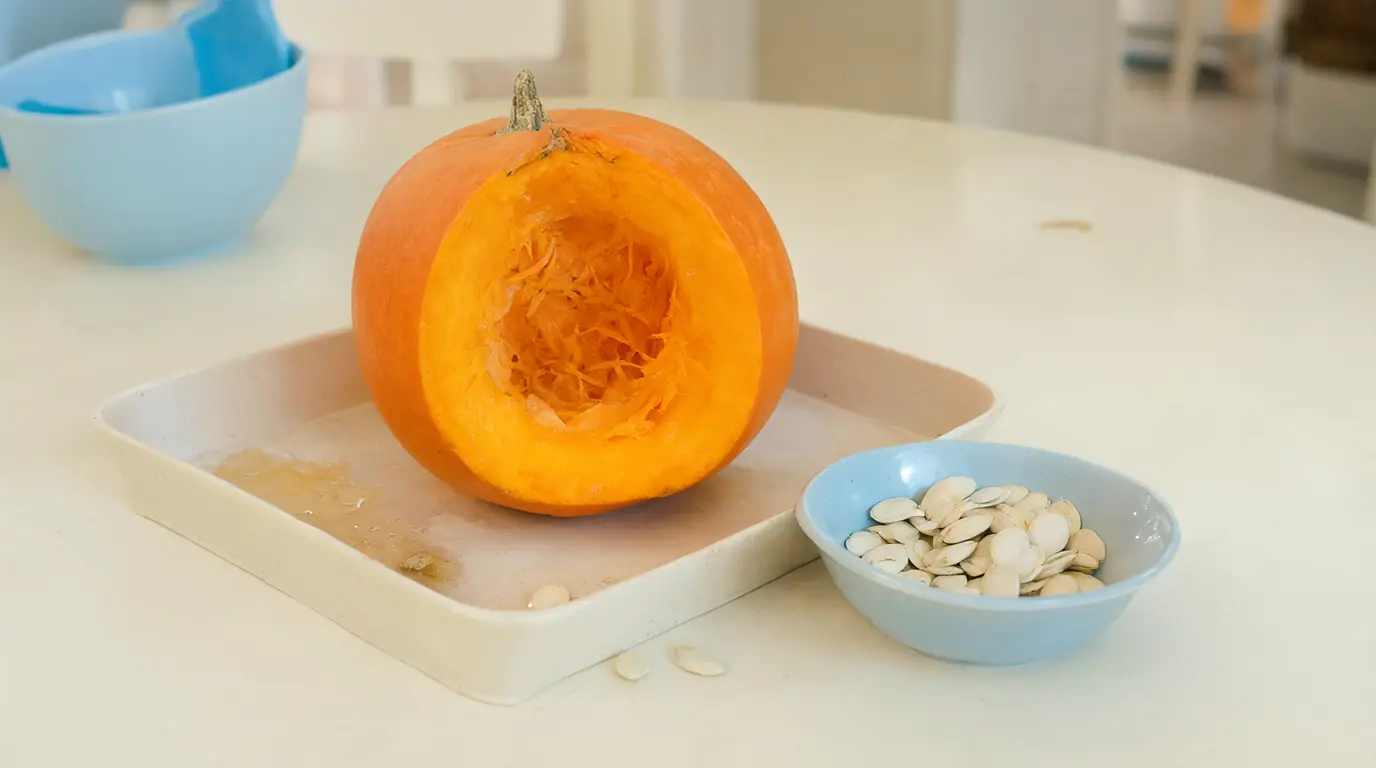
Cutting a pumpkin open answers several questions at once: what is inside, where the seeds sit and how many there might be. Children often expect a solid vegetable, so the hollow centre and the wet strands come as a genuine surprise. It is also the moment to mention that a pumpkin is botanically a fruit, because it grows from a flower and holds its own seeds.
 You’ll need
- 1 small pumpkin
- A tray or wipe-clean cloth
- A large spoon and a bowl
- An apron or an old shirt
How to do it
- Wash and dry the pumpkin, then let your child feel the ridges and the stem.
- An adult cuts a wide opening in the top and sets the knife aside out of reach.
- Lift the lid together and look inside before touching anything.
- Invite your child to pull the seeds and strands into the bowl with fingers or a spoon.
- Rinse a few seeds and count them in small groups of five.
- Leave the empty pumpkin on the tray and look at it again over the next few days to see what changes.
Make it your own: Toddlers can watch and touch one seed at a time, while older children can estimate the number of seeds before counting and compare two pumpkins. A child who dislikes wet textures can use a spoon and stay in charge of the bowl.
From turnip lanterns to pumpkin lanterns
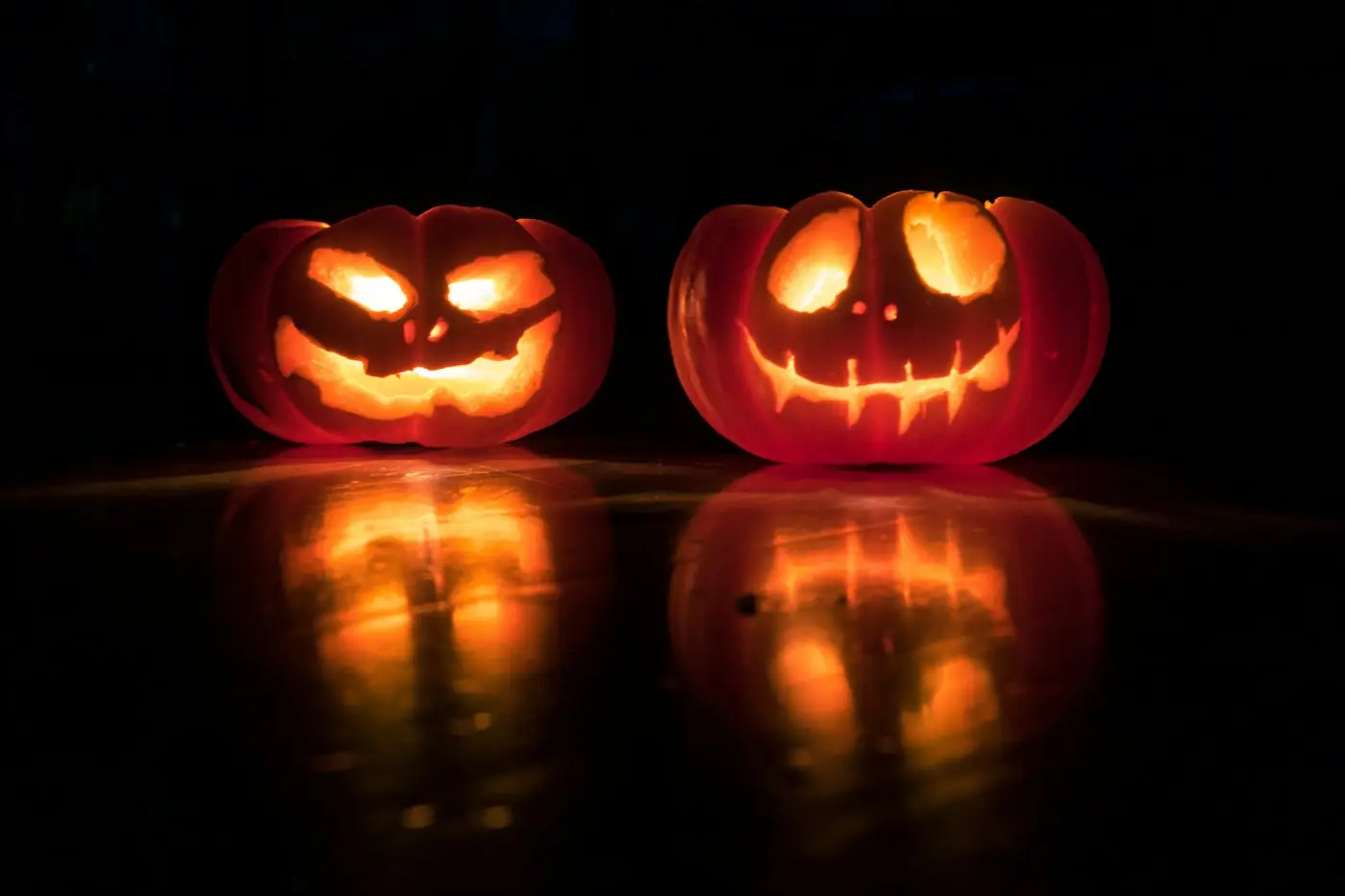
The lantern has a history that is easy to follow and gently corrects the idea that Halloween has always looked the way it does now. Carving began with root vegetables in Ireland and Scotland, and the pumpkin only became the familiar choice where it grew easily. The name itself comes from an old folk story rather than from anything anyone can check.
How to do it
- Turnips and potatoes were carved in Ireland and Scotland long before pumpkins were used for lanterns.
- Pumpkins grow well in North America, are easier to hollow out and became the usual choice there.
- A pumpkin is a fruit and belongs to the squash family, along with courgettes and cucumbers.
- The flesh can be cooked, and the seeds can be toasted or planted in spring.
- The name jack-o'-lantern comes from a folk tale about a man called Jack and a hollowed turnip with a light inside.
- The lantern was once meant to be a little unnerving; many families now carve friendly faces instead.
Make it your own: Younger children can draw a face on paper and tape it to the pumpkin. Older ones can compare a turnip and a pumpkin side by side, notice which is harder to hollow, and explain the difference to someone else.
A real-or-pretend sorting game
Sorting facts from make-believe gives children a way to enjoy spooky decorations without feeling muddled about what is true. The point is not to spoil the fun: a child can know that a ghost is a story and still love pretending to be one. It also shows you what your child is actually wondering about, which is usually more interesting than the answer.
You’ll need
- Six to eight small cards or sticky notes
- A pencil
- Two plates or two hoops
- A few decoration pictures if you have them
How to do it
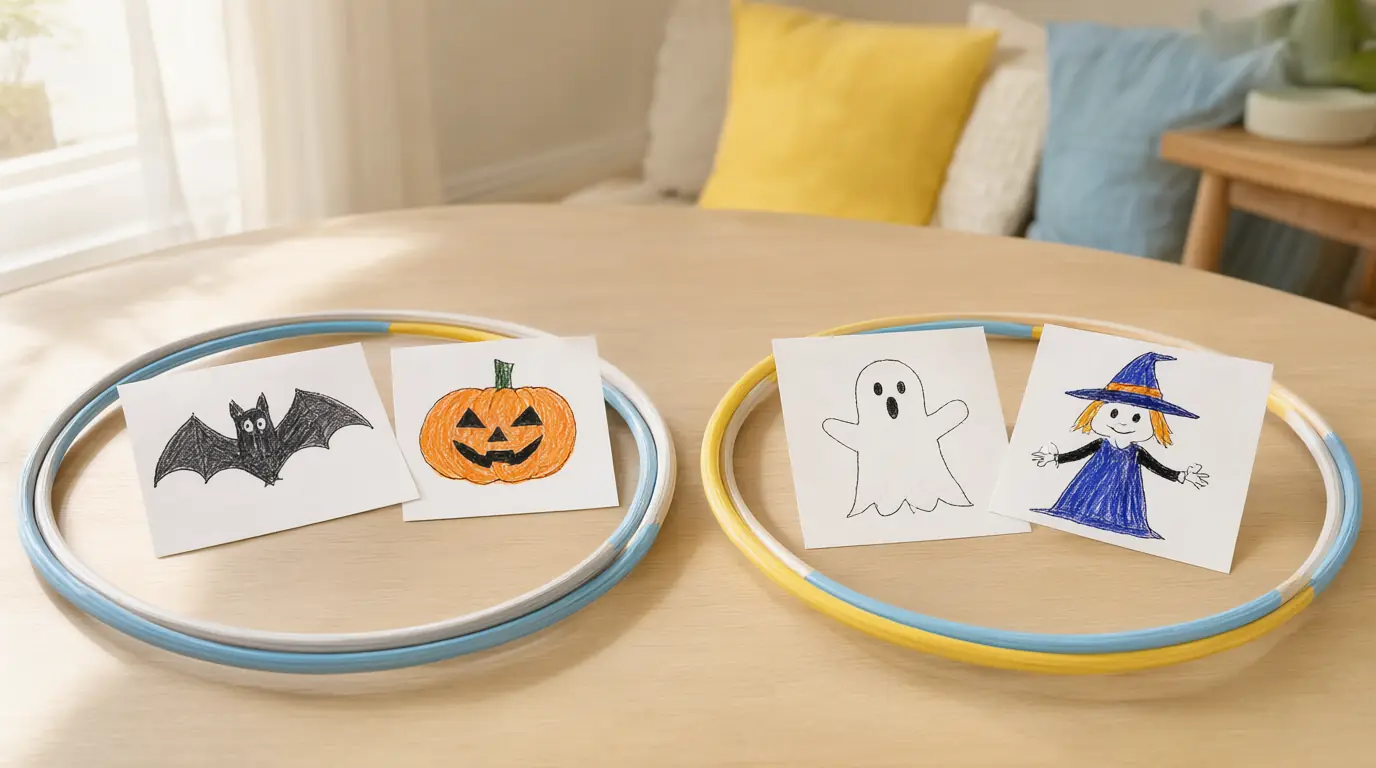
- Write or draw one thing on each card: a bat, a spider, a ghost, a pumpkin, a skeleton, a witch.
- Lay out two hoops and agree on a label for each: things that exist, and things people invented.
- Take turns choosing a card, naming it and placing it in a hoop.
- For each real animal, add one detail: bats eat mostly insects and fruit, and spiders have eight legs.
- For anything that lands in the middle, start a third pile called stories and say why it fits there.
- Finish by asking whether something can be pretend and still be fun.
Make it your own: For younger children use only four cards and two clear piles. Older ones can add a third category for things people once believed and no longer do, or draw a card for a decoration they have seen but could not name.
Draw a costume menu of five ideas
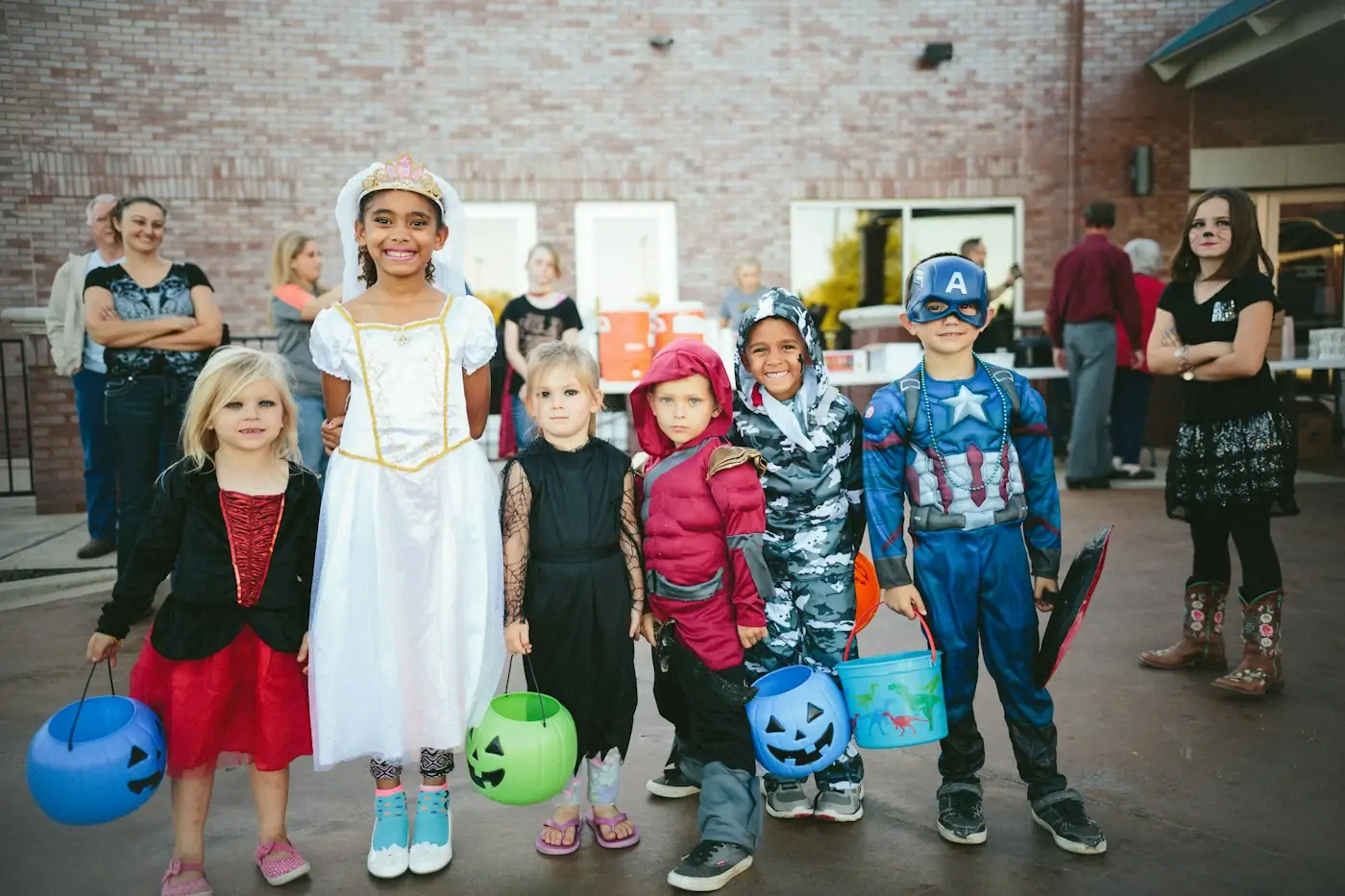
Costume talk widens the picture of what the day can be. Children often assume it is mostly about frightening figures, when in practice it holds animals, jobs, characters from films and completely invented creations. Drawing the options first takes the pressure off choosing, and it helps a child who feels they ought to be scary but would rather not be.
You’ll need
- One sheet of paper
- Pencils or crayons
- A few fabric scraps or ribbon if you have them
How to do it
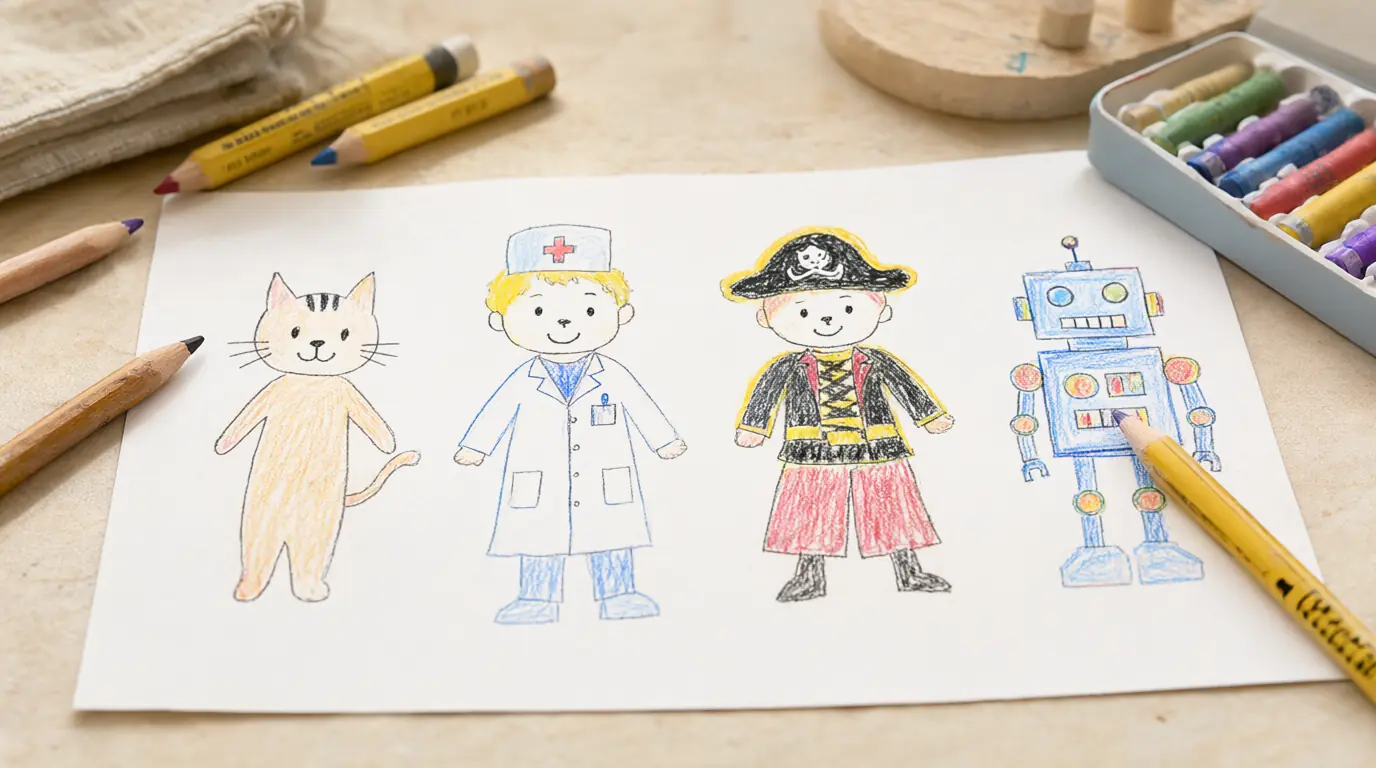
- Ask what your child would most like to be and draw or write that first idea at the top of the sheet.
- Divide the rest of the page into four: an animal, a job, a character from a story, and something made up.
- Draw one idea in each space, however roughly.
- Talk about what each costume would need: a hat, a tail, a badge, a cardboard box.
- Choose one together and collect the pieces from around the house rather than buying anything.
- Leave the menu on the wall so the favourite can change during the week.
Make it your own: Younger children can point at pictures while you draw. Older ones can plan a costume that needs no mask, or design one for a pet or a teddy and explain how it would stay on.
Bats, spiders and owls: what is actually true
Decorations mix real animals with invented ones, and children often carry away a muddled idea of which is which. A few accurate details turn a paper bat into a small nature lesson, and most of them are reassuring: bats are not out to get anyone, and a spider in the corner is going about its own business.
How to do it
- Bats are mammals, not birds, and they are the only mammals that can truly fly.
- Most bats eat insects or fruit; only a few kinds drink blood, and they live in Central and South America.
- A bat finds its way in the dark by listening to echoes, which is called echolocation.
- Spiders have eight legs and two body parts, so they are not insects, which have six legs.
- Almost all spiders are harmless to people and would rather hide than be handled.
- Owls hunt at night and can turn their heads a long way, though not all the way round.
Make it your own: Younger children can match a toy animal to a picture and copy its sound. Older ones can choose one animal, find out what it eats and draw its food next to it, then explain the drawing to someone at home.

Make it work for your family
Expect some answers to be wrong, and treat them as interesting rather than as mistakes. If your child insists a pumpkin is a vegetable, ask what makes them think so, then open it and look for the seeds together. That is far more useful than correcting the word straight away. If a question comes up that you cannot answer, say so and look it up later together rather than guessing.
Keep sessions short enough to end on a good question rather than a tired one, and let your child choose which idea to try first. A child who is uneasy about decorations may prefer the sorting game, because it gives them a clear way to separate what is real from what is pretend. For a quicker version at the table, try these Halloween trivia questions with clear answers, or follow one pumpkin further with these pumpkin counting and story activities.

Parents also ask
Why is Halloween always on 31 October?
It falls on the evening before All Saints' Day, which is 1 November. The older name was All Hallows' Eve, and that shortened over time to Halloween. Because it is tied to those fixed dates rather than to a particular weekday, it always lands on the thirty-first.
Is a pumpkin a fruit or a vegetable?
A pumpkin is a fruit. It grows from a flower and holds its seeds inside, which is how fruits are defined botanically, even though we usually cook it like a vegetable. It belongs to the squash family, along with courgettes and cucumbers.
How do you explain Halloween to a frightened child?
Separate what is real from what is pretend, and let them choose the friendly version. Say plainly that ghosts and witches are stories people enjoy, that a carved pumpkin is just a hollow vegetable, and that they can skip any house or decoration they do not like.
Choose materials and activities that suit your child, supervise as needed and adapt the ideas to their interests and abilities. About our editorial approach