Weebou Editorial Team
 8 min read
 In this article
A little preparation
Clear the floor before you start. Move toys, stools and anything sharp out of the way, check the surface is not slippery, and give yourselves about an arm's length of space each. A mat, rug or folded blanket is enough, and bare floorboards are fine for seated games. Shoes off; socks on or off as your child prefers. Set out the cards or scarf you plan to use and keep the next game beside you rather than leaving the room to fetch it.
Timing matters more than duration. Five to ten minutes is plenty for a first try, ideally before your child gets hungry or tired. Say what you are about to do in one sentence: 'We are going to try some animal shapes.' Show each movement yourself, then let your child copy it, change it or just watch. Skip inversions, hands-on adjustments and any instruction to hold or change the breath: young children move and breathe differently from adults, and 'lying still to calm down' can feel like a demand rather than a game. If your child has a movement or medical condition, ask a physiotherapist or another qualified professional what suits them.

Ideas to try together
Sleeping cat to stretching cat
Starting curled up and unfurling slowly is easier than copying a fixed pose, because your child decides how far the stretch goes. Curling small also gives a clear resting shape to return to whenever they want a pause. Name the two shapes and let them switch between them as many times as they like.
 You’ll need
- A mat, rug or folded blanket
- A picture card of a cat or a photo of a real pet
- A cushion to kneel on
How to do it
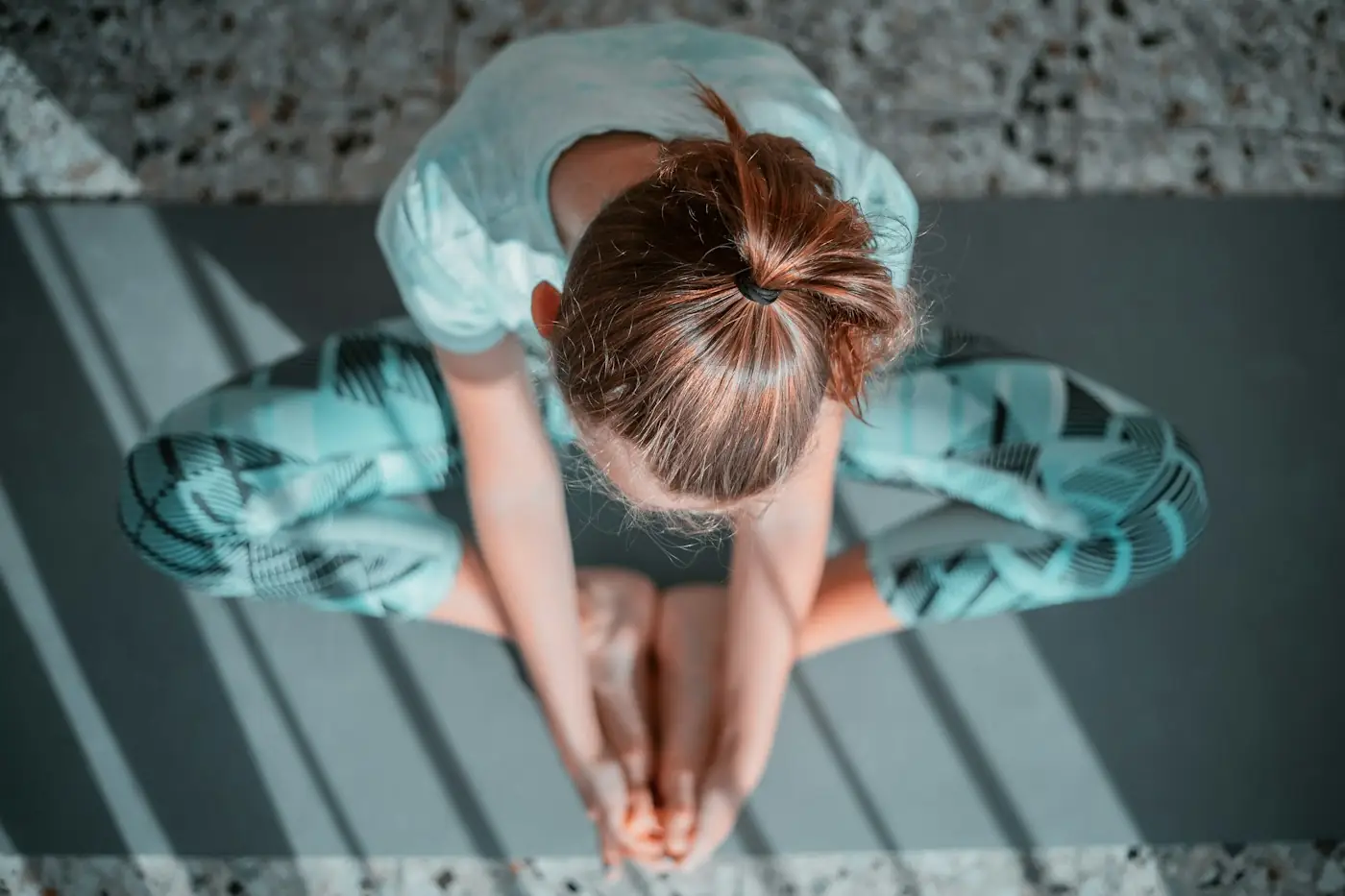
- Start kneeling and sitting back on your heels, then fold forward with arms resting in front: the sleeping cat.
- Move in and out of the shape a few times, letting your child set the pace.
- Slowly press the hands down and lift the chest while the hips stay back: the stretching cat.
- Hold for as long as it feels comfortable, then return to the sleeping shape.
- Ask which shape they would like to try three more times.
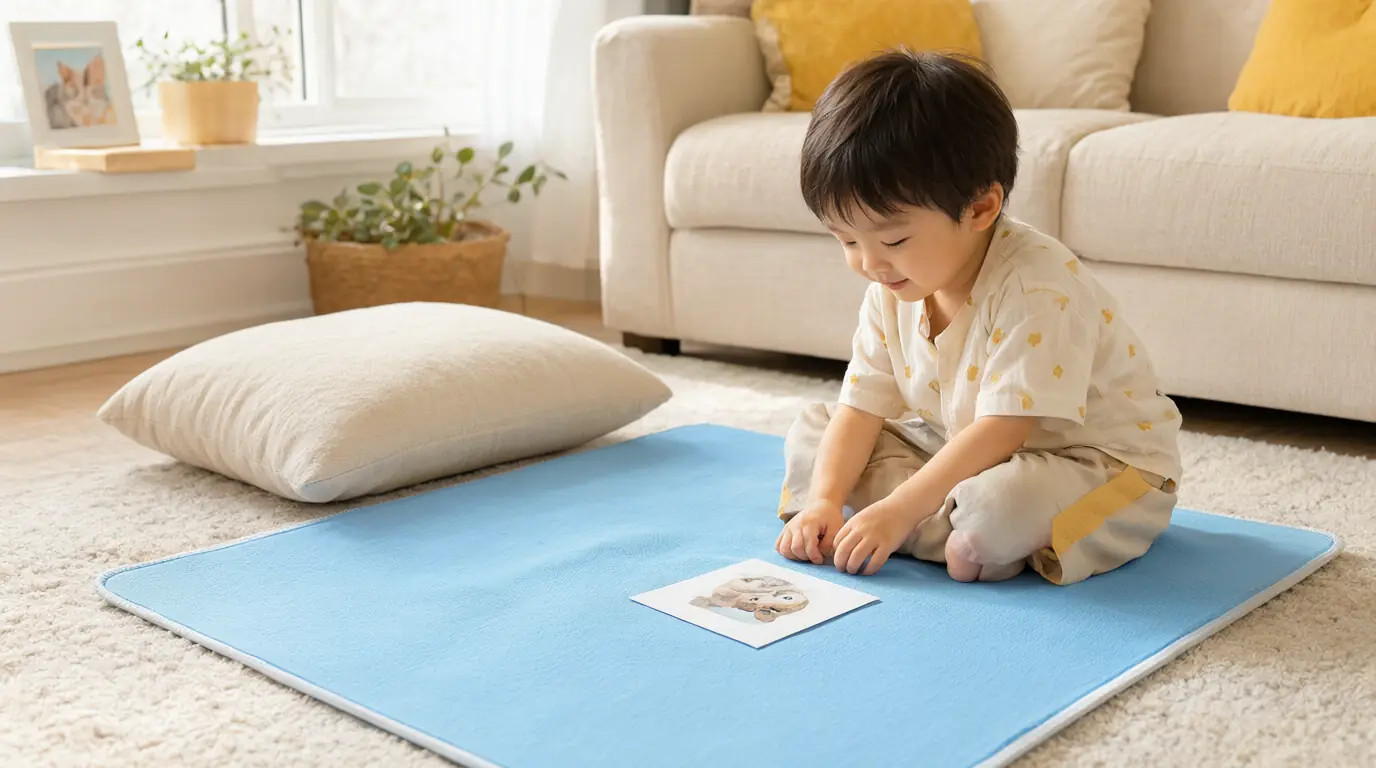
Make it your own: Toddlers can do both shapes sitting on a cushion with just their arms moving. Older children can add a sound to each shape, such as a yawn for the cat, or invent a third shape of their own.
Tape-line balance walk
A strip of masking tape on the floor turns balance into a game with an obvious goal and no height involved. Children practise stepping, stopping and changing direction, which builds the small adjustments that steady movement needs. A line also makes the game easy to repeat on any day.
You’ll need
- Masking tape or a skipping rope laid straight
- A clear stretch of floor
- Small paper shapes to place at the end
How to do it
- Lay a straight line of tape about two metres long across the floor.
- Walk along it heel to toe, slowly, with arms out to the sides if that helps.
- Try walking backwards, sideways or taking one big step over the line.
- Stand still on the line with one foot in front of the other and count three slow steps in place.
- Finish by picking up a paper shape from the far end and carrying it back along the line.
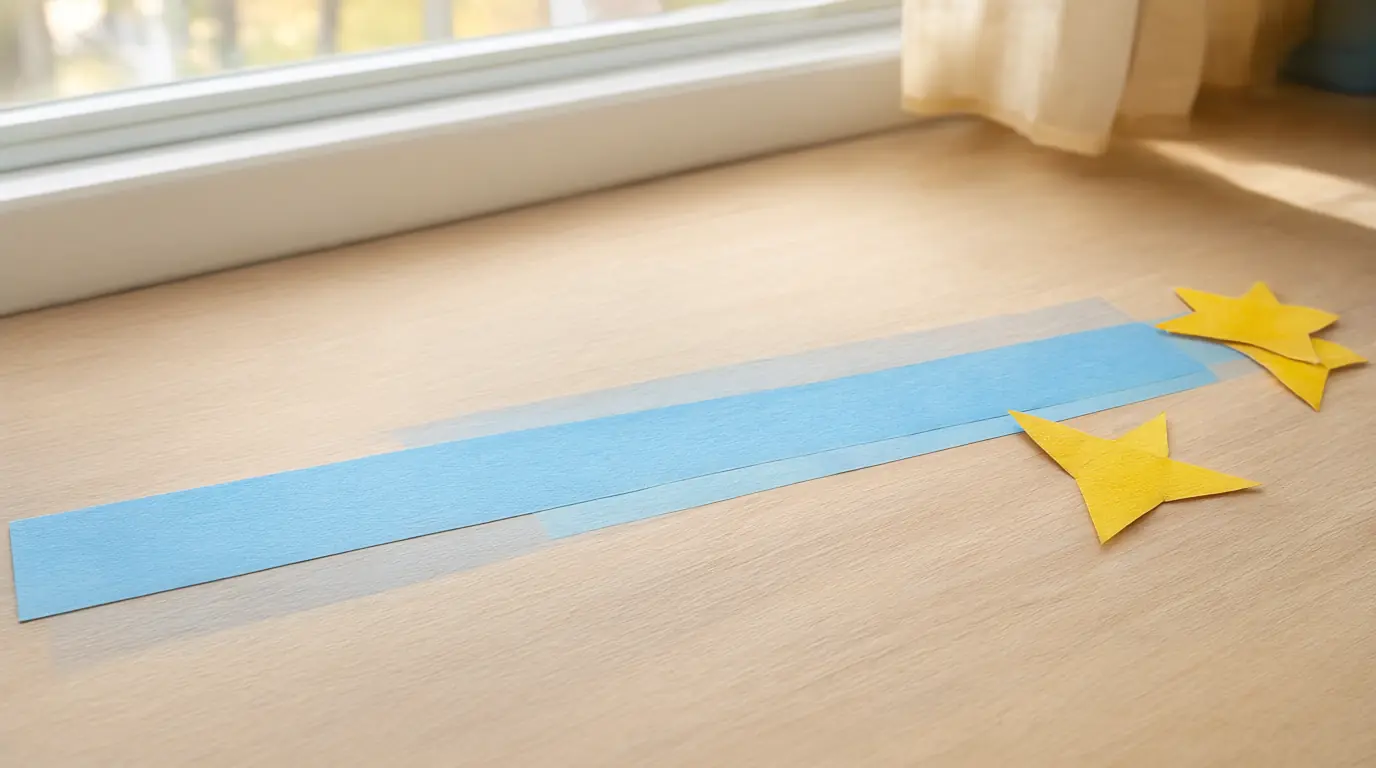
Make it your own: For younger children, make the line wider with two strips of tape or let them hold your hand. Older children can place the shapes themselves. For more ideas, see these balance games with feet close to the ground.
Seed to flower story
A story gives every movement a reason, which keeps children moving without any instruction to stretch. Because the flower grows in the child's own time, the same sequence can be tiny one day and wide the next. It also gives you natural places to pause and rest.
You’ll need
- A mat or rug
- A scarf in a green or yellow colour
- Two or three flower or leaf picture cards
How to do it
- Start crouched small with hands around the knees: the seed in the soil.
- Water the seed by sprinkling your fingers above it.
- Slowly stand up as the shoot pushes through, arms rising to whatever height feels easy.
- Open the arms out to the sides like petals and sway gently in an imaginary breeze.
- Let the flower close again, arms coming down, and sit back on the mat.
- Ask your child to add one more thing that happens in the story, such as a bee arriving.
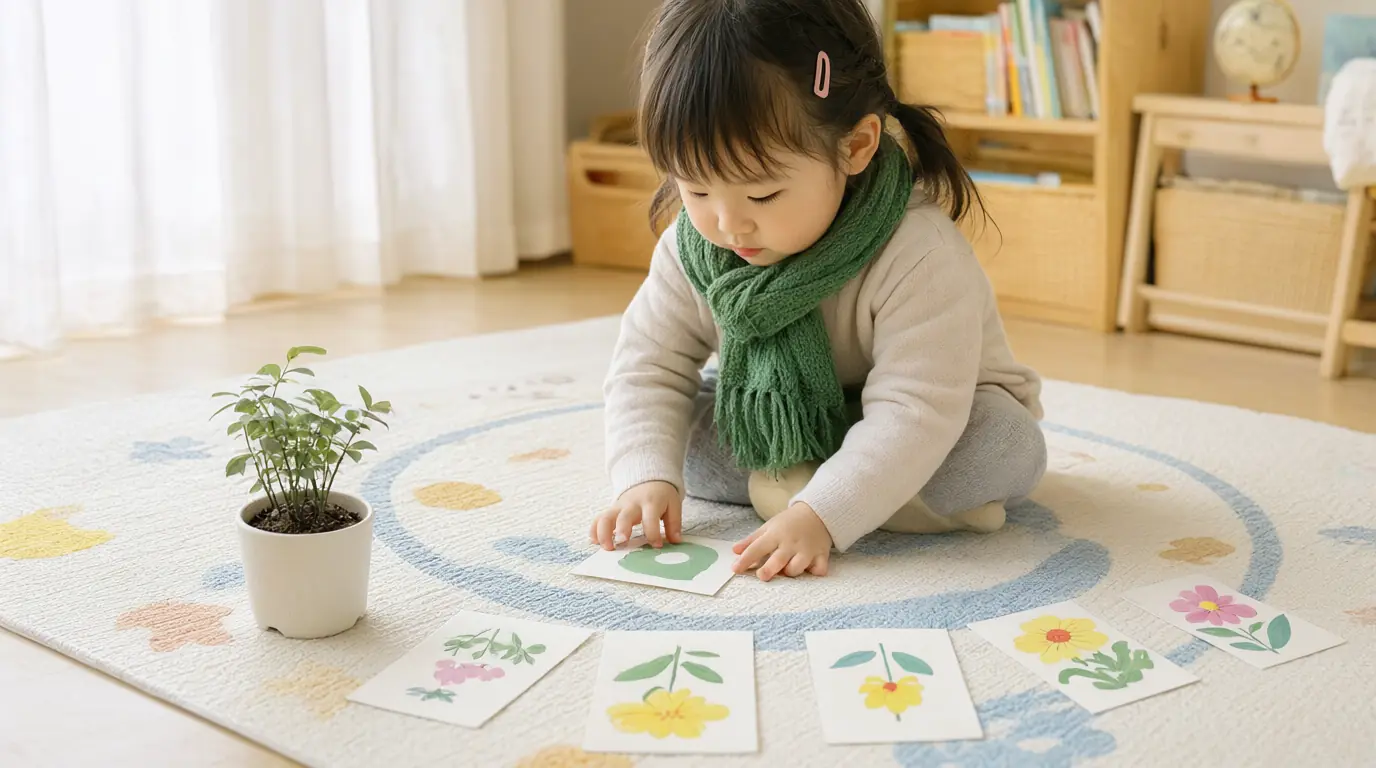
Make it your own: Seated children can do the whole story with arms and upper body only. Older children can take turns telling the next part while everyone else follows the movement.
Shape freeze
Copying a shape and then holding it still is a game children already know from musical statues, so the rules need no explanation. It asks them to make a plan, hold a position and notice when it changes, all without anyone being out. Choose shapes that are easy to stand or sit in.
You’ll need
- Five paper cards with simple shapes drawn on them (star, tree, wide, tall, small)
- A clear floor space
- A scarf or shaker to signal the change
How to do it
- Lay the cards face up where everyone can see them.
- Shake the scarf and call out a shape, or let your child turn over a card.
- Everyone makes that shape and holds it while you count three slow numbers.
- Shake the scarf again to release the shape, then choose the next card.
- Swap roles so your child calls the shapes and you copy them.
- Finish with a shape everyone can hold comfortably while sitting down.
Make it your own: Two-year-olds can hold a shape for one count instead of three, or simply copy you. Older children can combine two cards at once, such as a tall tree with wide arms.
Notice one thing at rest
Ending with a short noticing game gives children a clear finish without asking them to feel calm. Eyes can stay open, breathing stays natural and one observation is enough. Anything they notice counts, including 'I can hear the fridge', which keeps the whole thing honest.
You’ll need
- A cushion, chair or mat
- A view of the room or a window
- A soft toy to hold if wanted
How to do it
- Sit or stand comfortably and let the hands rest.
- Ask your child to find one sound they had not noticed before.
- Then find one colour in the room and point to it without moving from where they are.
- Take one more look around and choose something that has changed since you started.
- Finish by naming what each of you noticed, then get up and carry on with the day.
Make it your own: Younger children can do this lying on a mat with a soft toy. Older children can close their eyes for one round, or try to remember all four observations in order.

Make it work for your family
If your child flops down, wanders off or says no, treat that as information rather than a failure. Offer to do the game while they watch, shorten it to one shape, or move on to something else and try again another day. Children who dislike the floor can do most of these games sitting on a chair or standing at a table. If a movement seems to hurt, stop straight away and offer a smaller version or a rest.
Keep sessions short and repeat the same two or three games for a few weeks; familiarity makes them easier to join. Props help, and a scarf, a set of picture cards and the tape line are usually enough. For quieter days, these gentle noticing activities work well between busy moments, and if your child needs to burn off energy instead, try some whole-body play for small spaces.

Parents also ask
What age can children start yoga games?
Most children from about two can enjoy the shape and story games here, though the movements will be shorter and looser than an adult's. Between two and six, the aim is copying, choosing and playing rather than formal poses. If you join a class, look for one that stays playful and lets children opt out.
Do yoga games help children calm down?
They can be part of a winding-down routine, but a game is not a treatment. Some children settle after slow movement and a quiet finishing game, while others find sitting still harder than moving. Offer the calm-down game as one option among several and let your child choose.
Do children need a mat for yoga games?
No. A rug, a folded blanket or a clear carpeted floor works just as well. A mat mainly helps stop feet and knees slipping on smooth floors. For the tape-line and story games you do not need anything on the floor at all.
Choose materials and activities that suit your child, supervise as needed and adapt the ideas to their interests and abilities. About our editorial approach