Weebou Editorial Team
 9 min read
 In this article
A little preparation
Set up on a surface that suits the size of the movement. A big sheet of paper taped to a table, a clipboard on the floor or a low easel all work, and standing gives the whole arm room to move. Keep the paper large at first: A3 or the back of a poster is less frustrating than a small page because the marks have somewhere to go. Put out two or three tools rather than a whole pot, in a shallow dish so your child can swap without hunting. Ten to twenty minutes is usually plenty.
Use washable, non-toxic crayons and markers, and keep small caps, lids and beads away from children who still mouth objects. Chunky, short crayons are easier for small hands than thin pencils, and a broken crayon is often easier still. If your child grips in a fist, that is a normal stage and not something to correct in the middle of an activity; offer a vertical surface or a fatter tool instead. Short bursts of whole-hand play build the strength writing needs far better than long sessions with a pencil.
Ideas to try together
Roads for a toy car
A road is a line with a reason, which makes it one of the easiest ways in. Long curves, corners and junctions ask for a continuous movement rather than careful letter shapes, and the car gives the marks a job. Children who resist drawing often accept this, because the result is a track to use rather than a picture to be judged.
 You’ll need
- A large sheet of paper or card
- A chunky crayon or marker
- Two or three small toy cars or animals
How to do it
- Tape the paper to the table or floor so it does not slide.
- Draw one wide road together, talking about where it leads.
- Add a corner and a junction, then drive a car along to test them.
- Hand over the crayon and invite your child to add a new route or a dead end.
- Add a car park, a bridge drawn as a thick line, or a garage as a square.
- Drive the cars around the finished map and name the places as you pass them.
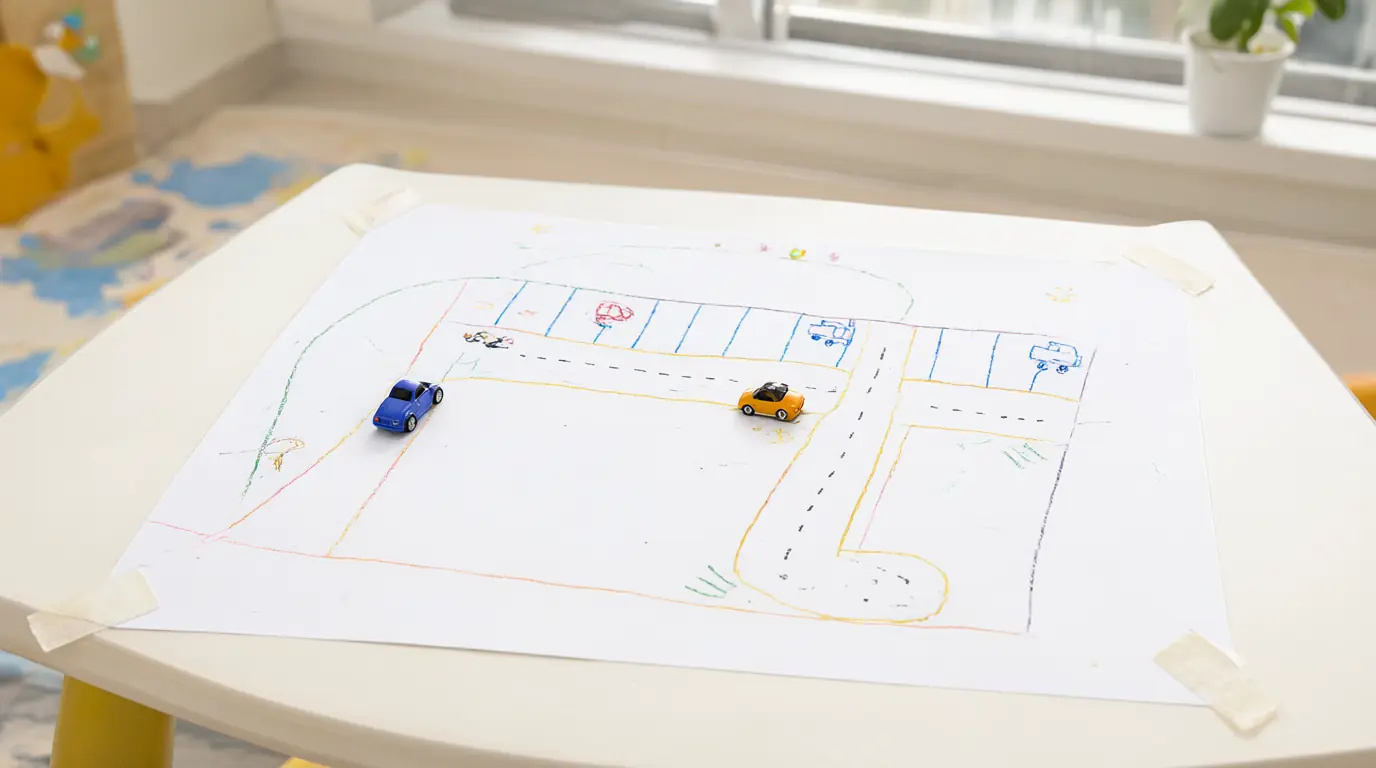
Make it your own: A two-year-old can push a car along a road you drew and add scribbled bumps. Older children can plan two roads that meet and label each place with the first letter of its name. On a rainy day, tape the paper to a low door for a standing version.
Lists and tickets for pretend play
Writing sticks when it does something. A shopping list for a pretend shop, a ticket for a train journey or a menu for a teddy bear's café all need marks on paper, and any mark counts. Your child is learning that writing carries a message and that the message can be read back later, which matters far more than the shapes themselves.
You’ll need
- Small squares of paper or old envelopes
- A clipboard or shallow box
- A chunky crayon or marker
- A few toy foods or small objects to sell
How to do it
- Set up a small pretend shop, station or café with a few toys.
- Say what you need: 'I'd like two apples and some bread, please.'
- Offer paper and a crayon and ask your child to write the order down.
- Accept scribbles, dashes, pictures or letter-like shapes as the message.
- Read it back aloud, running a finger along the marks as you go.
- Use the list in the game: pack the bag, stamp the ticket or serve the food.
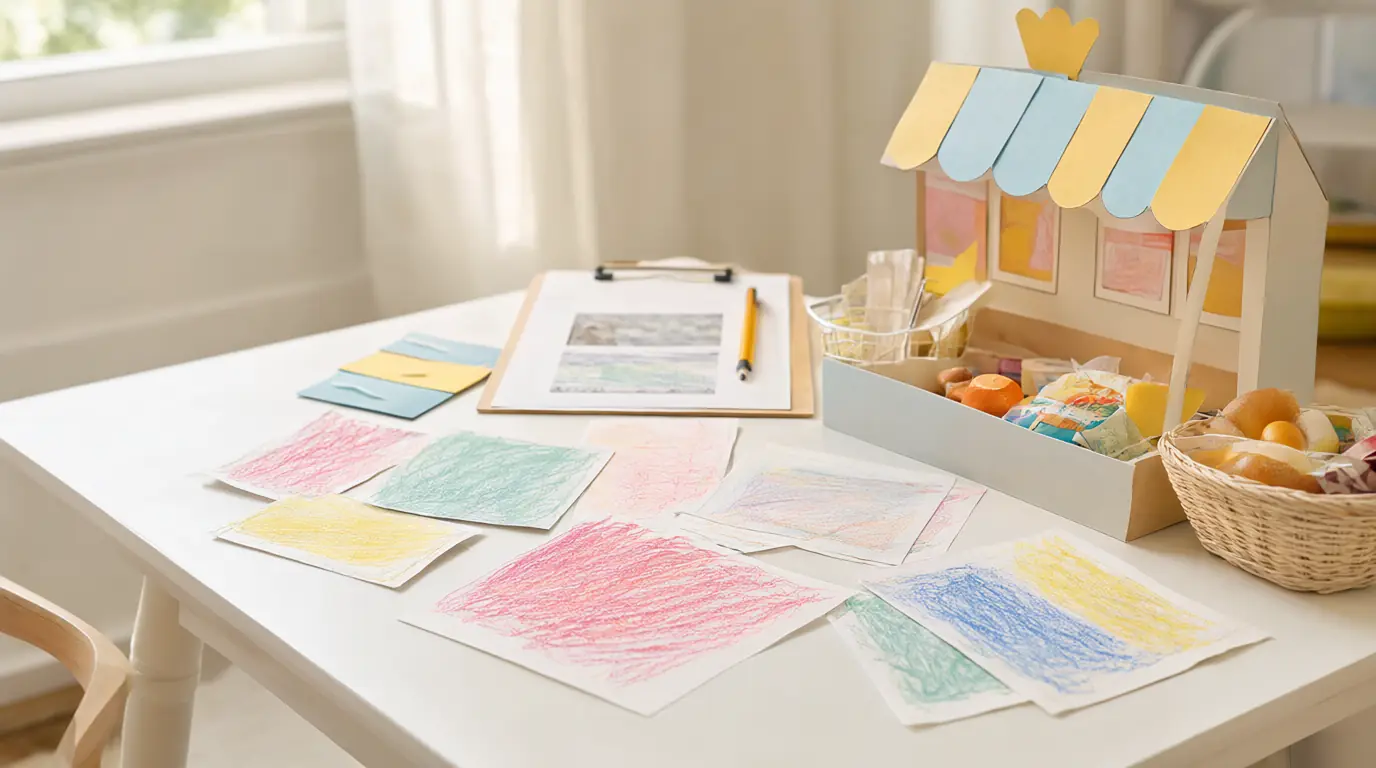
Make it your own: Younger children can make one big mark per item. Older ones can add a number of items, their own initials as a signature, or a tick beside each thing once it has been found. Swap the shop for a library or a vet's waiting room if that fits your child's interests better.
Big name art
Seeing their own name in large print gives a child something personal to work around. Rather than tracing the whole thing, they choose one letter to fill, outline or decorate, which keeps the task small and the ownership theirs. Over time the shape of the name becomes familiar from the outside in, without a single correction.
You’ll need
- A large sheet of paper
- A thick marker for the adult
- Crayons, torn paper or stickers
- A glue stick
How to do it
- Write your child's name in large clear letters across the paper.
- Read it together and point to the first letter.
- Ask which letter they would like to work on.
- Offer crayons to colour inside it, torn paper to fill it or stickers along its edge.
- Let them add their own marks anywhere else on the sheet.
- Display it at their height and come back later to hunt for the letters again.
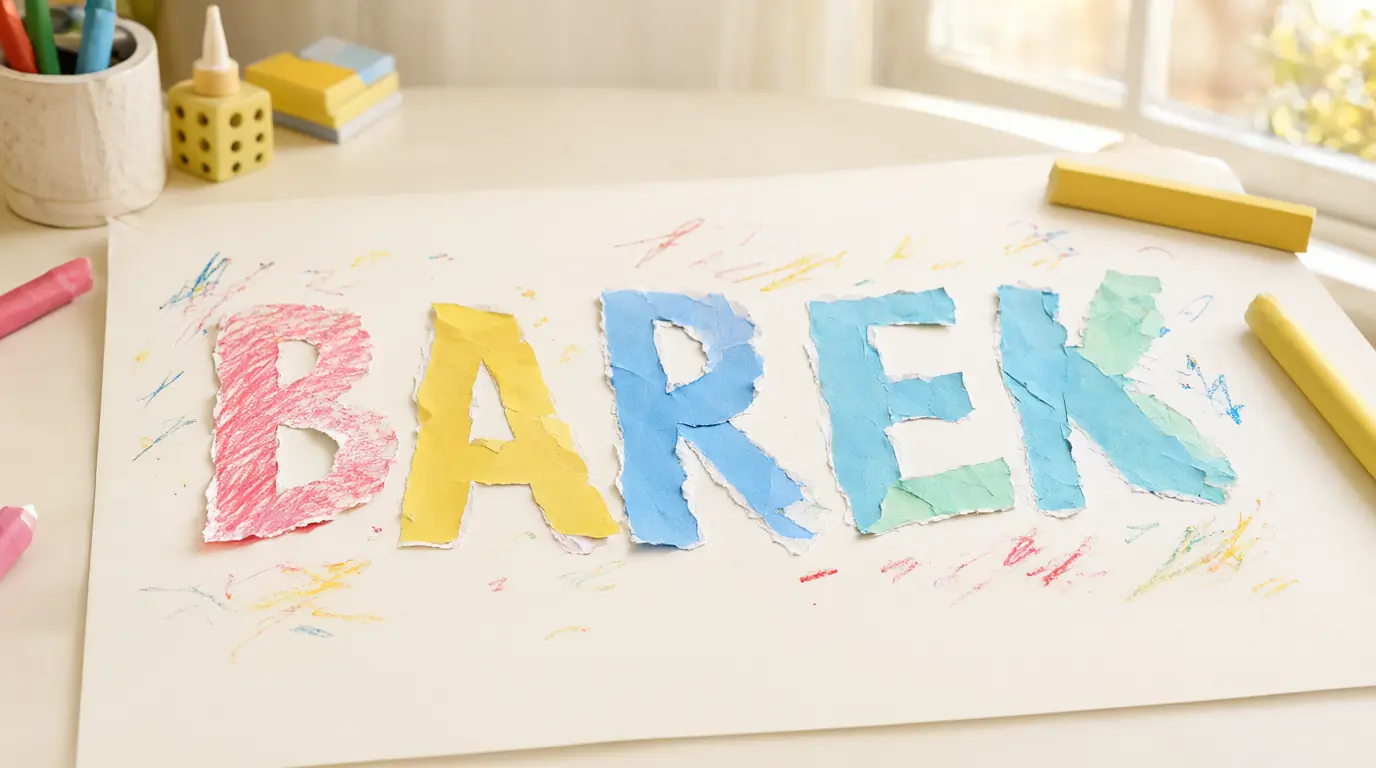
Make it your own: A younger child may only decorate the first letter, and that is enough. An older one can write the rest of the name underneath in their own way, or make a second version for a pet, comparing the two side by side.
Draw first, then dictate
Children often have a story long before they have the letters. Drawing first and then dictating lets them compose at length while an adult handles the transcription, and hearing their exact words read back shows them what writing does. Write what they say rather than a tidied version, and keep the odd phrasing; it is usually the best part.
You’ll need
- Paper and crayons
- A pen for the adult
- Tape or a folder for keeping the page
How to do it
- Invite your child to draw something that happened or something imagined.
- Ask an open question: 'What is going on here?'
- Write their words exactly beside the drawing, in front of them.
- Read the message back, running a finger under the words as you speak.
- Ask whether they want to add anything, and write that down too.
- Date the page and keep it in a folder or on the wall.
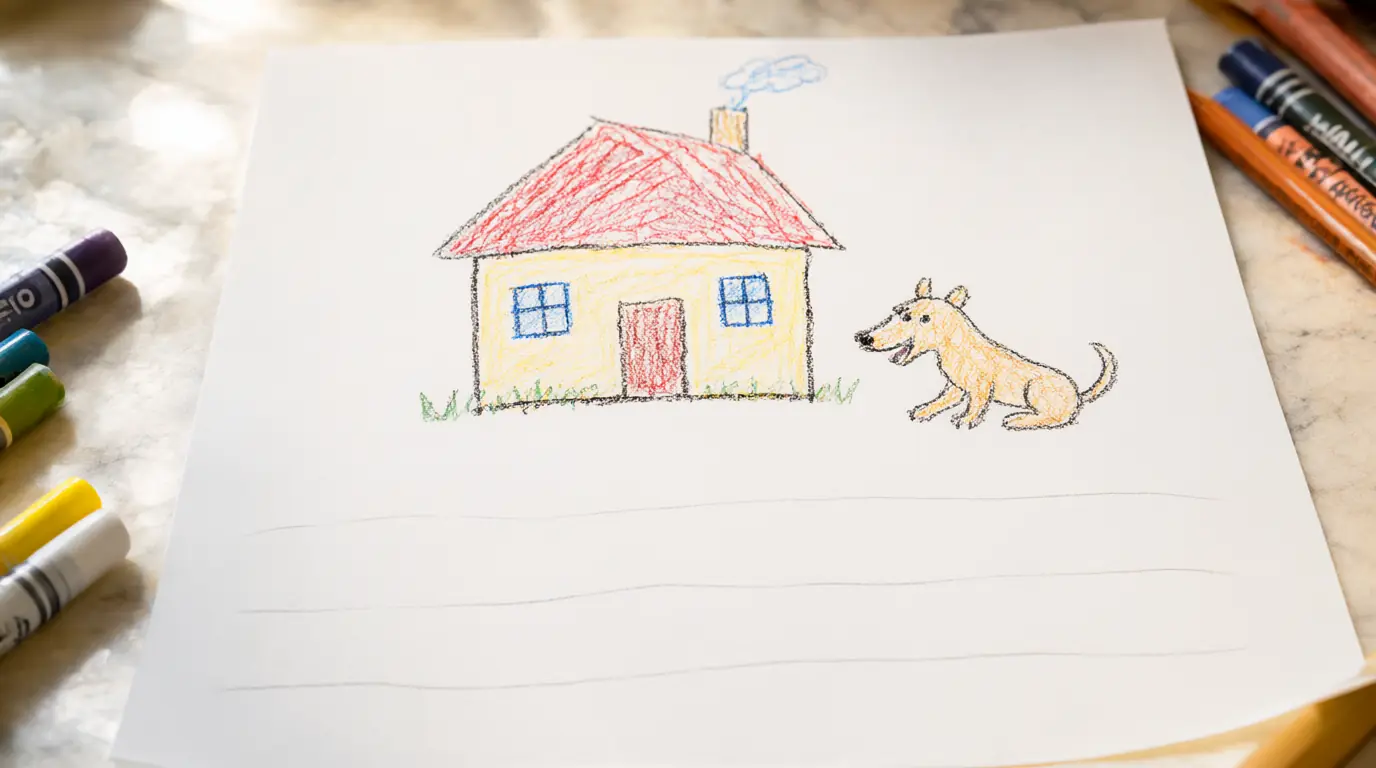
Make it your own: For a child with few words, label the picture with a single word they choose. Older children can add speech bubbles for the characters, or draw a second page and dictate the next part of the story while you number the pages together.
A message board by the door
A low board or a sheet of paper on the fridge turns writing into something the whole family uses. Leaving notes for each other, drawing a picture for a grandparent or adding a mark to a shopping list gives daily, low-pressure practice. Children see writing being read by real people rather than corrected by an adult, which changes how they feel about it.
You’ll need
- A low whiteboard, clipboard or paper on the fridge
- Washable markers or crayons
- Magnets or tape
- A small pot of sticky notes
How to do it
- Fix the board or paper at your child's height.
- Start the habit yourself: leave a note with a drawing and one word.
- Show your child the note and read it aloud.
- Invite them to add their own mark, drawing or letter.
- Read their message back and reply underneath it.
- Keep the week's notes and look through them together on Sunday.
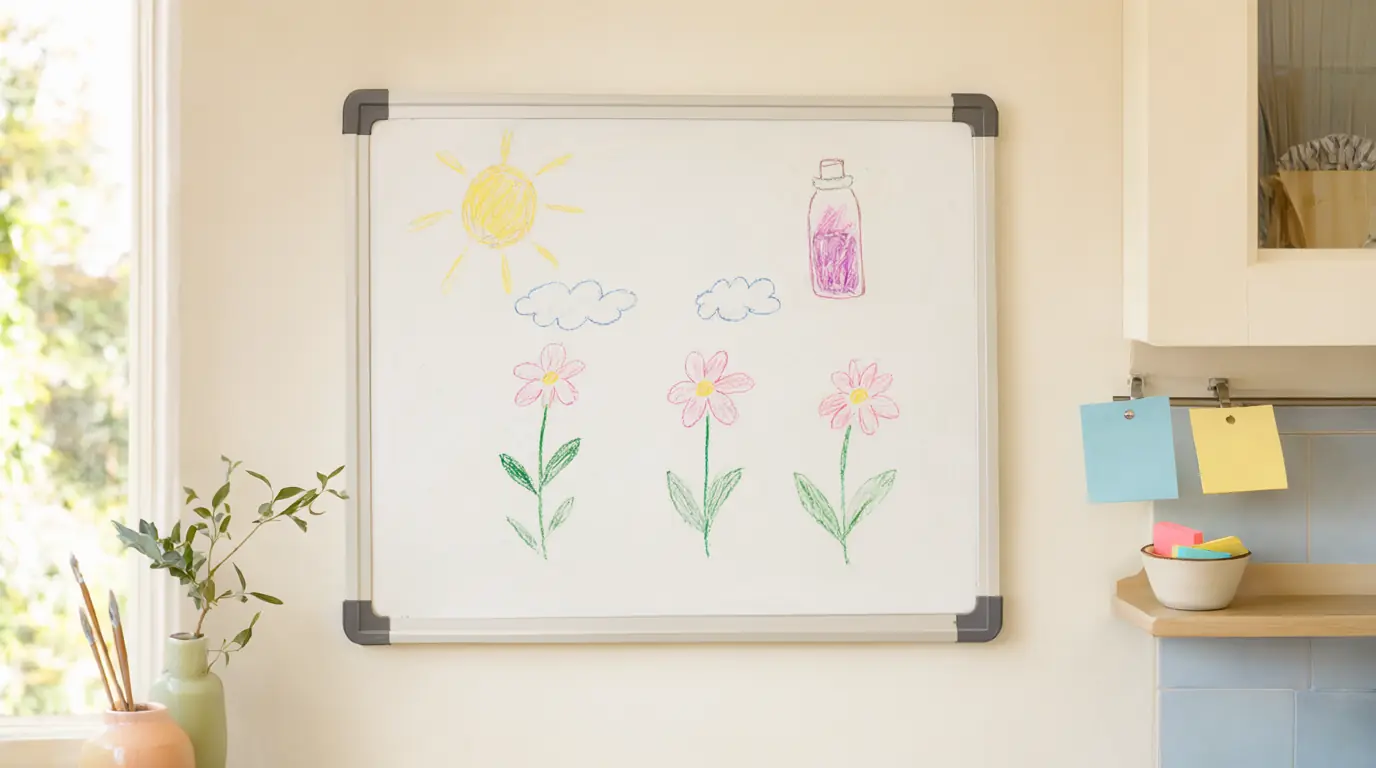
Make it your own: A younger child can add a magnet or a single scribble note. Older children can write the first letter of who the note is for, or copy a short word from a card you make together. In a shared home, add a column for each person so everyone can leave something.

Make it work for your family
Children who avoid mark-making often dislike the feel or the position more than the idea itself. Try a shorter tool, a vertical surface, or paper taped down so it cannot slide. If your child presses so hard that crayons snap, offer a thick marker or a sheet of card. If they barely touch the paper, try chalk on dark card or a finger in a shallow tray of sand, which gives more resistance and a clearer result.
Keep the activities short and repeat the ones your child likes. Ten minutes of roads three days running does more than one long session a week. If drawing or writing is persistently painful, tiring or avoided across many activities, mention it to your health visitor, nursery staff or another qualified professional rather than working through it alone. For more mark-making ideas with a purpose, try these writing games or preschool letter activities built around names and pictures.

Parents also ask
What age do children start writing letters?
Most children scribble and make letter-like shapes long before they form recognisable letters. Many show real interest in their own name around three or four, and clear letter shapes often appear between four and six. Copying a few letters is not the same as writing words, so there is no need to rush either.
Should I correct my child's pencil grip?
Not in the middle of an activity. A fist grip is common in toddlers and usually changes as hand strength and practice grow. Offer shorter, thicker tools and a vertical surface instead, and let the grip develop. If it is still awkward or painful past about six, ask an occupational therapist or your child's teacher.
How long should a preschooler write for?
Ten to twenty minutes is plenty, and many children do better with two or three short bursts than one long session. Stop while it is still going well rather than waiting for your child to lose interest. The aim is a positive association with marks and messages, not a finished page.
Sources & further reading
Explore these primary sources for further context on this topic.
Choose materials and activities that suit your child, supervise as needed and adapt the ideas to their interests and abilities. About our editorial approach