Weebou Editorial Team
 9 min read

 In this article
A little preparation
Choose four or five V words your child already knows or can easily picture: van, vase, vest, vet, violin or vegetable. Gather a picture of each, or draw quick sketches, and keep them together on a tray. Before you begin, say each word naturally in a sentence, then repeat it slowly so your child can hear the first sound: We saw a van. A van. There is no need to test; the aim is familiarity.
Find a quiet ten-minute slot and a flat surface at your child's height. V is made with the top teeth resting on the bottom lip, which is hard to see from the side, so sit facing each other. Draw a large V on paper and trace it with a finger while you say the sound. Some children will copy straight away and others will not, and both are fine. Name the letter, but do not insist on a correct answer. For a wider set of letter routines, these preschool letter activities follow the same unhurried approach.
Ideas to try together
A van with a load to deliver
A van is a word most children already know from the street, which makes it a comfortable starting point. Drawing one gives the letter a job, because the slanted front of a van looks like a V lying on its side. As your child adds wheels, a window and a load, the word comes up again and again without anyone drilling it.
 You’ll need
- One sheet of A4 paper
- Thick crayons or felt-tip pens
- A toy vehicle to look at if you have one
How to do it
- Look at a real van or a picture and name the parts together: wheels, window, door, roof.
- Draw a long rectangle for the body, then add a slanted front so the shape leans forward.
- Add two wheels underneath and a square window at the side.
- Decide what the van is carrying and draw it beside the van or stacked inside.
- Write a large V at the top of the page and say van together as your child points to it.
- Tell a short story: where is the van going next, and who opens the door?
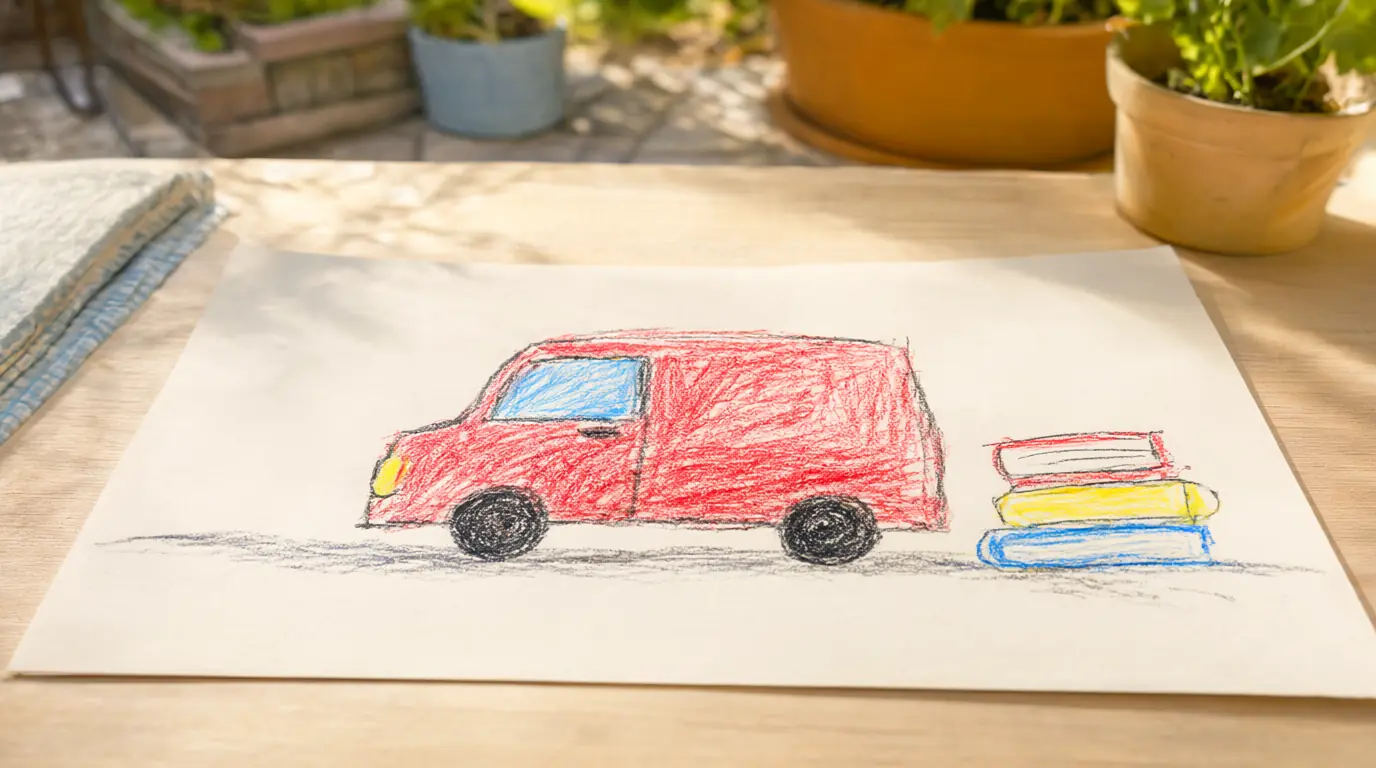
Make it your own: Younger children can scribble the wheels and let you draw the outline. Older children can draw a map of the route with three stops, label each one, and write the first letter of whatever the van is carrying.
A pretend vet appointment
A pretend vet visit gives the sound a purpose, because your child has to say the word to open the clinic. It also invites caring talk: what does the animal need, and what would help it feel better? Keep it gentle, follow your child's lead, and let them decide what happens to each patient.
You’ll need
- Two or three soft toy animals
- A cushion as an examination table
- Strips of paper for bandages and appointment cards
- A pencil to use as a pretend listening tool
How to do it
- Set out a cushion and arrange the animals in a waiting line.
- Draw an appointment card for each animal with a big V at the top.
- Take turns: one of you is the vet, the other brings an animal in and explains what is wrong.
- Use simple sentences: Hello, I have a rabbit. Her ear hurts.
- Let the vet listen, wrap a paper bandage and give some advice.
- Swap roles so your child says vet several times inside a real conversation.
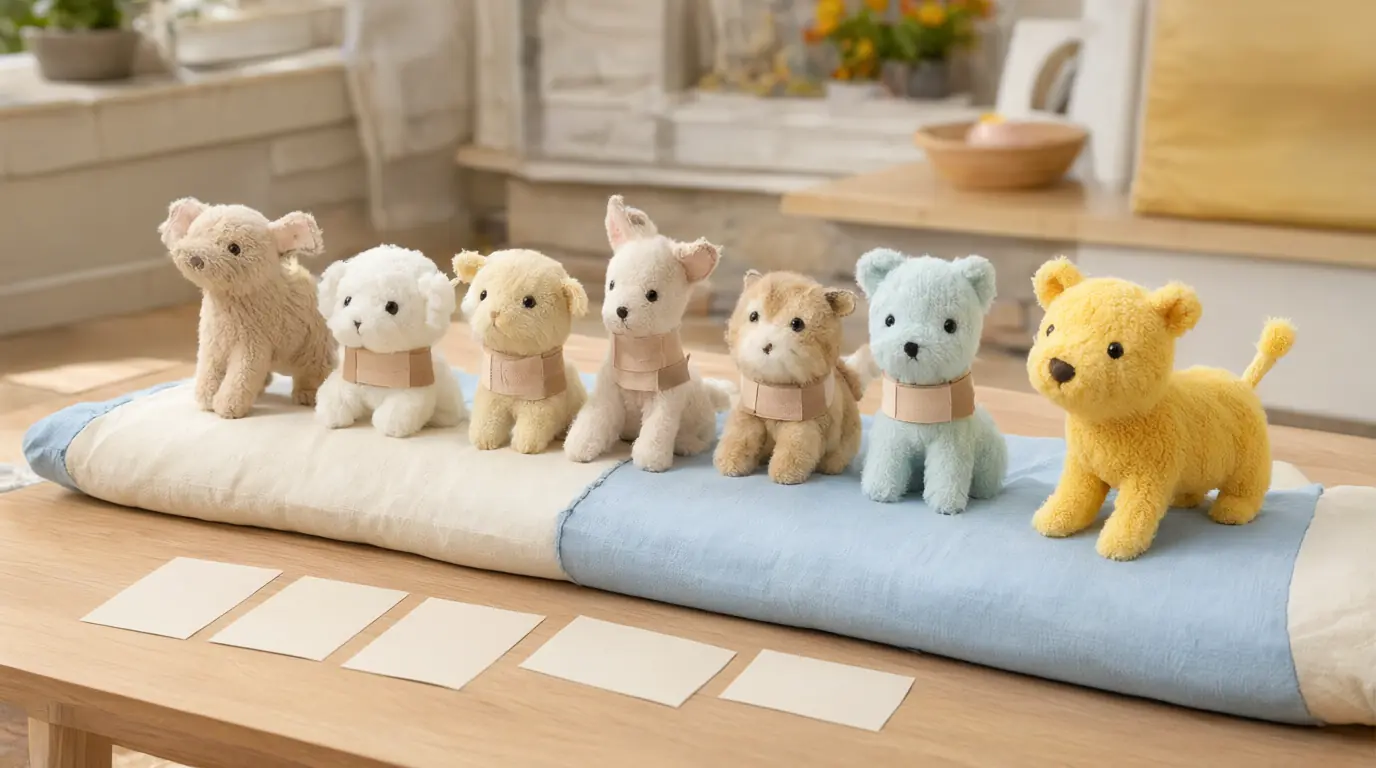
Make it your own: Toddlers can simply wrap and unwrap a bandage and name the animal. Older children can make a waiting-room sign, a list of appointment times and a bill with three numbers on it.
A paper vase filled with flowers
A vase is a good word for noticing that the same letter can sit inside very different words. Your child draws a tall vase, decorates it and adds flowers behind the rim. The wide top and narrow neck make the shape easy to recognise, and the flowers leave plenty of room for colour choices.
You’ll need
- Thick paper or card
- Crayons or washable paint
- Child-safe scissors with an adult nearby
- Tape
How to do it
- Draw a vase shape on card: a wide top, a narrow neck and a rounded base.
- Cut out the outline with child-safe scissors, or let an adult trim the awkward curves.
- Decorate the vase with stripes, dots or a pattern of your child's choosing.
- Draw three or four flowers on separate paper and colour them in.
- Tape the flowers behind the vase so the stems disappear into the neck.
- Write a large V on a small label, stick it to the front and say vase together.
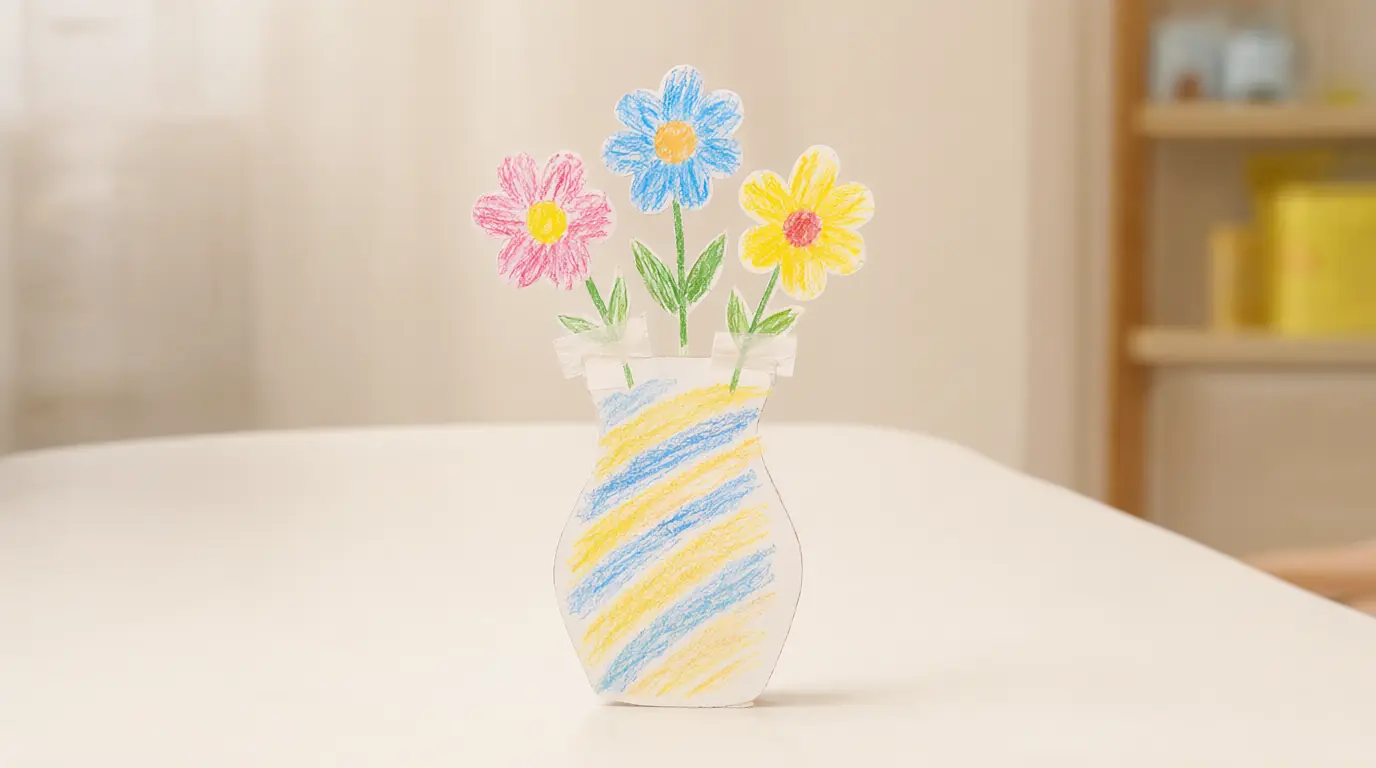
Make it your own: Younger children can decorate a vase shape you have already cut out. Older children can fold the card in half so the vase stands up, then make a second vase in different colours and compare the two.
A paper vest with real pockets
A vest is useful because children can wear one, so the meaning never stays abstract. A paper version with working pockets gives small hands something to fill, and the pockets invite counting, sorting and describing. It also gives you a natural reason to say the word several times in one afternoon.
You’ll need
- A large sheet of paper or a plain paper bag
- Child-safe scissors
- Tape or a glue stick
- Crayons
- A few small safe objects for the pockets
How to do it
- Fold a large sheet of paper in half and draw a simple vest outline with a neck opening.
- An adult cuts out the shape and two arm holes.
- Unfold the vest and let your child decorate both the front and the back.
- Cut two square pockets and tape them on, leaving the top edge open.
- Put one small object in each pocket and describe it together: soft, round, noisy.
- Try the vest on, look in a mirror and say vest as you point to the label.
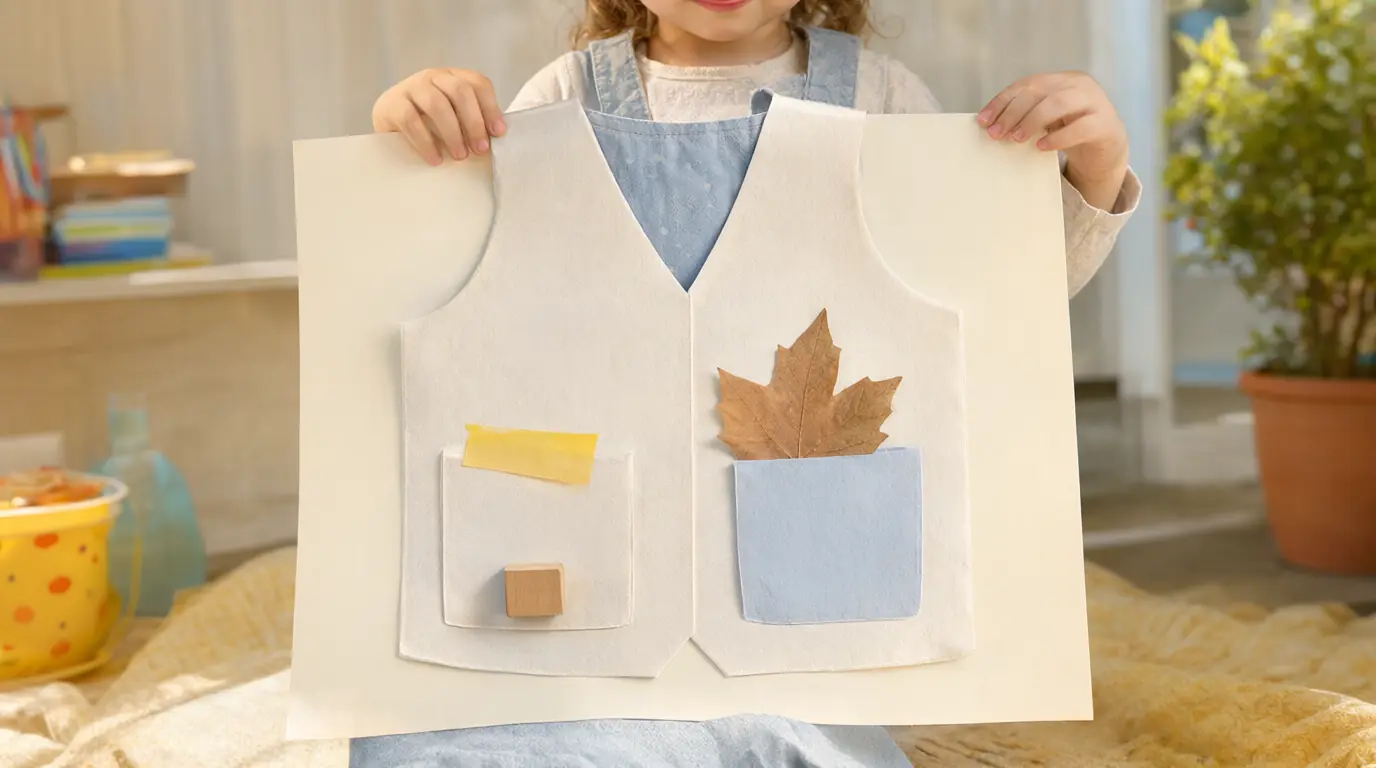
Make it your own: Toddlers can decorate a pre-cut vest and skip the pockets entirely. Older children can add a button line, one pocket per family member, or a drawing of what they would keep in a real vest.
A very small V hunt
A five-minute hunt keeps the letter connected to real objects rather than pictures alone. Children look, point and name instead of collecting, which is easier for toddlers and much less tidying for you. The list stays short on purpose, because five or six words said aloud are plenty for one session.
You’ll need
- Six picture cards: van, vase, vest, vet, violin, vegetable
- A tray
- One or two real objects if you have them
How to do it
- Put the six picture cards on a tray and name each one slowly.
- Say a word and let your child point to the matching picture.
- Ask which picture they would like to find a real example of in the room.
- Walk together and look, pointing at anything that matches.
- When you find one, say the word twice: A vase. Our vase.
- End by choosing a favourite card and drawing it on a small square of paper.
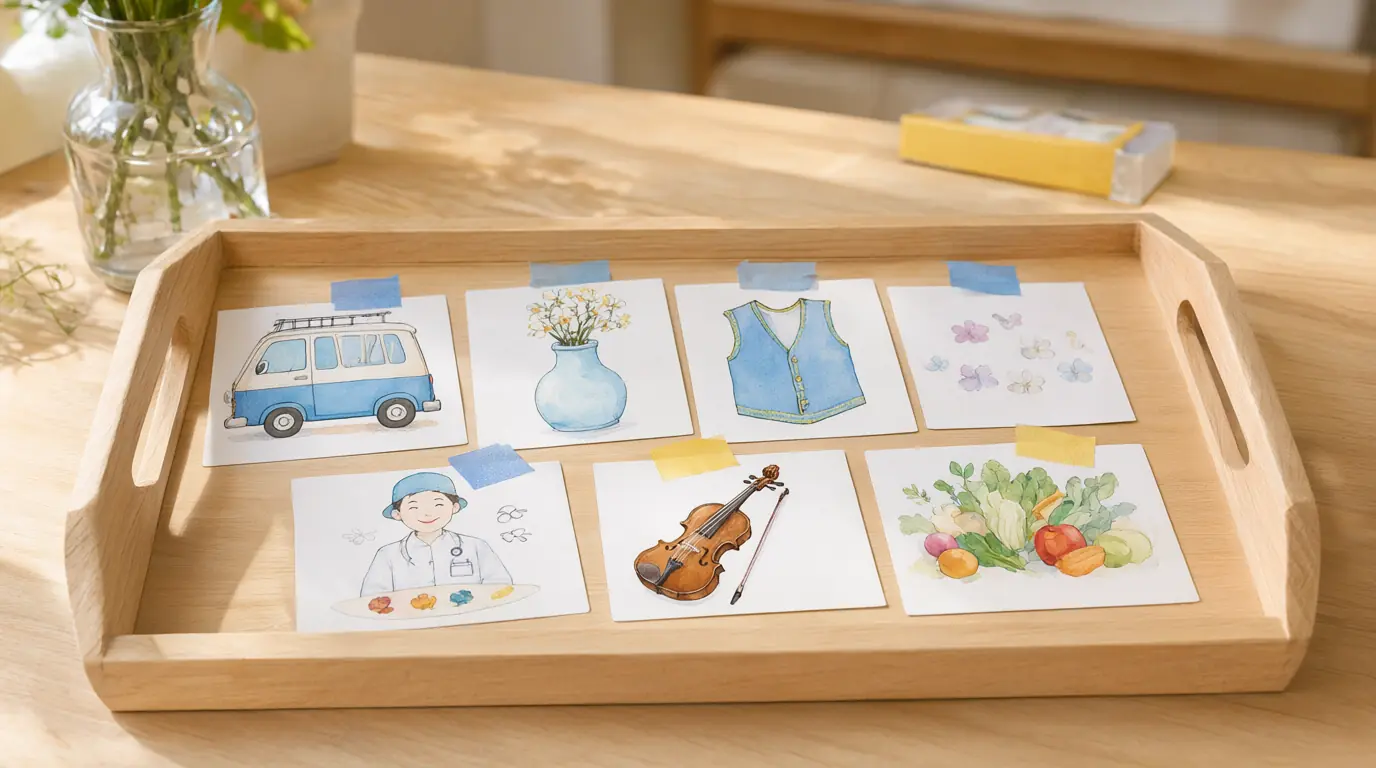
Make it your own: For younger children, use three cards and name them clearly. Older children can sort the cards into starts with V and does not, adding a few words such as sun, cup and hat to compare.

Make it work for your family
If your child loses interest halfway through a drawing, stop at the interesting part. A van with wheels and no window is still a van, and a vase with one flower still says the word. Keep sessions to ten or fifteen minutes and put the materials away afterwards rather than leaving them out for days, so the next invitation feels new. Children who are not yet talking can still point, choose pictures and watch your mouth; children who recognise a few letters can hunt for V on a cereal box or a street sign.
A common snag is the sound itself. Some young children replace V with B or W, which is usual in early speech, so repeat the word back clearly rather than asking for a correction. If the substitution continues and worries you, raise it with your health visitor, doctor or a speech and language therapist. For more letter play, try these alphabet games for kids, or some speech and language games that keep the conversation relaxed.

Parents also ask
What are some easy V words for young children?
Van, vase, vest, vet, violin, vegetable, violet, valley, visit and volcano are all concrete enough to picture or act out. Choose four or five your child already knows, and add new ones only when the first set feels familiar.
At what age do children learn the letter V?
Many children start recognising letters between three and five, but interest and pace vary a lot. What matters more than the age is hearing the sound in real words, seeing the shape often, and having someone who answers questions without turning it into a test.
What if my child says B instead of V?
Replacing V with B or W is common in early speech. Say the word back clearly, with your top teeth on your bottom lip, without asking for a repeat. If it continues and concerns you, mention it to your health visitor, doctor or a speech and language therapist.
Choose materials and activities that suit your child, supervise as needed and adapt the ideas to their interests and abilities. About our editorial approach