Weebou Editorial Team
 7 min read
 In this article
A little preparation
Start with a small set of letters that look and sound clearly different, such as S, M, T and O, rather than the whole alphabet. Write each letter large on a card, about the size of your hand, using thick marker and both a capital and lower-case version if your child is ready. Add 6 to 10 picture cards of familiar things: a sun, a moon, a tiger, an orange. Show the cards openly before you hide or shuffle anything.
Sit on the floor or at a low table where cards can be spread out, and keep sessions to about 10 minutes. Say the sound a letter makes, not only its name: 'This is the letter S, it says sss, like sun.' Follow your child's lead on which cards to use, and put the cards away at the first sign of tiredness. If your child likes to trace letters, a tray of flour or sand is a good companion. For more structured play, the Weebou alphabet game offers a similar approach on screen.
Ideas to try together
Letter delivery
Your child becomes a delivery person who brings each letter to the picture with the matching first sound. It links sounds to symbols through movement, and the picture cards give a visible clue, so a child does not need to know the letter name already. Saying each word aloud before choosing helps them listen for the first sound.
 You’ll need
- 4 letter cards (for example S, M, T, B)
- 8 picture cards with matching beginnings, such as sun, moon, tiger and ball
- A small bag or basket to carry the letters
- A toy van or a cardboard box (optional)
How to do it
- Spread the picture cards on the floor, spaced far enough apart to walk between them.
- Put the letter cards in a bag and let your child pull one out.
- Say the letter's sound together and ask, 'Which picture starts with this sound?'
- Say each picture word slowly, stretching the first sound, until your child chooses one.
- Deliver the letter by placing it on or next to the matching picture.
- Repeat until all the letters are delivered, then check each match together.
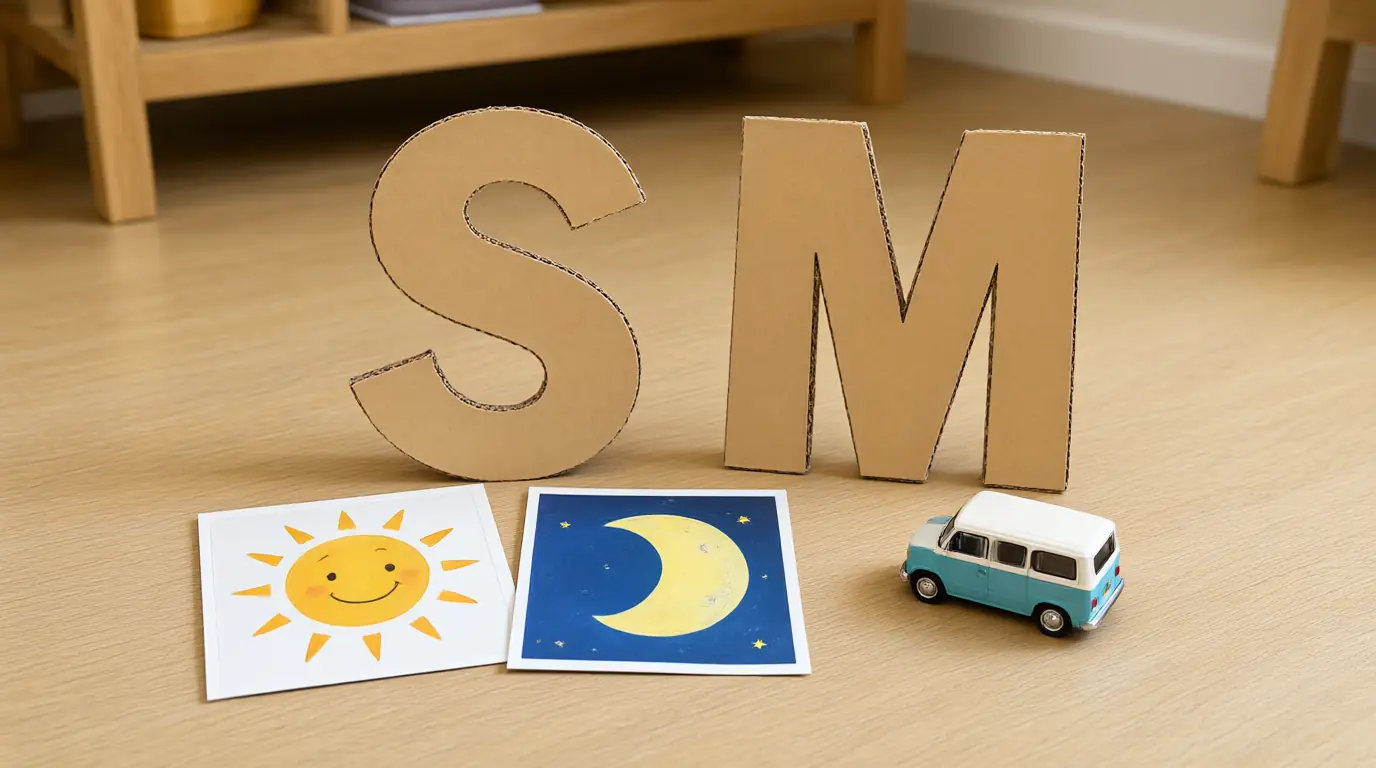
Make it your own: For younger children, use only two letters and two pictures. Older children can find a second picture for each letter or suggest a word that is not on a card.
What's missing?
Showing a small set of letters, covering them and removing one is a memory game that asks children to look carefully at shapes. It builds visual attention and the habit of comparing, with no pressure to name the letter. Noticing that something has changed is the skill that makes later reading easier.
You’ll need
- 3 to 5 large letter cards
- A tea towel or scarf to cover the cards
- A tray to arrange the cards on
How to do it
- Lay three letters on the tray in a row and name each one together.
- Cover the tray with the cloth while your child closes their eyes or turns around.
- Secretly remove one letter and put it behind your back.
- Lift the cloth and ask, 'What has changed?'
- Let your child point to the gap, say the letter or choose it from a short pile.
- Swap places so your child hides a letter and you guess.
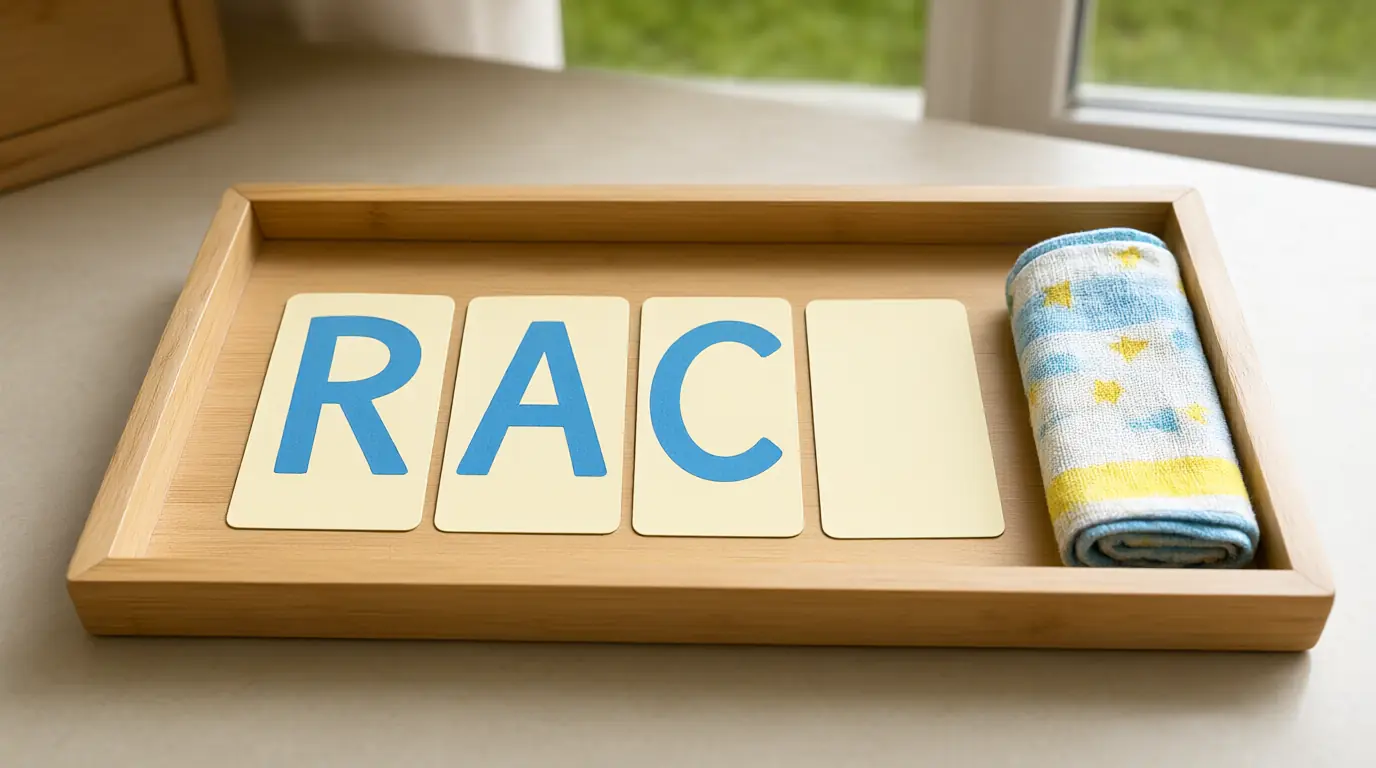
Make it your own: Younger children can start with two letters and a single card removed in full view. Older children can add a fourth or fifth letter or swap two letters instead of removing one.
Shape detective
Describing a letter by its features, such as a long line and a curve, helps children see letters as shapes made of parts. Your child becomes the detective who uses your clues to find the right card, and later gives clues themselves. It builds the vocabulary needed to talk about letters: straight, curved, tall, short.
You’ll need
- 5 letter cards with different shapes, such as L, O, T, S, A
- A magnifying glass or a cardboard tube (optional)
- A small notebook for the detective
How to do it
- Lay the letter cards out in a line.
- Give a clue, such as 'This letter has one long line and one short line at the bottom.'
- Let your child pick the card they think matches, then check together.
- Trace the letter in the air with a finger to feel its shape.
- Swap roles so your child describes a letter and you choose.
- Draw the solved letter in the notebook together, using a big hand movement.
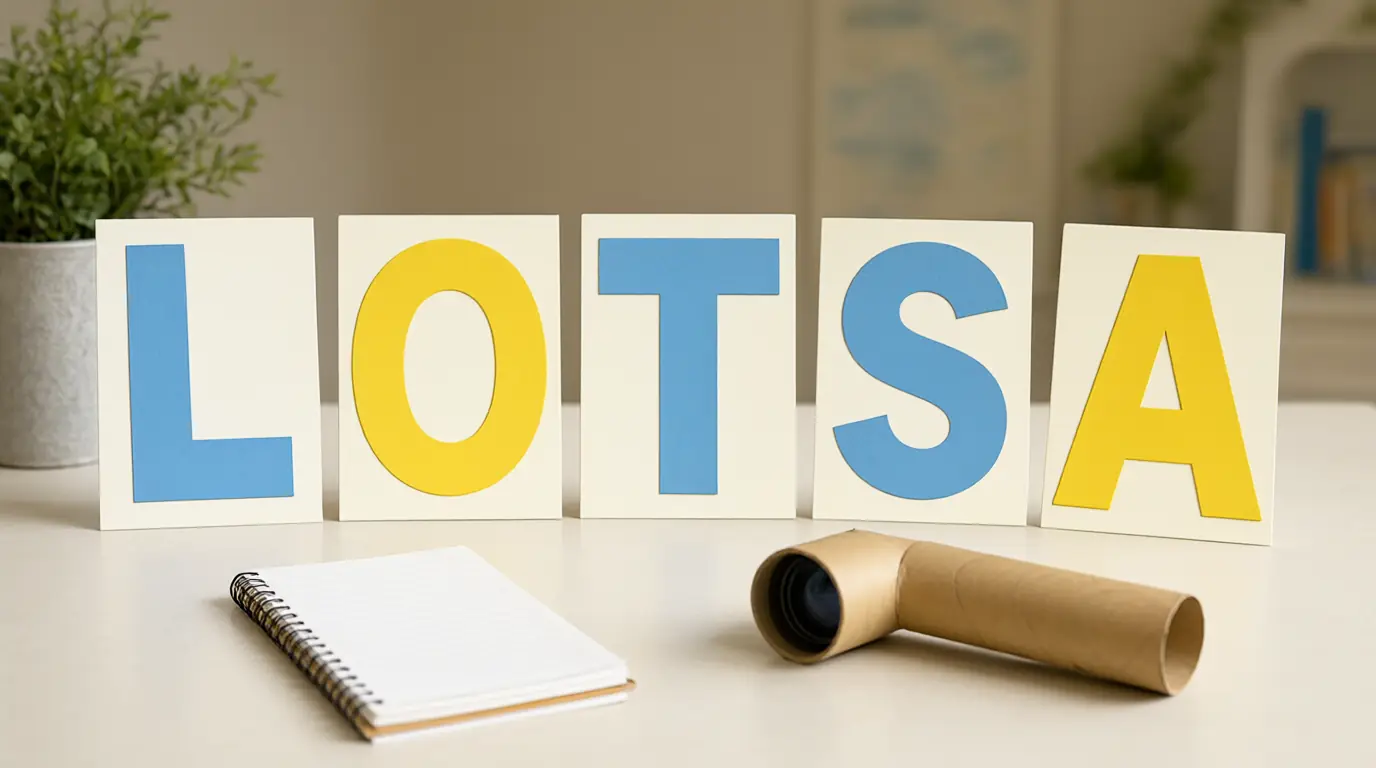
Make it your own: Younger children can use just two very different letters, such as I and O. Older children can describe a letter without using the words 'line' or 'curve' and invent their own clue words.
Alphabet name trail
A name is often a child's first meaningful word. Laying out the letters of a family member's name and following them in order turns practice into a path to someone they love. It also shows that letters come in a fixed order to make a word, an idea that underlies all reading.
You’ll need
- Large letter cards or sticky notes for each letter of a name
- A strip of masking tape on the floor as a path
- A photo or drawing of the person
How to do it
- Choose a name your child knows well, such as 'Nana' or 'Sam'.
- Write each letter on a card and lay them along the tape in order.
- Walk along the trail with your child, saying each letter sound as you step on it.
- At the end, place the photo or drawing and say the whole name together.
- Jumble the cards and ask your child to put them back in order.
- Choose a second name and build a new trail.
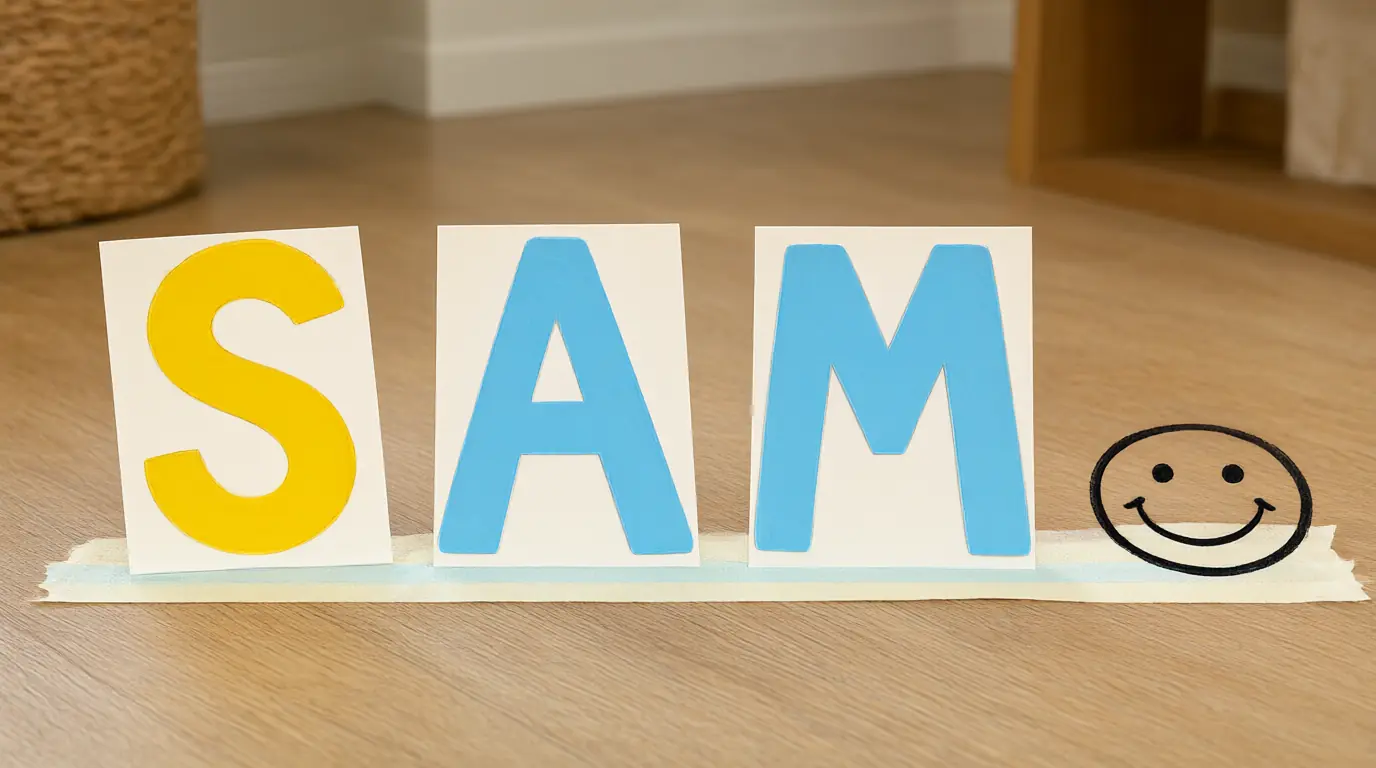
Make it your own: Younger children can walk the trail while you say each letter, and then match one card to the first letter of their own name. Older children can build the trail themselves from a name written on paper.

Make it work for your family
Recognising a letter does not require saying its name. A child who points to the right card, walks to it or matches it to a picture is showing knowledge. Let them respond in whichever way is comfortable, and add the name or sound yourself without asking them to repeat it. Keep the pace slow: if a child hesitates, give them a choice of two cards.
Letters take time. For a reassuring look at the usual order of development, read when do children learn the alphabet, and for a wider set of activities using names and pictures, see these preschool letter activities.

Parents also ask
What is the best way to teach the alphabet to a 3-year-old?
Start with letters in your child's own name and objects they love. Use large cards, say the sound as well as the name and keep sessions to about 10 minutes. Movement and pictures help more than repetition.
Should children learn letter names or sounds first?
Both are useful, and many children pick them up together. Sounds help with early reading, while names help with talking about letters. Offer both naturally, for example 'This is S, it says sss', and follow your child's interest.
How many letters should I teach at once?
Three or four at a time is plenty, especially if they look and sound different. Add new letters only when your child is comfortable with the current ones. There is no fixed order or deadline, and children learn at different speeds.
Sources & further reading
Explore these primary sources for further context on this topic.
Choose materials and activities that suit your child, supervise as needed and adapt the ideas to their interests and abilities. About our editorial approach