Weebou Editorial Team
 6 min read
 In this article
A little preparation
Look at a recent task together without turning it into a second lesson. Ask your child to explain a picture or a model before you correct an answer, and listen for the words they use. Keep paper, a handful of counters and some blocks on the table so you can recreate an example with objects. Aim for ten minutes and stop while it is still fun.
Before you introduce your own way of doing things, find out how the class does it: a number line, a ten frame or drawing groups. Using the same model avoids confusion and shows your child that you are on their side. If you are not sure what a method is, ask the teacher or look at the school's own guidance. For a gentle overview of where your child might be heading next, these second-grade math games show how the ideas continue.

What to know and try
Ask about number relationships
First-grade classes often explore how quantities are made up, such as how many ways you can make ten and how numbers sit in tens and ones. Asking how your child's class thinks about this lets you recreate a familiar example with objects instead of adding a competing method.
 You’ll need
- 10 large counters or buttons
- A sheet of paper with a line down the middle
- A pencil
- A recent piece of schoolwork
How to do it
- Ask your child what they are working on in number work at school.
- Put ten counters on the table and push some to each side of the line.
- Say how many are on each side and write the two numbers.
- Move one counter across and ask what has changed.
- Find other ways to split the ten and list them.
- Ask the teacher which models the class uses and match them.
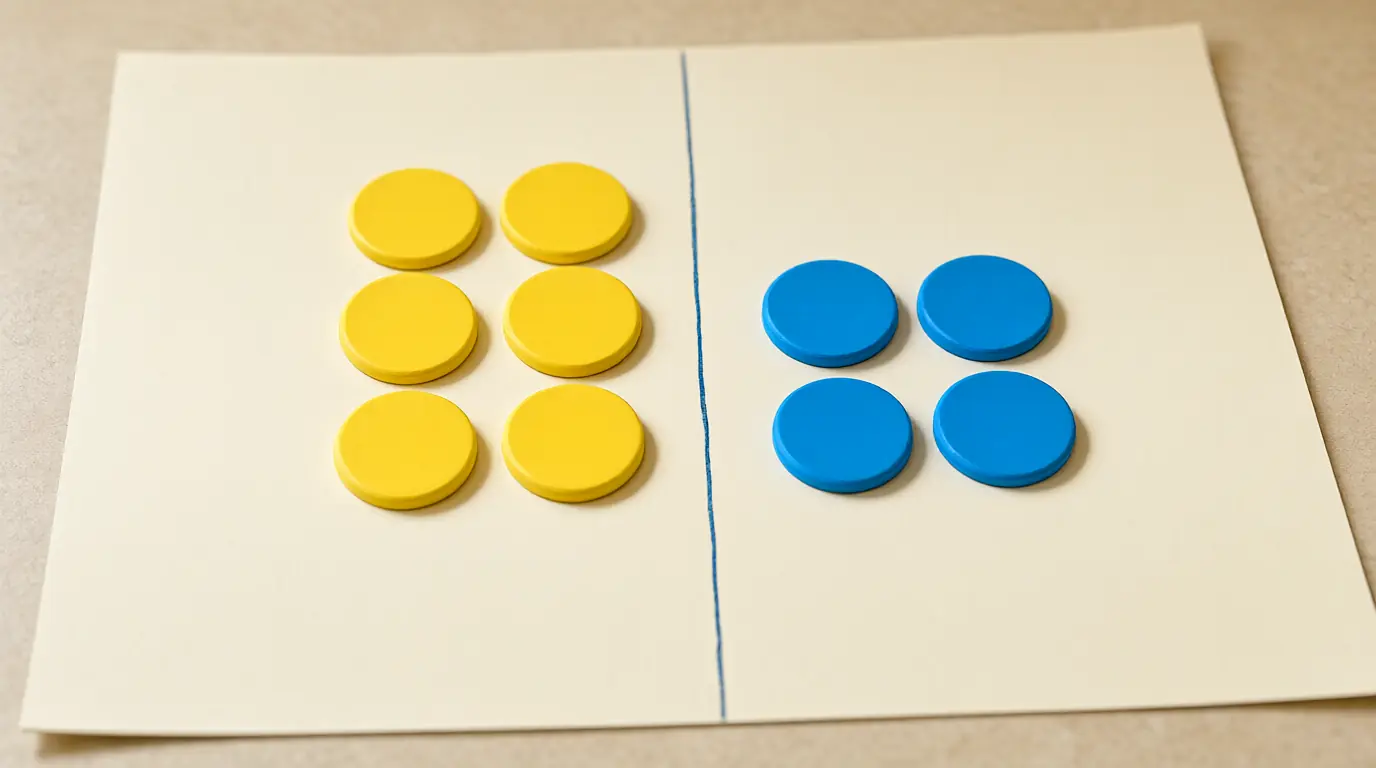
Make it your own: Younger children can split five counters. Older children can try twelve or twenty, group them into tens and ones and say how they know the total.
Look for story problems
Many first graders work with short stories about adding or taking away. Asking what happens in the story before choosing a calculation helps children understand the situation and not just look for a number to add.
You’ll need
- A short story problem, such as five birds on a fence and two fly away
- Counters or small toys
- Paper and a pencil
- A whiteboard (optional)
How to do it
- Read the problem aloud and ask what is happening in the story.
- Act it out with counters, placing five and then moving two away.
- Ask how many are left and how they know.
- Draw a quick picture of what you did.
- Write a number sentence together if the class uses them.
- Make up a new story and let your child be the teller.
Make it your own: Younger children can act out stories with toys and count the result. Older children can tackle problems where the starting number is unknown or solve it in two ways.
Notice shape language
Classes often name and describe shapes, from flat ones such as triangles to solid ones such as cubes, and talk about sides and corners. Using the class's words while holding real objects helps the vocabulary connect with something visible.
You’ll need
- 5 or 6 household objects, such as a box, a ball and a tin
- Paper and a pencil
- Blocks of several shapes
- A list of shape words from school
How to do it
- Ask your child which shape words they have used in class.
- Pick up a block and describe it using those words.
- Find a matching household object and compare them.
- Draw the shape you see from the top or side.
- Sort the objects into groups that roll, slide or stack.
- Ask which shapes might be good for building a tower and why.
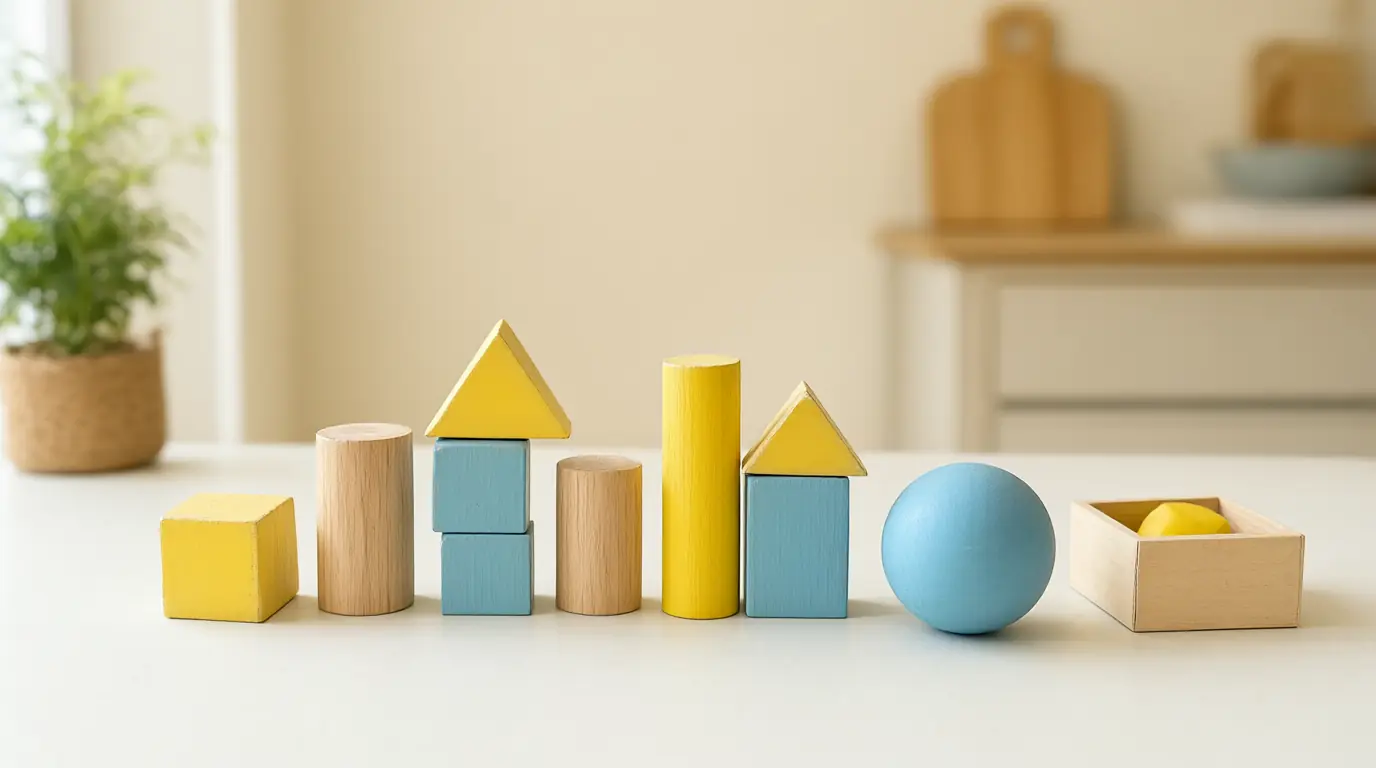
Make it your own: Younger children can match objects to blocks by touch. Older children can count the faces and corners of a solid shape and compare two shapes.
Explore measuring fairly
First graders often compare lengths by lining objects up or using non-standard units, such as paper clips or cubes. Starting each measurement from the same point and using the same unit throughout shows why a fair comparison matters.
You’ll need
- 2 objects of different lengths, such as a pencil and a spoon
- 10 identical cubes or paper clips
- A strip of paper
- A table
How to do it
- Line up the two objects with their ends together and see which is longer.
- Place cubes end to end along the first object without gaps.
- Count the cubes and write the number down.
- Measure the second object in exactly the same way.
- Compare the numbers and say how much longer one is.
- Ask what would happen if you used bigger cubes.
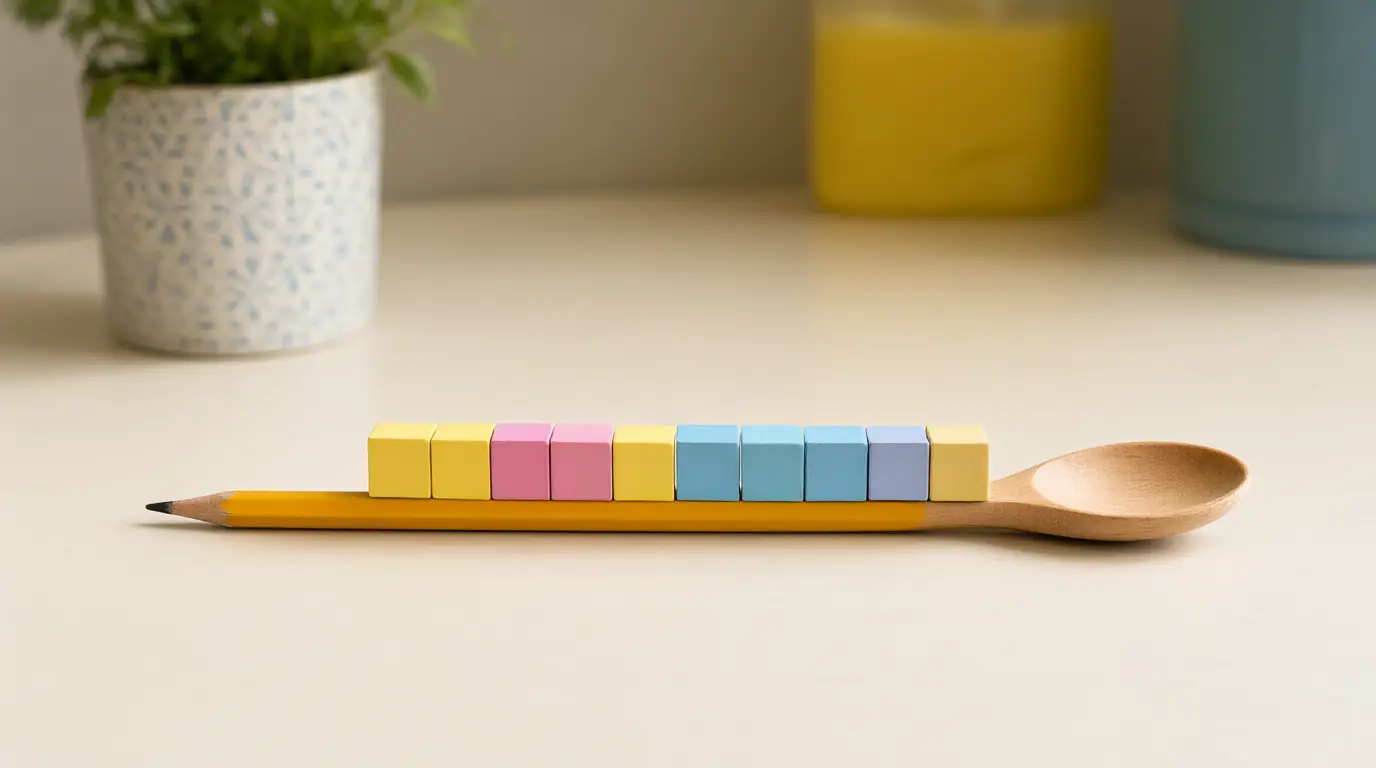
Make it your own: Younger children can compare by lining objects up and saying longer or shorter. Older children can use a ruler once the class has introduced centimetres and compare it with the cubes.

Make it work for your family
If you notice persistent difficulty, share a specific example with the teacher, such as a page where your child got stuck, and ask what support is available. Support should match your child's understanding and the school's methods. Comparing your child with others or with a published list of skills is rarely helpful, since expectations differ between places.
Praise explaining and trying again rather than speed. If your child dislikes a task, switch to a game with the same idea, using blocks or counters. Do not worry about different methods between school and home, as long as the child can explain what they did. For more ideas that connect with everyday life, try kindergarten math games or some number activities.
Parents also ask
What math do children learn in first grade?
It varies by school and country, but many classes cover counting and comparing numbers, adding and subtracting small numbers, place value basics, simple shapes and comparing lengths. Ask your child's teacher for the specific list, as curricula differ.
How can I help my first grader with math at home?
Ask them to explain how they solved a problem, use counters or drawings to recreate it and play simple games with numbers. Use the same methods as the class where you can, and talk to the teacher if you are unsure.
My child finds math hard. What should I do?
Share a specific example with the teacher and ask what support exists. At home, practise in short, relaxed sessions with objects and avoid comparing your child with others. If concerns continue, speak to the teacher or a doctor.
Sources & further reading
Explore these primary sources for further context on this topic.
Choose materials and activities that suit your child, supervise as needed and adapt the ideas to their interests and abilities. About our editorial approach