Weebou Editorial Team
 8 min read

 In this article
A little preparation
Check which number range and strategies your child's class is using, such as adding within 100, making a ten or drawing a number line, and match the games to that. Ask their teacher if you are unsure; it is more helpful to practise the method taught than to introduce a different one. Play for 10 to 20 minutes at a table with a pencil and paper handy so your child can sketch an idea.
Take turns being the explainer. When your child gives an answer, ask "How did you work that out?" before saying whether it is right, and do the same with your own answers, including a deliberate mistake now and then so they can spot it. Keep a small pile of counters or coins nearby for checking. If frustration appears, shrink the numbers rather than ending the game, and stop on a success. These activities support school maths and are separate from Weebou's app for ages 2–6+; younger siblings can join in with number games.

Ideas to try together
The ten shop
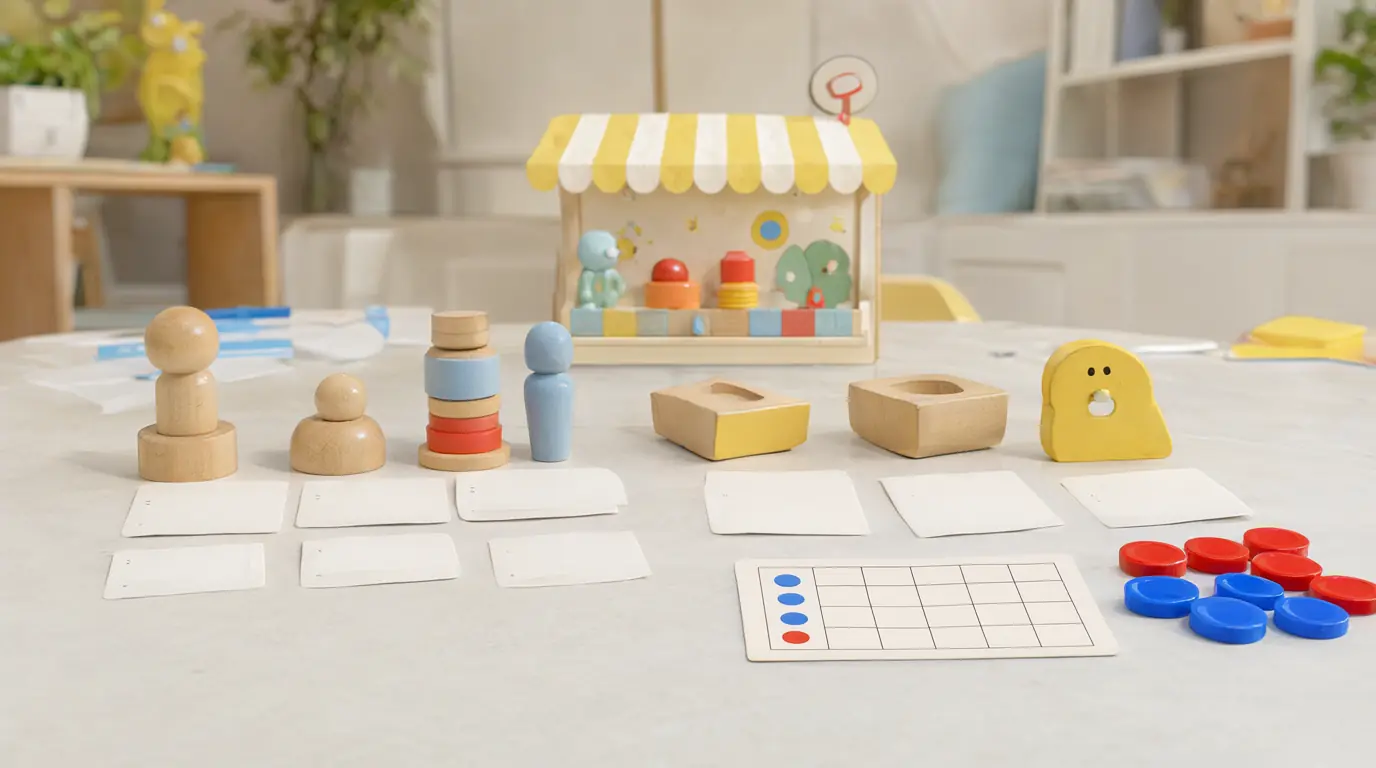
Pricing items so that two prices cross a ten gives children a real reason to use the make-a-ten strategy: 8 + 5 becomes 8 + 2 + 3. Counters make the regrouping visible, and the shop setting gives each total a purpose. Children can also practise change by working backwards.
 You’ll need
- 10 to 12 household items or toys, each with a price tag from 3 to 9
- 20 to 40 counters or coins
- A pencil and paper
How to do it
- Lay out the items and let your child write a price between 3 and 9 on each tag.
- Choose two items to buy, for example a 6 and a 7.
- Ask your child to show the total with counters, moving counters to fill a ten-frame or a group of ten first.
- Have them say how they did it: "6 + 4 = 10, then 3 more is 13."
- Swap roles: your child is the shopkeeper who checks your total and gives change from 20.
Make it your own: For an easier game, keep prices to 5 or under and use only a ten-frame. For more challenge, add three items or work with prices such as 15 and 27 with tens and ones, writing the total in a place-value chart.
Two routes to the same number
Choosing a target such as 24 and finding two different addition sentences that make it teaches children that numbers can be split in many ways. Drawing each route on a number line shows that parts and wholes stay connected, and comparing them builds flexible thinking that supports mental maths.
You’ll need
- A sheet of paper with a number line from 0 to 30
- 2 coloured pencils
- Index cards with target numbers from 12 to 40
How to do it
- Draw a card, for example 24, and write it at the end of the number line.
- Ask your child to choose a route with two jumps, such as 20 + 4, and draw it in one colour.
- Find a second route in the other colour, such as 10 + 14 or 12 + 12.
- Compare the two routes: which jump is longest, and do they land on the same number?
- Now try three jumps and see how many different routes you can find in five minutes.
Make it your own: Younger or less confident players can stay within 20 and use only two jumps. Older players can look for routes using subtraction, such as 30 − 6, or write the same total as a mix of tens and ones.
Equal-group delivery
Equal groups are the beginning of multiplication, and children make the connection when they see that 4 parcels of 3 can be written as 3 + 3 + 3 + 3. Packing real objects gives the idea a physical shape, and arranging them in rows previews arrays.
You’ll need
- 12 to 24 small objects such as buttons, pasta shapes or counters
- Paper cups or squares of paper to act as parcels
- A pencil and paper
How to do it
- Choose how many parcels to deliver, for example 4, and how many items go in each, such as 3.
- Put the items into the parcels one group at a time, counting aloud.
- Write the repeated addition: 3 + 3 + 3 + 3 = 12.
- Rearrange the parcels in a row and ask what changes if you swap to 3 parcels of 4.
- Try an odd total, such as 13, and ask whether all the parcels can be equal.
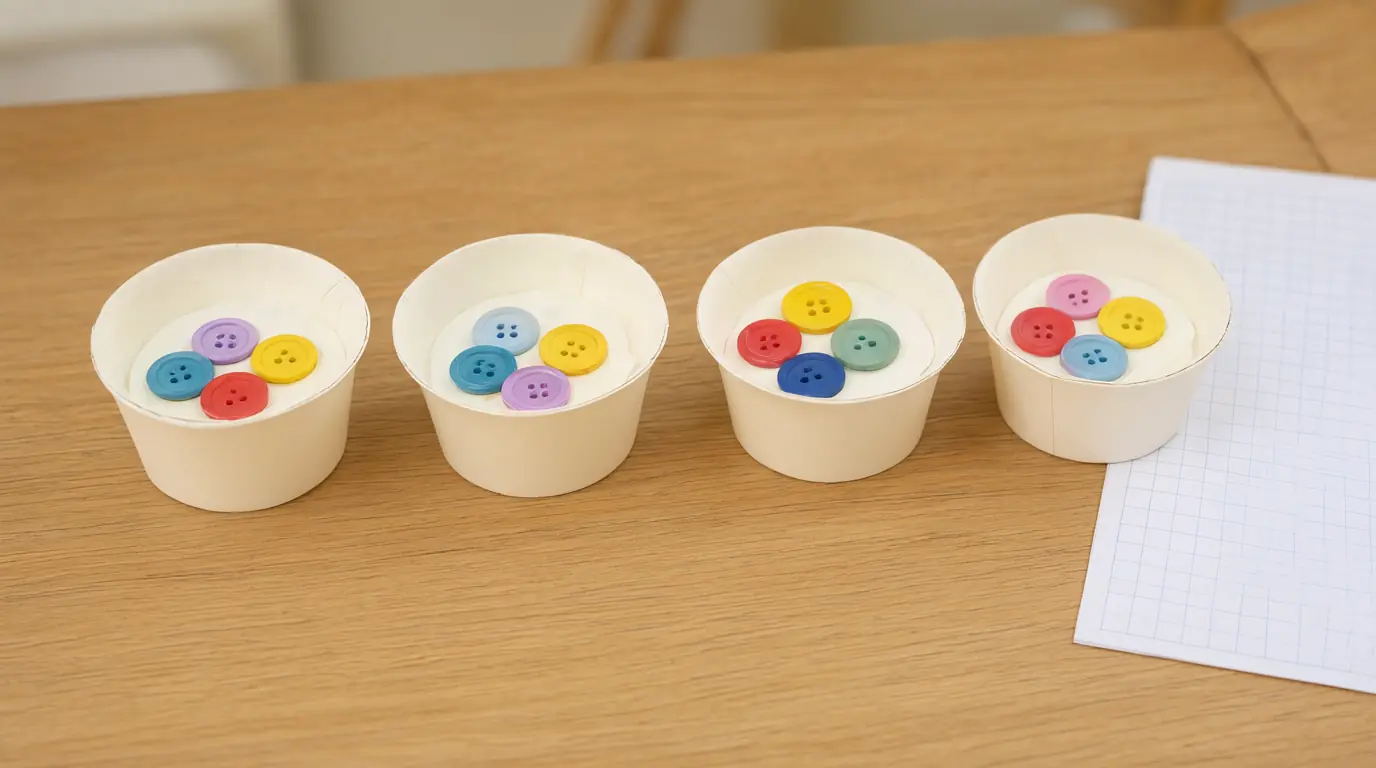
Make it your own: Start with 2 parcels and use items sorted into pairs. For more challenge, ask your child to find all the ways to share 12 items into equal parcels and to draw each one as an array of rows and columns.
Estimate, then measure
Measurement games work best when your child estimates first, because the estimate gives them something to check and talk about. Comparing a guess with the real measurement builds a sense of length in centimetres or inches, and the ruler becomes a tool for finding out, not just a task.
You’ll need
- A ruler or tape measure (centimetres or inches, whichever your child uses)
- 6 to 8 household objects of different lengths
- A pencil and a recording sheet with three columns
How to do it
- Choose an object and ask your child to estimate its length and write it down.
- Show a length they already know, such as a ruler or a paperclip, as a benchmark.
- Measure carefully, lining up the zero with one end of the object.
- Record the real length and the difference between estimate and measurement.
- After a few objects, ask whether the estimates are getting closer.
Make it your own: For an easier game, measure with paperclips or cubes laid end to end before moving to a ruler. For more challenge, ask which two objects together equal the length of a third, then check by measuring.
Tens-and-ones build
Building a two-digit number from bundles of ten and single ones helps children see why 36 means three tens and six ones. A quick card game gives the idea repeated, low-pressure practice and prepares them for adding and subtracting with regrouping.
You’ll need
- Index cards numbered from 10 to 99
- Bundles of 10 straws or lolly sticks secured with rubber bands, plus 20 loose ones
- A place-value chart with two columns drawn on paper
How to do it
- Turn over a card, for example 47.
- Build it with the straws: four bundles of ten and seven singles.
- Write 4 in the tens column and 7 in the ones column.
- Ask what the number would be with one more bundle, then one fewer.
- Take turns drawing cards and checking each other's builds.
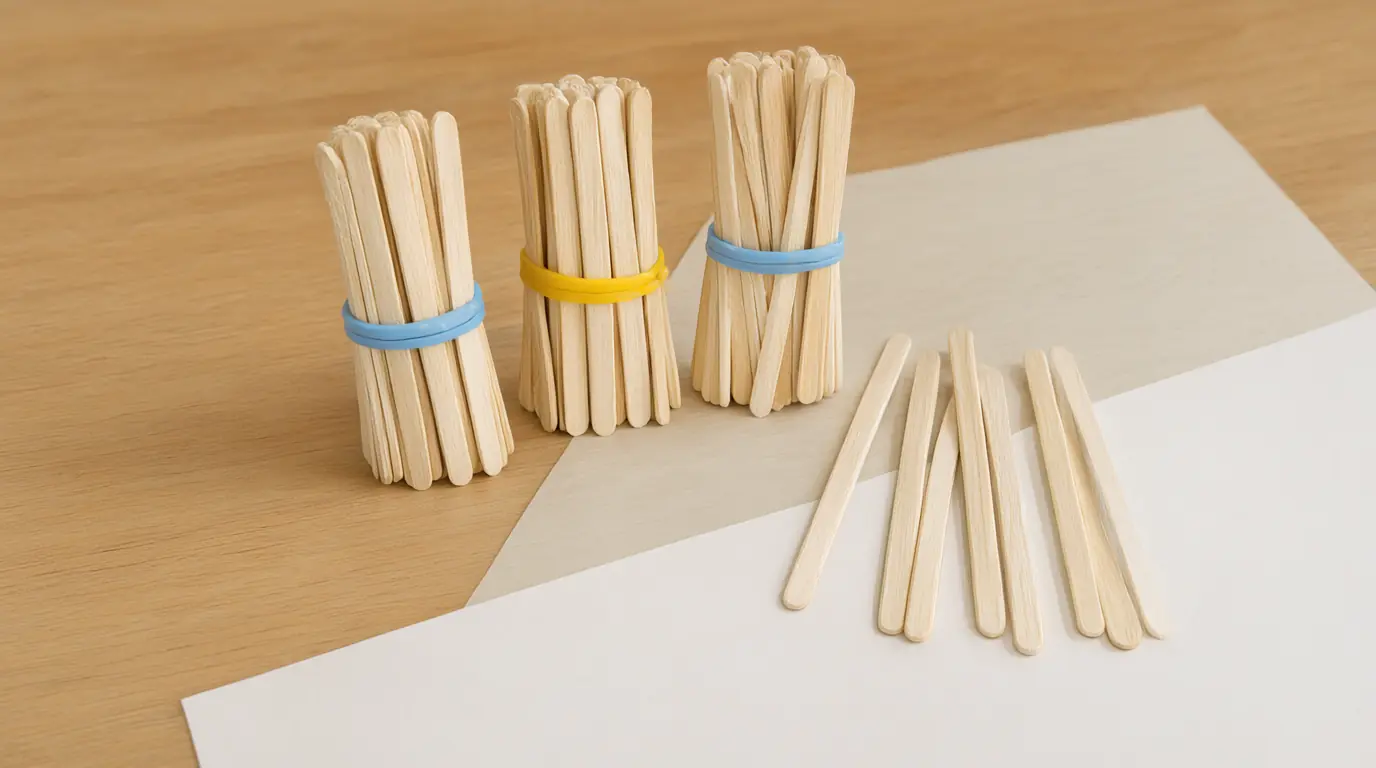
Make it your own: For an easier version, use only numbers up to 40 and say each number aloud while building it. For more challenge, ask your child to add two built numbers, regrouping ten singles into a new bundle.

Make it work for your family
If your child guesses quickly and gets it wrong, slow the game down by asking them to draw or build the answer first. A sketch of ten dots in a row, or three groups of four counters, often reveals the idea faster than talking. Praise the method, for example "You made a ten first, clever", rather than speed.
Let your child set some of the rules: the target number, the number of rounds or what the shop sells. Ownership keeps older children engaged. For more practice at this level, see math card games, or try the earlier steps in first-grade math questions if a skill feels shaky. A wrong answer is useful information, not a setback.
Parents also ask
What math should a 2nd grader know?
Typically children add and subtract within 100, understand tens and ones in three-digit numbers, begin equal groups, and measure in standard units. Schools vary, so check your child's class materials or ask the teacher which strategies they are using.
How long should we play math games each day?
Ten to twenty minutes is plenty for most seven- and eight-year-olds. Short, regular sessions work better than one long one, and stopping while your child is still engaged makes it easier to start again next time.
What should I do if my child gets the answer wrong?
Ask them to explain how they got it, then use counters or a drawing to check together. Often the idea is nearly right. Shrinking the numbers while keeping the same method helps them succeed and rebuild confidence.
Sources & further reading
Explore these primary sources for further context on this topic.
Choose materials and activities that suit your child, supervise as needed and adapt the ideas to their interests and abilities. About our editorial approach