Weebou Editorial Team
 8 min read

 In this article
A little preparation
Choose a flat, non-slip outdoor patch close to a tap or a filled watering can. Paving, decking or short grass all work, but keep the play area away from steps, drains and anything that becomes dangerous when wet. Set out two buckets, a shallow tray and a pile of old towels before the children arrive, and put a chair nearby for a child who wants to sit. For more water play ideas, keep the setup just as simple.
Use large car-wash sponges rather than small household ones, which are easy to squeeze dry and hard for small hands to hold. Fill the tray only two or three centimetres deep and empty every container as soon as the game ends. An adult stays within arm's reach the whole time, because even shallow water needs constant supervision. Agree before starting that faces and heads are off limits, and that sponges are squeezed over a bucket rather than at another person. Twenty minutes is usually plenty; stop earlier if children are cold, tired or starting to slip.

Ideas to try together
Sponge target stamps
Chalk circles give the game a clear target without anyone needing to throw. Dipping and pressing is satisfying on its own, and the prints show immediately whether a sponge was soaked or only damp. Children can compare sizes, count prints or invent a pattern, so the activity stays open even after the first few turns.
 You’ll need
- 3 large car-wash sponges
- A shallow tray with 2–3 cm of water
- Coloured chalk or large paper circles
- An old towel
How to do it
- Draw four or five wide circles on dry paving, or tape paper circles to the ground.
- Put one sponge in the tray and show how to press it flat so it soaks evenly.
- Lift the sponge and squeeze it gently over the tray until it stops dripping.
- Press the sponge inside a circle and lift it straight up to leave a print.
- Invite your child to fill the other circles, then compare which print is darkest.
- Redraw the circles in a new arrangement and start again.
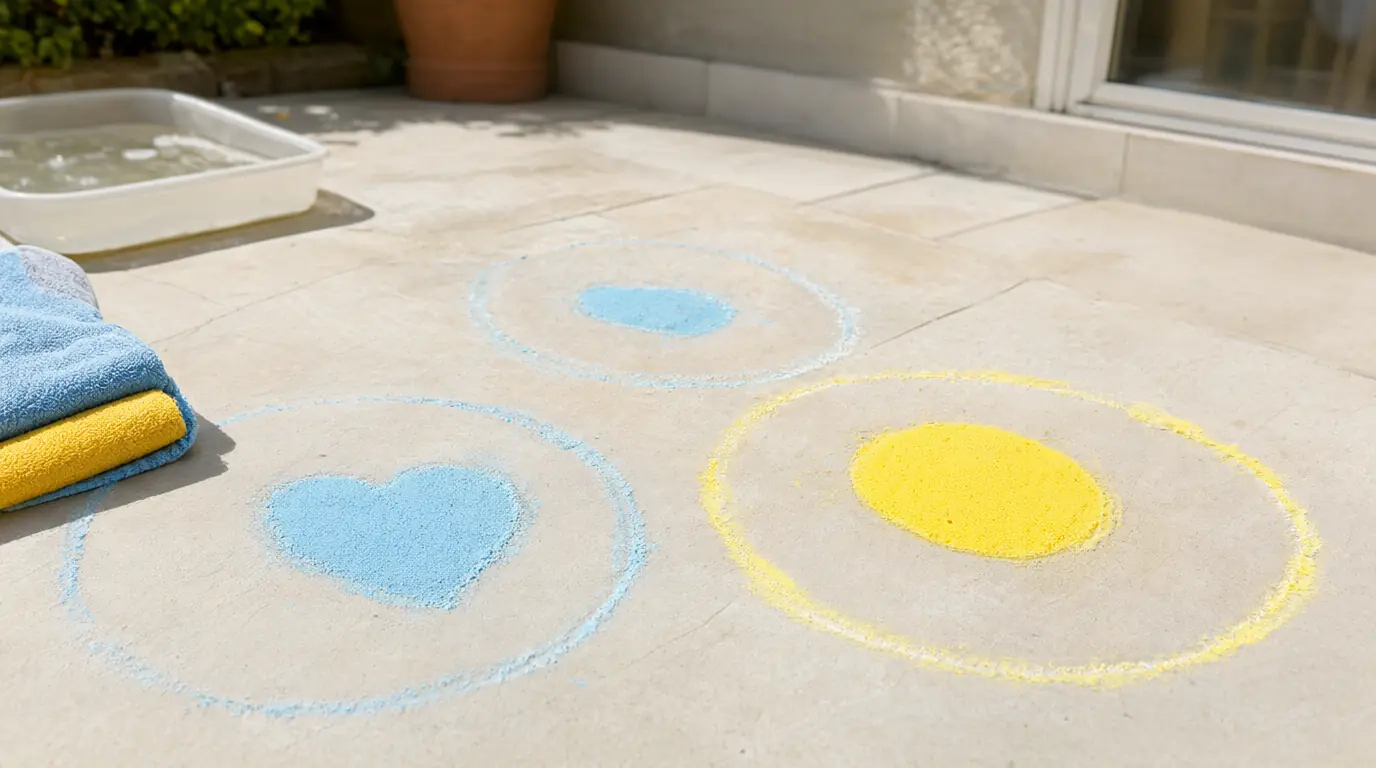
Make it your own: Younger children can press one sponge into one large circle. Older children can make a repeating pattern of three colours or measure which print dries first. If paving is unavailable, tape large paper circles to a balcony floor and use barely damp sponges.
Bucket-to-bucket relay
A relay gives everyone a job and keeps the water moving slowly. Because the sponge is squeezed into the empty bucket rather than thrown, the game stays calm and easy to supervise. Children practise carrying, aiming and working as a pair, and the growing water level gives them visible proof that their effort added up.
You’ll need
- 2 stable buckets, one with a little water
- 2 large sponges
- A towel for each child
- A non-slip mat if the ground is smooth
How to do it
- Place the buckets about three steps apart on level ground.
- Half fill one bucket and leave the other empty.
- Show how to soak a sponge, squeeze it once over the full bucket and carry it to the empty one.
- Squeeze the sponge into the empty bucket and walk back for the next turn.
- Take turns or work as a pair until the water has moved across.
- Wipe the route dry and compare how full the second bucket became.
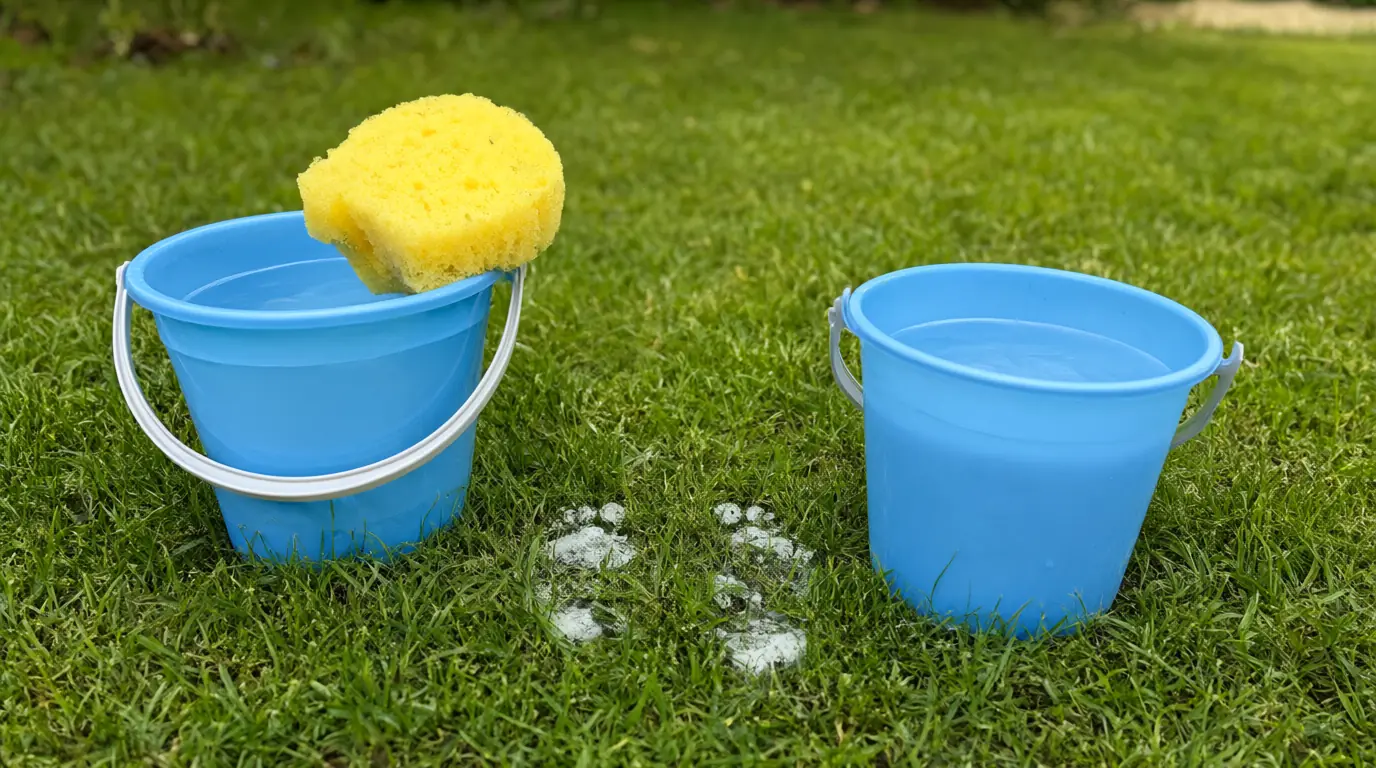
Make it your own: Toddlers can carry one small sponge between two buckets placed side by side. Older children can add a chalk line to walk along or count trips. A child who dislikes wet hands can hold the sponge with a small towel or take the job of tipping the full bucket.
The dripping sponge race
This is the closest version to a water balloon race: a full sponge is heavy and drips as it travels. Holding it over a bucket instead of throwing it keeps the competition gentle. Children feel the weight change as water leaves the sponge and can compare how much each trip collected, which turns a simple race into a small measuring game.
You’ll need
- 2 buckets
- 1 large sponge per child
- A measuring jug
- Chalk for a start line
- A towel
How to do it
- Mark a start line with chalk and put an empty bucket at the far end.
- Soak a sponge in the full bucket and lift it without squeezing.
- Walk or toddle to the empty bucket while the sponge drips.
- Squeeze everything that is left into the bucket and walk back.
- Pour the collected water into a measuring jug after three trips.
- Compare the amounts and talk about where most of the water went.
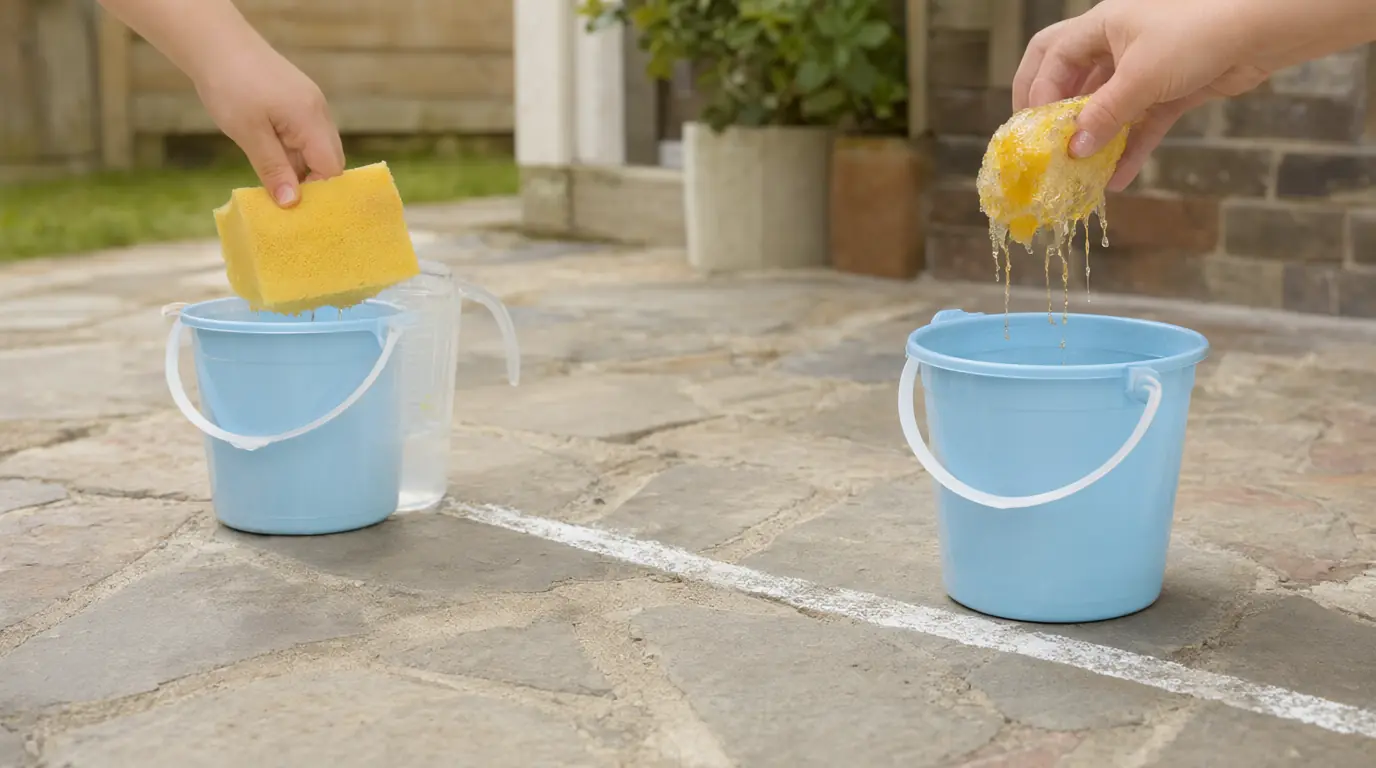
Make it your own: Shorten the route for younger children and let them squeeze the sponge straight into the bucket. Older children can count trips or mark the water level after each turn. If the ground is uneven, place both buckets on the same mat so nobody has to step over a puddle.
Sitting splash toss
Throwing a damp sponge is softer and slower than throwing a balloon, and it will not scatter fragments across the garden. Sitting down lowers the energy and makes the game welcoming for a child who is tired, cautious or playing in a small space. A wide basin is forgiving, so early misses still feel like part of the game.
You’ll need
- A wide plastic basin
- 3 damp sponges
- A chair or dry mat
- 2 towels
How to do it
- Place the basin two or three steps away from the chair.
- Sit down together and put the sponges within reach on a towel.
- Show an underarm toss with a sponge that is damp rather than dripping.
- Let your child throw all three sponges before anyone collects them.
- Retrieve the sponges together, squeeze them over the basin and sit down again.
- Move the basin closer or further away after each round.
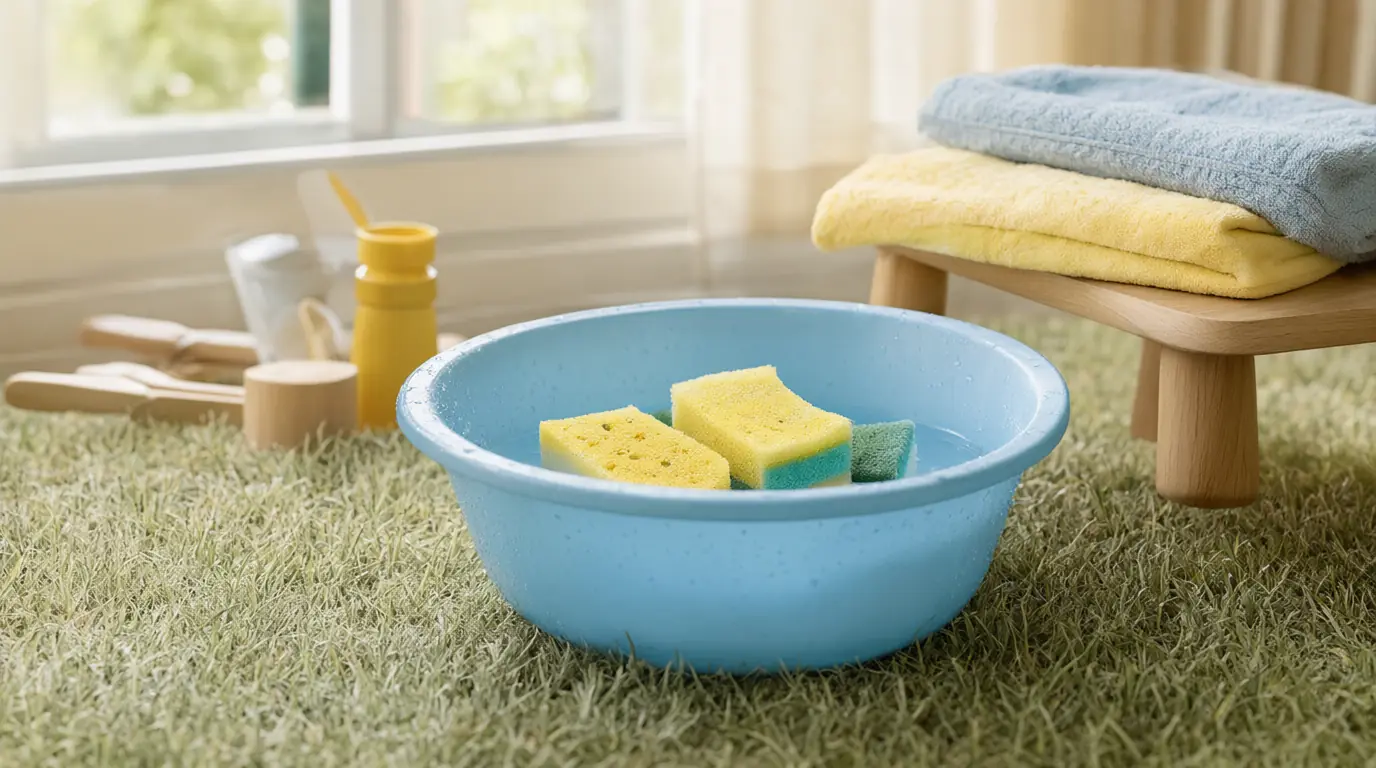
Make it your own: Move the basin closer for a toddler and allow an underarm toss. Older children can choose a target inside the basin, such as a chalk cross, or score by where the sponge lands. A child with limited reach can drop the sponge from a held position instead of throwing.
A water-painted route
Wet marks on dry paving are a forgiving canvas: the route can be redrawn, widened or turned into a river. Children see cause and effect as the edges fade in the sun, and they can decide whether to follow the line, jump beside it or paint over it. It is a good wind-down after more active sponge games.
You’ll need
- 1 large sponge
- A shallow tray of water
- Chalk
- An old towel
How to do it
- Draw a wavy start and finish point on dry paving with chalk.
- Soak the sponge and squeeze it until it is damp rather than dripping.
- Drag the sponge along the ground to make a visible wet line.
- Ask your child to choose the next bend, a loop or a crossing place.
- Walk beside the route rather than on it and watch the edges fade.
- Redraw the route in a different shape once the first one has dried.
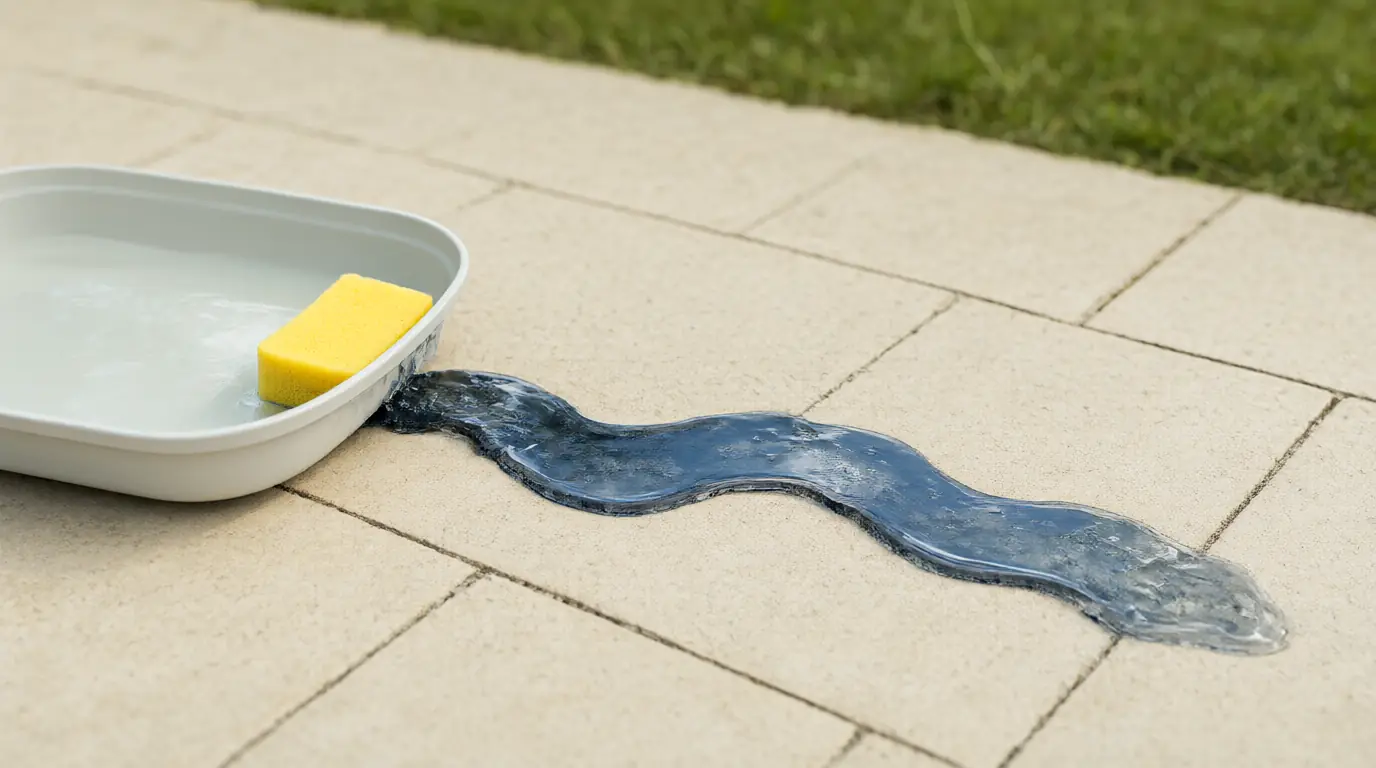
Make it your own: Younger children can paint one short line and watch it fade. Older children can plan a route with two turns and a bridge, then redraw it from memory. On a hot day, keep the route away from steps and doorways so wet feet do not carry water indoors.

Make it work for your family
Sponges that are too wet make heavy, slippery missiles, so show children how to squeeze one over the tray before carrying it. If the ground becomes shiny, stop and dry it with an old towel; a wet patio is the main hazard in this kind of play, not the water itself. Keep spare dry towels within reach and change socks before anyone goes back inside.
A child who dislikes getting wet can squeeze the sponge for someone else, hold the towel or call out the next target. If interest fades, turn the game into a filling race or move to summer activities at home that need less water. These outdoor games also work well when you want a calmer setup.

Parents also ask
What can I use instead of water balloons?
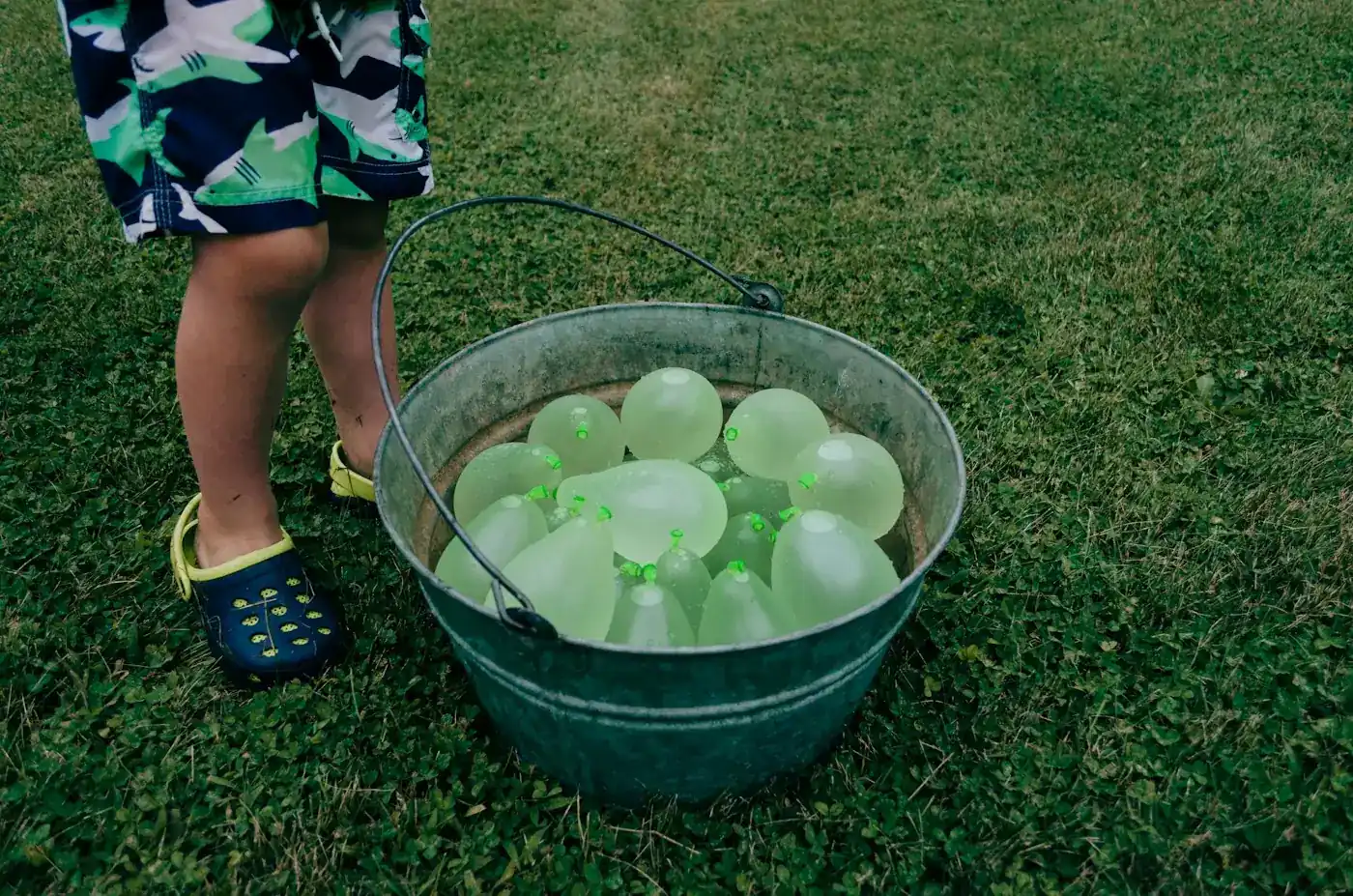
Large car-wash sponges are the simplest swap. Soak them in a shallow tray, squeeze them partly out and use them for tossing, stamping or carrying water. Soft foam balls also work for gentle throwing games, but sponges hold water and leave visible marks, which children often enjoy more.
Are water balloons safe for young children?
Broken balloon pieces are a choking hazard and are easy to lose in grass, so many families avoid them with toddlers and preschoolers. If you do use them, supervise closely and collect every fragment straight away. Sponge games give a similar splash without small pieces to pick up.
How much water do sponge games need?
A shallow tray holding about two to three centimetres of water is enough for most games, and one bucket can be refilled from a tap or watering can. Start with less than you think you need; you can always add more. Empty containers and spread towels on slippery patches when you finish.
Sources & further reading
Explore these primary sources for further context on this topic.
Choose materials and activities that suit your child, supervise as needed and adapt the ideas to their interests and abilities. About our editorial approach