Weebou Editorial Team
 8 min read

 In this article
A little preparation
Start with one line, said slowly by you while your child listens. Repeat it at half speed, then invite your child to join in on the last word only. Tongue twisters work best in short bursts of two or three minutes, in places where nobody is in a hurry: the car, the bath, the walk to nursery. Keep the mood light and let the first few attempts be muddled on purpose, so getting it wrong feels like part of the game rather than a mistake.
Young children often need the meaning before the sound. Draw or mime the bears, turtles or snails first, then say the line. Some children will want to listen for weeks without joining in, and that counts as playing. If your child has a speech sound difference or is already receiving support, follow the guidance you have been given and never use a twister to drill a sound they find upsetting; these speech and language games are gentler alternatives. Stop as soon as interest fades.
Questions to explore together
Bouncy bears and bright baskets
This is the gentlest place to start, because b is an early sound for most children and the lips close in the same place every time. Draw the bears first, then say the line together at half your normal speed. Your child can feel the pattern in their lips rather than having to listen for it, which makes the repetition easier to enjoy.
How to do it
- Bouncy bears bring bright baskets.
- Big bears bounce by blue bushes.
- Bella bear brings berry buns.
- Brave bears balance big blue baskets.
- Ben's brown bear bounces beside the bins.
- Baby bears brush bright blue boots.
Make it your own: Younger children can clap once for each b word while you say the line. Older ones can add a bear of their own, or swap every b for a d and listen to what changes. A child who prefers drawing can point to the bears instead of speaking.
Two tiny turtles trade toy tickets
T is a light tap near the front of the mouth, and these lines keep the tongue busy in the same spot. Hand out two paper tickets and act out the trade: one turtle passes a ticket, the other says thank you. The small story gives the repeated sounds a reason to be there, which helps children stay with a line that is hard to say.
How to do it
- Two tiny turtles trade toy tickets.
- Ten tiny turtles tie tiny ties.
- Tessa turtle taps ten tin tops.
- Tom's turtle takes two tiny tarts.
- Tiny turtles tickle Tommy's toes.
- Twelve tidy turtles trot to town.
- Tilly's turtle tucks ten toys away.
Make it your own: For a younger child, say the line and let them add only the word tickets each time. Older children can time how slowly they can say it without stopping, or add a third turtle. If paper tickets are fiddly, two spoons work just as well.
Muddy moon mice munch melon
M is made by closing the lips, so children can feel every repetition without being told to listen harder. Ask where moon mice might find melon and let the answer become part of the game: a garden, a kitchen floor, a spaceship. Nonsense is welcome, and a child who invents a new food word is doing exactly what the game is for.
How to do it
- Muddy moon mice munch melon.
- Many merry mice make muffins.
- Molly's mouse munches mini marshmallows.
- Five fluffy mice find fresh melon.
- Mice in mittens munch most mornings.
- Mabel's muddy mouse meets Max's mouse.
Make it your own: Toddlers can join in with just munch and a chomping action. Older children can build a second line by swapping melon for another food while keeping the m sound, then check whether it still works when said aloud twice.
Seven sleepy snails sew soft scarves
S is a quiet sound that often disappears when children rush, so these lines reward a slow, hissy pace. Use two fingers as snails and walk them across the table as you speak. Seven sleepy snails is also a counting line: hold up seven fingers, then fewer, and say the line again each time the number changes.
How to do it
- Seven sleepy snails sew soft scarves.
- Six small snails slide slowly sideways.
- Sam's snail sews six silly socks.
- Sneaky snails sneak past sleepy seals.
- Sally's snails sip soup slowly.
- Seven silver snails sing soft songs.
Make it your own: Younger children can start with snails and a slow finger walk. Older ones can add a snail and count nine, or whisper the line to see whether it stays clear. Children who dislike hissing sounds can hum the line instead.
Cheeky chicks chase cheese
Ch is a favourite for many four- and five-year-olds because it sounds like a small train. Say the first line, then take turns being the chick, the children and the cheesecake. The lines get sillier as they go, which makes a second and third attempt feel like a joke rather than a repetition exercise.
How to do it
- Cheeky chicks chase cheese.
- Charlie's chicken chooses cherries.
- Three cheerful children chew cheese chunks.
- Chilly chicks chat in chairs.
- Cherry cheesecake cheers cheeky chickens.
- Chad's chick checks the cheese shop.
Make it your own: A younger child can say just cheeky chicks and giggle. Older children can turn the line into a question, or say it as a whisper, a grumble and a cheer to hear how the sound changes with the voice.
A twister picture for the wall
Drawing a twister turns a string of sounds into a scene with a story. Children who are not ready to say the line can still show you what happens in it, and the picture gives you something to point at when you try the words again later. Tape it low, at your child's height, so it can be revisited.
 You’ll need
- A sheet of A4 paper or card
- Thick crayons or pencils
- A few paper scraps and a glue stick
- Tape
How to do it
- Choose one line together and say it once slowly.
- Ask what the picture needs: bears, baskets, a moon, a snail, a puddle of mud.
- Let your child draw the scene in any order, adding paper scraps for baskets or scarves if they want.
- Draw one detail yourself only if you are asked, and keep it small.
- Write the line underneath in your child's own words, or theirs if they can write.
- Tape it at your child's eye level and read it together next time you pass.
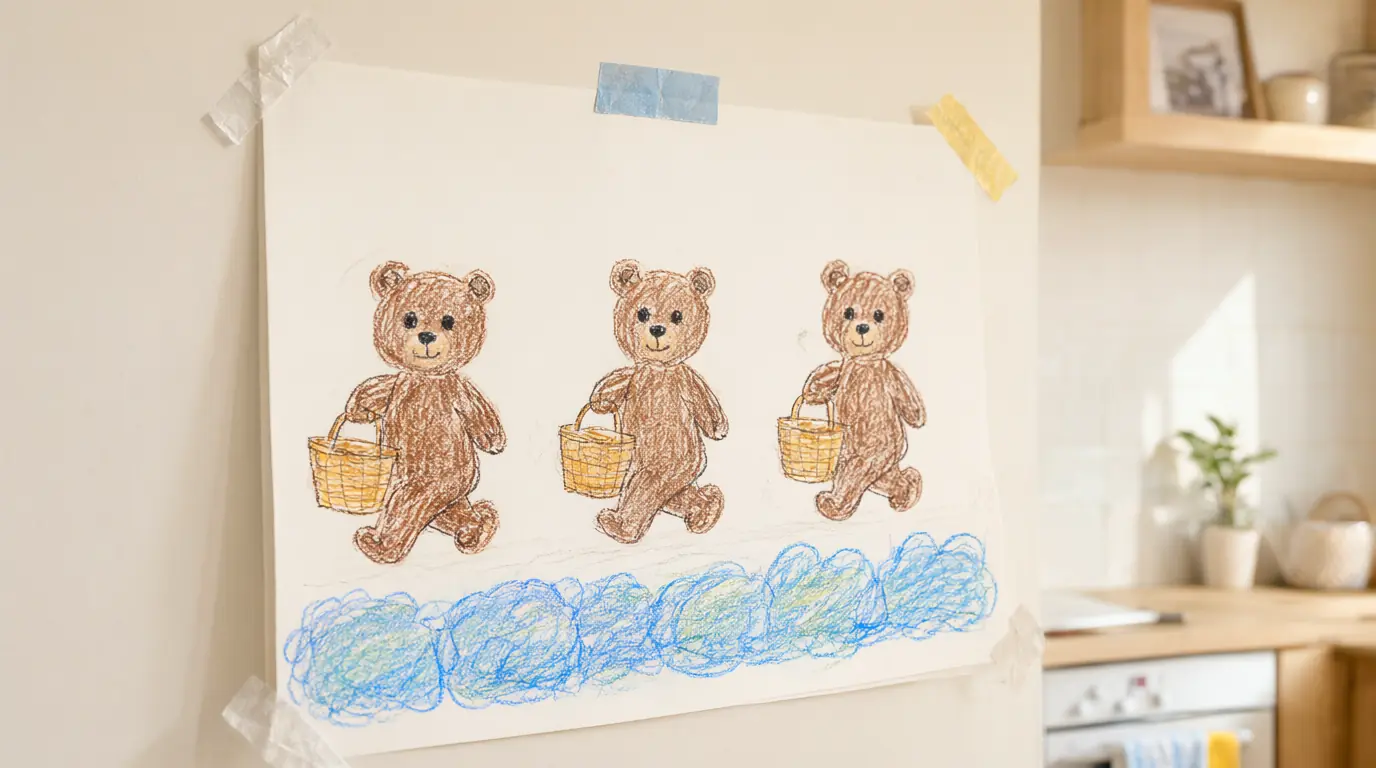
Make it your own: Younger children can draw a single bear and one basket. Older children can make a small book: one picture per line, with the words underneath, then read it aloud to someone at home.

Make it work for your family
If your child stumbles, slow the line down and say it together rather than correcting the sound. Try whispering it, singing it or clapping once per word, because a different route often unlocks the words. A mirror can help an older child watch their lips, though many children find it distracting. Keep sessions to a few minutes and finish on a line they can already manage.
Pronunciation varies with family, region and home language, and a tongue twister is never evidence of a problem. If you are worried about how your child says particular sounds, note a few examples and talk to your health visitor, nursery staff or a speech and language therapist rather than drilling the words at home. For more sound play without pressure, try these clapping patterns and rhythm games or a few easy riddles.

Parents also ask
What is a good tongue twister for a 4-year-old?
Short lines with one repeated sound work best, such as Bouncy bears bring bright baskets or Two tiny turtles trade toy tickets. Say it slowly first, let your child join in on the last word, and keep the game to a couple of minutes so it stays fun.
Do tongue twisters help children's speech?
They are wordplay rather than therapy. Saying them can help a child notice repeated sounds and practise slowing down, but they will not resolve a speech sound difficulty. If you are concerned about how your child speaks, ask a speech and language therapist or your health visitor for advice.
How do you say a tongue twister slowly?
Break the line into two halves, say each half at half your normal speed, then join them together. Clapping once per word keeps the pace steady. Whispering or singing the line can help too, because the sounds are made slightly differently and the words feel less like a test.
Choose materials and activities that suit your child, supervise as needed and adapt the ideas to their interests and abilities. About our editorial approach