Weebou Editorial Team
 8 min read
 In this article
A little preparation
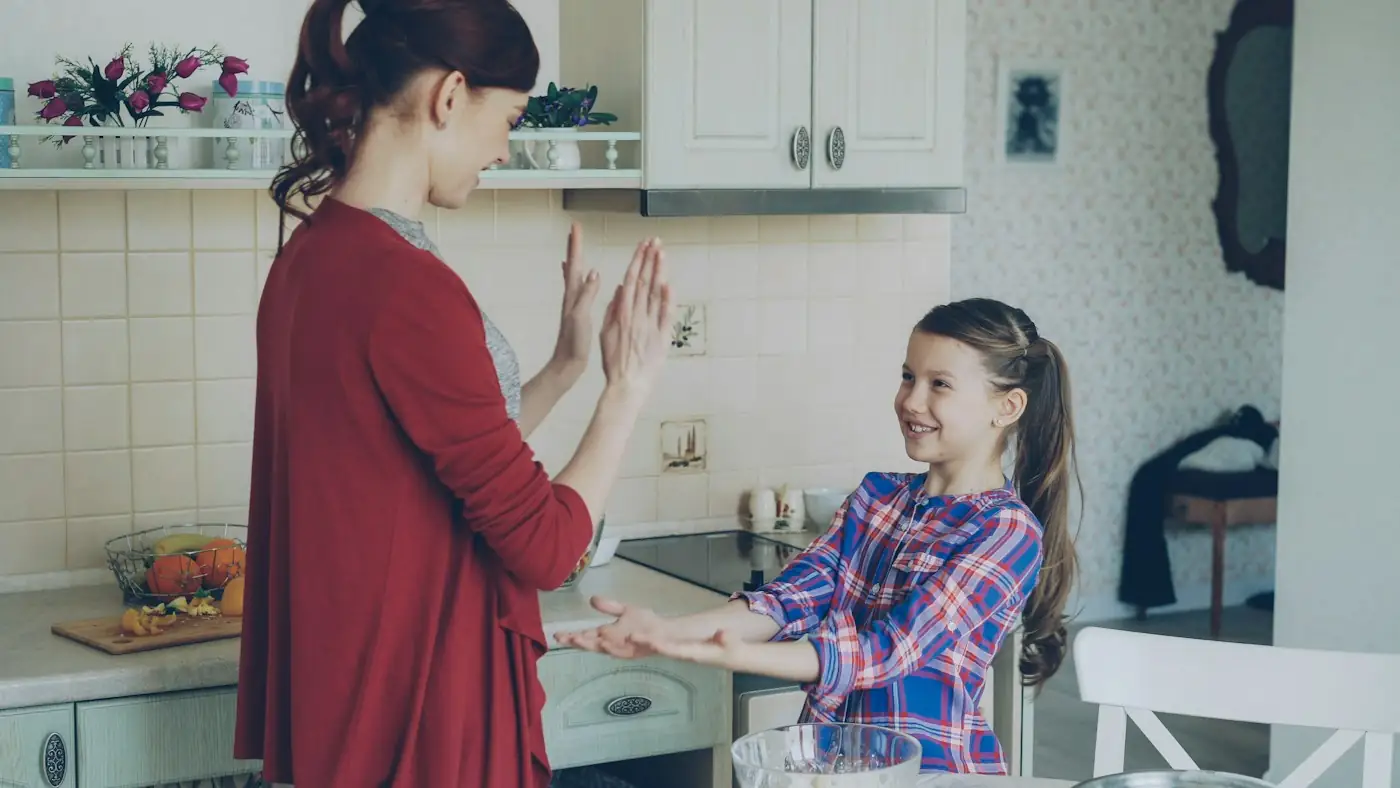
Start sitting on the floor facing each other, roughly an arm's length apart, so you can both see hands and faces. Kneel or sit cross-legged rather than standing, because children copy a pattern better when they can watch your hands at eye level. Keep the room quiet enough to hear a soft clap: a television or a loud toy in the background makes the pauses impossible to hear, and the pauses are where most of the learning happens.
Hand clapping is loud and some children find the sharp sound unpleasant, especially close to their ears. Offer a lap tap, a knee pat, two fingers on the table or a clap into the air as equally good versions, and never insist on the hand version. Keep the pace slow, slower than feels natural to you, and stop while everyone still wants one more turn. Five minutes is plenty for a first go; the pattern of clap, wait, answer works best when nobody is tired.

Ideas to try together
One clap, one long pause
This is the foundation of every other clapping game: make a sound, then wait. The pause is not a gap to be filled but the child's turn. It teaches turn-taking without words, and children who find conversation hard often find this easier because there is only one thing to do. Do not repeat your clap or add a second one while you wait; let the silence do the work.
 You’ll need
- Two pairs of hands, or hands and knees
- A quiet room
- A cushion to sit on
How to do it
- Say 'Watch my hands' and clap once, softly, in front of you.
- Open your hands and hold them still, counting slowly to three in your head.
- Wait. If your child claps back, smile and nod but say nothing yet.
- Clap once again and wait the same length of time.
- When the answer comes easily, try two claps and a pause.
- Ask your child to start, and answer their pattern exactly as they gave it.
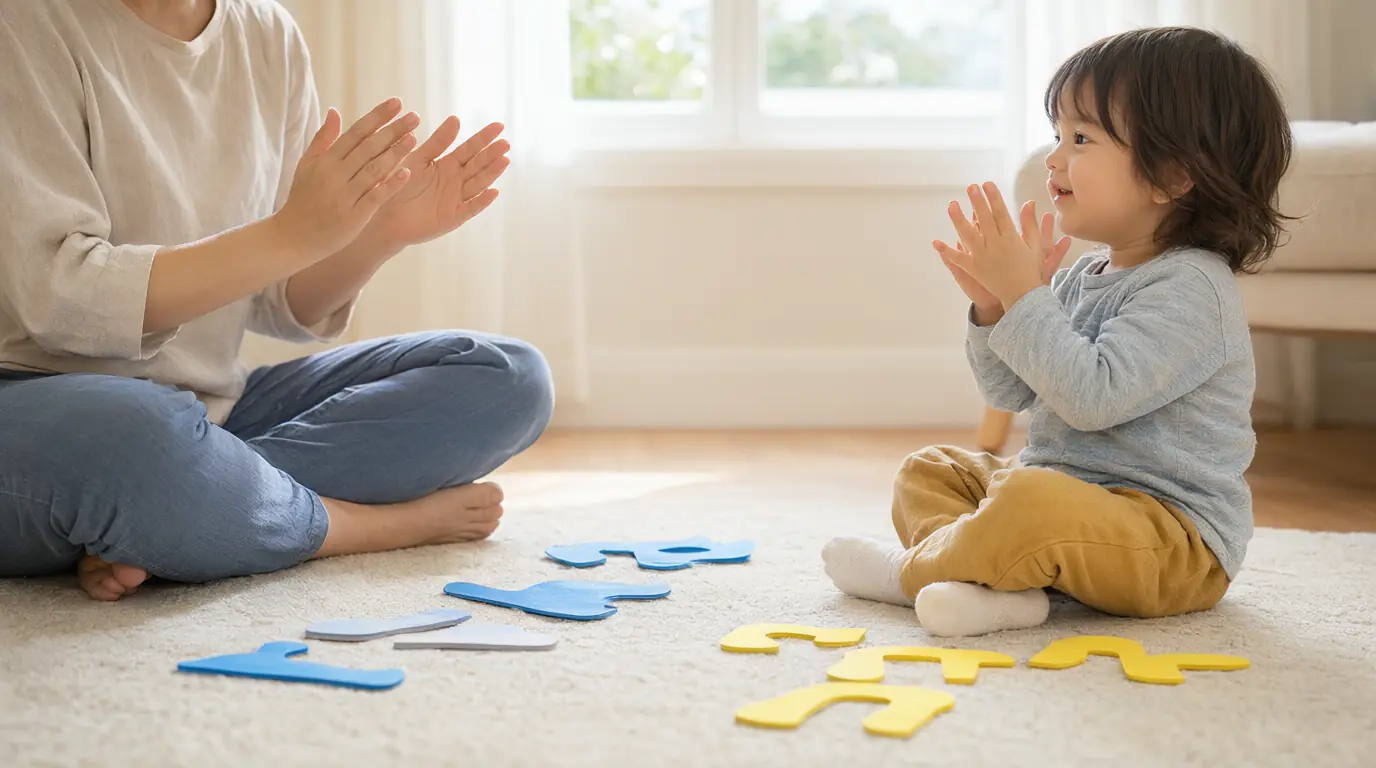
Make it your own: For a two-year-old, tap the floor once instead of clapping and pause for a full five seconds. For an older child, build to three or four claps and ask them to copy without looking at your hands.
Your name has a rhythm
Every name already contains a pattern, which makes it a ready-made clapping game. Saying a name and clapping once per spoken beat shows children that words have parts, a first step towards hearing syllables. It also lets each child choose something personal to clap, so the game belongs to them rather than to you.
You’ll need
- Hands or knees
- A few names of people in the family
- Optional: a favourite toy or pet to name
How to do it
- Say your child's name slowly at speaking pace and clap once for each part: El-la, or Sa-mu-el.
- Repeat it together, clapping at the same time.
- Ask your child to choose another name, perhaps a grandparent, a pet or a character.
- Clap the new name together and count the claps on your fingers.
- Compare two names: whose is longer, and can you hear why?
- Finish with your child's own invented name for a toy, clapped as they choose.
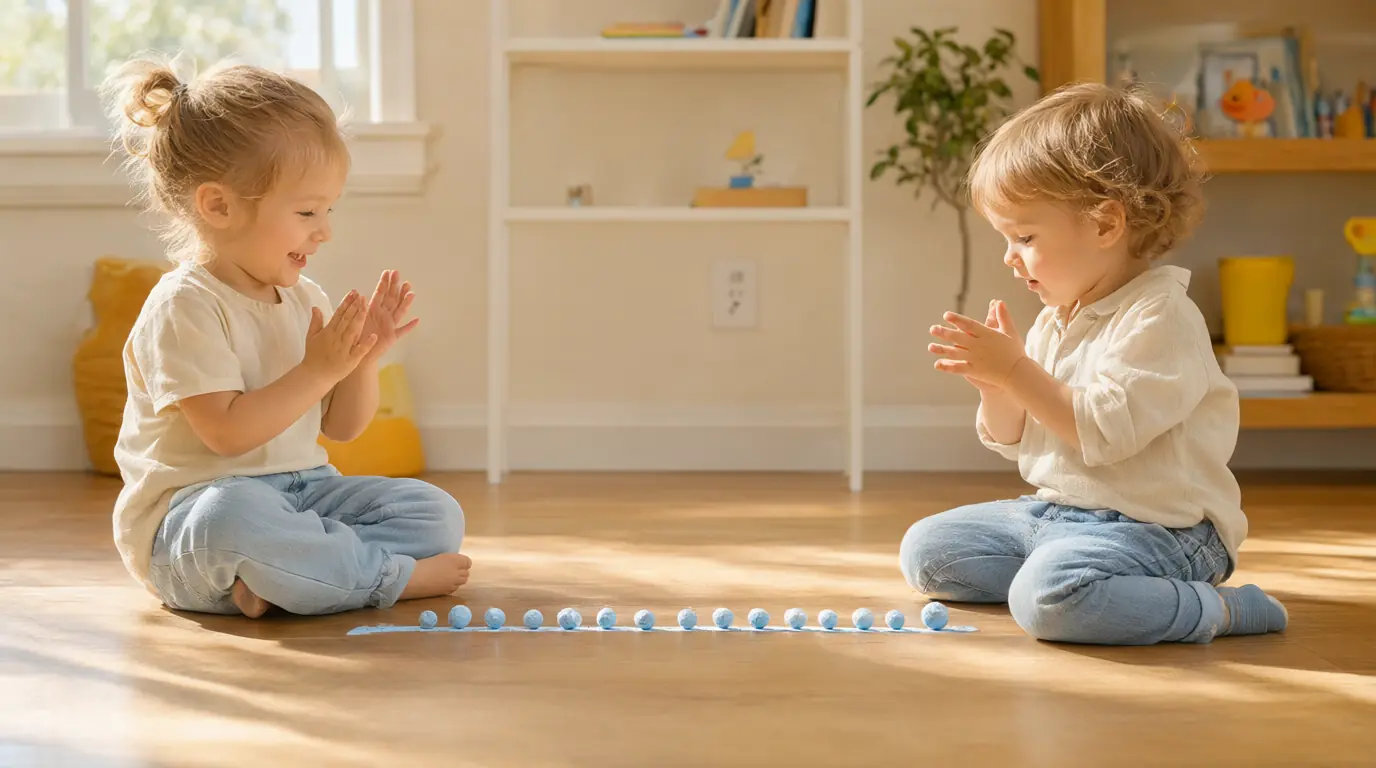
Make it your own: Younger children can pat their knees instead of clapping and use only one-syllable names. Older children can clap a whole short sentence, or clap a name while a partner says it aloud.
Picture score: clap, rest, clap
A picture score turns a rhythm into something a child can see and rearrange, which takes the pressure off memory. It also introduces the idea of reading from left to right, a small piece of early literacy hidden inside a game. Children who can plan a pattern and then perform it are doing real thinking, not just making noise.
You’ll need
- Six to eight squares of thick paper, the same size
- Thick crayons
- A flat table or a tray
How to do it
- Draw a pair of hands on three cards and leave three cards blank to stand for a rest.
- Lay a short score on the table: hands, blank, hands.
- Point to each card in turn from left to right and clap only on the hand cards.
- Repeat it together twice so the pattern settles.
- Let your child rearrange the cards and perform their new score.
- Take turns pointing at the cards for the other person to follow, and swap roles.
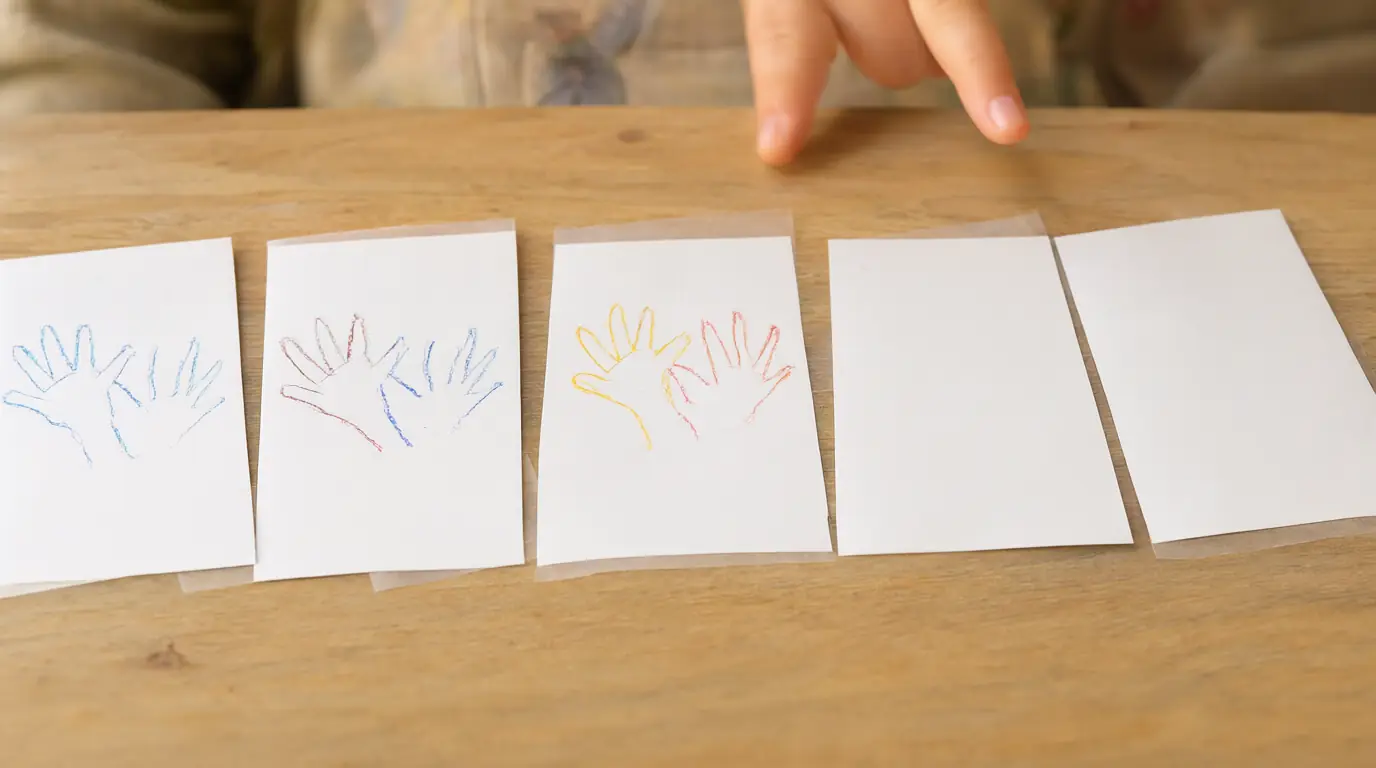
Make it your own: Younger children need only three cards and a slower point. Older children can add a stamp card for a foot tap, or build an eight-card score and teach it to someone else.
Quiet orchestra with a conductor
Here the child decides who makes which sound and when, which is a rare and satisfying kind of power for a small person. The sounds stay soft so nobody's ears are overwhelmed, and a conductor's job is exactly what it sounds like: point at a player, and they play. It works well with mixed ages because each player can choose a sound they can manage.
You’ll need
- Hands, laps, knees and a table
- A wooden spoon or rolled paper as a baton
- Two or three players if possible
How to do it
- Agree three sounds: a soft clap, two finger taps on the table, and hands rubbing together.
- Practise each sound once so everyone knows what it looks and sounds like.
- Hand the baton to your child and let them point at each player in turn.
- Point at a player for a few seconds, then move on or hold up a flat hand for silence.
- Swap so the conductor becomes a player and someone else takes a turn.
- Finish with everyone playing softly together and the conductor closing their hand for a silent ending.
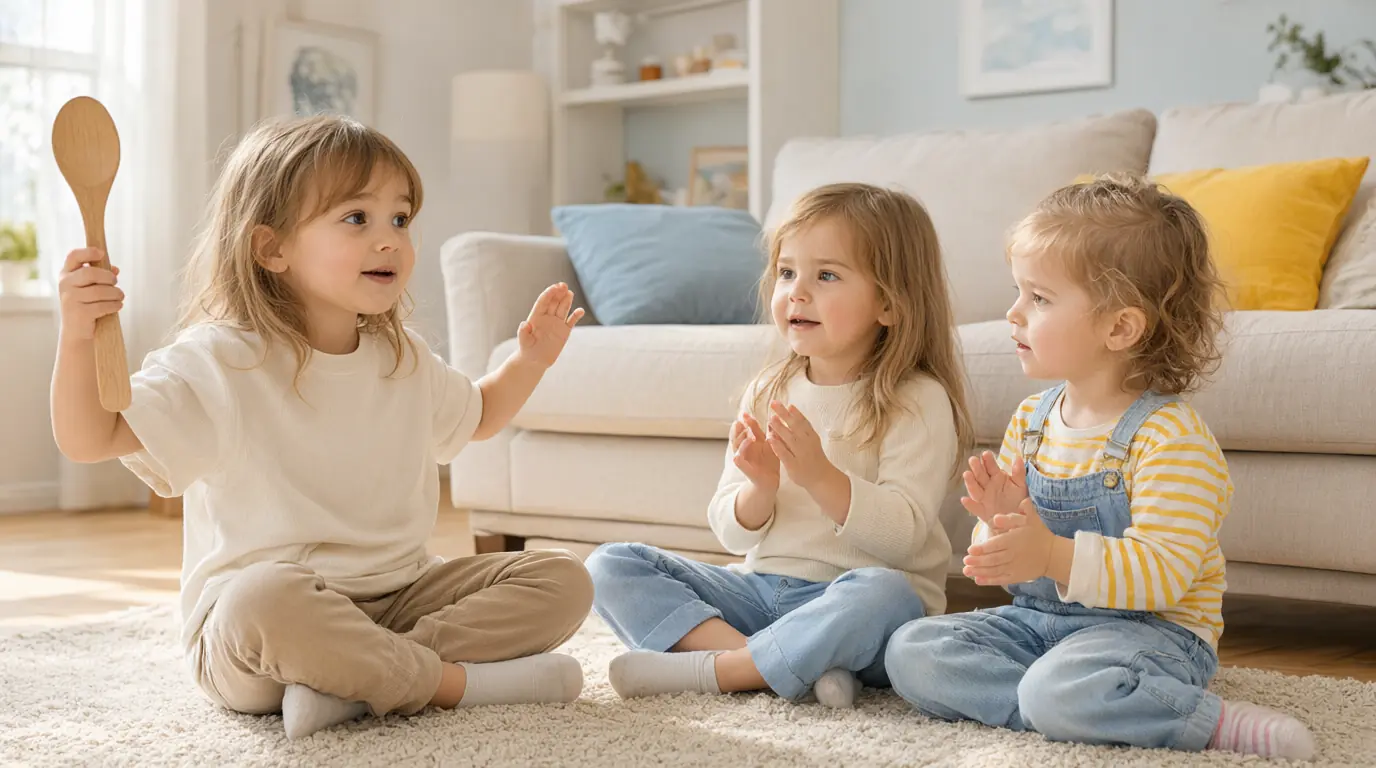
Make it your own: For a younger child, keep two sounds and let them conduct with a finger rather than a baton. Older children can invent a follow-the-leader section where the orchestra copies one player's sound.
Copy me backwards
A reversing game asks children to hold a short sequence in memory and then turn it round, which is harder than it looks and very satisfying when it works. It suits four- and five-year-olds who have mastered simple copying and want a challenge that feels like a trick rather than a test. Keep sequences short and let mistakes be funny.
You’ll need
- Hands or knees
- Nothing else needed
How to do it
- Clap a two-part pattern: clap, then knee tap.
- Ask your child to copy it exactly, and confirm it together.
- Now ask for it the other way round: knee tap first, then clap.
- Try a three-part pattern when that works, such as clap, knee, clap.
- Let your child set the pattern and ask you to reverse it, getting it wrong sometimes on purpose.
- Finish when interest drops, usually after five or six patterns.
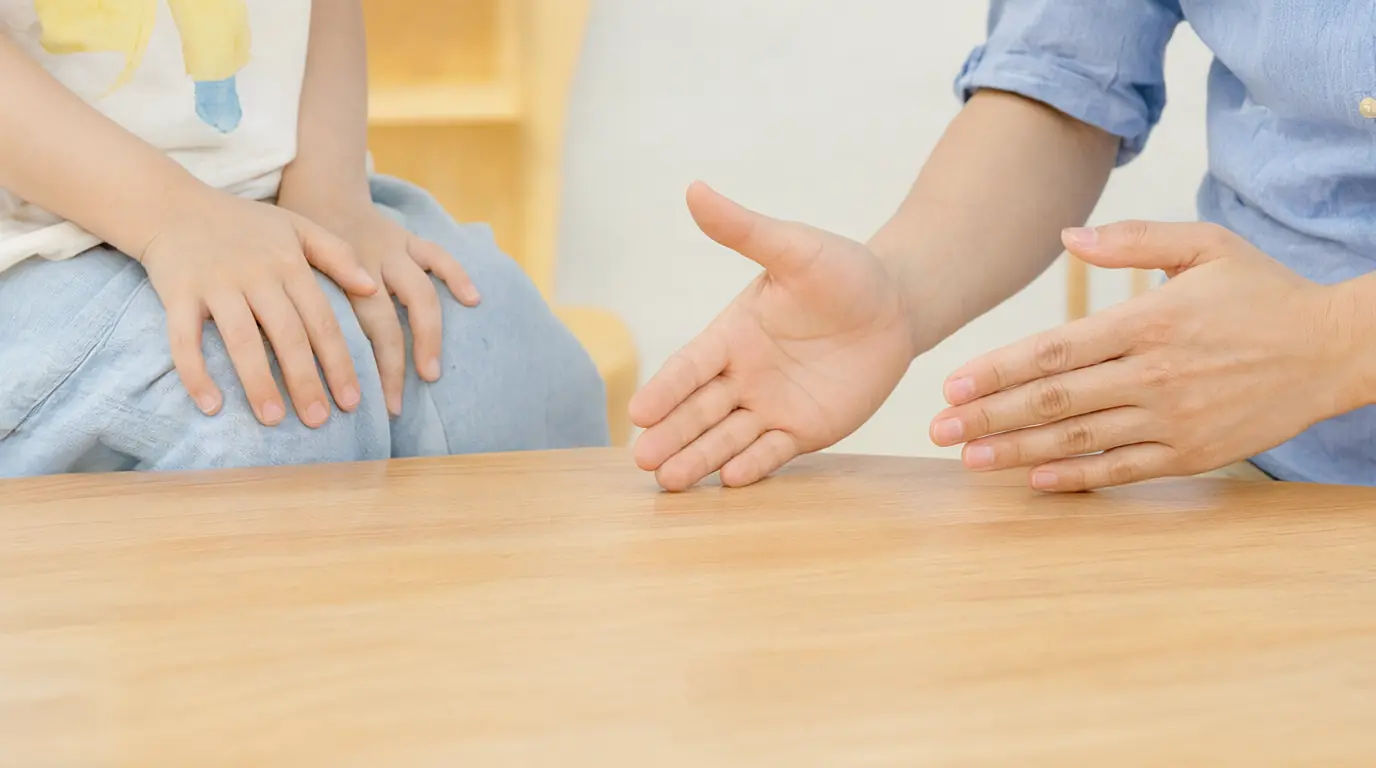
Make it your own: Younger children can start with two sounds and simply copy forwards. Older children can add a stomp or a spoken word as a third element, or reverse a four-part pattern.

Make it work for your family
If your child keeps clapping a different pattern from yours, that is usually a game they have invented, not a mistake. Copy theirs back and see where it goes. If they lose interest, shorten to one exchange and finish warmly; a short game repeated daily builds more rhythm than one long session. A child who dislikes the sound of clapping can use knee pats throughout and still learn every pattern.
Some children find waiting for a turn genuinely difficult, and a three-second pause can feel very long. Say 'your turn' out loud to give a clear signal, and keep it predictable. If hand clapping hurts small palms, clap with two fingers against the palm rather than flat hands. For more rhythm ideas, try these clapping and singing games, or explore music games for listening and shared invention. Our memory games also practise holding a short sequence in mind.

Parents also ask
What age do children start clapping games?
Most children can copy a single clap and a pause from around two, and manage two- or three-part patterns by three or four. Reversing a pattern or clapping to syllables usually becomes interesting around four to five. Follow your child's interest rather than a fixed age.
What are some easy clapping games for two children?
Copy me, where one child claps a short pattern and the other answers it, needs no materials and works with any pair. A picture score with three cards also suits two players, as does quiet orchestra with one conductor and one player taking turns.
What if my child cannot clap in time or finds it frustrating?
Slow the game right down and drop to a single clap with a long pause. Clapping is a physical skill and timing takes practice. Let your child set the pace, clap on knees instead, and stop while it still feels like play rather than a lesson.
Choose materials and activities that suit your child, supervise as needed and adapt the ideas to their interests and abilities. About our editorial approach