Weebou Editorial Team
 In this article
A little preparation
Pick five or six words your family genuinely says and write them on a card you will see, or keep them in your head and let the moment supply them. Ten to fifteen minutes is enough, and the best time is just before or just after a meal, when a word like gather or pass has something real to attach to. Work at the kitchen table, in the doorway where guests arrive, or on the sofa with a basket of toy food. You need no special space.
Keep the small pieces that come with card-making — paper scraps and cut-out pictures — away from children who still put things in their mouths, and let an adult handle the sharp scissors. Hot dishes and drinks stay at the far end of the table while you work. Some of these words belong to particular traditions and histories. If they are your family's, explain them in your own words; if you are learning about a tradition that is not yours, check a reliable source, talk about it plainly and keep it out of costumes and decorations. Never turn the words into a quiz or ask a child to perform gratitude on demand.

Ideas to try together
Words for people arriving at your door
Many of the most useful Thanksgiving words describe people coming together. A child hears gather, guest and welcome in a real doorway rather than on a worksheet, so the meaning arrives with a face and a sound. Say the words aloud while you set out extra chairs or wait for visitors, and your child gains a way to talk about what is about to happen in the house.
How to do it
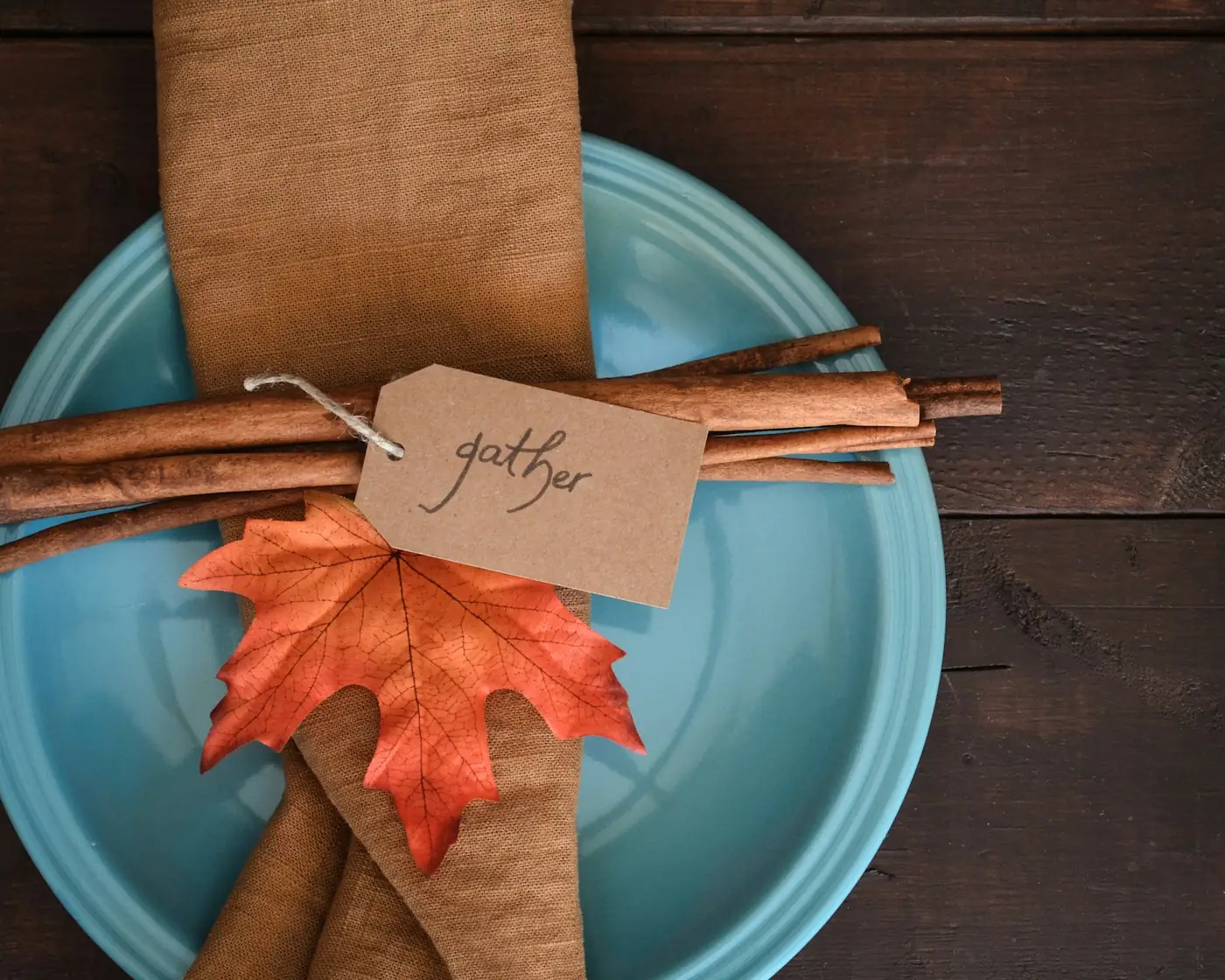
- gather — when people come to one place: 'Everyone will gather at our table.'
- guest — someone you invite and make comfortable: 'Our guest takes the seat by the window.'
- welcome — the way you greet someone who arrives: 'We welcome Grandpa with a hug.'
- arrive — to get to a place: 'The cousins arrive after lunch.'
- together — in the same place, or doing the same thing: 'We cook together.'
- belong — to be part of a group: 'You belong at this table.'
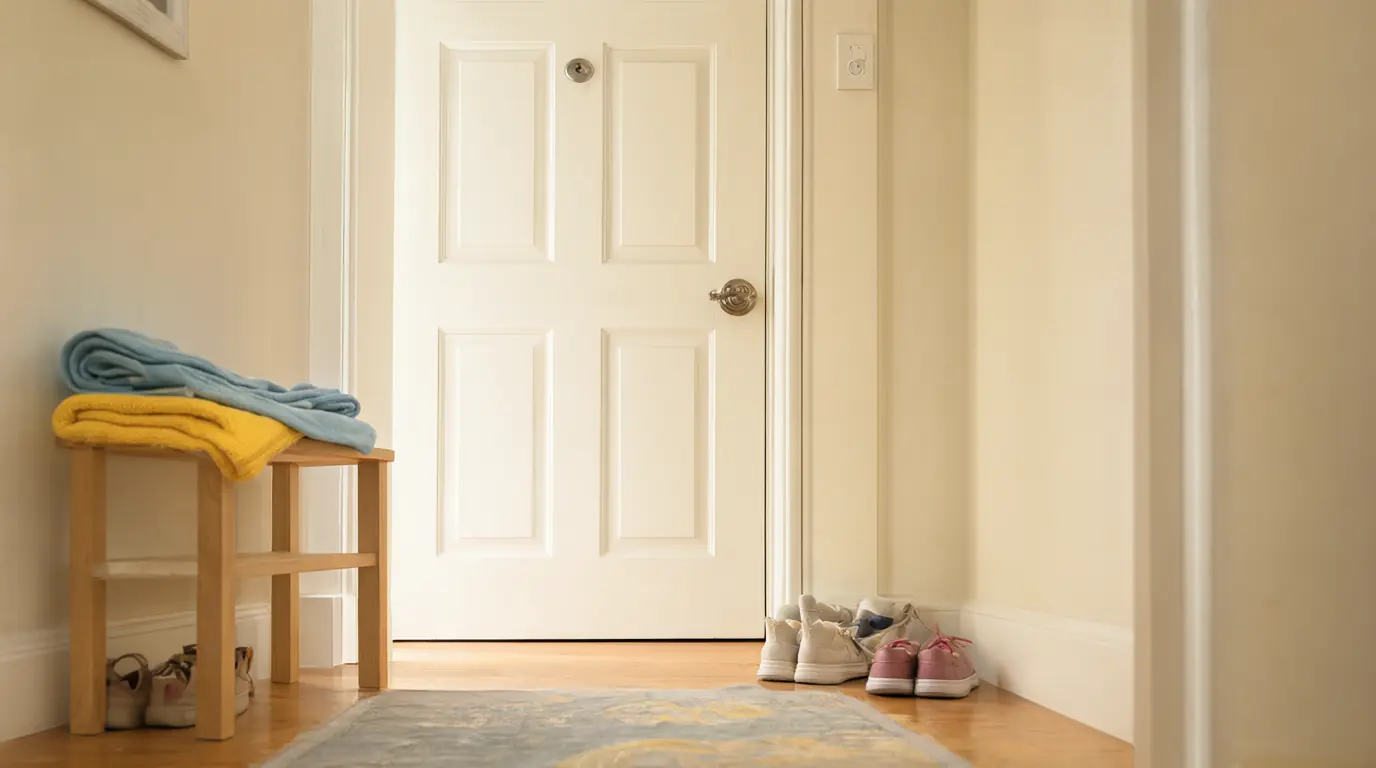
Make it your own: With a two- or three-year-old, use gather and welcome only, and pair each with a wave or a doorbell sound. Older children can name who arrives first, plan the order of the evening, or retell the visit afterwards using all six words.
A picture card for each word
Making a card for each word gives a child something to hold while you explain it, and the drawing shows you what they understood. It suits children who like to be busy with their hands while they listen, and the finished set becomes a small reference you can bring out at the table for weeks. These vocabulary games use the same idea with words from the rest of the year.
 You’ll need
- Sturdy paper cut into postcard-sized rectangles
- Thick crayons or washable markers
- Old magazines or printed family photos to cut up
- Child-safe glue stick
- A shallow box or tin to keep the finished cards
How to do it
- Choose five or six words your family actually says, such as gather, harvest, guest, share or thankful.
- Write the word in large letters at the top of a card and leave a clear blank line underneath where your child can copy it later.
- Ask your child to draw what the word means to them: a table with chairs for gather, a basket for harvest.
- Cut out one magazine picture that matches and glue it beside the drawing.
- Say the word together as you place the finished card in the box.
- Keep the cards on the table during the meal so anyone can pick one up and use it.
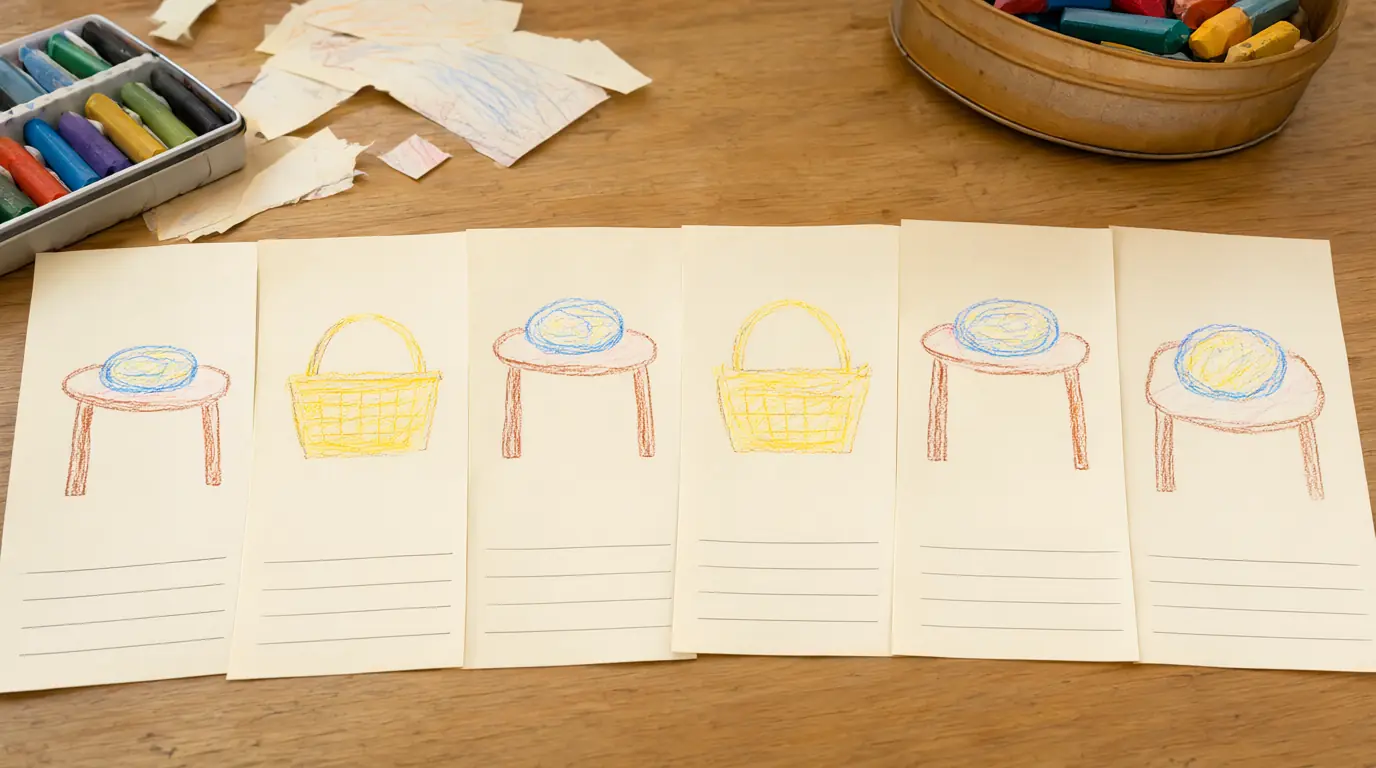
Make it your own: Younger children can draw one picture and let you write the word; older ones can copy the word on the blank line or add a short sentence of their own. If writing is hard, use stickers or a rubber stamp instead.
Words for food and where it comes from
Food words carry the holiday's practical side: where a meal comes from and what happens before it reaches the plate. Children who know harvest, ripe and recipe can join the cooking talk instead of only watching it, and they start to see the meal as the end of a long chain of work rather than something that simply appears.
How to do it
- harvest — collecting food when it is ready: 'Farmers harvest the pumpkins in autumn.'
- crop — the plants grown for food: 'Corn is an important crop here.'
- ripe — ready to eat: 'This pear is ripe and soft.'
- basket — a container with a handle for carrying things: 'We put the apples in the basket.'
- plenty — more than enough: 'There is plenty of soup for everyone.'
- recipe — the list of steps for making a dish: 'We followed Grandma's recipe for the pie.'
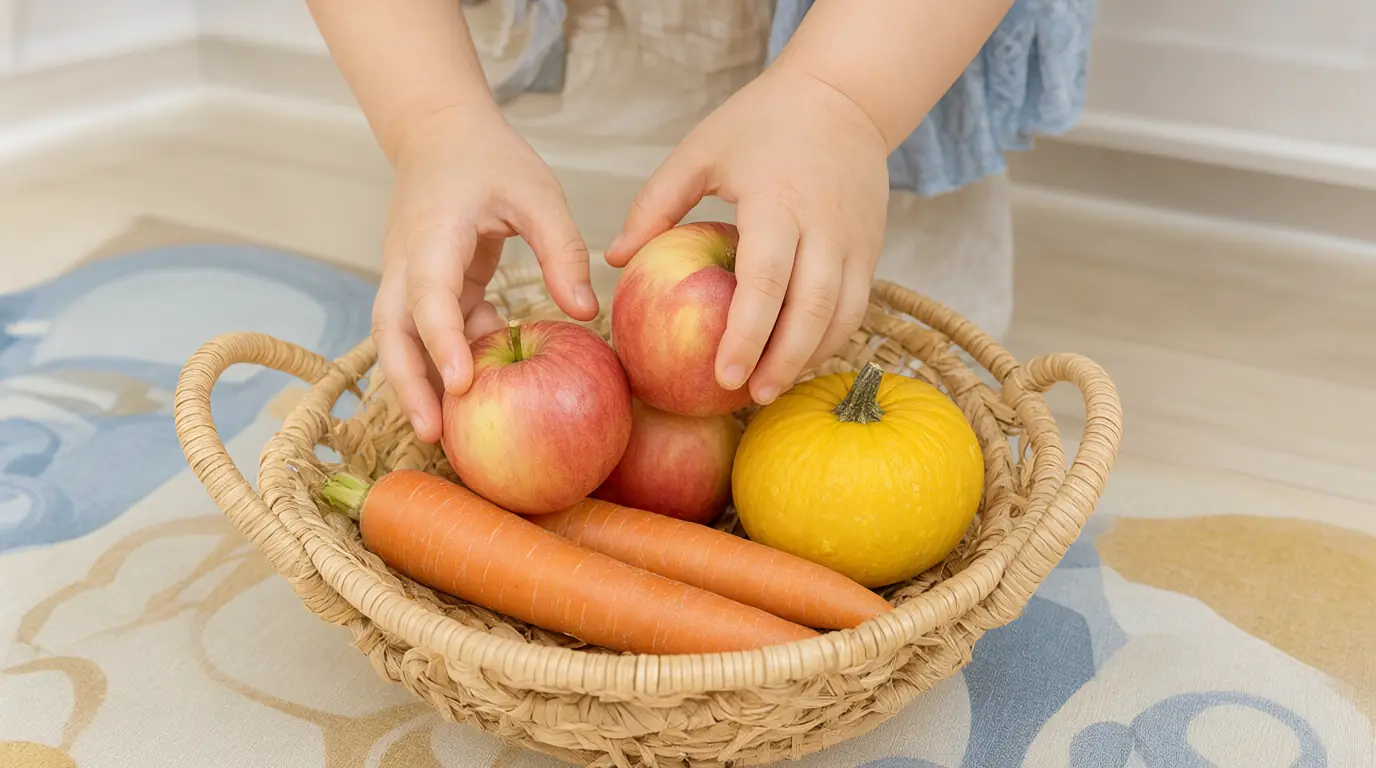
Make it your own: Younger children need two words: ripe, felt with a fingertip on a soft pear, and basket, carried around the room. Older ones can sort a small pile of real food into 'ripe' and 'not yet', or follow the first two steps of a simple recipe with you.
Act out the doing words
Doing words are the easiest to learn because the body can show them. Acting out carry, pass and stir turns a word into a movement your child can copy, and guessing afterwards gives everyone a reason to say the word out loud. It also makes the real jobs around a shared meal feel like something a child is part of.
You’ll need
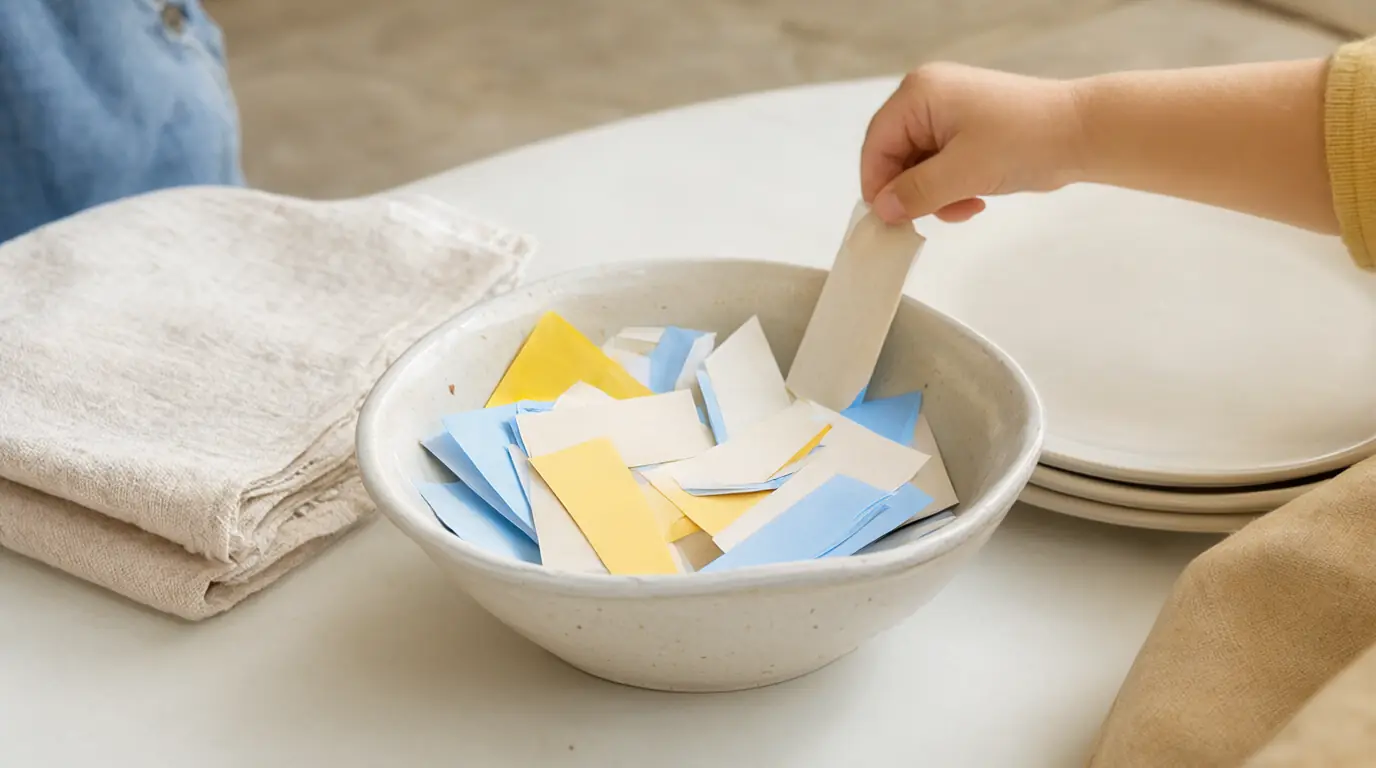
- Small slips of paper with one action word written on each
- A bowl or a hat to draw them from
- You and at least one other player — no other props needed
How to do it
- Write six action words on separate slips: carry, pass, stir, pour, share, clear.
- Fold the slips and drop them into the bowl.
- Take turns drawing one, then act it out without speaking while the others watch.
- Everyone else guesses the word aloud, then says a sentence with it: 'You carried the plates.'
- Keep the bowl for after the meal so the actions are genuinely useful: pass the bread, clear the table.
- Add a new word once the first six feel easy.
Make it your own: For a two- or three-year-old, show the action first and let your child copy it instead of guessing. Older children can act out two words in a row, or add slowly, carefully or proudly and let the others work out both the action and the manner.
Thankfulness words without a performance
Thankfulness words are worth teaching carefully, because a child who is asked to perform gratitude learns to say the words rather than feel them. Naming your own small moment first — the soup, the phone call, the dry walk to school — shows what the word means without putting your child on the spot, and it gives them permission to answer or to stay quiet.
You’ll need
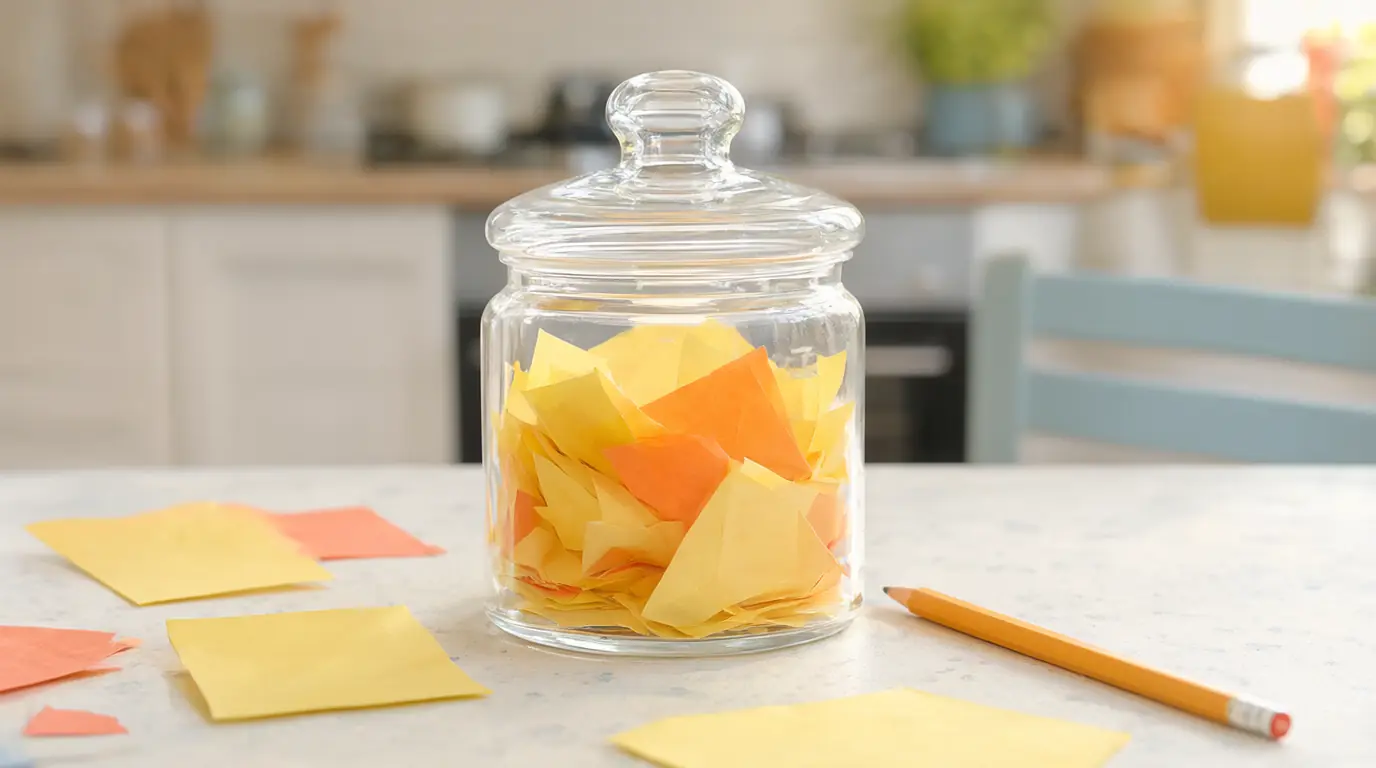
- A clear jar with a wide lid
- Small squares of paper in two or three colours
- Pencils or crayons
- A shallow dish for the folded notes
How to do it
- grateful and thankful both mean you noticed something good and are glad about it; use whichever word your family says more often.
- appreciate fits something a person did: 'I appreciate that you set the table.'
- Start by saying your own small moment out loud: 'I am grateful we ate together.'
- Invite rather than insist: 'Would you like to add a note, or would you like to pass?'
- Notice the feeling when it appears without naming it for your child: 'You gave your bread away — that was thoughtful.'
- Add notes to the jar whenever someone wants to, with no set number to fill.
Make it your own: Younger children can simply hear the words and pass the jar without adding a note. Older ones can write or dictate a sentence, or choose a word from the list — grateful, thankful, appreciate — and use it in a sentence about someone else.

Make it work for your family
If your child keeps using one word and ignores the rest, that is not a problem to fix. Model the others in your own speech — 'Shall we gather the plates?' — and let them land without a correction or a test. When a word does not come up naturally, leave it out rather than inventing a situation for it; a word that arrives with a real moment is the one that stays. If interest drops after two minutes, stop and come back another day.
Keep the words somewhere visible for the whole season, and bring them back when the situation fits: harvest while you unpack shopping, guest when someone knocks, plenty when the pot is full. Children who enjoy this often like our Thanksgiving activities for kids, and a short round of gratitude activities can carry the thankfulness words into the rest of the year. Screen-free word play like this also links well to gentle word games when your child wants more.

Parents also ask
What are good Thanksgiving words for a 3-year-old?
Keep it to three or four words: gather, share, harvest and thankful. Say each one while the action happens — gathering chairs, sharing bread, unpacking the shopping — and skip any list to memorise. At this age children learn words through the moment, so one word used ten times is worth more than ten words used once.
Should children learn the history behind Thanksgiving words?
Follow your child's question. If they ask why we say harvest, or who came to the first meal, answer honestly in simple words and check a reliable source if you are unsure. Some of these words belong to particular traditions and communities, so explain them in your family's own words rather than turning them into a decoration or a costume.
How many Thanksgiving words should a child learn at once?
Five or six is plenty for a week, and three is plenty for a three-year-old. Add a new word only when the earlier ones start appearing in your child's own talking. Repeating a familiar word in new situations — gather at the table, gather the leaves — teaches far more than a longer list.
Sources & further reading
Explore these primary sources for further context on this topic.
Choose materials and activities that suit your child, supervise as needed and adapt the ideas to their interests and abilities. About our editorial approach