Weebou Editorial Team
 9 min read
 In this article
A little preparation
Choose one room or a small corner of the garden and walk the boundary together before you start. Agree that a mission stays inside that area, that nobody hides from the adult in charge and that clues are looked at, never climbed for. Gather everything in one basket so the game can stop and restart easily.
Set out the clues yourself the first time, then let your child take over the hiding. Ten to twenty minutes is plenty for a first round, and a snack or a favourite toy at the end gives the game a clear finish. Keep the whole mission at floor level — spy stories are full of ladders and ledges, but young children only need a trail they can follow on foot. If your child enjoys guessing from hints, these guessing games for kids use the same skill.

Ideas to try together
A symbol code with its own key
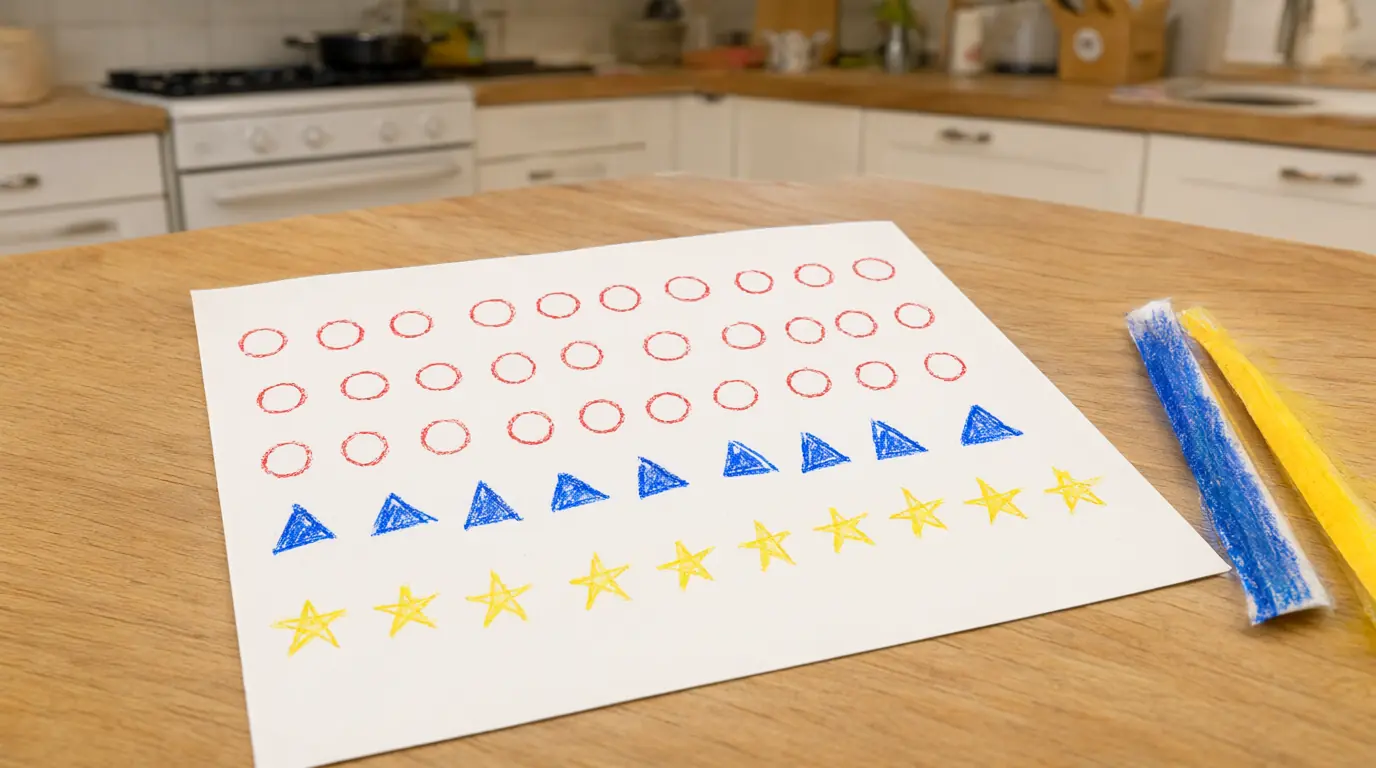
Writing in code gives a child a reason to slow down and think about every mark. Inventing the key first means the message belongs to your family rather than to a film, and decoding it practises matching a symbol to a meaning — the same skill as matching a letter to a sound in alphabet games. Keep it to four symbols so the code stays a game rather than a puzzle to fail.
You’ll need
- Two blank cards or quarter-sheets of thick paper
- Crayons in two or three colours
- A pencil
- A small envelope to keep the code in
How to do it
- Choose four simple shapes together — a circle, a cross, a star and a triangle — and agree what each one stands for, such as go, stop, here or look.
- Draw the shapes and their meanings on one card to make the key.
- Write a short message on the second card using only the shapes, for example three shapes that say where to look next.
- Hand over the card and the key and let the other player work out the message at their own pace.
- Decode it together, with your child explaining which shape they recognised first.
- Swap roles so your child sets the message and you do the decoding out loud.
- Slip both cards into the envelope so the family code survives for next time.
Make it your own: Three-year-olds can work with two symbols and a message of one shape. Older children can add a symbol that means 'turn the card over', or write a second message that only makes sense once the first is solved.
The changing observation tray
Covering a tray and changing one object turns noticing into a game with a clear answer. Your child has to hold several details in mind at once, then check their memory against the tray, which is far more satisfying than being told what they missed. Five objects is enough; more than that and the task becomes frustrating.
You’ll need
- A tray or a large plate
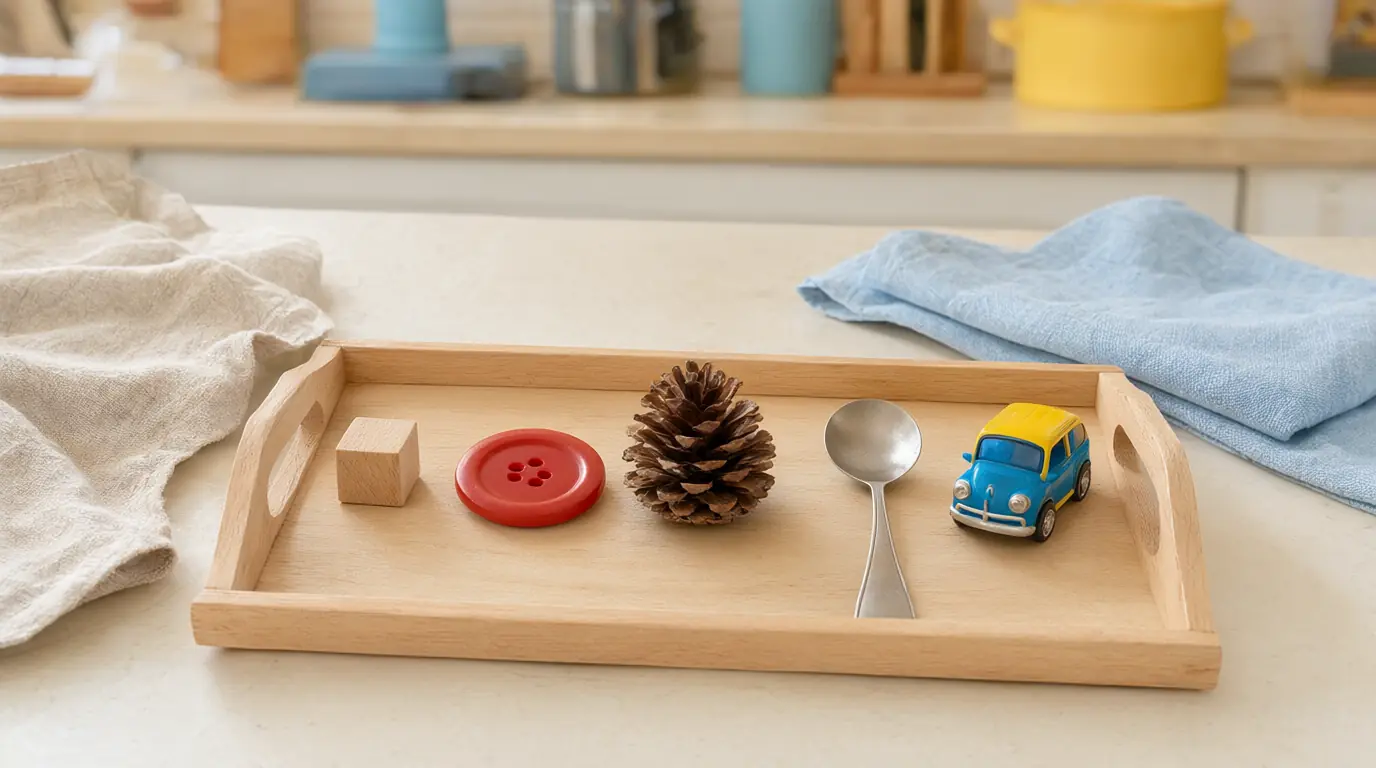
- Five small safe objects, such as a wooden cube, a spoon, a pine cone, a ball and a large button
- A tea towel large enough to cover the tray
- A second tray or a sheet of paper for the spare object
How to do it
- Lay the five objects on the tray and name each one slowly together.
- Cover the tray with the cloth and ask your child to look away while you remove one object, swap two around or turn something over.
- Uncover the tray and invite them to say what changed.
- Let them check by looking at the spare object or by comparing the two positions.
- Talk through how they worked it out — a shape, a colour or a missing space on the tray.
- Swap jobs and let your child set the change while you guess.
Make it your own: For a two- or three-year-old, use only three very different objects and move them rather than removing any. Older children can be given two changes at once, or ten seconds to look before the cloth goes back on.
A trail of paper footprint clues
A trail of paper footprints gives the mission a direction without sending anyone into cupboards or behind furniture. Each clue asks a small question — which way next, what to look under — so your child practises reading a picture as an instruction. Walking the route slowly and out loud keeps it calm rather than frantic.
You’ll need
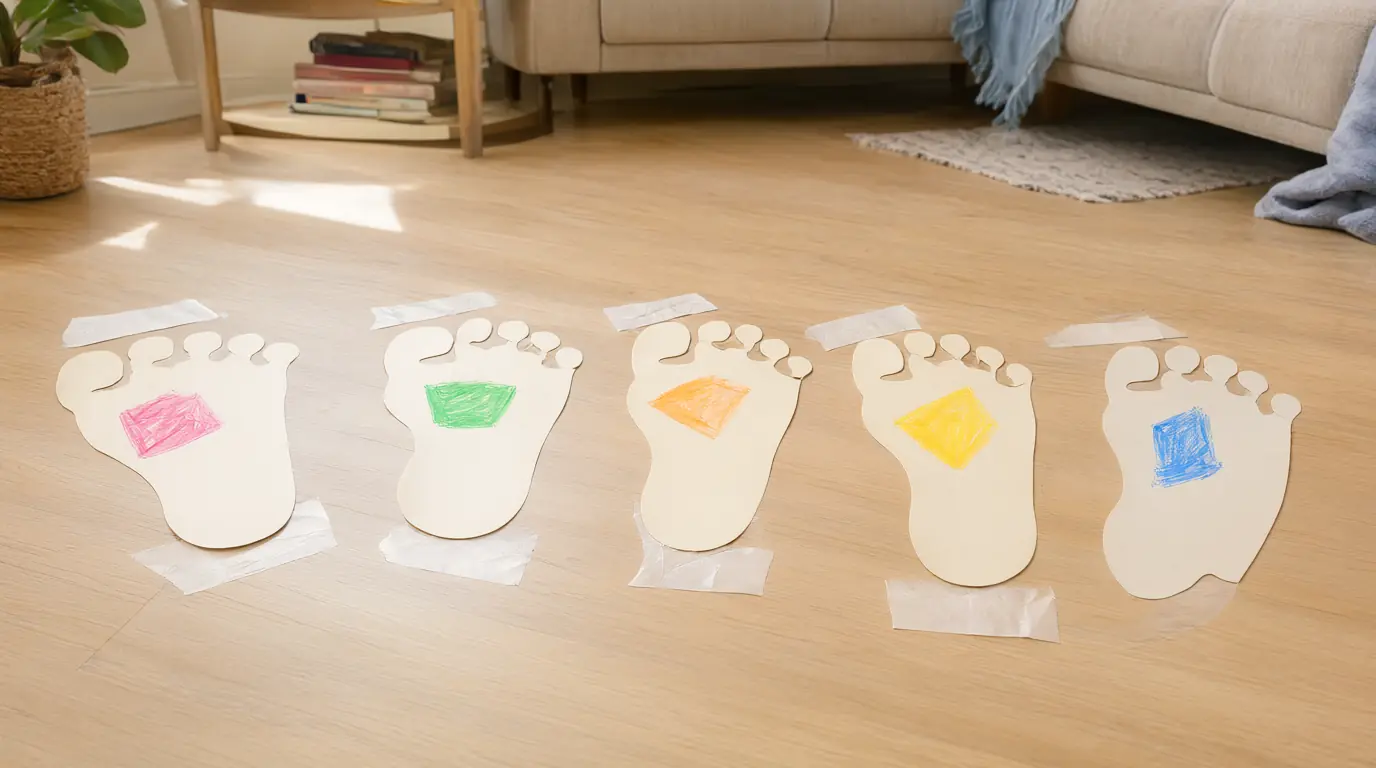
- Four or five paper footprint cut-outs
- A crayon or marker
- Sticky tape or removable putty
- A small familiar toy to hide at the end
How to do it
- Draw round a shoe or cut simple footprint shapes from thick paper.
- Draw one clear shape on each footprint — an arrow, a circle, a star — and agree what each one means before you hide them.
- Tape the footprints in a line along an open floor route, leading from one room to the next.
- Hide the toy at the end of the trail, somewhere your child can reach without climbing.
- Walk the trail together the first time, reading each picture clue out loud as you reach it.
- Let your child re-hide the toy and lay a new trail for you to follow.
Make it your own: Toddlers can follow a trail of just three footprints with one picture repeated. Older children can add a clue that points the wrong way on purpose, then explain why it would mislead a follower.
A listening post behind a low screen
Some clues cannot be seen at all, which makes this the quietest game in the list. Listening for one specific sound, then naming what changed, builds attention and vocabulary at the same time. Sit side by side with the screen between you, and let your child guess as many times as they like.
You’ll need
- A cloth over a chair back, a board book or a large cushion to make a low screen
- Four or five objects that sound different, such as keys, a sheet of paper, a wooden spoon or a jar of rice
- A tray to hold the objects
How to do it
- Sit on opposite sides of the screen with the tray of objects on your side.
- Pick up one object and make a sound with it — rattle the keys, crumple the paper, tap the spoon on the table.
- Ask your child to name what they heard; accept a word, a guess or a pointing gesture.
- Repeat the same sound twice, then use a different object and ask whether it changed.
- Let your child come round to your side and choose the next sound for you to identify.
- Finish by lining the objects up and asking which was the hardest to recognise.
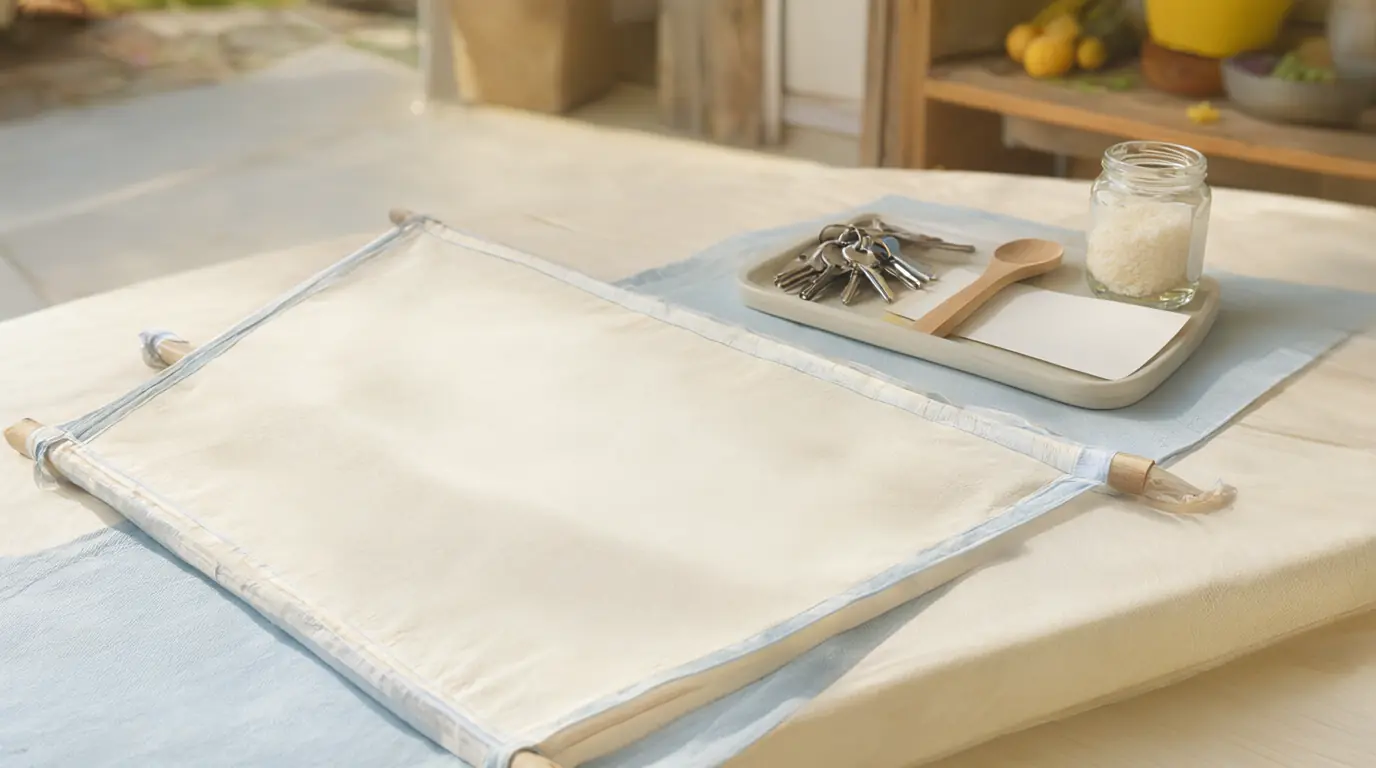
Make it your own: Two-year-olds do best with three sounds that are very different, such as keys, paper and a spoon. Older children can hear two sounds in a row and say which came first, or identify a sound made just outside the room by an adult.
The team mission report
Drawing the mission afterwards turns five minutes of play into a story your child can retell. Asking which clue helped most encourages them to think about evidence rather than just the answer, and a picture lets a child who is still learning to write take part on equal terms.
You’ll need
- A large sheet of paper
- Crayons or coloured pencils
- The toy or object that was found
How to do it
- Lay the paper on the floor and set the found object beside it.
- Ask your child to draw the part of the mission they remember best — the trail, the tray or the moment they found the object.
- Write their words underneath if they want them kept, leaving the drawing itself untouched.
- Ask which clue helped most and draw a small circle around that part of the picture.
- Read the report back together and let your child correct anything you got wrong.
- Store it with the code card and use it as the starting point for the next mission.
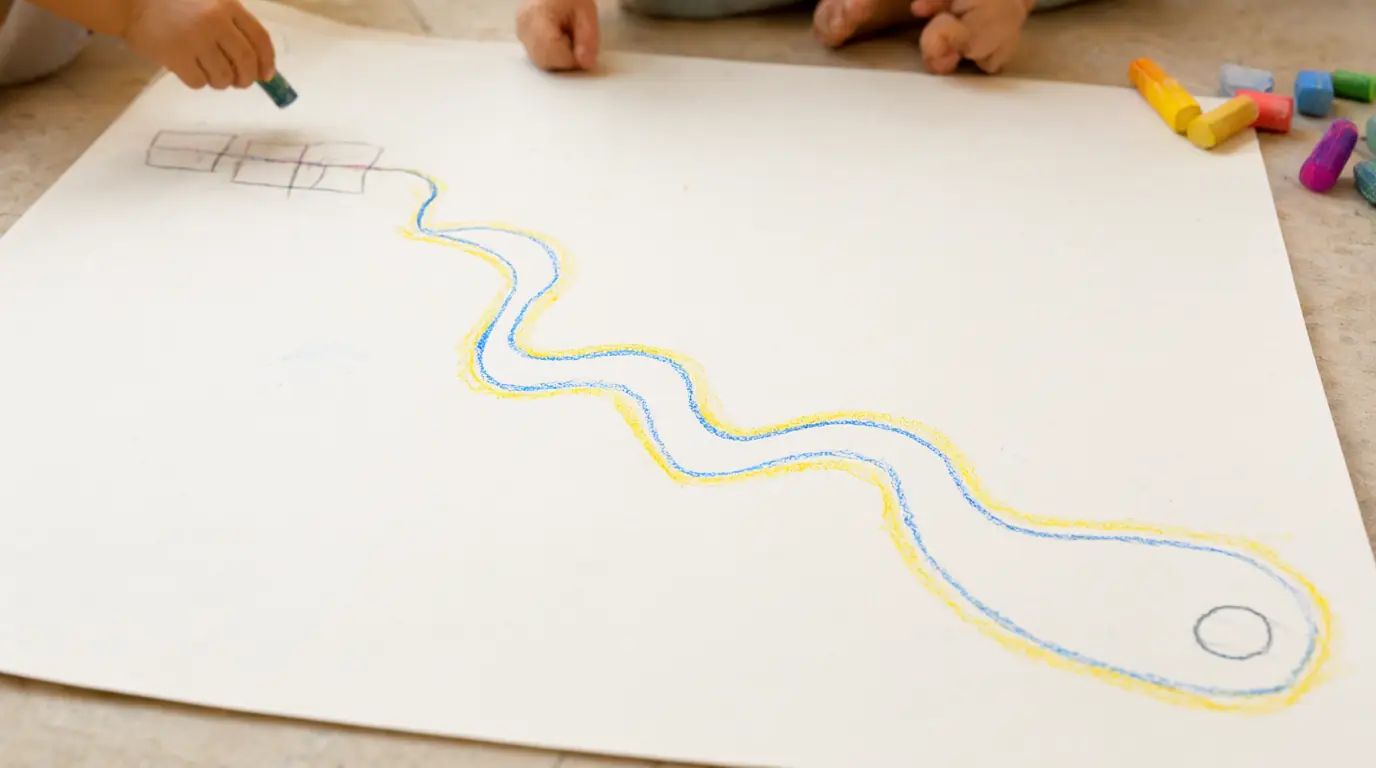
Make it your own: A child who does not want to draw can dictate the report while you write it down. Older children can number the clues in order, or add a line about what they would change in the next mission.

Make it work for your family
If your child loses interest halfway, stop the mission there and call it a success — the point is the looking, not the ending. Children who enjoy the hiding more than the hunting can simply swap roles. If clues are being missed, make them bigger, fewer and more obvious rather than repeating the same route.
Keep the imaginary elements light. A spy is someone who notices carefully and reports clearly, not someone who keeps secrets, and every adult in the house should always know where the children are. If your child wants more of the same, these mystery games for kids build on evidence, and these concentration games stretch attention further. Pack the materials into one box so a five-minute mission is always ready on a rainy afternoon.

Parents also ask
What age can children start spy games?
Most children enjoy a simple observation or listening game from about three, when they can follow one instruction and wait for a turn. A trail of picture clues suits four- and five-year-olds, and older children can invent their own codes and set the whole mission for you.
What can you use instead of letters in a spy code?
Use pictures, shapes, arrows or colours instead of letters. Agree the key together first, then repeat the same symbol in a few different messages so your child has time to recognise it rather than guess at random.
How do you keep spy play safe for young children?
Agree the playing area before you begin, keep everyone within sight of an adult, and rule out climbing, cupboards and wandering outdoors. The mission can feel secret to the players while every grown-up still knows exactly where the children are.
Choose materials and activities that suit your child, supervise as needed and adapt the ideas to their interests and abilities. About our editorial approach