Weebou Editorial Team
 7 min read
 In this article
A little preparation
Reduce competing noise where you can: switch off the television, close the door and put away toys you are not using. Place only the materials for the first game on a clear table or rug. A child sitting next to you, rather than across from you, will find it easier to share the task, and a small timer or sand glass can make the length of the game visible without any pressure.
Explain the goal in one short sentence, such as 'We are going to find the red hat in this picture.' Stay close for the first round to check that your child knows how to begin. Plan for 5 to 10 minutes, then stop, even if the game is going well, so your child leaves it wanting more. If a game is not working, change the task, not the child: smaller, simpler and closer to their interests usually helps. You can add variety with memory games when your child is ready for a different kind of challenge.

What to know and try
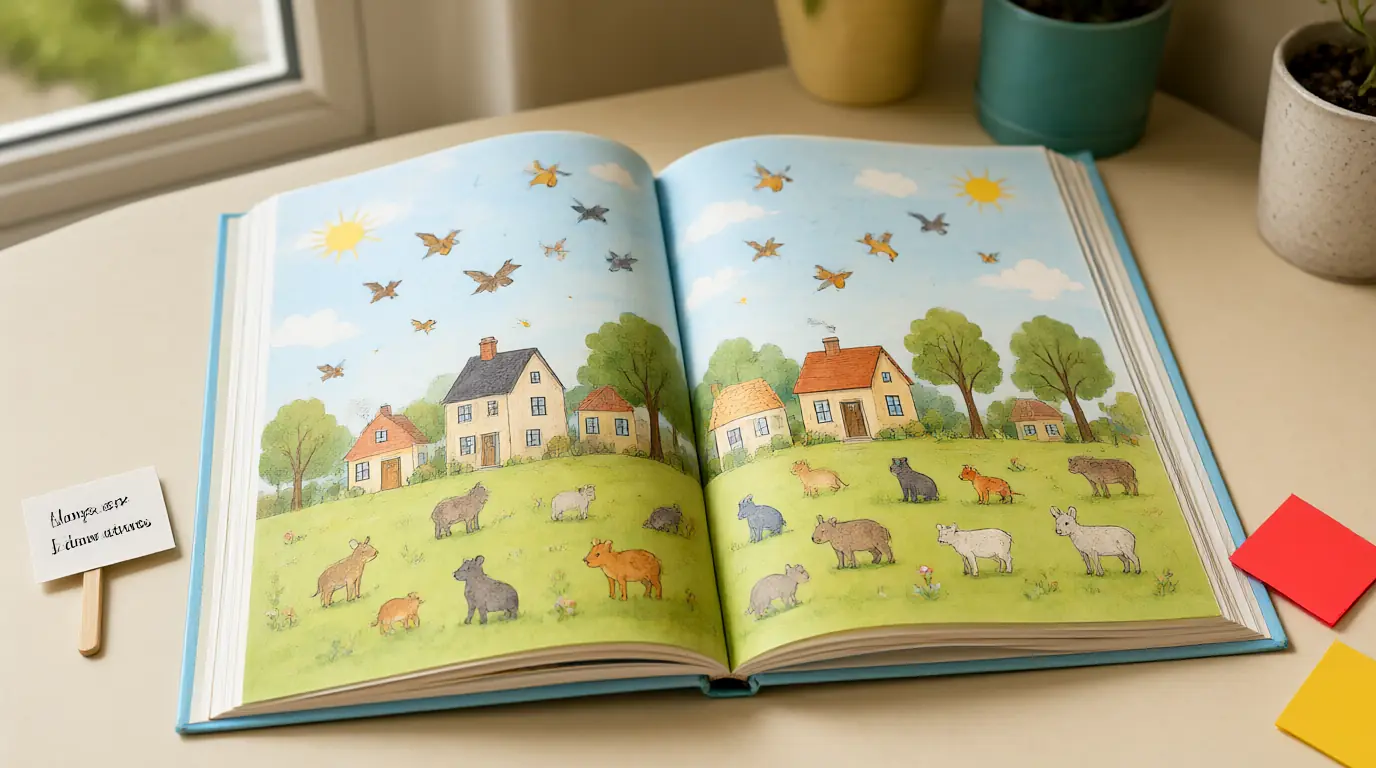
Search a single illustration
A detailed picture book page is full of things to find, which can feel overwhelming. Choosing one visible feature, such as a red hat, narrows the search and gives the child a goal they can understand. Looking for something specific encourages scanning from one side of the page to the other and noticing small details.
 You’ll need
- 1 detailed picture book with a busy page
- A small sticky note to cover part of the page
- A finger or a paper pointer
- A soft toy to be the 'detective'
How to do it
- Open the book on a page with lots of small pictures, and look at it for a few seconds together.
- Name one thing to find, such as a red hat or a yellow bird.
- Let your child scan the page and point to what they find.
- Ask them to say where it is, using words such as top, next to or under.
- Swap roles so your child chooses something for you to find.
- If the page feels too busy, cover half of it with the sticky note and search the smaller area.
Make it your own: Younger children can search a page with only a few large pictures. Older children can look for two things in a row or find something small in a specific corner.
Copy a short block design
Copying a small block arrangement gives children a visual model to hold in mind while they work. Starting with three blocks keeps the task short enough to finish, and checking one part at a time makes it easy to spot where something differs. Once they have explored it, many children turn the design into a new creation, which is a good outcome too.
You’ll need
- 6 large building blocks in 2 or 3 colours (two matching sets of 3)
- A small tray for the model
- A second tray for the copy
How to do it
- Build a simple model of three blocks on the first tray, such as a tower of red, blue and yellow.
- Leave it in view and give your child the matching blocks on the second tray.
- Invite them to make something that looks like your model.
- Compare the two designs one block at a time, starting from the bottom.
- Change one block in your model and ask your child to spot the difference.
- Let them make their own design for you to copy.
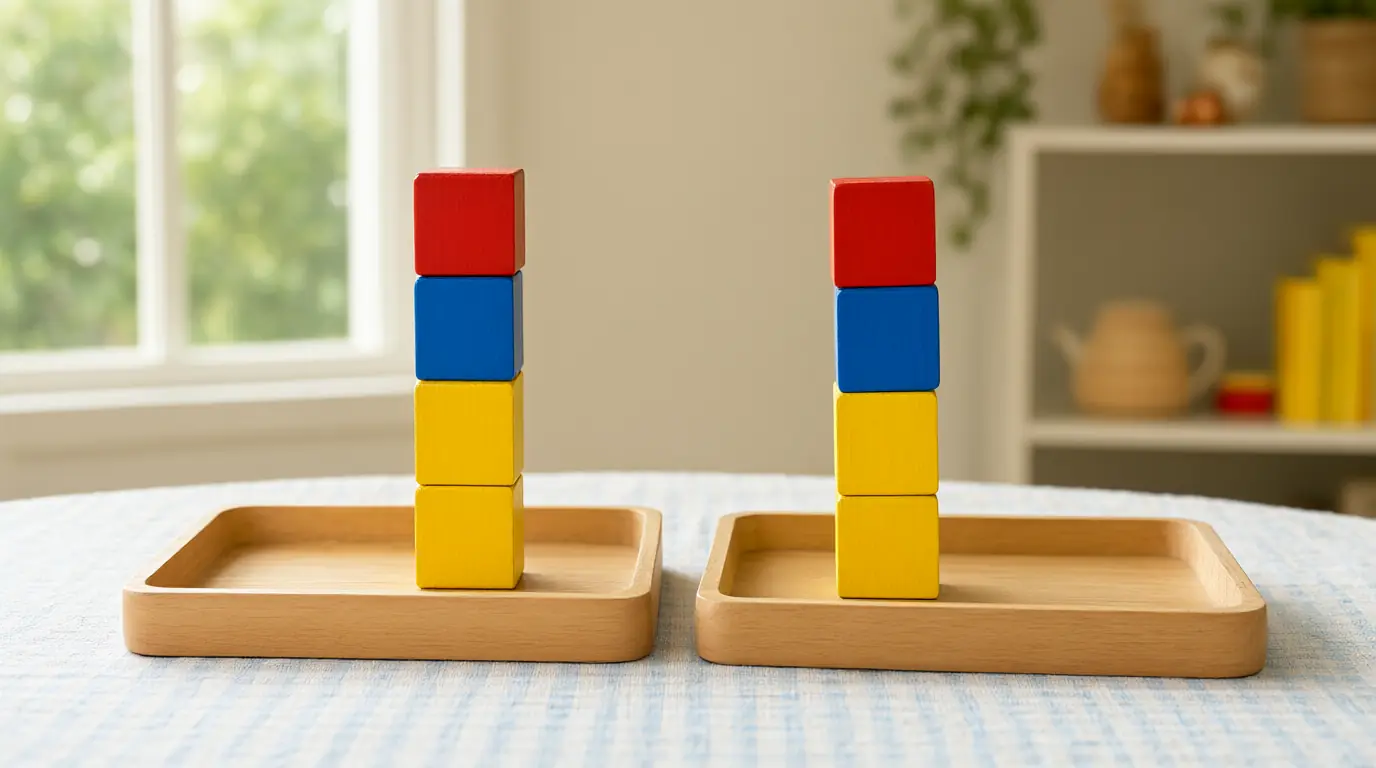
Make it your own: Younger children can match the blocks by colour only, without worrying about order. Older children can copy a model of five blocks or memorise it for 10 seconds before it is hidden.
Listen for a chosen word
Listening for one word in a very short story trains attention without staring at anything. The word becomes a signal, and your child decides how to respond with a gesture, a clap or a whisper. Keeping the story silly makes the game enjoyable, and not catching every occurrence is perfectly fine.
You’ll need
- A very short invented story of 6 to 8 sentences
- A soft toy or puppet as the storyteller
- A cushion to sit on
How to do it
- Choose a simple word to listen for, such as 'rabbit' or 'hat'.
- Agree on a gesture for when it appears, such as tapping your knees twice.
- Tell a short story that uses the word three or four times, speaking slowly.
- Pause if your child wants to add something to the story.
- Afterwards, ask what the rabbit did and how many times they heard the word, without worrying about accuracy.
- Swap places so your child tells the story and you listen.
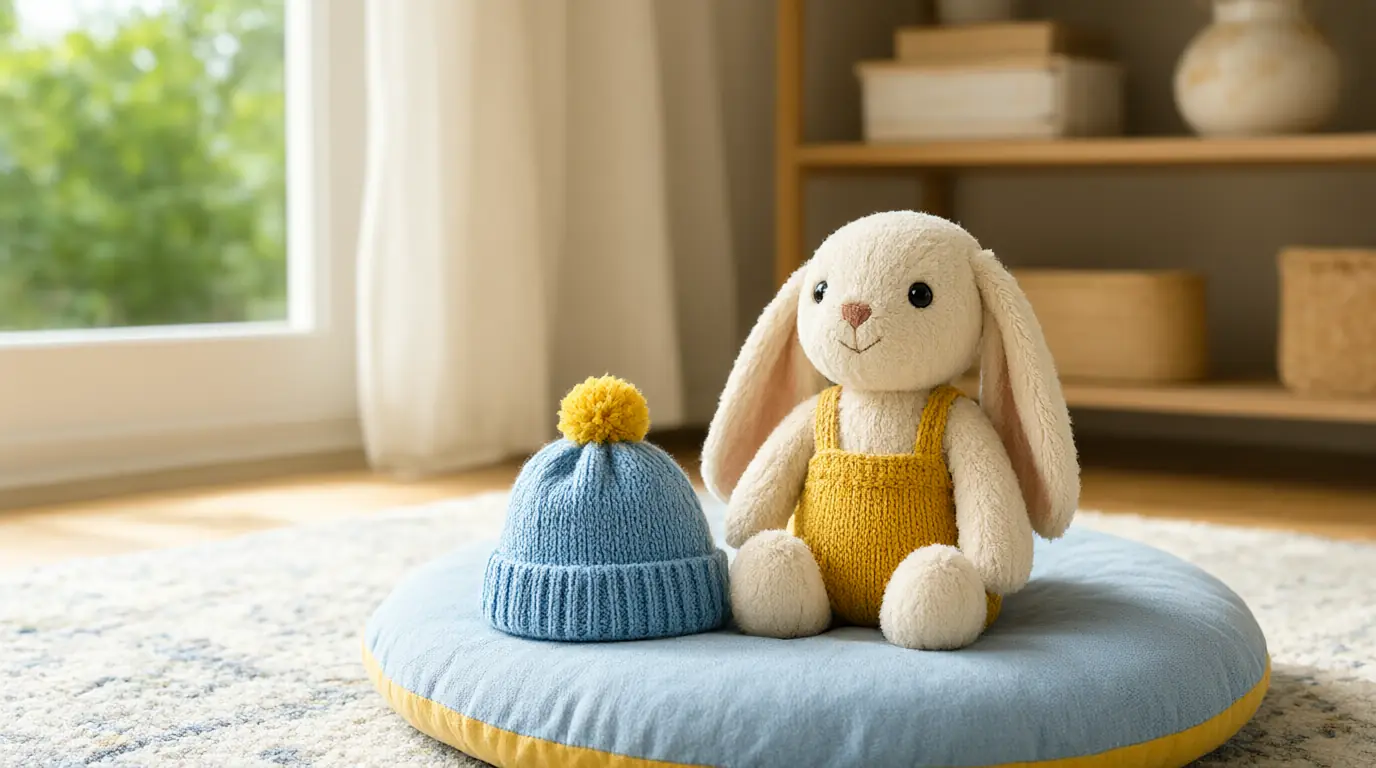
Make it your own: Younger children can listen for a sound effect rather than a word. Older children can listen for two words with different gestures.
Sort with a visible reminder
A drawn reminder of the sorting rule stays visible throughout the task, so your child does not need to hold it in mind alone. Sorting gives a clear start and finish, and talking about an uncertain piece shows that thinking and changing your mind are part of the game.
You’ll need
- 2 large cards, one with a drawn circle and one with a drawn square
- 10 small paper shapes, circles and squares, in 2 colours
- A small tray to hold unsorted shapes
How to do it
- Place the circle card on the left and the square card on the right, and say what each shows.
- Put the pile of shapes on the tray in front of your child.
- Let them pick up one shape and place it beside the matching card.
- Talk about any shape they are unsure of, and let them decide where it goes.
- When the sort is finished, count the shapes in each group together.
- Try a new rule, such as sorting by colour, and swap the reminder cards.
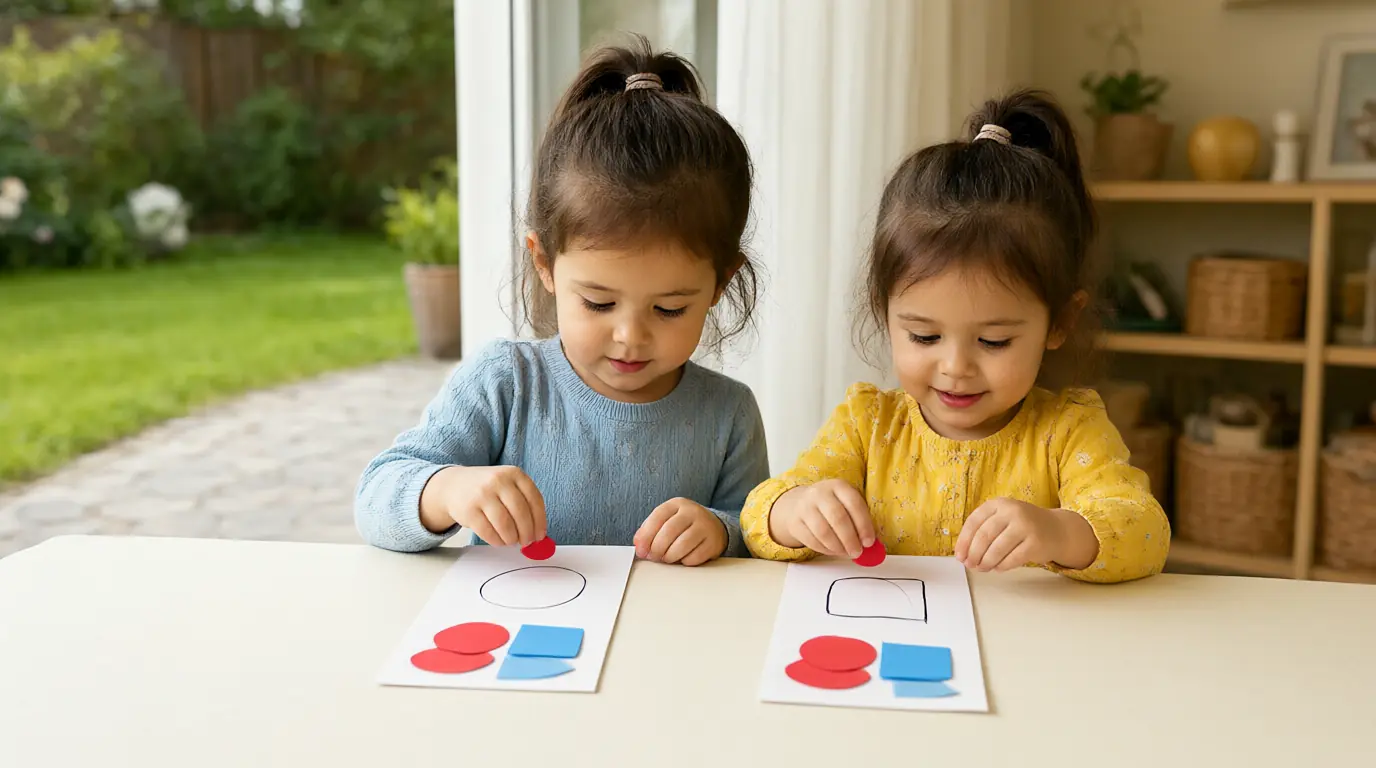
Make it your own: Younger children can sort five very different shapes into one group at a time. Older children can sort by two rules at once, such as colour and shape.

Make it work for your family
A break, a snack, a drink of water or a run around the garden may help more than another round. These games are ordinary play, not treatment, and they will not suit every child on every day. If you are worried about your child's attention over a longer period, or it affects daily life at home or nursery, talk to a qualified professional who knows your child.
Children concentrate longest on things they have chosen. Let your child pick the picture, the blocks or the story theme, and follow their interest for a few minutes before introducing the challenge. For gentle ways to reset between activities, try these brain breaks, and for a game that asks children to pause and start, see stop-and-go games.
Parents also ask
How long can a young child concentrate on one activity?
It varies a lot with the child, the task and the day. Many children aged 3 to 6 manage a few minutes on a task they find interesting. Keep games short, stop while your child is still engaged and follow their cues.
What can I do if my child cannot stay on a game?
Make the task smaller, sit beside them, reduce noise and offer a break or a snack. Choose games linked to their interests. If it is a regular worry, talk to a qualified professional who knows your child.
Do concentration games improve focus?
They offer enjoyable practice in looking, listening and holding an idea in mind, but they are not a treatment and results vary. Treat them as ordinary play, and let your child's interest and comfort guide how often you play.
Sources & further reading
Explore these primary sources for further context on this topic.
Choose materials and activities that suit your child, supervise as needed and adapt the ideas to their interests and abilities. About our editorial approach