Weebou Editorial Team
 7 min read


 In this article
A little preparation
Pick a room or a patch of garden and tell your child where the detectives may look. Keep every mystery about toys, paper characters or objects: nobody in the house is a suspect, and no child should be accused of anything, even in play. Prepare the clues beforehand on strips of paper or card, using pictures as well as words so younger children can take part.
Aim for a mystery that takes 10 to 15 minutes. Start with only three or four clues, because too many make the puzzle hard to hold in mind. Let your child be the detective and take the role of a helper who answers questions with yes or no. Have a notebook ready for the detective to jot down or draw what they find. If a child gets stuck, give a hint rather than the answer, and remember that a wrong guess is a useful part of the game.

Ideas to try together
The misplaced mitten
A toy character has lost a paper mitten, and the detective has to retrace its day. Picture clues lead from room to room, and each one rules out a place or points to the next. It teaches children to follow evidence in order and to check a guess against what they have found.
You’ll need
- A soft toy to be the owner
- 1 paper mitten
- 5 picture clue cards
- Sticky tape and a notebook
How to do it
- Hide the paper mitten in one place before the game begins.
- Place the first clue card where the detective can find it, showing a picture of the kitchen.
- Each card shows where the toy went next, such as the garden or the hallway.
- Let the detective guess where the mitten might be after each clue.
- Follow the cards until the mitten is found.
- Draw the route on a sheet of paper together.
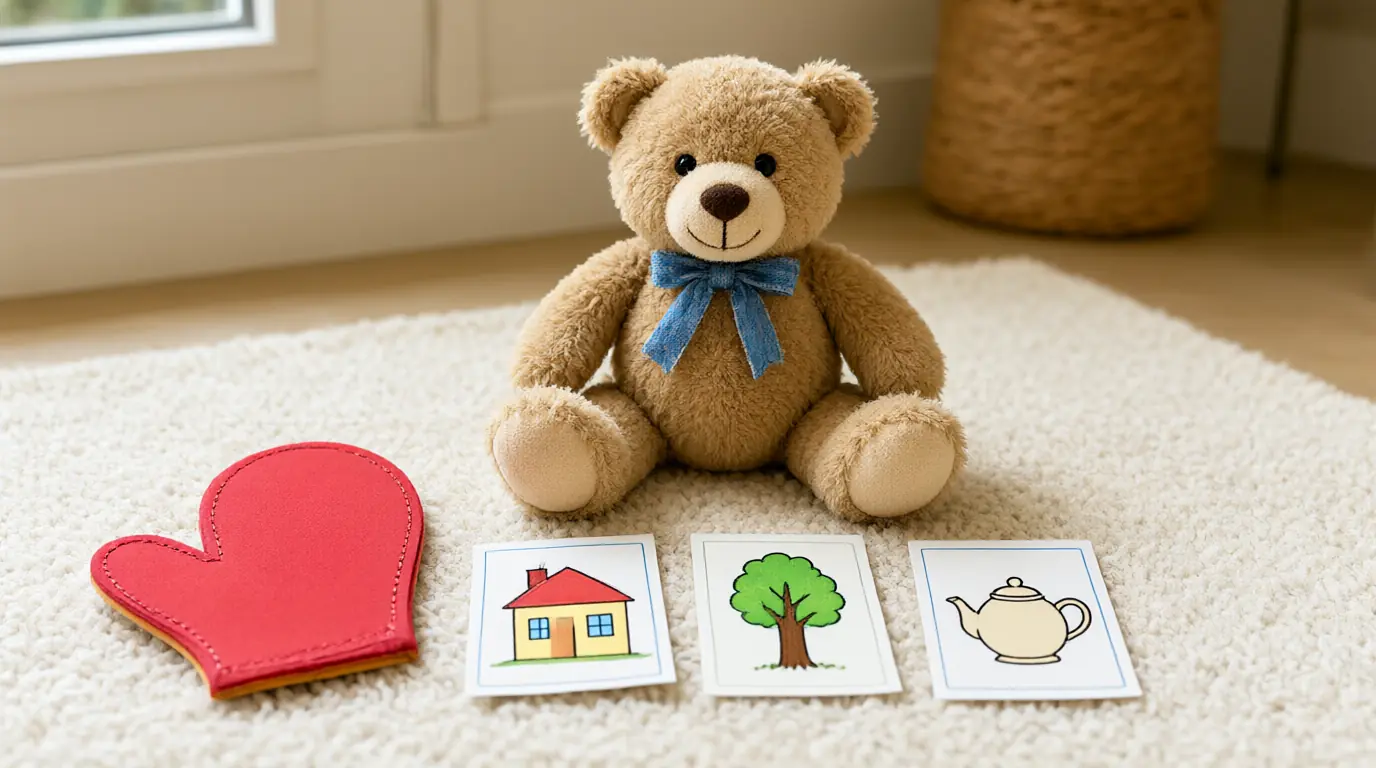
Make it your own: Younger children can follow only two clues. Older children can be given a clue that rules out a place, such as the toy never went upstairs, and work out the answer from what is left.
Whose note is it?
Three paper characters each wrote a note, but the notes have been mixed up. Children match each note to its writer by looking at the pictures, which teaches them to link evidence with an explanation. The game makes it natural to say because, which is the heart of good reasoning.
You’ll need
- 3 paper characters drawn on card
- 3 note cards, each with a different picture
- Crayons
- An envelope
How to do it
- Draw three characters: one who loves fish, one who loves flowers and one who loves trains.
- On each note draw a small picture that fits one character.
- Mix the notes in the envelope.
- Let the detective pull one out and decide whose it is.
- Ask for the reason: how do you know?
- Check by turning the character card over, where you have drawn the same picture.
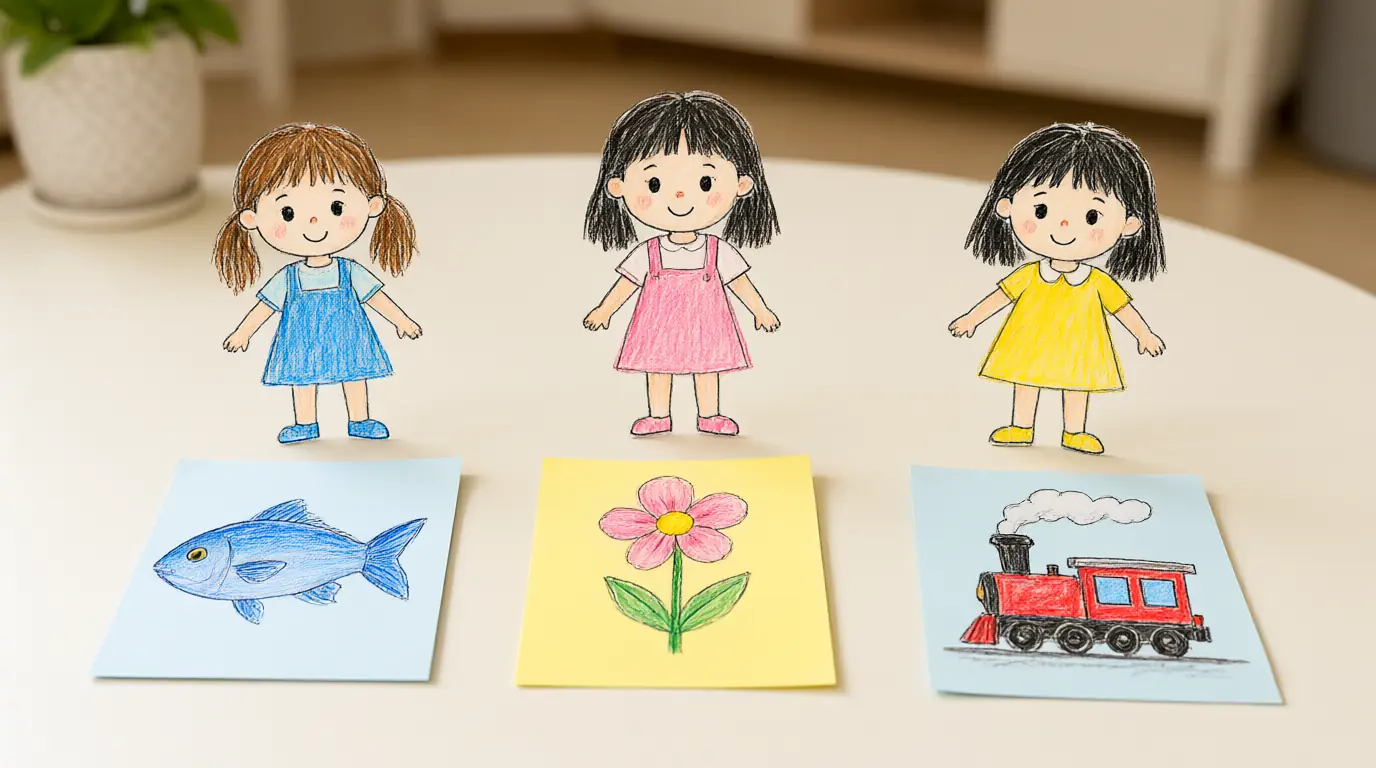
Make it your own: Younger children can match two notes. Older children can read written notes with simple clues such as I live near water.
The mystery bag
Feeling something you cannot see makes you notice shape, texture and weight in a way that looking does not. A mystery bag asks children to gather evidence one clue at a time and to eliminate possibilities, which builds both vocabulary and logical thinking.
You’ll need
- An opaque cloth bag or a pillowcase
- 5 familiar objects: a spoon, a ball, a sock, a block, a key ring
- A tray to lay the objects on
How to do it
- Lay all five objects on the tray and name them together.
- Put one inside the bag while the detective looks away.
- Let them feel it and describe it: hard, round, bumpy or soft.
- Ask them to point to the objects on the tray that could not be the answer.
- Guess the object, then reveal it.
- Swap, so you feel the bag and your child hides an object.
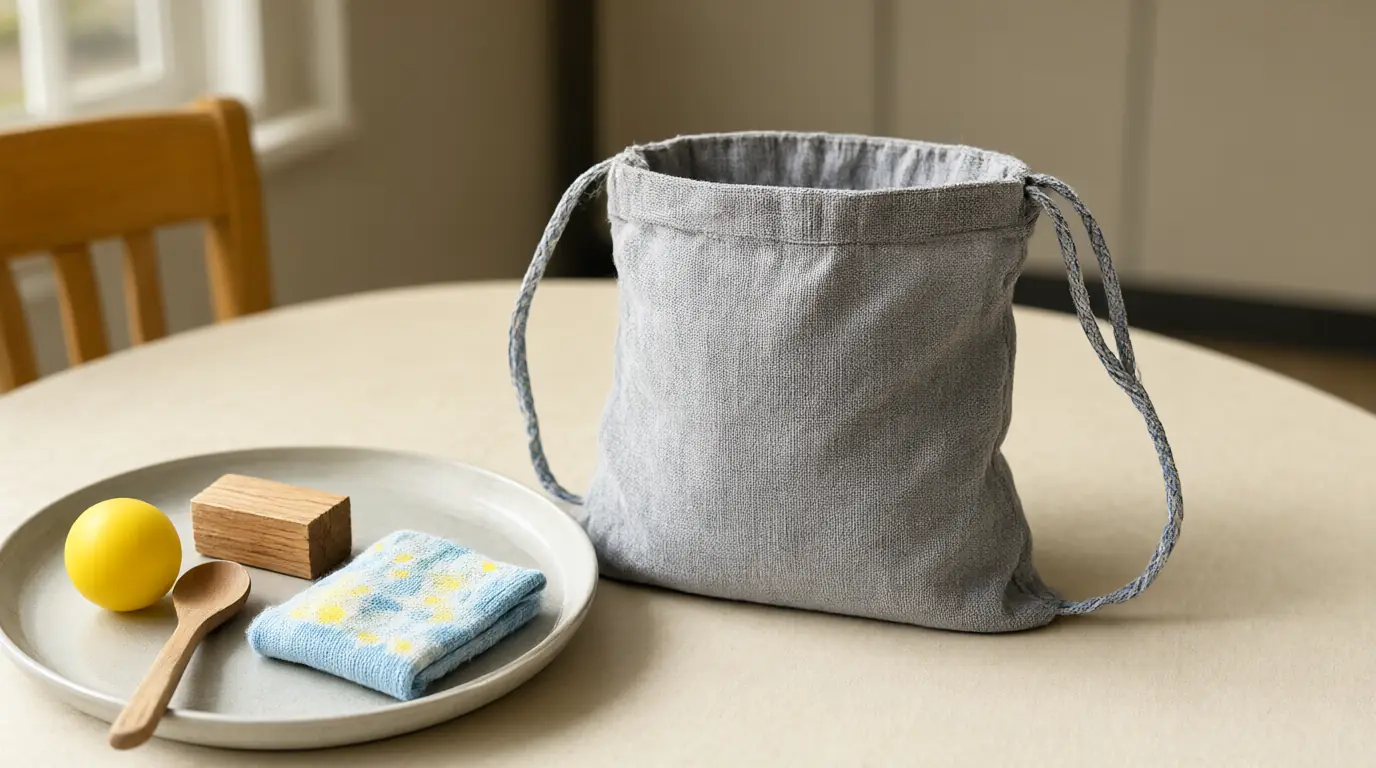
Make it your own: Younger children can use only two objects that feel very different. Older children can add objects that feel similar and ask a yes or no question before guessing.
Footprint trail
Paper footprints lead from one place to another and tell a little story: big steps, small steps, a stop, a turn. Children learn to read a trail and to say what it shows. It works well outdoors or indoors, and it gets the detective moving as well as thinking.
You’ll need
- 10 paper footprint shapes in two sizes
- Masking tape
- A small treasure such as a toy fish
- A flashlight (optional)
How to do it
- Cut footprints from card, some large and some small.
- Stick a trail across the floor with masking tape, turning at a corner.
- Make the trail stop at a place where the footprints change size.
- Ask the detective what happened where the footprints change.
- Follow the trail to the treasure.
- Make a trail for your child to design for you.
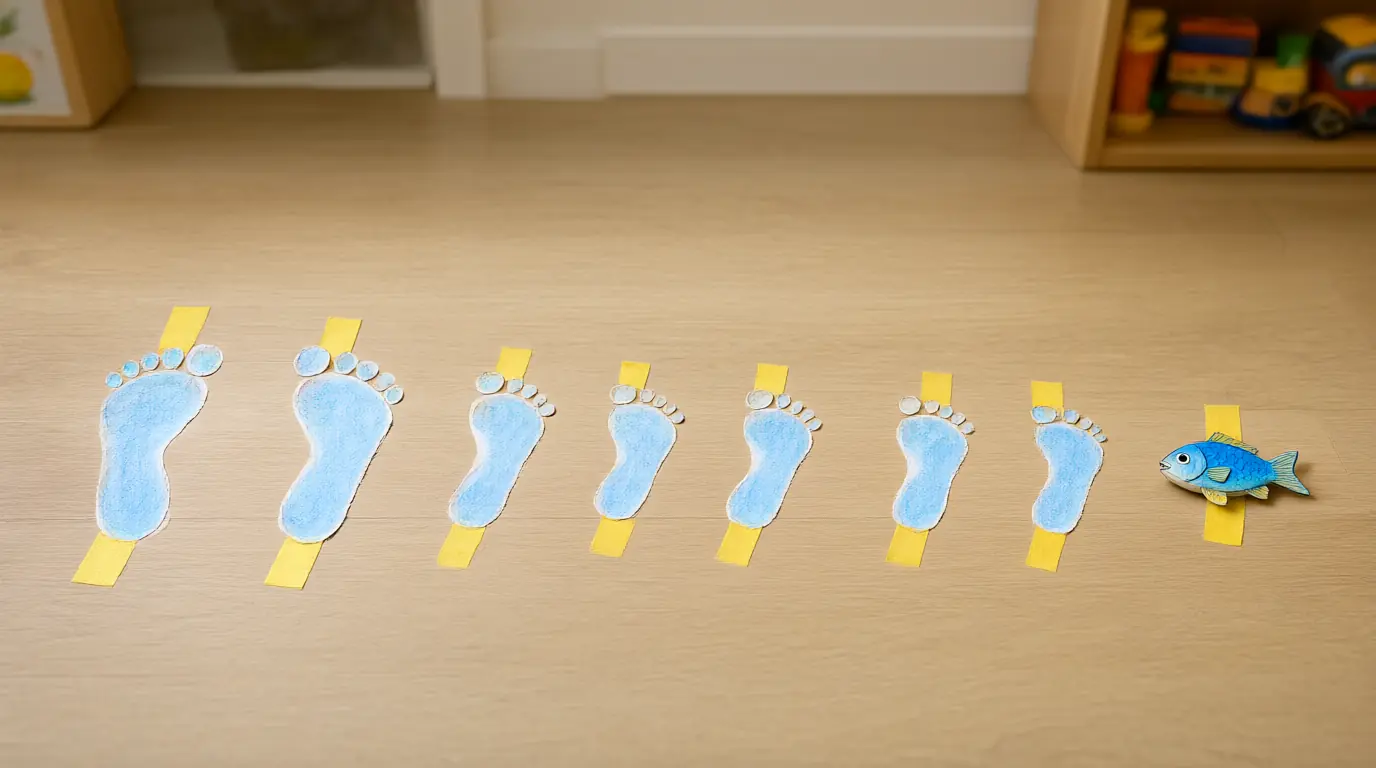
Make it your own: Younger children can follow a short straight trail. Older children can follow a trail with a fork, using a clue to decide which way to go.
Retell the case
Once the mystery is solved, putting the clues in order helps children see how the answer was built. Retelling gives them practice in sequencing and in explaining what mattered most. It also reveals whether any clue could have meant something different.
You’ll need
- The clue cards from your game
- A long strip of paper
- Sticky tape
- A pencil
How to do it
- Lay the clue cards face up in any order.
- Ask your child to put them in the order they found them.
- Tape each card to the strip of paper.
- Tell the story from first clue to last.
- Ask which clue was most helpful and why.
- Find a clue that could have led somewhere else and talk about it.
Make it your own: Younger children can order three cards. Older children can write a sentence under each card and read it to a family member.

Make it work for your family
The best mysteries leave room to change your mind. When a new clue shows that an earlier idea cannot be right, say so out loud: that is what detectives do. Praise the checking, not just the answer, and ask how your child knows. Avoid frightening settings or scary characters; a cheerful mystery about a lost mitten is far better for young children than a spooky one.
For more clue-based play, try some spy games for kids or work through a few brain teasers with answers.

Parents also ask
What are good mystery games for young children?
Choose mysteries with fair, gentle clues: a lost toy, matching notes to characters, a mystery bag or a footprint trail. Keep the story cheerful, use pictures as well as words and make sure children can solve it without help.
How do I make a mystery not scary for kids?
Set the story in a friendly world with fictional characters and a harmless problem, such as a missing mitten. Avoid darkness, strangers or any threat, and let children stay in charge of how much they investigate.
What skills do mystery games teach?
They practise looking closely, comparing clues, giving reasons and changing an idea when new evidence appears. They also build vocabulary and sequencing. The skills grow through play, so there is no need to test your child.
Choose materials and activities that suit your child, supervise as needed and adapt the ideas to their interests and abilities. About our editorial approach