Weebou Editorial Team

 In this article
A little preparation
Pick one small spot you can reach again easily: a tree at the edge of the pavement, a patch of grass, a balcony pot or a window with a view. Spring changes quickly, so returning to the same place a few days apart gives your child something real to compare instead of something to remember. Go out with a bag holding paper, thick crayons, a cloth and a spare pair of socks. Twenty minutes is usually plenty.
Timing matters more than equipment. Go after breakfast or after a nap rather than at the end of a tired afternoon, and pick a day without strong wind. Keep children away from nettles, thorny shrubs and hedges where birds may be nesting, and stay well back from ponds, streams and fast water. Supervise closely near roads and puddles, and wash hands as soon as you come in; plants, berries and seeds from the garden are not for tasting. If you want more ideas for slow looking, try these nature activities that begin with looking closely.

Ideas to try together
A sketchbook for one familiar spot
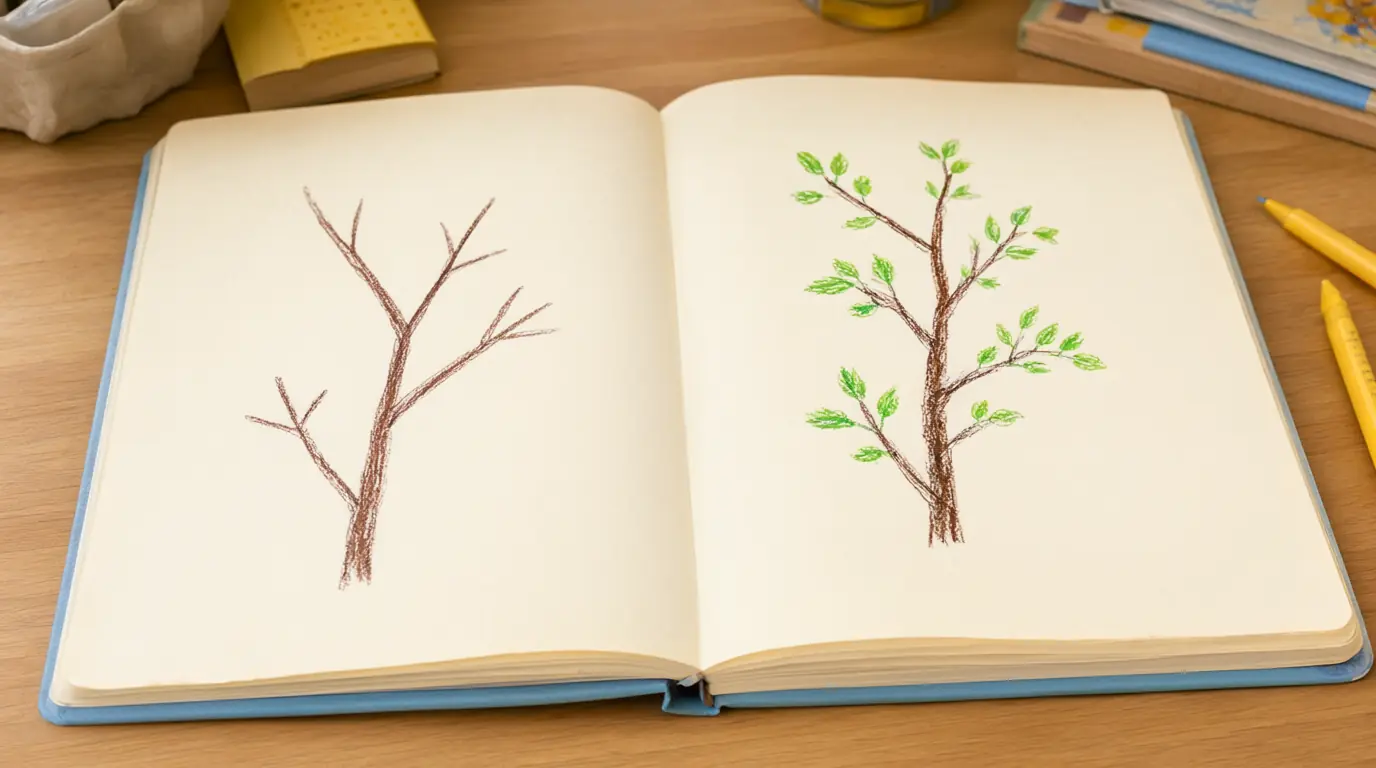
Choosing one place to draw again and again turns spring into a visible sequence rather than a blur. Your child is not trying to make a good picture — they are deciding what is worth noticing and then checking later whether it is still true. A bare branch on one page becomes a branch with tiny green points on the next, and both pages are correct.
 You’ll need
- A small notebook or a folded sheet of paper
- Thick crayons or pencils in a few colours
- A firm board or a book to lean on
- A cloth for wet fingers
How to do it
- Walk to the same tree, bush or pot and stand still for a moment before opening the notebook.
- Ask what has changed since last time and let your child point it out rather than naming it for them.
- Draw one thing they chose — a branch shape, a leaf, a patch of sky.
- Write their own words underneath, exactly as they say them.
- Add a simple mark or the date that stands for today.
- On a later visit, open the older page first and compare it with what is there now.
Make it your own: Younger children can fill one large page and stop after a single mark. Older ones can add a second, closer drawing of the same branch. In wet weather, do the same drawing from a window and keep the notebook by the glass.
A rain sound map on paper
Listening before drawing is the whole point here. Rain gives your child a small vocabulary of sounds: drumming on a car roof, dripping from a gutter, hissing on leaves. Marks on paper let them record what they heard without needing to write, and comparing a drizzle with a heavier shower on another day adds a genuine comparison.
You’ll need
- A sheet of paper and thick blue crayons
- A dry spot with a view of the rain
- A second page for another day
How to do it
- Sit together somewhere dry where you can both see and hear the rain.
- Close your eyes for a slow count of five and each name one sound.
- Show how a small dot can stand for a drip and a long wavy line for a heavier shower.
- Invite your child to fill the page with marks that match what they hear.
- Repeat on another day with the second page, then lay both pages side by side.
- Ask which page sounds most like the rain outside right now.
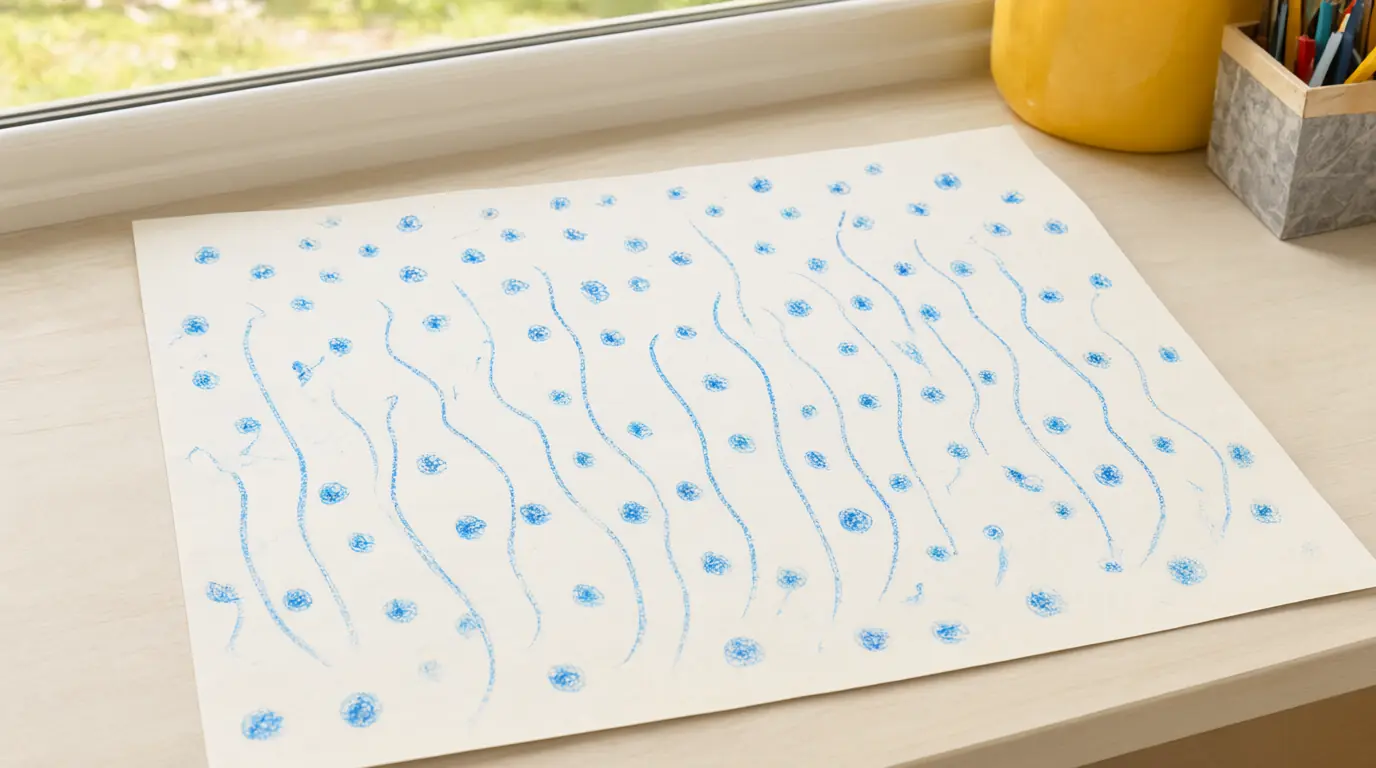
Make it your own: Younger children can make one big dot for each sound. Older ones can add a key at the bottom explaining their own marks. In a dry week, use a recording of rain or a gently running tap instead.
A colour palette from real finds
Spring greens are never just green, and collecting them takes patience as well as looking. Your child gathers only colours they can actually see in the world, which keeps the card honest and opens a natural conversation about where each one came from. Use fallen petals, leaves and stones rather than picking from plants that are still growing.
You’ll need
- A piece of card with a few wide double-sided tape strips
- A small paper bag for collecting
- Fallen petals, leaves, grass clippings, tiny stones
- A magnifying glass if you have one
How to do it
- Lay the tape strips on the card before you go outside.
- Walk slowly and let your child choose one fallen item at a time.
- Press each find onto a strip and say the colour word together.
- Leave gaps so the same colour can be added twice in different shades.
- At home, look at the card near a window in daylight.
- Ask which colour they think will fade or change first.
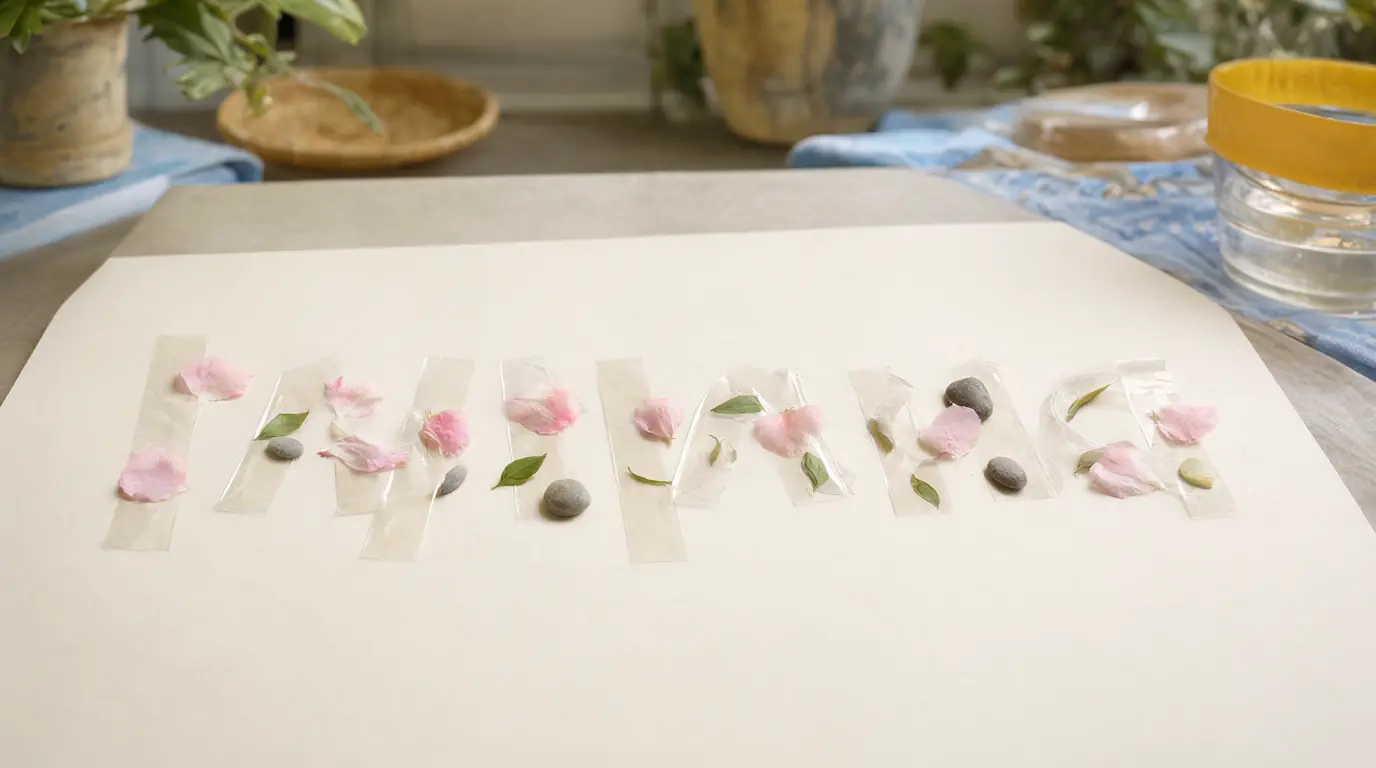
Make it your own: Younger children can add three finds and stop. Older ones can sort the card into warm and cool colours or hunt for one particular shade. Indoors, use crayons matched to objects around the room instead.
A bean in a clear cup
A clear cup lets your child see what normally happens out of sight. Watching a bean swell, split and push a root downwards is slow enough to feel exciting but quick enough for a young attention span, and the daily check builds a small routine. Move the cup to follow the light rather than moving the child.
You’ll need
- A clear plastic cup or a clean glass jar
- Kitchen paper or cotton wool
- One dried bean or pea
- A little water
- A warm, bright window sill
How to do it
- Scrunch the kitchen paper loosely and push it into the cup.
- Slide the bean down the inside, between the paper and the cup wall, where it can be seen.
- Add just enough water to dampen the paper — it should not be swimming.
- Put the cup on a bright window sill and check it once each morning.
- Ask your child to describe what is different from yesterday before adding a few drops of water.
- When leaves appear, talk about a bigger pot outside as the next step.
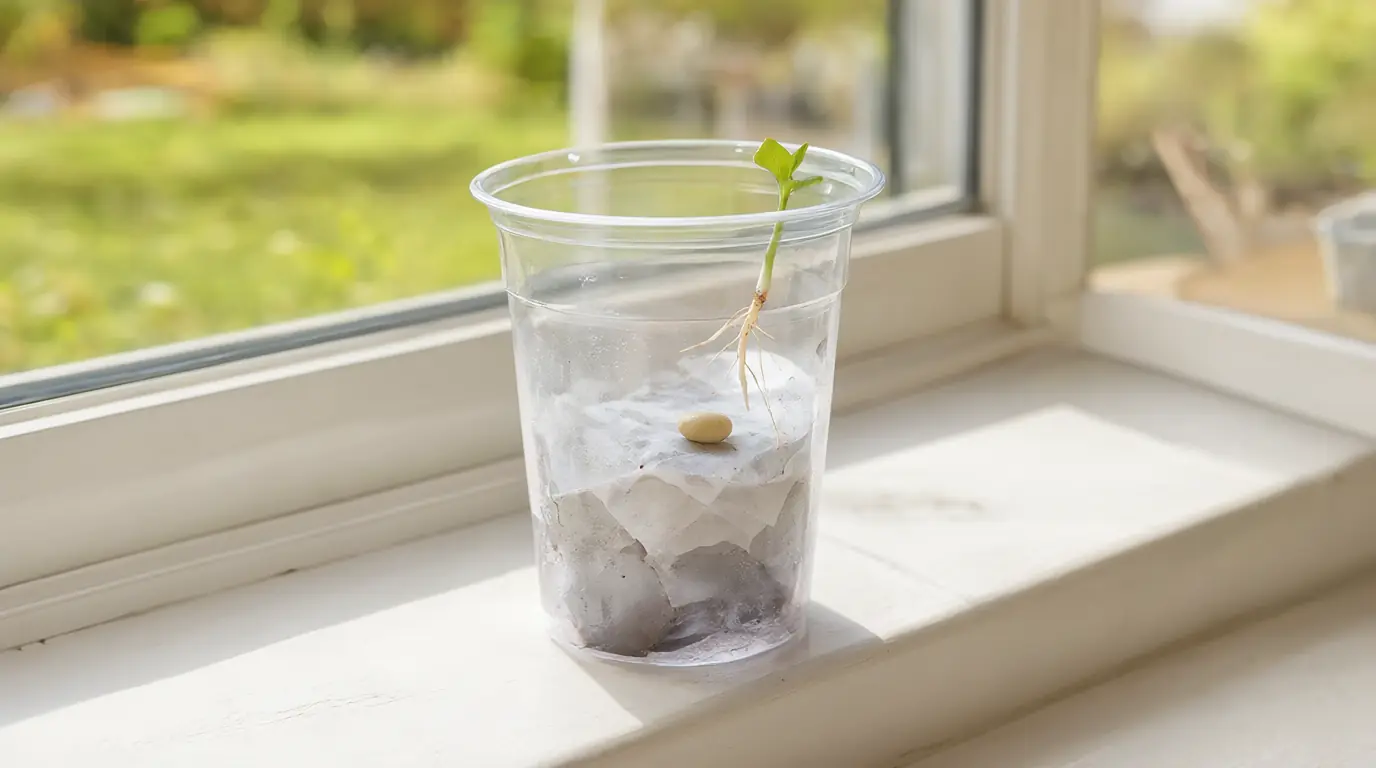
Make it your own: Younger children can help pour the water and look for a change. Older ones can measure the shoot with a strip of paper and mark each day's height on it. If nothing happens after a week, start a second bean and compare the two.
A pretend garden shop with real plans
Turning the season into a pretend shop gives all that noticing somewhere to go. Your child decides what to sell, what things cost in counters, and which plant needs watering first — a small planning task wrapped in play. It also links what you saw outside to a job you can actually do together afterwards.
You’ll need
- Paper and crayons for shop cards
- A box or tray as the counter
- Buttons, bottle tops or counters as money
- A real watering can or spray bottle
How to do it
- Ask your child to draw three or four things a spring garden shop would sell.
- Help them set the drawings out with the picture facing the customer.
- Choose prices together using small numbers of counters.
- Take turns as customer and shopkeeper, using real sentences such as 'One pot of seeds, please'.
- Pick one item from the shop and do the real version — water a plant or fill a pot with soil.
- Leave the counter set up so the game can carry on another day.
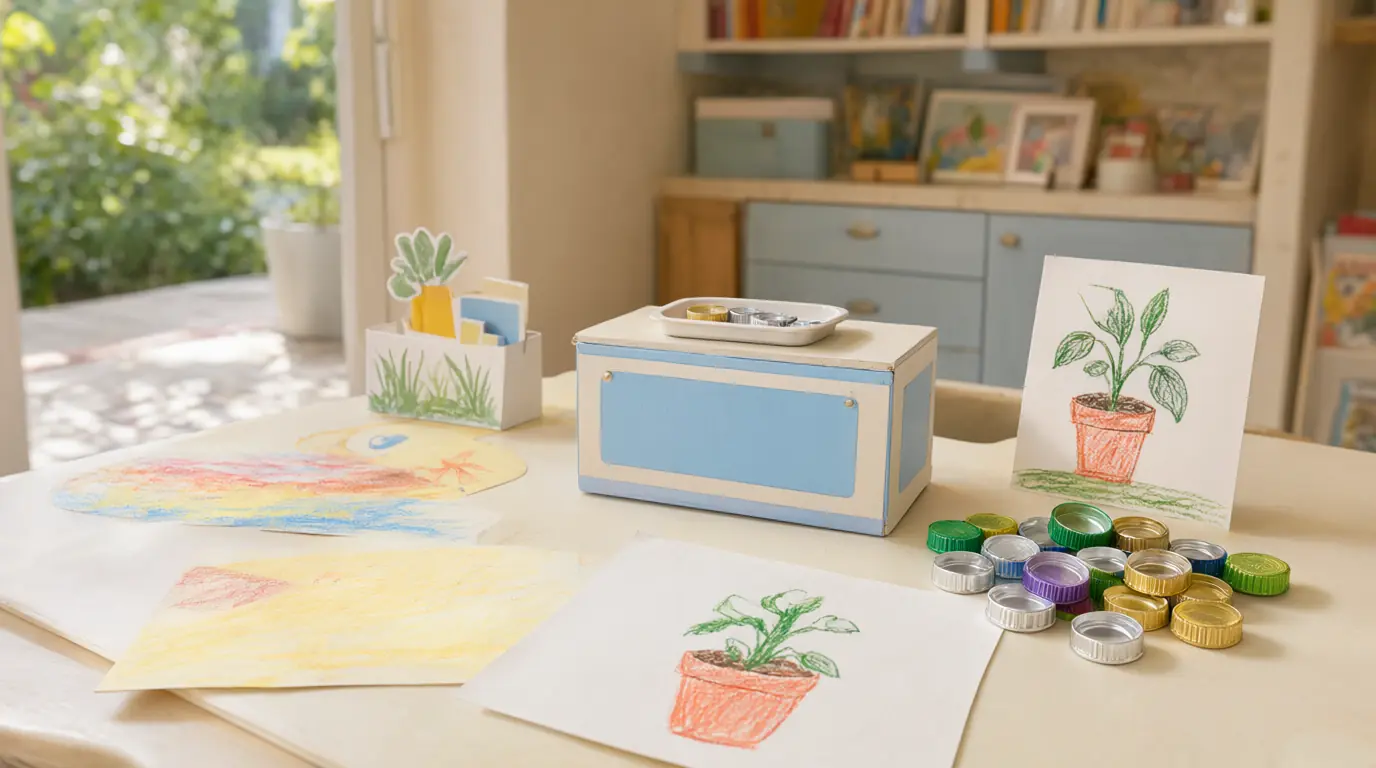
Make it your own: Younger children can sell two items and pay with one counter each. Older ones can write a simple list for the shop or add a closed sign. With several children, each can run their own stall.

Make it work for your family
Expect some visits to be disappointing: a tree may look identical for a week, or rain may arrive just as you put your shoes on. That is normal and not a failed activity. Keep the notebook, jar or card where your child can reach it, so a spare five minutes at the window can carry the work on. If interest runs out halfway through, put the materials down without comment and come back another day — the comparison still works whenever you return to it.
Weather changes quickly in spring, so pack a light waterproof and check the forecast before a longer walk. Wash hands after touching plants, soil and puddles, and keep very young children away from gathered items that could go in the mouth. If a child finds loud wind, wet clothes or sudden changes hard, plan shorter outings and say clearly how long you will stay. For more slow, season-long projects, look at these spring gardening projects for young growers or set up a simple weather-watching routine.

Parents also ask
What can children do outside in spring?
Looking in the same spot twice, listening to rain from shelter, gathering fallen petals and leaves for a colour card, and planting a bean in a clear cup all work in a small garden, on a balcony, or on a walk to the shops.
How do you explain spring to a preschooler?
Keep it concrete. Point out that the days are getting lighter, that buds open into leaves and that some birds build nests again. Let your child check the same tree every few days and describe what has changed in their own words rather than memorising a definition.
What spring activities work indoors?
A bean or pea in a clear cup on a window sill, a rain sound page drawn while watching through the glass, and a pretend garden shop with paper cards all work indoors. The window version of the same-spot sketchbook also lets a child compare views across a wet week.
Choose materials and activities that suit your child, supervise as needed and adapt the ideas to their interests and abilities. About our editorial approach