Weebou Editorial Team
 9 min read


 In this article
A little preparation
Start with one recurring situation rather than the whole day: the morning getting-dressed routine, coming to the table, or the end of screen time. For a week, note what happened just before it went well or badly — how many things were within reach, whether your child had eaten or moved, how the instruction was worded and how many steps you gave at once. Keep the notes factual, such as 'two toys and the tablet on the table' rather than 'wouldn't listen'. Then change one thing at a time so you can tell whether it helped. A clearer screen-time ending is often a good start.
Keep the space simple: a clear table, a basket for the rest, and a visible place for shoes and coat. Ten to fifteen minutes of shared play is plenty to begin with; stop while it is still going well. Choose materials that are safe for the age — no small parts for children who still mouth objects, no unsupervised scissors. Keep expectations about sitting still low: many children listen better while standing, kneeling or holding something. Mention persistent difficulties or worries about development to your GP, health visitor or the child's clinical team.

What to know and try
A routine strip with one visible next step
A whole morning described out loud can sound like a wall of words. A strip of four or five pictures puts the sequence somewhere other than your voice, so you can point instead of repeat. It also lets your child see the end, which often matters more than the order. Keep the pictures to actions your child actually does: socks, shoes, teeth, bag, door.
 You’ll need
- A strip of card about 30 cm long
- Four or five small photos or drawings of the real steps
- Hook-and-loop dots or tape
- A marker
How to do it
- Choose one routine only, such as leaving the house, and photograph your child's own shoes, coat and bag.
- Fix or draw the four or five steps in order along the card, left to right.
- Show the strip at the start, point to the first picture and give one short instruction.
- Let your child move a peg or a small card along as each step is finished.
- When the strip is complete, say clearly that the routine is done and what happens next.
- Change the pictures if a step keeps being missed; the strip should describe the real routine, not an ideal one.
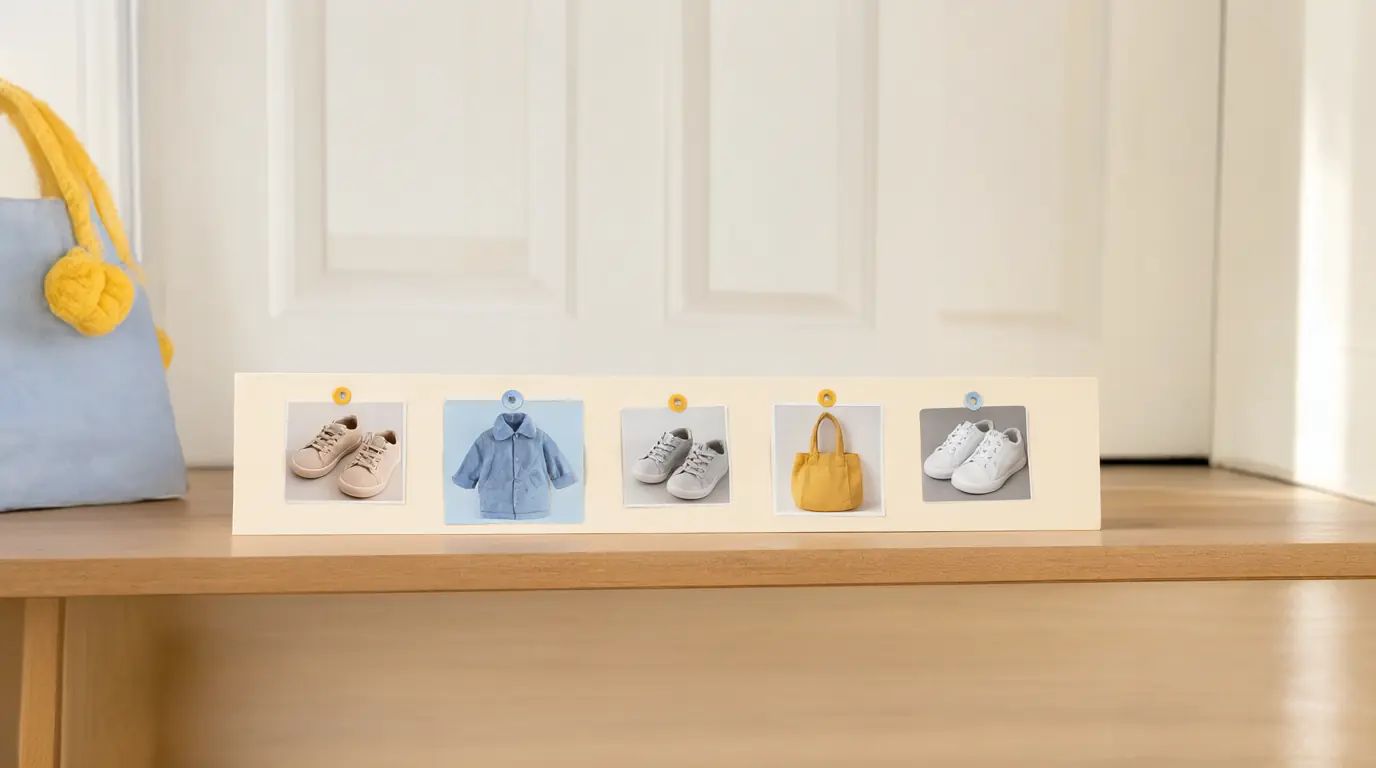
Make it your own: For a two- or three-year-old, use three pictures and keep the strip where they can reach it. Older children can choose the photos and add a word underneath. If looking at the strip becomes a distraction, keep it by the door rather than in your child's hands.
A two-choice play tray
Offering a whole shelf of toys asks for a decision a child may not be able to make quickly. Two activities, each already set out with what it needs, narrow the choice without taking it away. Your child still decides, and the second tray waits nearby. This works best when the materials are open-ended and the play has no correct ending.
You’ll need
- Two shallow trays or baking sheets
- One familiar activity on each, ready to start
- A basket for anything not in use
How to do it
- Pick two activities your child already enjoys, such as blocks and a small set of toy animals.
- Set each one out fully on its own tray, with one obvious first move — two blocks stacked, two animals facing each other.
- Put both trays on the table and ask which one they would like.
- Keep the other tray visible but out of reach of the first, so it stays an option.
- Let your child move between the two without comment; swapping is not failing.
- Put everything away together at the end, using the same short phrase each time.
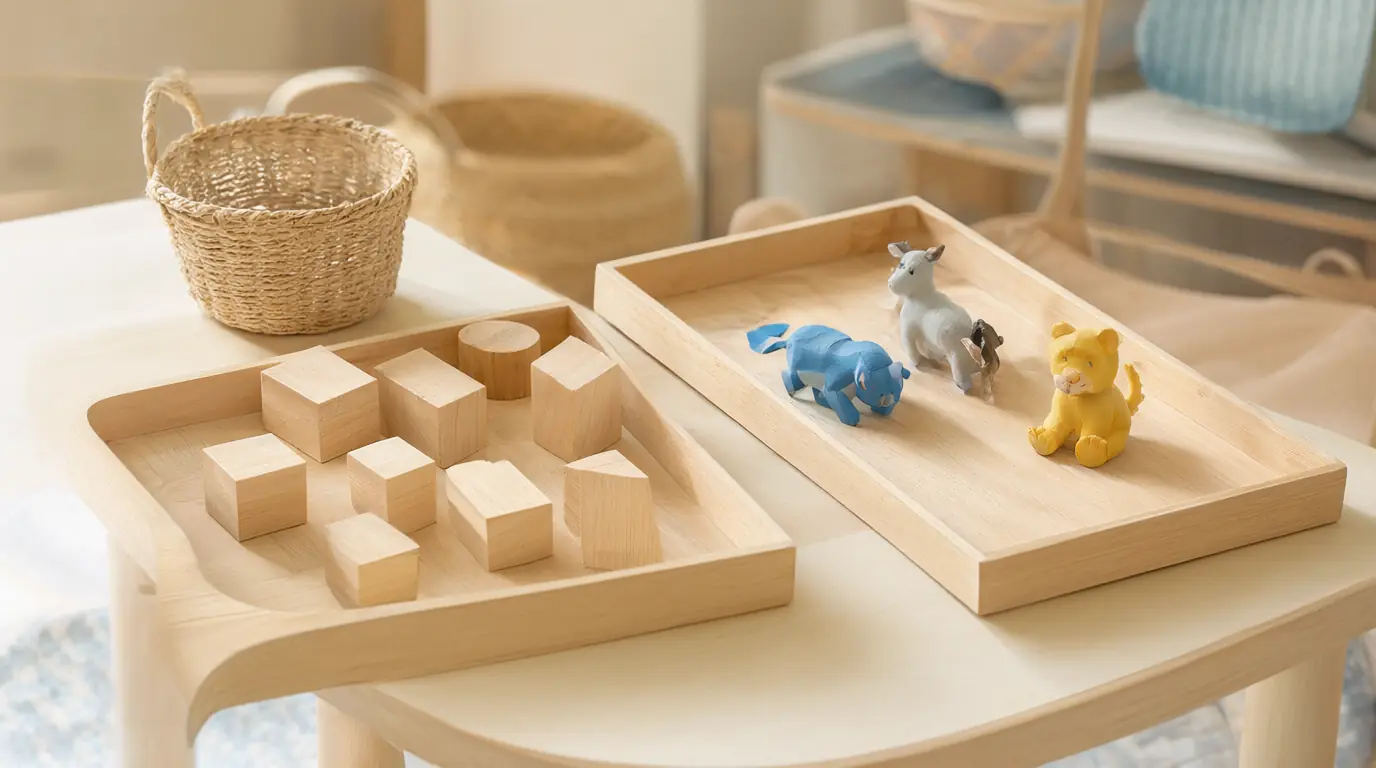
Make it your own: Younger children may need the second tray covered with a cloth. Older children can choose the two activities themselves the evening before. If two trays are still too many, offer one and name what comes after it.
A movement job between activities
Between one activity and the next, a short carrying or pushing job gives the body something to do while the mind changes gear. It is not a reward for sitting still and not a punishment for being restless — just a useful task that happens to involve movement. A basket of soft toys to return to a shelf, a pile of cushions to move to the sofa or a bag of laundry to push along the hall all work.
You’ll need
- A light basket or bag
- Soft toys, cushions or laundry
- A clear route with nothing to trip over
How to do it
- Choose the job before you announce the transition, so it is part of the plan rather than an afterthought.
- Put the basket where your child can see it and describe the job in one sentence.
- Do the first trip together if your child hesitates.
- Keep the load light and the route short — one corridor or one room.
- Finish with a clear marker: the basket on the shelf, the door closed.
- Repeat the same job for the same transition for a week or two so it becomes expected.
Make it your own: A younger child may carry one soft toy at a time; an older child can plan the route or count the trips. In a small flat, try pushing along the floor instead of carrying. Skip it when your child is already calm and engaged.
Instructions that are short enough to hold
A sentence with three parts — 'get your shoes, put your cup in the sink and come here' — is easy to hear and hard to keep in mind. Shortening it to one action, waiting, then giving the next one costs nothing and changes a lot. The waiting is the part adults usually skip. Count silently to ten before repeating, and repeat the same words rather than a new, longer version.
How to do it
- Get close, say your child's name once and wait until they look.
- Give one action in five or six words: 'Shoes on, please.'
- Wait ten seconds without repeating or adding anything.
- If nothing happens, repeat the same words and offer one point of help, such as pointing at the shoes.
- Name what happened when it is done: 'You put both shoes on.'
- Keep instructions out of the background: turn off the television first.
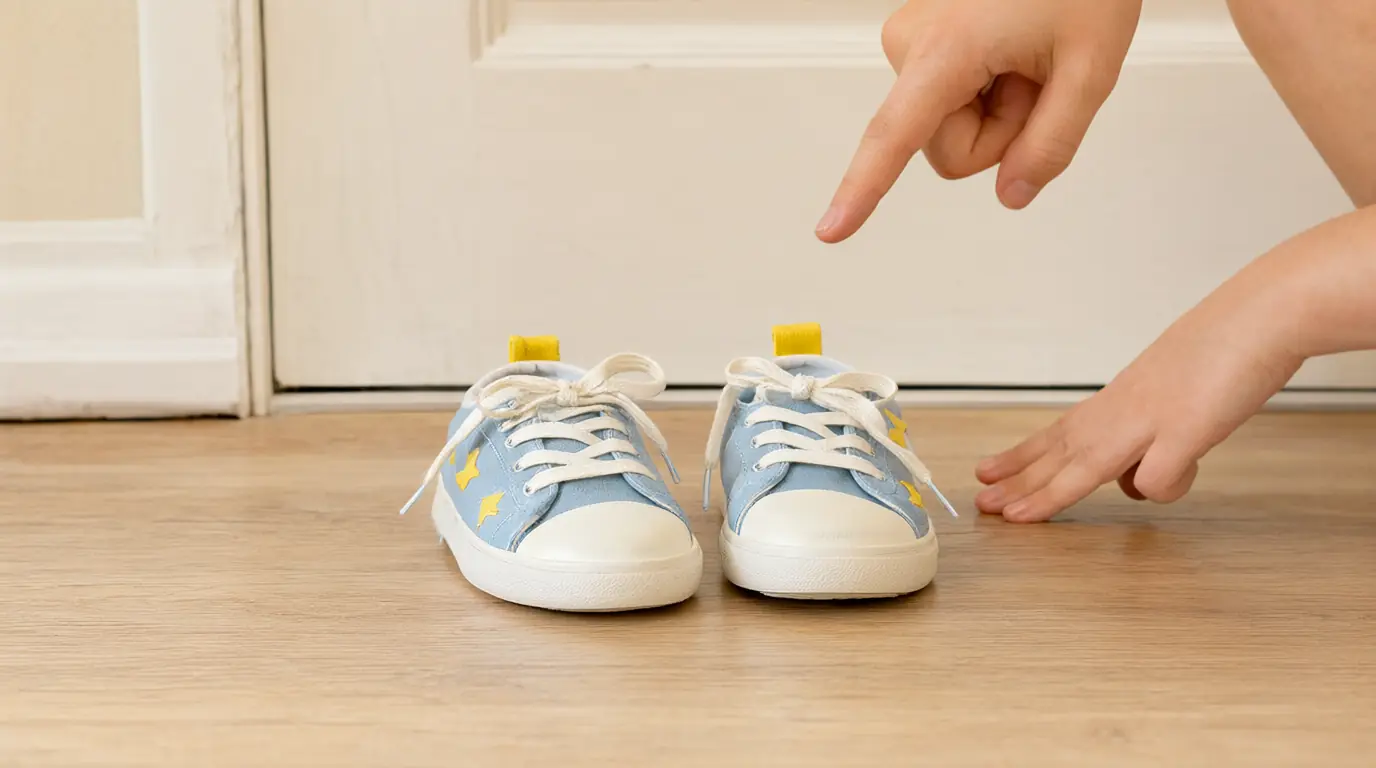
Make it your own: For a younger child, show the object as you speak. For an older child, ask them to say the step back to you. If ten seconds feels long, put a timer on the table and watch it together — many children need that pause before they start.
A wind-down basket for the end of the day
The last hour before bed is often where routines fall apart, because tiredness and excitement pull in opposite directions. A basket of the same three or four quiet things, brought out at the same point each evening, gives the end of the day a shape that does not depend on a screen. The contents matter less than their sameness: books, a puzzle, crayons and paper, a soft toy.
You’ll need
- A low basket or box
- Two or three picture books
- A small puzzle or a few crayons and paper
How to do it
- Choose three or four quiet activities that already work for your child.
- Keep them together in one basket that only appears at wind-down time.
- Bring the basket out at the same point each evening, after the last drink and before teeth.
- Sit nearby with your own book or cup, so the room is quiet rather than empty.
- Let your child choose from the basket; you do not need to direct the play.
- End with the same short phrase, then put the basket away out of reach until tomorrow.
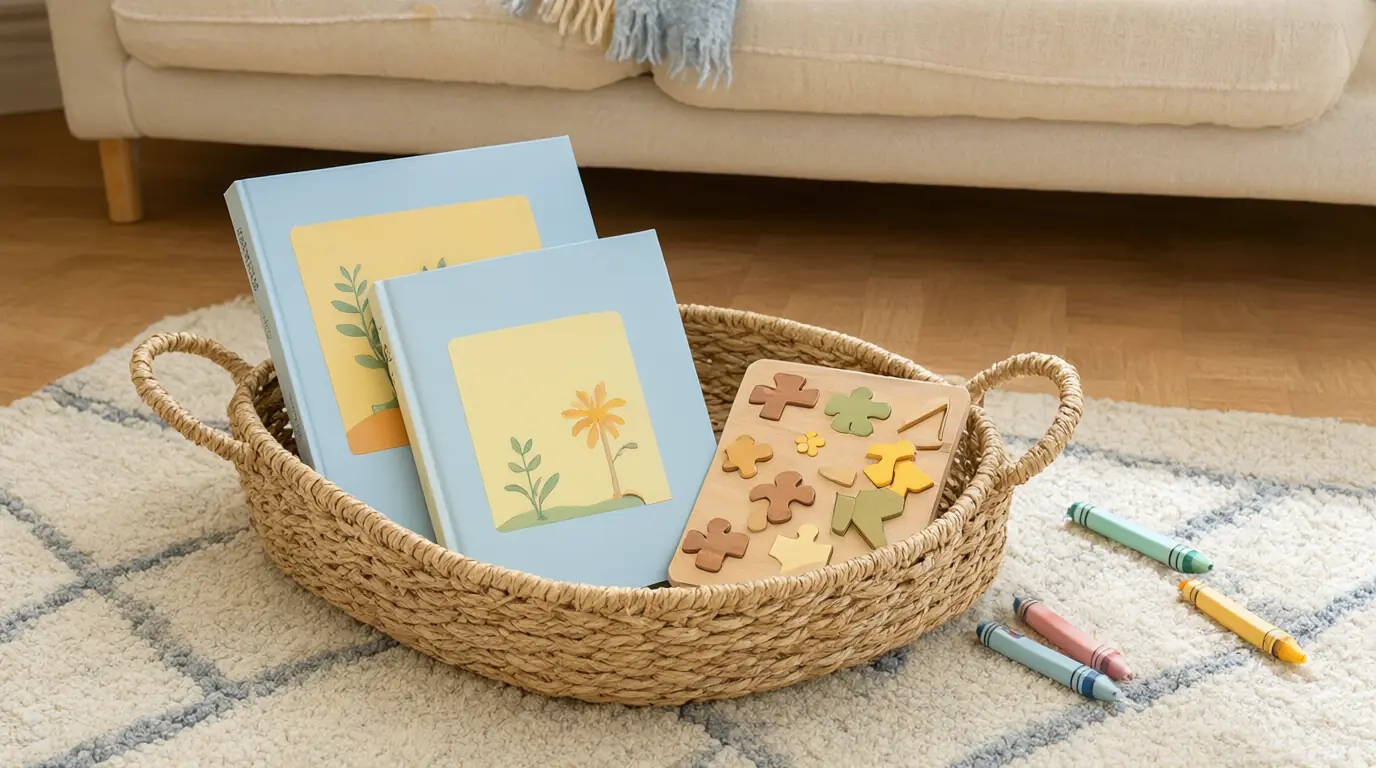
Make it your own: A two-year-old may want the same book every night. An older child can add a drawing to a wind-down notebook. If your child finds the basket over-stimulating, keep just one item visible and the rest covered with a cloth.
Make it work for your family
If a routine keeps collapsing at the same point, shrink it rather than adding more support. A five-picture strip can become three; two trays can become one. Check the basics first — hunger, tiredness, a noisy room, a screen still playing in the background — because these change what a child can manage far more than a new chart does. Expect good days and bad days, and keep your own language descriptive: 'the shoes went on quickly this morning' is more useful than 'you were good today'.
Notice what your child does well and say it plainly, especially when it is ordinary. For more ideas, these stop-and-go games practise waiting in a playful way, and supporting autistic children at play covers choice and comfort if your child is also autistic. Persistent difficulties, sleep problems or worries about development are worth raising with your GP, health visitor or the child's clinical team rather than working out alone.

Parents also ask
What is the best routine for a young child with ADHD?
There is no single routine that suits every child. The useful pattern is a short, predictable sequence with one visible step at a time, a warning before changes and the same ending each day. Keep it to three or five steps and adjust it to what your child actually does.
How do I get a child with ADHD to listen without repeating myself?
Get close, turn off competing sound, say the child's name, then give one short instruction and wait about ten seconds. Repeating the same words once is usually more effective than adding a longer explanation. Naming what happened afterwards helps the next instruction land.
Should I use a reward chart for a young child with ADHD?
A simple chart can help some families when the reward comes soon and the goal is small, such as getting shoes on before a timer ends. Charts that run for weeks, or that take away rewards already earned, are hard for young children to understand. Ask your child's clinician or parent-training practitioner what suits your child.
Sources & further reading
Explore these primary sources for further context on this topic.
Choose materials and activities that suit your child, supervise as needed and adapt the ideas to their interests and abilities. About our editorial approach