Weebou Editorial Team
 8 min read
 In this article
A little preparation
Choose a room or a patch of garden where the crew can move freely and mark the 'sea' with a rug, a rope or a line of tape. Collect the treasure ahead of time: large, safe items such as gold paper discs, shiny buttons that are too big to swallow, wooden spoons or a cardboard 'jewel'. Avoid tiny items if any child is under three or puts things in their mouth. Decide where the treasure is hidden and where the ship is docked so that the journey has a clear start and end.
Give every child a role before you begin: map reader, lookout, cargo master, cook or navigator. Say that this crew is friendly, so there are no weapons, and nobody walks the plank. If a child wants to be the captain, add 'first mate' and 'deck officer' so that there are enough jobs. Plan about 20 to 30 minutes, with a treasure feast or a quiet map-making session at the end to wind things down. A small hat or scarf for each crew member helps children step into the story, and you can join in as the 'new recruit' with questions.

Ideas to try together
Draw a map that really works
A map becomes meaningful when somebody else can follow it. Children draw a start point, two or three landmarks and a spot for the treasure, then test the map on a friend. This gives practice in using symbols, thinking about direction and noticing what a map needs to include.
You’ll need
- 1 large sheet of paper
- Crayons
- 2 or 3 landmarks in the room, such as a chair, a plant and a cushion
- A small treasure to hide
How to do it
- Walk round the room together and name the landmarks you will use.
- Draw a cross for the start and a symbol for each landmark.
- Draw a dotted line between them and finish with a big X for the treasure.
- Hide the treasure at the X while your child looks away.
- Give the map to a second child or adult and watch them follow it.
- Ask which part of the map was most helpful and what could be changed.
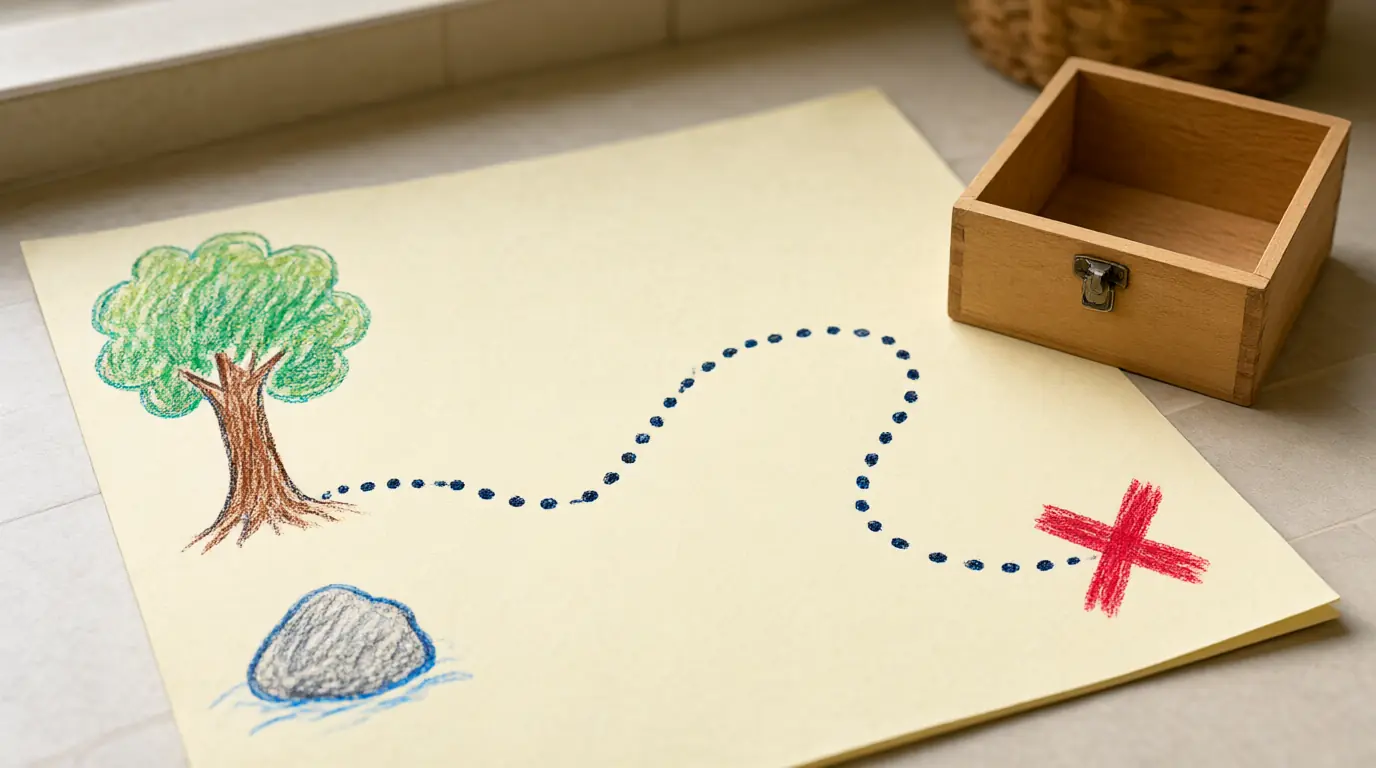
Make it your own: Younger children can draw a single line to one landmark. Older children can add a key, a compass arrow or numbers for steps between landmarks.
Cargo sorting on the ship
A ship needs the right supplies, so the crew sorts them into crates. Children choose the sorting rule, such as things to eat, things to wear or things to use, and explain it. It is a practical way to practise grouping and counting and gives plenty of chances to use new words.
You’ll need
- 6 to 10 pretend supplies, such as wooden spoons, cups, scarves and soft toys
- 3 boxes or buckets as crates
- A cardboard sign for each crate (drawn pictures)
How to do it
- Lay the supplies on the floor and name each one.
- Ask the crew how they should sort them and let them choose.
- Label each crate with a picture of the rule.
- Sort the supplies, talking about why each one goes where it does.
- Count how many are in each crate.
- Carry the crates aboard the ship together.
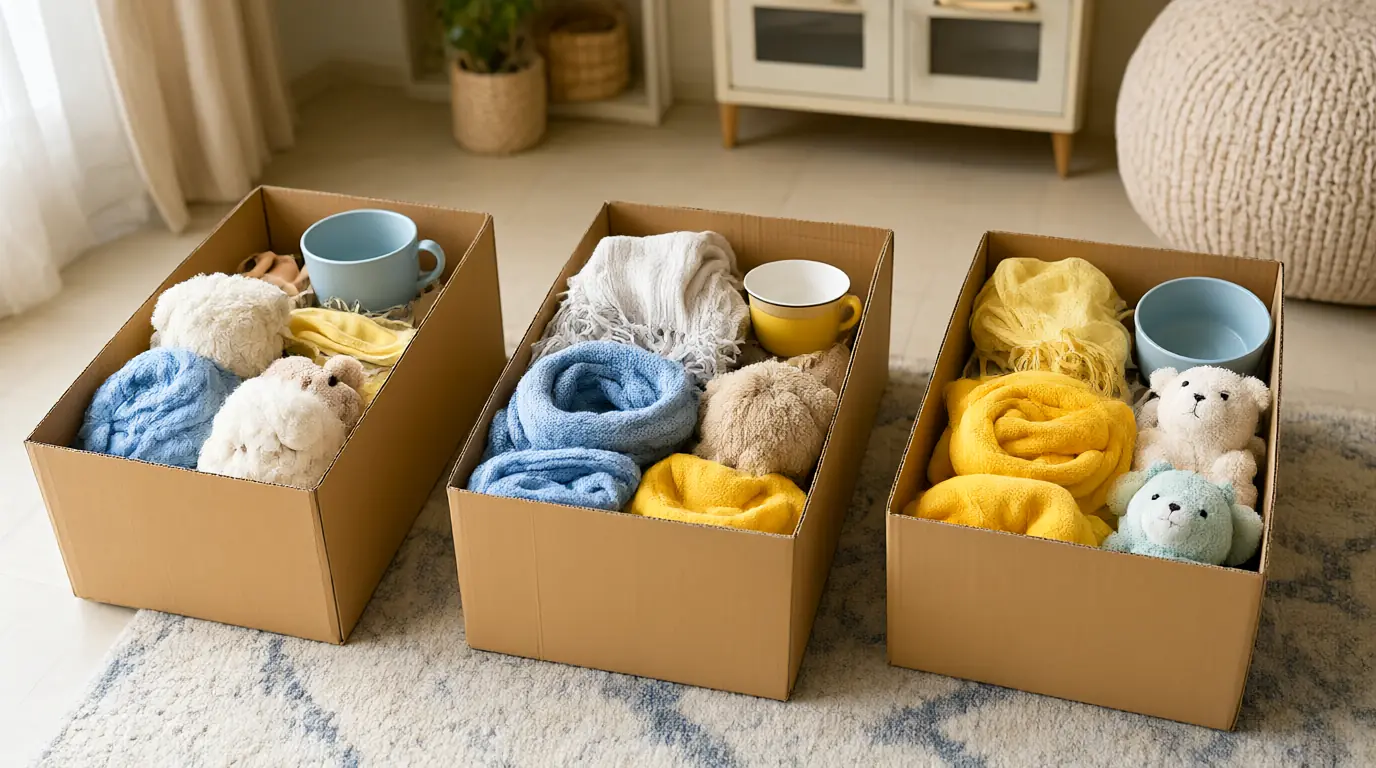
Make it your own: Younger children can sort into two crates by colour. Older children can sort by two rules at once, such as 'soft and red'.
Cross the paper river
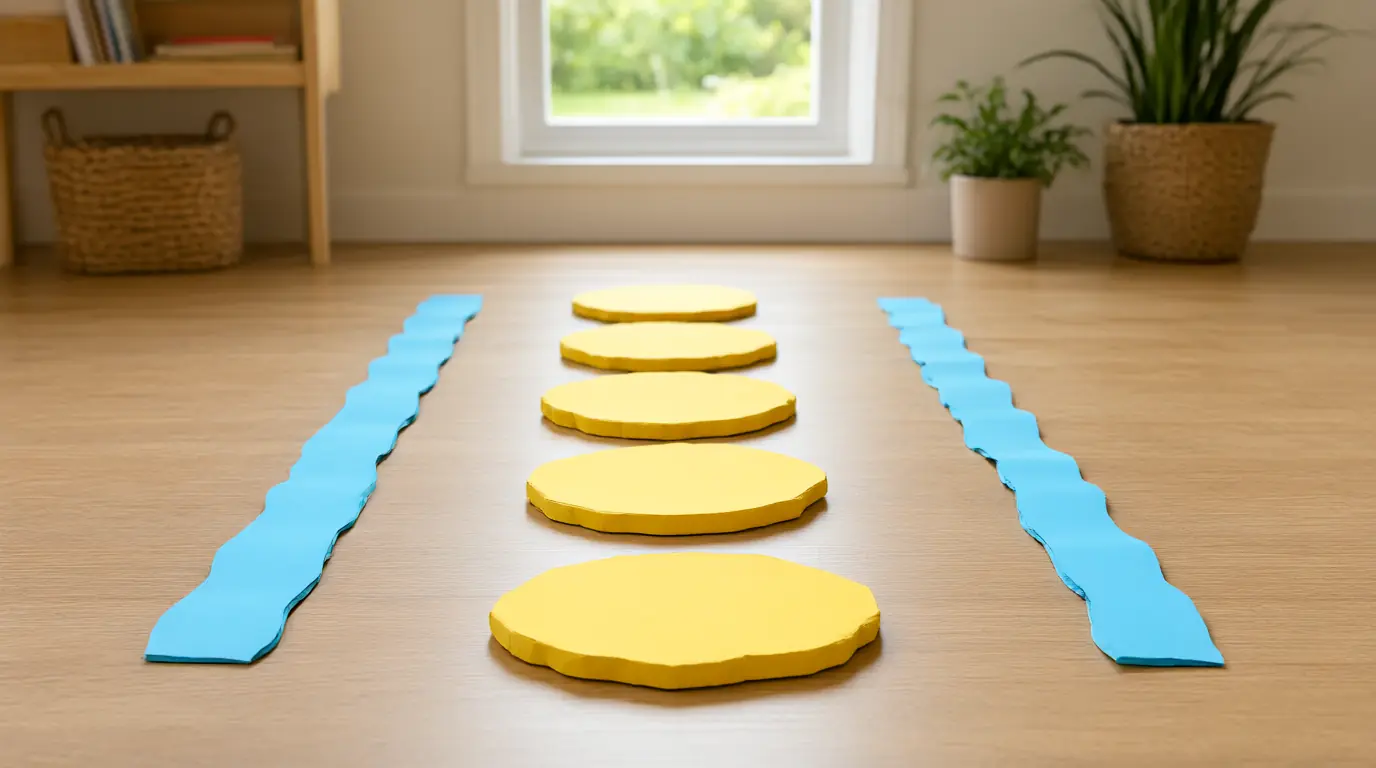
Strips of blue paper laid on the floor become a river for the crew to cross. Planning a safe way across encourages thinking ahead and works on balance, stepping and jumping at a low height. Nothing is raised off the ground, so nobody can fall far.
You’ll need
- 4 long strips of blue paper or fabric
- Tape to hold them to the floor
- 6 paper stepping stones
- A small hat for each crew member
How to do it
- Tape two blue strips on the floor about a metre apart.
- Lay stepping stones between them with a small gap.
- Ask the crew how they will cross without getting wet.
- Try a route, step by step, with each child choosing a stone.
- Move one or two stones and ask whether the route has changed.
- Cheer when everyone has reached the other bank.
Make it your own: Younger children can walk beside the river and hold your hand. Older children can plan a route in advance by drawing it before they cross.
A cardboard ship
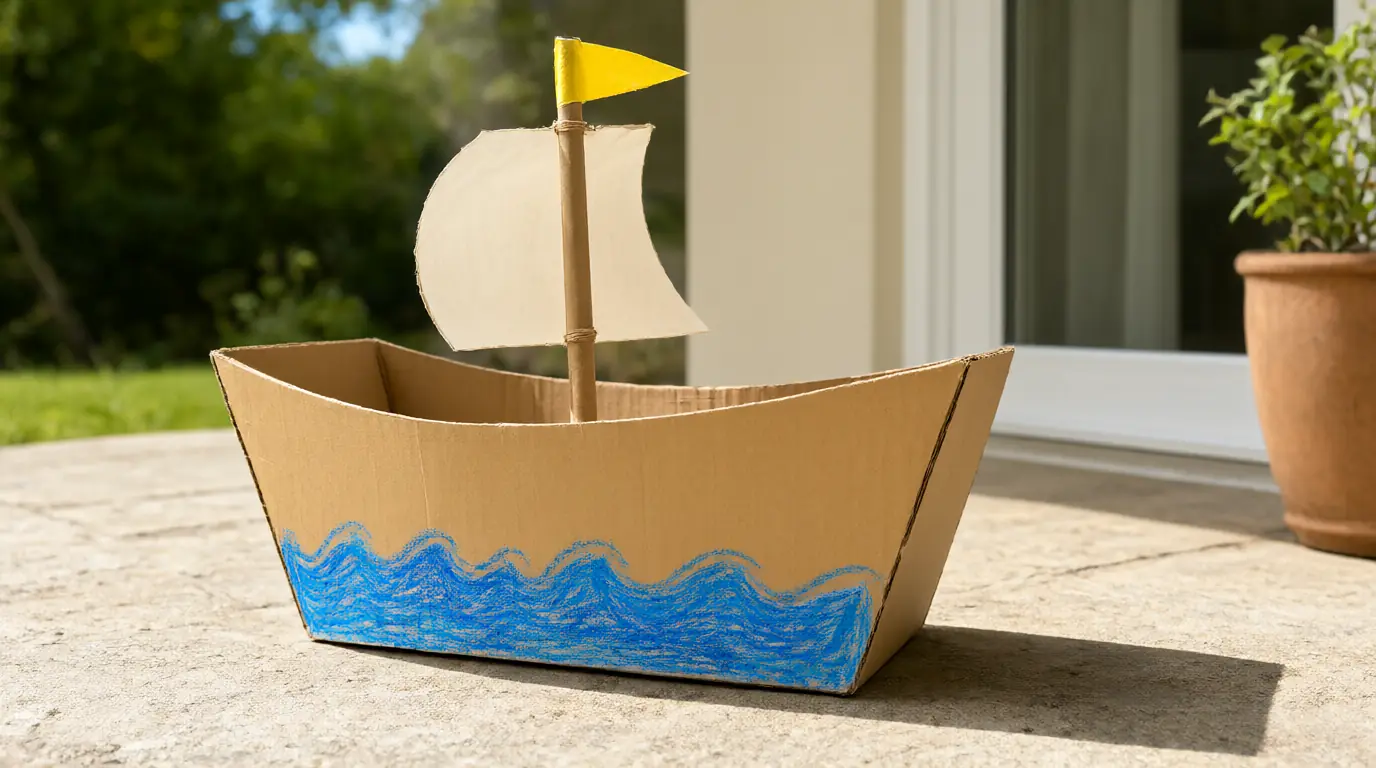
A big cardboard box turns into a ship in a few minutes. Children decorate it, decide who sits where and invent the voyage. It gives space for storytelling and for deciding what a ship needs, such as a lookout post or a place to keep treasure.
You’ll need
- A large cardboard box, about the size of a child
- Crayons or washable paint
- A broom handle or cardboard tube for a mast
- A paper sail
How to do it
- An adult cuts the box into a boat shape, or cuts a low front edge so that children can step in easily.
- Invite the crew to decorate the sides with waves, portholes or a flag.
- Tape a paper sail to a cardboard tube and stand it in the corner.
- Choose names for the ship and for the crew's roles.
- Sail the ship on a made-up journey and describe what you see.
- Park the ship in a corner of the room until next time.
Make it your own: Younger children can simply sit in the box and enjoy it. Older children can plan where each person sits and draw a plan for the ship first.
A welcome at the island
Instead of taking treasure from others, the crew visits an island and asks permission to explore. Children invent who lives there and how visitors should behave. It builds respect for other people's places and gives children practice in polite requests.
You’ll need
- A blanket or rug for the island
- A few toy animals or dolls as islanders
- A paper flag
- A small gift, such as a drawn picture
How to do it
- Lay the rug a short distance from the ship and place the islanders on it.
- Ask the crew what they should do when they arrive.
- Practise saying 'hello, may we visit your island?'
- Let an adult or child answer as an islander and invite them in.
- Share a drawn gift and learn something about the island.
- Say goodbye and sail home.
Make it your own: Younger children can just wave at the islanders. Older children can invent a rule for the island, such as 'always ask before picking up a shell'.

Make it work for your family
Make sure the treasure is a shared find and not a prize for whoever runs fastest. Ask the crew to carry it home together, or divide it into equal piles at the end. Children who are slow to join in often thrive when they are given a role such as keeper of the map or the ship's cook, and children who love to move can be the ones who check the route.
If the story gets rough, steer it with questions: 'What could the crew do if the sea gets stormy?' Frightening scenes can be set aside by deciding that the storm is only a bit of splashing. When the game finishes, pack the ship away together. For more mapping and finding, try an outdoor scavenger hunt or a few mystery and detective games, and for group jobs, see these teamwork activities.

Parents also ask
How can I play pirate games without swords or fighting?
Give the crew jobs with real purpose: reading a map, sorting cargo, crossing a river and meeting islanders. Say at the start that this is a friendly crew, and offer props such as telescopes, flags and maps in place of weapons.
What can I use as pirate treasure for toddlers?
Large, safe objects such as gold paper discs, wooden spoons, gold cardboard coins or fabric bags. Avoid small buttons, beads and coins that are a choking risk for children under three or those who still mouth objects.
How long should a pirate game last?
Around 20 to 30 minutes is typical for preschoolers. Plan one main activity, such as the map hunt, and let the rest of the time go to pretend play. Finish with a calm moment, such as sharing the treasure.
Choose materials and activities that suit your child, supervise as needed and adapt the ideas to their interests and abilities. About our editorial approach