Weebou Editorial Team

 In this article
A little preparation
Lent is not kept in one way. In many Western churches it begins on Ash Wednesday, runs for forty days not counting Sundays and leads into Holy Week, while Orthodox churches begin Great Lent on Clean Monday and count differently. Before you start, check your own tradition's dates and customs, or ask your priest, minister or a grandparent. Explain only what your family really does; a child can hear that other families do things differently.
Keep every activity invitational. Fasting is a practice for adults and older children and usually follows church guidance, so there is no need to ask a young child to go without food or a treat. A small, positive act such as helping, giving or noticing is easier to understand at four or five. Each activity here takes about ten to twenty minutes, so you can fit one into a calm part of the day. Use ordinary materials, and leave any child who does not want to take part free to watch or draw.

Ideas to try together
A Lent stone garden on a tray
A tray garden is a long-standing way for families to mark the season with something they can see changing. Start with bare stones and soil and add one small thing each week, so children feel the passing of time through a physical object rather than a number. It also gives you a natural moment to talk about waiting.
 You’ll need
- A shallow tray or baking tin lined with a plastic sheet
- A handful of clean pebbles
- A little damp soil or compost
- Cress or grass seeds
- A small spray bottle of water
How to do it
- Spread a thin layer of soil on the tray and let your child arrange three or four pebbles on top.
- Explain that the tray will look quiet and plain for now, and that something may grow while you wait.
- Sprinkle the seeds over a small patch and press them gently with a palm; do not bury them.
- Let your child mist the soil every day or two and look at the seeds before saying anything.
- Each week, add one thing together: a stick, a piece of moss, a small flower picked with permission.
- On the last day, look at the garden and ask what changed since the first day.
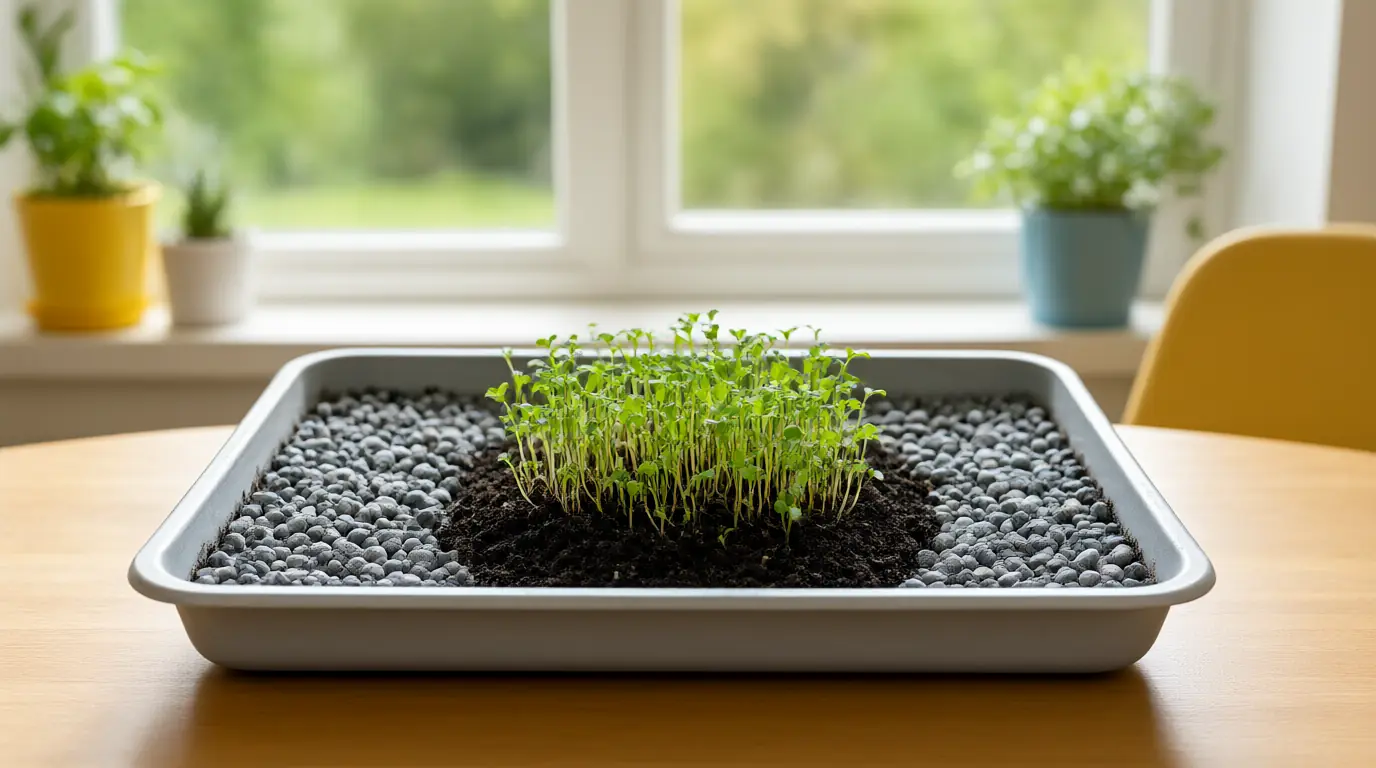
Make it your own: Younger children can simply pat soil and press seeds. Older ones can draw the tray each week to compare. Keep it in a window and use a saucer underneath if spilled water would bother anyone.
A giving jar for others
Lent traditionally includes giving to those in need, sometimes called almsgiving. A jar makes that idea concrete: children see something go in, and your family decides together where it goes. The point is the choosing and caring, not how much is saved.
You’ll need
- A clean glass or plastic jar with a wide neck
- Coins or small notes your family chooses to give
- Paper and crayons
- A paper heart
How to do it
- Decorate the outside of the jar with paper hearts or crayon pictures, without any written promises.
- Talk about who might need help: a local food bank, a neighbour, or a charity your church supports.
- Let your child choose a time each week when a coin goes in, such as Sunday or before supper.
- Count the coins together every few weeks, grouping them in tens or fives.
- Near the end of the season, decide together who receives the money and how it will be passed on.
- Ask your child how they think the person might feel when it arrives.

Make it your own: A child without pocket money can add a drawing or a folded note instead. Older children might help research a charity with an adult. Never turn the jar into a competition about who gave most.
A preparation calendar with paper circles
Forty days is a long stretch for a young child, so a visible calendar turns the length into something they can follow. A strip of paper circles works for families who count each day or each week, and it helps children see the season as a journey towards Easter, not a test.
You’ll need
- A long strip of paper or a roll of plain paper
- A pencil and crayons
- Seven large circles cut from coloured paper
- Tape or reusable putty
- Your family calendar
How to do it
- Look together at the family calendar and find the first day of Lent and the day of Easter.
- Draw seven big circles in a row, one for each week, and mark Sundays with a different colour if your tradition does that.
- Stick the strip at child height on a wall or the fridge.
- Each week, let your child colour one circle and say or draw one thing they noticed or did for someone.
- Mark any special services or days, such as Palm Sunday, with a small picture.
- At Easter, look back along the whole strip and tell the story of the weeks.

Make it your own: If seven circles feel too many, use three: beginning, middle and end. Older children can write the day names or count the days between circles. Check that dates match your church's calendar.
Three-minute quiet noticing
A short, quiet time can fit many Christian families' practice of prayer and reflection without asking a young child to sit still for long. Keeping it to three minutes, and letting them choose how they join in, makes it a comfortable habit rather than a hurdle.
You’ll need
- A cushion or rug
- A small sand timer or a watch with a second hand
- A smooth stone to hold
How to do it
- Choose a calm moment, perhaps before bed, and sit together somewhere familiar.
- Offer your child the stone to hold if they like something to do with their hands.
- Start the timer and say, 'Let's notice one sound, one thing we can see and one thing we feel.'
- Sit quietly; if your child wants to whisper what they notice, listen without correcting.
- When the timer ends, say a short family prayer or simply say thank you for something from the day.
- Ask which part they liked best, and keep the habit only if it feels welcome.

Make it your own: Children who find stillness hard can walk slowly around the room or lie down. Make it one minute for a four-year-old. If your family does not pray aloud, replace the final step with a hug and a kind word.
Draw the question you are wondering about
Children often have real questions about faith, forgiveness or why Jesus died and rose again, and a drawing gives them a way to ask without finding the words. You write down what they say, you do not supply the expected answer, and you take the question seriously.
You’ll need
- A sheet of plain paper
- Crayons or coloured pencils
- A pen for you
How to do it
- Say, 'Draw something about Lent that you are thinking about or wondering about.'
- Let your child draw for as long as they like, without suggesting what to include.
- Ask, 'Can you tell me about your picture?' and write their words along the edge, using their exact phrasing.
- Ask whether they have a question; write that down too, even if you cannot answer it yet.
- Choose together whether to keep the picture, share it with a grandparent or bring it to church.
- Come back to the question during the week and answer it simply, or say you will ask someone.
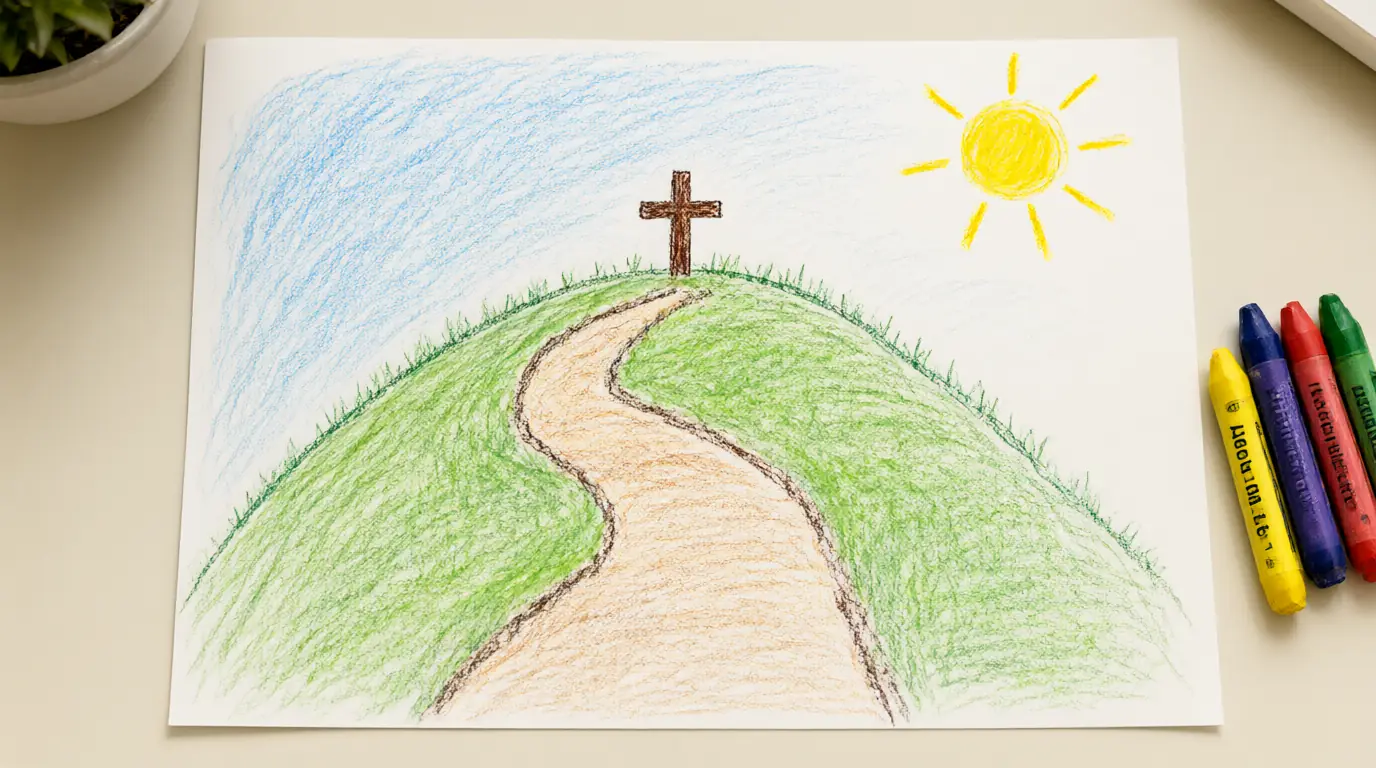
Make it your own: If your child says nothing, offer two simple prompts such as 'Something I'm sorry about' or 'Something I'm thankful for'. Older children can add a short sentence. Avoid correcting theology in the moment.

Make it work for your family
A kindness chart can quietly turn into a judgement about a child's goodness, so avoid ticking, scoring or praising the biggest total. Instead, look back at the week and say what you noticed: 'You held the door for Grandpa.' If your child skips a week, simply carry on. A child who forgets, grumbles or says it feels boring is not failing; they are thinking aloud, and that deserves an honest answer.
Lent customs also vary around food and church services, so let your own community lead rather than copying a list from elsewhere. If your child asks why a friend does not take part, explain that families practise differently. The same calm approach works for the days leading to Easter, such as Palm Sunday activities. For a daily habit that fits any belief, try these gratitude ideas for kids.

Parents also ask
How do I explain Lent to a young child?
Keep it short and concrete: Lent is the time before Easter when many Christians think about God, say sorry for things, help others and wait. Use the calendar or tray garden so they can see time passing, and let them ask questions rather than giving a long lesson.
Should young children give something up for Lent?
Many families prefer adding a kind action to giving up food or screen time, because it is easier for small children to understand. Fasting is usually guided by the church and parents, so follow your tradition and avoid making it a test of goodness.
How long does Lent last?
In many Western churches Lent begins on Ash Wednesday and lasts forty days, not counting Sundays, ending before Easter. Orthodox churches observe Great Lent starting on Clean Monday and count differently. The dates change each year, so check a church calendar.
Sources & further reading
Explore these primary sources for further context on this topic.
Choose materials and activities that suit your child, supervise as needed and adapt the ideas to their interests and abilities. About our editorial approach