Weebou Editorial Team

 In this article
A little preparation
Begin with the story rather than the craft. Read a simple children's version of Jesus' entry into Jerusalem, in which the Gospels describe people spreading cloaks and branches on the road and calling out a welcome. Explain in a sentence that Christians remember this on Palm Sunday at the start of Holy Week, and that churches and families mark it in different ways. If you are not Christian yourself, you can say so honestly and describe it as a story that belongs to the people who celebrate it.
Give each child a flat, clear space for paper and crayons. Cut palm leaf shapes in advance, or let children tear them, since scissors are better handled by an adult at this age. Plan around 20 minutes for the story and one activity. In places where palm branches are hard to find, some churches use other greenery such as olive, willow or yew, so a paper leaf in any green is entirely fitting. Let children say 'I don't know' or 'I'd rather listen'; a quiet role is a real way to take part.

Ideas to try together
Paper palm leaves
Large paper leaves give hands something to do while the story sinks in. Folding and tearing gives a feel for the long, narrow shape of a palm leaf, and children can decorate each one differently. Keep the leaves as a quiet part of the telling rather than as props for a parade.
 You’ll need
- Green paper, a few sheets
- A pencil to draw a leaf outline
- Scissors, handled by an adult
- Crayons or washable markers
How to do it
- Fold a sheet of green paper in half lengthways and draw a long leaf shape against the fold.
- An adult cuts along the outline and opens it out into a symmetrical leaf.
- Invite your child to draw veins or a pattern along the centre line.
- Make a second and third leaf so there is a small pile.
- Lay the leaves in a line on the floor and talk about the road in the story.
- Keep the leaves in a basket or tape them to a window.
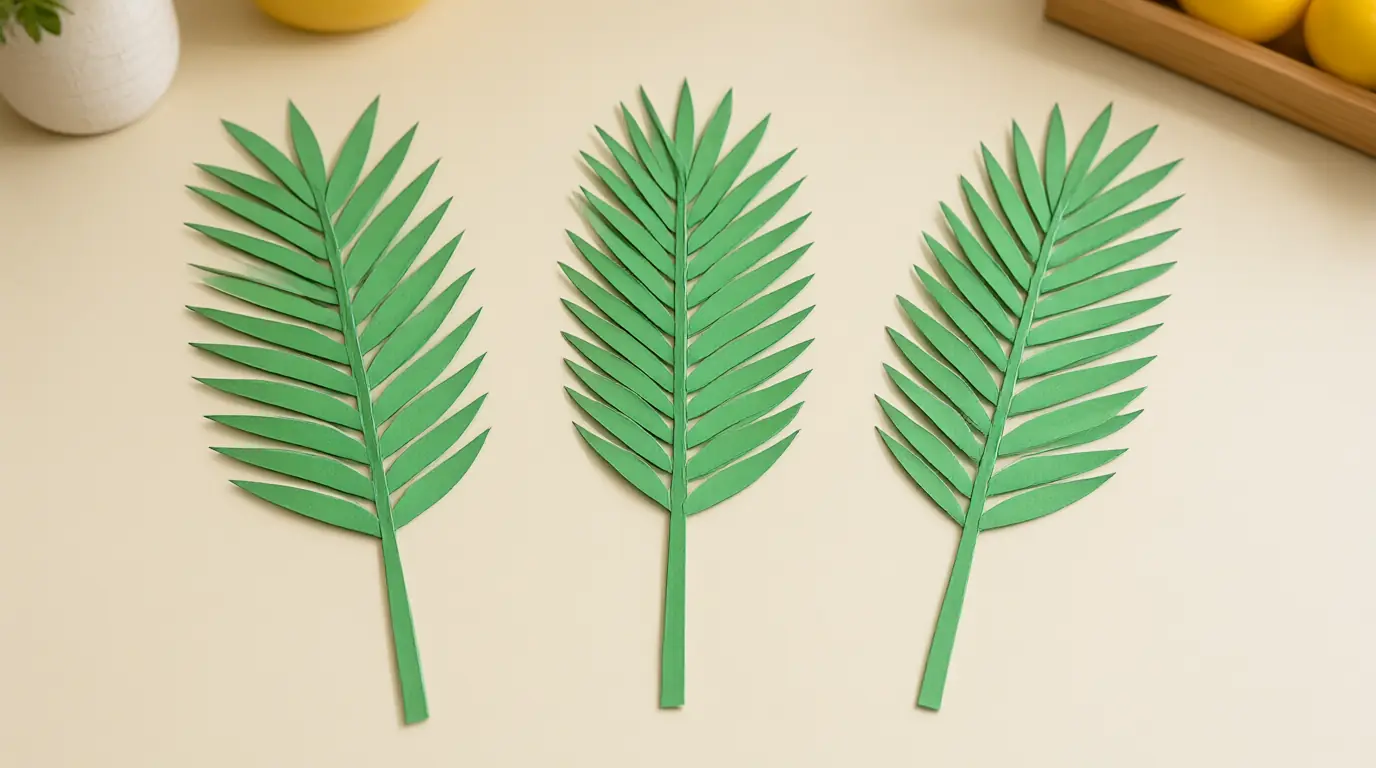
Make it your own: Younger children can tear paper strips and call them branches. Older children can cut their own leaf and count the points along the edge.
Three-picture retelling
Folding a sheet into three gives children a clear beginning, middle and end. Drawing the road into the city, the welcome and a quiet moment afterwards lets them retell the story in their own words and gives you a window into what they understood.
You’ll need
- 1 sheet of paper, folded into three panels
- Crayons
- A pencil to write a few of your child's words
How to do it
- Fold the paper into three and open it flat.
- Re-read the story slowly in short chunks and stop after each one.
- In the first panel, draw the road and who is coming along it.
- In the second, draw the crowd welcoming him.
- In the third, draw what you think happened next or how it ended.
- Ask your child to tell you about each picture while you write the words underneath.
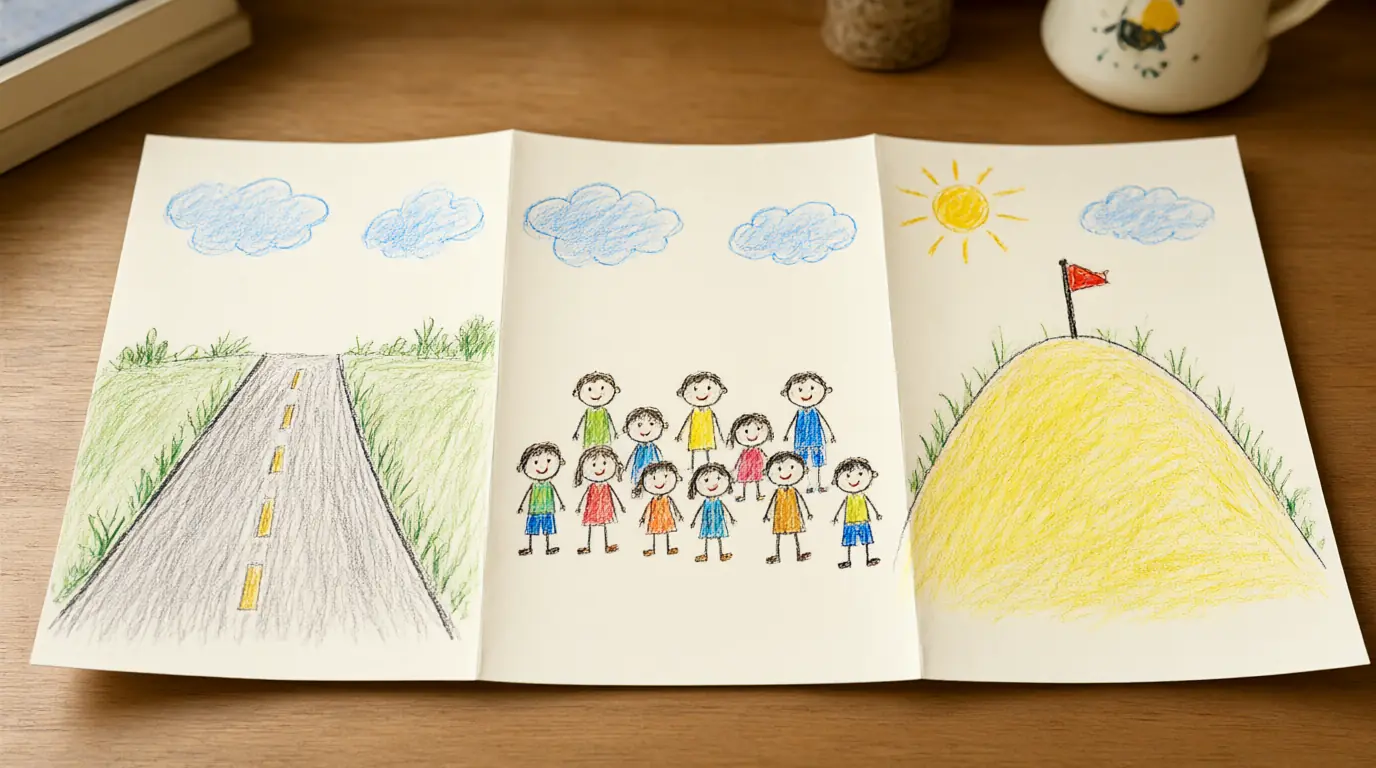
Make it your own: Toddlers can scribble one panel and tell you about it. Older children can add a caption of their own or a fourth panel that begins with 'then I wondered'.
A welcome card
Palm Sunday is about welcome, and children can think about it in everyday terms: how do we welcome a friend or a visitor? Making a card builds the idea of kindness without needing a child to act out a religious scene. It can be sent to someone who needs a cheer-up.
You’ll need
- A folded sheet of card
- Crayons or stickers
- A pencil
- An envelope
How to do it
- Ask your child how it feels to be welcomed at a door or in a new place.
- Talk about different ways to welcome someone: a wave, a smile, a hug, a song.
- Choose someone who might like a welcome card, such as a grandparent or a neighbour.
- Draw a picture or pattern on the front and write their name inside.
- Add a short message in your child's words and let them put their own mark underneath.
- Post it or hand it over together.
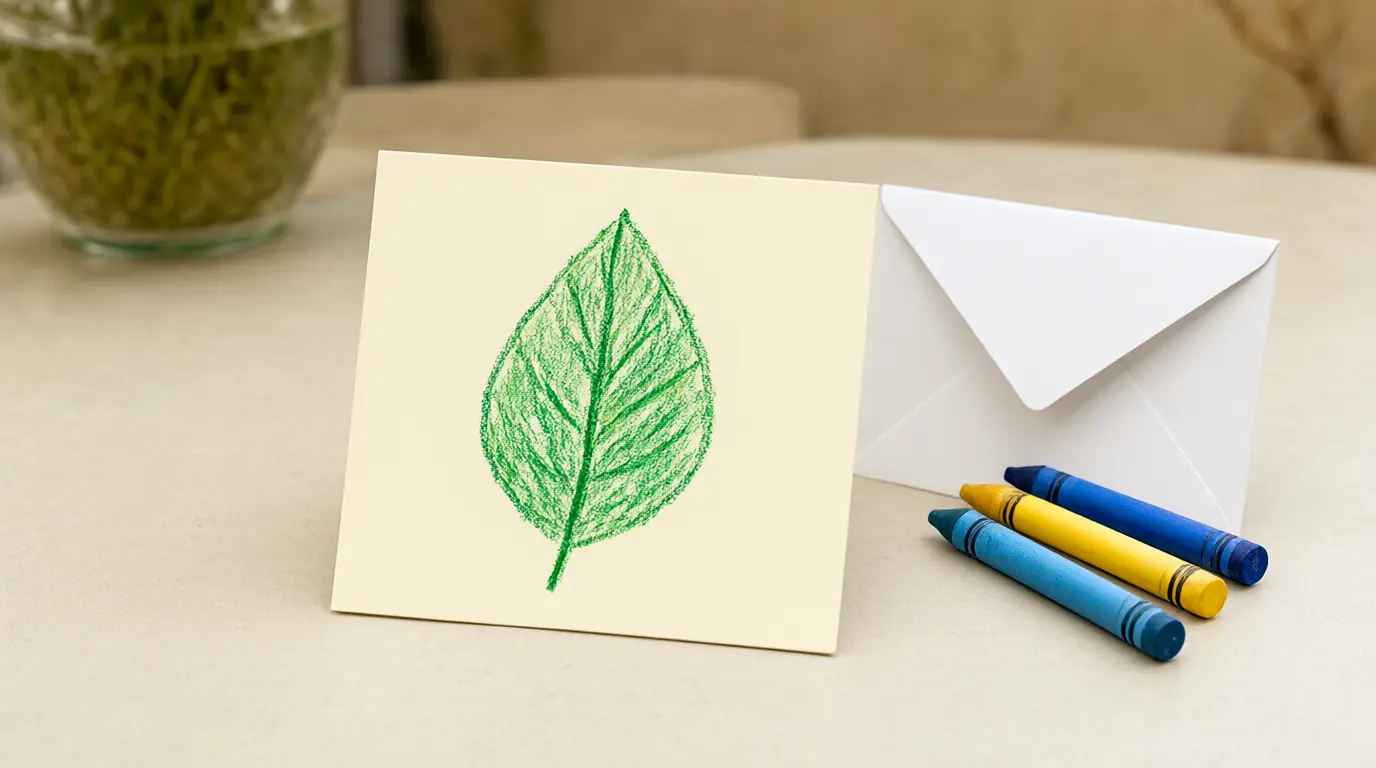
Make it your own: Younger children can colour a block of green and call it a leaf for the card. Older children can write their own greeting or choose a word to copy.
Noticed and wondered page
Dividing a page in half into 'we noticed' and 'we wondered' gives children permission to ask questions. It treats the story as something that can be explored together and shows that adults do not have every answer. Keep the page as a record that you can return to next year.
You’ll need
- 1 sheet of paper
- A ruler or folded edge
- Crayons
- A pencil to write down words
How to do it
- Fold the page in half and write 'noticed' at the top of one side and 'wondered' at the top of the other.
- After the story, ask what stood out: a donkey, a crowd, a branch.
- Draw a small picture for each thing they noticed.
- Invite questions and write each one word for word on the wondered side.
- Choose one question to take to a trusted adult in your faith community.
- Look at the page again next year and see whether any answers have changed.
Make it your own: Young children can point at a picture in the book and tell you about it. Older children can add colours to mark which questions are about the story and which about the day itself.
Story in a box
A shoebox becomes a small world that children can set up and retell. Placing paper figures along a road gives them a hands-on way to think through the story. It also means they can revisit it on their own during the week.
You’ll need
- A shoebox, lid removed, lying on its side
- Brown paper for a road
- Green paper leaves
- A few paper figures cut from card
How to do it
- Tape a strip of brown paper along the bottom of the box as a road.
- Draw and cut out a few simple people and one animal with a flat base.
- Place the leaves along the road, one by one.
- Re-tell the story together, moving the figures a little at a time.
- Ask your child what a person in the box might say.
- Keep the box on a low shelf for the week.
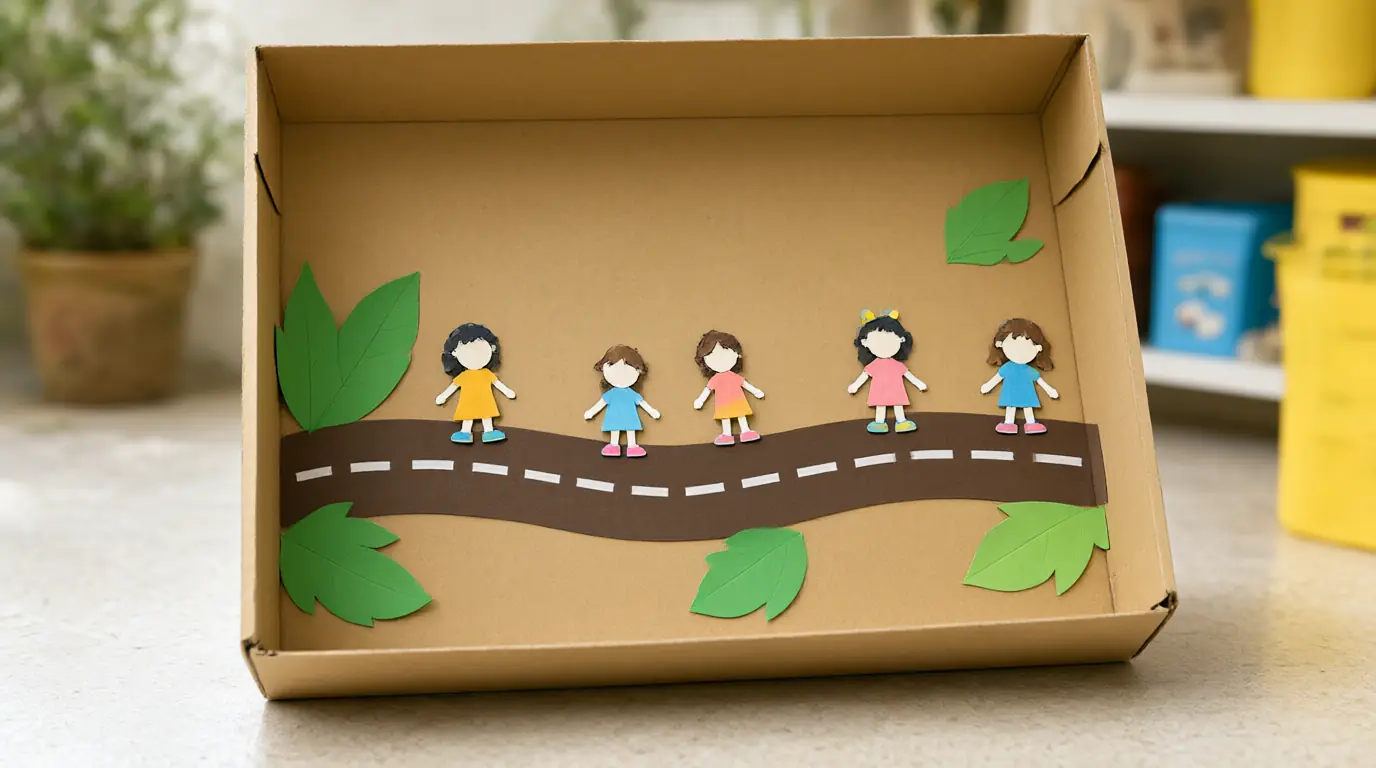
Make it your own: Younger children can simply move one figure along the road. Older children can add a city wall or write labels in their own writing.

Make it work for your family
Families and churches keep Palm Sunday differently: some give out palm crosses, some process with branches, some simply read the story at home. Share what your family does and avoid telling children that every Christian does exactly the same. If a child asks a big question you cannot answer, write it down and promise to ask a priest, minister, grandparent or other trusted person together.
Treat the story as something to explore, not something to act out. Rather than asking a child to play Jesus or the crowd, invite them to draw or describe what they imagine. Keep crafts for the day light so that the question time does not get lost. For related seasonal reading, you might like Easter games for kids or Lent activities for kids, which show other ways families approach the weeks around Easter.

Parents also ask
What is Palm Sunday, in a way a child can understand?
Palm Sunday is the Sunday before Easter. Christians remember the story of Jesus arriving in Jerusalem as people welcomed him with branches and cloaks on the road. It begins Holy Week, the days leading to Easter, and is kept differently in different churches.
Why are palm leaves part of Palm Sunday?
The Gospels describe people waving branches as Jesus entered the city, and the day takes its name from palm branches. Many churches give out palm leaves or crosses, and in places where palms are rare other greenery is sometimes used instead.
How do I teach Palm Sunday if we are not very religious?
Be honest about where you are coming from, tell the story simply and say that it matters to people who celebrate it. Invite questions, and if you cannot answer one, find someone from a church or community who can help.
Sources & further reading
Explore these primary sources for further context on this topic.
Choose materials and activities that suit your child, supervise as needed and adapt the ideas to their interests and abilities. About our editorial approach