Weebou Editorial Team
 In this article
A little preparation
Decide first what Easter means in your family and tell the children, in a sentence, which part you are doing today. Then choose materials that are easy to share: paper eggs cut from card, a basket or a bag, soft pom-poms and a clear floor space. Skip small loose prizes, and if food is part of your celebration, plan it separately and check with each child’s caregiver about allergies and dietary needs.
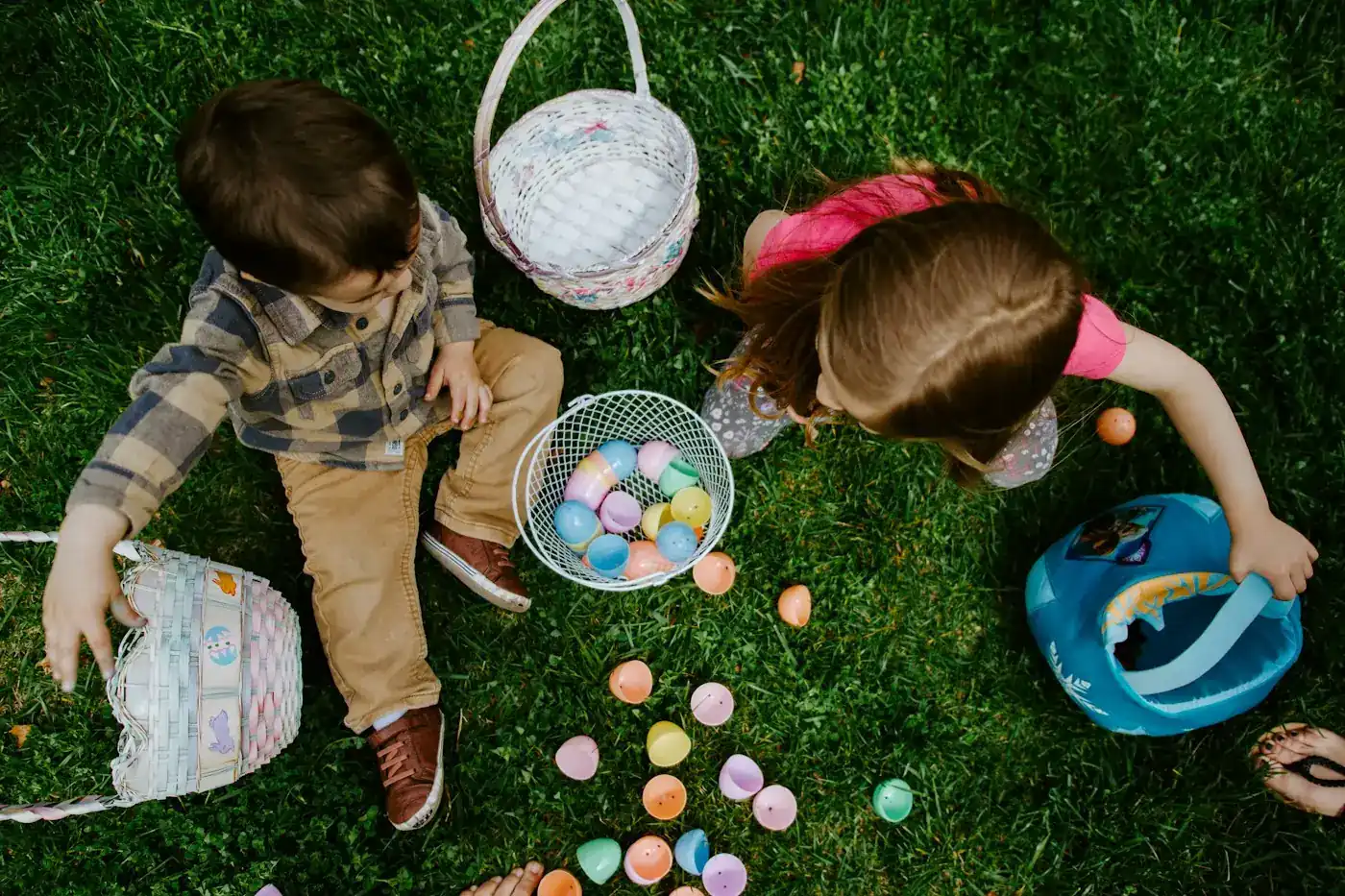
Easter falls on a different date each year, in spring, so some of these games suit a garden and some a living room. Whatever the weather, mark a clear boundary for any hunt and show younger children the route beforehand. Play for fifteen to twenty-five minutes, and have a quiet option ready, such as the egg garland, for a child who wants a break. The point is shared fun, not winning; you can always count what the group found altogether.

Ideas to try together
Match the patterned paper eggs
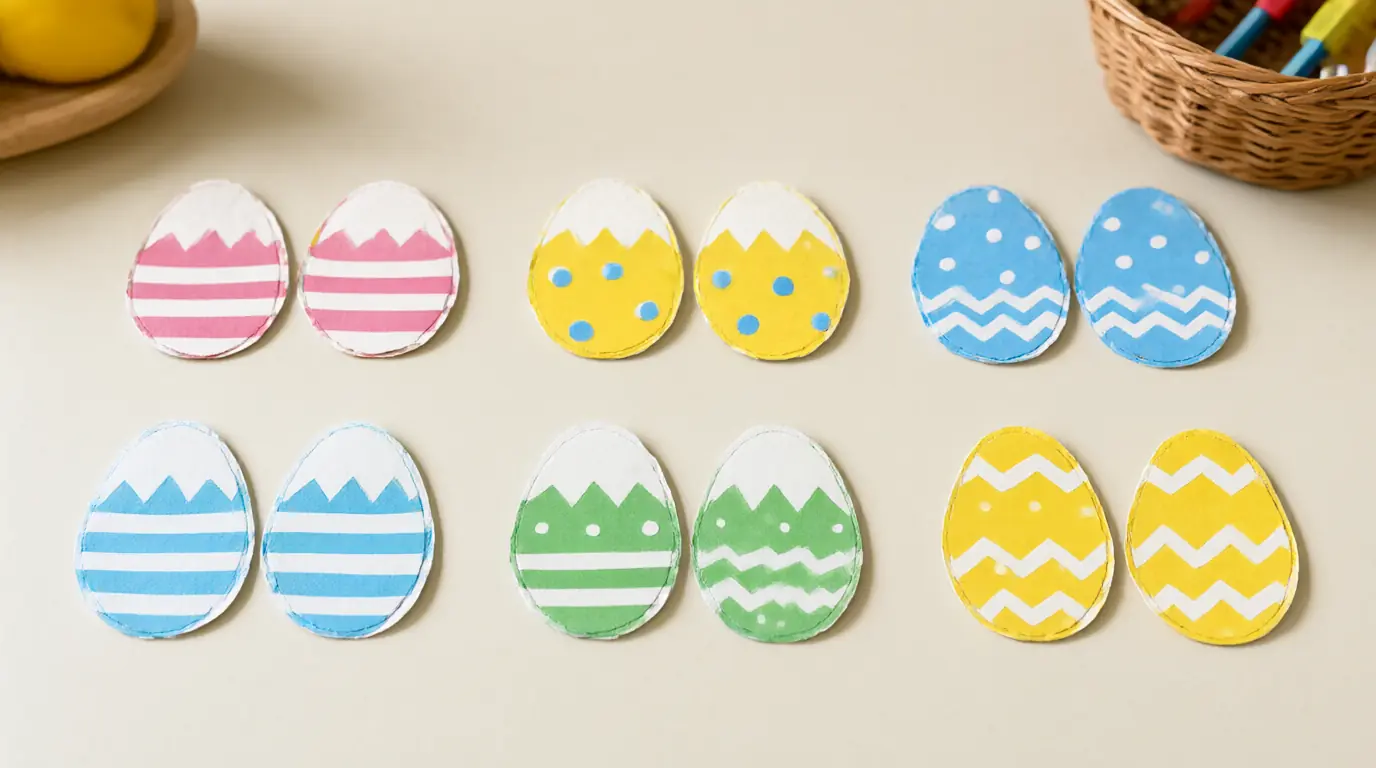
Decorating eggs in pairs and then finding the match builds careful looking and memory. The game starts open and cooperative, with every egg visible, and can become a memory challenge when children are ready. It is also a good first craft for children who like repeating patterns.
 You’ll need
- 10 egg shapes cut from card, 2 per pattern
- Crayons, stickers or washable paint
- A tray or tea towel for a playing area
- A small basket to collect pairs in
How to do it
- An adult cuts out ten egg shapes from card, so there are five pairs.
- Decorate each pair in the same pattern, for example stripes, dots or zigzags.
- Mix the eggs and lay them face up on the tray.
- Take turns to pick one egg and find its match, then place the pair in the basket.
- Next, turn the eggs face down and play memory, flipping two at a time.
- Admire the finished pairs and arrange them into a row of favourites.
Make it your own: Younger children can start with three pairs and keep them face up. Older children can make their own pairs for a friend to find, and invent a pattern with three colours.
Follow the picture-clue hunt
Hunts do not have to rely on reading or speed. Drawings of familiar places lead a child from one stop to the next, which builds sequencing and memory. Because the clues are pictures, children of different ages can take part together, and the focus stays on finding rather than racing.
You’ll need
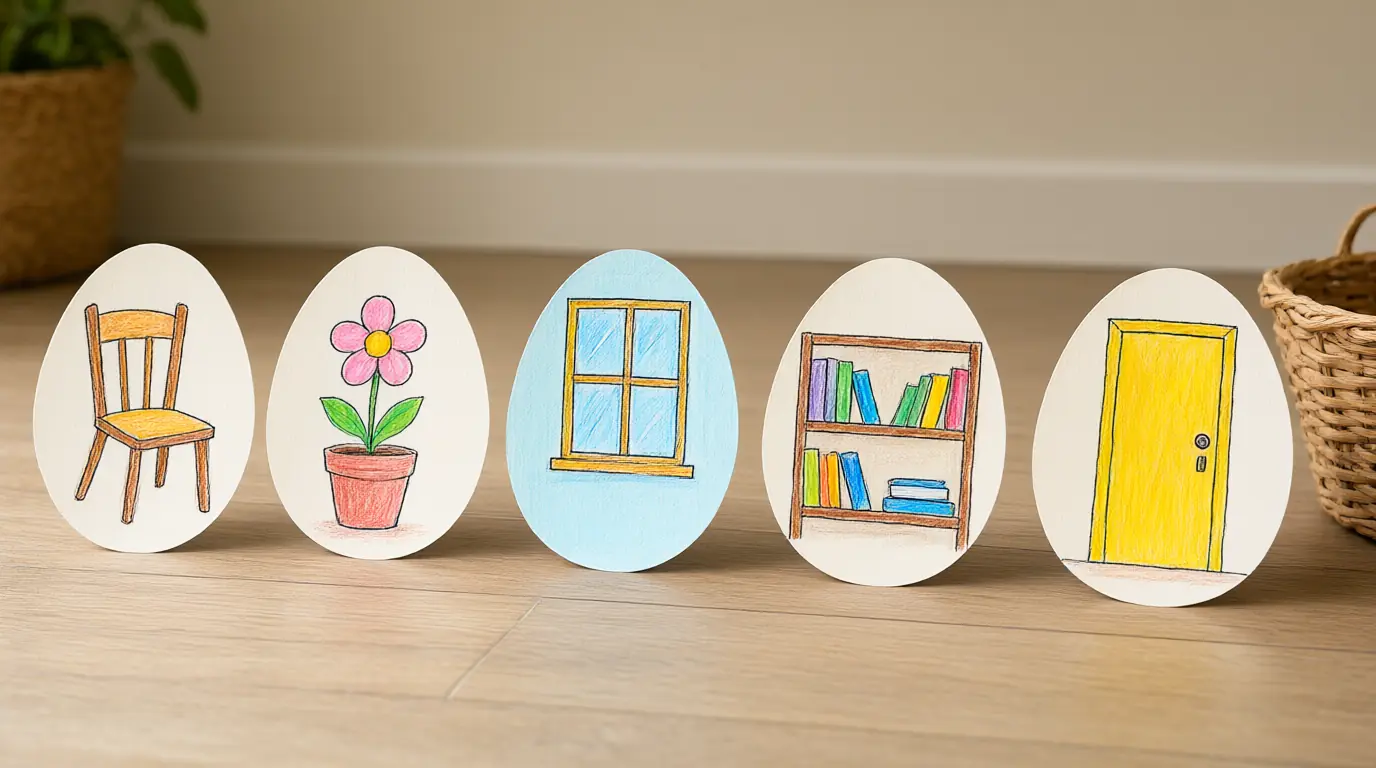
- 5 paper eggs, each with a simple drawing of a place on the back
- A basket
- Sticky tack
- A list of the hiding places
How to do it
- Draw five easy pictures of places in your home or garden, such as a chair, a flowerpot, a window, a bookshelf and a door.
- Hide each paper egg at child height in the place shown on the previous egg’s picture.
- Give your child the first egg and the basket.
- They look at the picture, go to that place and find the next egg.
- Continue until all five are found, then place them in order on the floor.
- Retell the route together using the pictures, saying where you went first, second and last.
Make it your own: For younger children, hide eggs in plain sight and go together. Older children can make the clues for an adult or sibling and keep a list of the hiding places.
Carry the basket course
A carrying course gives children a physical challenge that is not about speed. Each player picks a way to move, carries something soft and decides how to get from one point to another. The game works well outdoors or on a hallway floor, and it suits children who like having a job to do.
You’ll need
- A small basket or bag
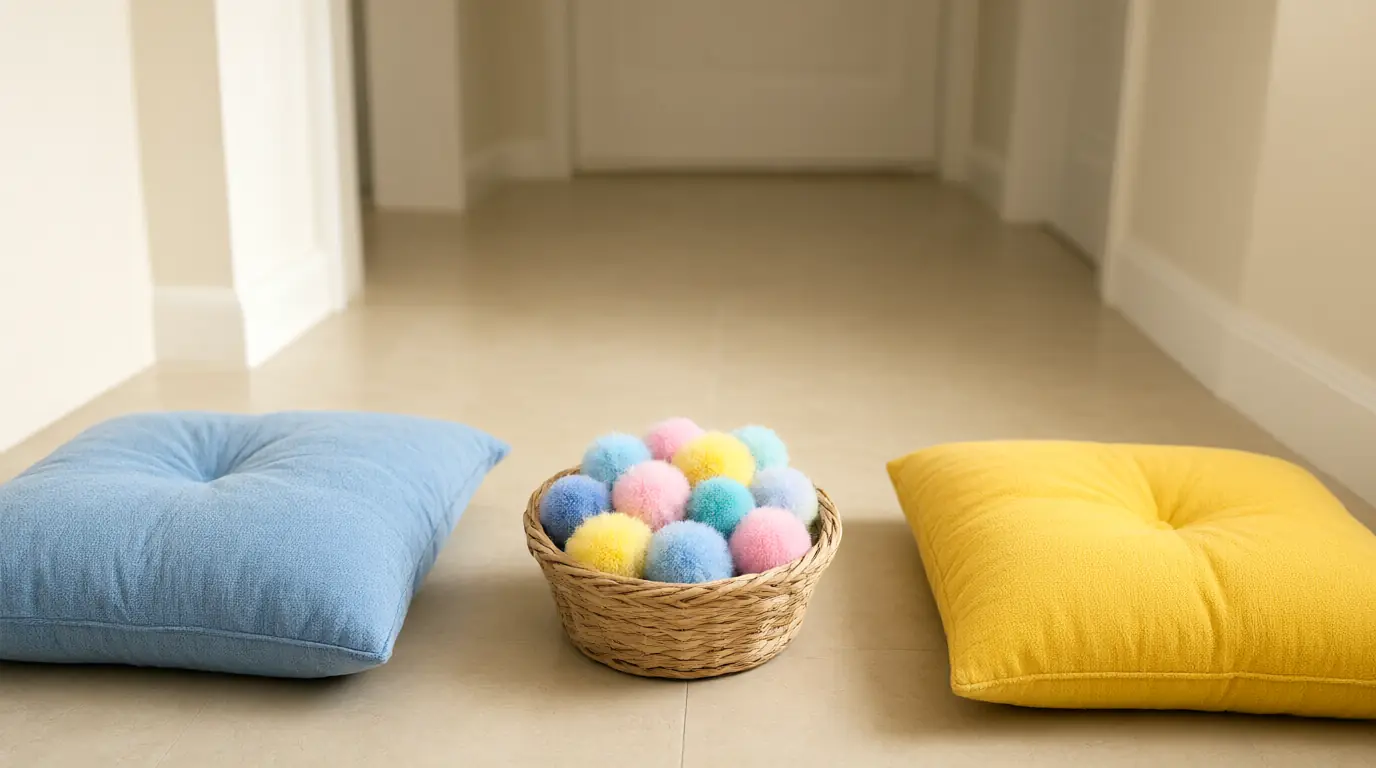
- 6 soft pom-poms or scrunched paper balls
- Masking tape or two cushions to mark the start and finish
- A few chairs or cones for turns
How to do it
- Mark a start and a finish with tape or cushions, four to six metres apart.
- Place a few cushions or cones between them to walk round.
- Each child puts three pom-poms in the basket.
- They carry the basket to the finish in any way they like: walking, tiptoeing or hopping.
- Tip the pom-poms into a bowl at the end and count them.
- Go again with a new way to move, or add one more pom-pom.
Make it your own: Younger children can carry one pom-pom in a bucket and take a very short path. Older children can balance a pom-pom on a spoon, or have two players carry one basket between them.
Make an egg garland
A garland is a calm craft that uses the same egg shapes as the games and leaves you with something to display. Children practise choosing colours, repeating a pattern and threading or taping shapes in a line. It suits children who need a quieter moment during a busy day.
You’ll need
- 10 to 12 paper eggs
- A length of string or yarn
- Washable paint, crayons or stickers
- Tape or clothes pegs
How to do it
- Lay the paper eggs flat and let your child decorate them with crayons, stickers or paint.
- Leave them to dry if you used paint.
- Lay the string along the table and plan the order of the eggs.
- Tape each egg to the string, or peg it, leaving a small gap between them.
- Hang the garland across a window or a wall at a height the children can see.
- Count the eggs together and find the biggest and the smallest.
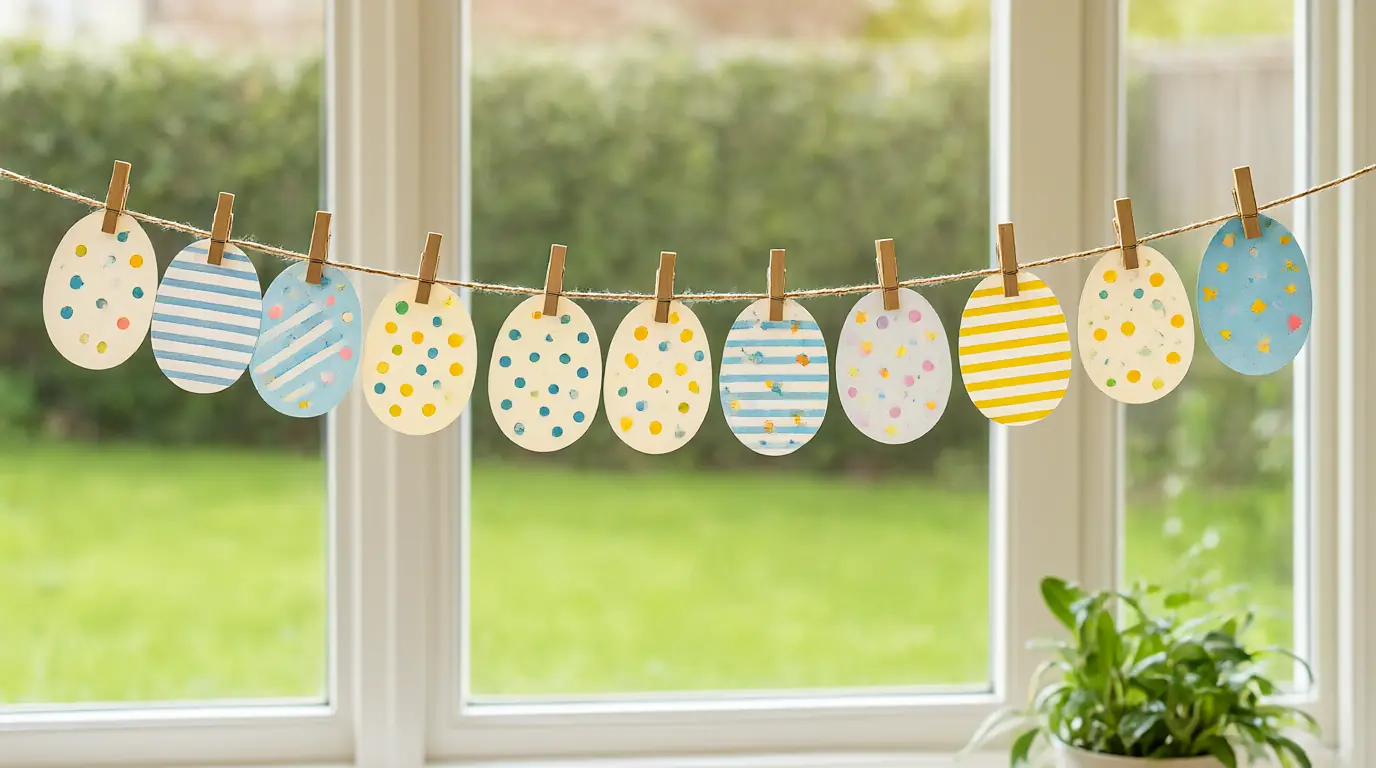
Make it your own: Younger children can stick one big egg on a door instead. Older children can make a colour pattern, such as red, blue, red, blue, and keep it going along the whole garland.
Story time and questions
For families who celebrate Easter as a religious festival, a story can be a calm moment away from the games. Reading it separately from the hunt keeps each part clear, and it leaves space for questions. Children often ask direct things, and honest, simple answers are better than a long explanation.
You’ll need
- An age-appropriate Easter picture book or a story you trust
- A cosy corner with cushions
- A few drawing materials
- A little time without screens
How to do it
- Choose a quiet time, not straight after a game.
- Gather cushions and sit close, with the book at child height.
- Read the story slowly and stop at a picture to let your child look.
- Invite a question: ‘Is there anything you are wondering about?’
- Answer simply and honestly, and say if you do not know.
- Offer paper and crayons so your child can draw what they remember.
Make it your own: Younger children may only manage a few pages, which is fine. For children from different beliefs, you can read about spring customs or a favourite seasonal picture book instead.

Make it work for your family
A hunt need not be fast. Mark a clear start, hide eggs at child height, and let everyone keep what they find without counting winners. If a child is shy or tired, give them the job of carrying the basket or checking the list. Plan a seated version for children who find running hard, such as the picture-clue hunt using a few eggs spread across one table.
It helps to name Easter in a way that is true for your family and respectful to others, especially when friends who do not celebrate are present. You might like these group games for kids and memory games for kids, and the Weebou memory game offers a screen version of egg matching for a quiet moment.

Parents also ask
What are good Easter games for toddlers?
Keep them short and visible: collecting large paper eggs from a low shelf, carrying a soft ball in a basket, or matching two pictures. Toddlers do best with a few items, no time limit and an adult beside them.
How can I make an egg hunt fair for different ages?
Give each child a different colour of egg to find, hide eggs at different heights, and let older children help younger ones. Count the eggs found by the whole group rather than by each child, and use paper eggs to avoid allergy worries.
Can I play Easter games if we are not religious?
Yes. Many families enjoy the spring side of Easter, with eggs, baskets and seasonal crafts. You can tell your child that some people also celebrate it as a Christian festival and that you are enjoying the games for fun.
Sources & further reading
Explore these primary sources for further context on this topic.
Choose materials and activities that suit your child, supervise as needed and adapt the ideas to their interests and abilities. About our editorial approach