Weebou Editorial Team
 8 min read
 In this article
A little preparation
Choose a quiet corner and a time when your child is rested, such as after a snack rather than just before bed. Ten minutes is plenty. Keep a small box of materials in one place so that starting takes no preparation, and stop while your child is still interested; a short session that ends happily is easier to repeat tomorrow.
If your child already has a teacher or a school reading programme, ask which letter-sound order and which terms it uses, then match them. Many schools teach letter sounds (the short sound a letter makes, such as the "mmm" in mat) rather than only letter names, and mixing the two systems in the same game can confuse a beginner. Write letters in lower case on your cards unless the school starts with capitals, because most books are printed in lower case. For reading aloud together as well, see how to encourage reading without turning books into homework.
What to know and try
Start with your child's own name
A child's name is the most meaningful print they will meet, so it is a natural first word. Spotting it on a bag, a drawing or a bedroom door shows that letters stand for something real. You are building recognition and a sense that print can be looked at closely.
 You’ll need
- Index cards
- A thick marker
- A bag or lunchbox with your child's name on it
- A few sticky notes
How to do it
- Write your child's name in large lower-case letters on a card, with a capital for the first letter only.
- Read it aloud while you point under each letter, then ask your child to point to the first letter.
- Hide the name card among two other name cards, for example family members, and ask which one says their name.
- Walk round the house and use sticky notes to label two things that belong to your child; let them stick the note on.
- Cut the name card into letters if they are ready and rebuild it together, checking against the original.
- Finish by finding the first letter in a picture book on the shelf.
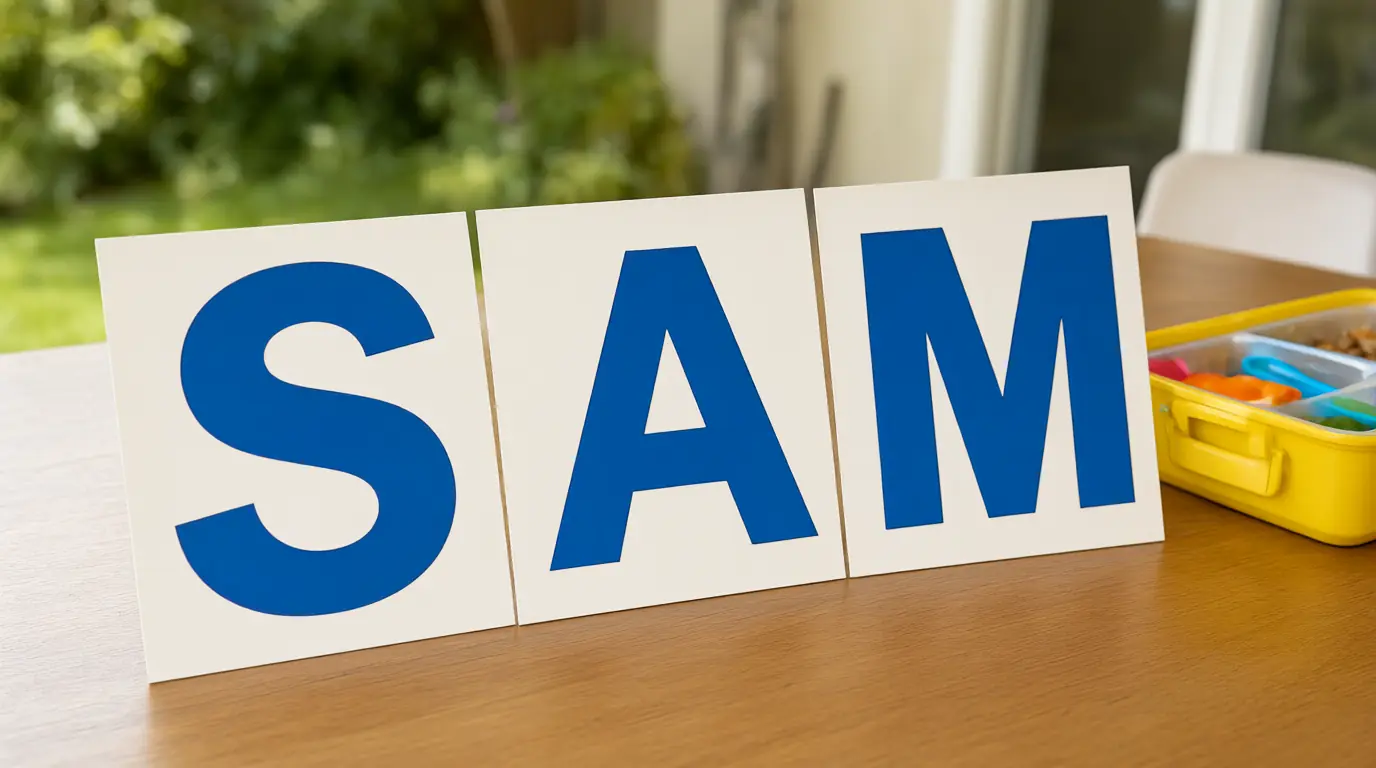
Make it your own: For younger children, use only a first-letter card and a picture. Older children can build the names of everyone at the table from loose letters and notice which letters repeat.
Clap the beats and hunt for rhymes
Before children can read, they need to hear that words are made of smaller pieces. Syllable clapping and rhyme work entirely by ear, so no letters are needed. Children who can hear that cat and hat end alike usually find it easier to notice the same pattern in print later.
You’ll need
- Four or five small toys such as a cat, a hat, a dog, a log and a bee
- A shoebox
- A scarf or tea towel
How to do it
- Say your child's name slowly and clap each beat: Ol-i-ver is three claps. Let them try their own.
- Pick up each toy in turn and clap its name together, for example di-no-saur.
- Put two toys on the table and ask whether their names sound alike at the end: cat and hat do; cat and dog do not.
- Hide all the toys under the scarf, pull one out, and invite your child to find its rhyming partner.
- Say a silly rhyme and pause before the last word so your child can fill it in: The cat sat on the...
- Put the toys back in the shoebox and take them out again tomorrow.
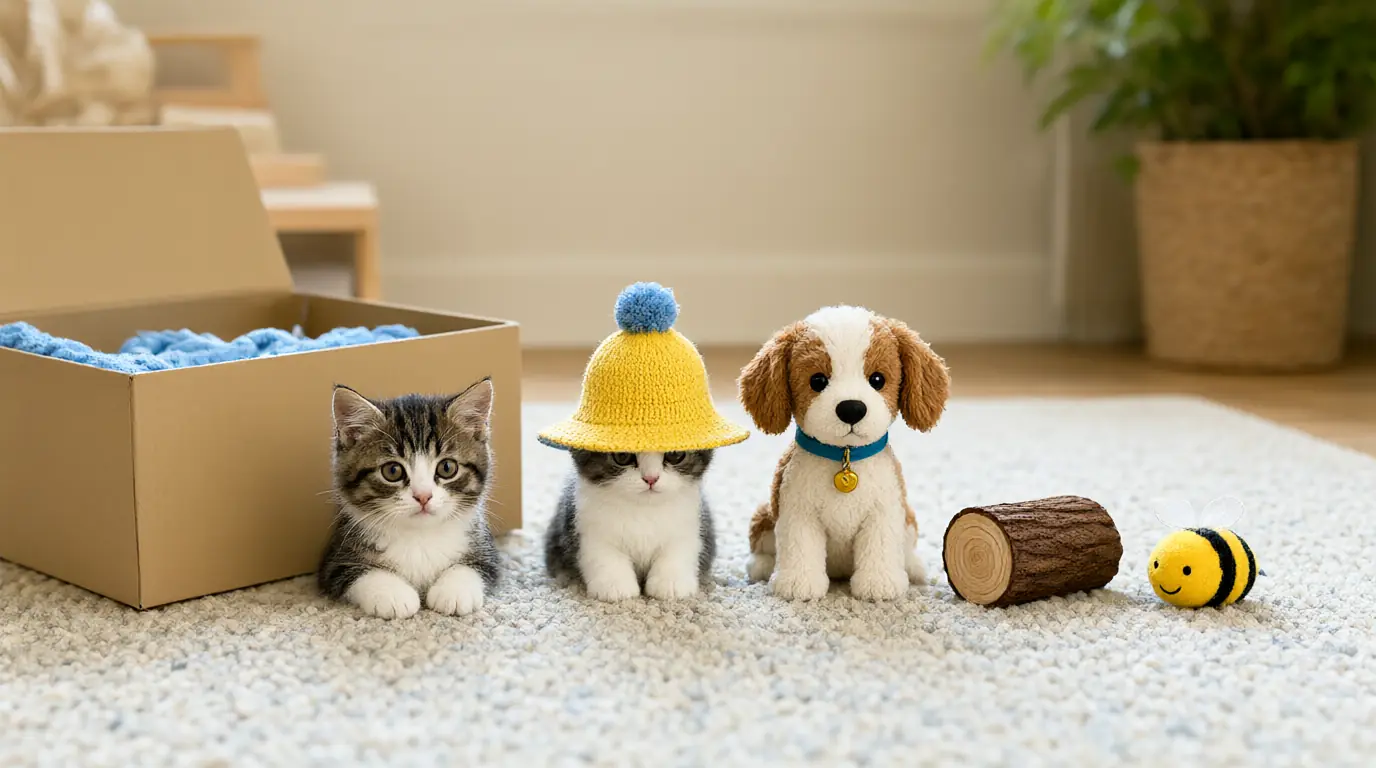
Make it your own: If rhyme is hard at first, spend more time on clapping and on noticing which word is longest. Older children can say a word with a missing first sound and guess what is left: cat without the c.
Match first sounds to letters with a sound basket
Connecting a printed letter to its sound is the point at which listening games turn into reading. Starting with one letter and a few real objects keeps the load low. Children hear the sound over and over in meaningful words and see how a single letter can be shorthand for it.
You’ll need
- One lower-case letter card, such as m
- Three objects starting with that sound, such as a mug, a mouse toy and a marble in a jar
- Two objects that do not, such as a spoon and a sock
- A small basket
How to do it
- Show the letter card and say its sound, not its name: "This one says mmm."
- Pull each object from the basket and say its name slowly, stretching the first sound: mmm-ug.
- Ask your child whether it starts with mmm and place it on the card if so.
- Put the odd objects aside and say what they start with, so they are not thrown away as wrong.
- Let your child take a turn hiding an object for you to sort, then swap.
- Look for the letter on a cereal box, book cover or shop sign over the next few days.
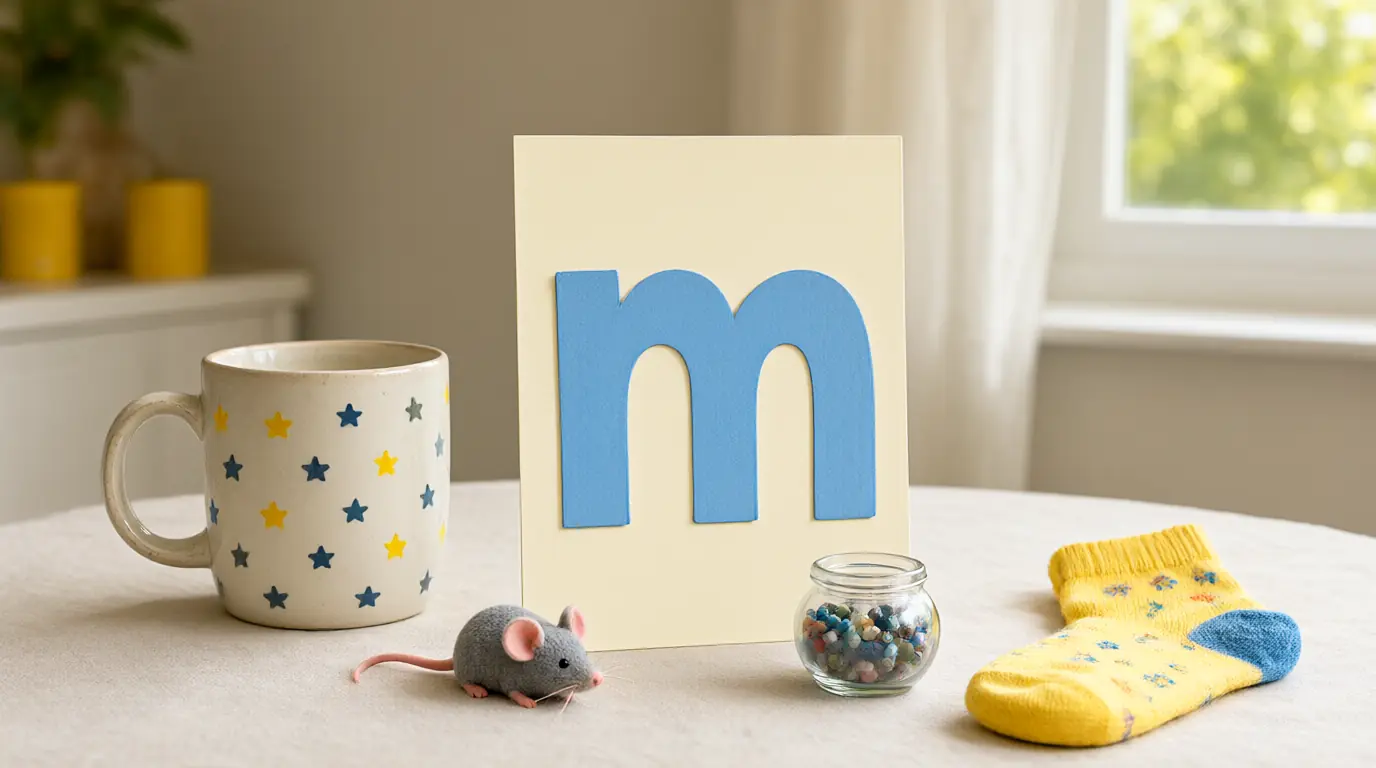
Make it your own: Begin with sounds that can be stretched, such as m, s and f, which are easier to hear than stop sounds like t or p. Older children can sort three letters at a time or find objects that end with the sound.
Blend a few sounds into a first word
Blending is putting separate sounds together to read a word, and it is the step where many children feel the first proper success. Use only letters your child already knows and short words that follow a regular pattern. Reading a word they have sounded out themselves feels different from guessing.
You’ll need
- Small cards with the letters s, a, t, p, i and n
- A few matching picture cards for sat, pin and pan
- A mat or tray to arrange them on
How to do it
- Lay out s, a and t in a row and say each sound separately, pointing: sss, aaa, t.
- Slide your finger from left to right and blend the sounds slowly: sss-aaa-t, sat.
- Let your child do the blending while you point, and help with the first sound if they get stuck.
- Swap the first letter for p and ask what the new word says: pat.
- Show the picture cards and ask which word matches the picture they have built.
- After two or three words, stop and read a short book together instead of continuing with cards.
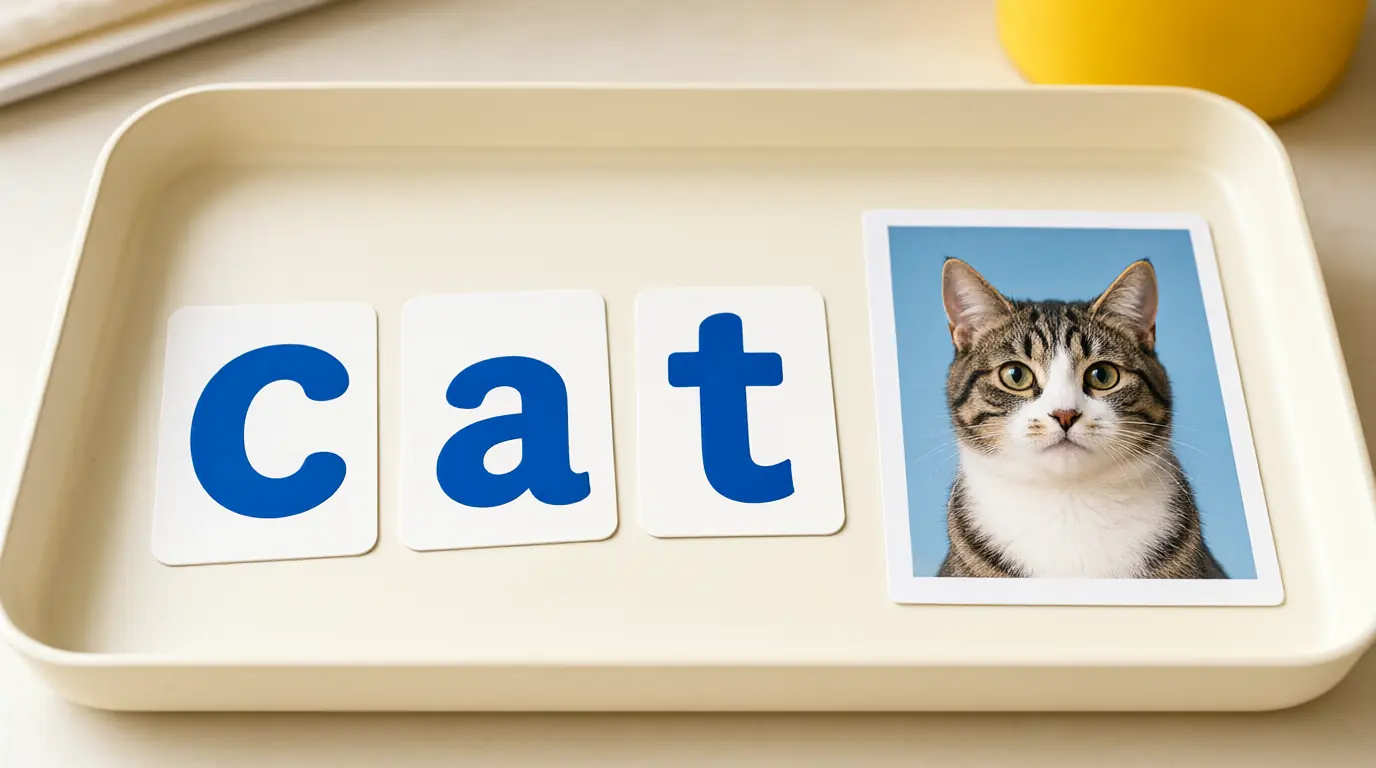
Make it your own: Younger children can practise only listening, with you saying the sounds and them guessing the word. Older children can move to words with two consonants together, such as stop or snap, and one short sentence.

Make it work for your family
Keep letter names and letter sounds apart when you speak: say "this letter is called em, and it says mmm" once, then use the sound for the rest of the game. If your child guesses a word from the picture instead of the letters, cover the picture with your hand and look at the first letter together. Mix-ups such as b and d are common while children are learning; give the pair a hint, for example drawing the bat and the ball on a b card, and carry on without drilling.
Treat reading as a skill that grows at different speeds. If your child seems frustrated for weeks, or you have concerns about hearing, vision or speech, ask the teacher or a doctor for advice rather than waiting. To understand the usual order of steps, read when kids learn to read, and later add talk about stories with these ideas for reading comprehension.

Parents also ask
What age should I start teaching my child to read?
There is no single age. Sharing books, naming letters in familiar words and playing with sounds can begin from the toddler years. Formal blending of sounds into words usually starts around the time a child begins school. Follow your child's interest and the school's programme.
Should I teach letter names or letter sounds first?
Many schools teach letter sounds first because they help children sound out words, but letter names are useful too and children often pick them up from songs. The key is to keep each game consistent and check what your child's school uses.
What should I do if my child guesses words from pictures?
Guessing from pictures is common and shows that your child wants the story to make sense. Cover the picture gently, point under the first letter, and ask what sound it makes. Then show the picture afterwards as a way to check the word.
Sources & further reading
Explore these primary sources for further context on this topic.
Choose materials and activities that suit your child, supervise as needed and adapt the ideas to their interests and abilities. About our editorial approach