Weebou Editorial Team
 8 min read
 In this article
A little preparation
Pick a short picture book with a clear problem and ending; a story you can read in five to eight minutes is ideal. Read it aloud yourself, even if your child is learning to read, so that decoding does not get in the way of understanding. Reading it once for pleasure before you talk about it keeps the story from feeling like a test. If your child asks to read it again, that is a good sign: second readings are where details, patterns and feelings begin to be noticed.
Keep your talk to two or three questions per session and wait several seconds after each one, because young children often need time to find their words. If a question is met with silence, say what you noticed first: 'I saw that the bear looked worried on this page.' Answers can be spoken, pointed to or drawn, and a different idea from yours is not a mistake. Sit side by side with the book between you, and stop when your child's attention moves away. If you are concerned about your child's reading progress, speak to their teacher or another qualified professional.
What to know and try
Retell the story with three objects
Choosing objects to stand for the beginning, middle and end gives a child something to hold while they remember the order of events. Moving the objects helps those who find it hard to speak in long sentences, and it shows you which parts they understood.
 You’ll need
- Three small objects, such as a block, a toy animal and a button
- The book you have just read
- A strip of paper divided into three boxes
How to do it
- Lay the strip on the table and put one object in each box without telling your child what they mean.
- Ask your child which object could stand for the start of the story and why.
- Let them choose the objects for the middle and the end, listening to their reasons.
- Ask them to tell the story as they point to each object in turn.
- Add a prompt such as 'and then what happened?' if they stop.
- Swap: tell the story yourself and let your child move an object when you say something wrong, on purpose.
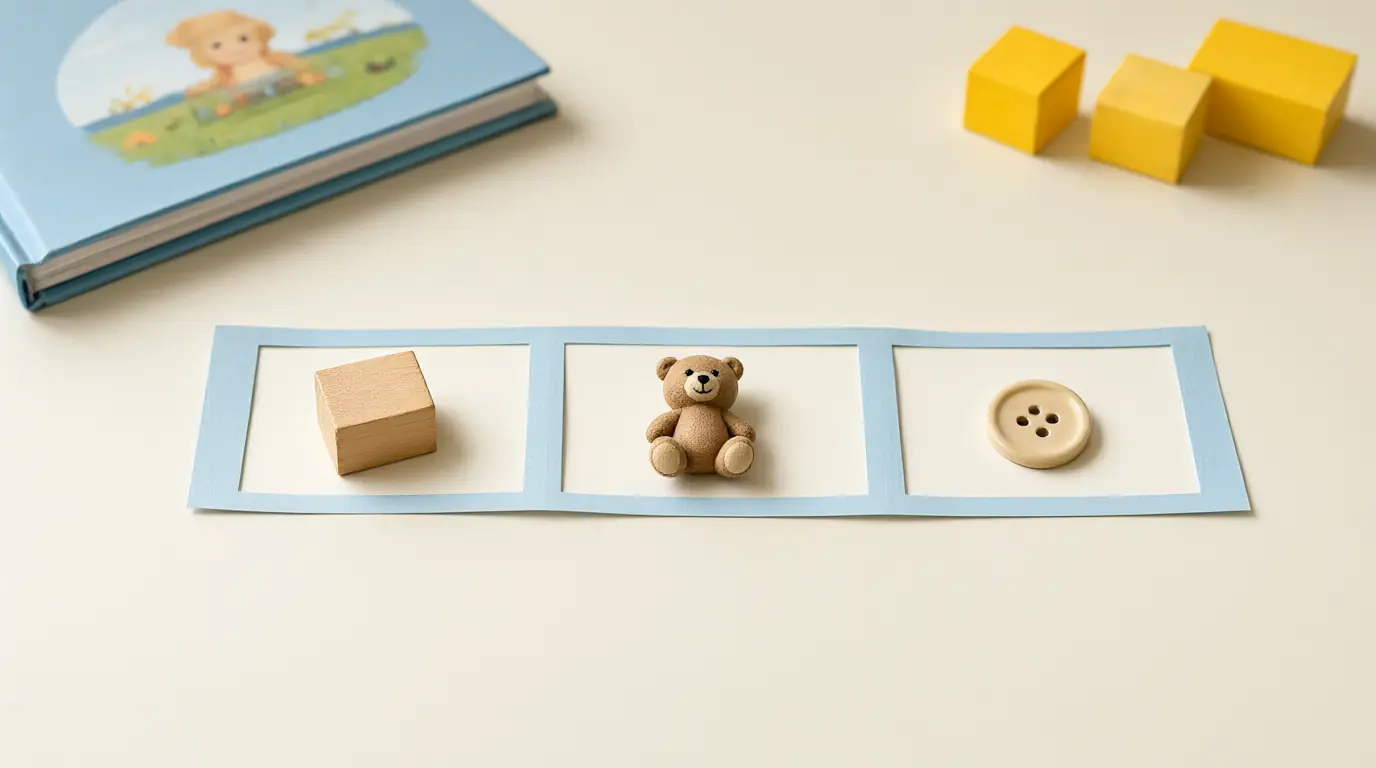
Make it your own: Use only two objects for a younger child: before and after. For older children, add a fourth object for the problem and ask how the character solved it.
Spot what the character wants
Almost every story is built on a character who wants something. Asking what a character is trying to do links the events together, so the child understands why things happen rather than just what happens.
You’ll need
- A picture book with a clear problem
- Sticky notes
- A crayon for drawing a quick goal picture
How to do it
- After the first few pages, pause and ask 'what does she want right now?'
- Draw or stick a small picture of the goal, such as a kite or a lost toy, on a sticky note.
- Continue reading and stop when a problem appears.
- Ask whether the problem makes it easier or harder to get what the character wants.
- At the end, move the sticky note to the last page and ask whether the character got it.
- Talk about how the character might feel and what they did to reach their goal.
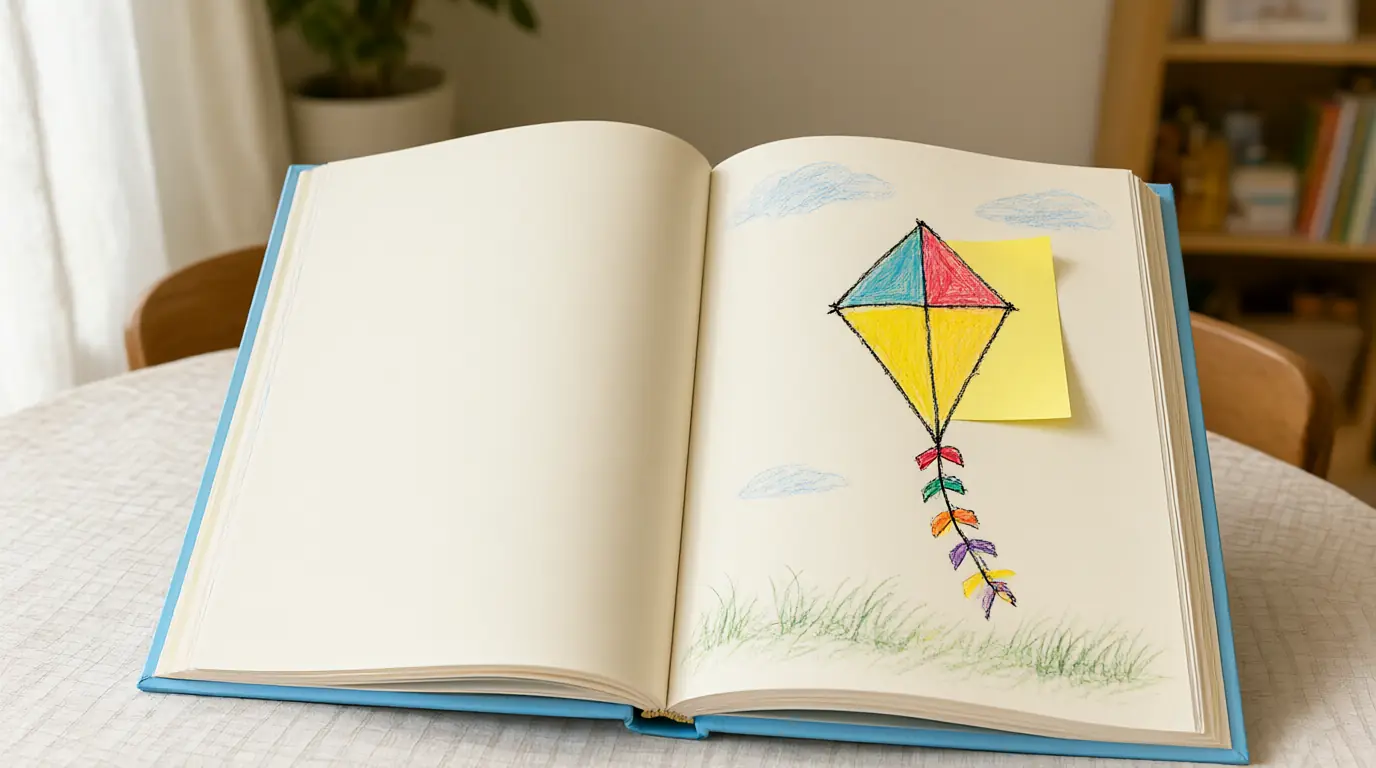
Make it your own: For a young child, name the goal yourself and ask whether the character is getting closer. Older children can find a second goal that some other character has.
Make a prediction and check the clue
Predicting asks the child to use the pictures and the story so far to guess what comes next. The key moment is the follow-up, 'what made you think that?', which turns a guess into a reason.
You’ll need
- A new picture book
- Two sticky notes
- A pencil
How to do it
- Look at the cover and read the title together before opening the book.
- Ask what the story might be about, and what in the picture made your child think so.
- Stop at a page turn with a clear question, such as 'will the fox find the door?'
- Offer two possibilities and let your child pick one, then place a sticky note on the page.
- Turn the page and read on without commenting on whether the guess was right.
- Compare the outcome with the guess and talk about what the clues were.
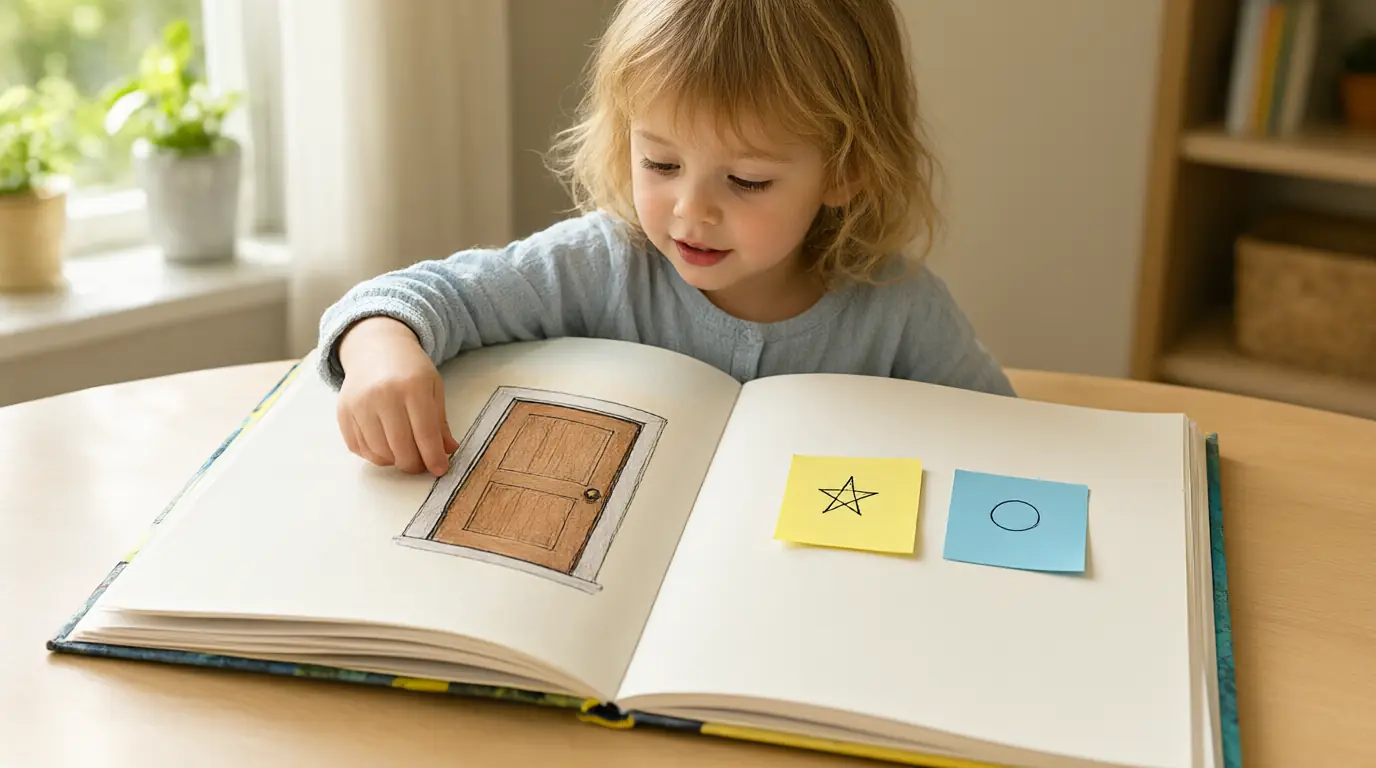
Make it your own: Give a young child two choices. Older children can predict without choices and explain which picture clue helped.
Compare how two characters feel
When two characters face the same event but react differently, children can see that feelings depend on who you are and what you want. Pointing to words and pictures as evidence shows them how to read closely.
You’ll need
- A book with at least two characters
- Two paper plates for faces
- Crayons
How to do it
- Choose a moment where something happens to two characters, such as rain starting during a picnic.
- Draw a face on each plate to show how each character feels, helping your child choose the expression.
- Ask what each character did, said or looked like to show that feeling.
- Point to a word or picture that supports your child's idea.
- Ask how the two characters could help each other.
- Hold up a plate when the event comes back later and ask whether the face has changed.
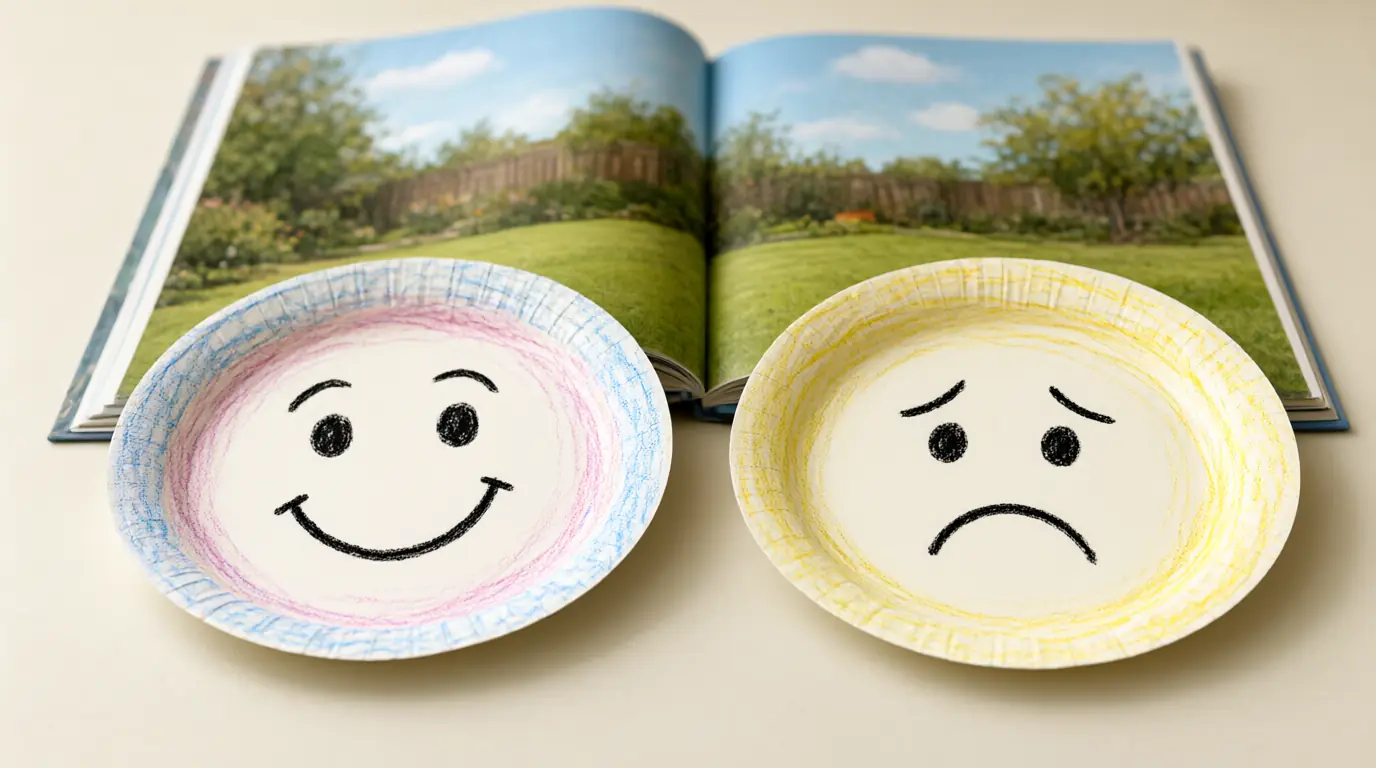
Make it your own: Younger children can use one face and say whether the character is happy or not. Older ones can add a third character or a changed feeling at the end.
Draw the scene you pictured
A drawing shows what a child saw in their mind as they listened, including details the text never gave. Comparing the drawing with the book's pictures is a good conversation about how readers use their imagination.
You’ll need
- A short story with few illustrations or a read-aloud poem
- A sheet of paper
- Crayons
How to do it
- Read a short passage aloud while your child closes their eyes or looks away from the page.
- Ask them to draw what they pictured, including the place and the characters.
- Invite them to tell you about the drawing without correcting any detail.
- Ask whether anything in the story made them add a particular colour or object.
- Show the book's illustration, if there is one, and spot similarities and differences.
- Display the drawing beside the book for the next reading.
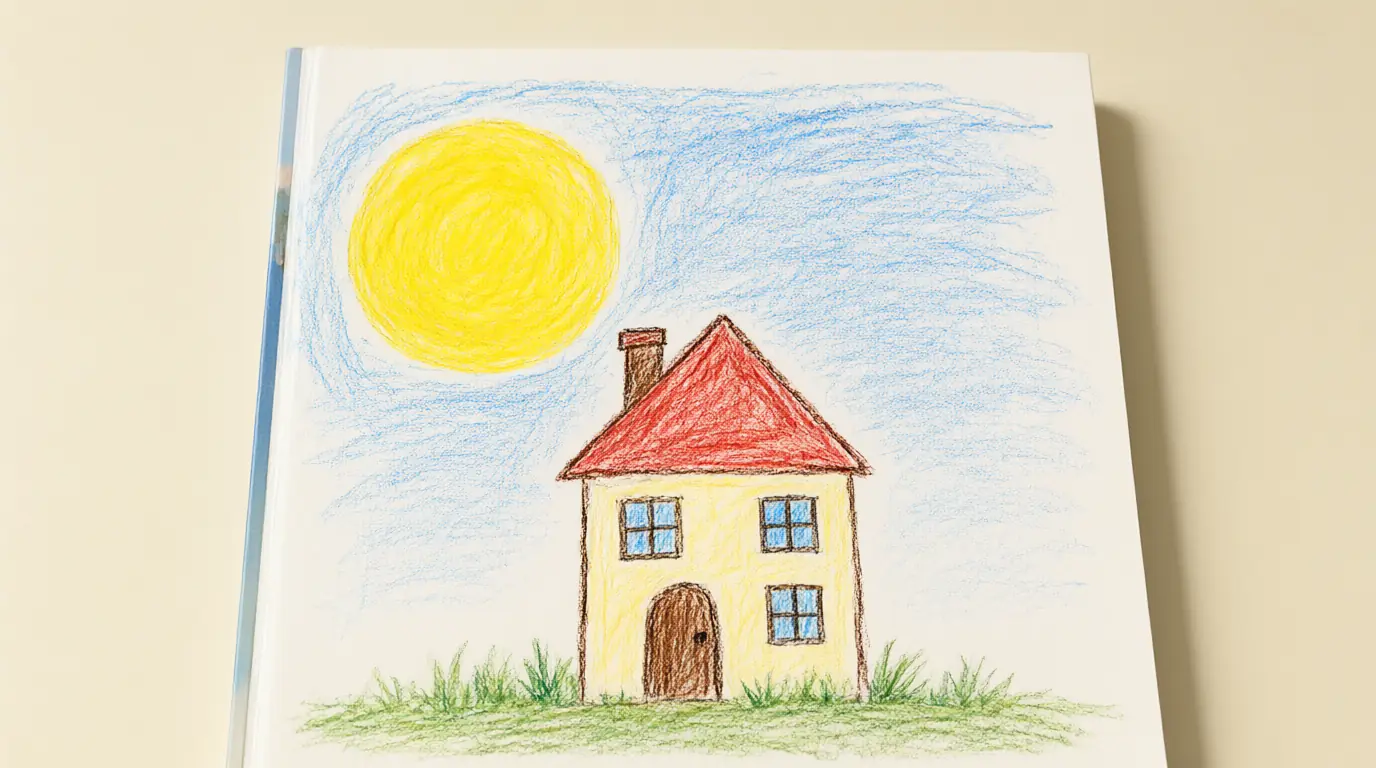
Make it your own: For younger children, read just one sentence. For older children, ask them to add a small speech bubble drawn as a squiggle or a symbol.

Make it work for your family
If a question produces silence, model your own thinking first and leave your child free to agree or offer another idea. Avoid asking more than two or three questions in a row, and pay attention to the moments when your child leans in or starts to talk. Stories read at bedtime may be best enjoyed without any questions at all; save the talking for daytime sessions.
It helps to keep your reading routine regular and relaxed. For building the broader habit, see how to encourage reading in kids and when kids learn to read, and the Weebou words game offers a short, playful vocabulary break between books.

Parents also ask
What is reading comprehension for young children?
It is understanding what a story or text means, not just reading the words. For young children it shows up as retelling events, explaining why a character acts a certain way, guessing what comes next and linking the story to their own experience.
Should I ask my child questions after every book?
No. A few relaxed questions now and then are enough. If every book ends in a quiz, reading can start to feel like work. Sometimes simply enjoying the story together, or saying what you liked about it, is the best way to build understanding.
How can I help if my child can decode words but does not seem to understand?
Read the book aloud yourself so your child can focus on meaning, and use the retell and prediction ideas above. If the difficulty continues, mention it to your child's teacher, who can look at what might be getting in the way.
Sources & further reading
Explore these primary sources for further context on this topic.
Choose materials and activities that suit your child, supervise as needed and adapt the ideas to their interests and abilities. About our editorial approach