Weebou Editorial Team
 In this article
A little preparation
Choose a time when nobody is hungry or rushing, and keep the question list within sight. Younger children can answer by pointing at a picture: draw a pumpkin, a cat, a costume and a sweet on separate cards beforehand. Read each question twice and leave a pause after the answer so your child can add a thought. If a question is unfamiliar, turn it into a small hunt: find October on a calendar, look inside a pumpkin or test whether a costume mask makes seeing harder.
Keep the game cooperative: pairs or teams can pool their ideas, and nobody is out. Check the age guidance on any small props, keep sweets out of reach until an adult has read the labels, and talk about allergies before sharing food. Costumes should be loose enough to walk in and bright enough to be seen, and an adult stays close during dressing-up or doorstep practice. Ten to fifteen minutes is usually plenty; stop while the game still feels friendly. For more seasonal play, try these friendly Halloween activities.

Questions to explore together
Pumpkin questions from the inside out
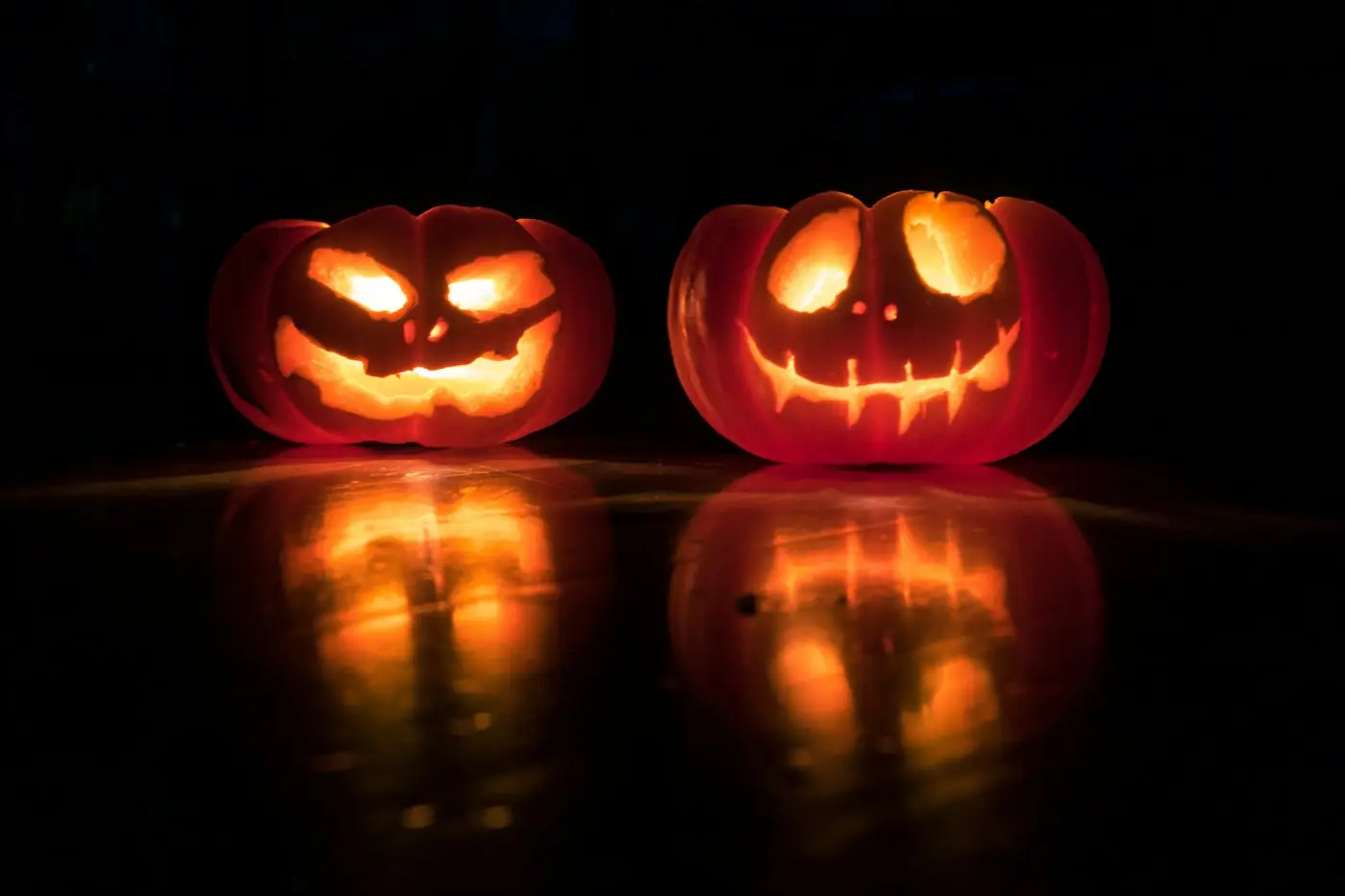
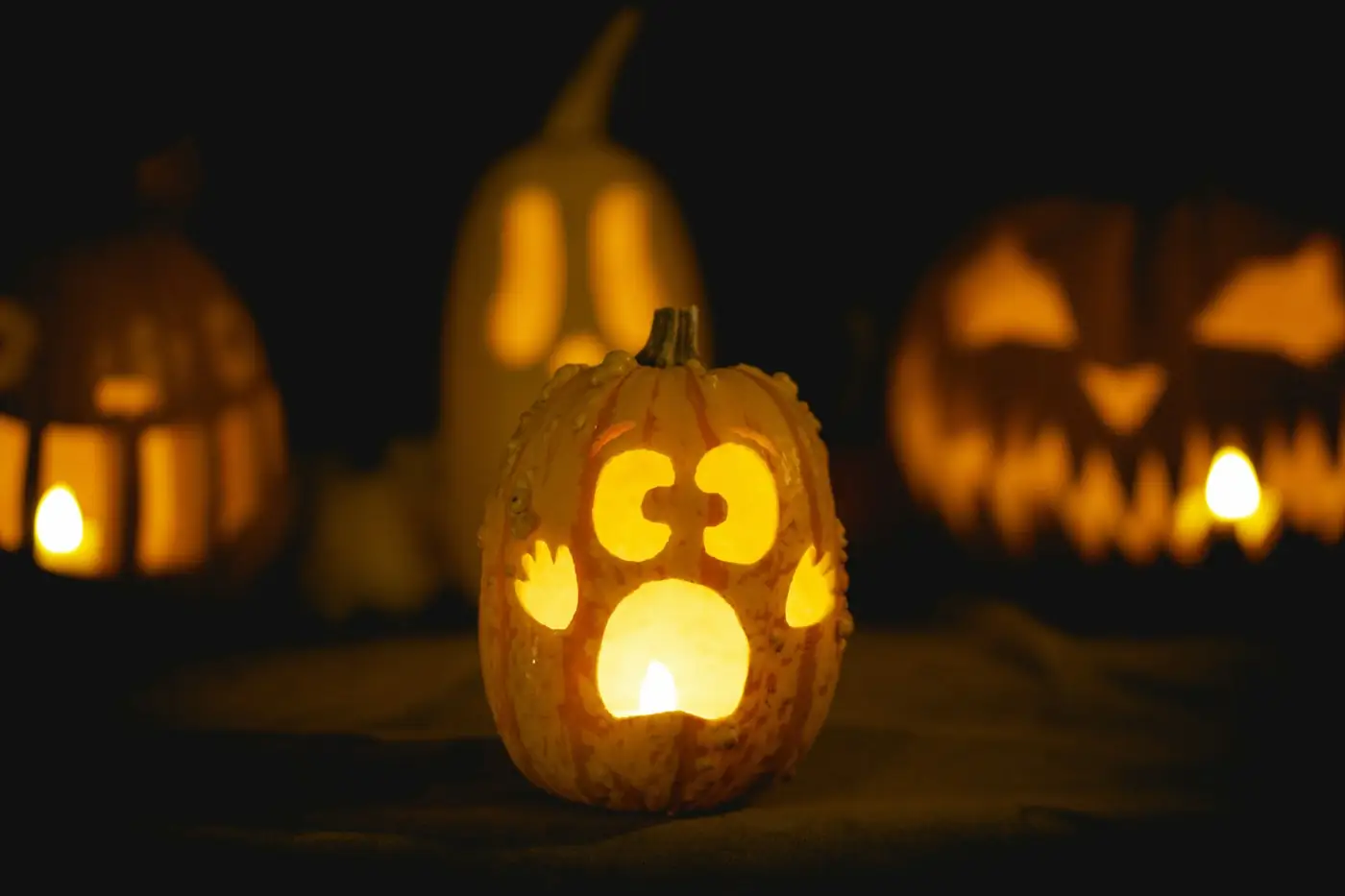
A real pumpkin makes these answers visible, and children often want to check for themselves. Cut nothing during the game; simply lift the lid of a pumpkin an adult has already opened, or use a small one to feel the ridges and stem. The questions move from what children can see to a fact they can test, which keeps guessing grounded in evidence.
How to do it
- Q: Is a pumpkin a fruit or a vegetable? A: A fruit, because it grows from a flower and contains seeds.
- Q: What is inside a pumpkin that can grow into a new plant? A: Seeds.
- Q: What colour is a pumpkin's flower? A: Yellow.
- Q: Where does a pumpkin grow? A: On a long vine along the ground.
- Q: Are all pumpkins orange? A: No; some are green, white, yellow or striped.
- Q: What is the hard outside of a pumpkin called? A: The skin or rind.
- Q: What do we call a pumpkin with a face cut into it? A: A jack-o'-lantern.
Make it your own: For a two- or three-year-old, ask only the colour and seed questions and let them hold a clean pumpkin. Older children can draw the inside and outside, or sort pumpkin photographs by colour. If a pumpkin is not available, use a picture and a spoonful of seeds.
Costume and pretend-play questions
Costume questions invite children to explain their own ideas, which is more valuable than recalling a definition. Ask the group to act out one answer: a slow robot walk, a careful fairy step or a lion's stretch. The movement gives younger children a way into the game and helps everyone remember the word 'costume'.
How to do it
- Q: What do we call clothes worn to look like a character? A: A costume.
- Q: What might you carry to make a pirate character easier to recognise? A: A cardboard telescope or a paper hat.
- Q: Why might a mask be a problem at a party? A: It can make seeing and breathing uncomfortable, so take it off for games and food.
- Q: What could you wear if you do not want to dress up? A: A favourite colour, a funny hat or ordinary clothes are all fine.
- Q: What should you say if a costume feels itchy or too tight? A: Tell an adult and change the part that bothers you.
- Q: How can you make a character without buying anything? A: Use a towel as a cape, a paper crown or a kitchen spoon as a pretend microphone.
- Q: What is a kind thing to say about someone else's costume? A: 'I like your idea' or 'That colour is bright'.
Make it your own: Younger children can choose from two costume pictures and point. Older children can plan a character with a name, a home and one favourite object. Children who dislike dressing up can design a costume on paper or make a prop for a toy instead.
Trick-or-treat questions about safety and kindness
These questions prepare children for the doorstep without turning the evening into a list of warnings. Practise the words together, then let your child decide how to answer. Knowing what to expect makes the first houses less daunting, and the kindness questions apply whether or not your family goes trick-or-treating.
How to do it
- Q: What do you say when someone opens the door? A: 'Trick or treat!'
- Q: Which houses should you visit? A: Ones with a light on and an adult nearby, and only with your grown-up.
- Q: Should you go inside a stranger's house for sweets? A: No. Stay outside with your adult.
- Q: What should you say after someone gives you a treat? A: 'Thank you.'
- Q: What should you do before eating any sweets? A: Take them home and let an adult check the labels and wrappers.
- Q: What can you do if a house is too scary or a decoration frightens you? A: Tell your adult and walk past; you do not have to stay.
- Q: How can you be kind to someone who has run out of treats? A: Say 'That's okay, thank you anyway' and move on.
Make it your own: With toddlers, practise only the doorbell, the phrase and thank you, and visit two or three familiar homes. Older children can plan a route and decide which houses to skip. A child with food allergies can carry a small bag of safe treats from home.
Night creatures: bats, cats and owls
Night animals are a safe route into Halloween's spooky side because the facts are stranger than the fiction. Children can compare what they already believe with what the animal actually does, and the answers give you a natural chance to correct 'bats are blind' or 'black cats are unlucky' without a lecture.
How to do it
- Q: Is a bat a bird or a mammal? A: A mammal; it has fur and feeds its babies milk.
- Q: Are bats blind? A: No, they can see, and they also use sound to find their way in the dark.
- Q: What do bats do during the day? A: Most rest, often hanging upside down in a dark place.
- Q: How many legs does a spider have? A: Eight.
- Q: Are black cats a different kind of cat? A: No, they are ordinary cats with dark fur.
- Q: Can an owl turn its head all the way around? A: No, but it can turn much further than people can.
- Q: What might you hear at night in a garden? A: An owl hooting, a fox calling or leaves moving in the wind.
Make it your own: For younger children, use toy animals and ask which one says 'hoot' or 'miaow'. Older children can sort animal pictures into day and night, or write one true sentence to replace a scary rumour. Keep the focus on real animals rather than frightening decorations.
Dates, words and old traditions
Halloween has a history, and a few clear facts help children understand why the date stays the same each year. Keep the story short and connect it to something they can see: a calendar, a lantern or the word 'hallow'. These questions work well at the table because they invite a child to add what their family does.
How to do it
- Q: On which date is Halloween? A: 31 October.
- Q: What is the day after Halloween? A: 1 November, All Saints' Day.
- Q: What is Halloween short for? A: All Hallows' Eve, the evening before All Saints' Day.
- Q: What is a jack-o'-lantern? A: A hollowed-out pumpkin or turnip with a face cut into it and a light inside.
- Q: Which vegetable did people carve before pumpkins became common? A: Turnips, especially in Ireland and Scotland.
- Q: What does the word 'hallow' mean? A: Holy or set apart; it is an old word.
- Q: Why do people give sweets at Halloween? A: It is a modern custom; different families and places have their own traditions.
Make it your own: Younger children can find 31 on a calendar and point to November. Older children can compare two family traditions or interview a grandparent about Halloween when they were young. If your family does not mark Halloween, use the questions to learn about a neighbour's custom without judging it.

Make it work for your family
If a child freezes or says 'I don't know', offer two possible answers rather than repeating the question. 'Is a pumpkin a fruit or a vegetable?' is easier than an open blank, and choosing still counts as thinking. Children who dislike being put on the spot can whisper the answer to a partner, draw it or point to a card. Keep score only if everyone wants to; a simple tally of questions explored works better than a winner.
Some facts may surprise you, and it is fine to say 'let's check that together'. A calendar, a pumpkin and a picture book can settle most questions. Stop when attention drifts and leave the list on the table for another day. For more true-or-not noticing, try these Halloween facts for kids, or switch to friendly Halloween riddles when your child wants clues instead of direct questions.

Parents also ask
What are good Halloween trivia questions for young children?
Questions about things children can see or act out work best: the date of Halloween, the colour of a pumpkin flower, what to say at a door and whether a bat is a bird. Keep answers to one sentence and let children point, draw or demonstrate rather than only speak.
How do you play trivia with a 3-year-old?
Use two picture choices and ask your child to point. Read the question slowly, give the answer yourself if they look unsure, and let them copy. Three or four questions is enough; stop before they lose interest. A real pumpkin or a costume prop makes the game concrete.
Is Halloween on the same date every year?
Yes, Halloween is always 31 October. The day of the week changes, but the date does not. It is the evening before All Saints' Day on 1 November. A calendar helps children see that the date stays fixed while the weekday moves.
Choose materials and activities that suit your child, supervise as needed and adapt the ideas to their interests and abilities. About our editorial approach