Weebou Editorial Team
 6 min read
 In this article
A little preparation
Set up a play area on a rug or low table with large, age-rated toys and leave clear routes between baskets and blocks. Picture vegetables cut from card avoid the need for real food or small seeds, and an adult should check any real natural objects such as straw or leaves for dirt and sharp edges. Wash hands after handling any real plants or soil.
Keep the pretend farm friendly to everyone: farms differ around the world, so ask what your child thinks a farm looks like and avoid presenting one version as the only one. If they ask about real animals, look it up together in a library book instead of letting a toy answer. Start with one activity, let your child lead the story and add a second job only after the first feels familiar. For more play with animals, these animal games are a natural next step.

What to know and try
Morning delivery to the market
Delivering paper vegetables to stalls gives children a route, a goal and a matching task. Choosing the best path around the blocks is a small planning problem, and the stalls make the delivery feel real.
 You’ll need
- 6 to 10 paper vegetable pictures (carrots, cabbages, tomatoes)
- A small basket
- 3 blocks or small boxes as market stalls
- A paper sign for each stall
How to do it
- Cut out the paper vegetables and put them in a basket at the farm end of the room.
- Set the blocks out as market stalls and draw a vegetable on each sign.
- Ask your child to choose a route from the farm to the market without bumping into anything.
- Carry one vegetable picture at a time and put it on the matching stall.
- Add a missing-vegetable problem once the routine is familiar and ask where it could be.
- Count how many pictures arrived at each stall.
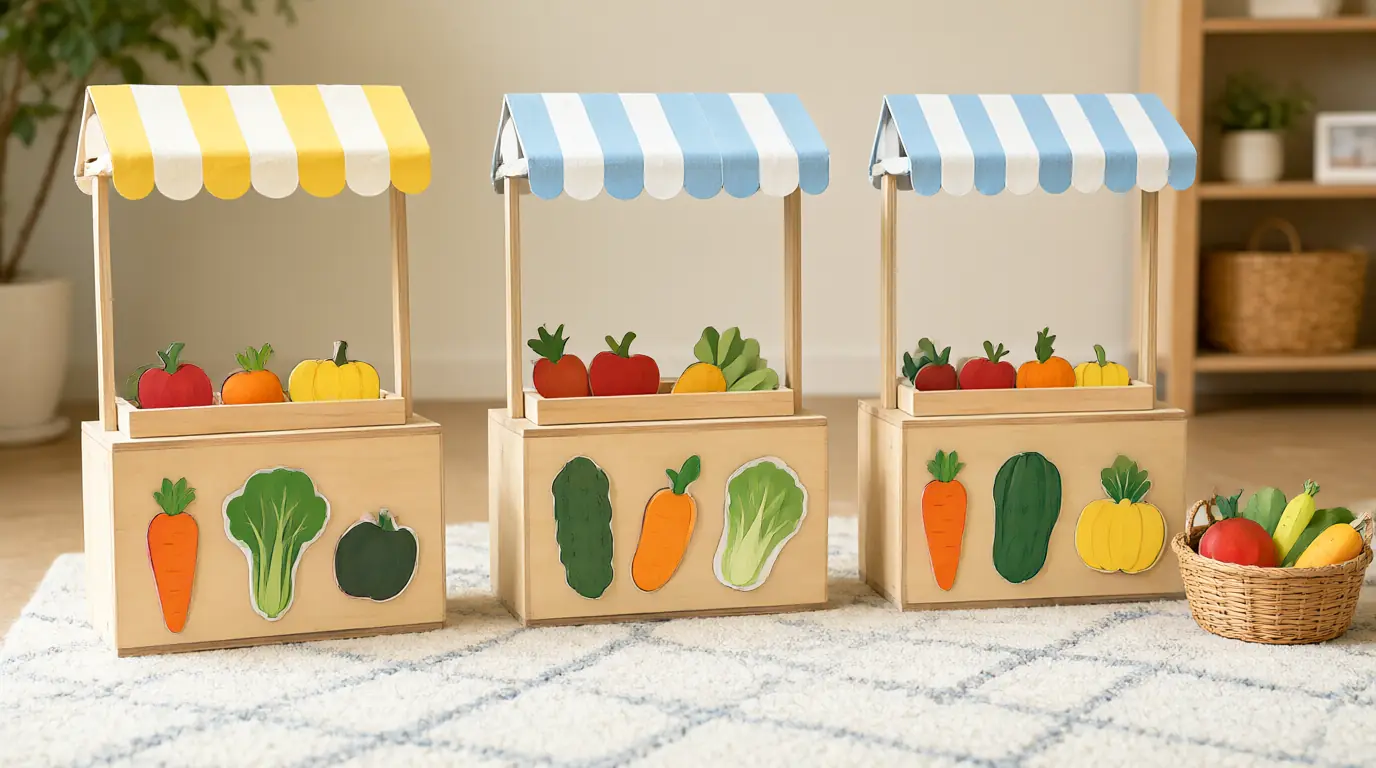
Make it your own: Younger children can deliver any picture to any stall. Older children can add more stalls, take orders or sort vegetables by colour or shape.
Animal shelter designs
Building a shelter for a toy animal asks children to think about size, shape and doorways. Testing whether the toy fits through the door is a real engineering question, and changing the design when it does not is part of the fun.
You’ll need
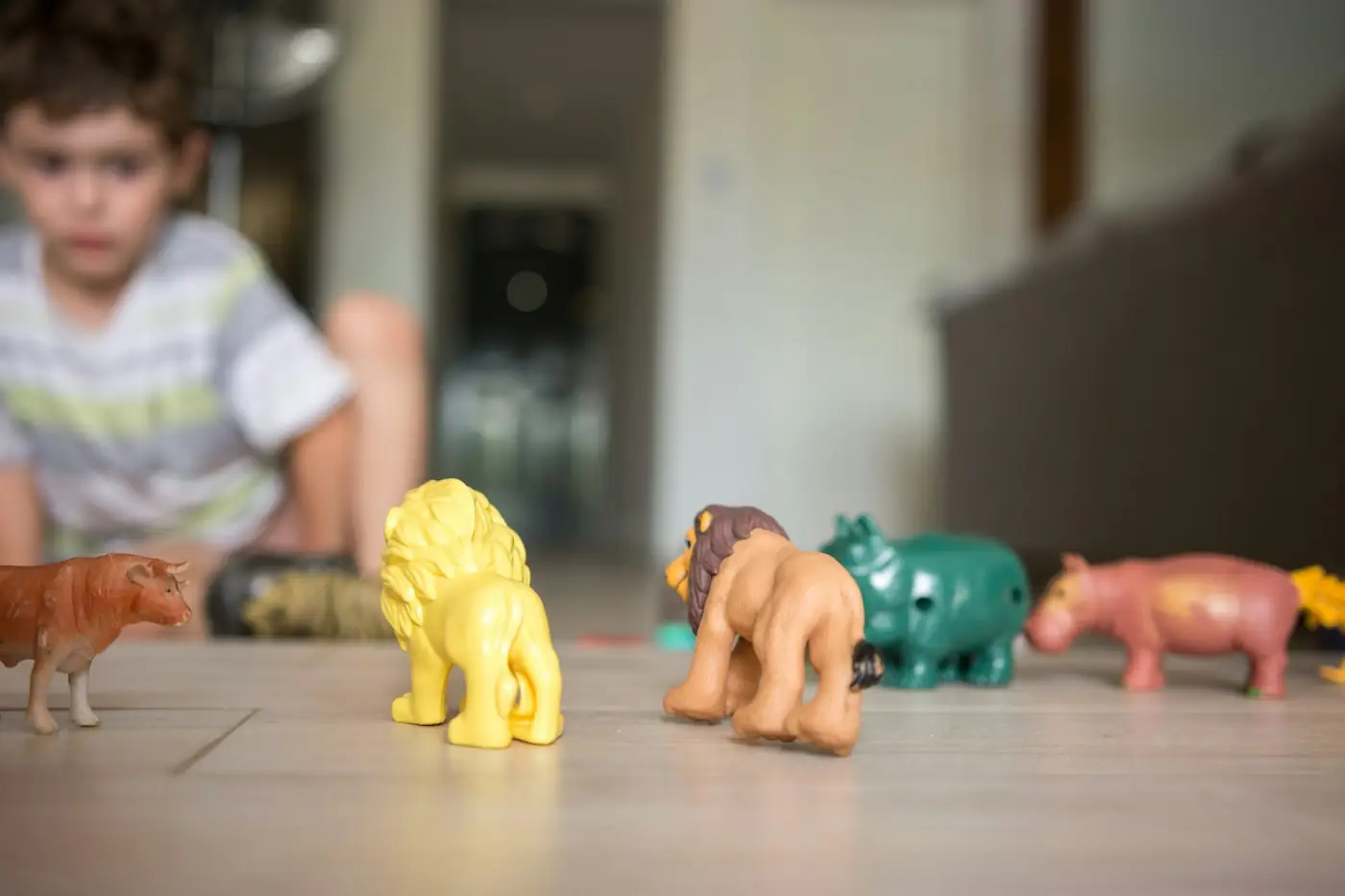
- A large toy cow, horse or pig
- Wooden or plastic blocks
- A shoebox lid as a base
- A strip of paper for a sign
How to do it
- Choose a large toy animal and look at how big it is.
- Build four walls from blocks around the animal on the base.
- Leave a gap for a doorway and ask whether the animal can get through.
- Test it by walking the toy in and out.
- Widen or heighten the doorway if the toy sticks.
- Add a roof from a flat block or card and talk about what the animal might need inside.
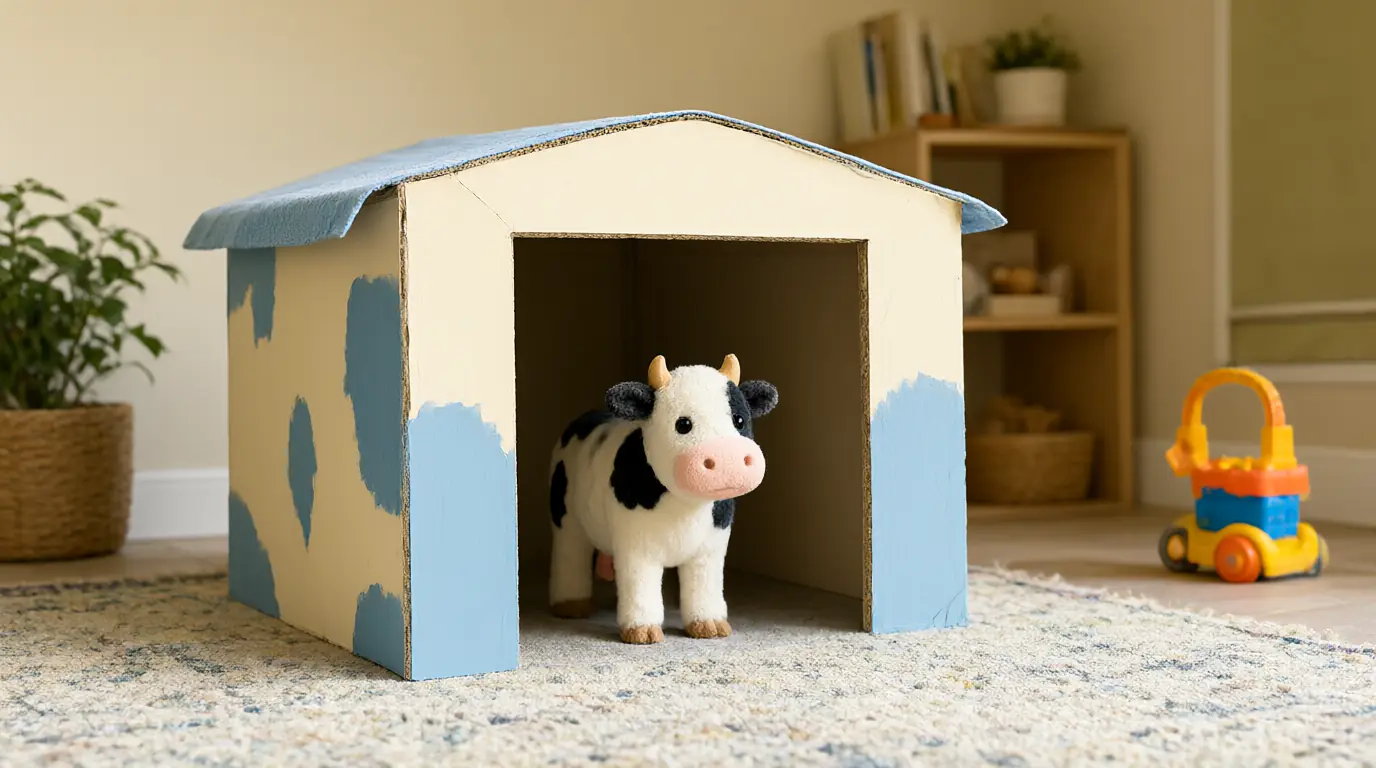
Make it your own: Younger children can build a simple fence. Older children can draw a plan first and count how many blocks they need for each wall.
Picture sorting barn
Sorting animal pictures by one feature, then re-sorting them by another, shows that the same objects can be grouped in many ways. The barn gives the activity a setting, and the rule is the child's own.
You’ll need
- 8 to 12 animal pictures or cards
- 2 to 3 shoebox lids or paper plates as barn sections
- A marker for labels with pictures
- A tray
How to do it
- Spread the animal pictures face up on the rug.
- Ask your child to choose a way to group them, such as animals with feathers or animals with four legs.
- Place each picture in the matching barn lid.
- Count how many are in each group.
- Choose a different rule and sort the same pictures again.
- Notice any animal that fits both groups and talk about why.
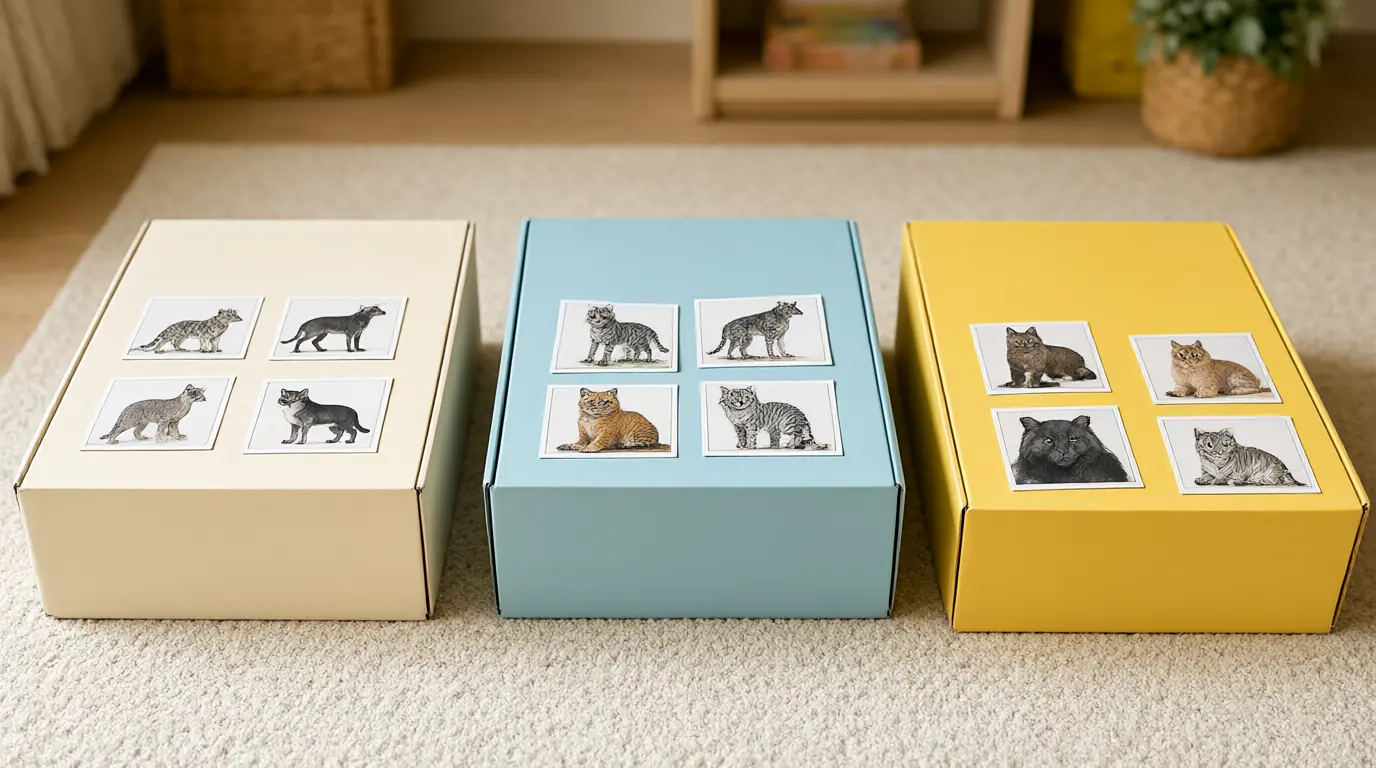
Make it your own: Younger children can sort into two groups, such as big and small. Older children can try rules with three groups or make up a mystery rule for you to guess.
Farm sound story
A short story with animal characters lets every child add a sound, a word or a movement. It builds listening and turn-taking, and anyone can choose a quiet role as the observer or the farmer.
You’ll need
- 4 to 6 animal pictures or toys
- A cloth or blanket as a farm field
- A paper hat for the farmer
- A comfortable place to sit
How to do it
- Lay out the cloth and put the animals on it.
- Begin the story with a sentence, such as one morning the farmer woke up early.
- Hold up one animal and let your child choose its sound or movement.
- Continue the story and bring in the next animal.
- Pause and ask what the animal might want or do next.
- End the story when everyone has had a turn and tuck the animals in.
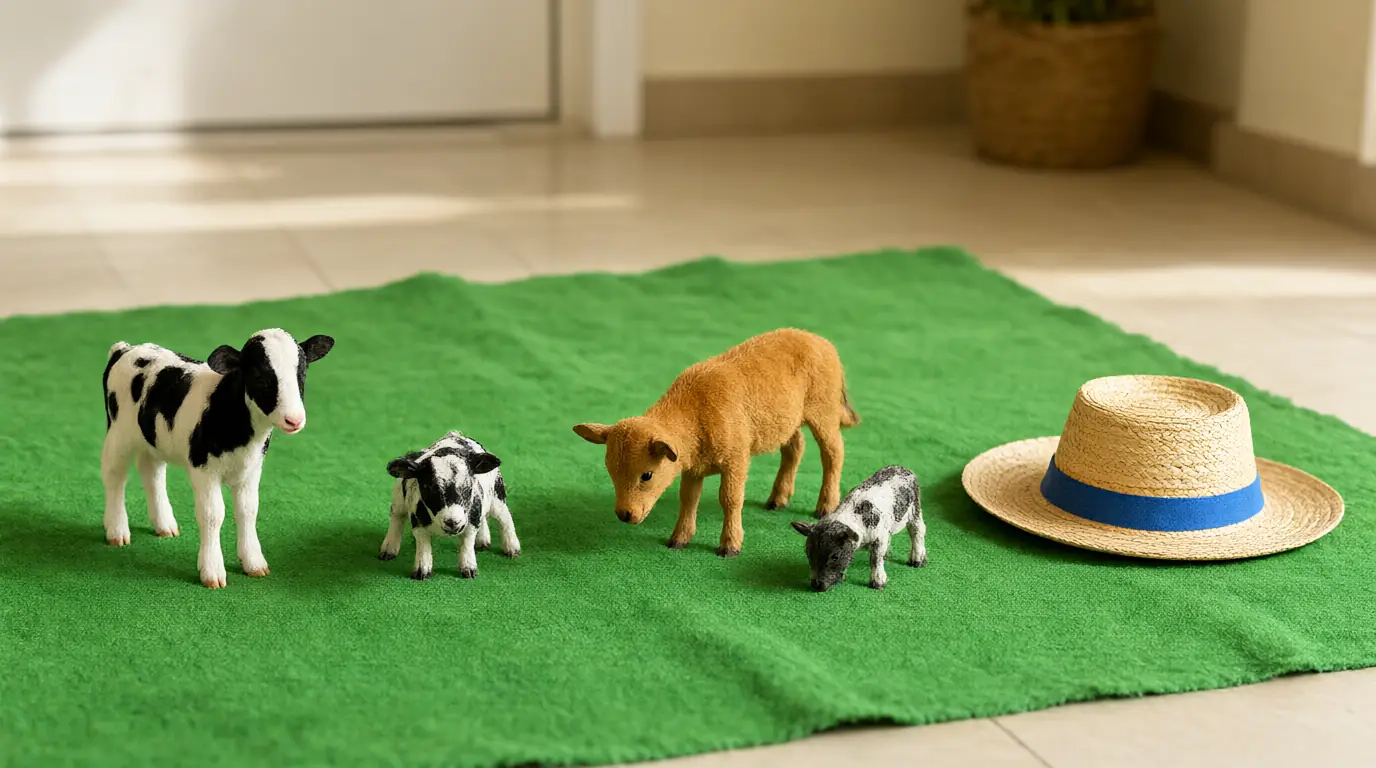
Make it your own: Younger children can make the sound and let you tell the story. Older children can take the role of narrator and invent a problem for the farm.

Make it work for your family
Follow your child's story before adding another job. If they want to keep the cows in the barn all morning, let them. A question about a real animal or a real farming practice is best answered with a book or a short visit to a farm or market, not by asking a toy to explain it.
To extend the play, introduce one new word at a time, such as barn, crate or harvest, and use it in context. Swap roles often so the farmer, the shopper and the animals each get a turn. If a toy is missing, a block or a paper picture can stand in. For something similar with a different theme, try dinosaur play for little explorers or some sorting-based games.

Parents also ask
What farm games suit toddlers?
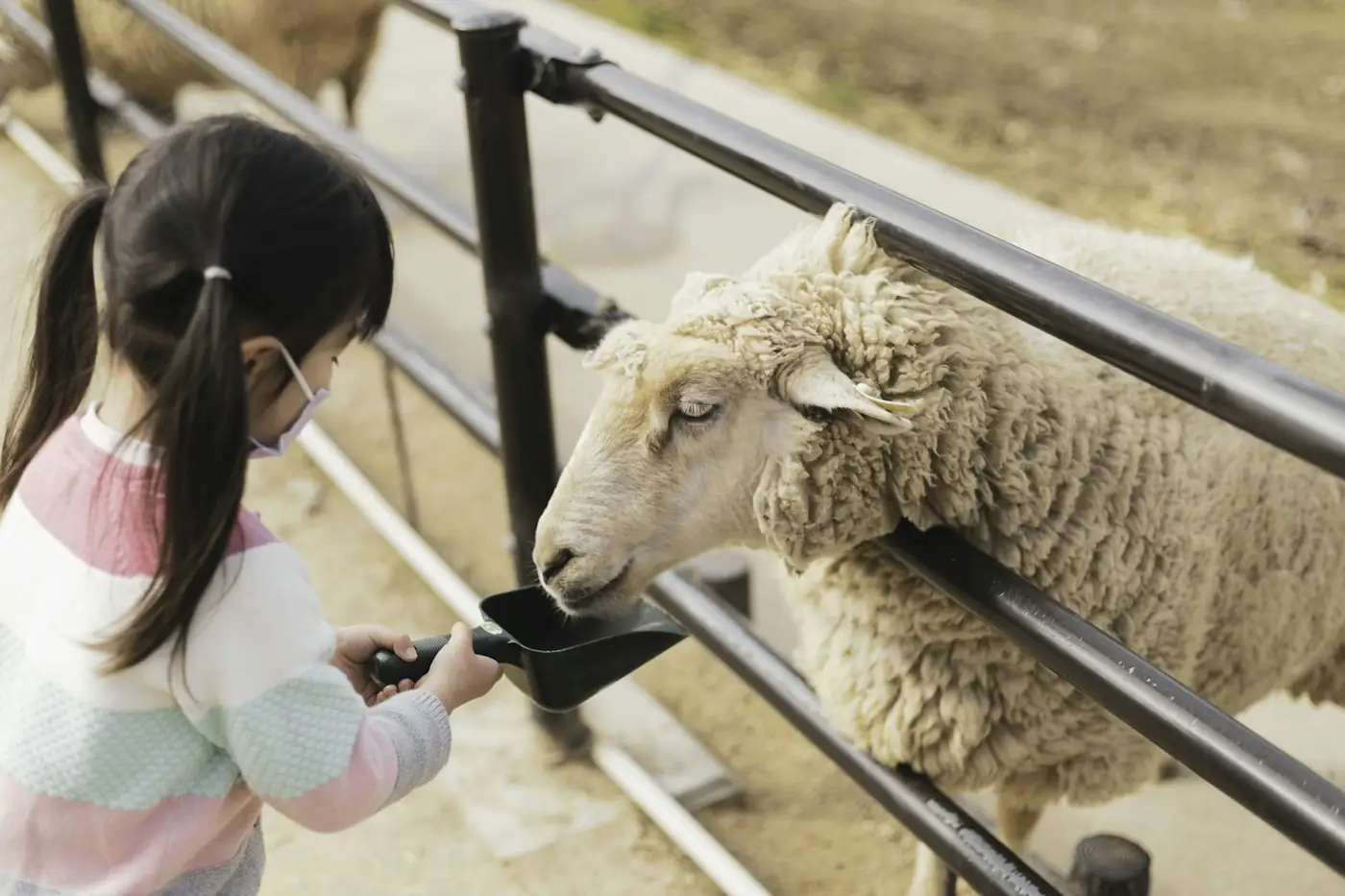
Simple ones with large animal toys work best: matching animal sounds, carrying toys in a basket or pretending to feed animals with large pretend food. Keep sessions short and choose pieces too large to be a choking risk.
How can farm play teach children about food?
Pretend delivery and market games show that food travels from a farm to a shop to a table. Pair them with a visit to a market or a library book about farms so your child can compare their pretend farm with a real one.
Do I need real farm animals or props?
No. Toys, paper pictures and household items are enough. Real farm visits are a nice extra, but they depend on the place and the season, and a pretend farm can be just as rich for a young child.
Choose materials and activities that suit your child, supervise as needed and adapt the ideas to their interests and abilities. About our editorial approach