Weebou Editorial Team
 7 min read
 In this article
A little preparation
Gather 10 to 15 animal pictures or toys with clear shapes: cut them from old magazines, print photographs or use large toy figures that are not small enough to swallow. Spread a blanket on the floor for a play area and keep a book or two of real animal photographs nearby, in case a question needs checking. Do not bring live pets into guessing or chasing games, and keep sessions to 10 to 15 minutes.
Before you start, tell your child that there are two kinds of animal talk: real talk, about what animals do, and pretend talk, about what we imagine. Both are welcome. If your child asks a factual question you cannot answer, write it on a sticky note and look it up together afterwards. For early picture-naming practice, the Weebou matching game is a handy companion to these activities.

Ideas to try together
Picture clue trail
One visible clue at a time helps children look closely at an animal picture and describe it in their own words. A long neck, a striped pattern or a curly tail can all be a starting point. Taking turns to give clues puts the child in charge, and the game works whether or not they can name the animal.
 You’ll need
- 6 to 8 animal picture cards laid face up
- A basket or box to collect matched pictures
- A soft toy as a game helper (optional)
How to do it
- Spread the pictures on the floor where your child can see them all.
- Choose one in secret and give a clue: 'I'm thinking of an animal with a very long neck.'
- Let your child point to a picture they think fits and say why.
- Compare the picture to the clue together, and talk about what matches and what does not.
- Swap roles so your child gives a clue and you guess, sometimes making a wrong guess on purpose.
- Collect the matched pictures in the basket as you finish.
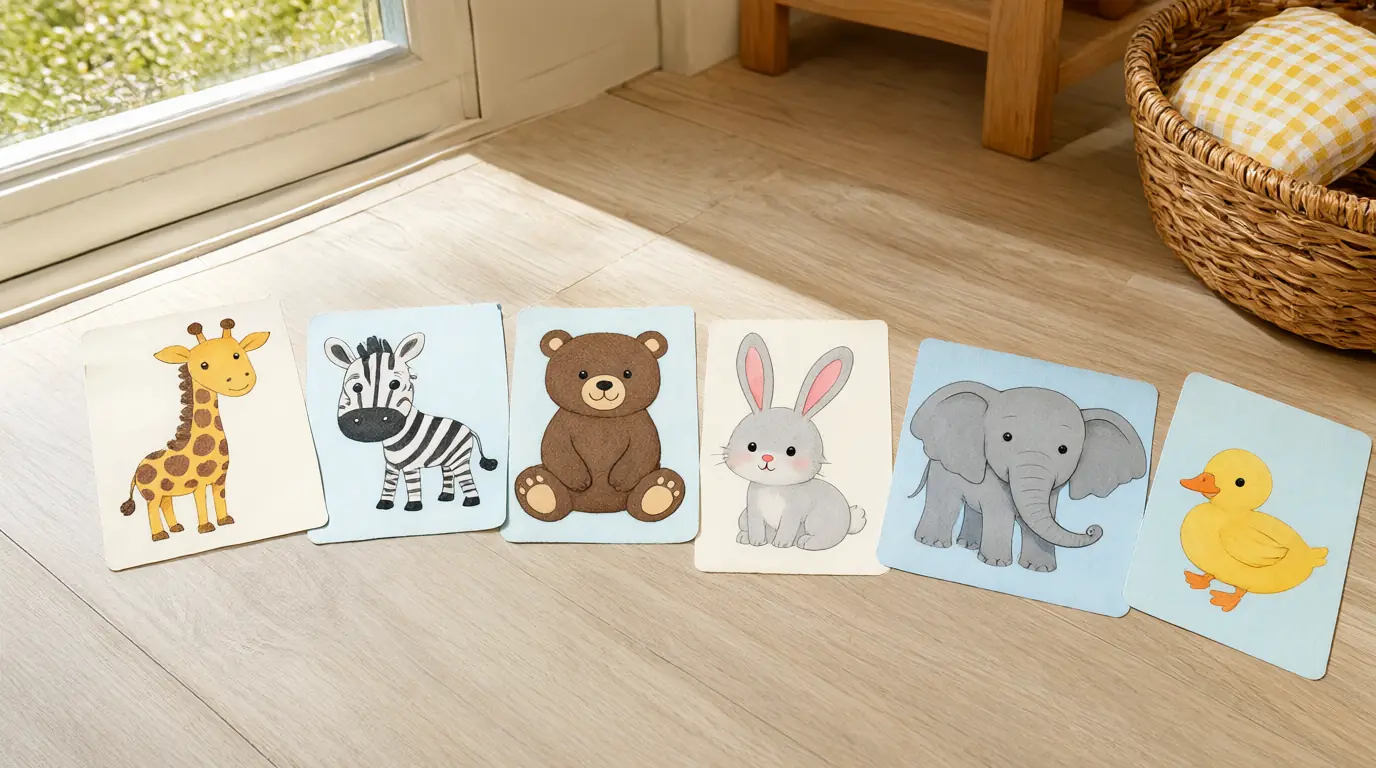
Make it your own: For toddlers, use only three pictures and give one very obvious clue. Older children can give two clues, one about how the animal looks and one about what it does.
Animal sound story
Each animal picture gets a comfortable sound, gesture or word, and together the pictures become a pretend conversation. Children invent dialogue, practise turn-taking and decide how each character speaks. It is entirely pretend, which makes it a good place to play with voices.
You’ll need
- 3 or 4 animal pictures or toys
- A shoebox as a stage
- A small blanket or scarf as a stage curtain (optional)
How to do it
- Choose three animals and place them on the stage.
- Ask your child what sound or movement each animal might make.
- Start a short conversation, such as 'Good morning, rabbit', and let your child reply in the animal's voice.
- Take turns adding a word or gesture to the story.
- Introduce a small problem, such as a missing carrot, and see how the animals solve it.
- End with a goodnight sound for each animal.
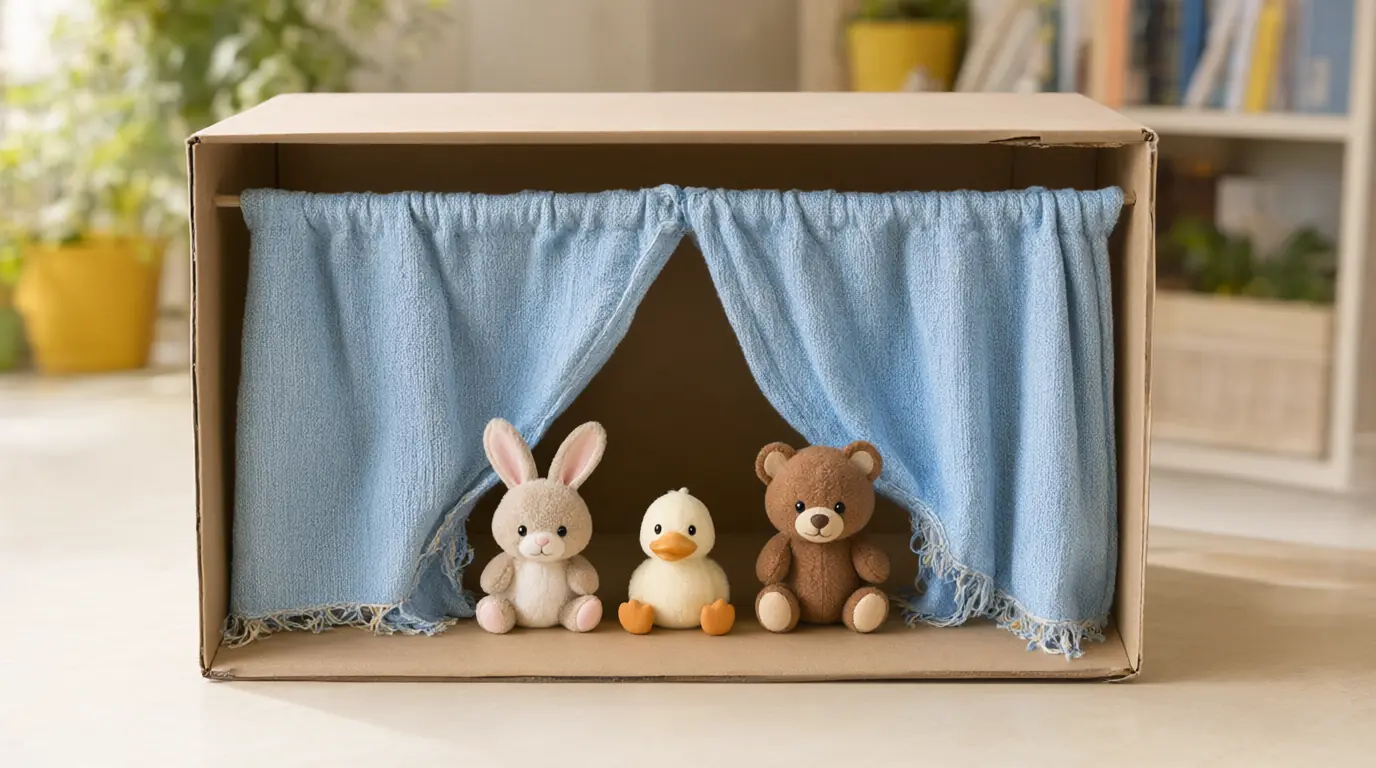
Make it your own: Younger children can make one sound per animal and use gestures instead of words. Older children can invent names for the animals and plan a short scene with a beginning and an end.
Block shelter design
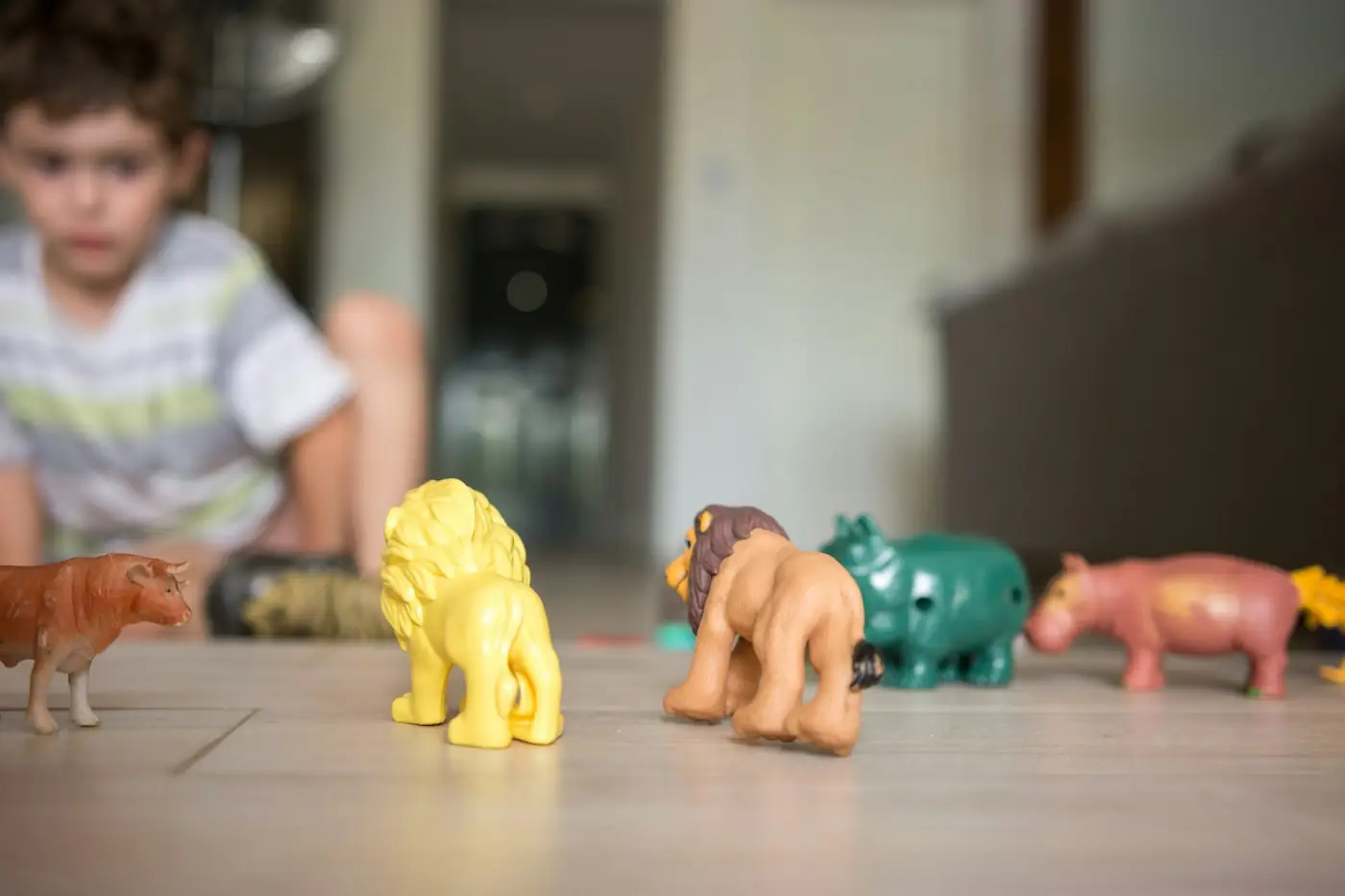
Building a shelter for a toy animal asks children to think about size and fit. Does the toy go through the door? Is the roof high enough? Changing the opening when something does not fit is a first lesson in design. Keep the focus on toys, not real animals, whose homes have needs we should leave to experts.
You’ll need
- 1 large toy animal
- 10 to 15 large building blocks or small boxes
- A scarf or small blanket as a roof
- Paper and a crayon for a name sign
How to do it
- Introduce the toy and say it needs a place to rest.
- Let your child decide how big the shelter should be and start stacking blocks.
- Test whether the toy fits through the door and move a block if it does not.
- Add a roof with the scarf and check the toy still fits inside.
- Draw a name sign for the shelter on paper.
- Ask what the animal would put inside the shelter and add a pretend bed or a bowl.
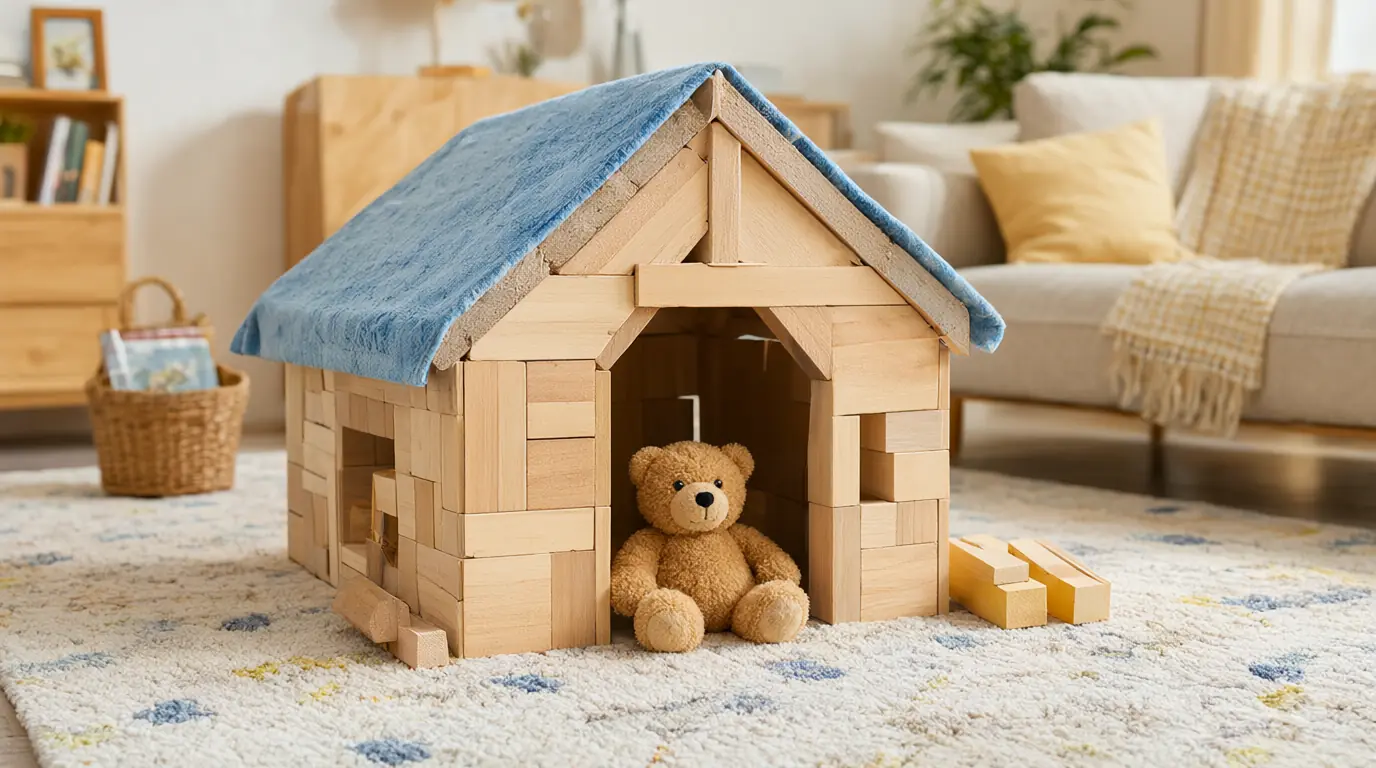
Make it your own: Younger children can build a low wall around a toy and simply place it inside. Older children can design a shelter with two rooms or plan one for a bigger or smaller animal.
Sort what you see
Sorting animal pictures by a feature that your child chooses builds early classification skills. The rule can be anything visible: has wings in the picture, has four legs, is brown. A second sort with the same pictures shows that one set can be grouped in many ways, and that there is more than one right answer.
You’ll need
- 10 to 12 animal pictures
- 2 large paper plates or hoops as sorting areas
- A pencil and sticky notes to label the groups with drawn symbols
How to do it
- Lay all the pictures out and look through them together.
- Ask your child to find something that is the same about two of the animals.
- Place those two on a plate and draw a simple symbol on a sticky note for the shared feature.
- Sort the rest of the pictures onto the plates according to the rule.
- Check that every picture belongs, and move any that do not fit.
- Mix them up and try a new rule, such as colour or size.
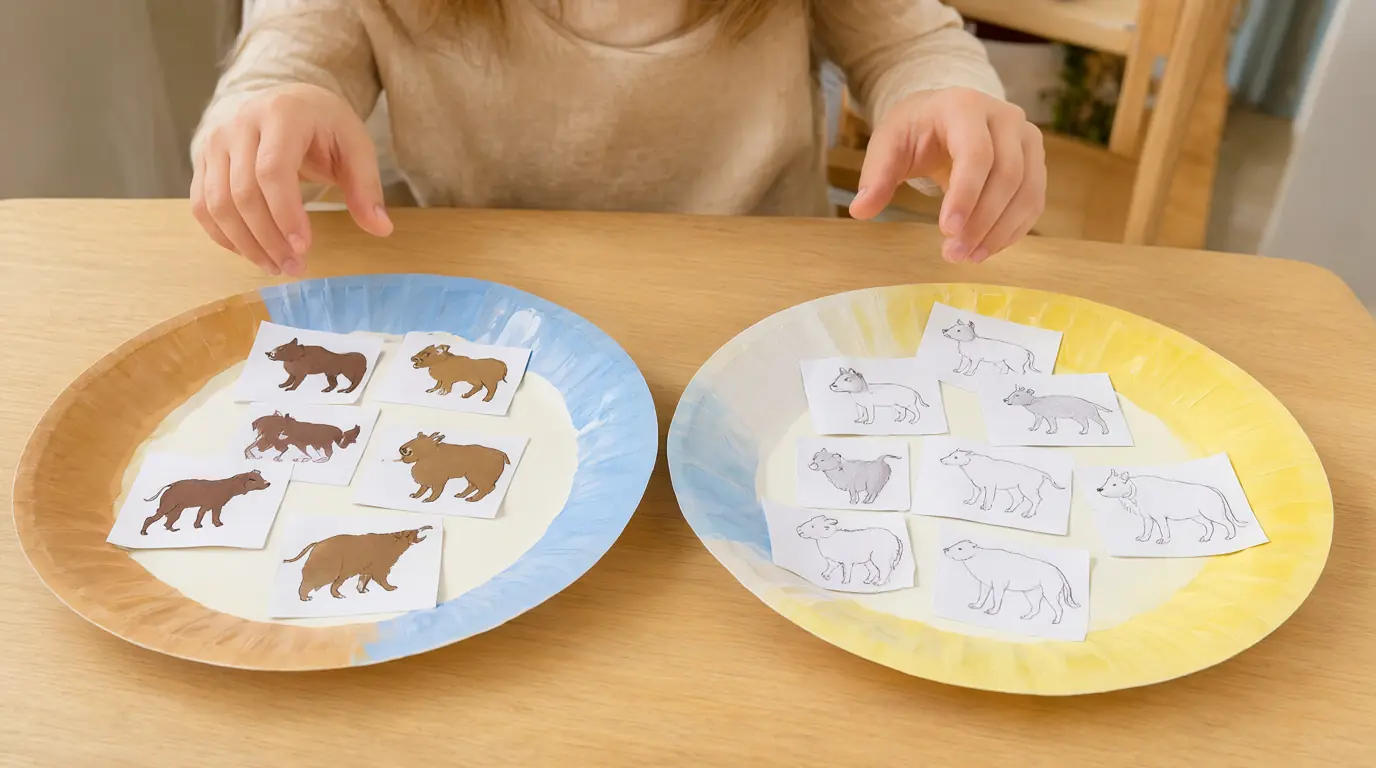
Make it your own: Younger children can sort into one plate and a pile that does not match. Older children can use three groups or try to guess the rule from a finished sort.

Make it work for your family
Accept a child's invented animal character, such as a purple elephant that can fly, and label it as story. When real animals come up, look at reliable photographs together rather than relying on a toy, whose colours and proportions are often not accurate. If your child is frightened of an animal, do not push: choose a different picture and let them decide.
Once children are curious, take the interest outdoors with a scavenger hunt for birds and insects, or continue indoors with farm-themed games and dinosaur play.

Parents also ask
What are good animal games for toddlers?
Simple matching and sound games suit toddlers best: pointing to the cow picture, making an animal sound or carrying a toy animal to its block shelter. Use large pictures, keep sessions short and let the child lead.
How do I teach kids about real animals through play?
Keep story and fact separate. Let children invent freely, then look at photographs or a book together to check real details. Answer questions honestly, and when you do not know, say so and look it up together.
Are animal toys accurate enough for learning?
Not always. Toy animals are often simplified or brightly coloured. Use them for pretend play and counting, and use photographs or books when you want to look at real colours and shapes.
Choose materials and activities that suit your child, supervise as needed and adapt the ideas to their interests and abilities. About our editorial approach