Weebou Editorial Team
 In this article
A little preparation
Choose a room with enough floor space to move between chairs and a table clear of hot dishes, and keep the games away from the kitchen route where people carry pans. Ten to fifteen minutes is usually enough for one game before attention drifts, so plan a short round rather than a tournament. If you are playing before the meal, put food well out of reach and clear the floor of bags and cables first; after the meal, a low coffee table works better than a crowded dining table. If you are expecting a wide range of ages, it helps to read about group games with different ways to join before you choose.
Explain one game at a time, using the actual materials rather than a long description, and play a practice turn so everyone sees how it works. Offer a watching role from the start: someone can hold the cards, keep time or hand out crayons without taking a turn. Check that a child who needs help can sit beside an adult, and let anyone leave the circle without comment. Finish while it is still fun, then ask the group which game they would play again.

Ideas to try together
Family picture clues
Drawing something familiar is easier than drawing something clever, so nobody needs artistic skill to take part. Because the answer is already agreed, the drawer can concentrate on one shape at a time, and guessers practise describing what they see rather than shouting the first thing that comes to mind. It also gives a shy child a clear, short turn with a job attached.
 You’ll need
- Six blank cards or paper squares
- Thick crayons
- A small basket
- A few spare sheets for drawing
How to do it
- Before the meal, draw four or five familiar things on separate cards together: a leaf, a spoon, a pumpkin, a chair, a slice of pie.
- Keep the outlines simple so they can be recognised quickly, and put the finished cards face down in the basket.
- The first player takes a card and redraws it on a fresh sheet, or describes it aloud if they would rather not draw.
- Everyone else guesses out loud; there is no scoring and no limit on guesses.
- If the table is stuck, the drawer adds one spoken clue, such as where the object is usually found.
- The card goes to the person who guessed, and they take the next turn.
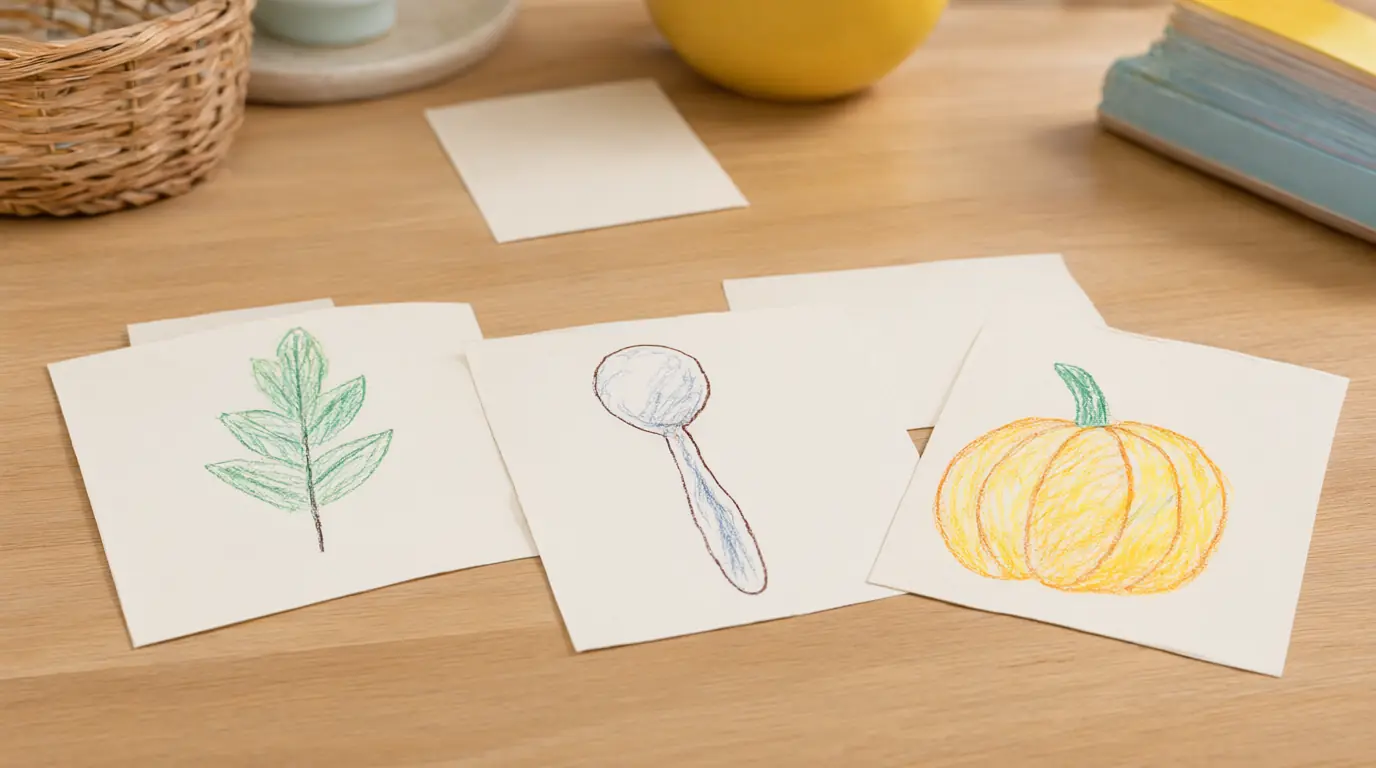
Make it your own: Younger children can describe the card instead of drawing it, with an adult drawing what they say. Older children can draw with their eyes closed or add a second object to the same card, so guessers must name both.
A shared story plate
A single plate collects the story as it grows, which means the group can see how far they have come. Children who find a blank page intimidating only need to add one small symbol, and listeners count as players. Reading the pictures back at the end turns the plate into a record of the afternoon that can be kept or photographed.
You’ll need
- One plain paper plate
- Crayons or thick felt tips
- A cleared table space
How to do it
- Put the plate and a few crayons in the middle of the table.
- Agree on a starting line together, such as: on Thanksgiving morning, the doorbell rang.
- The first player draws a small picture or symbol near the edge of the plate and says one sentence that includes it.
- Pass the plate clockwise, and each willing person adds a drawing and a sentence that builds on what is already there.
- Anyone who would rather not invent can point to a drawing already on the plate and say that it happened again.
- When the plate returns to the first player, read the whole story back from the pictures.
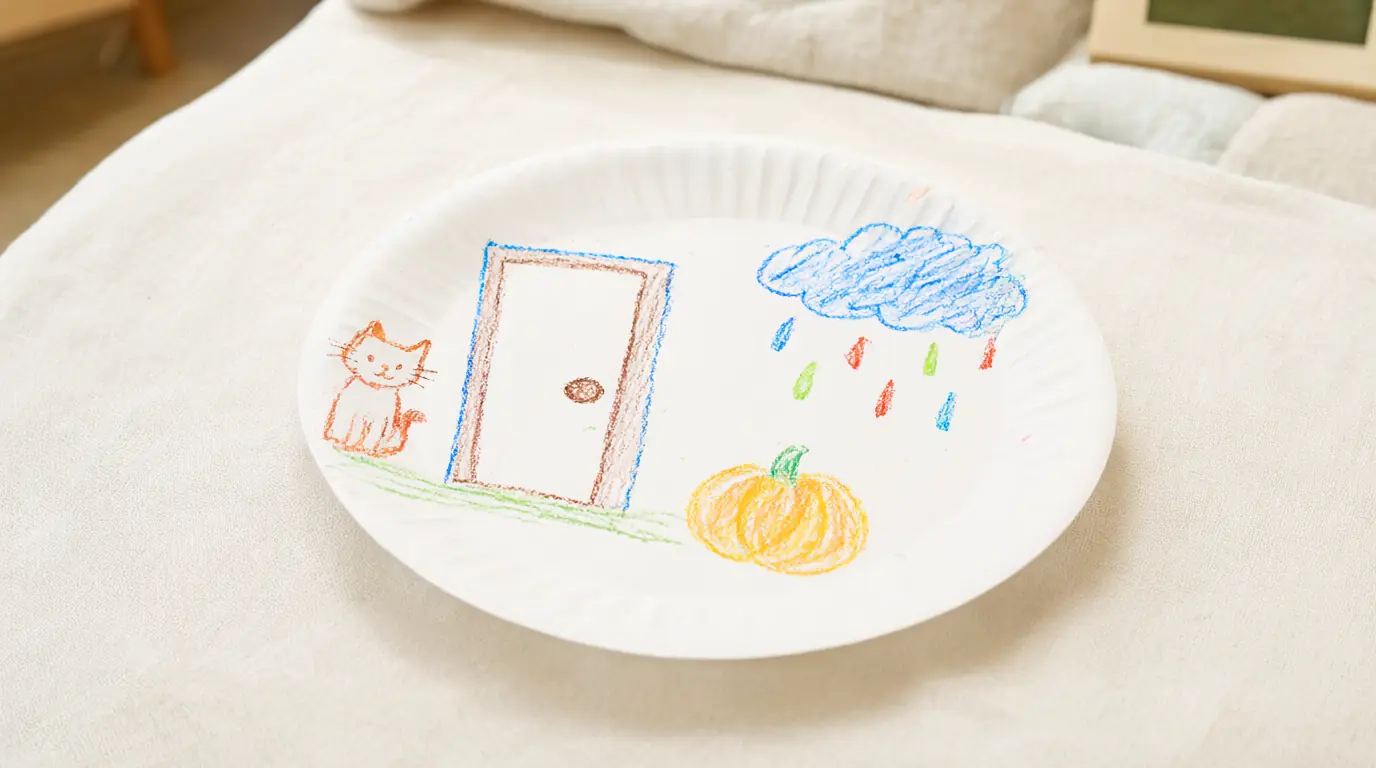
Make it your own: Toddlers can add one scribble and let an adult weave it into the story. Older children can plan a twist for the last turn, or ask a would-you-rather question between sentences to keep the table talking.
Kindness charades
Acting out a helpful action gives children a way to think about kindness with their whole body, and guessing keeps everyone watching closely. The actions are ordinary rather than tricky, so younger children can guess and older ones can add detail. The second half, naming when that action would be welcome, turns a mime into a real conversation about the people at the table.
You’ll need
- A short list of helpful actions in your head
- Optional picture cards showing the actions
- A clear space beside the table
How to do it
- Agree on a small set of helpful actions: opening a door, carrying a plate, offering a chair, sharing a blanket, clearing a cup.
- The first player chooses one action and mimes it silently, without pointing at real people or objects in the room.
- Everyone else guesses aloud, and the mime can be repeated as often as needed.
- When the action is guessed, ask the group when it would be most welcome at home or at school.
- The guesser chooses the next action, or passes the turn to someone who has been watching.
- Stop after three or four actions while people are still enjoying it.
Make it your own: Younger children can act with an adult and copy the action. Older children can mime a sequence of two or three linked actions, then ask the group to put them in order and say which one they would notice most at home.
Memory tray for the whole team
A team memory tray removes the pressure of individual scoring: the group either remembers together or asks for another look. Fewer objects than you think is plenty, and the shared goal means a child who spots only one item still contributes. It also fills the ten minutes before food arrives without anyone running through the room.
You’ll need
- A tray or flat plate
- Five to eight safe household objects
- A tea towel or cloth large enough to cover the tray
How to do it
- Choose objects everyone can name: a spoon, a pine cone, a wooden block, a folded napkin, an orange.
- Lay them on the tray in full view and give the group thirty seconds to look.
- Cover the tray with the cloth and ask the team to name as many objects as they can together.
- Let anyone ask for the cloth to be lifted for another five seconds, as many times as the group agrees.
- When the list feels complete, reveal the tray and check it together rather than marking anyone wrong.
- Swap one object for something new and play a second, shorter round if interest holds.
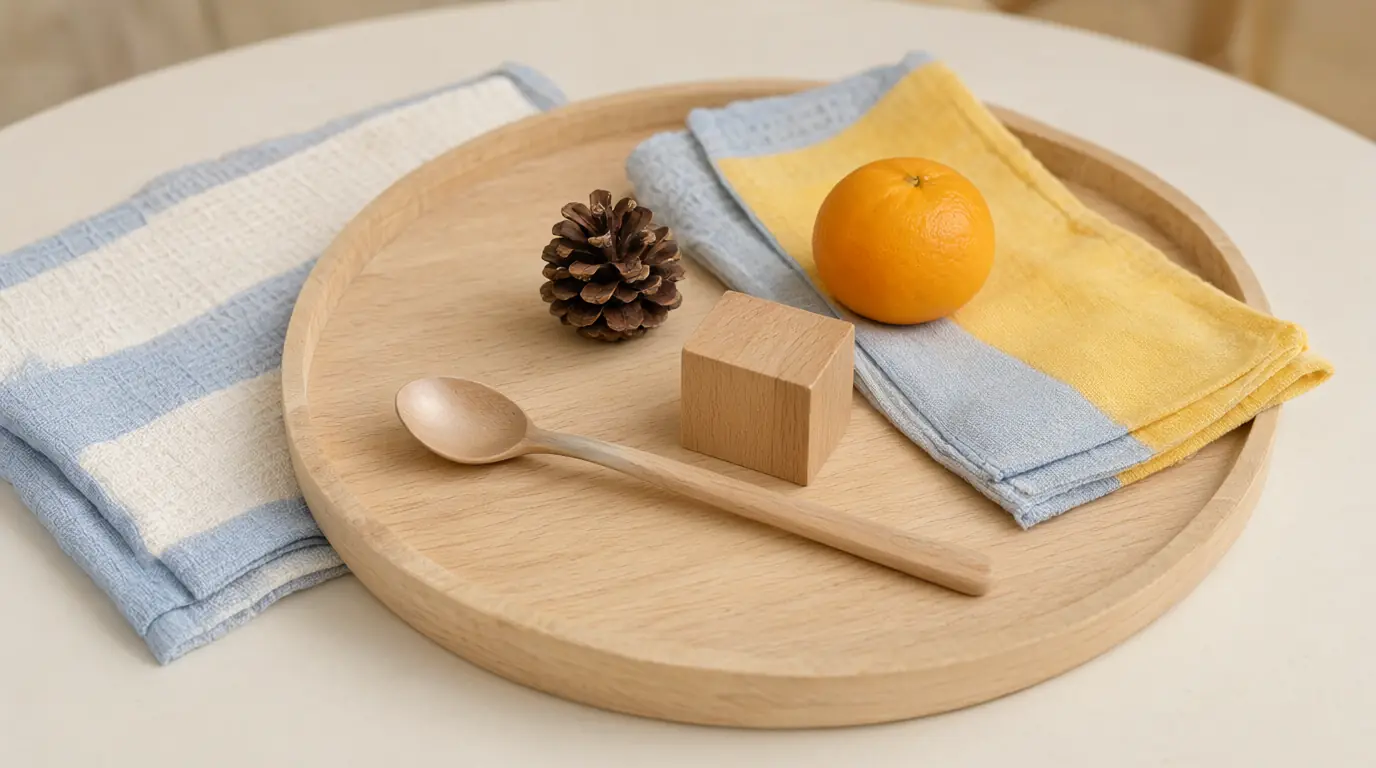
Make it your own: Use three objects for children under four and eight for older ones. To make it harder, ask for one detail, such as colour, rather than the whole list. Children who dislike the pressure of remembering can be the ones who lift the cloth.
A thankful cube to roll
A cube with pictures instead of words works for pre-readers and grandparents alike, and the symbol gives a hesitant speaker something concrete to start from. One short sentence is the whole commitment, and passing is always allowed. Rolling the box also gives restless hands something to do while other people talk.
You’ll need
- A small empty cardboard box
- Plain paper and tape
- Thick felt tip and crayons
How to do it
- Wrap the empty box in plain paper and tape the edges so it rolls and survives the table.
- Draw one simple symbol on each face together: a plate, a person, a tree, a star, a hand, a house.
- Sit in a circle and roll the box gently so it lands in the middle of the table rather than at anyone.
- Whoever rolled names one thing connected to the symbol that they are glad about, in one short sentence.
- Pass the box to the next person, and let anyone say pass without giving a reason.
- Play one full round, then stop or continue only if people ask for more.
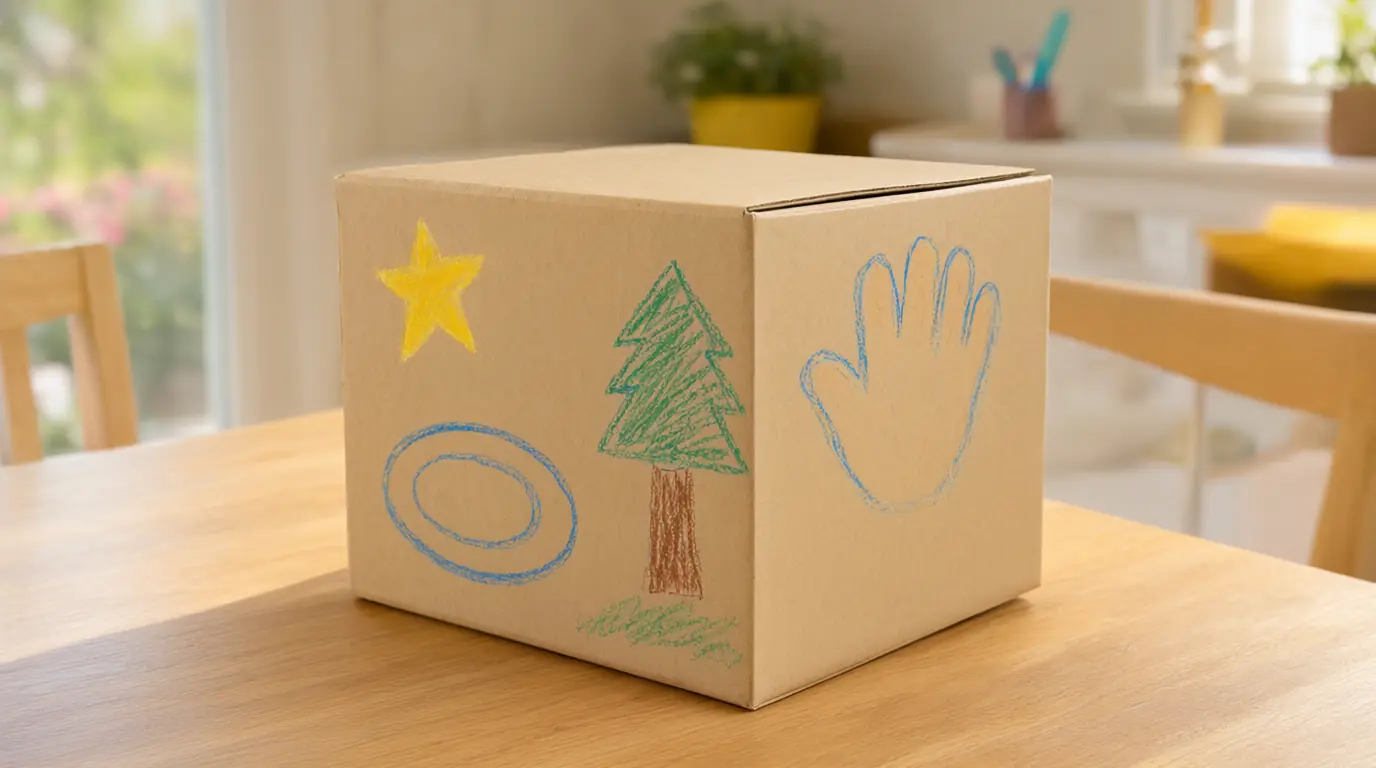
Make it your own: For younger children, roll the box and let them point to something on the table that matches the picture. Older ones can give a reason for their answer, or roll twice and connect the two symbols in one sentence.

Make it work for your family
If a game stalls, shorten it rather than explaining again: fewer cards, three objects on the tray, or one round only. A child who freezes when all eyes are on them often joins happily as the person who holds the basket or turns the plate. An older child can draw the picture clues in advance, which keeps them involved without making them perform. If two players want the same turn, let them take it together. Stop as soon as interest drops and leave the materials out; children often come back later with their own rules.
Watch for the moment a game turns into a race, and name the shift out loud: we are helping each other guess, not winning. Keep paper and crayons in one basket so the table clears quickly when food arrives. For the wait before dinner, try these Thanksgiving activities for children or some gratitude rituals families can share.

Parents also ask
What are good Thanksgiving games for a mixed-age family?
Games with a shared goal and a quiet role work best: picture clues, a memory tray, a story plate or a thankful cube. They need no running, no reading and no scoring, so a three-year-old and a grandparent can take part in the same round. Keep each round to ten or fifteen minutes.
How do I include a shy child in Thanksgiving games?
Give them a job rather than a turn: holding the card basket, turning the plate, or lifting the cloth off the tray. Say clearly that watching counts and that they can join later. Sitting beside a familiar adult often helps, and a short first turn of one sentence or one guess is easier than leading a whole round.
Do you need prizes for Thanksgiving family games?
No. Prizes tend to turn a shared game into a competition, which makes it harder for younger or slower players to stay involved. A round of applause, choosing the next game or keeping the story plate is usually enough. If you want a reward, make it something the group shares, such as the first slice of pie.
Sources & further reading
Explore these primary sources for further context on this topic.
Choose materials and activities that suit your child, supervise as needed and adapt the ideas to their interests and abilities. About our editorial approach