Weebou Editorial Team
 In this article
A little preparation
Lay the stations in a loop rather than a single room, so children move in one direction and nobody queues behind a throwing area. Each sign should show the job as a picture: a beanbag beside a basket is enough for a child who cannot read. Keep the throwing line two steps back from the target, and stand the target against a wall or hedge so a miss does not travel far. Set out three stations for a small group, and all five only if an adult can stay near the busy ones. Twenty to thirty minutes is usually plenty.
Choose beanbags and play fruit that are soft, age-rated and too large to swallow, and keep anything smaller than a choke-test tube away from children who still mouth objects. Check baskets for sharp rims and wire ends, and tape down loose tablecloths or cables that could trip a running child. Wind is the quiet enemy outdoors, so weight the signs with stones or filled bottles. On wet grass, move throwing onto a paved path and swap running for walking. An adult stays at every station involving throwing or lifting. For more ways to plan for a mixed group, see these group games with roles for everyone.

Ideas to try together
Harvest relay with three ways to carry
Carrying something and putting it down is satisfying work for a two-year-old and still interesting for a six-year-old if the route changes. Because the job is simply move and place, no child has to understand a rule before joining. Offer three carrying styles at the same station — in two hands, tucked under one arm, or balanced in a small basket — and let each child pick. Nobody is timed unless they ask, and the counting happens at the end, together.
 You’ll need
- 6 large soft beanbags or play apples
- 4 laundry baskets
- Masking tape for a start line
- Two cones or pairs of shoes as markers
How to do it
- Put an empty basket at each end of the route, about four paces apart for younger children and eight for older ones.
- Mark a start line with tape and show the three carrying styles once, slowly.
- Invite a child to choose a beanbag, carry it to the far basket and come back for another.
- Ask children to pass each other on the outside of the route so the tape line stays clear.
- Count the beanbags in the far basket together at the end rather than counting each child's total.
- Offer a second round where the beanbag travels on a shoe or a tray for children who want a challenge.
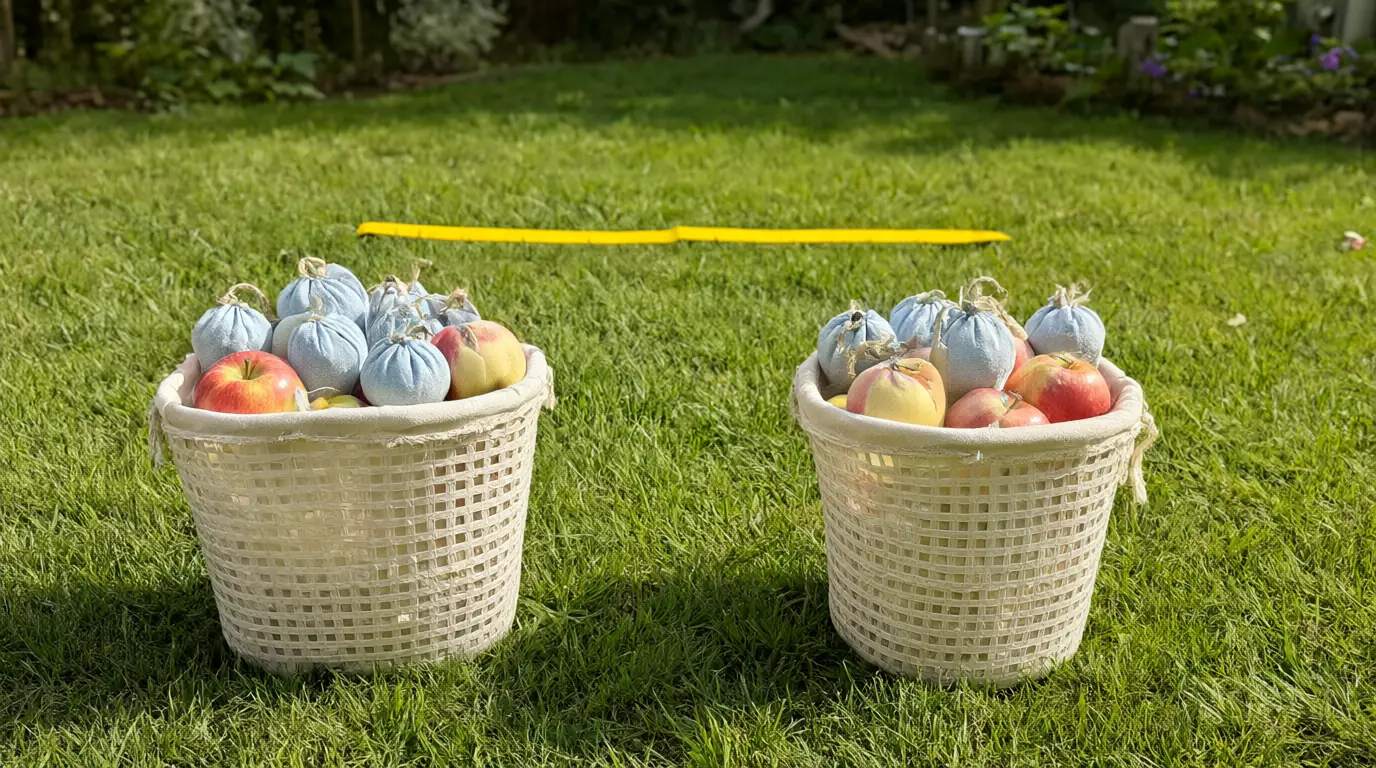
Make it your own: Two-year-olds can carry one beanbag across a single pace and drop it in. Older children can zigzag around markers or carry two at once. A child who uses a wheelchair or walker can push a basket along a smooth path, keeping the same job of moving and delivering.
Pumpkin face pairs, face up first
Matching is a game a three-year-old can win and a six-year-old can still enjoy once the cards are turned over. Drawing the pumpkins yourself takes ten minutes and lets you choose expressions worth talking about — a squint, a wide grin, a wobbly mouth. Because the pieces are big and flat, small hands can move them without help and nothing rolls off the table.
You’ll need
- 10 paper plates or card circles
- Orange and black crayons
- A shallow tray to hold the pairs
- A cloth to cover the cards for the memory version
How to do it
- Draw five pumpkin faces in pairs so each expression appears twice, keeping the shapes simple and bold.
- Lay all ten face up on a tray or a low table.
- Invite your child to find two pumpkins that look the same and put them side by side.
- Ask what each face is doing — smiling, sleeping, surprised — as the pair is found.
- When every pair is matched, turn the cards face down and try again two at a time.
- Let older children keep the pairs they find; younger children can collect all the matches into one pile.
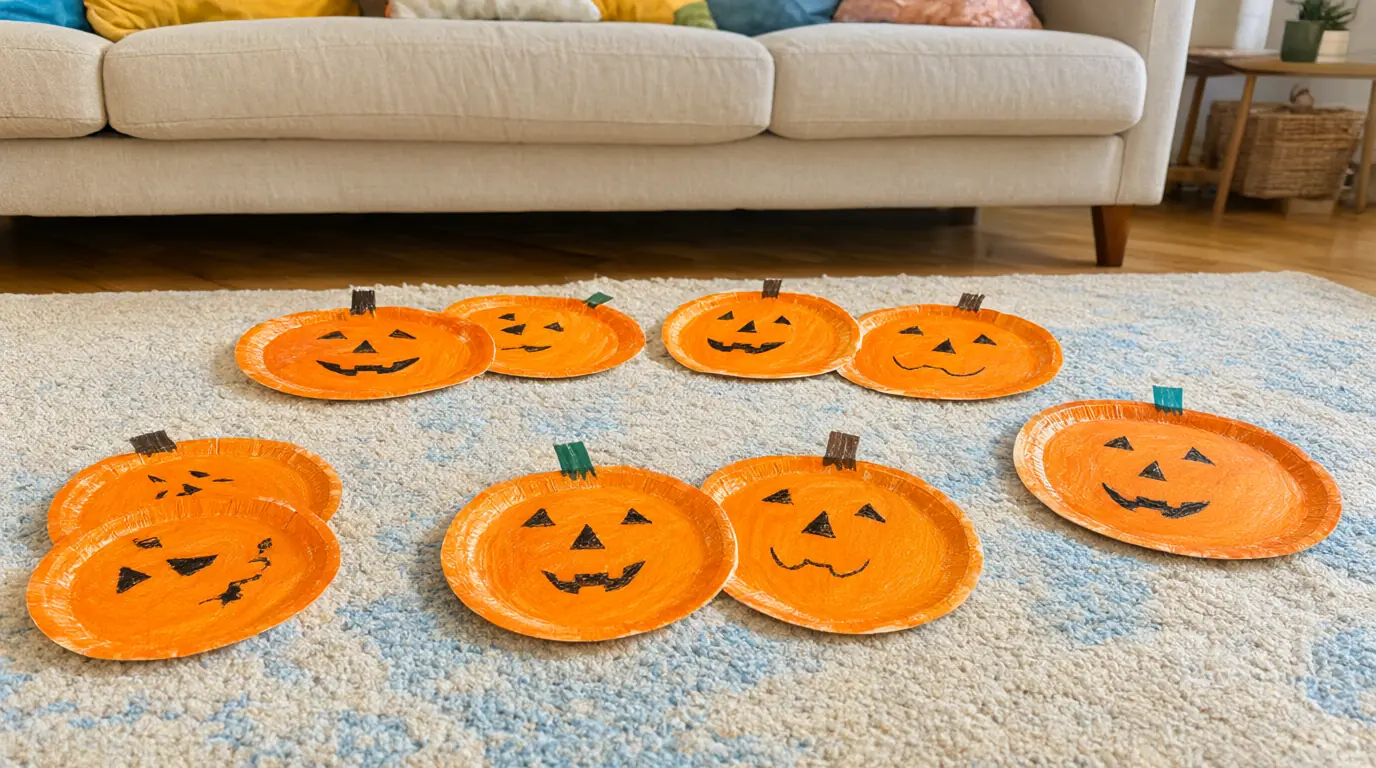
Make it your own: Three-year-olds do best with six cards face up and pairs that differ clearly. Five- and six-year-olds can handle ten face down and take turns. If matching frustrates a child, switch to sorting by expression instead — all the surprised faces gathered together.
Three throwing lines, three basket sizes
A target game only works at a festival if the youngest guest can succeed on the first go. Three taped lines and baskets of different sizes let each child choose their own difficulty, which removes the moment where an adult decides who is too small. Counting attempts out loud keeps the focus on trying rather than on score, and the beanbags are soft enough that a wild throw costs nothing.
You’ll need
- Three wide baskets or buckets in different sizes
- 6 soft beanbags
- Masking tape in three colours
- A wall or hedge behind the target
How to do it
- Stand the largest basket against a wall or hedge and the smallest one beside it.
- Tape three lines on the ground at different distances, with the nearest line one step from the basket.
- Show that anyone can throw from any line and that a child may move forward after two tries.
- Give each child three beanbags and count them into the basket together.
- Cheer a throw that lands close as loudly as one that goes in.
- Reset the beanbags after each child so the next one starts with a full set.
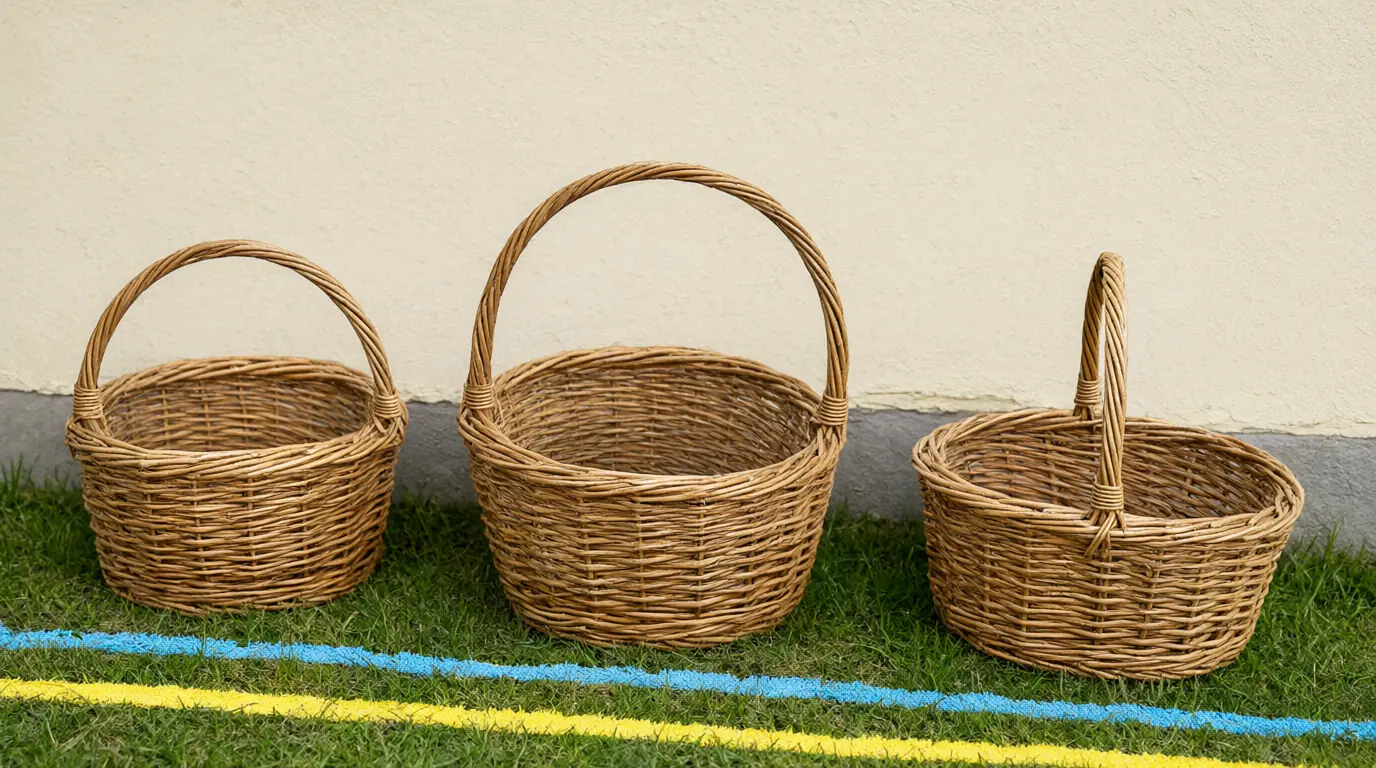
Make it your own: Put a large cushion at the nearest line so a toddler can stand and drop the beanbag in. Older children can throw over a low string or aim at a hoop laid flat on the ground. Seated children can roll the beanbag along the tape instead of throwing.
A welcome sign everyone adds to
Some children need a station where nothing is thrown, timed or won. A shared sign gives them a real job with a visible result: by the end of the afternoon the festival has a poster that every guest helped make. It also slows the pace between active games, which helps children who find noise and crowds tiring, and gives shy guests an easy way to stand near other children.
You’ll need
- A large sheet of cardboard
- Thick markers or crayons
- A glue stick and paper scraps
- Masking tape
- A shallow box for offcuts
How to do it
- Write a simple title or ask an older child to write it, leaving most of the cardboard empty.
- Tape the cardboard to a low wall or lay it flat on a table at child height.
- Invite each guest to add one drawing, a handprint or their name.
- Offer paper scraps and leaves for children who would rather glue than draw.
- Keep a shallow box for offcuts so the table stays usable.
- Hang the finished sign where guests leave, so everyone sees their part of it.
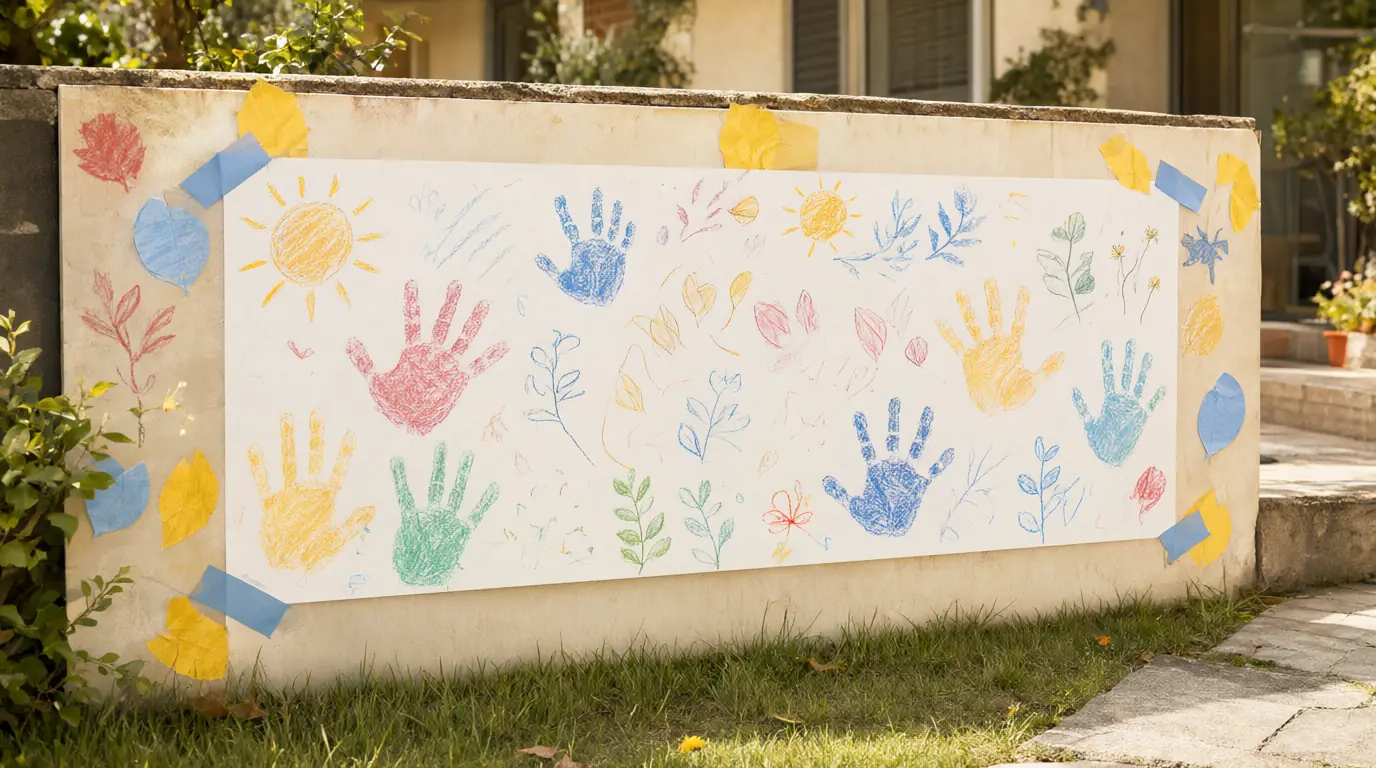
Make it your own: Toddlers can add a single sticker or a scribble with a chunky crayon. Older children can draw a map of the stations or write the welcome message. If drawing has no appeal, a basket of dry leaves to glue down gives the same shared result with less demand.
A leaf and seed sorting table
A sorting station is the quiet counterweight to a relay. Children pick up leaves, seed cases and pine cones and arrange them into shallow bowls by colour, size or shape, and the same collection can be re-sorted a different way ten minutes later. The fine handwork settles a child who has been running, and it gives adults a natural place to talk with a guest who is still finding their feet.
You’ll need
- A tray of dry leaves, seed cases and pine cones
- 4 shallow bowls or paper plates
- A magnifying glass
- A large spoon or blunt tweezers
How to do it
- Collect a few handfuls of dry leaves, seed cases and pine cones beforehand, avoiding anything damp, spiky or small enough to swallow.
- Set them on a tray with four empty bowls beside it.
- Ask your child to choose how to sort: by colour, by shape or by size.
- Let them move the leaves with fingers, a spoon or blunt tweezers.
- When the bowls are full, tip everything back and choose a different way to sort.
- Offer the magnifying glass for looking at veins, edges and seed shapes.
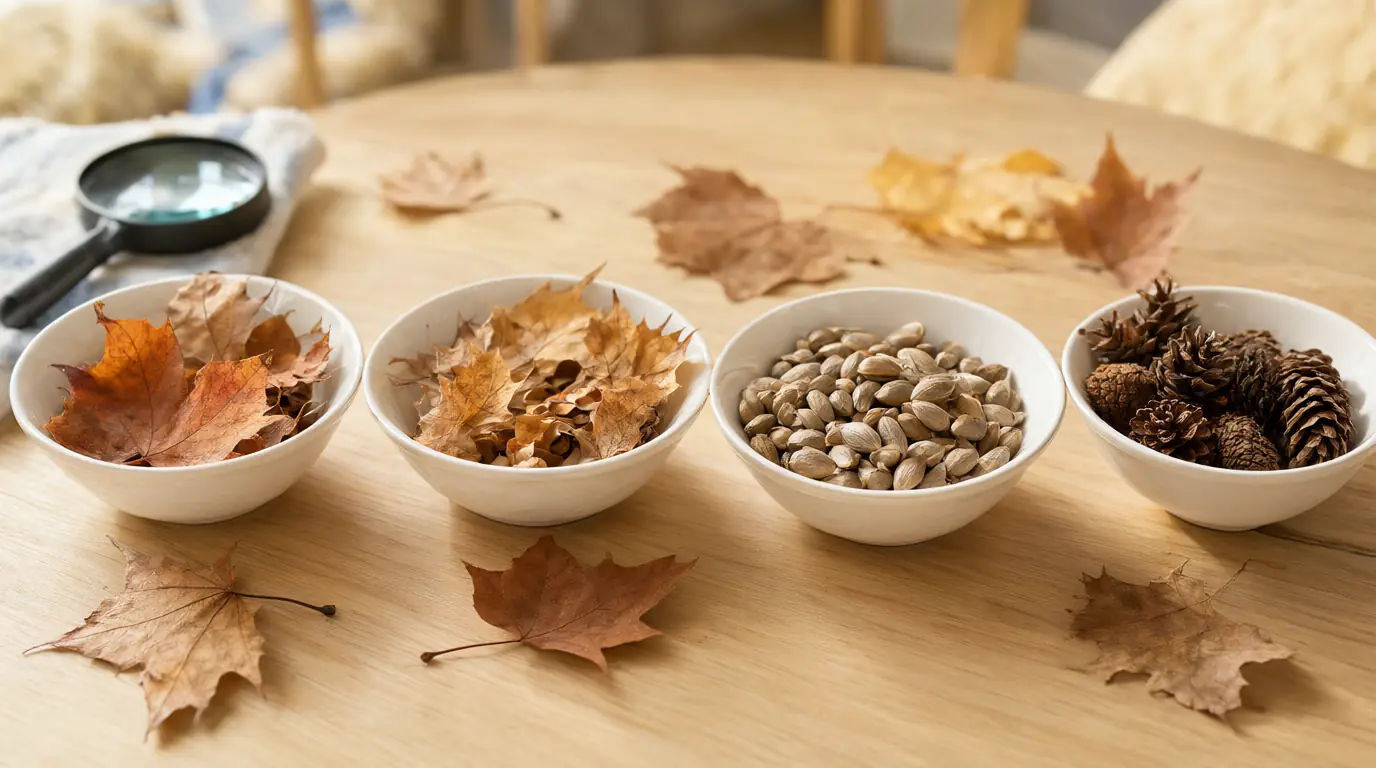
Make it your own: Two-year-olds can move big leaves into one bowl and name the colours. Four-year-olds can sort three ways and explain their rule. Older children can keep a simple tally of each kind, which turns the station into a first picture graph.

Make it work for your family
Expect children to skip stations, do one four times and ignore the rest, and plan for that rather than against it. A station nobody visits is not a failure; leave it out next year. If older children lose interest in the relay, hand them a job — holding the tape line, resetting beanbags, drawing arrows on the signs — which keeps them at the festival without making the game harder for smaller guests. If a child is upset about a missed throw, name the effort rather than the result and offer one more go from the nearest line.
Prizes are optional and often cause more trouble than they solve. A stamp or sticker per station, collected on a card, gives the same sense of progress without ranking anyone. Keep water and a shaded sitting spot near the quiet station, and finish while children are still enjoying themselves rather than when the last guest is tired. For more station ideas that work with mixed ages, try these carnival games without elimination or a set of friendly Halloween activities.

Parents also ask
What games work for a fall festival with toddlers and older children together?
Carrying games, target tosses and sorting tables adapt most easily, because the job stays the same while the distance, size or number of items changes. Set out three or four stations rather than ten, put a younger version at every one, and let each child choose which version to try.
How many festival stations do I need for a small group?
For eight to twelve children, three stations are usually enough, with one adult at the throwing game and the others within sight. More stations mean more to supervise and reset. For a larger group, run the same three in a loop and add an adult rather than another game.
What can children collect at a fall festival instead of prizes?
A stamp or sticker on a card, a turn at choosing the next game, or a shared snack at the end all work better than individual prizes. If you want something to take home, offer a drawn badge or a leaf from the sorting table. Everyone should be able to earn the same thing.
Choose materials and activities that suit your child, supervise as needed and adapt the ideas to their interests and abilities. About our editorial approach