Weebou Editorial Team
 9 min read
 In this article
A little preparation
Gather a few clean items, such as a cardboard tube, a yoghurt pot with a rinsed lid, a paper bag and an empty cereal box. Avoid anything sharp, such as tins with rough edges, glass or items that held chemicals, and let an adult do any cutting. Before you begin, look up your council’s current recycling and waste guidance, because the rules differ from place to place and can change.
Choose a calm moment and a table or floor space where paper and crayons are at hand. Start by asking your child what they already do to look after something, and listen without correcting. Frame each activity as something your household can do, not something a child must solve: an adult carries heavy bags, handles waste and makes decisions about energy and shopping. Avoid frightening predictions, and when your child asks a hard question, give a short true answer and say that people everywhere are working on it. Allow about fifteen to thirty minutes per idea.

Ideas to try together
Give a package a second job
Choosing a new use for a clean container is a real design decision: what does it need to hold, and what does it need to look like? Children think about shape, size and purpose before they decorate. Using the finished item at home shows that reuse can be practical rather than just a craft.
 You’ll need
- 1 clean sturdy package, such as a cereal box or a cardboard tube
- Paper, crayons and child-safe glue
- Child-safe scissors for older children (adult cuts thick card)
- A few items it could hold, such as pencils or hair clips
How to do it
- Look at the package together and ask what it did before.
- Brainstorm three new jobs for it, such as a pencil pot, a mail holder or a toy garage.
- Choose one and sketch a quick plan showing how it will look.
- An adult trims the box if needed, then your child decorates it.
- Fill it with the items and put it where it will be used.
- A week later, check whether it is doing its job and what could be improved.
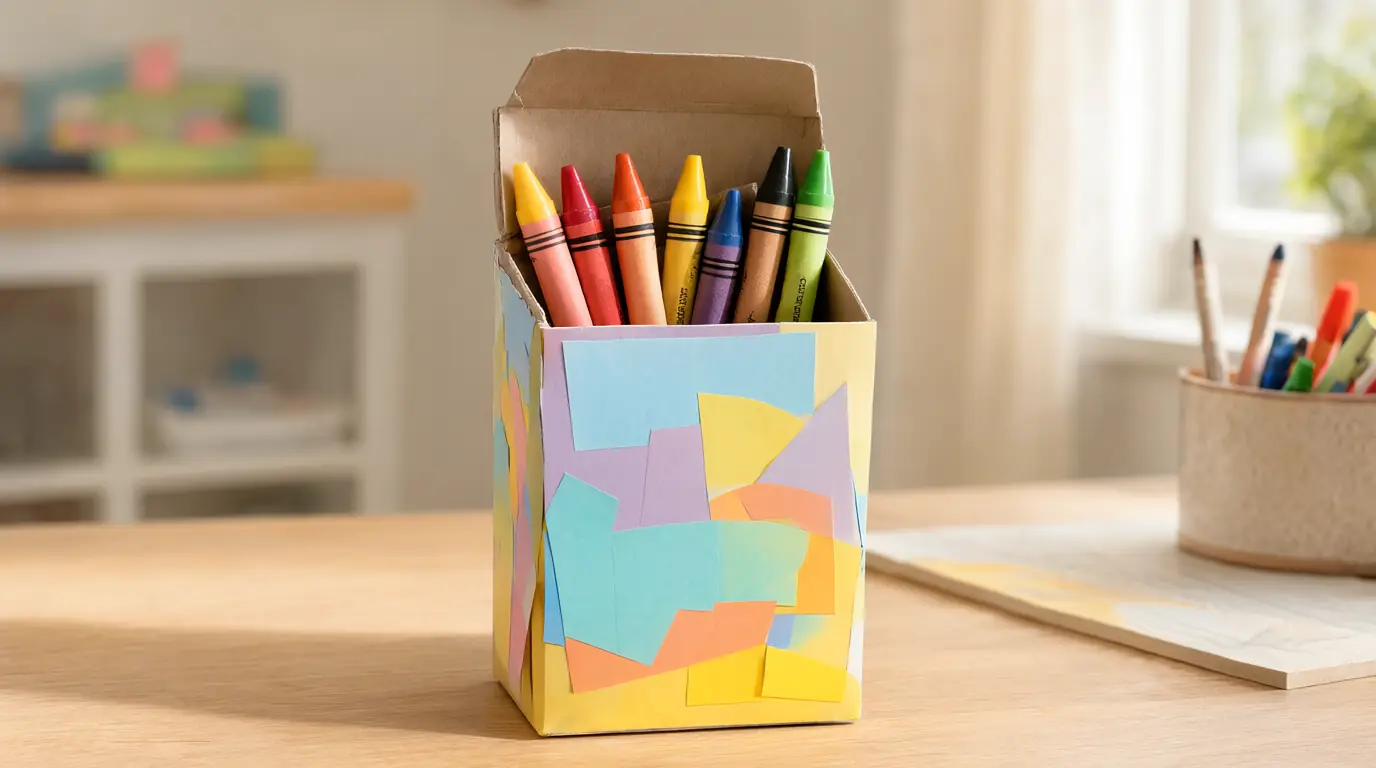
Make it your own: Younger children can decorate a package that is already cut, using chunky crayons. Older children can design a more complicated holder, such as one with compartments made from folded card.
Sort with your local rules
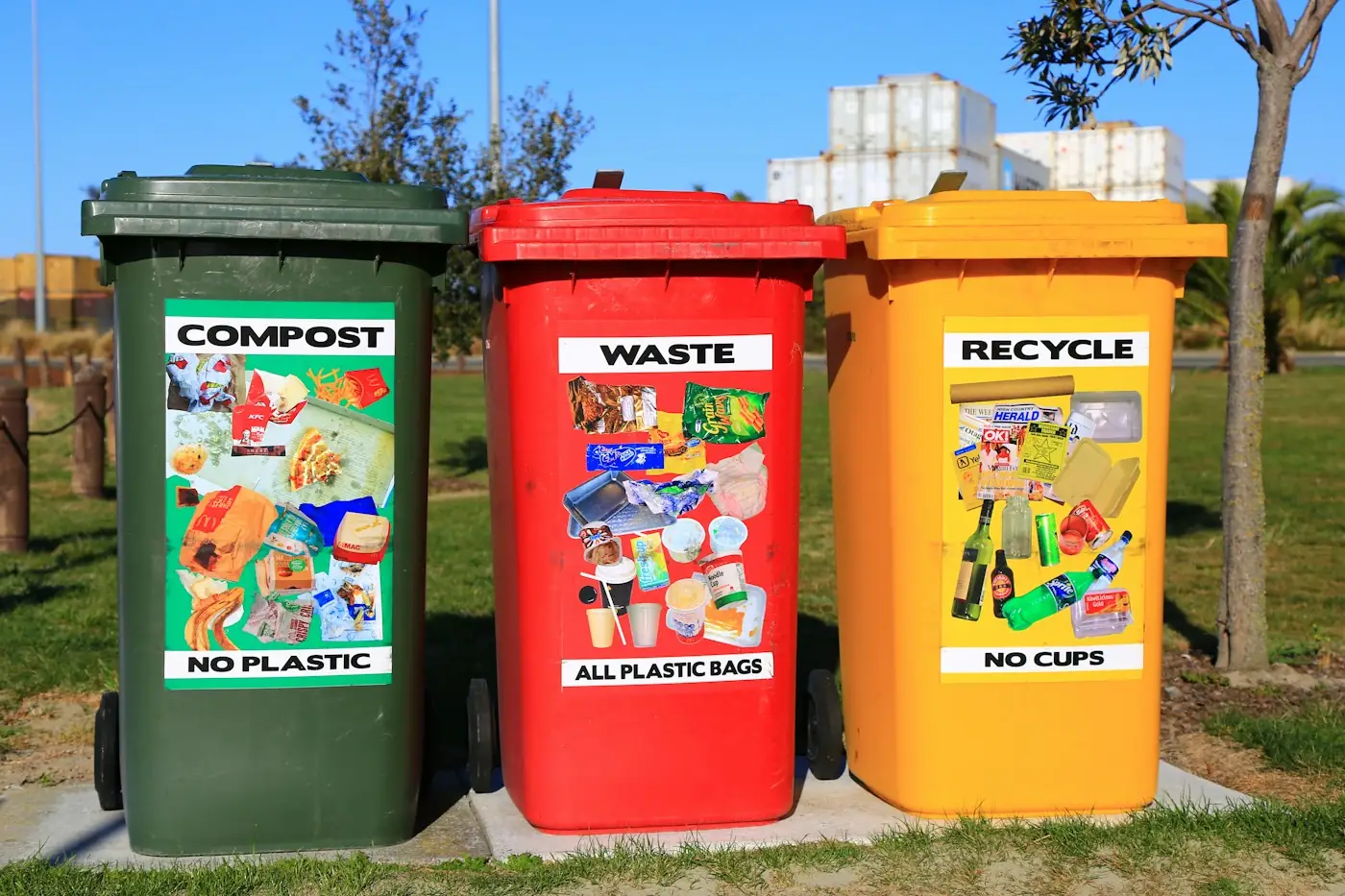
Real recycling depends on where you live, so this activity is a small investigation rather than a rule to memorise. Children learn to look at what something is made of and to check a source when they are unsure. It teaches that good decisions need information, not only good intentions.
You’ll need
- 8 to 10 cards, each with a drawn or printed picture of an everyday item
- 3 sheets of paper labelled with pictures of your local bins
- A pencil
- Your local council’s guide, on paper or on a screen
How to do it
- Read your council’s current guidance yourself first and note which items go in which bin.
- Draw simple pictures of items such as a newspaper, a plastic bottle, a food scrap and a glass jar.
- Lay the three bin sheets on the table and place the picture cards in a pile.
- Let your child choose a card, say what it is made of and decide where it goes.
- Put any card you cannot decide in a ‘check first’ pile and look each one up together.
- Count how many were in each bin, and which group was the largest.
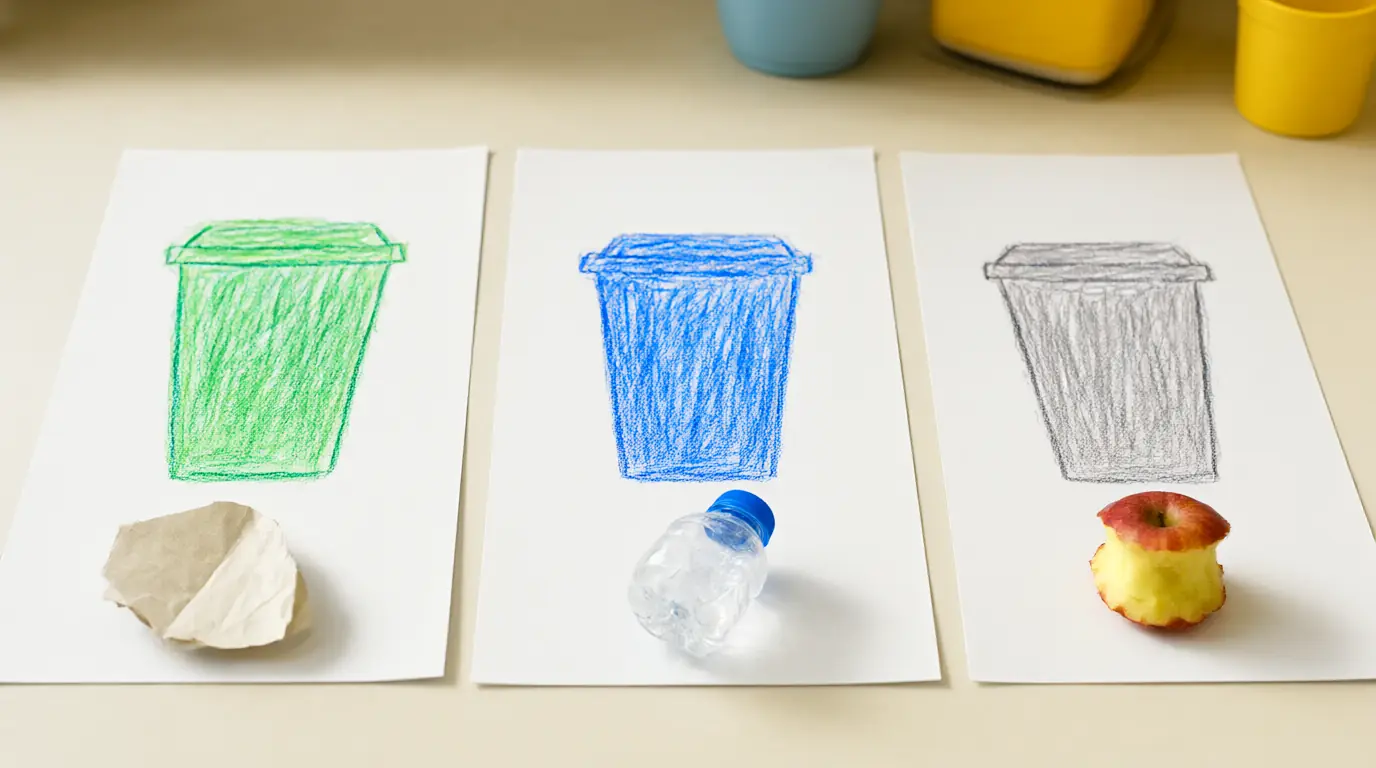
Make it your own: For younger children, use only two bins and bold pictures. Older children can write the material beside each picture and discover that two similar items may go in different bins.
Draw a map of a place you care about
A map of a favourite park, garden or street helps children notice what is there and what a visitor can do to look after it. Drawing the features builds spatial thinking, and thinking about care turns the picture into a plan. A map you can add to later becomes a record of a place your family knows.
You’ll need
- A large sheet of paper
- Crayons or coloured pencils
- A photograph or memory of the place
- Small sticky notes
How to do it
- Choose a place your family visits and talk about what is there: paths, trees, benches, bins and a play area.
- Draw the main shape of the place on the paper and let your child add the features in their own style.
- Mark the bins and paths with a coloured symbol.
- Put a sticky note on the places where visitors can help, such as picking up litter with an adult wearing gloves or staying on the path.
- Ask what could make the place better for people and animals, and add one idea.
- Keep the map, and next time you visit take it with you and see what has changed.
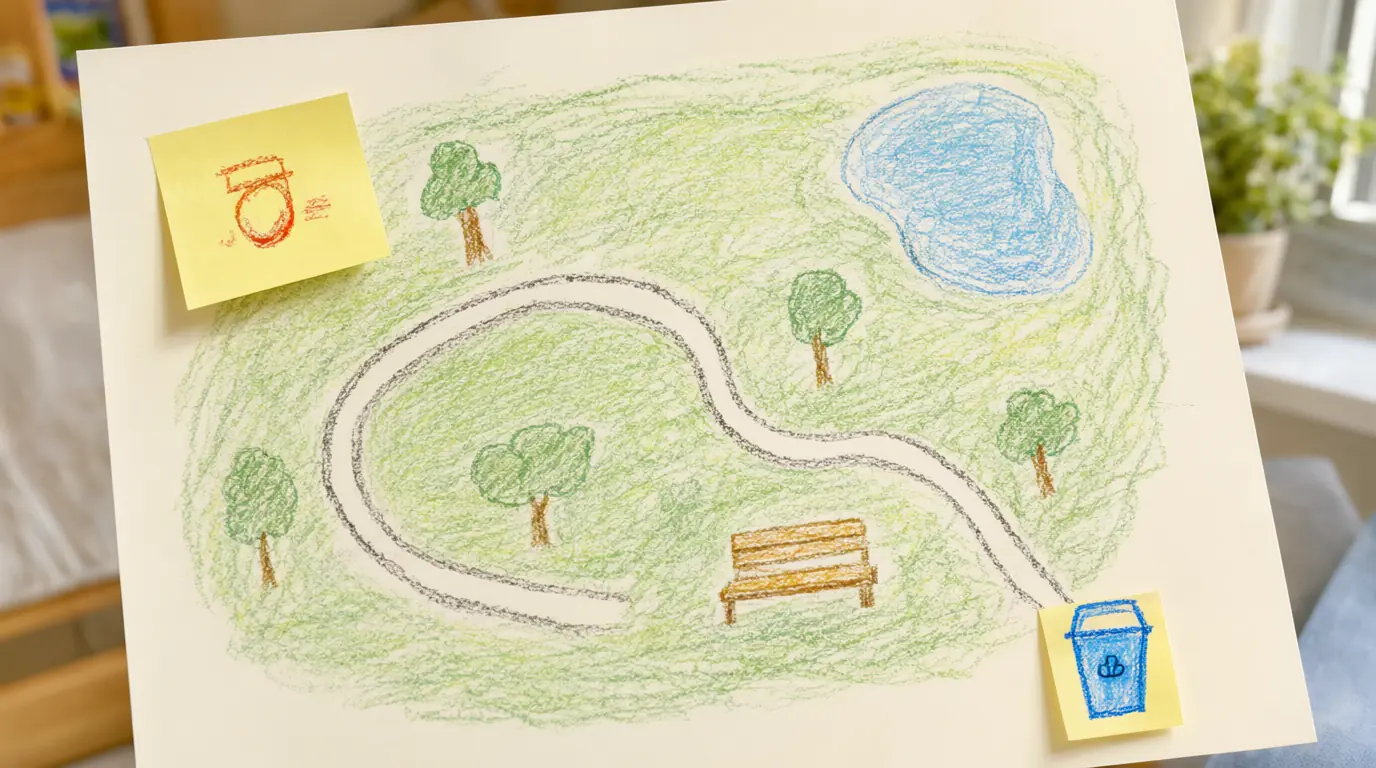
Make it your own: Younger children can draw a few big shapes and tell you what each one is. Older children can add a key explaining their symbols, or draw a second map of the same place in a different season.
Hunt for lights and gadgets left on
An energy hunt turns the idea of saving power into a game of noticing. Children look for things that are on without anyone using them and decide, with an adult, what to switch off. The aim is to build a habit of noticing rather than to scold anyone, and the answer is often a quick, satisfying click.
You’ll need
- A paper checklist with drawn symbols (a light bulb, a screen, a radio)
- A pencil or crayon
- A bag of sticky notes
- A grown-up to flip the switches
How to do it
- Draw a bulb, a screen and a speaker on a sheet of paper to make a checklist.
- Walk around one room at a time, with your child pointing out anything that is switched on.
- Ask: is anyone using this right now?
- If nobody is, an adult switches it off and your child ticks the symbol on the list.
- Stick a note on the door as a reminder to check again before bedtime.
- Count how many things you switched off and compare the total with another day.
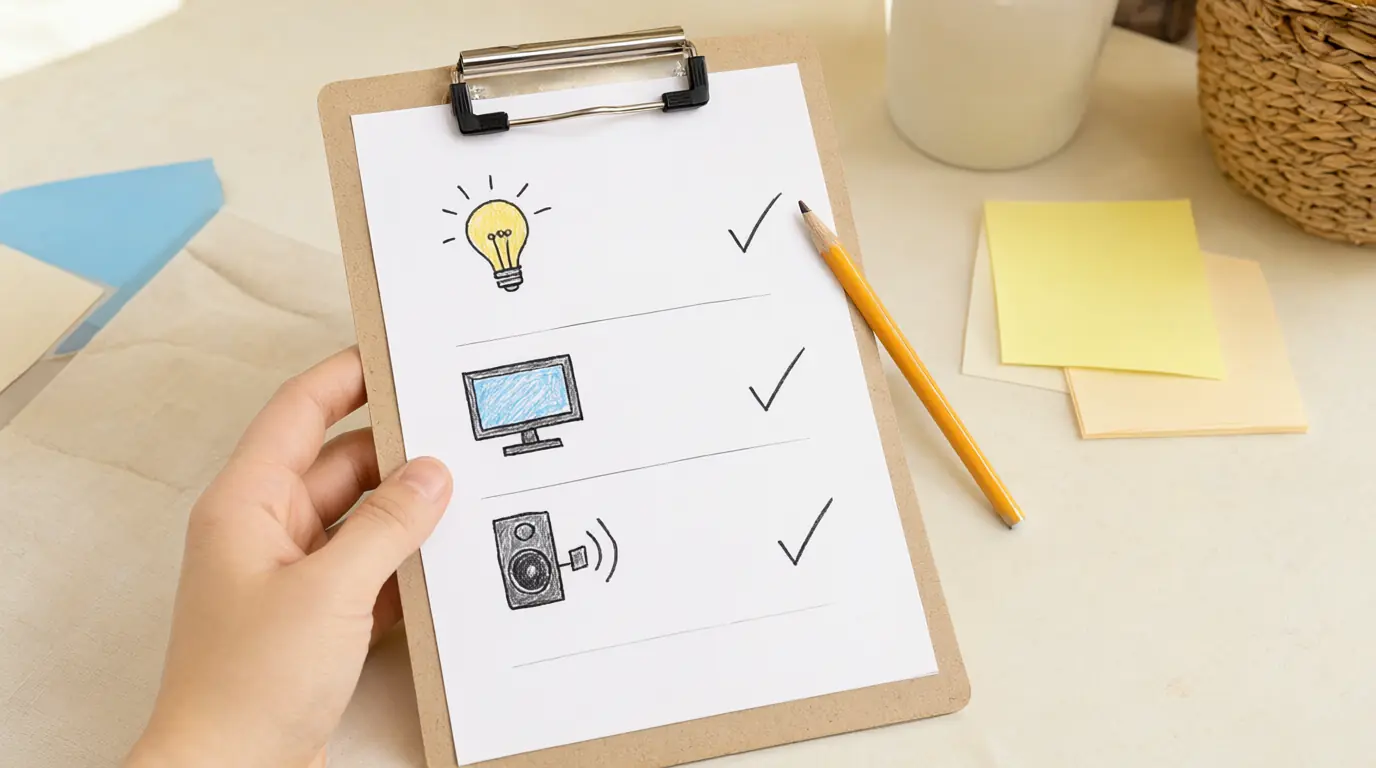
Make it your own: Younger children can hunt for only the lights in one room. Older children can sort what they find into things that must stay on, such as a fridge, and things that can be switched off.
Make a family habit card
A habit card turns a good intention into a shared plan. Children help to choose one small action, such as bringing a reusable bag or turning off a tap while brushing teeth, and design a reminder for it. Because the action is chosen together, they are more likely to remember it and feel proud of it.
You’ll need
- A thick piece of card or a large index card
- Crayons and stickers
- Magnet or tape for the fridge
- A pen to write the date
How to do it
- As a family, talk about three small things you could do to look after the world, such as using a bag again or taking shorter showers.
- Vote or choose one together to try for two weeks.
- Let your child draw a picture of the action on the card.
- Write the date on the back and put the card on the fridge.
- Each time someone does the habit, add a sticker to the card.
- After two weeks, decide whether to keep it, change it or choose another.
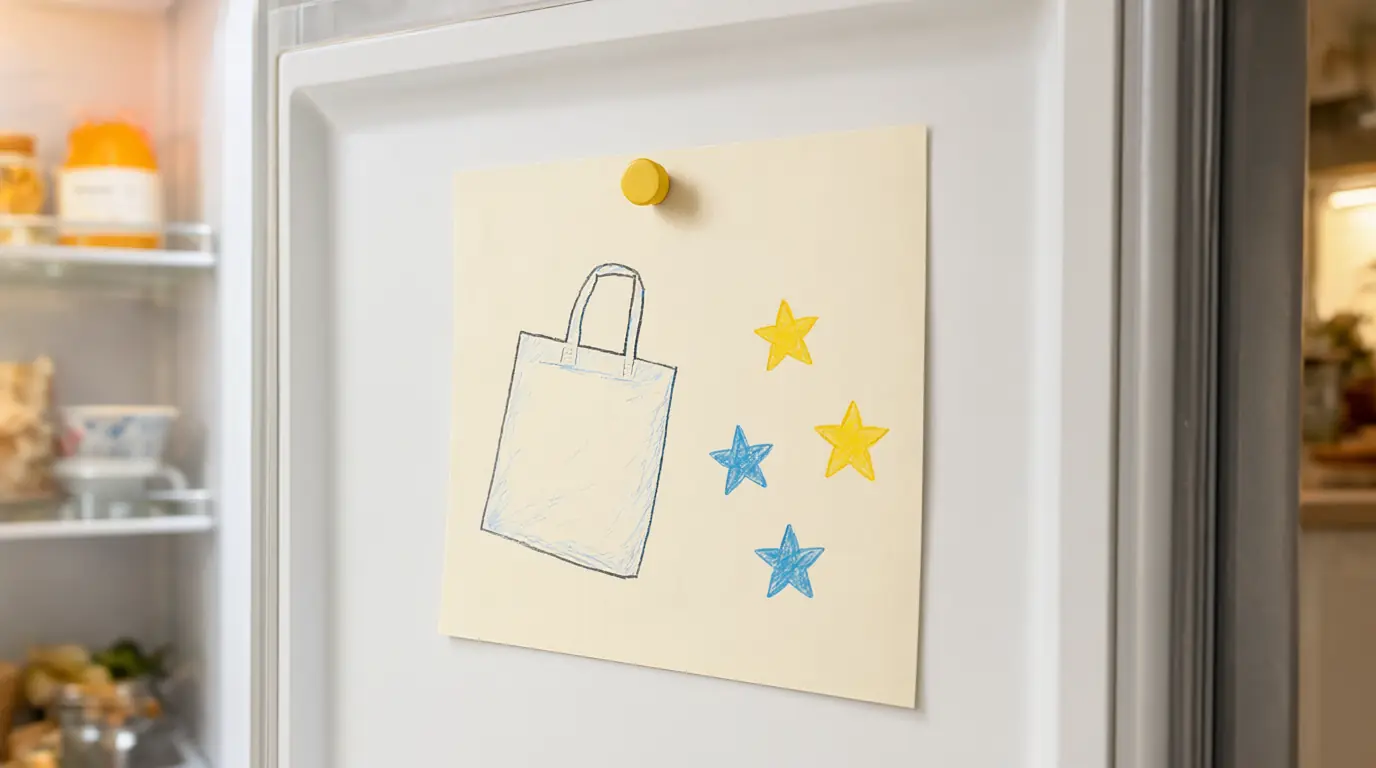
Make it your own: Younger children can colour a card for a habit chosen by an adult. Older children can write a sentence on the card and count how many stickers they earned each week.

Make it work for your family
Pick one action and stay with it. A family that always brings its own bag or rinses a jar for reuse has more impact than one that tries ten things for a day. Let your child enjoy being involved, but keep responsibility with adults: it should never fall on a six-year-old to fix a problem or to scold others for what they do.
If an activity raises a worry, answer calmly, say what grown-ups are doing and offer a small thing you can do together. Trade-offs are a good conversation: a reusable bag is only helpful if it is used many times. To plan another outing, you might like these outdoor scavenger hunt ideas, or you can explore life-skills games on Weebou for everyday habits.

Parents also ask
What are good Earth Day activities for a 5-year-old?
Choose hands-on, short activities with a clear result: reuse a clean package, sort picture cards, draw a map of a favourite place or plant a seed. Five-year-olds enjoy having a job, so give them one task, such as ticking the energy checklist.
How do I find out what is recyclable where I live?
Check your local council or waste collection service, as rules differ and change. Many publish a short list online or on a leaflet. When something is unclear, treat it as ‘check first’ rather than guessing, which can contaminate a recycling load.
How do I talk about climate worries with young children?
Keep it calm, simple and true. Say that people are working on big problems and that your family can do small things. Avoid frightening details, answer questions honestly and, if your child is anxious, talk to a qualified professional.
Choose materials and activities that suit your child, supervise as needed and adapt the ideas to their interests and abilities. About our editorial approach