Weebou Editorial Team
 8 min read
 In this article
A little preparation
Choose one activity and keep the rest for another day. Place a washable cloth or tray where the work will happen, and put out only what you need. Young children care about things they can see and touch, so choose a plant, a box or a small patch of ground in your home or neighbourhood rather than anything remote or large.
Grown-ups handle watering decisions, scissors and any rubbish. If you use a real plant, check that it is not poisonous if touched or tasted, and wash hands after handling soil or plants. Use pictures for anything dirty, sharp or unsuitable for children. Keep sessions to ten or fifteen minutes and use short sentences: ‘This plant is thirsty. We give it a little water.’ A very young child needs no lesson about the planet, just a clear, kind action to repeat.

Ideas to try together
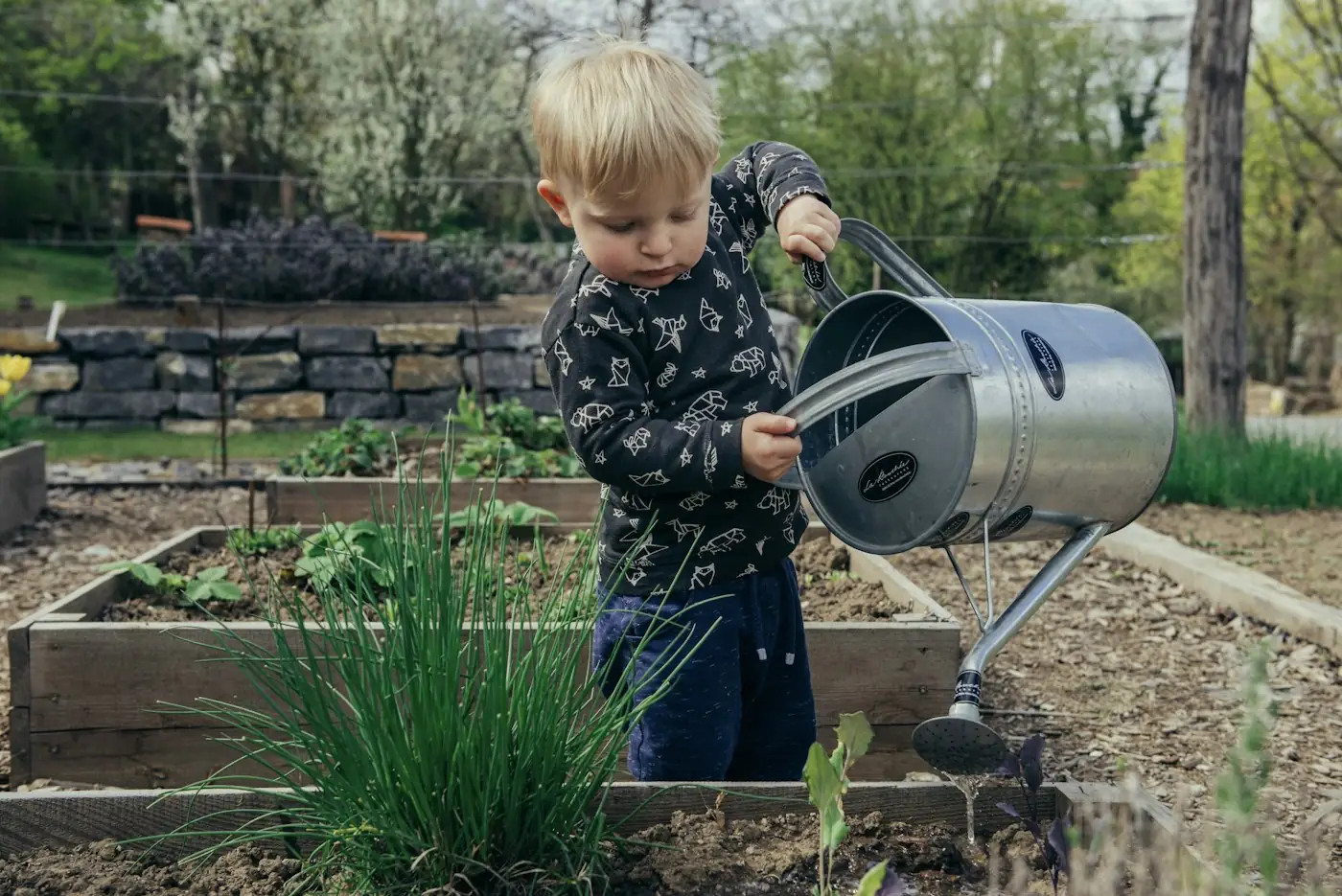
Check on the plant together
A plant check is a calm daily ritual: look, touch, decide and act. Children learn that living things need regular care and that the same job done again and again helps something grow. It is also an easy way to practise describing words such as dry, damp, droopy and green.
 You’ll need
- A sturdy potted plant, such as a spider plant
- A small child-sized watering can or jug
- A saucer or tray
- A paper card with a drawn sun and a drawn raindrop
How to do it
- Put the plant on a tray at child height and sit beside it.
- Look together: what colour are the leaves? Do any look droopy or crispy?
- Touch the soil gently with one finger. Is it wet or dry?
- An adult decides whether it needs water; if so, your child pours a small amount slowly onto the soil.
- Point to the sun or raindrop card to show whether it has had water today.
- Wash hands, and look again the next day to see if anything has changed.
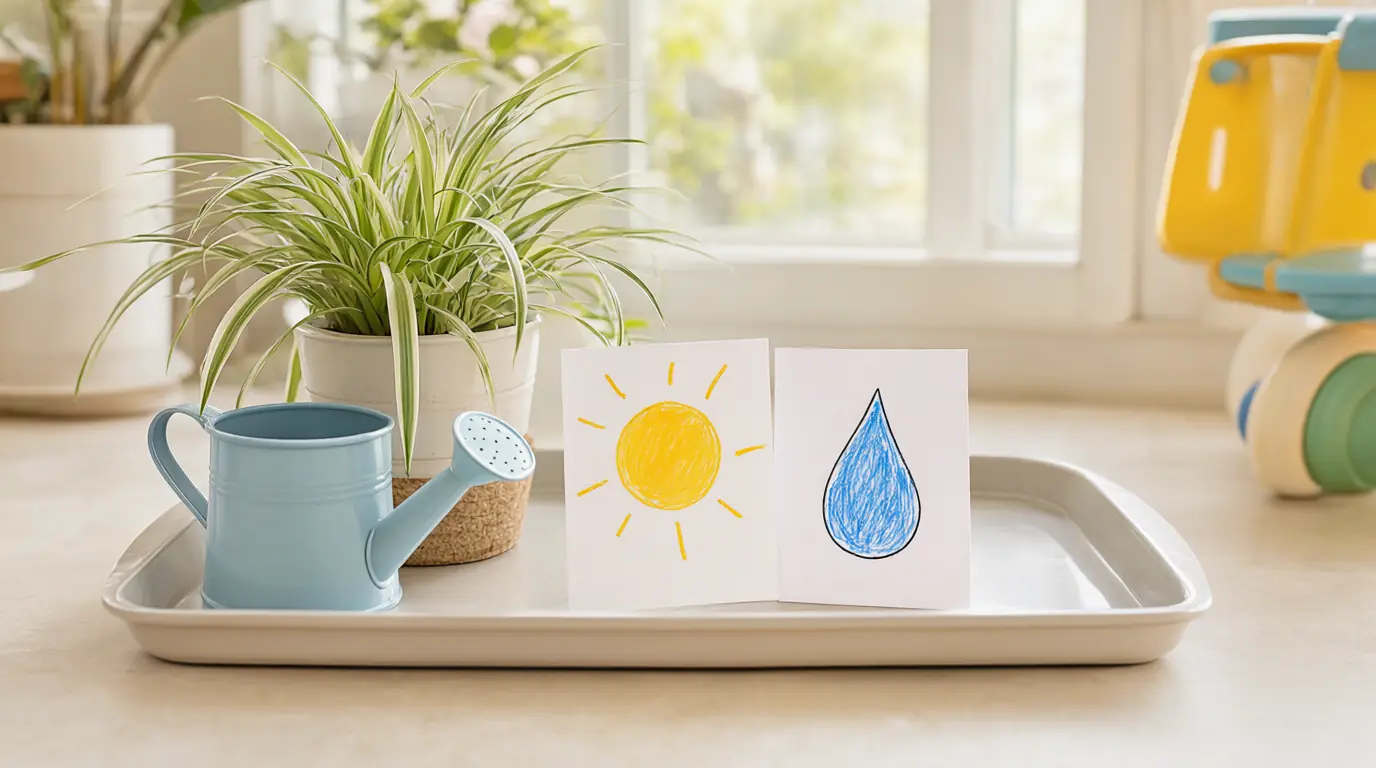
Make it your own: Younger children can simply look and stroke a leaf. Older preschoolers can take a daily photo or draw a small picture of the plant to see the changes over a week.
Grow a bean in a cup
A bean in a clear cup shows what usually stays hidden underground. A seed swells, splits, grows a root and then a shoot, and a preschooler can see each change within a week or so. Watching the roots appear gives children a reason to come back and check every day.
You’ll need
- A clear plastic cup
- Cotton wool or a folded paper towel
- 1 or 2 large dried beans, such as runner beans
- A little water in a small jug
How to do it
- Soak the bean in water overnight to soften its skin.
- Wet the cotton wool until it is damp but not dripping and pack it loosely into the cup.
- Push the bean between the cotton wool and the side of the cup so you can see it.
- Put the cup on a bright windowsill and check it each day, adding a splash of water if the cotton wool dries out.
- Draw what you can see when the first root appears, and again when a green shoot follows.
- When it has grown a little, plant the bean in soil in a pot or garden.
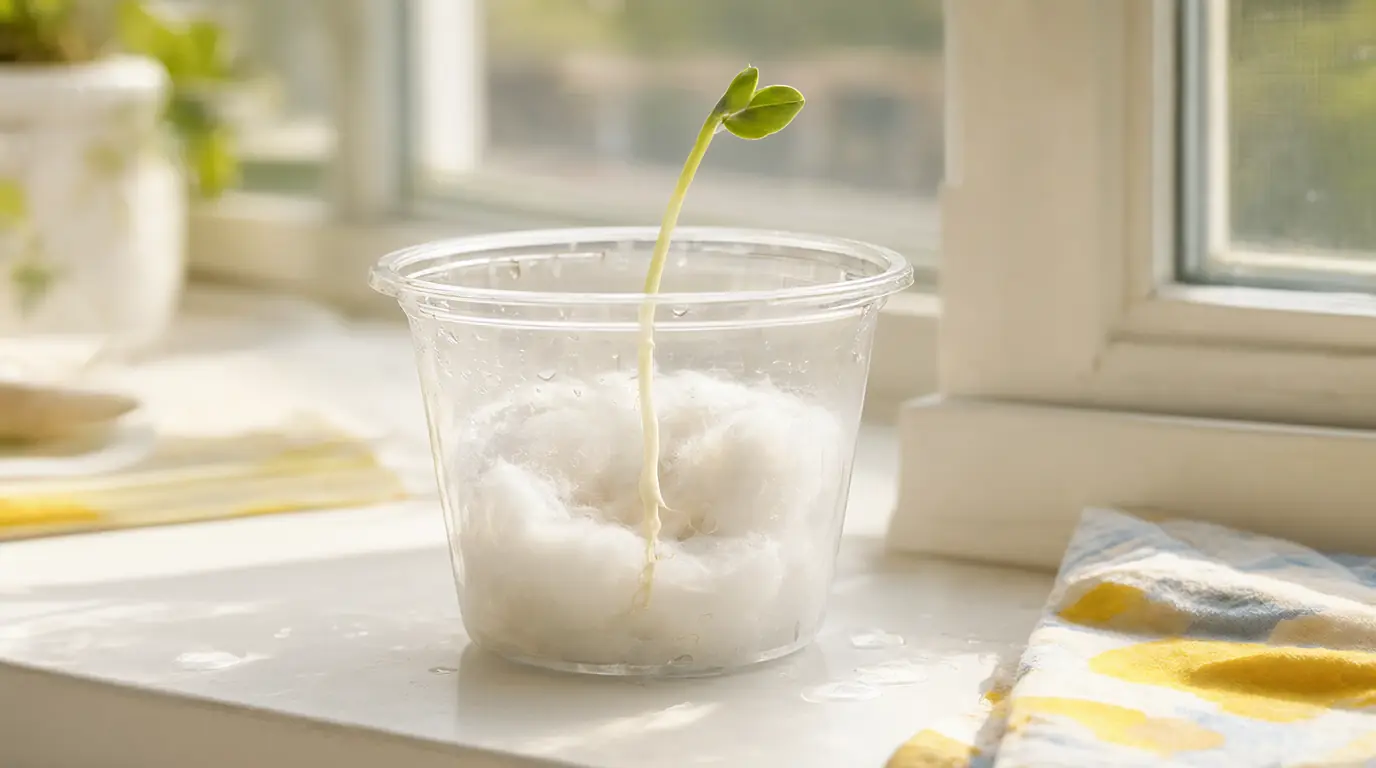
Make it your own: Younger children can look at a picture of the seed, root and shoot and match it to what they see. Older preschoolers can measure the shoot with a strip of paper and compare it each day.
Give a box a new job
Reusing a clean box shows a child that things can have a second life. Choosing what it will hold and decorating it connects the idea to something they will use every day. The finished box is a practical reminder that reusing is a normal part of home life.
You’ll need
- A clean shoebox or cereal box with its lid
- Crayons or washable markers
- Scraps of coloured paper and child-safe glue
- A few toys or books to store
How to do it
- Look at the box with your child and ask what it was used for before.
- Decide together what job it could do now: hold toy cars, books or drawing supplies.
- An adult trims off anything sharp or awkward.
- Let your child decorate the outside with crayons and paper scraps.
- Draw a picture on the front of what lives inside it.
- Fill it with the items and use it for real, every day, so the new job sticks.
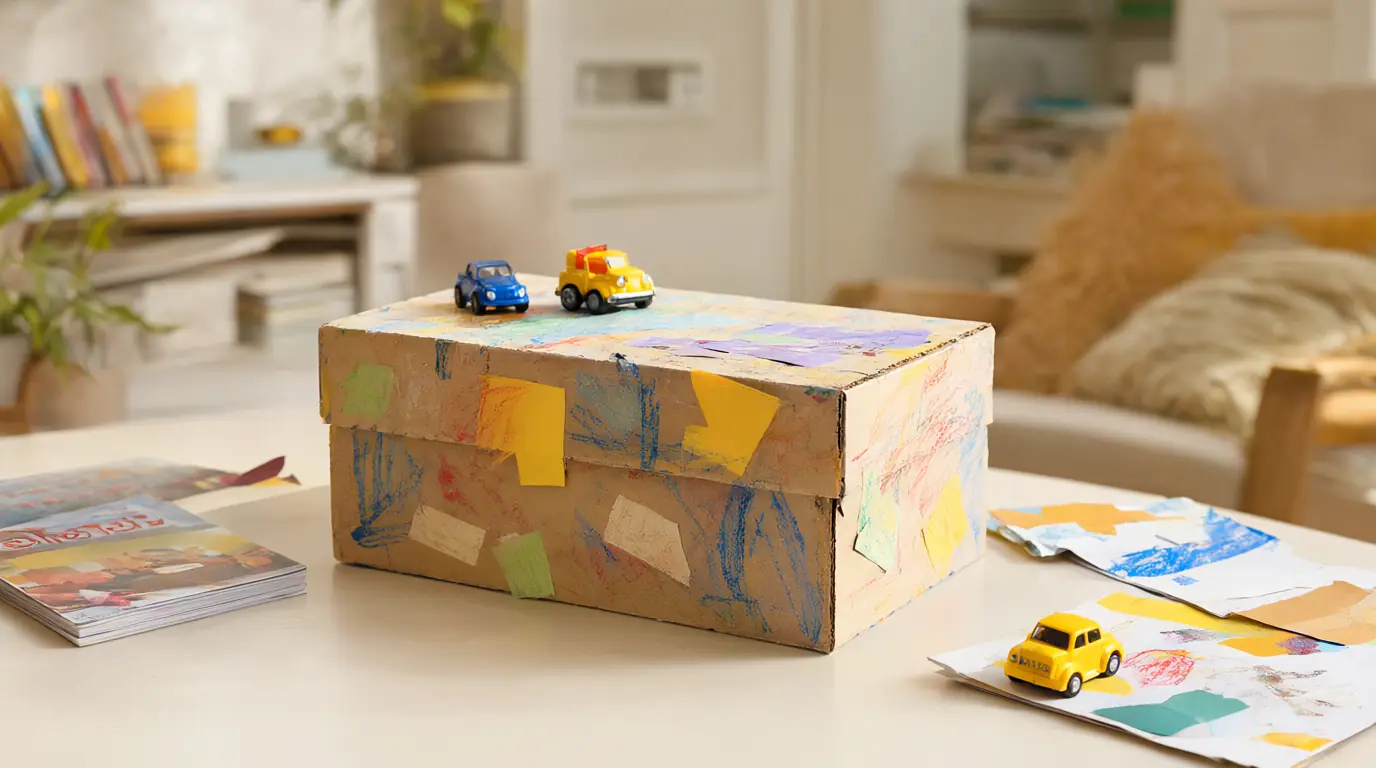
Make it your own: Younger children can colour a pre-cut box with chunky crayons. Older preschoolers can sort items into two boxes and explain how they decided which went where.
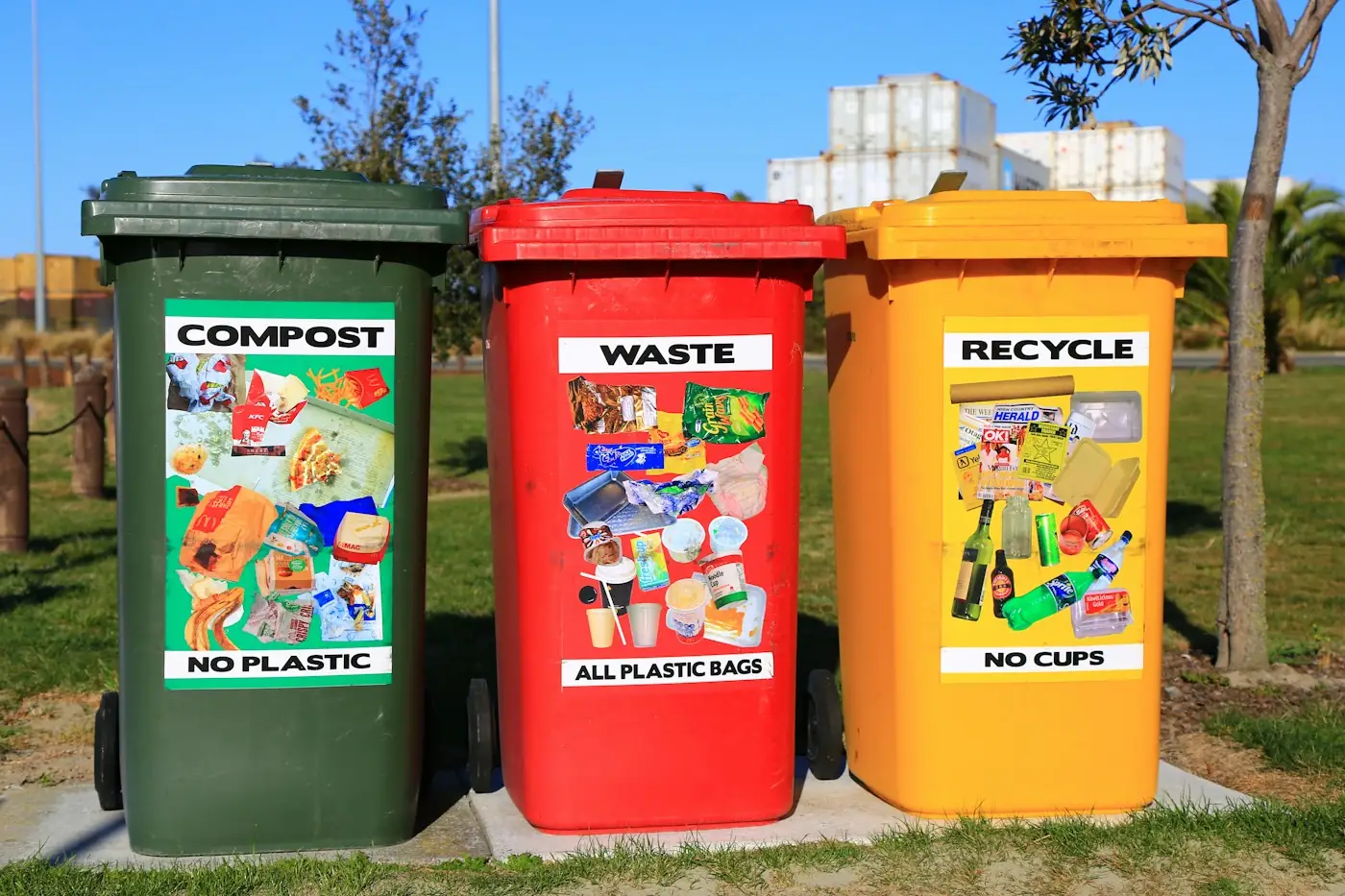
Match pictures to bins
Sorting pictures into groups builds the looking and comparing skills that sorting real objects will need later. Because you use cards, there is no mess and no sharp edge. It also introduces the idea that different things go in different places, with a grown-up checking the details.
You’ll need
- 6 or 8 picture cards of everyday items, drawn or printed
- 3 shallow boxes or sheets of paper as pretend bins
- A crayon to colour each bin
- Local council guidance for the adult to check
How to do it
- Check your local recycling and waste guidance first, as rules vary from place to place.
- Colour three boxes to match your real bins, such as one for paper, one for food waste and one for everything else.
- Lay the pictures face up and name each one together.
- Let your child place each card in the bin they think it belongs in.
- Put any card you are unsure about in a ‘check first’ pile and look it up together.
- Say how well you did, and put the cards away for another day.
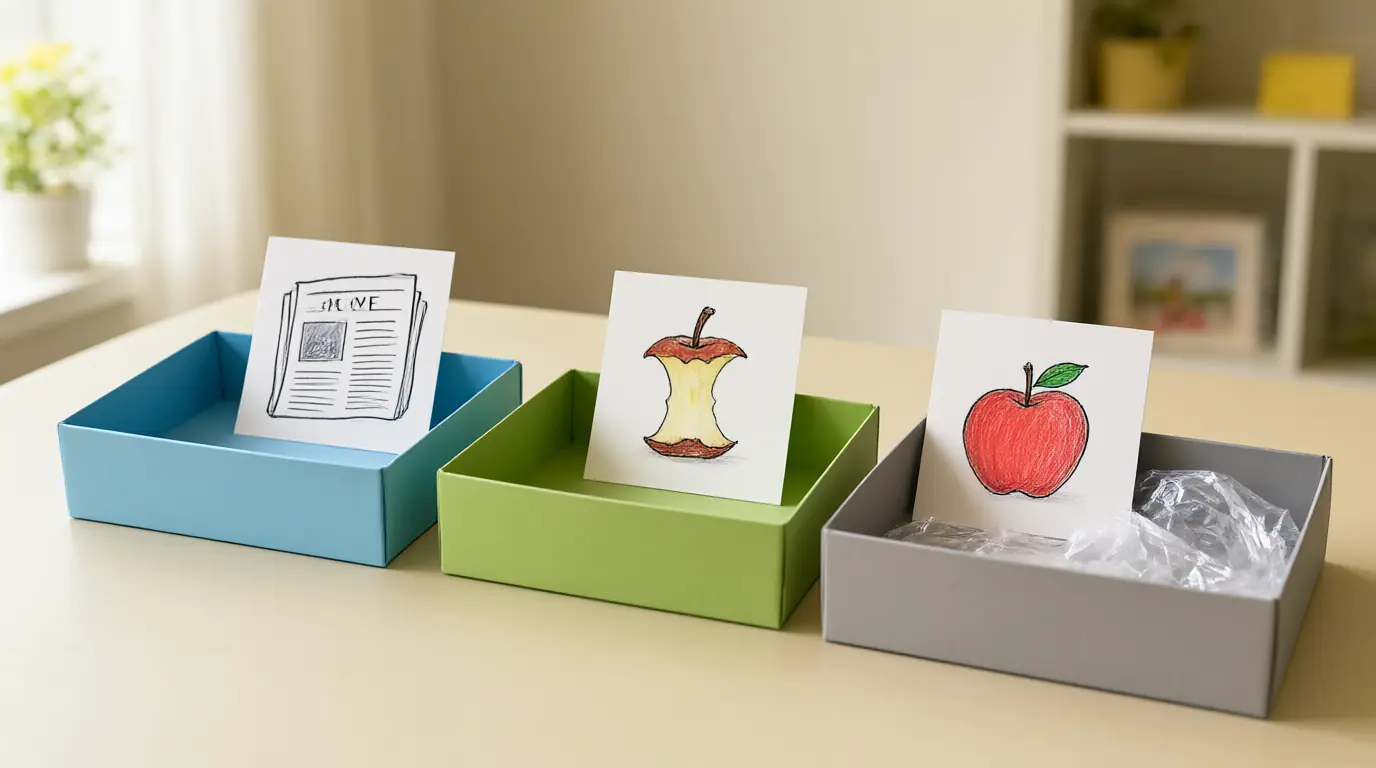
Make it your own: Younger children can sort into two groups, paper and not paper. Older children can sort the cards by material and then check against the local guidance, discovering that rules differ between places.
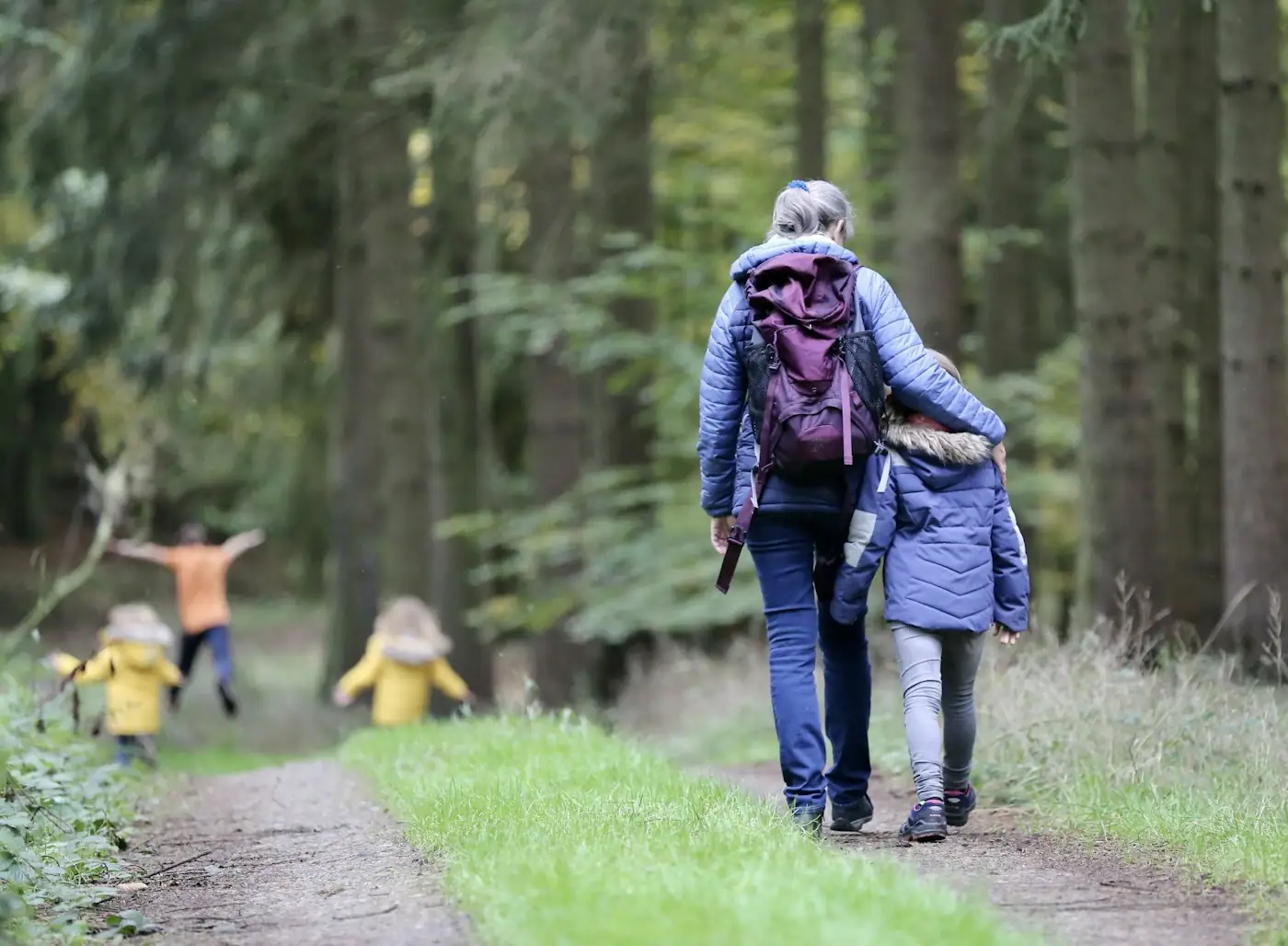
Be a careful visitor on a short walk
A short outdoor walk gives children a chance to practise gentle behaviour in a green place. Staying on the path, looking without picking and listening for sounds are simple actions that make the place a bit better for everyone. The walk is a calm way to notice what lives nearby.
You’ll need
- Comfortable shoes
- A small bag for the grown-up
- A picture card of an ear and one of an eye
- A checked, safe outdoor space
How to do it
- Choose a short route in a park, garden or quiet street and tell your child where the walk begins and ends.
- Hold up the eye card and look slowly for three things: something green, something small and something that moves.
- Hold up the ear card, stand still and listen for one minute.
- Stay on the path, and look at plants and insects without picking or touching them.
- If you see litter, point it out, and an adult picks it up with a glove or bag, never the child.
- At the end of the walk, ask your child to tell you one thing they saw and one thing they heard.
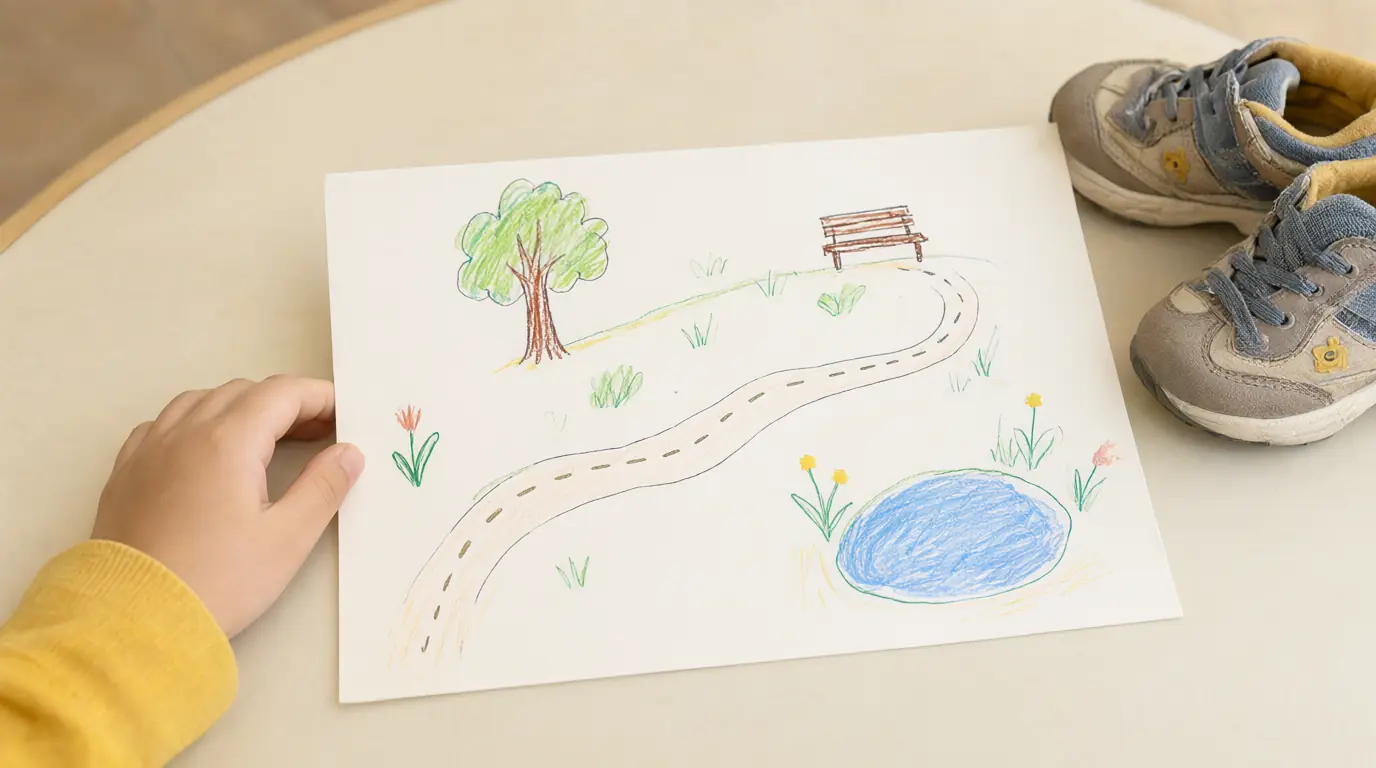
Make it your own: For younger children, shorten the walk and carry a favourite toy as a companion. Older children can draw a small map of the route and add the things they noticed.

Make it work for your family
Repeat one routine until it is familiar, rather than adding something new each day. A plant that is checked every morning teaches more than a one-off project, and a box that is used every week is more convincing than a box that sits on a shelf. If your child asks about big problems in the world, answer simply and calmly, and say that grown-ups are working on them.
Try not to attach worry to the activities: a three-year-old does not need to feel responsible for the environment, only to enjoy caring for something. For further ideas, see these nature activities for kids or the playful recycling games for kids. A single small habit that your whole household shares is worth more than a day of activities.

Parents also ask
When is Earth Day, and do we need to do it that day?
Earth Day is on 22 April each year, and the first one took place in 1970. You can do these activities on that day or at any time of the year. A small routine that you repeat is more valuable than a single event.
How do I explain recycling to a preschooler?
Keep it concrete: ‘Some things can be used again, so we put them in a special bin.’ Show one item and the bin it goes in. Because rules differ between places, check your local guidance yourself and avoid saying that everything marked with a symbol is recyclable.
Is it safe for a preschooler to handle soil and plants?
Usually yes, with supervision. Choose non-toxic plants and sturdy pots, keep soil away from mouths and wash hands afterwards. Avoid wild mushrooms, berries and unknown plants, and talk to a qualified professional if your child has allergies or skin conditions.
Choose materials and activities that suit your child, supervise as needed and adapt the ideas to their interests and abilities. About our editorial approach