Weebou Editorial Team
 8 min read
 In this article
A little preparation
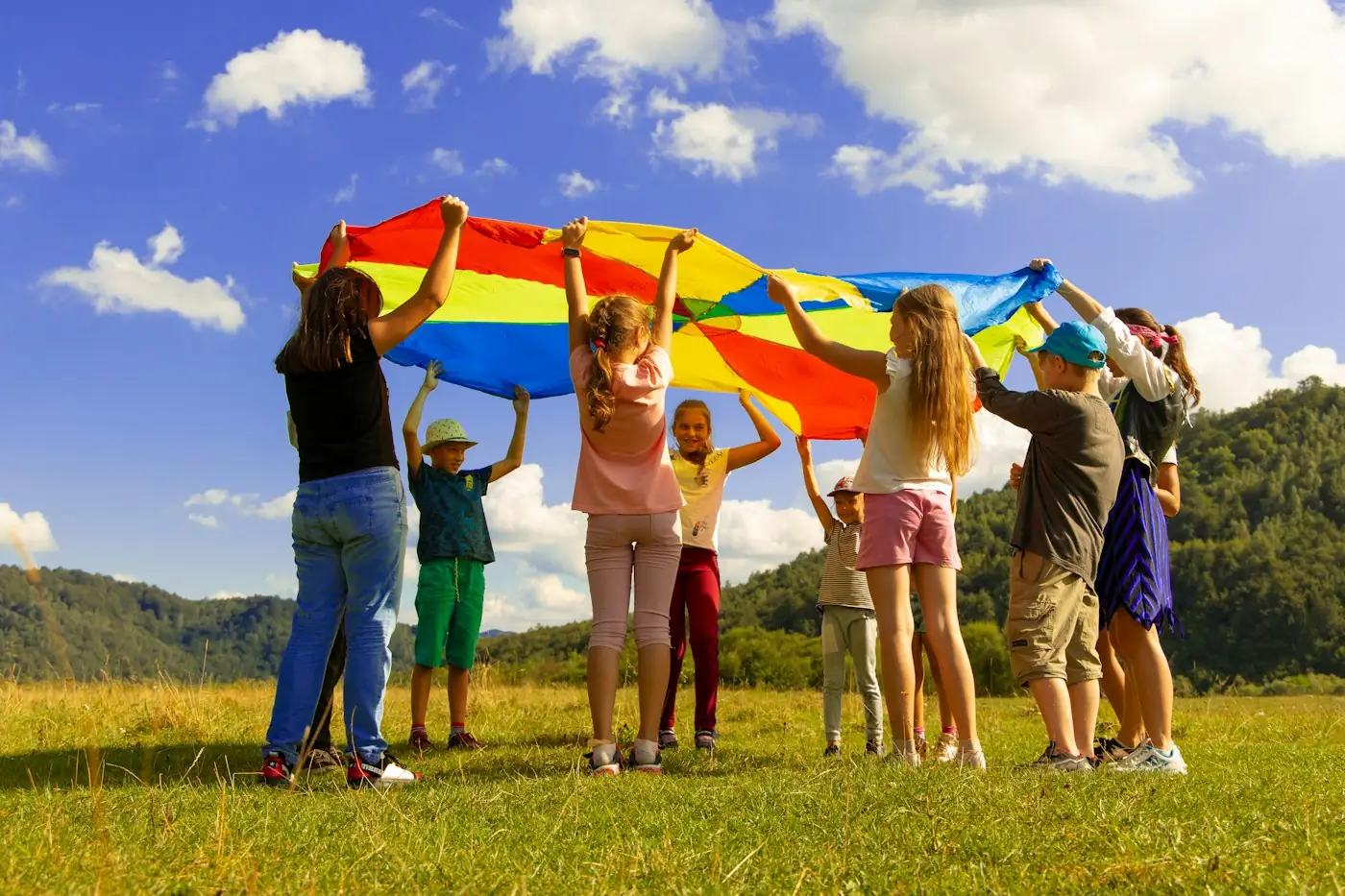
Check the cloth before every session: look for torn seams, loose threads and holes where a finger or toe could catch. Choose a clear, level floor with no furniture within arm's reach of the group, and wear socks or soft shoes rather than slippery tights. Spread children evenly around the edge and keep one adult beside the cloth. Fabric stays below shoulder height and away from faces and necks, and nobody wraps themselves in it or goes underneath while it is moving.
Practise two things before you add anything fun: how to lower the cloth to the floor on a signal, and how to let go together. A short, repeated word such as "down" works well. Show children how to hold the edge in a loose pinch rather than wrapping it around fingers, and offer a seated edge position for children who tire quickly. Plan about ten to fifteen minutes in total, ending on a calm game. If your group likes cooperative games with a shared goal, read about cooperative play as well.

Ideas to try together
Tiny waves and slow-motion ocean
This is the simplest starting game and the best way to teach control. Children discover that many small movements together look very different from one big shake. The game gives you a natural way to practise slow, quiet, loud and fast without anybody running, and it lets children choose which kind of wave to make next.
 You’ll need
- A small play cloth
- A clear floor space
- A bright scarf or ribbon for the wave leader (optional)
How to do it
- Everyone holds the edge in a loose pinch and stands (or sits) around the cloth.
- Lift the cloth to waist height and make very small ripples together.
- Say "slow motion" and make the waves as slow as you can.
- Ask for a medium wave, then lower the cloth to the floor on "down".
- Let a child choose the next wave size and the group follow.
- Finish with the cloth resting flat and one quiet breath together.
Make it your own: Younger children can sit with their legs crossed and use two hands. Older children can match the waves to a story, such as a calm pond, then a windy lake, then a slow sunset.
Ball pond: roll it to a target
Here the goal is cooperation: everyone must tilt the cloth in roughly the same direction for the ball to travel. Children quickly see that one person pulling hard does not work. The game also introduces cause and effect and gives quieter children a role, such as pointing to where the ball should go.
You’ll need
- One large soft ball (bigger than a fist)
- A play cloth
- A floor marker or soft basket at one edge
How to do it
- Place the ball in the centre while the cloth is held low and flat.
- Tilt one edge slightly and watch the ball move.
- Decide on a target edge and ask the group to tilt gently toward it.
- Stop the ball before it reaches a child's hands and reset by hand.
- Choose a new target and try again.
- Celebrate when the ball touches the marker, then rest.
Make it your own: Start with the cloth flat on a table or the floor so children can tilt it with their hands. Older children can try rolling two balls in a row or move the target to another edge.
Picture signal game
Picture cards let children follow clear signals without needing to read or listen for long instructions. The cards make the pace visible, and a child holding them has a real leading job. Because the cues are simple, children can focus on moving together instead of worrying about what happens next.
You’ll need
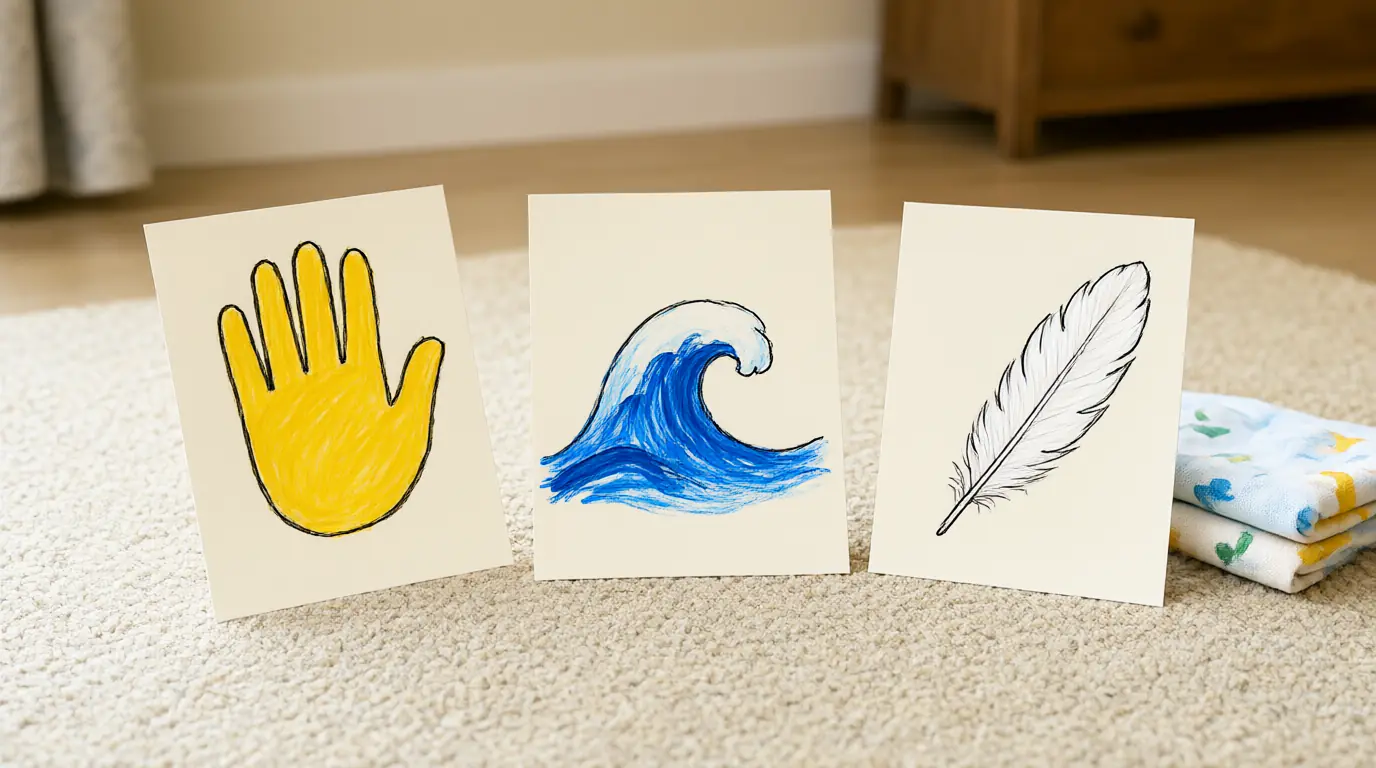
- Three picture cards: a stop sign, a wave and a feather
- A play cloth
- A card holder or a clipboard
How to do it
- Show each card and decide what it means: stop and hold still, make waves, float up slowly.
- Practise each signal once with the cloth lowered.
- The card holder shows one picture and the group follows it.
- Pause between cards for a few seconds.
- Swap who holds the cards after three signals.
- End with the stop card and the cloth lying flat.
Make it your own: For younger children, use just two cards. Older children can design their own cards and teach the group a new signal.
Team landing: lower the cloth together
Lowering the cloth slowly toward a target teaches teamwork and patience. Children have to watch each other's hands, because if one person drops early the cloth tips. It also gives a clear, calm ending to the session and a simple way to practise letting go together.
You’ll need
- A play cloth
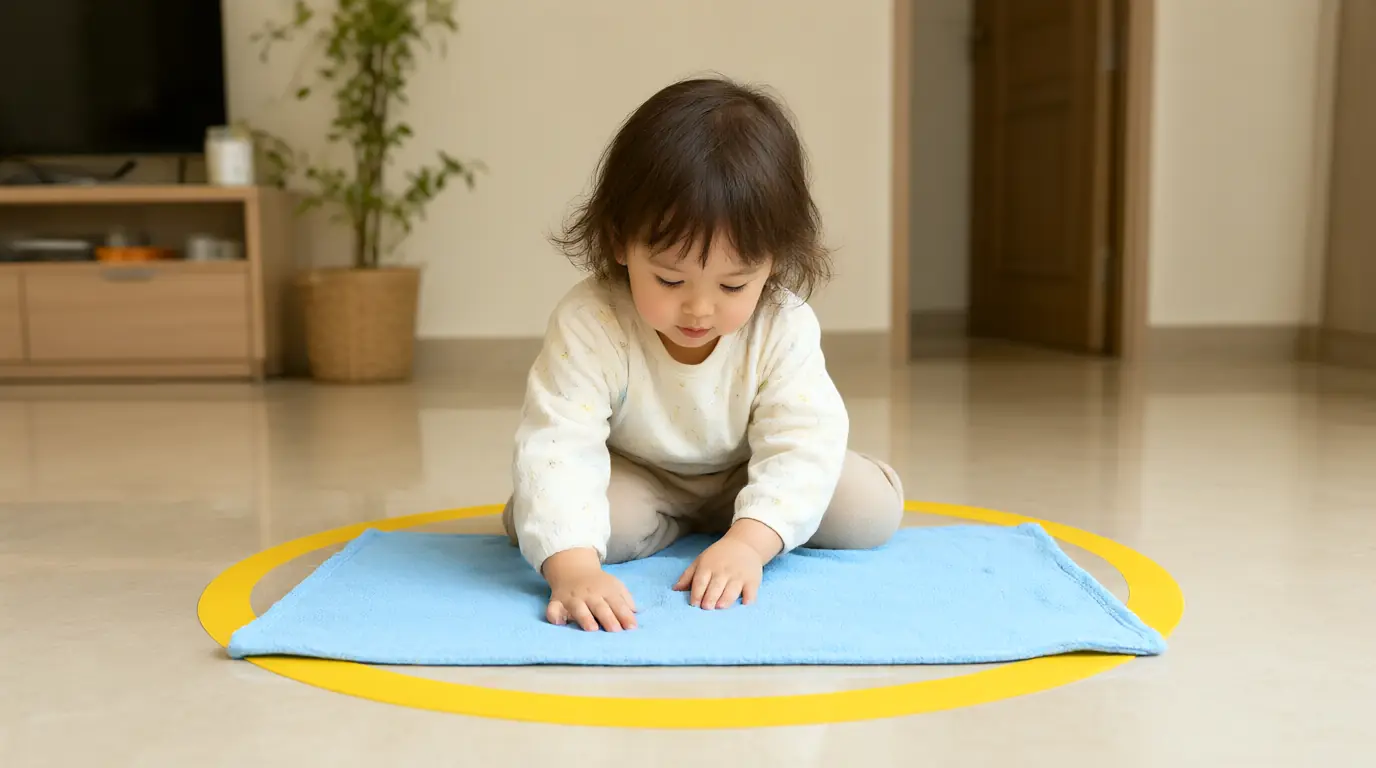
- A large floor marker such as a paper circle or a rug square
- A quiet space
How to do it
- Place the marker under the centre of the cloth before you start.
- Hold the cloth at waist height and agree on a count of five.
- Lower it slowly, keeping it level, until it rests on the marker.
- Let go together on "down".
- Lift it back to a low height and try a new count.
- Ask whether it landed softly and what would make it smoother.
Make it your own: Younger children can lower it in three counts and use a larger marker. Older children can try landing in silence or lower it to a rhythm.
Colour swap on the cloth
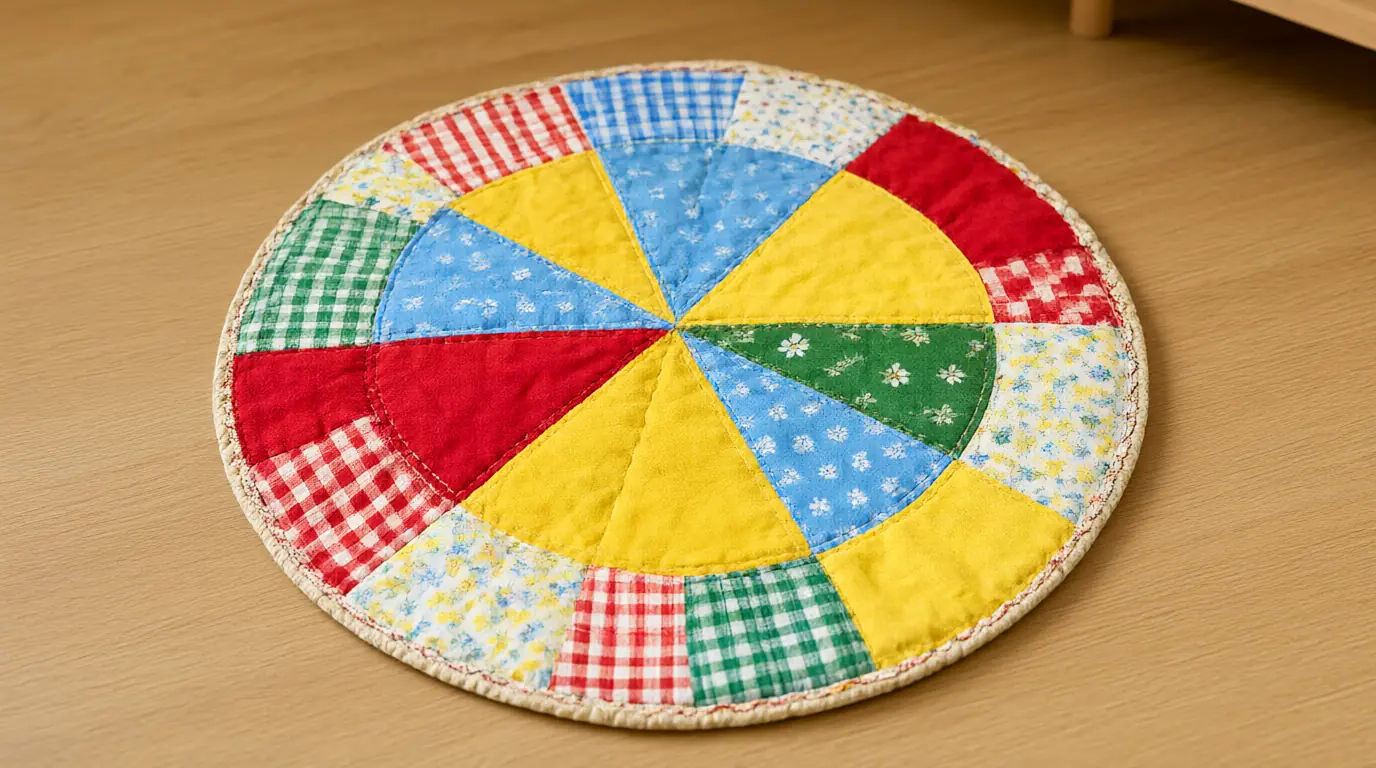
A cloth with colourful sections lets children practise noticing and swapping places in an orderly way. Moving to a new colour gives everyone a reason to walk, not run, and it keeps the circle open. It also builds colour vocabulary without turning into a quiz.
You’ll need
- A multicoloured play cloth or sheet with coloured paper circles taped to it
- A small bell or tambourine
- A clear floor
How to do it
- Lay the cloth flat and let each child stand next to one colour.
- Say "swap" and ask everyone to walk slowly to the next colour clockwise.
- Pause and name the colour you are standing beside.
- Lift the cloth for a short ripple, then lower it.
- Call a different direction and repeat.
- Finish with a rest on the colour they like best.
Make it your own: Younger children can stay put while the cloth is turned beneath them. Older children can follow a colour pattern, such as red, blue, red, blue.

Make it work for your family
If the cloth catches on something, a child feels stuck or a game becomes noisy and fast, stop, lower the cloth together and reset. Children who are nervous about fabric near their faces can hold the edge with one hand and keep their other arm free, or take the signal-card role instead. Keep the ball games to one large soft ball so that nobody has to scramble.
A small play cloth can be as simple as a lightweight bed sheet cut down, but only if the edges are hemmed and nobody can get tangled in loose ties. Avoid loops, cords or anything that tightens. When children want to run around the circle, switch the game to stepping or marching in place so the cloth stays steady. For another group movement idea that uses a hoop rather than a cloth, try these hoop games for stepping and sorting.

Parents also ask
What size parachute is best for preschoolers?
A small play cloth, roughly two to three metres across, is easier to manage than a full-sized parachute. It lets a small group stand around it, keeps fabric low and gives adults a clear view of every child. Check it is intact before each use.
How many children can play parachute games at once?
For a small play cloth, four to eight children is usually comfortable. Too many players make it hard to keep the cloth level and for an adult to watch everyone. Split a larger group into two smaller circles, or have some children take cueing roles.
Is it safe for children to run underneath the cloth?
It is safer to avoid it with young children. Running under moving fabric can cause collisions, tangling or a child losing their way. Keep the cloth low, stop before anyone goes near it and offer a floor marker for children who want to move.
Choose materials and activities that suit your child, supervise as needed and adapt the ideas to their interests and abilities. About our editorial approach