8 min read
 In this article
A little preparation
Let your child choose between two projects and help gather the materials, even if that takes five minutes longer. Ask a planning question before starting: 'What will you do first?' A five-year-old can often hold a three-step plan in mind, but a quick drawing of the steps helps if it starts to wobble. Keep one adult job clearly separate, such as cutting thick cardboard, so your child knows which decisions belong to them.
Allow about 20 to 40 minutes, and agree beforehand where unfinished work can wait, perhaps a shelf or a labelled box. Many of these ideas are better on a second day, when your child has had time to think of changes. Sit nearby rather than directing, and save your suggestions for when your child asks or gets properly stuck. Use blunt-ended scissors for children and keep small items such as counters away from any younger sibling in the room.

What to know and try
Invent a board game with your own rules
Designing a game asks a child to think about fairness, sequence and what happens next, all while doing something they love. The path can be messy and the rules can change; the point is that your child decides how it works and then notices when a rule makes the game confusing.
 You’ll need
- A large sheet of paper or the back of a poster
- Crayons or markers
- One die or a spinner made from card
- Two small toys as player pieces
How to do it
- Draw a winding path of about 15 squares together, with a start and a finish.
- Ask your child to choose two special squares and decide what each one does, such as 'go back two' or 'take an extra turn'.
- Decide how players move: a die roll, a coin flip or counting steps.
- Play one full round with you taking the first turn and following the rules exactly as invented.
- Pause if anything felt unclear and ask, 'Which rule should we change so it works better?'
- Rewrite the changed rule in pictures on the corner of the board.
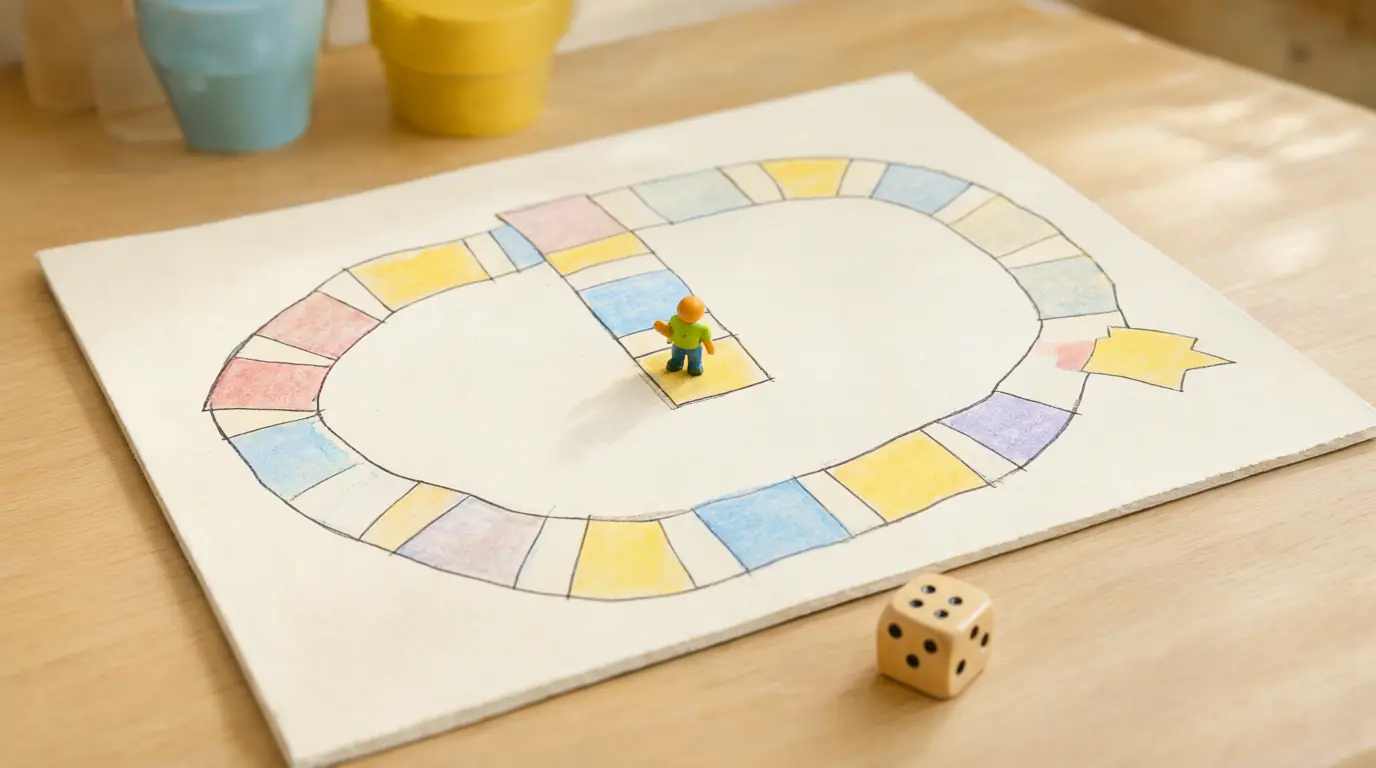
Make it your own: For a younger five, use only six squares and a single special square. Older children can add a second path, a rule for ties or a card pile with simple challenges. Play it with a friend and see whether they can follow the rules from the pictures alone.
Make a picture book for a younger listener
Writing for another person gives marks and drawings a real purpose. Your child must decide what a listener needs to understand, which builds early skills in sequencing and noticing an audience without feeling like a lesson.
You’ll need
- Four sheets of paper folded in half and stapled by an adult
- Crayons or coloured pencils
- A pencil for adding words
- A teddy or younger relative as the audience
How to do it
- Choose a topic your child knows well, such as how to wash a dog or a trip to the shops.
- Decide on one idea per page and say them aloud before drawing.
- Draw the cover first and let your child decide a title, which you write if they ask.
- Illustrate each page, then add a short sentence your child dictates or their own letters.
- Read the book to the audience, noticing which pictures make the listener point or ask a question.
- Ask what they would add to a second edition.
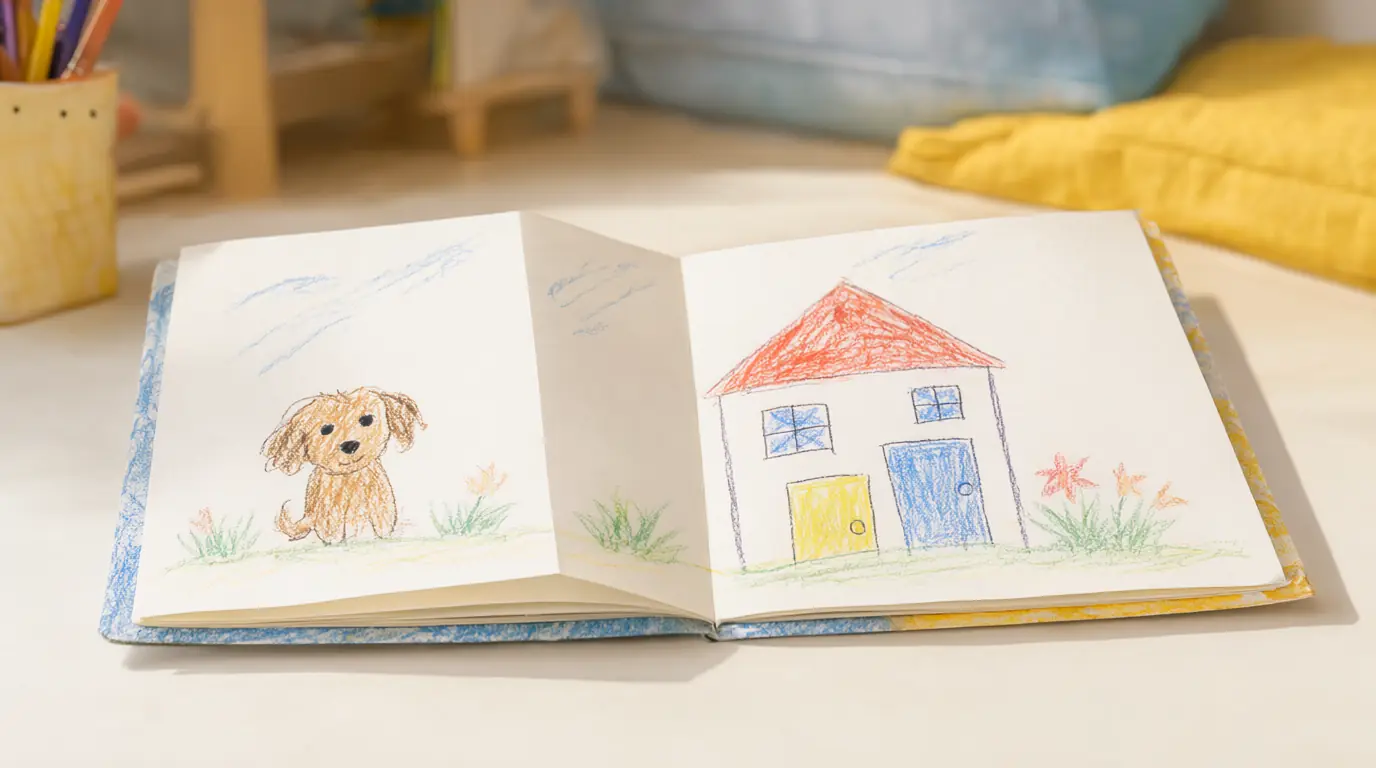
Make it your own: Younger children can make a book with only pictures and a single word per page. Older children can try a page number or a last page that asks the reader a question. If a drawing seems rushed, offer a magnifying-glass look at one detail.
Build a model machine and label its parts
A made-up machine lets practical thinking and imagination sit side by side. Your child can invent what it does while still working out how parts connect, balance and stay together. Labels give drawing and early writing a reason to exist.
You’ll need
- Cardboard tubes and small boxes
- Child-safe tape
- Large building blocks
- Sticky notes and a thick pencil
- Small toys to test the machine
How to do it
- Ask what the machine should do: sort toys, carry a teddy or make a pretend sandwich.
- Let your child choose the main body from boxes and blocks, and tape or stack it.
- Add one moving or special part, such as a tube slide or a hinge made from folded card.
- Test it with a small toy and ask, 'What happened? What could we change?'
- Make a sticky-note label for each important part, using a picture, a letter or a word.
- Show the machine to someone and explain what each part does.
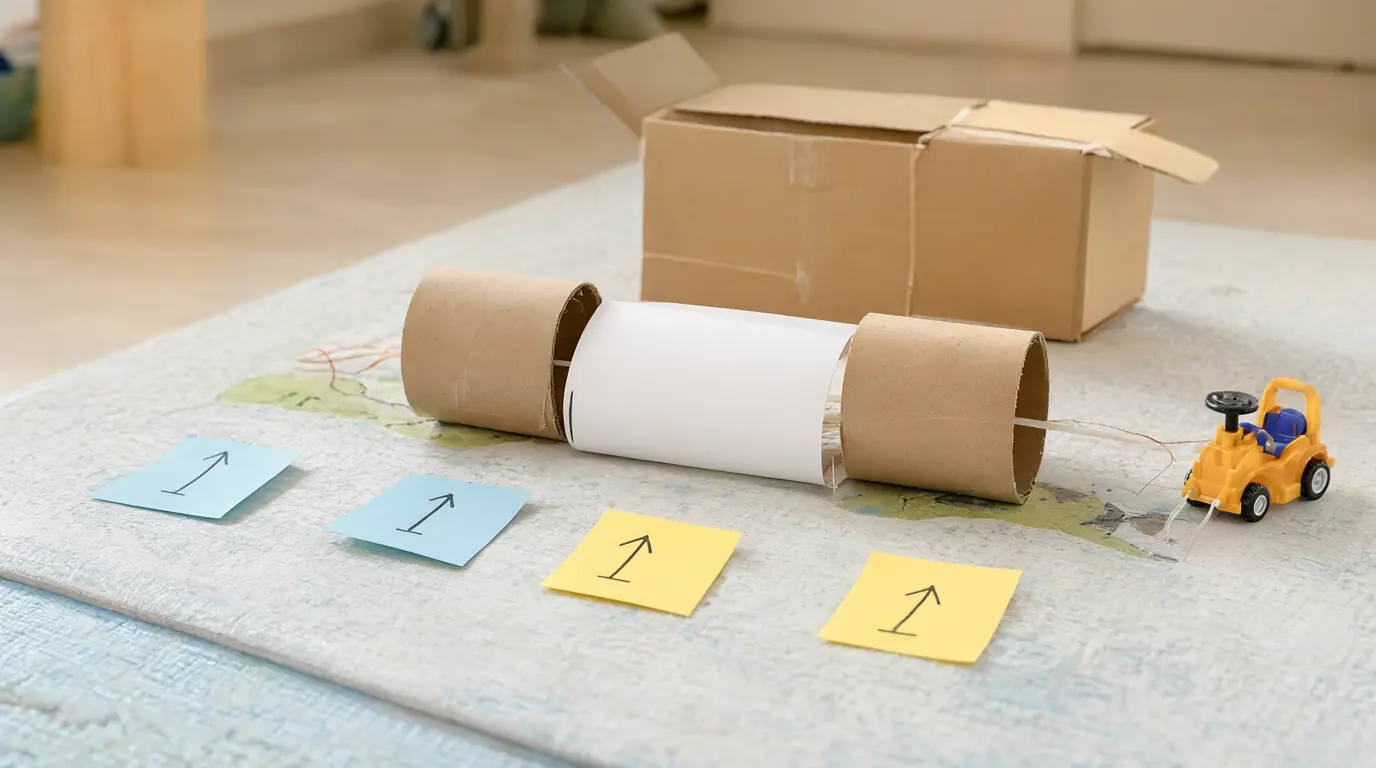
Make it your own: Younger children can build for ten minutes and name just one part. Older children can draw a simple plan first, count how many pieces they used or build a second machine that connects to the first.
Plan a picnic from list to blanket
Planning a small real event brings counting, one-to-one matching and responsibility together in a task with an obvious finish. Your child decides what is needed, checks it off and sees the plan become something they can enjoy.
You’ll need
- Paper and a pencil
- A blanket or towel
- A basket or bag
- Plates, cups and napkins for each person
- Toys or family members as guests
How to do it
- Decide who is coming and count the guests, including toys.
- Draw a picture list of what you need: one plate, one cup and one napkin for each person.
- Walk around the home together, collecting items and ticking each picture.
- Let your child choose how to pack the basket so nothing heavy sits on top of anything soft.
- Lay out the blanket and set one place for each guest, counting again.
- Adults prepare and serve the food while your child welcomes everyone.
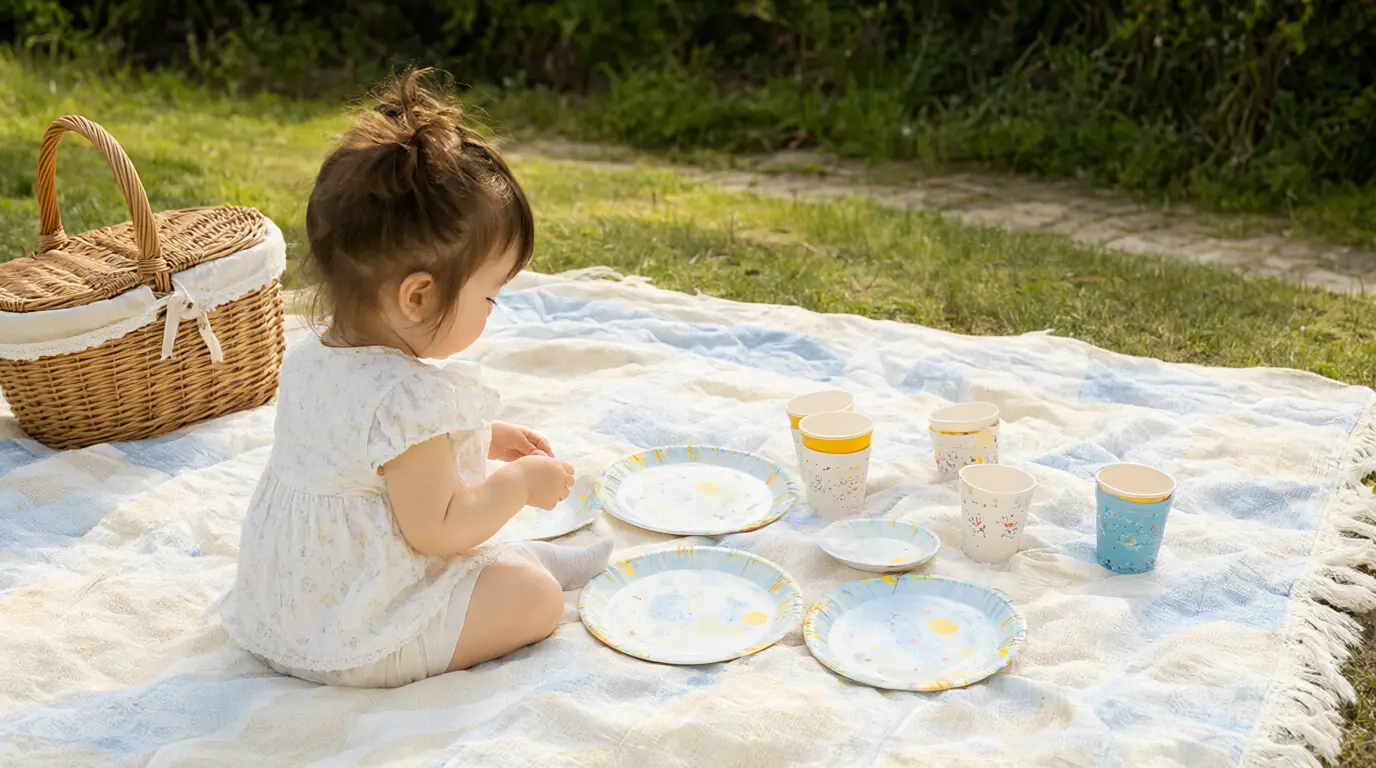
Make it your own: Simplify with two guests and a list of three items. Older children can write the list themselves with invented spelling, add a budget in pretend coins or plan a map of the route to the picnic spot.
Interview a grown-up and draw their answers
Asking questions is a skill, and so is listening to an answer. A short interview turns a family member into an expert and gives your child a reason to remember, sequence and record what they heard.
You’ll need
- A clipboard or hard book to lean on
- Paper folded into four sections
- A pencil or crayon
- An adult or grandparent willing to answer
How to do it
- Choose a person and a topic, such as their favourite game as a child.
- Help your child think of three questions and draw a quick symbol for each.
- Sit together and ask the first question, giving the grown-up time to answer.
- Draw or write one thing from the answer in the matching section.
- Continue with the other two questions.
- Read your notes back and ask whether you got it right.
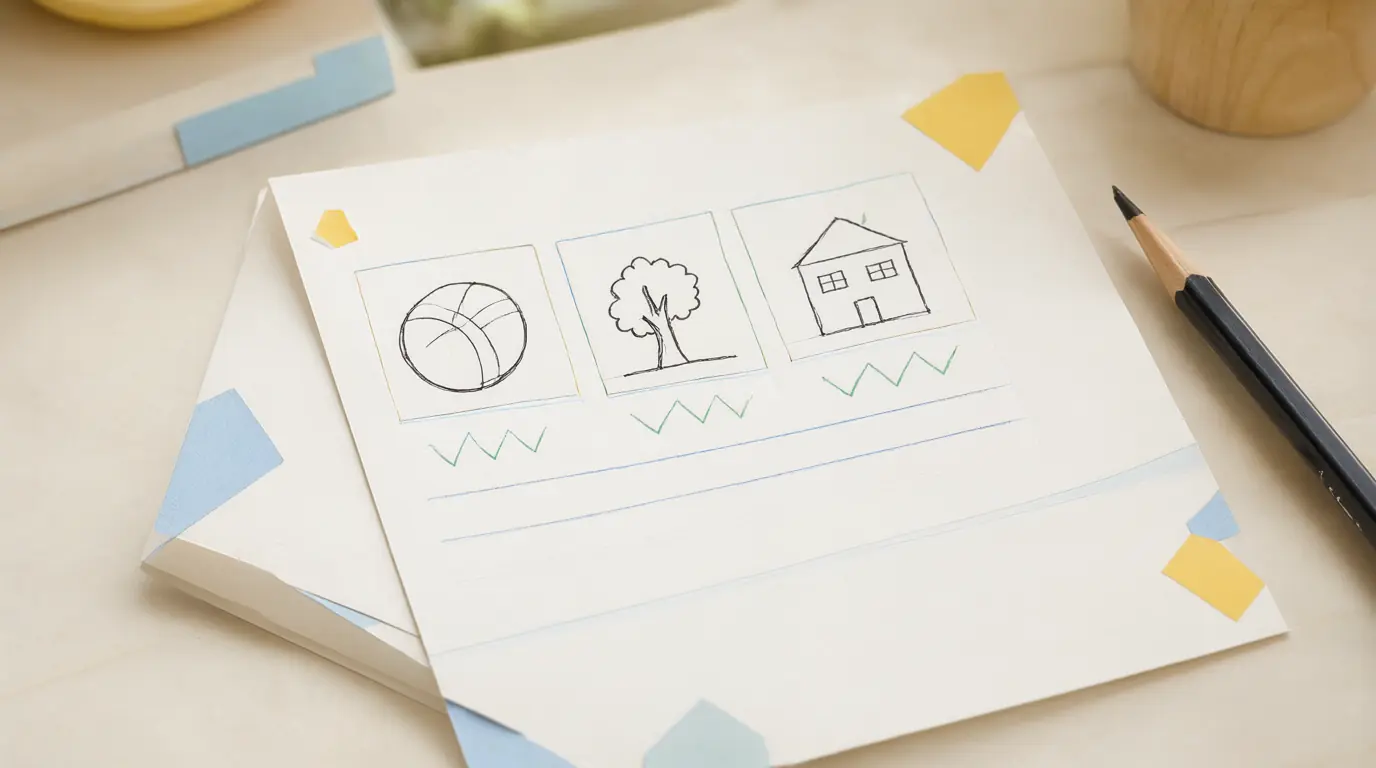
Make it your own: Younger children can ask one question and draw one picture. Older ones can try a follow-up question beginning with 'why' or compare the answers of two different people.

Make it work for your family
Invite explanations without demanding a spoken answer every time. A drawing, a demonstration or moving objects can show an idea just as well, and some children need a moment before words come. If your child wants another attempt, keep the useful parts rather than starting over: a rule board can be edited, and a model can be rebuilt with one change.
When frustration arrives, name it and offer two choices: take a break, or try one small change. Resist fixing the problem yourself, even if the answer seems obvious. For more projects at this age, explore six-year-old activities for planning and explaining or try some building games that invite children to test an idea.

Parents also ask
How long should a 5-year-old stay on one activity?
It varies a lot between children, but 15 to 30 minutes of focused play is common at this age when the project is their own idea. Let them leave and return later; a project that spans two days is not a failure.
What if my 5-year-old says they are bored?
Offer two clear options rather than a long list, such as designing a game or building a machine. Many children begin once the choice is small. You can also hand them one material and ask what it could become.
Should I correct spelling in their writing?
Usually not during creative play. Invented spelling shows a child is listening for sounds. If they ask how a word is written, tell them, or write it on a separate note for them to copy if they wish.
Sources & further reading
Explore these primary sources for further context on this topic.
Choose materials and activities that suit your child, supervise as needed and adapt the ideas to their interests and abilities. About our editorial approach