7 min read

 In this article
A little preparation
Offer a manageable question rather than a model to copy: 'Where could the toy animals play?' rather than 'Build this house.' Put out a few materials where your child can see them, and agree on a work space such as a tray or a corner of the floor where the project can stay for a while. Ask how your child wants to begin and which part they would like help with.
Expect sessions of 15 to 30 minutes, and be ready for a change of plan halfway through. Cutting card, taping and anything fiddly are adult jobs unless your child is confident with child scissors, so say clearly: 'I will cut, you decide where.' Keep small items away from younger siblings, and photograph temporary arrangements so a project can be tidied without being lost. Ask before changing your child's work, even when you can see an easier method.

What to know and try
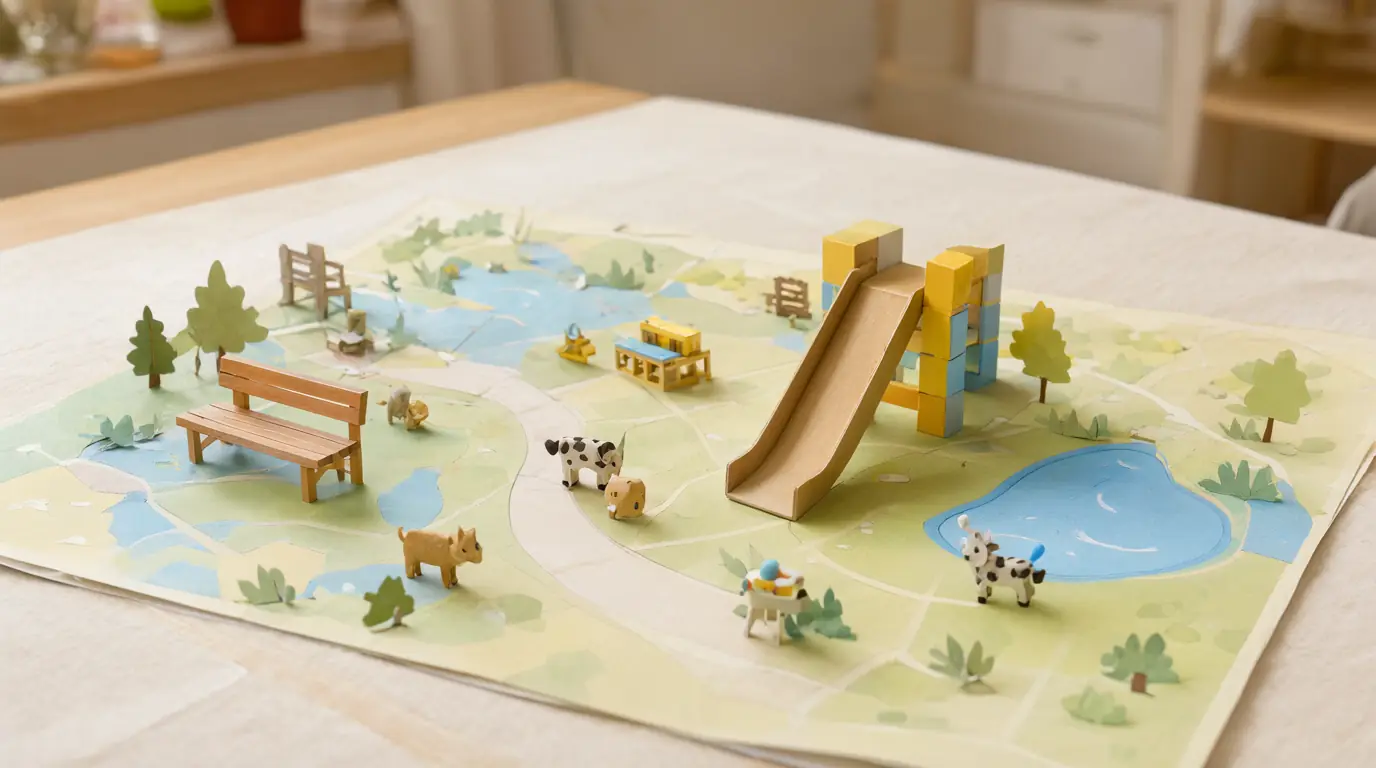
Design a tiny play park for toy figures
Planning a park lets a four-year-old think about space, routes and what other people might want. Moving toys between the entrance, the resting place and the play area tests whether the design works, and changing it is part of the fun rather than a mistake.
 You’ll need
- Blocks and cardboard offcuts
- A large sheet of paper as the ground
- Small toy figures or animals
- Green and blue crayons for grass and water
How to do it
- Lay the paper on the floor and ask, 'Where is the way in?' Draw the entrance together.
- Choose a play area and a place to rest, and build each with blocks or card.
- Draw a path linking the three places with a crayon line.
- Walk a toy along the path and see if it can reach everything.
- Ask what a visiting toy might need, such as a bench or a puddle, and add it.
- Invite your child to give the park a name and tour you around it.
Make it your own: For younger four-year-olds, use only two zones. Older children can add a rule such as 'only two toys on the slide' or measure the path with a row of blocks.
Make signs for a pretend shop
Signs give marks a purpose. A child who needs a label for their shop will be motivated to draw, copy or ask for a word, and the play gives the writing meaning beyond practising a particular letter. Your role is to write only what they ask you to.
You’ll need
- Paper cards or sticky notes
- Thick crayons
- A table or box as a counter
- Toys, books or food packaging to sell
How to do it
- Ask what kind of shop it is and what it sells.
- Draw a picture sign for the shop and ask whether it needs a word.
- Write any word your child requests while they watch, letter by letter.
- Make a price tag using dots or tally marks instead of numbers.
- Open the shop and invite a customer, either you or a toy.
- After play, ask which sign helped customers most.
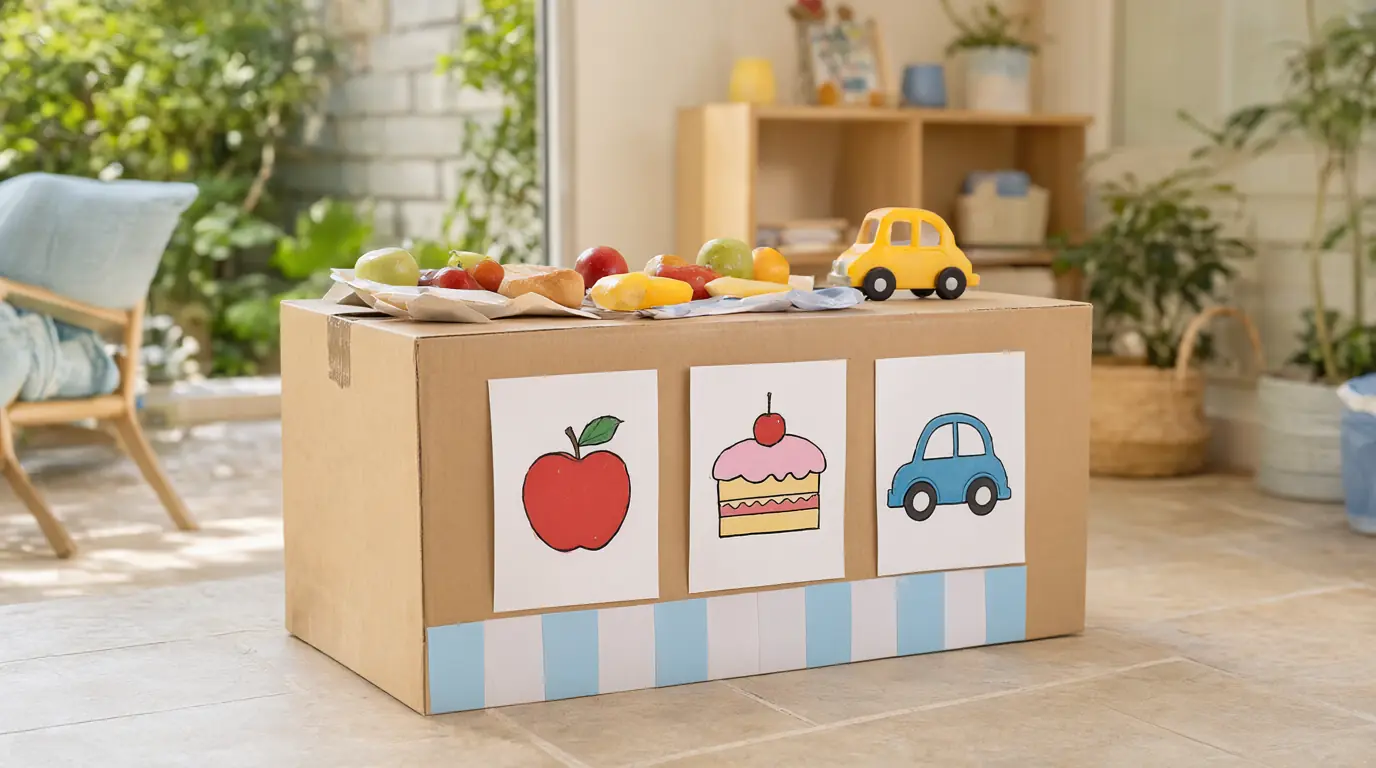
Make it your own: Younger children can draw only the pictures. Older children can write the first letter of each item or a short sentence with your help.
Test two paper bridges across a gap
A small experiment shows that shape can change strength even when the material stays the same. Your child predicts, tests and describes what happened, practising the language of cause and effect in a way that is easy to see on a table.
You’ll need
- Two strips of paper, about 5 cm by 20 cm
- Two stacks of books or blocks about 15 cm apart
- A light toy car or a small toy animal
- A few coins or counters
How to do it
- Place the stacks apart to make a gap.
- Lay one flat strip across the gap and test it with the toy.
- Fold the other strip into a zigzag or fold up the long edges.
- Lay it across the gap and test it with the same toy.
- Add counters one at a time to each bridge and count how many it holds.
- Ask which bridge held more and what could be different about its shape.

Make it your own: Younger children can compare only flat and folded. Older children can make a third bridge with their own folding idea and predict before testing.
Tell a story in three drawings
A three-part fold gives a story a beginning, middle and end, which is a simple way to practise sequencing and to give an idea form. Your child can draw, dictate or both, and can change the story whenever they like.
You’ll need
- A sheet of paper folded into three panels
- Crayons
- A pencil for writing their words
- A toy to be the main character
How to do it
- Fold the paper into three and open it flat.
- Introduce the toy and ask where it is at the start of the story.
- Let your child draw the first panel, then ask, 'What happened next?'
- Draw the second panel, then ask how the story ends.
- Write a short caption your child dictates under each picture.
- Read the story together and ask whether they want to change anything.
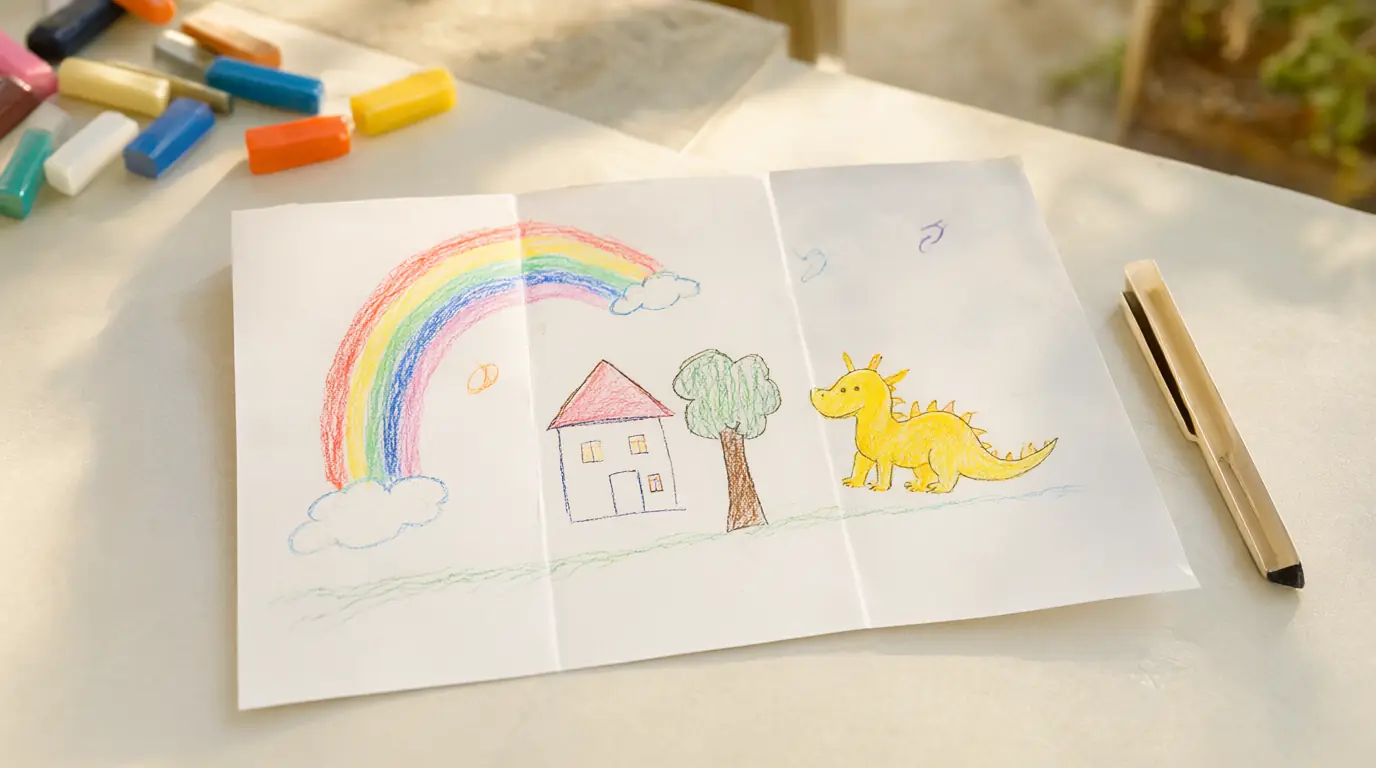
Make it your own: Younger children can draw only one panel and tell the rest aloud. Older children can use a fourth panel for a surprise or draw an extra character.
Open a toy hospital
A toy hospital gives a four-year-old a caring role and a problem to solve. Fixing a bandage or a broken wheel involves looking closely, choosing tools and explaining what is wrong, and it can make a real visit feel more familiar.
You’ll need
- Soft toys with a pretend problem
- Strips of cloth or plasters of tape for bandages
- A shoebox as a bed
- A toy doctor's kit or a spoon and a cardboard clipboard
How to do it
- Let your child choose which toy needs help and what the matter is.
- Listen as the toy 'tells' what feels wrong and ask your child to repeat it.
- Choose a tool and decide what to do first.
- Wrap, tuck or tap carefully, speaking in a calm voice.
- Put the toy to rest in the shoebox bed and wait.
- Check on the patient and decide whether it is ready to go home.

Make it your own: Younger children can care for just one toy with a single bandage. Older children can fill in a drawn chart with pictures of the problem and the treatment.

Make it work for your family
A project does not have to become a finished object. Photographing a temporary arrangement or listening to the story it tells can be enough, and a child who rebuilds the same thing three times is practising. When you are tempted to help, ask first: 'Would you like a suggestion, or do you want to try it yourself?'
If your child says 'I can't', try making the first step smaller: one block, one line, one word. Praise effort and specific choices rather than the result, such as noticing how they fixed a wobbly tower. For more ideas at this age, explore building games that invite children to test an idea or the activities that suit five-year-olds.

Parents also ask
What are good activities for a 4-year-old at home?
Building a small world, running a pretend shop, drawing a story and simple experiments with paper or water suit many four-year-olds. Let your child choose and lead, and offer help only where they ask for it.
How long can a 4-year-old concentrate on one activity?
It varies from child to child, but 10 to 25 minutes on something they care about is common. Short sessions, a place to leave work out and a choice of when to return can all help.
What if my 4-year-old only wants to watch screens?
Offer two simple alternatives at a calm time and set a clear end to screen time in advance. Keep the invitation small, such as one block or one drawing, and join in for the first few minutes.
Sources & further reading
Explore these primary sources for further context on this topic.
Choose materials and activities that suit your child, supervise as needed and adapt the ideas to their interests and abilities. About our editorial approach