Weebou Editorial Team
 In this article
A little preparation
Pick one set rather than all five, and read the questions aloud while your child listens without needing to read. Answer cards are optional: the point is the talk around each answer, not keeping score. If several children join in, let each one choose a set and take turns asking the questions themselves. Keep a calendar nearby for the date questions, since finding the fourth Thursday together teaches more than memorising a number.
Some of these questions touch on real history, including the Wampanoag people and the settling of New England, and families do not all remember that history in the same way. Stay descriptive, say plainly that you are still learning, and look things up together when a question goes further than you can answer. Weebou's Thanksgiving facts for kids is a calm place to start, and Thanksgiving words helps with the vocabulary. There is no need to make a child perform gratitude or take a side; listening and asking are enough.

Questions to explore together
When Thanksgiving happens
Dates are easy to check and satisfying to get right, which makes them a friendly place to begin. This set asks about the month, the weekday and the country, then invites your child to find the date on a real calendar. Reading a calendar this way builds a sense of how weeks and months work, without turning the holiday into a memory test.
How to do it
- Q: Which month is Thanksgiving in the United States? A: November.
- Q: Which day of the week is it always on? A: Thursday.
- Q: Is it the first Thursday or the fourth Thursday of the month? A: The fourth Thursday.
- Q: Does it fall on the same date every year? A: No — because the date follows the weekday, it shifts by a few days.
- Q: Which country holds Thanksgiving on the second Monday of October? A: Canada.
- Q: Which day does a household in the United States usually mark on the calendar? A: The fourth Thursday in November.
Make it your own: Younger children can simply point to November on the calendar. Older ones can work out how many days away the fourth Thursday is, or compare the American and Canadian dates and notice that the same holiday can sit in different months.
Foods people put on the table
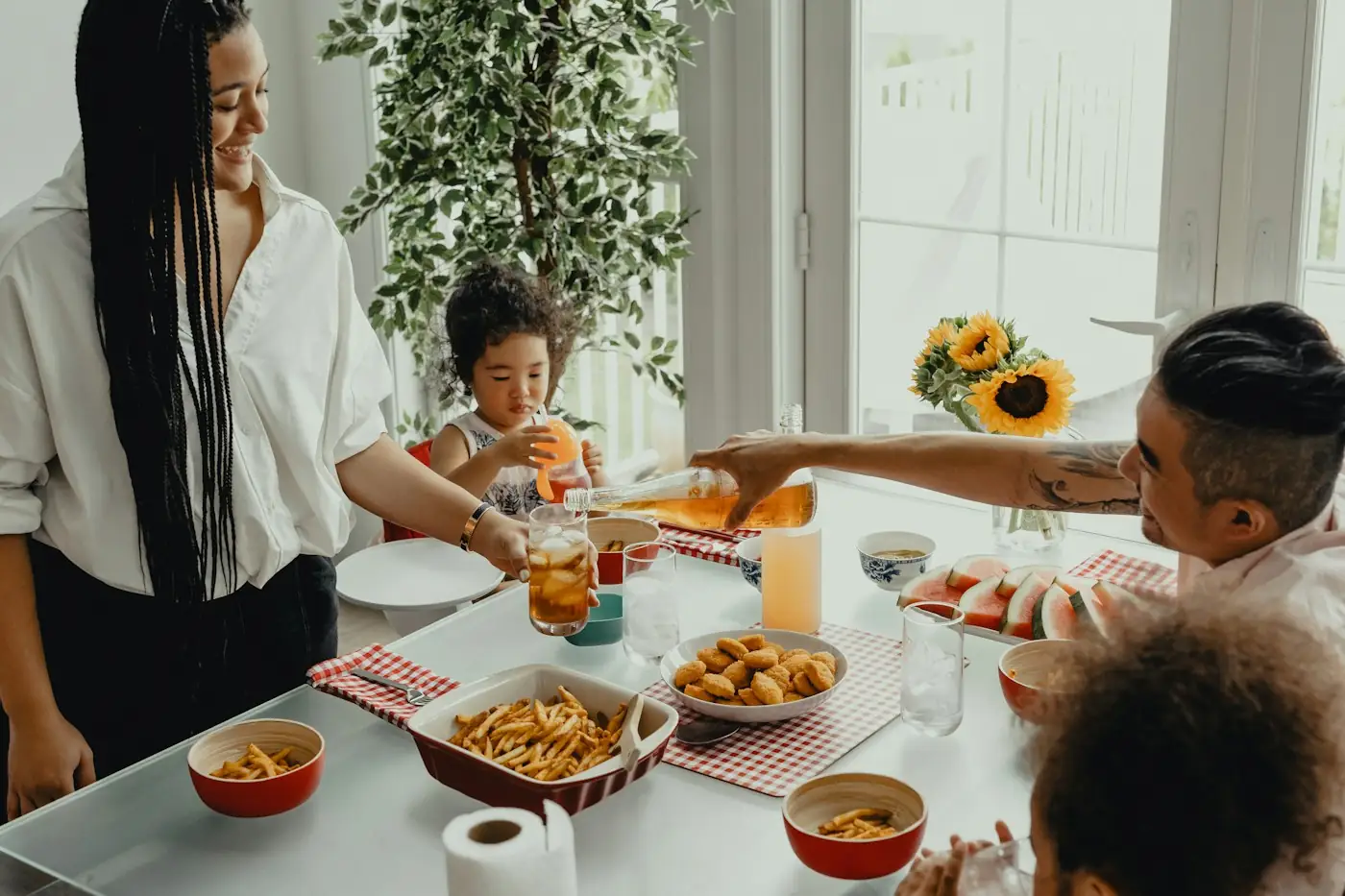
Food is the part of Thanksgiving that young children can see, smell and help with, so these questions feel familiar straight away. Naming the dishes leads naturally into talking about who makes what, which foods your family keeps and which ones you leave out. The answers are descriptive, not a rule about what should be on anyone's table.
How to do it
- Q: Which large bird is often the centre of a Thanksgiving meal? A: A turkey.
- Q: Which small red berries are cooked into a tart sauce? A: Cranberries.
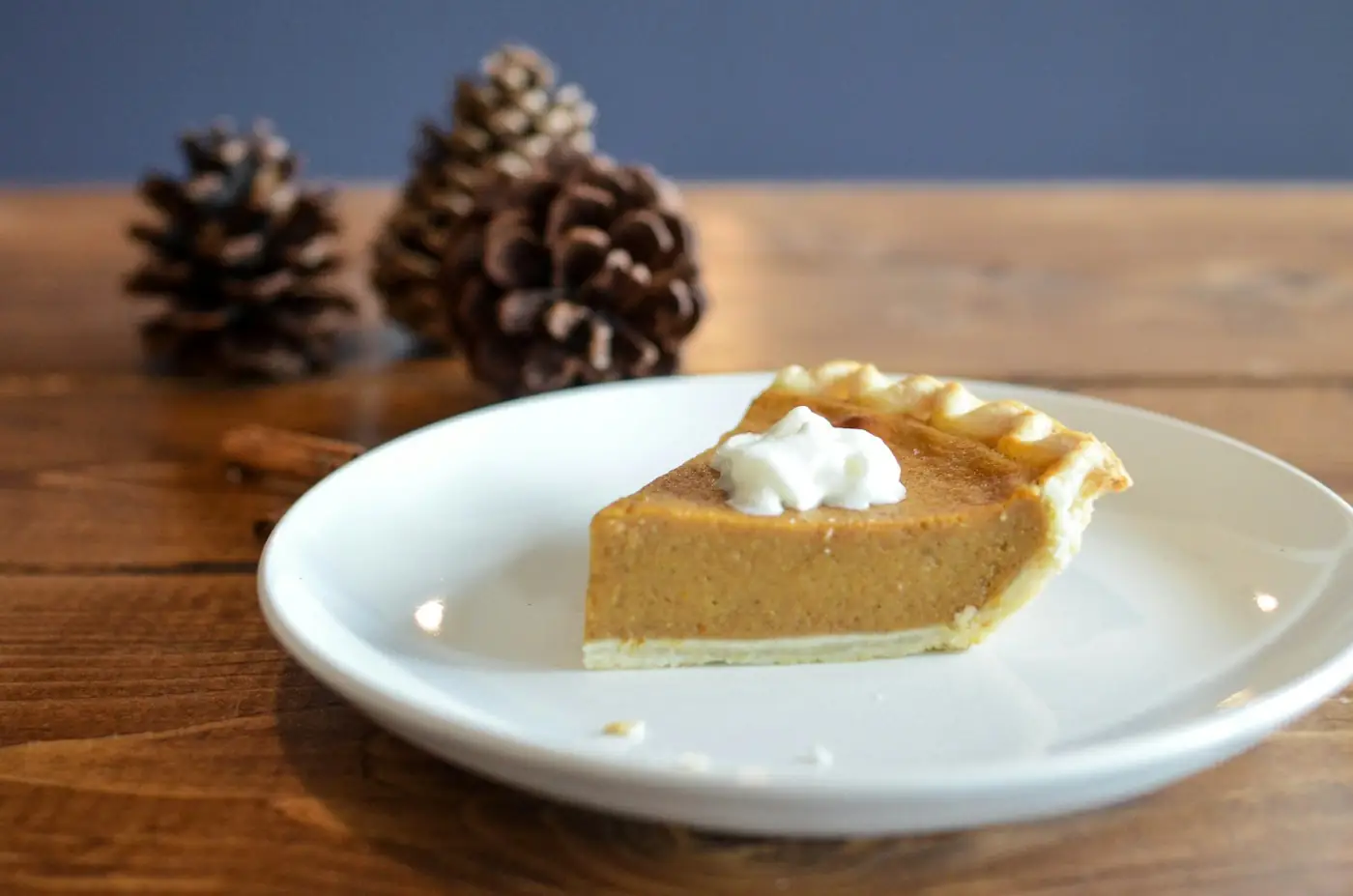
- Q: Which orange vegetable is often baked into a pie? A: A pumpkin.
- Q: What is the name for bread baked inside a dish, often with herbs? A: Stuffing, also called dressing.
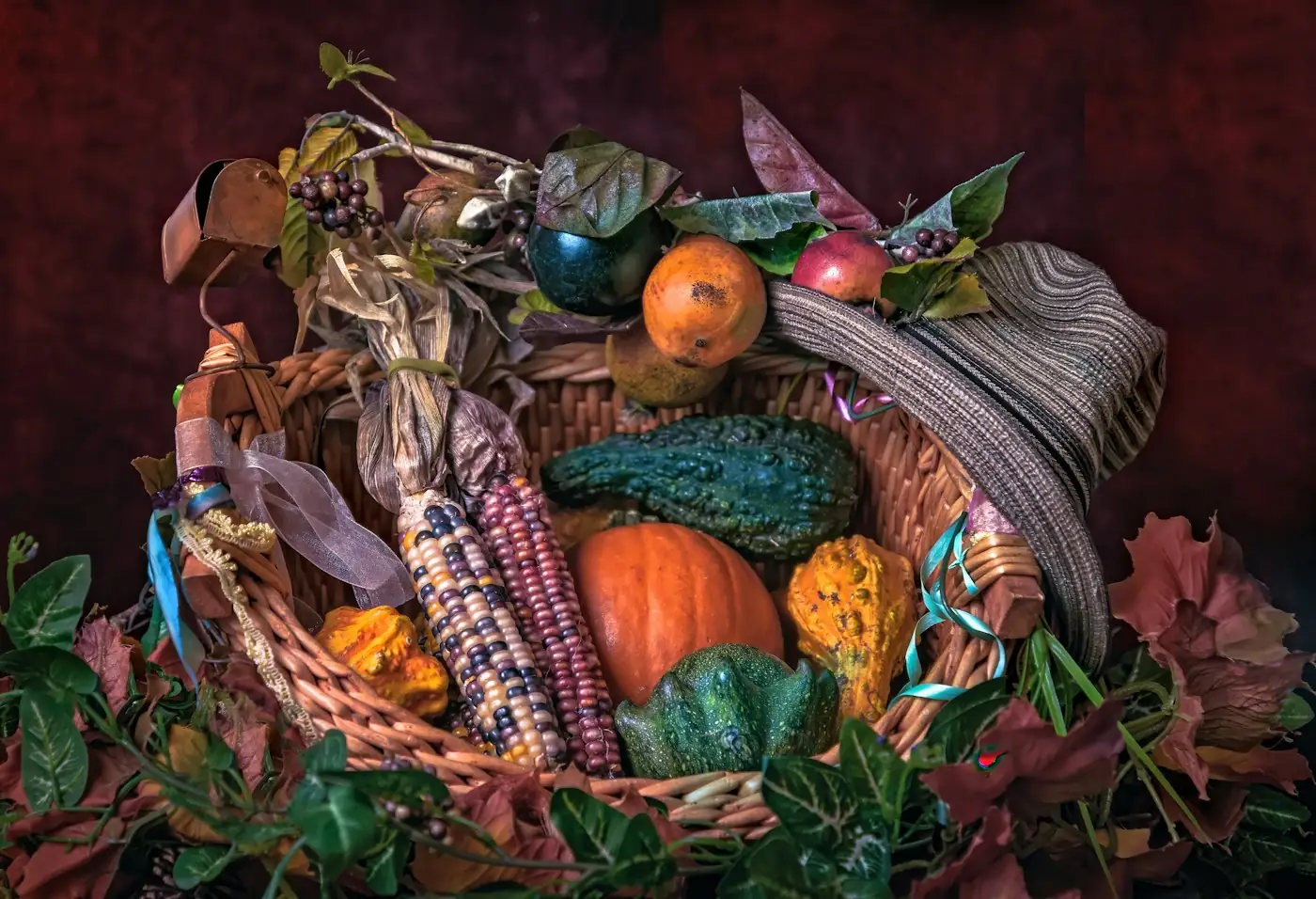
- Q: Which yellow vegetable grows on a cob and often appears at harvest meals? A: Corn.
- Q: Which nut is sometimes baked into a sweet pie? A: Pecans.
Make it your own: Toddlers can answer by pointing to pictures or to real food on the table. Older children can sort the dishes into savoury and sweet, or plan one item they would like to help make. Swap any dish your family does not eat for one you do.
Words that help you talk about the day
A handful of words carry most of the day's meaning, and unpacking them slowly makes the holiday easier to talk about. Harvest, feast and gratitude are worth explaining once and using all afternoon. Children who meet these words in conversation first will recognise them later in books and at school, and the questions give them a reason to repeat each one.
How to do it
- Q: Which word means the time of year when crops are gathered? A: Harvest.
- Q: Which word names a large, special meal? A: A feast.
- Q: Which word describes people who travel to a new place to live? A: Settlers.
- Q: Which word means the feeling of being thankful? A: Gratitude.
- Q: What do we call a public march with bands and floats? A: A parade.
- Q: Which word describes plants growing in a field, ready to gather? A: Crops.
Make it your own: Younger children can act the words out: gathering, feasting, saying thank you. Older ones can use each word in a sentence of their own and collect two or three more from a book. Keep the explanations short and let the words come back naturally through the day.
A history everyone can talk about
This set opens the history gently, without asking a child to carry a whole story or a whole culture. The answers name the Wampanoag people, admit that today's meal looks little like the 1621 gathering, and remind everyone that families remember the day differently. Treat each answer as the start of a question rather than the end of one, and stay honest about what you do not yet know.
How to do it
- Q: Which Native nation lived in the area of the 1621 harvest gathering? A: The Wampanoag.
- Q: Did that gathering look like today's Thanksgiving meal? A: No — it took place over several days and the food was quite different.
- Q: Is there only one way to tell the story? A: No — Native families and settler descendants remember it differently.
- Q: Did everything stay peaceful afterwards? A: No — conflict and loss followed for many communities.
- Q: Whose accounts can help you understand the day? A: Wampanoag writers and historians alive today.
- Q: Is it respectful to ask one guest to speak for a whole culture? A: No — read and listen to many voices instead.
Make it your own: Keep the youngest ones on the simple facts and save the harder conversations for when they ask. Older children can read a Wampanoag account alongside a settler one and notice what each one chooses to mention, then talk about why that might be.
Traditions your family can choose
The last set turns outward, asking what your own household actually does and why. Children often assume their family's way is the only way, so questions about other choices widen the picture without judging anyone. It also invites your child to suggest a small tradition of their own, which is the kind of participation they can genuinely offer.
How to do it
- Q: Is the meal always eaten at home? A: No — some families eat out, visit friends or share with neighbours.
- Q: Does a family have to serve turkey to celebrate? A: No — the food is a choice, not a rule.
- Q: Does every family watch a parade or a game? A: No — some prefer a walk, a film or quiet time.
- Q: Which kind of tradition is easiest to start? A: A small one you can repeat each year, like a shared thank-you.
- Q: Does a family tradition have to cost money? A: No — many are free, like a walk or a song.
- Q: Can children help decide a family tradition? A: Yes — asking children what matters to them makes it more real.
Make it your own: Preschoolers can choose between two simple options, such as a walk or a song. Older children can interview a grandparent or neighbour about a tradition they remember, then decide together whether to borrow it. There is no wrong answer, only what fits your family.

Make it work for your family
If a question is too hard, shrink it rather than skipping it. Ask which month Thanksgiving falls in before asking for the exact date, and let your child guess as many times as they like. Children who dislike being put on the spot can be the question-reader instead of the answerer, and a shy guest can join simply by listening. When an answer surprises your child, pause and let them wonder aloud; a wrong guess often leads to the best conversation of the day.
Write the questions you want to keep on blank cards and store them with your decorations, so the same set returns next year and grows a little. If your family enjoys open-ended talk, try Thanksgiving would you rather questions or Thanksgiving riddles for a gentler version with picture-friendly clues. Vote on a favourite question at the end and add one of your own; a family's own trivia is always the most memorable.

Parents also ask
What are good Thanksgiving trivia questions for young children?
Start with questions about things a child can see: which month Thanksgiving falls in, which bird is often on the table, or what the word harvest means. Add a few open questions, such as whether every family celebrates in the same way, so the answers lead into conversation rather than a right-or-wrong quiz.
How do you explain the first Thanksgiving to a child?
Describe it simply as a harvest gathering in 1621 where Wampanoag people and English settlers shared food. Say honestly that today's meal looks quite different, and that Native families often remember the day in their own way. For deeper detail, read a Wampanoag account together with your child.
Is it okay to play Thanksgiving trivia without keeping score?
Yes, and it often works better. Asking questions cooperatively lets a child guess freely and stay curious, without the pressure of losing. If you do keep score, let children ask the questions too, so everyone shares the part that feels comfortable.
Sources & further reading
Explore these primary sources for further context on this topic.
Choose materials and activities that suit your child, supervise as needed and adapt the ideas to their interests and abilities. About our editorial approach