8 min read
 In this article
A little preparation
Pick a spot that can get messy: a high chair tray, a plastic tablecloth over the floor or a bath-time basin all work. Put a damp towel and a dry towel within reach before you begin, and have a small bowl of water ready for rinsing hands. A baking tray or a large plastic tub keeps the mess contained and gives the child a clear edge to work within.
Check for allergies before offering any food-based material: flour, yoghurt and cooking oil are common triggers, and a child who tastes the mixture should be given a drink and a wipe, not a lecture. Stay within arm's reach throughout and keep household cosmetics and cleaning sprays out of the room, since a child who has enjoyed one foamy texture may reach for another. Plan about 15 minutes. If your child does not want to touch the material at all, offer a spoon, a paintbrush or a pair of kitchen tongs and let them decide when, or whether, to use their fingers.

Ideas to try together
Cloud dough in a tray
Cloud dough is made from flour and a little oil, and it feels soft and powdery, then holds a shape when squeezed. It offers the same gentle, tactile experience as foam: children can swipe, pat, pinch and draw lines. It is not for eating, so use it with children who no longer put everything in their mouths.
 You’ll need
- 4 cups plain flour
- ½ cup vegetable oil
- A shallow baking tray
- A spoon and a small scoop
- A damp cloth for hands
How to do it
- Tip the flour into a bowl and pour in the oil.
- Let your child squeeze and rub the two together until it feels like soft, crumbly sand.
- Spread the mixture across the tray with the back of a spoon.
- Invite your child to draw a path with one finger, then smooth it flat and draw another.
- Press a small scoop into the dough to make a mound, a hill or a castle.
- Tip it into a bin bag once play ends, rather than washing it down the sink.
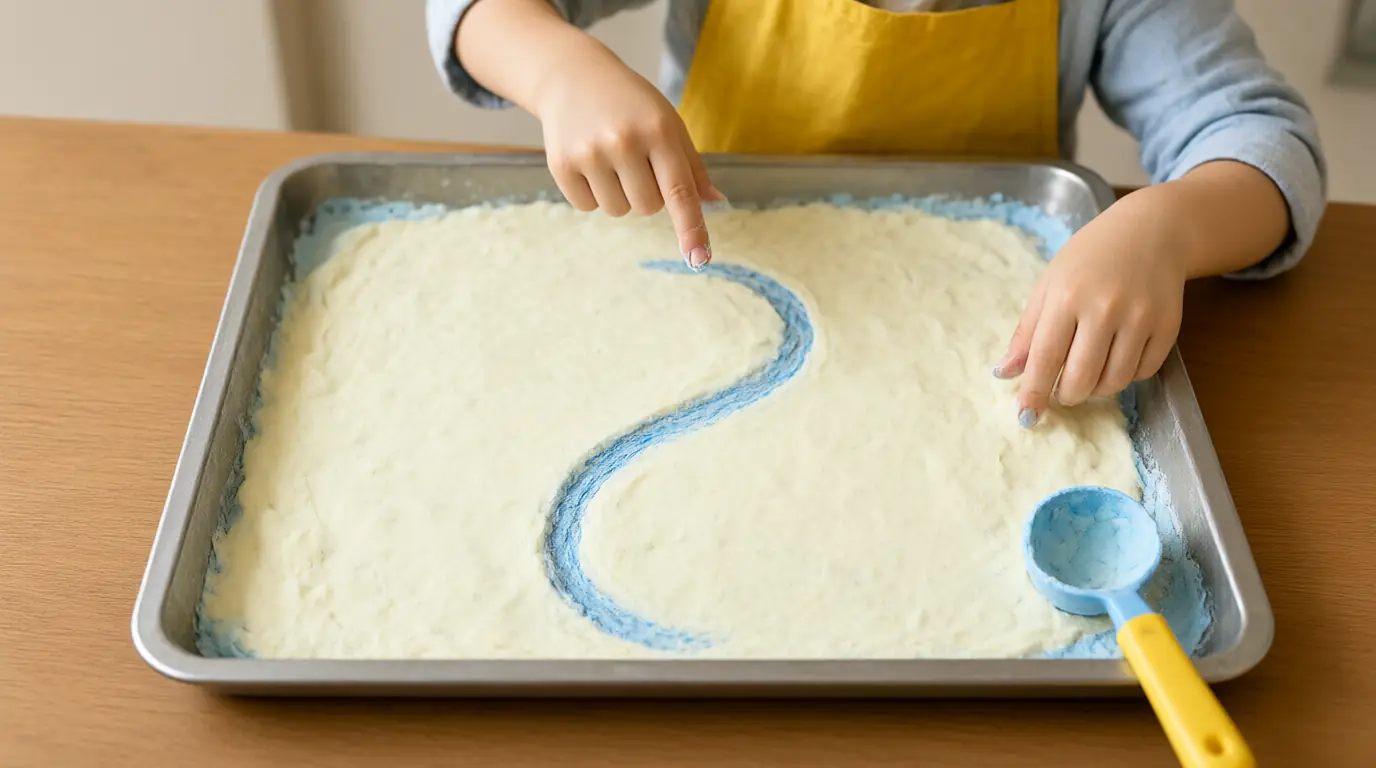
Make it your own: For younger children, give a spoon and a pot and let them scoop rather than shape. Older children can use a ruler to draw straight roads or press cookie cutters into the surface to make shapes.
Yoghurt finger painting
Plain yoghurt feels cool and smooth, spreads easily and is safe if a child tastes it, which makes it a good choice for younger children who still explore with their mouths. A drop of food colouring turns the foamy white into a rainbow without any cosmetic product involved.
You’ll need
- A small bowl of plain, thick yoghurt
- 2 or 3 drops of food colouring in separate cups
- A high chair tray or a plastic tray
- A soft cloth
How to do it
- Spoon a few tablespoons of yoghurt onto the tray.
- Stir a drop of colour into one portion and leave the rest white.
- Let your child spread the yoghurt and draw with a finger.
- Add a second colour and watch what happens when two colours meet.
- Press a clean sheet of paper over the pattern to take a print.
- Wipe hands and tray together when the paint starts to feel sticky.
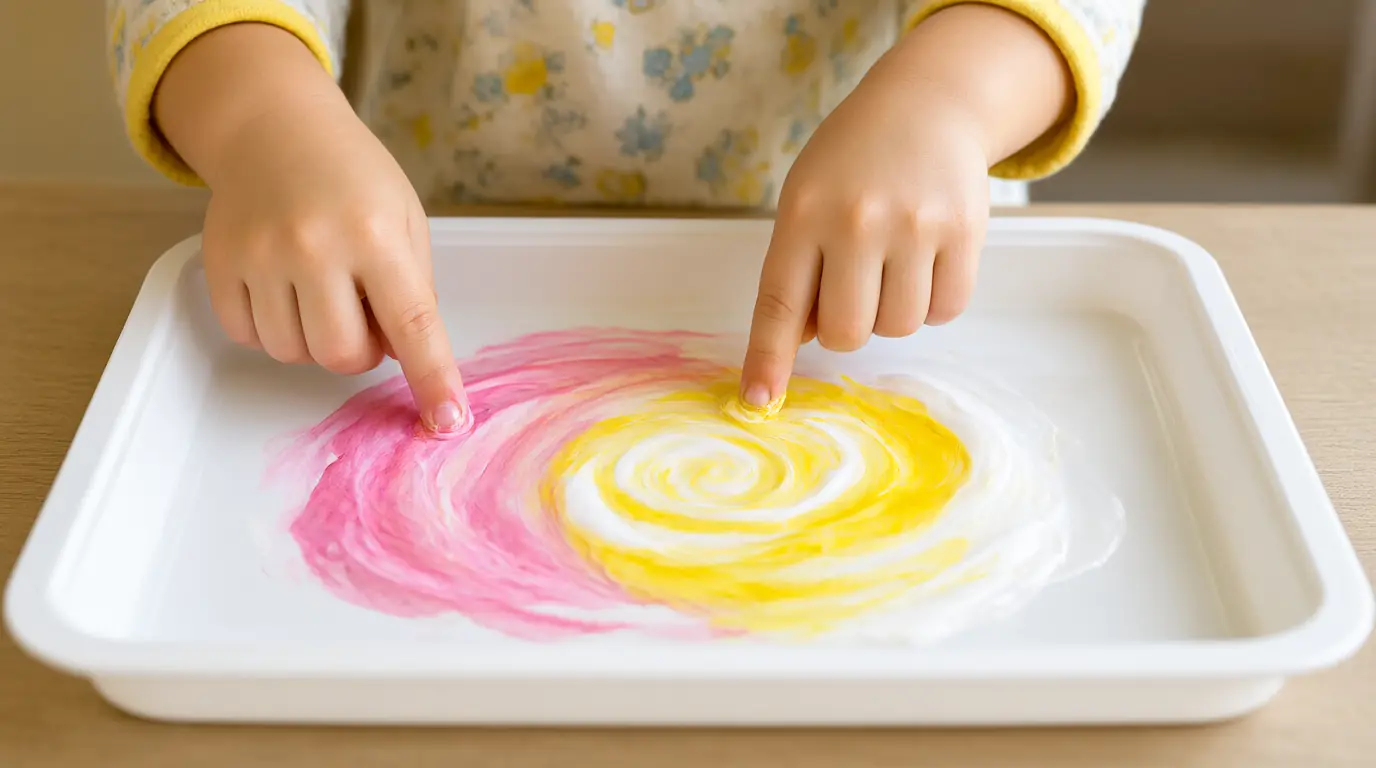
Make it your own: Check for dairy allergy first and substitute a plant-based yoghurt if needed. Older children can mix two colours deliberately and predict what will appear before they stir.
Cornflour tray drawing
Cornflour is a fine, silky powder that records every mark. A thin layer on a tray works like a magic slate: a finger draws a line, a wipe erases it, and children can repeat the cycle as many times as they like. It is a calm, slightly cooler experience than foam.
You’ll need
- ½ cup cornflour
- A dark-coloured tray or baking sheet
- A paintbrush and a lolly stick
- A small sieve (optional)
How to do it
- Sprinkle a thin layer of cornflour across the dark tray.
- Let your child draw a squiggle with one finger and look at the line it leaves.
- Try the paintbrush handle for a thinner mark and the stick for a scratchy one.
- Gently shake the tray to wipe the surface clean.
- Draw a letter, a shape or a pattern for your child to copy.
- Brush the powder into the bin and wipe the tray with a damp cloth.
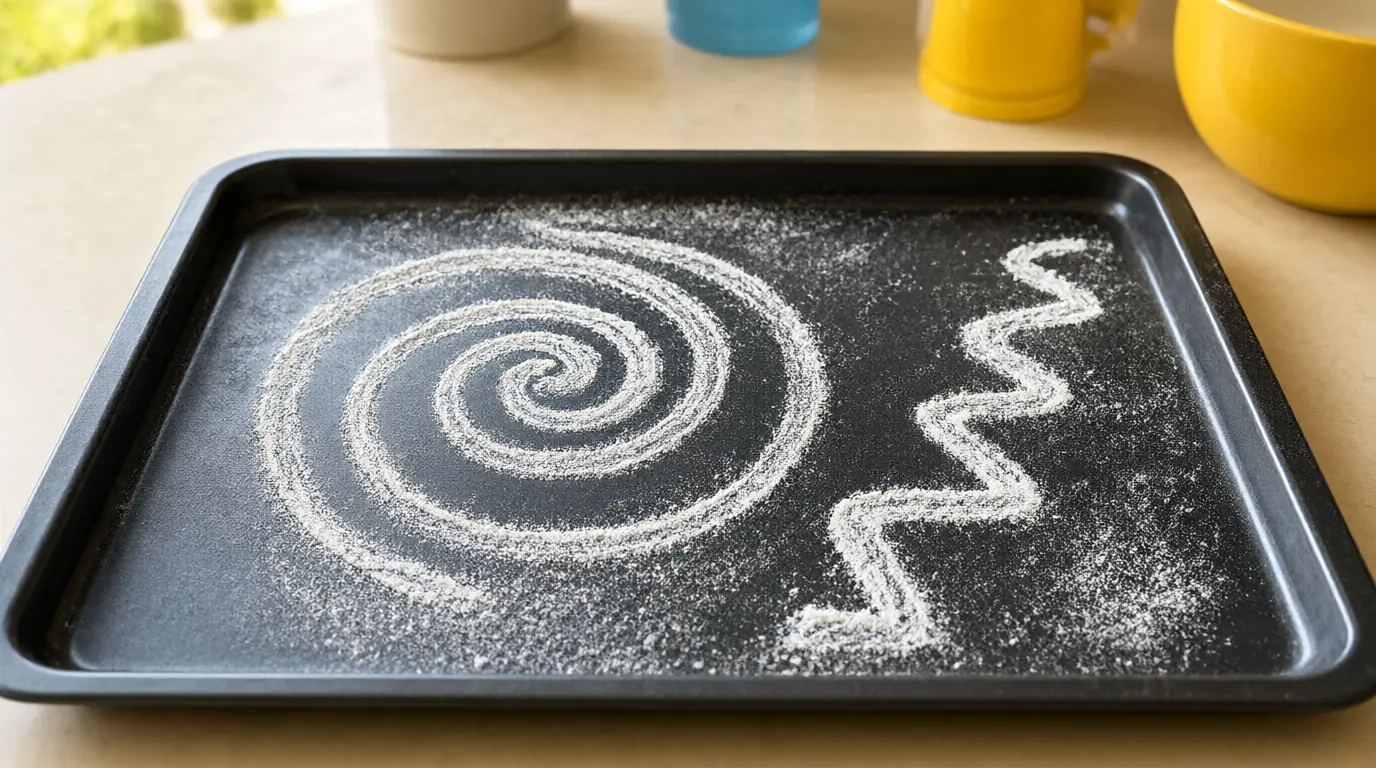
Make it your own: Keep the powder away from faces and work outside for children who tend to blow on it. Older children can write their name or draw a simple map for another person to follow.
Window water painting
Water painted onto a window, fence or paving slab makes a mark that glistens, then fades away. It gives the satisfying smoothness and the big arm movements of foam play, but uses only a bowl of water, so there is no clean-up and no ingredient to worry about.
You’ll need
- A bowl of water
- A wide brush and a sponge
- A clean window, a fence or a dry patio
- A towel for wet sleeves
How to do it
- Fill a bowl with warm water and place it at your child's height.
- Dip the brush and make one long stroke across the surface.
- Watch the mark together and notice what happens to it over the next minute.
- Use the sponge to make a patch, a circle or a handprint.
- Try drawing a shape, then asking a friend to guess what it is.
- Pour any leftover water onto a plant to finish.
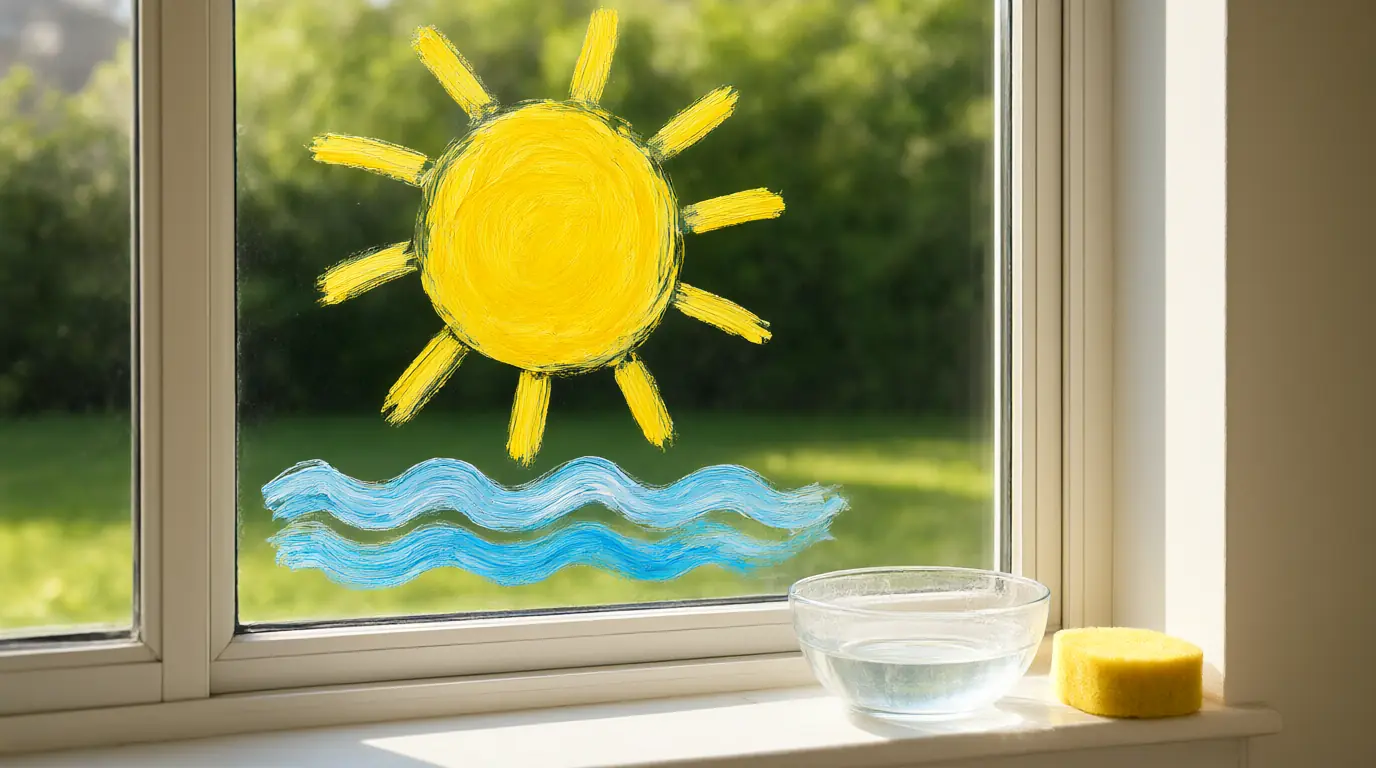
Make it your own: Younger children can simply splash and wipe. Older ones can race the sun, making a picture and comparing how long different surfaces keep their marks.
Sponge print clouds
This idea turns the cloud shapes of foam play into a picture that lasts. Children press a damp sponge into white paint, stamp it across dark paper and see soft, bumpy shapes appear. It works well for children who like the look of foam but do not like the feel of it on their hands.
You’ll need
- A sheet of dark blue paper
- White washable paint in a shallow dish
- A kitchen sponge cut into 2 or 3 chunks
- A damp cloth
How to do it
- Pour a little paint into the dish and spread it thin.
- Dab a sponge chunk in the paint, then press it onto the paper.
- Make more prints in a cluster until the cloud looks full.
- Rinse the sponge and press a different shape to compare.
- Add a flat paper cut-out of a moon or a sun behind the clouds.
- Leave the picture flat to dry before hanging it.
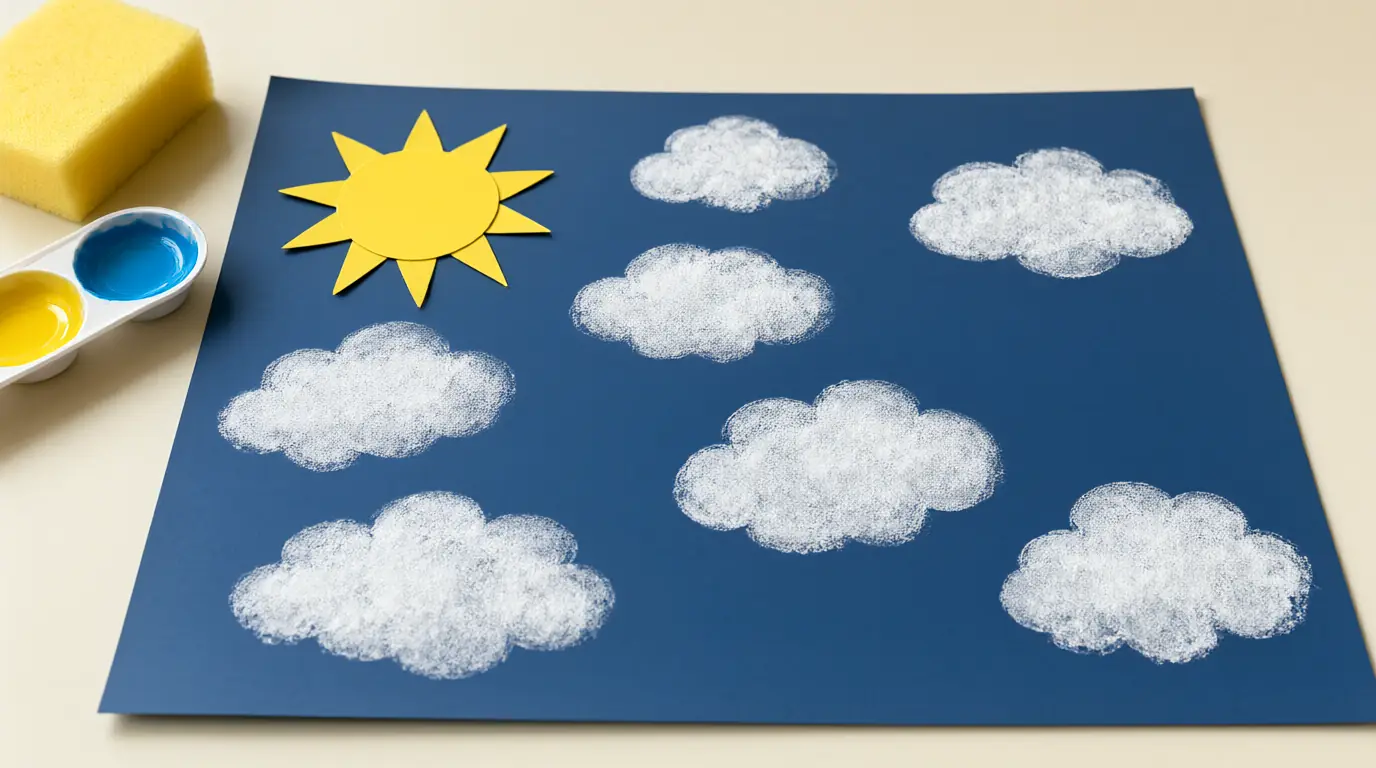
Make it your own: Use a clothes peg as a handle for children who prefer not to touch the paint. Older children can mix grey paint to show a rain cloud and talk about how weather changes.

Make it work for your family
Most messy-play problems come from one of three things: too much material, too little space, or a child who is asked to enjoy something they are not ready for. Start with a small amount in a shallow tray and add more only when it is used up. If your child tenses at the first touch, put the tray down at the other end of the table and carry on with your own play: curiosity often wins without a push.
Clear-up is easier if you decide the rules in advance, for example that the tray stays on the table and hands get wiped before touching anything else. For more ideas that use texture without cosmetics, try these sensory games for kids, or move on to easy painting ideas when your child is ready for colour.

Parents also ask
Is shaving cream safe for toddlers to play with?
Shaving cream is made for adult skin, not as a toy. Fragrances and other ingredients can irritate young skin and eyes, and a toddler may taste it. Many families prefer plain yoghurt, cloud dough or cornflour, which are easier to control and rinse away.
What can I use instead of shaving cream for sensory play?
Plain yoghurt, cloud dough made from flour and oil, a thin layer of cornflour on a tray and water painting all give a soft, smooth texture. Choose the one that suits your child's age and any allergies, and supervise throughout.
How do I clean up after messy play?
Work on a tray or plastic sheet and keep a damp cloth and a dry towel within reach. Scrape or wipe most of the material into the bin first, then rinse hands in a basin. Avoid washing flour mixtures down the sink, as they can clog pipes.
Choose materials and activities that suit your child, supervise as needed and adapt the ideas to their interests and abilities. About our editorial approach