7 min read

 In this article
A little preparation
Make a small food kit: picture cards cut from old magazines or drawn on card, a few pieces of play food, two baskets and a tray. Wash any plastic or fabric play food before use. If you want to include real food, an adult checks allergies, choking risks, hygiene and your child's usual needs before anything is handled or tasted, and tasting stays optional.
Play at a table or on a rug with room to move, and avoid playing when your child is very hungry or just before a meal, when real food may feel more tempting than pretend. Show the game once, then let your child take the leader role. Keep sessions to about 15 minutes, and put the kit in a labelled box so your child can choose to play again. Games are not a way to change what a child eats, so keep any talk about meals separate.

Ideas to try together
The picture café
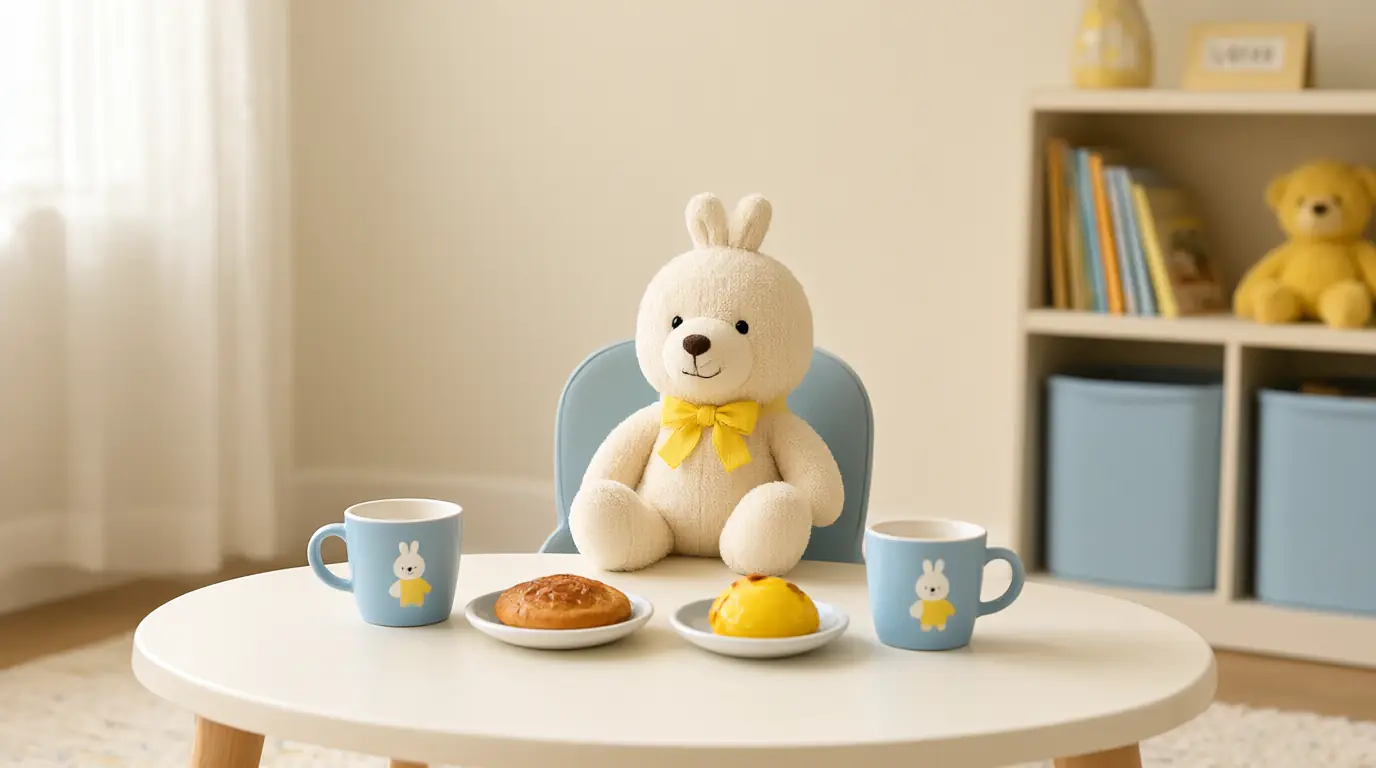
Running a café gives children a script they can use again and again: greet, choose, serve, thank. It practises polite phrases and turn taking, and gives you a way to model saying no thank you without it feeling like a refusal.
 You’ll need
- A paper menu with four food pictures
- Play plates and cups
- Two baskets of pretend food
- A toy notepad and crayon
How to do it
- Draw a short menu together with four pictures and no prices.
- Choose who is the customer and who is the café worker.
- The customer points to a picture and says what they would like.
- The worker finds the matching food and serves it on a plate.
- Practise a friendly 'no thank you, maybe next time' when something is not wanted.
- Swap roles and change the menu.
Make it your own: For younger children, offer only two menu choices. For older children, add a simple order of two items or a pretend bill drawn as tally marks.
Grocery delivery round
A delivery round turns a list into a mission. Children match pictures to real objects, hold a list in mind and check their own work, all while pretending to be a helpful driver. The focus is on finding and naming, not on earning food as a prize.
You’ll need
- Several baskets or boxes as houses
- Food picture cards
- A short illustrated shopping list for each house
- A bag for the delivery person
How to do it
- Set the baskets around the room and put a list beside each one.
- Place the food cards in a pile on a table, which is the shop.
- Read the first list aloud together and look at the pictures.
- Collect those items into the bag from the pile.
- Deliver them to the right basket and check them against the list.
- Try a second delivery with a new list.
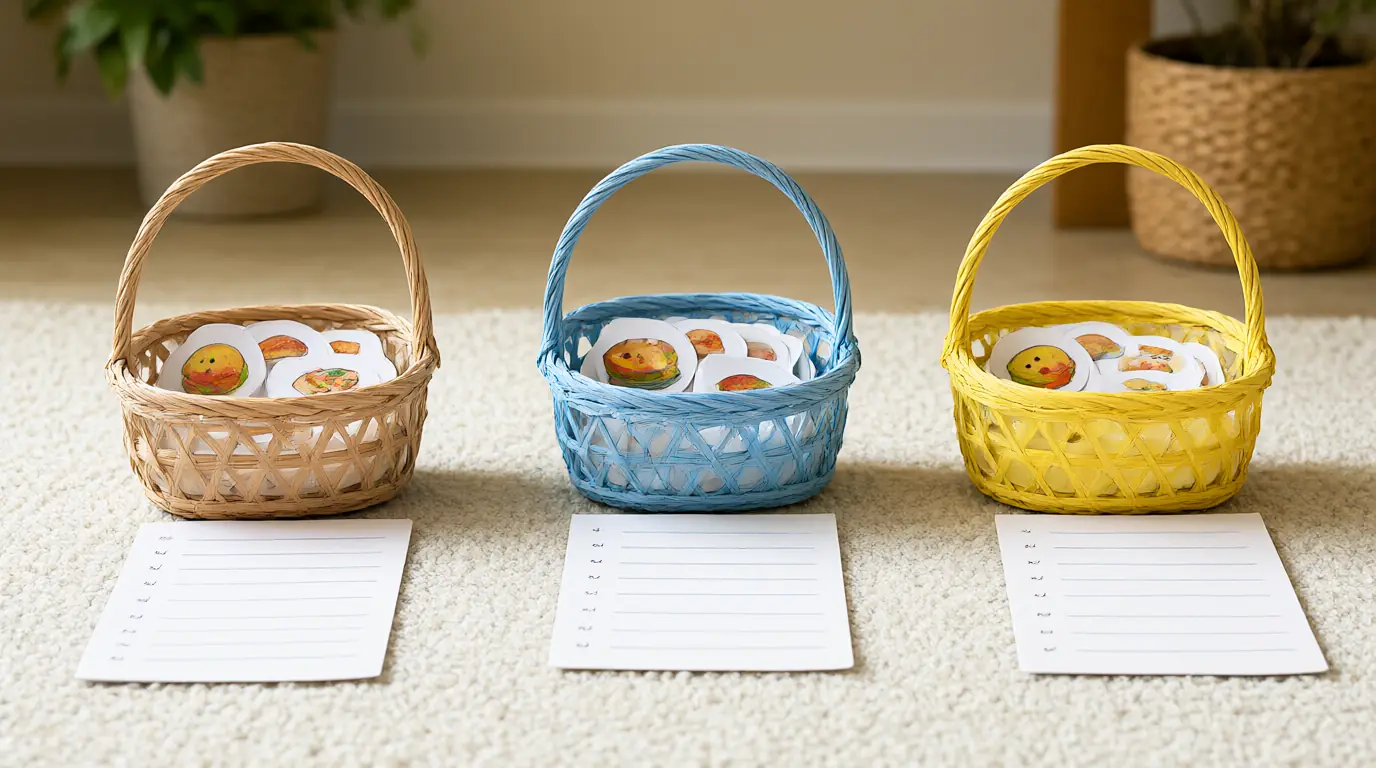
Make it your own: Reduce the list to two items for a three-year-old. Older children can write a list for you or add a rule such as delivering in the order shown.
Market stall groups
Sorting food pictures by something visible encourages looking closely and talking about similarities and differences. There may be several sensible groupings, and discovering them makes children flexible thinkers. Because it is only pictures on a cloth, nobody is asked to eat, and the game still leaves room for plenty of conversation.
You’ll need
- Ten to twelve food picture cards
- A cloth for a market table
- Three bowls or trays
- Sticky dots in red, green and yellow
How to do it
- Spread the cards on the cloth and name them as you go.
- Choose one visible rule, such as colour, and sort into trays.
- Ask your child to describe one group in their own words.
- Pick up one card and ask whether it could fit somewhere else.
- Change the rule, perhaps to round and long shapes, and sort again.
- Compare how the market looks now and which way your child prefers.
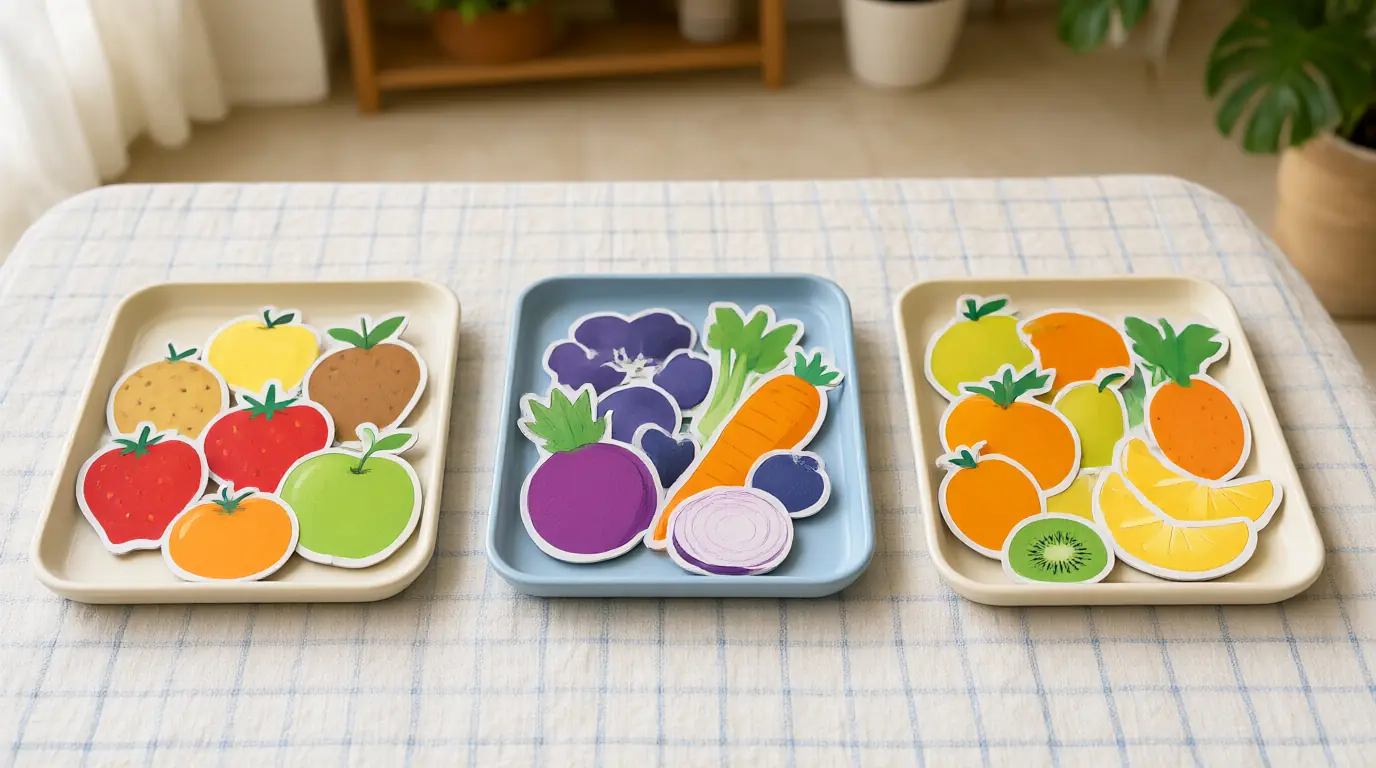
Make it your own: Start with two groups and clear examples. Older children can invent a third rule, such as foods you might see at a birthday party, and explain the choice.
An imaginary recipe story
Inventing a dish gives children a beginning, a middle and an end, which is the shape of a story and of a recipe. Because it is pretend, they can combine anything they like without worrying about taste or waste.
You’ll need
- Three picture ingredients
- A large paper plate or bowl
- A wooden spoon
- Paper and crayons
How to do it
- Choose three ingredient pictures and lay them in a row.
- Ask your child to name the dish, even if the name is silly.
- Act out preparing each ingredient with the spoon and bowl.
- Draw three boxes on paper: prepare, combine and serve.
- Fill in each box with a quick drawing.
- Serve the pretend dish to a toy and ask for its review.
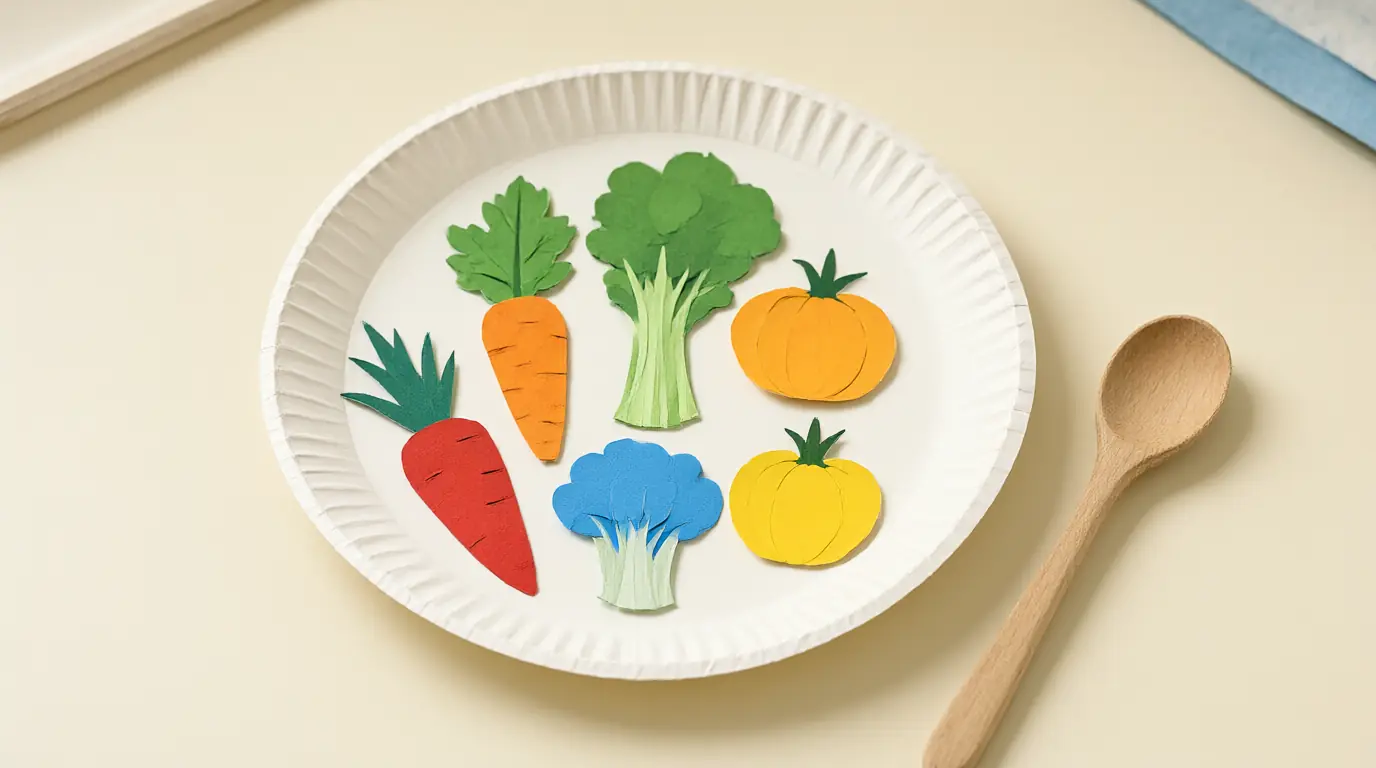
Make it your own: Younger children can act it out without drawing. Older children can write a first word on each step or add a surprise ingredient that has to fit.
Picnic helper checklist
A pretend picnic gives practice in counting guests and matching things to people. It works with real or play items and ends with a clear success, as everyone has a seat and something on their plate.
You’ll need
- A blanket
- Play plates and cups
- Soft toys as guests
- A drawn checklist with a tick box
How to do it
- Count your guests aloud and write the number on the list.
- Draw one plate and one cup for each guest.
- Lay out the blanket and place the plates in a ring.
- Add cups beside each plate, counting as you go.
- Tick the list and check nobody is missing.
- Tell the guests what is on the menu and invite them to sit.
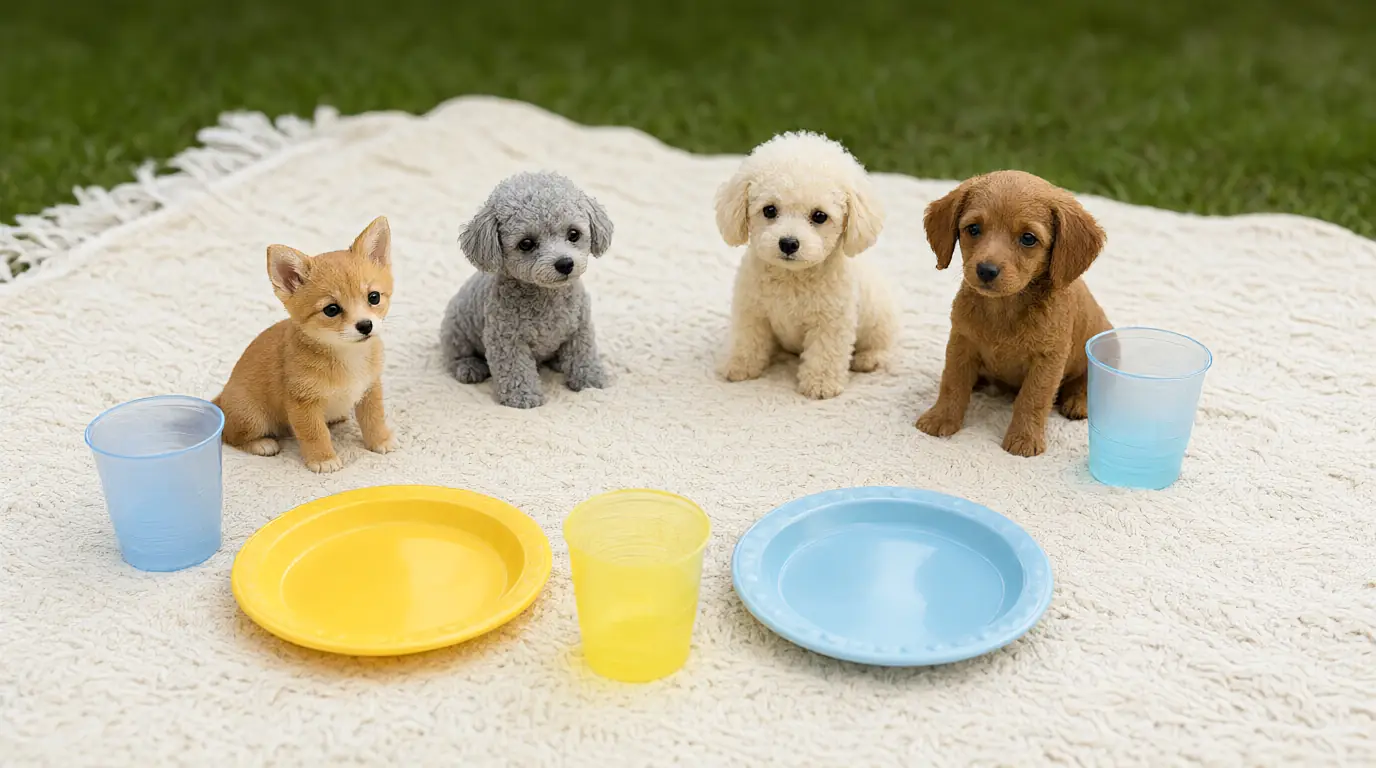
Make it your own: For younger children, use two guests and one item each. Older children can add napkins, forks or a rule such as 'stripes on the left'.

Make it work for your family
Avoid describing foods or eaters as good or bad, and never require a bite to continue playing. Children can look, name, sort or pass an item and still take part. If a child feels uneasy about a food picture, simply put it aside.
Keep the play kitchen clean and do not use real food that has been played with for later eating. If you have worries about your child's eating, talk to a doctor or other qualified professional rather than using a game as the solution. For related ideas, explore nutrition-themed games without pressure or a farm-themed pretend play day.

Parents also ask
What are good food games for toddlers and preschoolers?
Pretend cafés, picture sorting and delivery rounds are all easy to play with pictures or play food. They use names, colours and turn taking and require no tasting, so they suit different appetites and allergies.
Should food games use real food?
Not necessarily. Pictures and play food avoid allergy, choking and waste concerns. If you use real food, an adult should check ingredients, hygiene and your child's needs first, and tasting should always be optional.
Will food games help with picky eating?
They can offer low-pressure play with food, but they are not a treatment and cannot promise a change in eating. If mealtimes worry you, ask your doctor or a feeding specialist for advice.
Choose materials and activities that suit your child, supervise as needed and adapt the ideas to their interests and abilities. About our editorial approach