8 min read

 In this article
A little preparation
Choose a time when neither of you is hungry, tired or in a rush, and put phones out of reach for 20 to 30 minutes. Tell your daughter what you have in mind, then ask what she would add or change. A child who has helped plan the afternoon is more likely to stay with it, even if the activity ends up different from your idea.
Prepare one or two simple materials rather than a whole kit, and keep the space tidy enough that you can sit at the same level on the floor or at a table. If something does not work, switch to another idea without comment. Not every child wants to do the same things as their mother, and a daughter's tastes are her own: if she would rather build a ramp than paint a picture, follow that. Ask before you share anything she has made outside your family, including photographs.

Ideas to try together
Teach each other
Adults are used to being the teachers, so turning the roles round can be a pleasure. When your daughter shows you how to do a cartwheel, fold a paper boat or play her favourite game, she practises explaining, and you practise listening and being a beginner. It makes her an expert in something real.
 You’ll need
- A skill each person chooses
- A timer set for 5 minutes each
- Paper for a quick sketch (optional)
How to do it
- Each of you chooses one small thing you can show the other: a clap pattern, a drawing trick, a knot.
- Decide who goes first and set a gentle five-minute limit.
- The teacher shows the first step and then waits for the learner to try.
- The learner asks one question before trying again.
- Swap roles and repeat with a different skill.
- Finish by saying one thing you learned from the other.
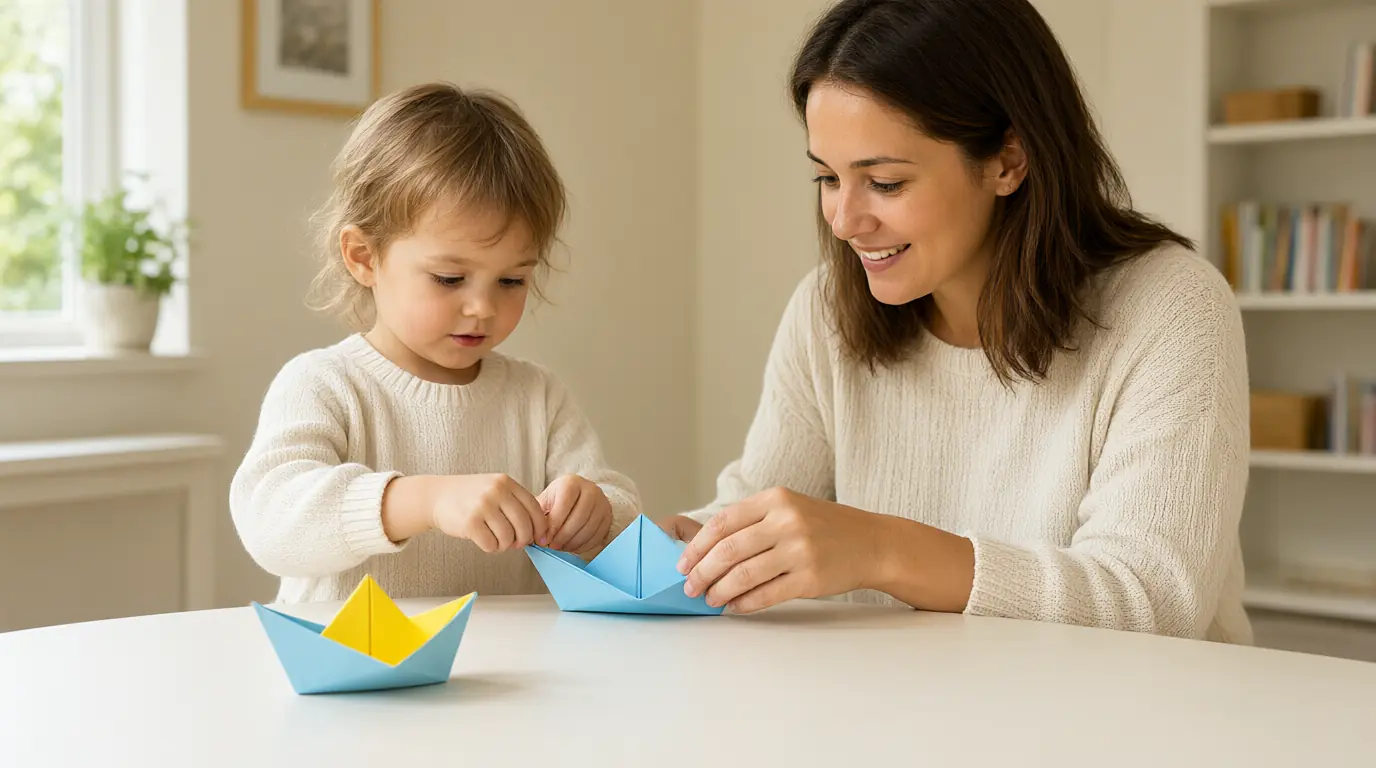
Make it your own: Younger children may only be able to show, not explain, which is fine. Older children can write a two-line instruction card for the skill they taught.
One picture, two artists
Working on one picture lets you see how another person thinks. It also gives your daughter practice in agreeing, adding to someone else's idea and leaving a part alone. The picture is a conversation in lines and colours, and nobody has to be good at drawing.
You’ll need
- A large sheet of paper
- Pencils or crayons in 4 or 5 colours
- Masking tape for a border
How to do it
- Tape the paper to the table and draw a line down the middle with a crayon.
- Each of you begins on one side with a shape, a creature or a scribble.
- After two minutes, swap sides and add to the other person's drawing.
- Ask before changing anything: may I add a tail to this?
- Join the two halves by drawing a path, a river or a rainbow across the line.
- Give the picture a title together.
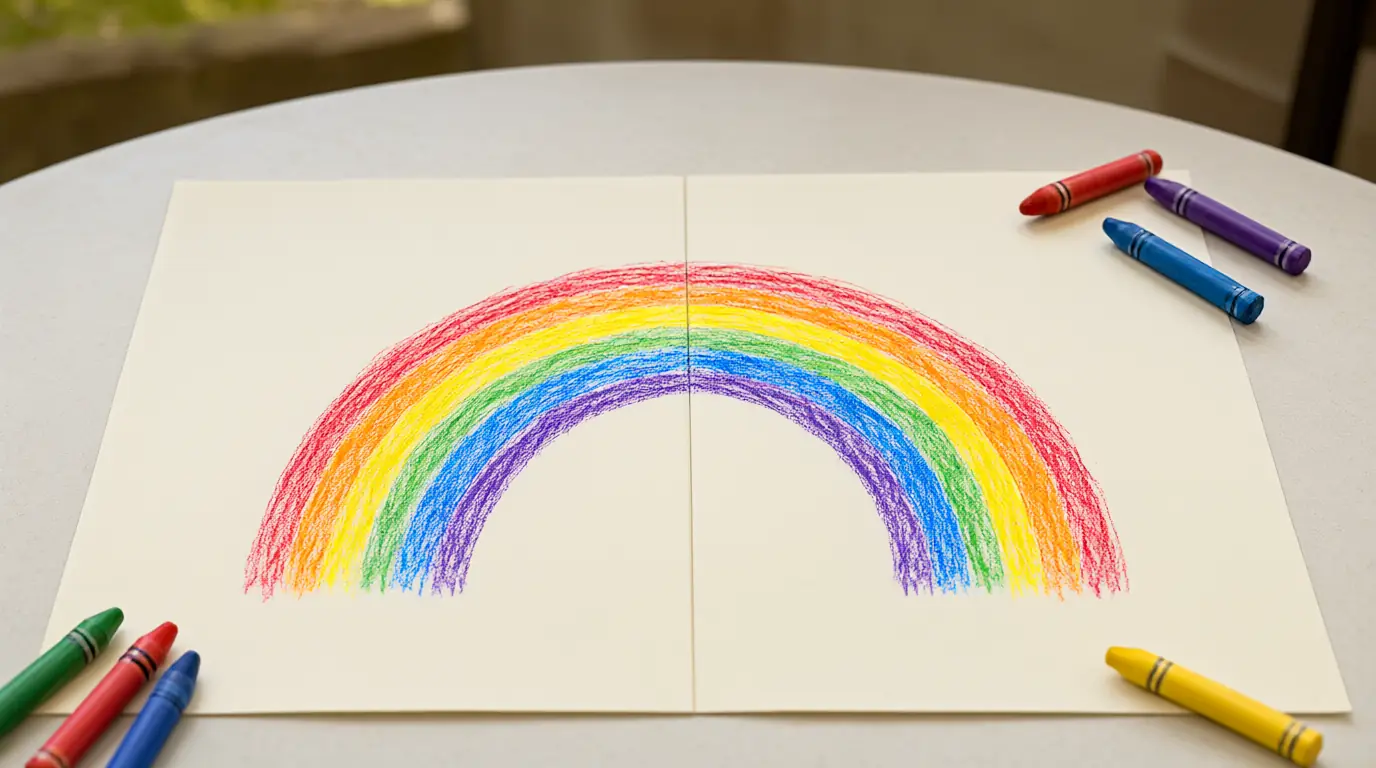
Make it your own: Younger children can use just two or three colours and big marks. Older children can plan a scene first, such as a town, and each draw half of it.
A family recipe and its story
Cooking together gives children real jobs and a taste of family history. A recipe connects a child with relatives, places and times she may never have known. Whether it is a plain pancake or a festival dish, you can tell her where it came from and who made it first.
You’ll need
- A simple, well-known family recipe
- A washed apron or old T-shirt
- Child-safe tools such as a wooden spoon and a plastic bowl
- A notebook
How to do it
- Choose a recipe with a few steps and no sharp tools for your daughter.
- Tell her one short story about where it came from.
- Let her measure, pour or mix while you handle hot or sharp parts.
- Ask her to guess what each ingredient will do.
- Write the recipe down in her words, or let her draw each step.
- Eat the result together and say what you would change next time.
Make it your own: Younger children can stir or sprinkle. Older children can read a step aloud and count scoops. Check for allergies and adapt the recipe if needed.
A walk led by the child
A short walk where your daughter decides the route changes the feeling. She may stop at a puddle, a cat or a pile of leaves for far longer than you would, and you get to see her world from a lower height. Following her gives her a clear message: what you notice matters.
You’ll need
- A small bag
- A notebook or a few sheets of paper
- A pencil
- Sensible shoes and a coat
How to do it
- Tell her she is the guide and you are the visitor.
- Walk to the end of your street, then ask her which way to go.
- Stop whenever she stops and ask what she can see.
- Share one thing you notice too: a smell, a sound or a colour.
- Draw or write one thing from the walk on the way home.
- Stick the page on the fridge as a map of the trip.
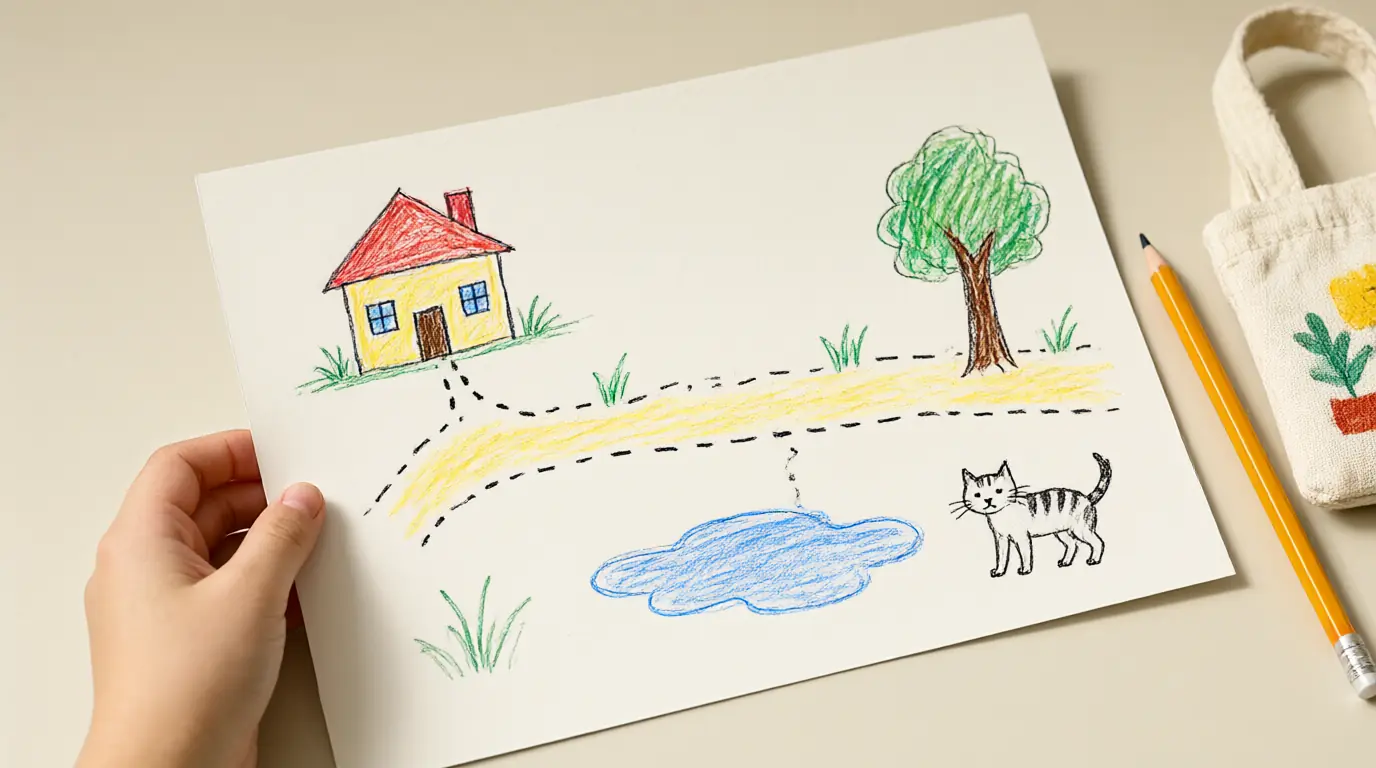
Make it your own: Younger children can take a toy as a companion. Older children can lead a longer route and carry a simple map. Always stay within sight and away from traffic.
A tiny time capsule
A time capsule helps children think about change: what is true today, and what might be different later? Choosing the contents together gives the two of you a chance to say what matters now. Opening it in a few months is a small celebration of how much your daughter has grown.
You’ll need
- A shoebox or a biscuit tin with a lid
- A sheet of paper for each person
- A drawing or a handprint
- A small favourite object
How to do it
- Decide when you will open the capsule, such as next birthday.
- Each person writes or draws something about today, such as a favourite food or friend.
- Add a handprint and a small object that matters.
- Write one wish for each other on a folded slip of paper.
- Put everything in the box and close the lid.
- Hide it somewhere safe and mark the date on a calendar.
Make it your own: Younger children can draw rather than write. Older children can write a short letter to their future self and predict what they will be doing when it opens.

Make it work for your family
Some of the best moments come when you stop steering. If your daughter wants to change a rule, extend the game or finish early, let her. Your job is to be curious and to notice what she enjoys, not to produce something to display. A short, easy session that ends while she still wants more is worth far more than a long one that ends in a battle.
Once an idea works, repeat it on a regular day, because a small ritual such as a Saturday walk can mean more than a big outing. For more everyday ideas, look at these family activities at home, or try some kindness activities that you can plan together.

Parents also ask
What can a mother and daughter do together at home?
Cook a simple recipe, draw one picture together, teach each other a skill, make a time capsule or build something from boxes. Choose something that needs little preparation and lets both of you decide, and keep it short enough that your daughter stays interested.
How do I bond with my daughter if she is shy?
Offer side-by-side activities such as drawing, baking or walking, which feel less intense than face-to-face talking. Follow her lead and avoid forcing conversation. Regular small moments, like a weekly walk, build trust more than one big outing.
How long should one-to-one time last with a young child?
Fifteen to thirty minutes of focused attention is plenty for most children of three to eight. Choose a time when you are not rushed, put distractions away and stop while she is still enjoying it, so she looks forward to the next one.
Choose materials and activities that suit your child, supervise as needed and adapt the ideas to their interests and abilities. About our editorial approach