Weebou Editorial Team
 7 min read

 In this article
A little preparation
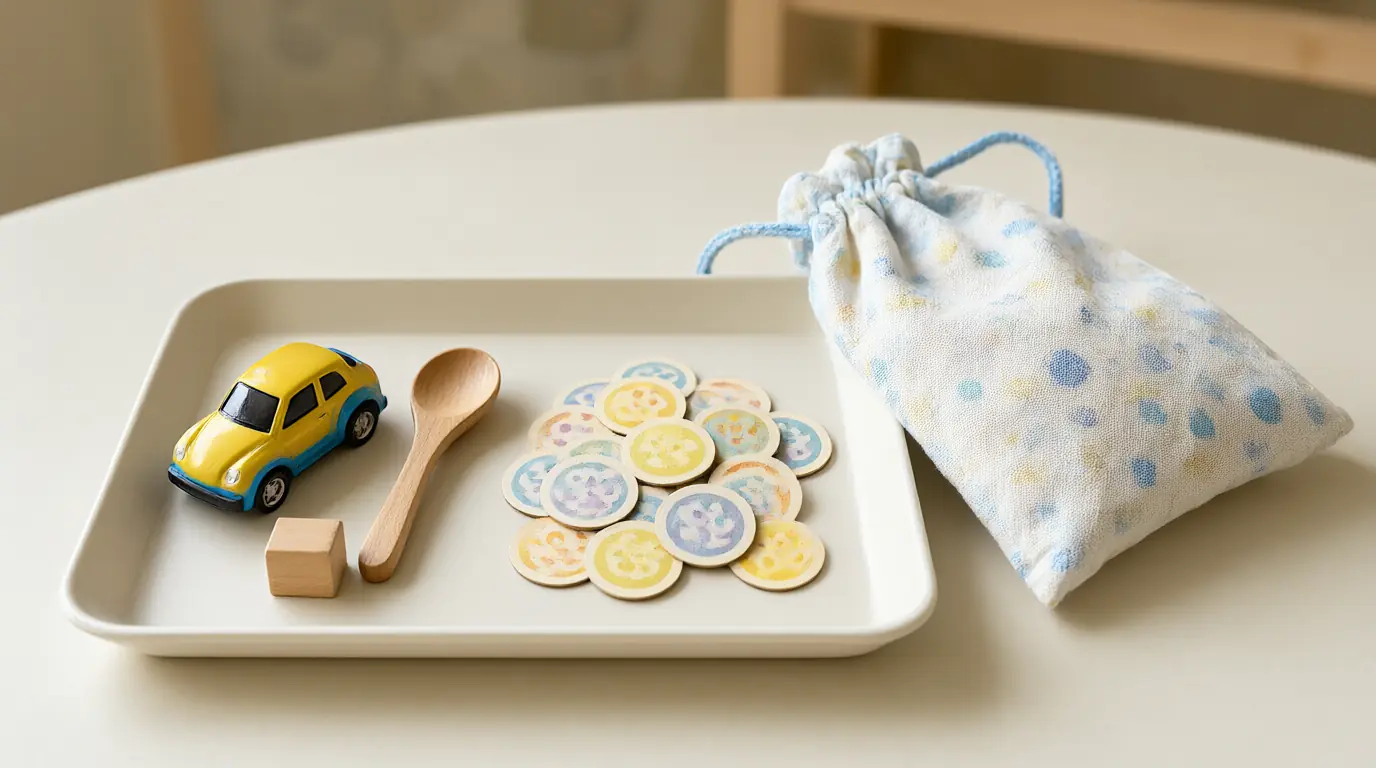
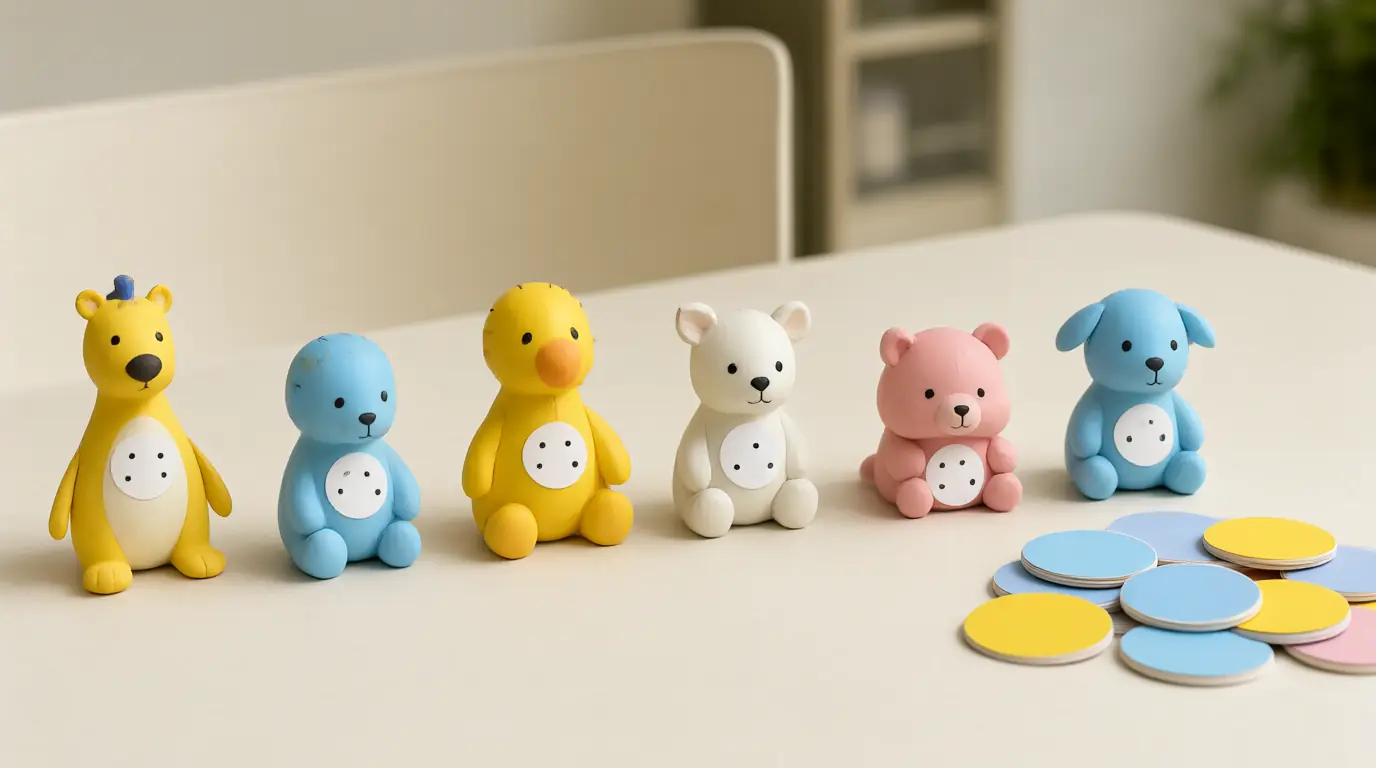
Make your own tokens from card, about the size of a large biscuit, rather than using real coins, which are small, dirty and a choking hazard for younger children. Cut about 30 and colour one side so they look different from plain paper. Choose 6 to 8 small household objects as stock: a toy car, a spoon, a sock, a block, a cup. Lay them on a tray or table and give each a sticky label.
Keep the first shop small and the prices low. A price of one or two tokens lets children focus on the idea that things cost something before they must add several numbers. Take turns being shopkeeper and customer, because each role teaches something different: the shopkeeper counts and gives change, the customer chooses and decides. Real currency differs from country to country, so introduce your own coins and notes only when your child asks or when the pretend version feels comfortable.

Ideas to try together
The one-token market
Every object costs exactly one token. This takes the pressure off arithmetic and lets children grasp the central idea: you give something to get something. Counting becomes natural, because each purchase is one token and one object, and children can check whether they have run out.
 You’ll need
- 6 small household objects
- 10 card tokens
- A tray for the shop
- A small bag for the customer
How to do it
- Lay the objects on the tray and tell your child each one costs one token.
- Give the customer five tokens in a bag.
- Let them choose an object and hand over one token.
- Count the tokens left and the objects bought together.
- Swap roles so your child becomes the shopkeeper and receives the tokens.
- Play until the tokens are gone, then talk about what each person chose.
Make it your own: Younger children can start with only three objects and three tokens. Older children can write a shopping list before they begin and tick off each purchase.
Make your own price labels
When children choose the prices, they begin to think about why something might cost more or less. They also practise writing numbers in a meaningful way. A tiny sticker with a number is a real piece of writing for a purpose, and the shop gives that number a job.
You’ll need
- Sticky labels or paper tags
- A thick felt pen
- 6 objects for the shop
- Card tokens
How to do it
- Look at each object together and ask whether it feels big or small, plain or special.
- Let your child choose a price from one to four tokens for each.
- Write the number on a label, or let your child try the digit themselves.
- Stick each label to the object or its tray.
- Shop with a handful of tokens and count out the exact price for each purchase.
- Check each other's counting at the till.
Make it your own: For younger children, use dots on the label instead of numbers. Older children can include a sale sticker that lowers a price by one token and see how it changes what they can afford.
Two baskets, one budget
This game asks children to compare options rather than simply count. With the same number of tokens, two shopping lists might buy different things, and the goal is to notice what each basket gives, not to pick the biggest. It builds early reasoning and the idea of trade-offs.
You’ll need
- Two shopping bags or baskets
- 8 labelled objects
- 6 card tokens
- A pencil and paper for lists
How to do it
- Give the customer six tokens as their budget.
- Fill one basket with a few cheaper things and the other with fewer, pricier things.
- Ask which basket they could afford and which would leave tokens over.
- Count together to check the cost of each basket.
- Invite your child to swap one object between baskets and see what changes.
- Choose a favourite and say why.
Make it your own: Younger children can compare only two items and decide which to buy. Older children can plan a party shopping list of three items and work out the total before they start.
Saving up for something bigger
Saving is a hard idea for young children, because it means waiting. A paper jar and a picture of the thing they want make waiting visible. Each round, a token goes in, and children can see the goal getting closer without anyone saying a word about patience.
You’ll need
- A clear jar or a paper envelope
- A picture of a pretend toy cut from a catalogue
- 10 card tokens
- A sticker chart (optional)
How to do it
- Stick the picture of the toy to the jar and agree it costs five tokens.
- Give your child one token to put in the jar after each small job or game round.
- Count the tokens in the jar at the end of each round.
- Talk about how many more are needed.
- When the jar holds five, buy the pretend toy by handing over the tokens.
- Play again with a different goal and a different price.
Make it your own: Younger children can use a goal of two or three tokens. Older children can set their own price and work out how many rounds they will need.
The change counter
Giving change is the hardest part of shopping, and it can be introduced very gently. With tokens, the shopkeeper hands over a little extra and the customer gives something back. The game is really about subtraction, but children see it as a story about paying and receiving.
You’ll need
- 20 card tokens in two colours
- A cash tray made from a shoebox lid
- 3 or 4 objects priced at one to three tokens
- A small notebook
How to do it
- Set the shop up with prices written clearly in dots or numbers.
- Let the customer pay with a token of the higher-value colour, which counts as three.
- Ask the shopkeeper how many tokens should come back.
- Count the change out onto the tray together.
- Write one line in the notebook showing the price and the change.
- Swap roles and try a different purchase.
Make it your own: Younger children can pay with exact tokens only and just practise handing over. Older children can add a second paying token and calculate the total change.

Make it work for your family
If a child wants to buy everything, that is a good moment to talk about limits, not a problem to fix. Say that tokens are the money, and when they are gone the shopping stops. Let them see the pile shrink and choose again on the next round: it is the choice, not the arithmetic, that matters at this age.
Keep the games to around 15 minutes and stop while your child is still having fun. Pair them with some counting practice, such as these kindergarten math games, or with math card games using small numbers when your child is ready for more.
Parents also ask
At what age can children start learning about money?
Many children begin to understand that things cost something around four or five, but it varies. Start with a pretend shop and large tokens, and move to real coins when your child is ready. There is no fixed age, so follow your child's interest.
Should I use real coins in money games?
Real coins are small and a choking hazard for younger children, and they require recognition skills many children do not have yet. Homemade card tokens make the game safer and let you set the values. Introduce real coins later, under supervision.
How do I teach a child to save money?
Make saving visible. A clear jar and a picture of the item they want let children watch the tokens grow. Start with a small goal that can be reached in a few days, so the wait feels manageable, and celebrate when they reach it.
Sources & further reading
Explore these primary sources for further context on this topic.
Choose materials and activities that suit your child, supervise as needed and adapt the ideas to their interests and abilities. About our editorial approach